How we make this list: we compare pricing pages, product documentation and public user reviews. Rankite is independent; if a vendor ever pays for a featured spot, that listing is clearly labeled Partner.
Key takeaways
- A bachelor's in computer science remains the most versatile choice, covering algorithms, systems, and theory that transfer across every specialty.
- Software engineering degrees add process discipline: requirements, testing, and project management that CS programs sometimes skim.
- The BLS reports median pay of $135,980 for software developers in May 2025, with about 106,100 openings projected per year through 2035.
- No degree guarantees a job; internships, portfolios, and the ability to keep learning matter as much as the diploma.
Quick comparison
Is your product missing or out of date?
We review this list regularly. Vendors can request a listing, send updated pricing or ask about featured placement.
The best degree for software developer careers

#1
Computer Science (B.S.)
Best for: the all-around gold standard
Visit acm.org
Starting priceSee website
Free planNo
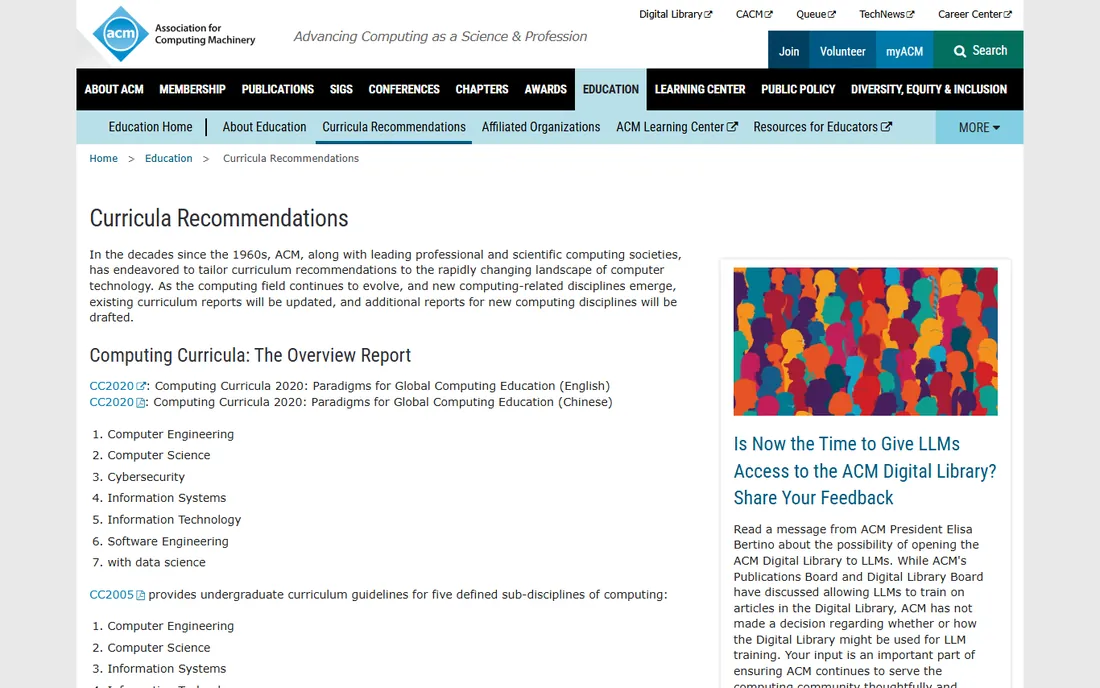
The Bachelor of Science in Computer Science is the default answer for a reason. The ACM's curriculum guidelines, updated most recently in the CS2023 volume, center on programming fundamentals, algorithms and data structures, operating systems, databases, and the mathematical foundations underneath them. That combination travels well: a CS graduate can move from web development to mobile to backend infrastructure without relearning the fundamentals each time.
Employers treat the BSCS as the safest signal on a resume. Large tech companies and government contractors often list it as the preferred qualification, and it keeps graduate school doors open. The honest catch is that most CS programs teach you to write correct programs, not to ship software with a team. Version control, code review culture, testing strategy, and dealing with legacy code are usually learned on the job. Pair the degree with internships and the gap closes fast.
What we like- Deepest coverage of algorithms, data structures, and systems
- Recognized by every employer
- Easiest path to graduate school
Watch out for- Lighter on software process and project management
- Theory-heavy courses frustrate hands-on learners
#2
Software Engineering (B.S.)
Best for: engineering discipline and process
Visit abet.org
Starting priceSee website
Free planNo

Software engineering degrees take the position that building software is an engineering discipline, not just applied mathematics. Coursework covers the full lifecycle: gathering requirements, system design, verification and validation, project management, and maintenance. Many programs carry ABET accreditation through its Engineering Accreditation Commission, which gives employers a clear quality signal.
This is the best degree for software engineers headed into aerospace, medical devices, automotive, or finance, where process maturity and documentation are non-negotiable. Graduates tend to arrive at their first job already comfortable with testing strategies and team workflows that CS graduates pick up later. The trade-off is breadth. SE programs spend less time on theory of computation and advanced algorithms, which matters little for most product work but can pinch if you later aim at research or highly algorithmic roles.
What we like- Structured training in requirements, design, and testing
- ABET accreditation signals rigor
- Strong fit for regulated industries
Watch out for- Fewer programs available than CS
- Can feel rigid for creative or startup-oriented students
Starting priceSee website
Free planNo
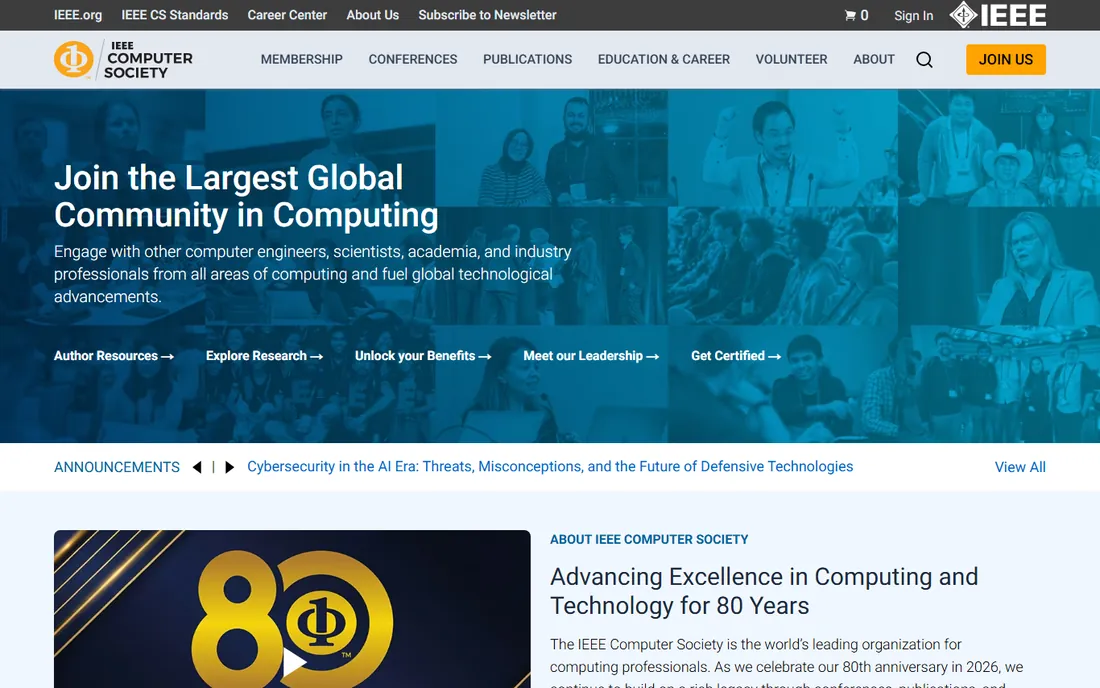
Computer engineering lives where software meets silicon. The degree blends electrical engineering with computer science: digital logic, computer architecture, embedded systems, and operating systems, alongside programming and data structures. The IEEE Computer Society, the professional home for this field, maintains curriculum guidance that keeps programs aligned with industry needs.
For pure software developer roles at SaaS companies, computer engineering is a longer road than necessary. Its payoff comes in embedded software, robotics, IoT devices, chip-adjacent tooling, and systems programming, where understanding what the hardware actually does is a genuine advantage. If you love the idea of writing code that runs on physical things, this is your degree. If your goal is a full-stack web role, the hardware coursework is mostly overhead.
What we like- Unique preparation for embedded systems, IoT, and firmware
- Strong math and physics foundation
- High demand in hardware-adjacent industries
Watch out for- Less software depth than CS
- Overkill if you only want to build web or mobile apps

#4
Information Technology (B.S.)
Best for: applied IT and operations
Visit comptia.org
Starting priceSee website
Free planNo

Information technology degrees focus on applying computing rather than building its foundations. Expect coursework in networking, systems administration, databases, web technologies, and IT security, with plenty of lab work. The field's professional ecosystem, led by organizations like CompTIA, connects the degree to industry certifications that employers recognize immediately.
This is a practical route into development-adjacent roles: DevOps, site reliability, platform engineering, and internal tools development all value the operations knowledge IT programs teach. The honest limitation is programming depth. IT graduates sometimes need to supplement with serious coding practice to compete for pure software developer postings against CS graduates. If you enjoy making systems run and want to grow toward infrastructure-as-code and automation, IT is a strong, underrated pick.
What we like- Hands-on with networks, systems administration, and security operations
- Pairs naturally with industry certifications
- Strong for DevOps paths
Watch out for- Less programming depth than CS
- Some employers view it as less rigorous for developer roles

#5
Data Science (B.S.)
Best for: data-heavy and machine learning roles
Visit amstat.org
Starting priceSee website
Free planNo
Data science degrees combine statistics, machine learning, and programming into one program. Students learn to clean and model data, build predictive systems, and communicate findings, usually in Python and R with real datasets. The American Statistical Association anchors the statistics side of the field, and ACM published undergraduate data science curriculum guidance in 2021.
For aspiring software developers, this degree shines in data-adjacent roles: machine learning engineering, analytics engineering, and backend work on data platforms. The statistical maturity is something CS programs rarely teach well. The catch is program variance. Because the degree is new, quality differs wildly between schools, and many programs under-teach software engineering fundamentals like testing, version control, and system design. Check the curriculum for those before enrolling, and build software projects, not just notebooks, for your portfolio.
What we like- Statistics plus programming is a rare and valuable combo
- Direct path to ML and analytics engineering
- Strong salaries in data roles
Watch out for- Newest degree type with uneven program quality
- Less software engineering training than CS
#6
Cybersecurity (B.S.)
Best for: security-focused development
Visit nist.gov
Starting priceSee website
Free planNo
Cybersecurity degrees teach you to think like both a builder and an attacker: network defense, cryptography, secure coding, incident response, and governance. The field has unusual curricular clarity thanks to the NICE Workforce Framework from NIST, which maps degree content to actual job roles, and ACM's CSEC2017 curriculum guidelines for degree programs.
Security-aware software developers are in short supply, and this degree makes you one from day one. Application security engineering, security tooling, and platform security roles all pay well and hire steadily. The risk is specialization. If you discover mid-program that you would rather build products than defend them, a cybersecurity degree transfers less cleanly to general development than CS does. Choose it because the security mindset genuinely interests you, not just because the job market looks hot.
What we like- Security knowledge is scarce and well paid
- Clear federal career frameworks via the NICE model
- Every software team needs security-aware developers
Watch out for- Narrow if you decide security is not for you
- Some programs are IT-heavy with light programming

#7
Information Systems (B.S.)
Best for: business-facing development
Visit aisnet.org
Starting priceSee website
Free planNo
Information systems sits between the business school and the engineering school. Students learn databases, systems analysis, enterprise software, and project management alongside accounting, finance, and organizational behavior. The Association for Information Systems is the field's academic home, and ACM's IS2020 guidelines define the modern curriculum.
This is the best degree for software developers who want to work close to the business: enterprise software implementation, business intelligence development, Salesforce and ERP customization, and internal tools teams. IS graduates speak both languages, which is a genuine advantage in consulting and in product-adjacent roles. The trade-off is technical depth. Algorithms, operating systems, and compilers get less attention, so IS graduates aiming at core product engineering should deliberately build those muscles through electives and side projects.
What we like- Combines business knowledge with technical skills
- Strong fit for ERP, CRM, and enterprise software roles
- Good for future product managers
Watch out for- Lighter on algorithms and systems than CS
- Can be seen as a business degree by technical hiring managers

#8
Mathematics (B.S.)
Best for: theory-heavy and research roles
Visit ams.org
Starting priceSee website
Free planNo

A mathematics degree teaches you to reason precisely about abstract structures, which turns out to be excellent preparation for the hardest parts of software: algorithms, machine learning theory, cryptography, computer graphics, and formal verification. The American Mathematical Society anchors the field, and math graduates are heavily recruited for quantitative and research-adjacent engineering roles.
The catch is obvious: a math degree does not teach you to build software. There are no courses in version control, testing, databases, or system design unless you choose them as electives. Math majors who become developers do it by pairing the degree with serious self-taught programming and a portfolio that proves it. If you love mathematics and want to work on machine learning, data-heavy systems, or research engineering, this path can outperform CS. For standard product development, it is the scenic route.
What we like- Unmatched training in abstract reasoning
- Excellent preparation for ML, graphics, and quantitative roles
- Respected by research-driven employers
Watch out for- Almost no software engineering training
- You must learn programming largely on your own
How we chose
We started from the Bureau of Labor Statistics Occupational Outlook Handbook, which defines the baseline: software developers typically need a bachelor's degree in computer and information technology or a related field. We then mapped the degree paths against ACM's computing curricula guidelines, which recognize computer engineering, computer science, cybersecurity, information systems, information technology, software engineering, and data science as distinct disciplines. Each organization's site in this guide was opened and verified directly. We weighted versatility for general software developer roles, employer recognition, and how cleanly each degree transfers to adjacent specialties. No degree was evaluated on prestige or rankings; the focus is fit for the work.
Matching the degree to the career you actually want
The best degree for a software engineer is not the same as the best degree for a software developer, though the terms overlap heavily in job postings. Here is how to think about it.
If you want maximum optionality, choose computer science
CS keeps every door open: product engineering, systems, data, security, and graduate school. It is the degree that hiring managers argue about least. When in doubt, this is the default.
If you want to build products in regulated industries, choose software engineering
Aerospace, medical, automotive, and finance employers value the process discipline SE programs teach. ABET accreditation gives these programs a consistent quality bar.
If you want data or security, specialize deliberately
Data science and cybersecurity degrees pay off when the specialty genuinely interests you. Both fields hire well, but both transfer less cleanly than CS if you change direction. Commit only if the subject holds your attention beyond the salary figures.
If you want business-adjacent roles, choose information systems
IS is the right call for consulting, enterprise software, and product management trajectories. Just plan to build technical depth on the side.
Degree versus bootcamp versus self-taught
A degree is still the most common route, but it is not the only one. Coding bootcamps compress practical skills into months and work best for career changers who already hold a degree in another field. Self-taught developers succeed through portfolios and open-source contributions, though they face the steepest climb past resume screens at large companies.
The data favors the degree for first jobs: BLS reports about 106,100 openings per year for developers, QA analysts, and testers through 2035, and degree holders capture a disproportionate share of entry-level hiring. But after three to five years of shipped work, almost nobody asks where you studied. The degree buys you the first interview. Everything after that is what you built.
Frequently asked questions
What is the best degree for a software engineer?
A Bachelor of Science in Computer Science is the most versatile choice, and a Bachelor of Science in Software Engineering is the closest match for the "software engineer" title specifically, with its emphasis on lifecycle process, testing, and project management. Either one satisfies what most employers mean by the requirement.
What is the best major for a software engineer who wants to work in AI?
Computer science with machine learning electives, or a dedicated data science degree, both work. The deciding factor is mathematical depth: linear algebra, probability, and statistics matter more than the degree name. A mathematics major who learns to program seriously is also competitive for these roles.
Do you need a degree to become a software developer?
Not strictly, but it helps substantially for the first job. The BLS reports that developers typically need a bachelor's degree, and many large employers still filter on it. Bootcamp graduates and self-taught developers do get hired, usually by demonstrating ability through portfolios, freelance work, or open-source contributions.
Is software engineering better than computer science?
Neither is universally better. Software engineering teaches process and discipline for building reliable systems with teams; computer science teaches deeper theory and keeps more specialties open. For product work at startups and SaaS companies, the difference rarely decides a hire. For regulated industries, software engineering has an edge.
How long does it take to become a software developer with a degree?
A bachelor's degree takes four years full time. With internships during the program, many graduates are job-ready at graduation. Accelerated and online programs can shorten the timeline, but rushing usually costs you the internship experience that makes the degree pay off.
Which degree pays the most for software developers?
Pay depends far more on role, company, and location than on degree title. That said, CS, computer engineering, and mathematics graduates are well represented in the highest-paying specialties like machine learning and systems engineering. The BLS median of $135,980 covers all developers regardless of degree.
Sources we checked (10)
- http://www.bls.gov/ooh/computer-and-information-technology/software-developers.htm
- https://www.acm.org/education/curricula-recommendations
- https://www.abet.org
- https://www.computer.org
- https://www.comptia.org/en-us/
- https://www.amstat.org
- https://www.nist.gov
- https://www.aisnet.org/
- https://www.ams.org
- https://techguide.org/careers/software-developer/
Is your product missing or out of date?
We review this list regularly. Vendors can request a listing, send updated pricing or ask about featured placement.

Shihab Mia · Founder, Rankite
Shihab has spent more than a decade helping SaaS and e-commerce brands grow through search. He writes Rankite's software buying guides from pricing pages, documentation and public user reviews. More about Shihab.
 Computer Engineering (B.S.)