How we make this list: we compare pricing pages, product documentation and public user reviews. Rankite is independent; if a vendor ever pays for a featured spot, that listing is clearly labeled Partner.
Key takeaways
- OneTrust and TrustArc remain the enterprise defaults, but both now start around $10,000 a year, which prices out smaller teams by design.
- Osano, Ketch and Termly all offer genuinely free tiers that cover cookie consent for small sites, a reasonable starting point before you need DSAR automation.
- DataGrail is the mid-market pick when you have dozens of connected systems and need request fulfillment that actually reaches into them.
- Ketch's free tier plus published $150 a month Starter plan makes it the most price-transparent privacy platform on this list.
- If all you need is policies and a compliant cookie banner, Termly at $14 a month beats buying an enterprise suite by an order of magnitude.
Quick comparison
| Tool | Best for | Starting price | Free plan |
|---|
 OneTrust OneTrust | enterprises running a full privacy program | Custom quote ($10,000/year minimum) | No |
 TrustArc TrustArc | teams that value deep regulatory research | Custom quote (~$10,000/year) | No |
 DataGrail DataGrail | mid-market companies drowning in data subject requests | Custom quote | No |
 Osano Osano | US companies wanting consent plus a compliance backstop | $0 (free plan) | Yes |
 Securiti Securiti | enterprises merging privacy with data security | Custom quote | No |
 Transcend Transcend | engineering teams that want privacy as infrastructure | See website | No |
 Ketch Ketch | price-transparent privacy with a real free tier | $0 (free plan) | Yes |
 MineOS MineOS | starting DSAR handling at zero cost | $0 (free plan) | Yes |
 Termly Termly | small sites that need policies and a banner, not a platform | $0 (free plan) | Yes |
Is your product missing or out of date?
We review this list regularly. Vendors can request a listing, send updated pricing or ask about featured placement.
The best data privacy software
Starting priceCustom quote ($10,000/year minimum)
Free planNo
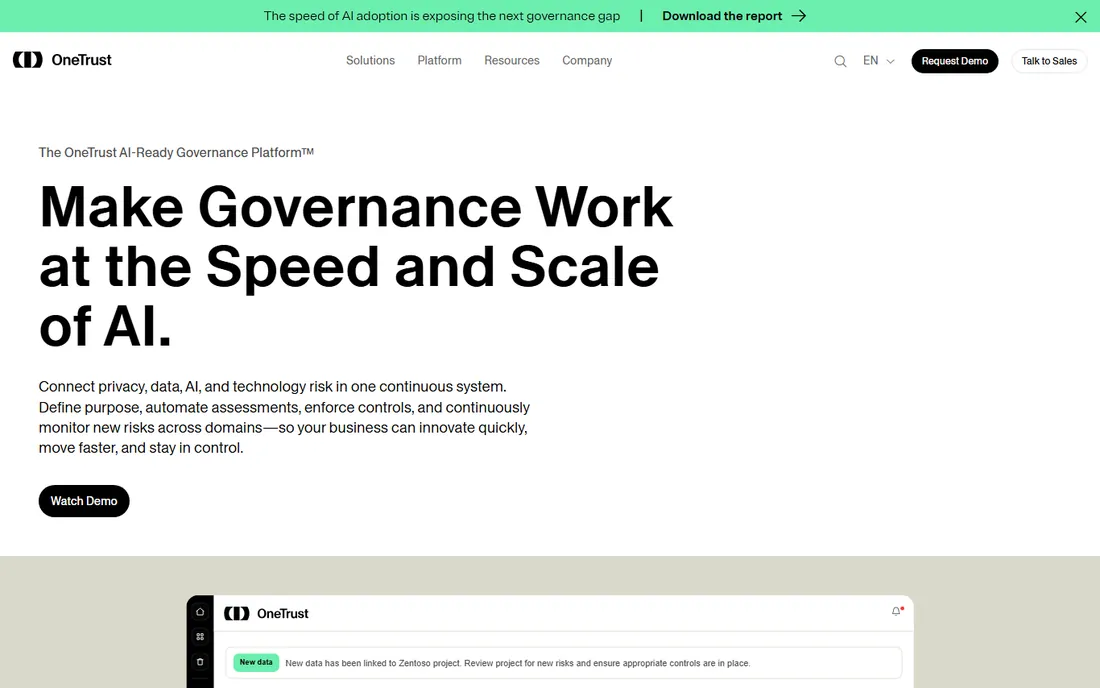
OneTrust is the platform most enterprise legal teams already know, and its module list is unmatched: privacy automation, consent and preferences, tech risk, third-party management and AI governance under one roof. If your company operates across many jurisdictions and needs one system of record for all of it, OneTrust is the default shortlist entry. The API access also matters for larger teams that want privacy workflows wired into their own tooling.
The honest catch is cost and complexity. OneTrust publishes no prices and now enforces a $10,000 annual minimum as of 2026, with buyer-reported median contracts around $11,800 a year and implementation fees adding thousands more. Deployments routinely take weeks to months. For companies that only need consent management, this is far more platform than the problem requires, and that is exactly the gap the smaller tools below exist to fill.
What we like- Broadest module coverage in the industry
- Strong API and integration ecosystem
- AI governance modules for regulated AI use
Watch out for- Opaque pricing with reported steep renewal increases
- Complex implementation that often needs consultants
Starting priceCustom quote (~$10,000/year)
Free planNo
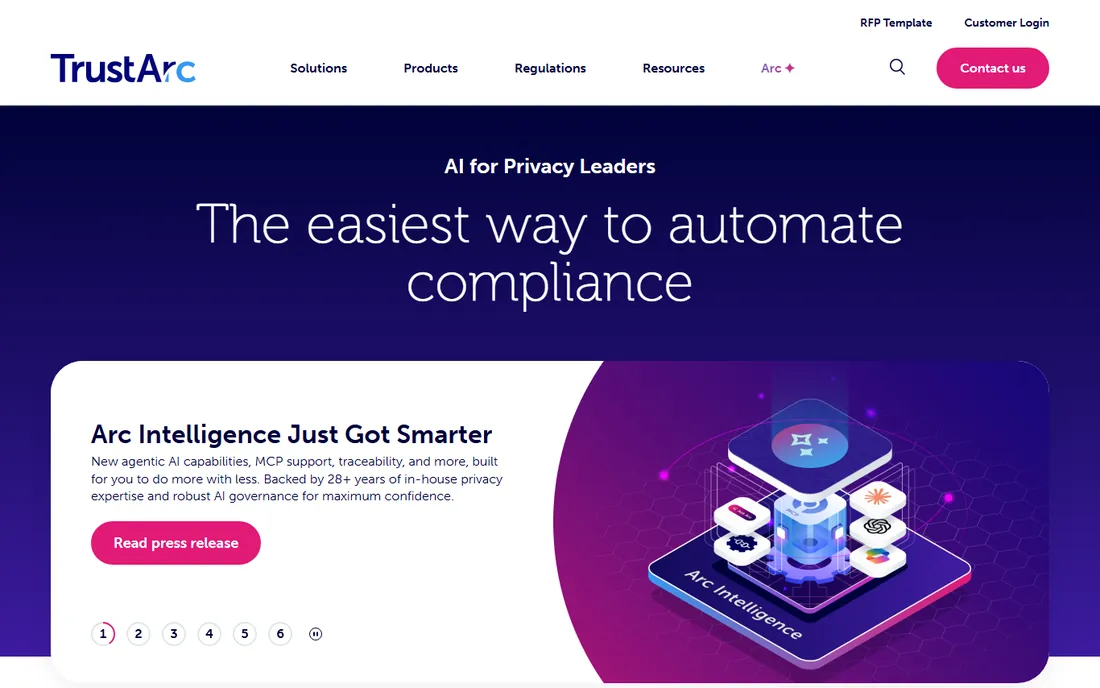
TrustArc has been in privacy since 1997, originally as TRUSTe, and that history shows in its regulatory intelligence. In December 2025 the company relaunched its platform as Arc, adding an AI assistant that answers regulatory questions against a large database of privacy laws. The TRUSTe certification program remains unique: a visible trust mark your site can display, which no competitor offers.
Pricing sits in the same enterprise bracket as OneTrust, with reported contracts starting near $10,000 a year and averaging in the low twenty-thousands. There is no public pricing and no self-serve tier, so budget conversations start with a sales call. Teams choosing between the two giants usually pick TrustArc for its privacy-specific depth and certification, and OneTrust for broader GRC coverage and API flexibility.
What we like- Decades of privacy expertise with TRUSTe certification
- Relaunched Arc platform with AI regulatory guidance
- Strong consent management
Watch out for- No public pricing
- Smaller integration ecosystem than OneTrust
- No API according to buyer reports
#3
DataGrail
Best for: mid-market companies drowning in data subject requests
Visit datagrail.io
Starting priceCustom quote
Free planNo
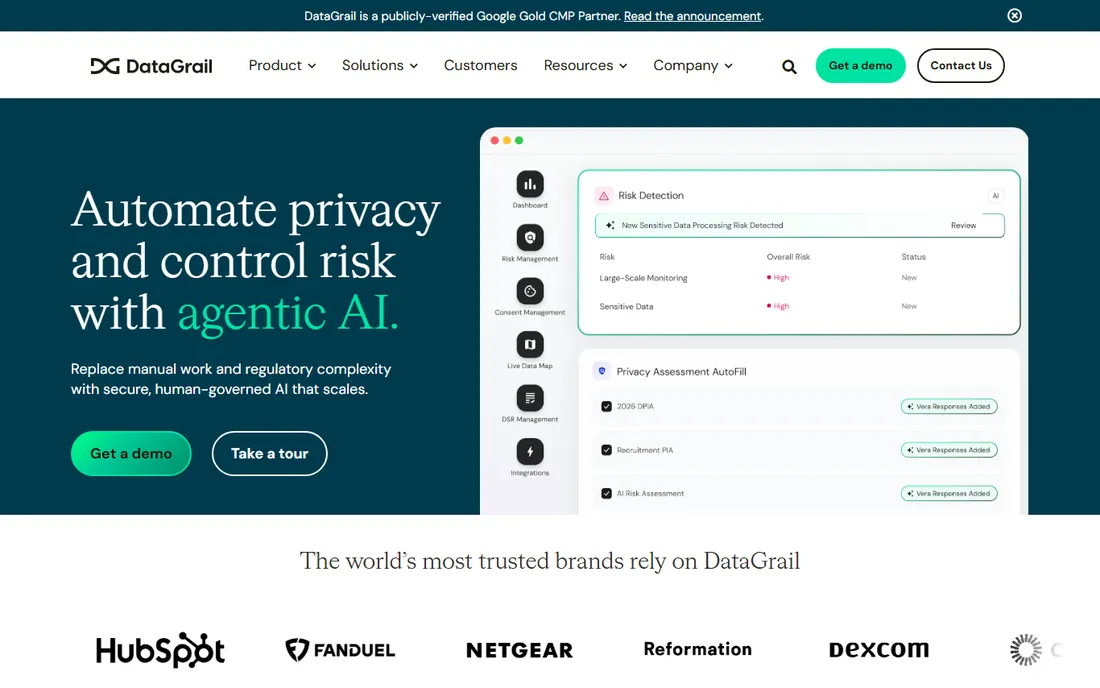
DataGrail's pitch is simple: connect your systems once, and data subject requests get fulfilled across all of them automatically. With over 2,500 pre-built integrations included in the price and no per-request or per-integration charges, it removes the two pricing anxieties that make privacy software budgets unpredictable. Deployment can take as little as a week with no-code onboarding, and the company reports strong customer retention.
The trade is that this is a serious mid-market purchase. Public estimates put typical annual costs between $50,000 and $100,000, with implementation adding more. There is no free tier and no published price list. If your company runs on five tools and gets a handful of deletion requests a year, DataGrail is more than you need. If you run on fifty tools and get hundreds of requests, it is one of the few options that actually scales.
What we like- 2,500+ pre-built integrations included
- No per-request or per-integration fees
- Fast no-code deployment
Watch out for- Custom pricing only
- Mid-market contracts typically $50,000+ a year
- Overkill for simple consent needs
#4
Osano
Best for: US companies wanting consent plus a compliance backstop
Visit osano.com
Starting price$0 (free plan)
Free planYes
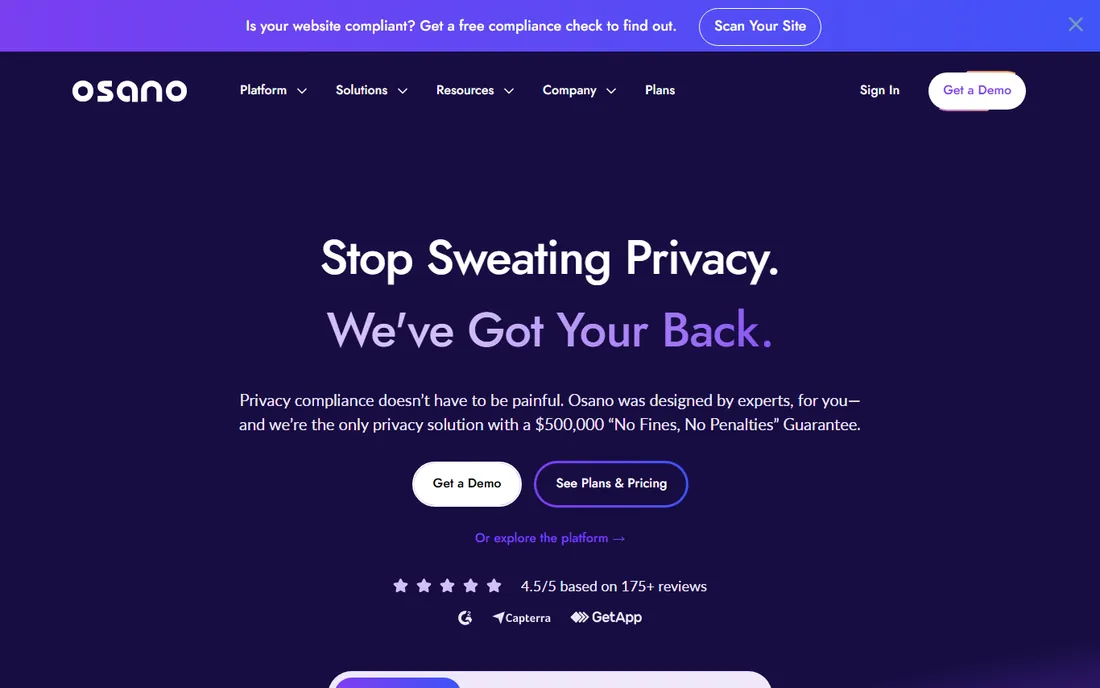
Osano started as a consent management tool and grew into a broader privacy platform, which makes it a natural stepping stone for companies outgrowing a bare cookie banner. The free plan covers one domain and up to 5,000 monthly visitors with the core banner. The Plus plan at $199 a month adds three domains, 30,000 visitors, legal templates and a UK and GDPR representative. Higher tiers add subject rights workflows and compliance checks.
The distinctive feature is the No Fines pledge: on eligible plans, Osano says it will cover certain regulatory fines up to $500,000 if you followed their implementation guidance. Read the terms carefully before treating that as insurance, since exclusions apply. Also note that the Plus tier's per-visitor pricing runs higher than some competitors. Osano fits best when cookies are one part of a growing privacy workload and you want a US vendor with a human support team.
What we like- Real free plan for one domain
- Published pricing up to $199 a month
- No Fines pledge on higher tiers
Watch out for- Plus tier pricing is high per visitor versus peers
- Full privacy suite requires a sales conversation
#5
Securiti
Best for: enterprises merging privacy with data security
Visit securiti.ai
Starting priceCustom quote
Free planNo
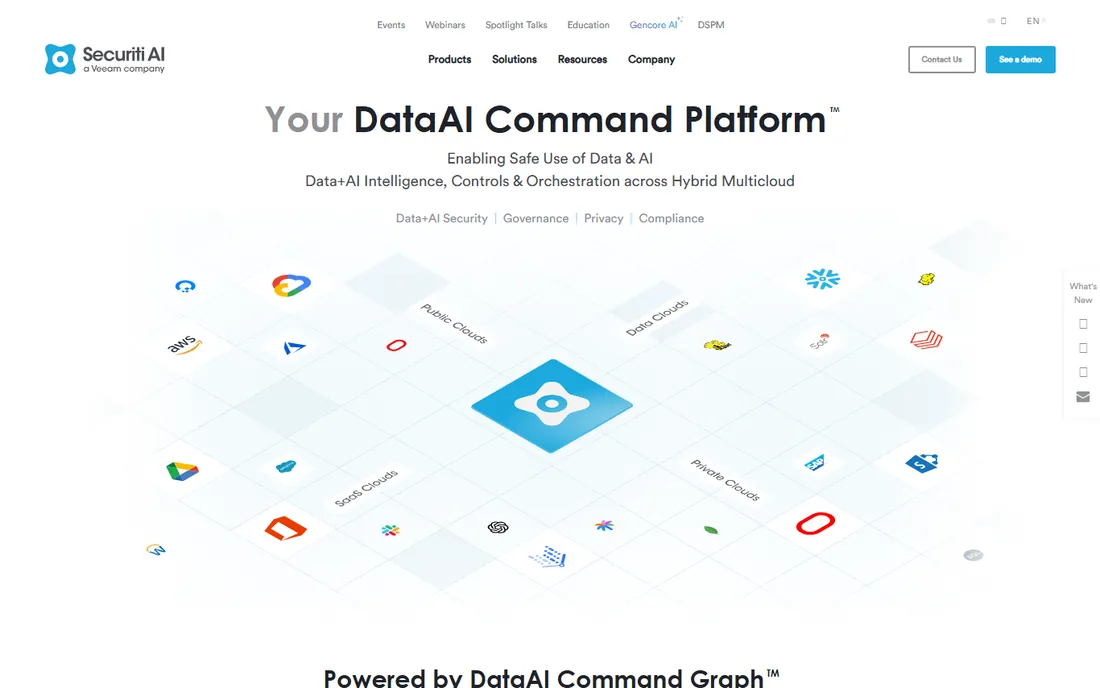
Securiti calls its platform the Data Command Center, and the concept is that privacy, data security and AI governance should run on one intelligence layer instead of three disconnected tools. For large companies with data spread across AWS, Azure, GCP and on-prem systems, unified discovery and classification is genuinely valuable. DSAR fulfillment, risk assessments and consent orchestration all draw from the same data map.
This is unambiguously enterprise software. Pricing is entirely custom-quoted, G2 reviewers consistently describe it as cost-prohibitive for smaller organizations, and implementation averages around three months. There is no free plan and no trial. If your privacy and security teams already share a roadmap and a budget, Securiti deserves a look. Everyone else should keep scrolling.
What we like- Unified data intelligence across multicloud
- Strong DSAR automation
- Recognized AI governance capabilities
Watch out for- Enterprise-only pricing with no self-serve option
- Deployment commonly takes around 3 months
#6
Transcend
Best for: engineering teams that want privacy as infrastructure
Visit transcend.io
Starting priceSee website
Free planNo
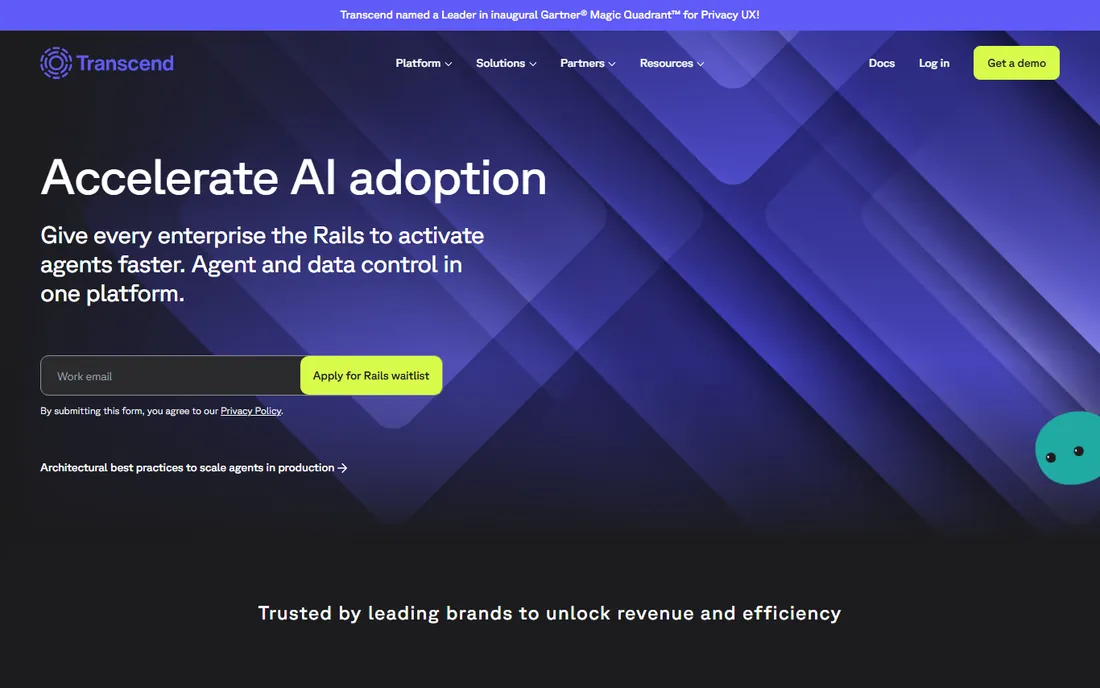
Transcend approaches privacy as an engineering problem rather than a legal workflow. Its platform connects to your data systems and vendors through APIs and automatically fulfills access and deletion requests across them, while giving your users a hosted privacy center (typically at privacy.yourcompany.com) where they manage their own preferences. The design assumes your engineers will be involved, and it rewards that involvement with automation depth.
The company does not publish pricing, so expect a sales process. The bigger consideration is fit: Transcend shines when the privacy owner is technical and the company has real data infrastructure. A marketing-led team looking for guided templates and hand-holding will find friendlier options elsewhere on this list. For product-led SaaS companies, though, the infrastructure framing is exactly right.
What we like- Developer-first design with strong APIs
- Automated request fulfillment across systems
- Clean end-user privacy center
Watch out for- No published pricing
- Less suited to non-technical privacy teams
#7
Ketch
Best for: price-transparent privacy with a real free tier
Visit ketch.com
Starting price$0 (free plan)
Free planYes
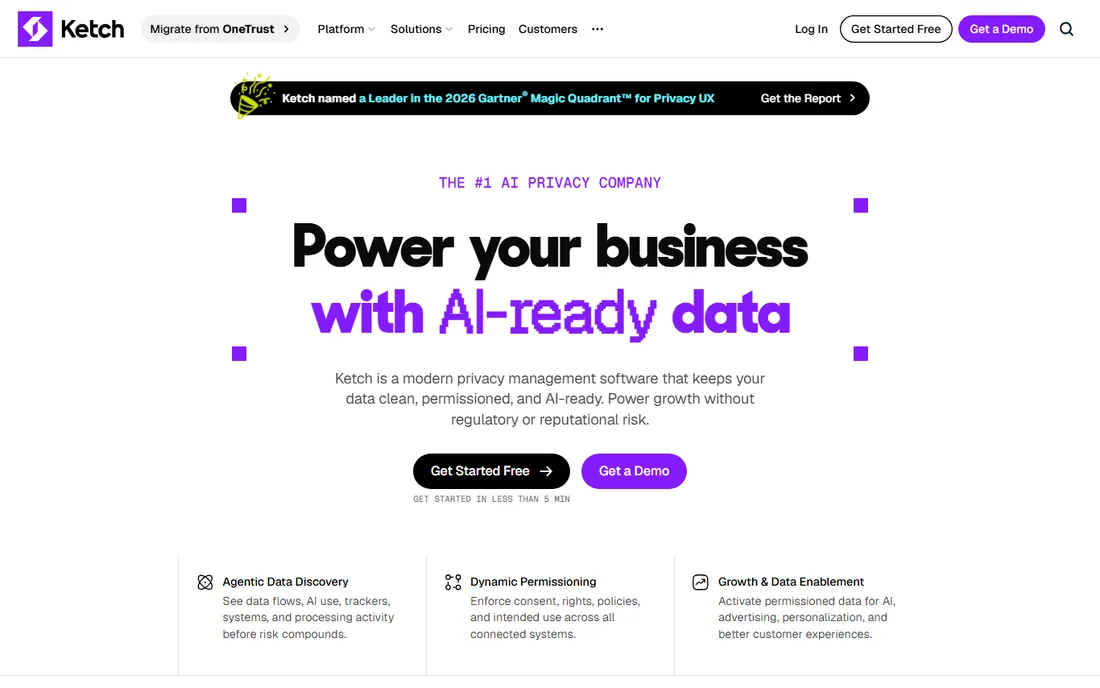
Ketch stands out in this category for a simple reason: it publishes its prices. The free tier covers 5,000 monthly unique users with the full consent management platform, privacy law templates, tracker scanning and two integrations. Starter at $150 a month covers 30,000 users. Plus starts near $499 a month for 100,000 users with rights workflows available as an add-on. Every tier includes the full consent feature set, so you are paying for scale, not for features kept behind a paywall.
That transparency extends to packaging: consent, data subject rights and data mapping are available a la carte, so you do not have to buy the whole platform to automate deletions. The honest catch is that deeper enterprise needs (AI discovery, unlimited integrations, dedicated support) sit behind custom Pro pricing. For small and mid-market companies, though, Ketch is the easiest privacy platform to evaluate without a sales call.
What we like- Free tier with full consent management
- Published pricing from $150 a month
- Products sold a la carte
Watch out for- Per-integration charges beyond the base on some tiers
- Enterprise features need the custom Pro tier
Starting price$0 (free plan)
Free planYes
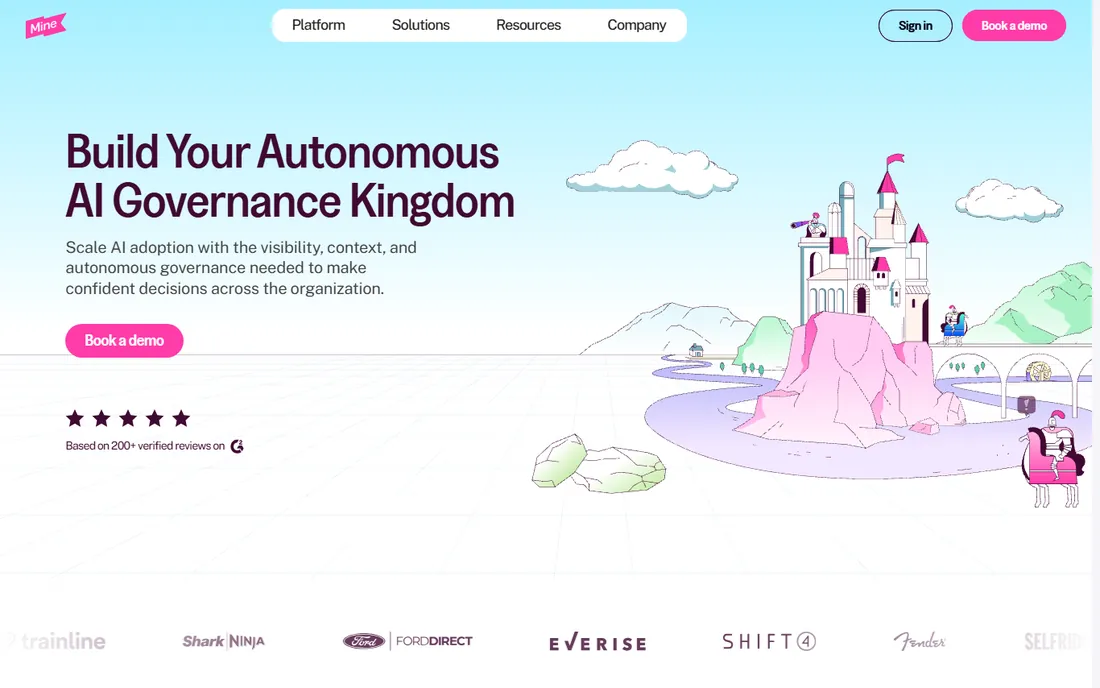
MineOS (from the company Mine) takes the opposite path from most privacy vendors: it gives away the core request-handling workspace forever and charges for the advanced modules. The free tier provides a full portal for receiving and processing data subject requests, and you can add data mapping or consent management modules as your program grows. The integration list covers the usual SaaS suspects from Salesforce to Zendesk to Snowflake.
Because paid pricing is quote-based, budget planning requires a conversation once you outgrow the free tier. But the free tier is genuinely functional, not a demo, which makes MineOS a low-risk way to start handling requests properly while you build the business case for a bigger investment. Small companies getting their first deletion requests will find it refreshingly practical.
What we like- Forever-free request handling workspace
- Modular add-ons for mapping and consent
- Solid integration list
Watch out for- Paid pricing is quote-based
- Advanced automation needs the paid modules
#9
Termly
Best for: small sites that need policies and a banner, not a platform
Visit termly.io
Starting price$0 (free plan)
Free planYes
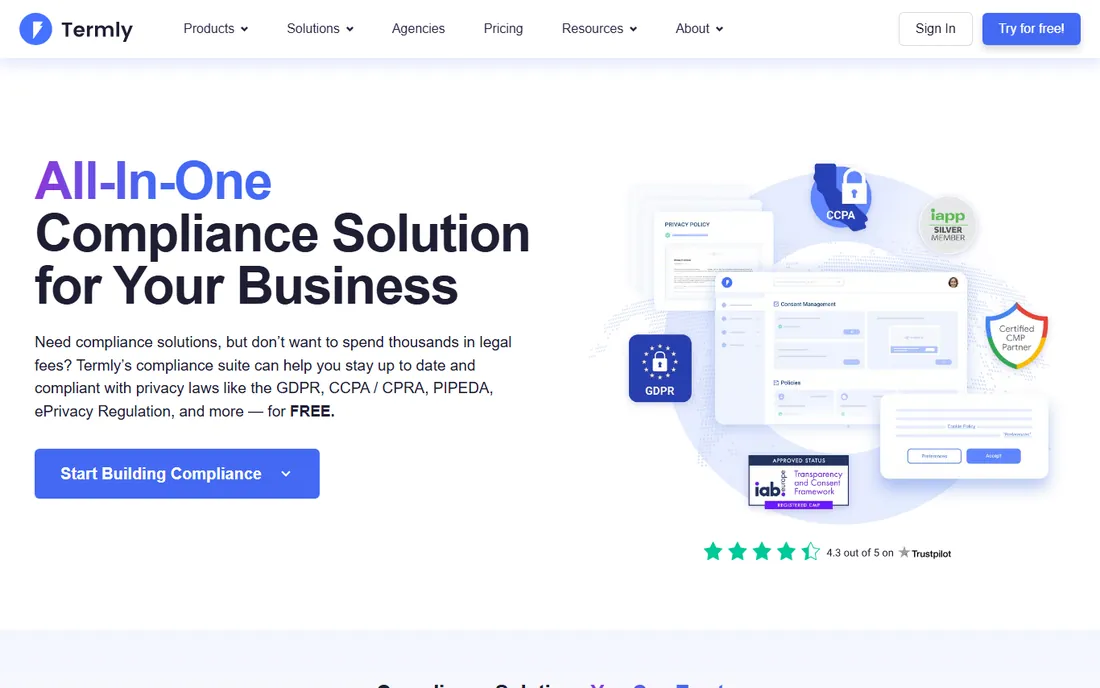
Termly is the pragmatic choice when your actual problem is "my website needs a privacy policy and a compliant cookie banner" rather than "my company needs a privacy program." The free plan includes one policy generator, the cookie banner, script auto-blocking and quarterly scans. Starter at $14 a month per website adds a second policy and 50,000 monthly banner views. Pro+ at $20 a month includes unlimited policies and views, weekly scans, Google Consent Mode v2 and IAB TCF support.
Termly will not map your data systems or automate DSAR fulfillment across your stack, and it does not pretend to. What it does, it does well and cheaply, with policies that update as laws change. For bloggers, small ecommerce stores and early-stage startups, it covers the compliance basics at a price that needs no approval chain.
What we like- Attorney-crafted policy generators
- Free plan with cookie banner
- Very affordable paid tiers
Watch out for- Not a full privacy management platform
- Per-website pricing adds up for agencies
How we chose
We researched each vendor's current pricing page and product documentation in October 2026, and checked third-party pricing intelligence (Vendr transaction data, GetApp, G2) for the vendors that do not publish prices. We favored tools that are live products today, serve US buyers, and represent different segments: enterprise suites, mid-market automation, and self-serve consent tools. We did not run hands-on trials and claim none. The prices above reflect published vendor pricing where it exists and clearly labeled third-party estimates where it does not.
Why most privacy software hides its pricing
If you noticed that half this list says "custom quote," that is not an accident. Enterprise privacy software is priced on modules, data volume, user counts and jurisdictions, which makes a simple price list genuinely hard to publish. But it also serves the vendor: without a public anchor, every deal starts with a sales conversation where the vendor controls the framing.
That is why the transparent vendors on this list matter more than they might seem. Ketch, Osano and Termly publish real prices, which gives you a baseline for what consent management and basic automation should cost. When an enterprise vendor quotes you $60,000 a year, you can ask what exactly you get that the $150-a-month tier does not provide. Sometimes the answer justifies it (deep integrations, legal-grade audit trails, dedicated support). Sometimes it does not, and you just saved your company a lot of money.
A practical rule: if your annual privacy software budget is under $10,000, stay in the self-serve tier of this list. The enterprise platforms now enforce minimums around that level anyway, so you are not missing a negotiation. You are buying the right tool for the job.
What to check before you sign anything
Start with your actual request volume. Count how many access and deletion requests you received in the last twelve months and where fulfilling them hurt. If the answer is "a handful, and the pain was finding the data," you need data mapping more than workflow automation. If the answer is "hundreds, and the pain was the manual work," you need automation with deep integrations.
Second, list your systems of record. A privacy tool is only as good as its connections to the places your customer data lives. Ask vendors which of your specific systems have pre-built integrations versus API-only connections, and who builds the custom ones. DataGrail's 2,500 included integrations versus competitors that charge per integration is a real budget line, not a footnote.
Third, clarify who owns the tool internally. Privacy software bought by legal but operated by nobody fails quietly. The best implementations assign a named owner, usually in legal, security or product operations, with engineering time budgeted for the integration phase. Ask the vendor for a realistic implementation timeline in writing, and check it against reviewer reports before you sign.
Frequently asked questions
What is data privacy software?
It is software that helps companies comply with privacy laws like GDPR and CCPA. Typical functions include cookie consent management, data mapping (finding where personal data lives), automating data subject requests like access and deletion, vendor risk assessment and regulatory tracking.
How much does data privacy software cost?
It ranges from free to six figures a year. Self-serve tools like Termly, Osano and Ketch start at $0 with paid tiers from $14 to $199 a month. Mid-market platforms like DataGrail typically run $50,000 to $100,000 a year. Enterprise suites from OneTrust, TrustArc and Securiti start around $10,000 a year and scale well past $100,000.
Do I need data privacy software for a small website?
Probably not a full platform. A cookie consent banner with a scanner (Termly, Osano or Ketch free tiers) plus generated privacy policies covers the basics for most small sites. Consider a bigger tool when deletion requests become frequent or regulators come knocking.
What is the difference between a CMP and a privacy platform?
A consent management platform (CMP) handles website consent: the cookie banner, preference center and consent records. A privacy platform adds data mapping, DSAR automation, risk assessments and vendor management. Many vendors sell both, sometimes as separate modules.
What is a DSAR?
A data subject access request. Under laws like GDPR and CCPA, individuals can ask a company what personal data it holds about them, and can request deletion or correction. Companies must respond within legal deadlines, typically 30 to 45 days, which is why automation matters at volume.
Can privacy software prevent fines?
No software guarantees compliance or prevents fines on its own. It reduces risk by systematizing consent records, request handling and data mapping, which is what regulators look for. Osano's No Fines pledge covers certain fines under specific terms, but read the exclusions before relying on it.
Sources we checked (11)
- https://www.onetrust.com
- https://trustarc.com
- https://www.datagrail.io
- https://www.osano.com
- https://securiti.ai
- https://transcend.io
- https://www.ketch.com
- https://www.mineos.ai
- https://termly.io
- https://www.enzuzo.com/blog/onetrust-pricing-for-compliance
- https://www.vendr.com/marketplace/datagrail
Is your product missing or out of date?
We review this list regularly. Vendors can request a listing, send updated pricing or ask about featured placement.

Shihab Mia · Founder, Rankite
Shihab has spent more than a decade helping SaaS and e-commerce brands grow through search. He writes Rankite's software buying guides from pricing pages, documentation and public user reviews. More about Shihab.