How we make this list: we compare pricing pages, product documentation and public user reviews. Rankite is independent; if a vendor ever pays for a featured spot, that listing is clearly labeled Partner.
Key takeaways
- Cisco Duo ($3/user/month) and Okta ($6/user/month) anchor the market, with free tiers for small teams at Duo, Microsoft Entra ID and Authy.
- Hardware keys from Yubico ($58 for a YubiKey 5 NFC) provide the strongest phishing-resistant MFA for high-risk users.
- Microsoft Entra ID's free tier includes basic MFA, making it the default for organizations already on Microsoft 365.
- Enterprise needs differ sharply: zero-trust adaptive policies (Duo, Ping), directory consolidation (JumpCloud), or token-based assurance (RSA SecurID).
Quick comparison
| Tool | Best for | Starting price | Free plan |
|---|
 Cisco Duo Cisco Duo | Easiest enterprise MFA rollout | $3/user/month (Essentials) | Free plan (10 users) |
 Microsoft Entra ID Microsoft Entra ID | Microsoft 365 shops | $6/user/month (P1) | Free tier (basic MFA) |
 Okta Okta | Best-of-breed identity platforms | $6/user/month (Starter) | Free plan (developer tier) |
 PingOne MFA PingOne MFA | Adaptive enterprise authentication | See website | Free trial |
 JumpCloud JumpCloud | Directory plus MFA for SMBs | See website | Free trial |
 RSA SecurID RSA SecurID | Regulated and high-assurance orgs | See website | No |
 Yubico Yubico | Phishing-resistant hardware keys | $58 (YubiKey 5 NFC) | No |
 Authy Authy | Free authenticator app | Free | Free plan |
Is your product missing or out of date?
We review this list regularly. Vendors can request a listing, send updated pricing or ask about featured placement.
The best MFA software
#1
Cisco Duo
Best for: Easiest enterprise MFA rollout
Visit duo.com
Starting price$3/user/month (Essentials)
Free planFree plan (10 users)
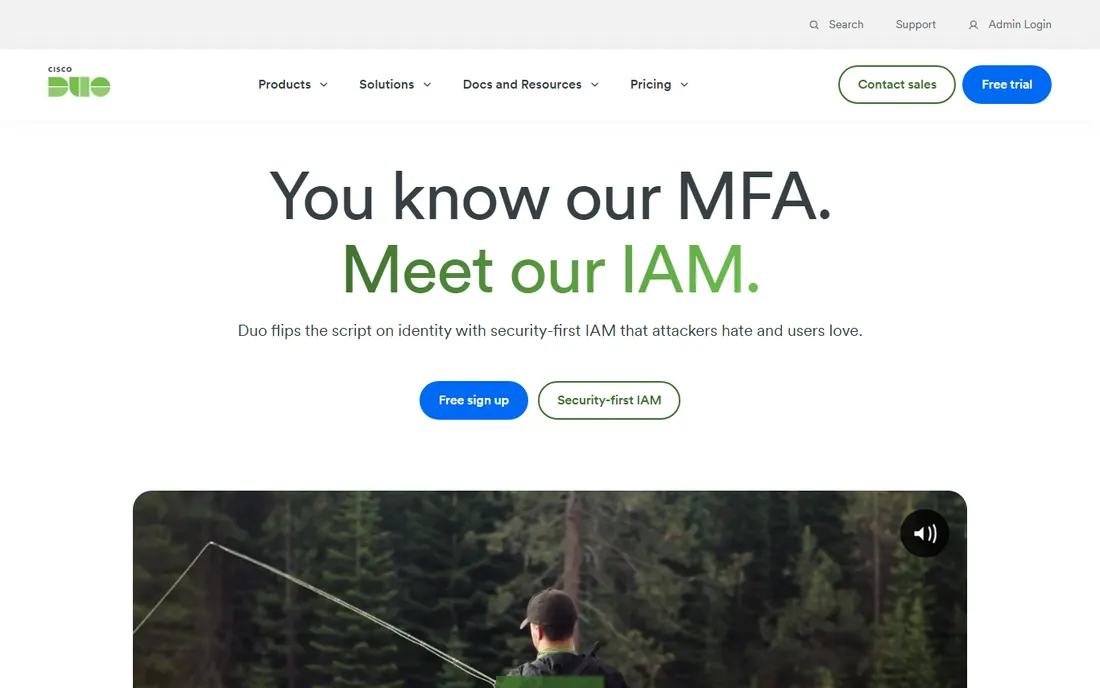
Cisco Duo's pricing starts with Duo Free for up to 10 users, then Essentials at $3 per user per month, Advantage at $6 and Premier at $9, with a free trial available. Essentials adds SSO, passwordless authentication and trusted endpoints to the core push-based MFA; Advantage adds risk-based authentication, device health checks and adaptive policies; Premier adds VPN-less remote access.
The deployment story is Duo's superpower. Users enroll in minutes through the Duo Mobile app, Duo Push approves logins with one tap, and integrations cover VPNs, firewalls, cloud apps and on-premises systems. Higher education, healthcare and IT services run on it at scale.
The honest caveats: the features that matter for zero trust (adaptive policies, device trust) sit at $6 to $9 per user; ordering and license assignment draw complaints; and it pulls you deeper into Cisco. For organizations that want MFA live this week, Duo is the fastest path.
What we like- Free for 10 users
- Dead-simple enrollment
- Huge integration catalog
Watch out for- Advanced features need $6-$9 tiers
- Licensing can frustrate
- Cisco ecosystem lock-in
Starting price$6/user/month (P1)
Free planFree tier (basic MFA)
Every Microsoft Entra ID tenant includes a free tier with basic MFA (security defaults), user and group management and SSO for up to 10 apps per user. Premium P1 at $6 per user per month adds full Conditional Access, unlimited SSO apps, hybrid identity and self-service password reset; P2 at $9 adds Identity Protection and Privileged Identity Management. P1 is included in Microsoft 365 E3, P2 in E5.
The integration argument is decisive for Microsoft shops. MFA policies apply across Microsoft 365, Azure and thousands of SaaS apps through one Conditional Access engine, with the Microsoft Authenticator app handling push, TOTP and passwordless sign-in. If you already pay for M365 E3 or E5, you likely already own P1 or P2.
The honest reality: standalone P1 at $6 is the real entry for serious policy control; licensing after the July 2026 price increase needs care; and it is Microsoft all the way down. For organizations already in the Microsoft ecosystem, Entra ID is the obvious MFA home.
What we like- Free tier includes MFA
- Native to M365
- Conditional Access depth
Watch out for- Full value needs P1/P2
- Complex licensing
- Microsoft lock-in
Starting price$6/user/month (Starter)
Free planFree plan (developer tier)
Okta Workforce Identity lists Starter at $6 per user per month with Essentials at $17 and Professional and Enterprise quote-only, plus a free developer tier and free trial. The platform pairs adaptive MFA (push, TOTP, WebAuthn, biometrics) with the industry's broadest SSO catalog, lifecycle management and API-first extensibility.
The neutrality pitch wins where Microsoft does not. Okta sits above heterogeneous stacks, governing Google Workspace, Salesforce, AWS and on-premises apps alike, with risk-based policies that step up authentication only when signals warrant it. The developer tier lets teams build and test for free.
The honest caveats: the bill grows as you add lifecycle management, governance and advanced features; small teams can drown in capability; and enterprise deals mean sales cycles. For organizations that want identity independent of any one vendor, Okta leads.
What we like- Deepest app catalog
- Strong adaptive MFA
- Developer-friendly
Watch out for- Costs rise with add-ons
- Complexity for small teams
- Enterprise sales motion
Starting priceSee website
Free planFree trial
PingOne MFA from Ping Identity is quote-based, sold as part of the PingOne Cloud Platform with a free trial available. It offers adaptive authentication with push, TOTP, FIDO2 and biometrics, orchestrated through Ping's policy engine with risk signals, plus passwordless and decentralized identity options.
The orchestration story suits complex enterprises. Ping lets identity teams design authentication journeys across brands, channels and risk levels without custom code, and its standards leadership (FIDO, OpenID) keeps it current on passwordless. Regulated industries and large federations are the core audience.
The honest reality: quote-only pricing and an enterprise sales motion mean slow starts; implementation needs identity expertise; and smaller teams get more value elsewhere. For large enterprises with complex authentication journeys, Ping is the architect's choice.
What we like- Strong orchestration
- Passwordless options
- Enterprise-grade policy engine
Watch out for- Quote-only pricing
- Enterprise sales cycle
- Heavier implementation
Starting priceSee website
Free planFree trial
JumpCloud's current pricing is a la carte, with Device Management from $9 per user per month billed annually, SSO from $11, Device Identity Management from $13, and individual features from $3, with Platform tiers quote-only and a free trial available. Note: the legacy free tier for 10 users and 10 devices is no longer offered to new accounts, so treat JumpCloud as a paid platform.
The consolidation pitch is compelling for SMBs. One cloud directory covers user identity, device management, RADIUS, LDAP and MFA, replacing on-premises Active Directory without separate MDM and SSO vendors. G2 reviewers praise it as an AD replacement for cloud-first companies of 10 to 500 employees.
The honest caveats: the pricing overhaul confused the market; per-feature pricing needs careful modeling; and very large enterprises find it less competitive at scale. For SMBs that want directory and MFA from one vendor, JumpCloud is the value play.
What we like- Directory, MDM and MFA in one
- A la carte pricing
- Strong SMB fit
Watch out for- Free tier discontinued for new accounts
- Pricing structure shifted
- Less enterprise depth
#6
RSA SecurID
Best for: Regulated and high-assurance orgs
Visit rsa.com
Starting priceSee website
Free planNo
RSA SecurID is quote-based with no free plan, sold as the SecurID Suite with hardware tokens, software tokens and push authentication. It remains the reference standard for high-assurance MFA in government, finance and healthcare, with decades of compliance pedigree.
The assurance story matters where auditors do. SecurID's token-based authentication, risk engine and access management are built for environments where identity failure is not an option, with deployment models from cloud to on-premises for air-gapped needs.
The honest reality: pricing is premium and opaque; the user experience lags modern push-first tools; and it is overkill for typical SMB needs. For regulated organizations where compliance drives the decision, SecurID is the safe incumbent.
What we like- Token-based assurance pedigree
- Strong compliance story
- Hardware and software tokens
Watch out for- Quote-only
- Dated UX reputation
- Premium pricing
Starting price$58 (YubiKey 5 NFC)
Free planNo
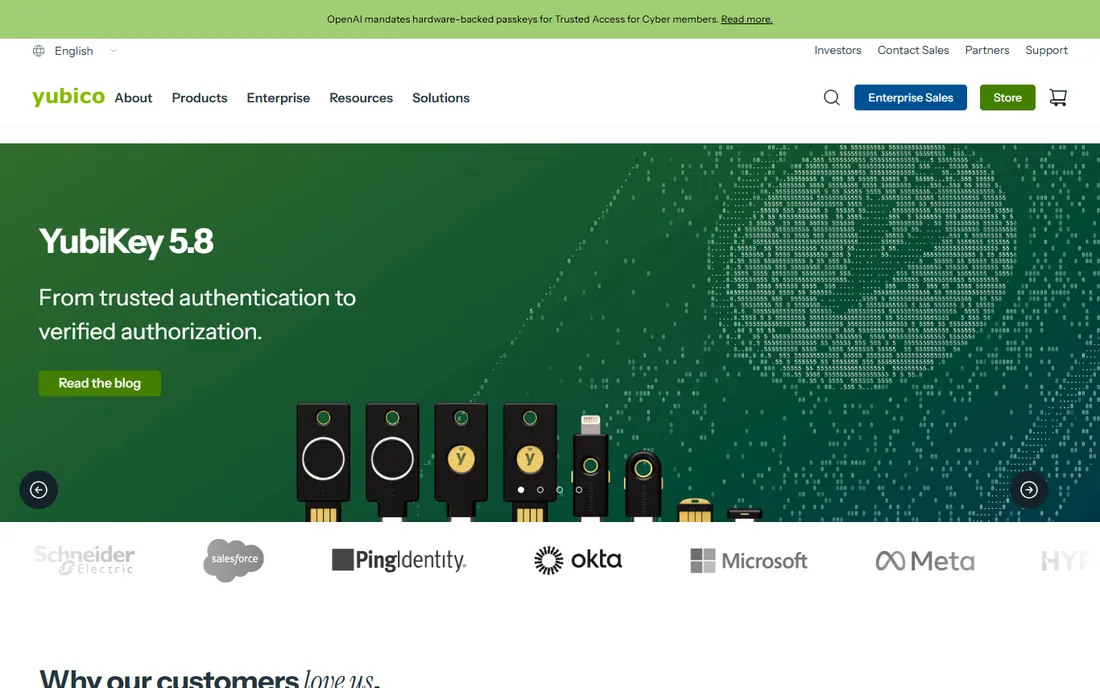
Yubico sells YubiKeys as hardware, with the multi-protocol YubiKey 5 NFC at $58 on yubico.com and enterprise YubiEnterprise subscriptions for 500-plus users. The keys support FIDO2, WebAuthn, U2F, smart card (PIV), OTP and TOTP, work across Windows, macOS, Linux, ChromeOS, Android and iOS, and need no battery or connectivity.
The security argument is the strongest in MFA. FIDO2/WebAuthn cryptographically binds logins to the real site, which stops phishing and account takeovers in a way push and SMS cannot. Google, Microsoft and thousands of services support YubiKeys natively, and passkey slots make them a passwordless vehicle too.
The honest caveats: $58 per user times a workforce is real money; you need a lost-key recovery process (buy two per person); and deployment needs planning. For executives, admins and anyone targeted by phishing, hardware keys are the gold standard.
What we like- Strongest phishing resistance
- No batteries or network needed
- Broad protocol support
Watch out for- Hardware cost per user
- Lost keys need process
- No free tier
Starting priceFree
Free planFree plan
Twilio Authy's authenticator app is free for individual users, generating TOTP codes for thousands of services with encrypted cloud backup and multi-device sync. Register with a phone number, scan QR codes, and tokens sync across phone, tablet and desktop.
The backup story is why people choose it over Google Authenticator. Lose your phone and your tokens survive in encrypted cloud backup; add a tablet and everything syncs. It is the default 2FA provider for companies like Coinbase, and it works offline.
The honest caveats: it is phone-number based, which some security purists dislike; Twilio retired the desktop app, pushing users to mobile; and business use of Twilio's Verify API is paid. For individuals who want a free authenticator that survives a lost phone, Authy is the pragmatic pick.
What we like- Free for individuals
- Encrypted cloud backup
- Multi-device sync
Watch out for- Twilio account needed
- Desktop app retired
- Phone-number based
What to compare before you buy
Phishing resistance matters more than convenience
Push and TOTP stop credential stuffing but not determined phishing; FIDO2 hardware keys and passkeys do. Match the method to the risk: authenticator apps for general staff, hardware keys for admins, executives and finance teams.
Count the total identity bill
MFA rarely stands alone. Duo's $3 becomes $6 to $9 with adaptive policies; Okta's $6 becomes $17 with Essentials; Entra P1 becomes P2 for identity protection. Model the tier you will actually need in year two, not the entry price.
How we chose
We compared the MFA tools organizations actually deploy, from enterprise platforms to free authenticator apps and hardware keys. Every entry had to be live today with documented pricing; quote-only enterprise tools are marked "See website". We did not run hands-on trials; this guide reflects capabilities and pricing as each vendor publishes them.
Frequently asked questions
What is the best free MFA software?
Microsoft Entra ID's free tier includes basic MFA for Microsoft cloud tenants, Cisco Duo is free for up to 10 users, and Authy is free for individuals. For a small team, Duo Free or Entra's free tier covers the essentials at zero cost.
Is SMS-based MFA secure?
SMS is the weakest MFA method: SIM swapping and interception attacks defeat it. Authenticator apps (TOTP), push and especially FIDO2 hardware keys are all stronger. Use SMS only as a last-resort fallback.
What is the difference between 2FA and MFA?
Two-factor authentication uses exactly two factors (usually password plus a code); multi-factor authentication is the broader term covering two or more factors, including biometrics, hardware keys and risk-based signals. In practice, vendors use the terms interchangeably.
Do hardware security keys work with phones?
Yes. NFC-enabled keys like the YubiKey 5 NFC tap against phones, and USB-C keys plug into modern phones directly. Both work with FIDO2 and passkey logins on iOS and Android.
How much does MFA software cost per user?
Entry pricing runs $3 per user per month (Duo Essentials) to $6 (Okta Starter, Entra P1), with advanced tiers at $9 to $17. Free options exist for small teams. Hardware keys cost around $58 per user one-time.
Can MFA work without a phone?
Yes. Hardware security keys need no phone, and desktop authenticator apps generate codes on computers. For shared workstations or phone-free environments, FIDO2 keys are the standard answer.
Sources we checked (8)
- https://duo.com/pricing/
- https://www.microsoft.com/en-us/security/business/identity-access-management/microsoft-entra-pricing
- https://www.okta.com/pricing/
- https://www.pingidentity.com/en/products/pingone-mfa.html
- https://jumpcloud.com/pricing
- https://www.rsa.com/products/securid
- https://www.yubico.com/store/
- https://www.authy.com/
Is your product missing or out of date?
We review this list regularly. Vendors can request a listing, send updated pricing or ask about featured placement.

Shihab Mia · Founder, Rankite
Shihab has spent more than a decade helping SaaS and e-commerce brands grow through search. He writes Rankite's software buying guides from pricing pages, documentation and public user reviews. More about Shihab.