How we make this list: we compare pricing pages, product documentation and public user reviews. Ratings come from G2, Capterra or Trustpilot, with the date we checked them.
Key takeaways
- Managed ELT tools like Fivetran, Airbyte, and Hevo move data from SaaS apps and databases into your warehouse with almost no code, while cloud services like AWS Glue and Azure Data Factory give engineers more control at the cost of more setup.
- Pricing models are the real comparison. Fivetran charges by monthly active rows, Hevo by events, Airbyte by volume synced, and the cloud services by compute used, so the cheapest tool depends entirely on your data shape.
- Stitch and Talend no longer sell as standalone products. Both now live inside Qlik Talend Cloud, so evaluate that platform instead of hunting for the old standalone plans.
- Self-hosted open source looks free but is not. Airbyte self-hosted costs nothing in license fees, yet infrastructure and engineering time often run $500 to $3,000 per month at real scale.
- Start with one source and one destination on a trial, measure the first month's bill against your row or event count, and only then commit to a pricing tier.
Quick comparison
| Tool | Best for | Starting price | Free plan |
|---|
 Fivetran | Hands-off managed pipelines | Free | Yes |
 Airbyte | Open-source flexibility | Free | Yes |
 Hevo Data | No-code pipelines for small teams | Free | Yes |
 Qlik Talend Cloud | Enterprise integration suites | See website | Free trial |
 Informatica | Enterprise governance and scale | See website | Free trial |
 AWS Glue | AWS-centered data teams | Pay per use | No |
 Azure Data Factory | Microsoft-centered data teams | Pay per use | Free trial |
 Matillion | Warehouse-native transformation | See website | Free trial |
 Estuary | Real-time CDC pipelines | See website | Free trial |
Is your product missing or out of date?
We review this list regularly. Vendors can request a listing, send updated pricing or ask about featured placement.
The best data pipeline software for integrating data
#1Fivetran
Best for: Hands-off managed pipelines4.3/5 on
G2 (841 reviews, checked Oct 2026)
Visit fivetran.com
Starting priceFree
Free planYes
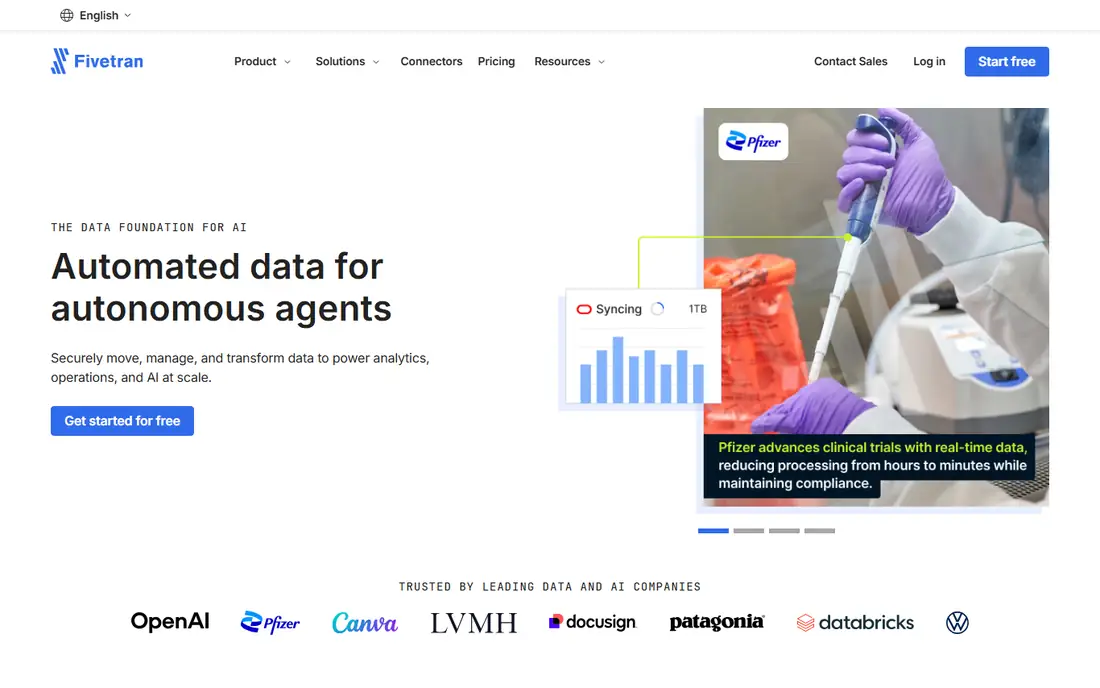
Fivetran is the default choice for teams that want pipelines they never think about. Connect a source, pick a warehouse destination, and Fivetran handles schema changes, retries, and incremental syncs across more than 900 sources and destinations. The free tier covers up to 500,000 monthly active rows, which is enough for a small company to run core SaaS and database sources at no cost.
The pricing model needs attention before you scale. Fivetran bills by monthly active rows per connection, and since 2026 deletes also count toward that total, so tables with heavy churn cost more than their size suggests. Mid-market monthly bills commonly land between $2,000 and $4,000. For teams that value reliability over the lowest bill and want the deepest connector catalog without building anything, Fivetran remains the safest managed pick.
What we like- Largest managed connector catalog
- Automatic schema change handling
- Free tier up to 500,000 monthly active rows
Watch out for- Usage bills can surprise at scale
- Deletes are billed since 2026
- Per-connection pricing removed pooled discounts
#2Airbyte
Best for: Open-source flexibility4.4/5 on
G2 (78 reviews, checked Oct 2026)
Visit airbyte.com
Starting priceFree
Free planYes
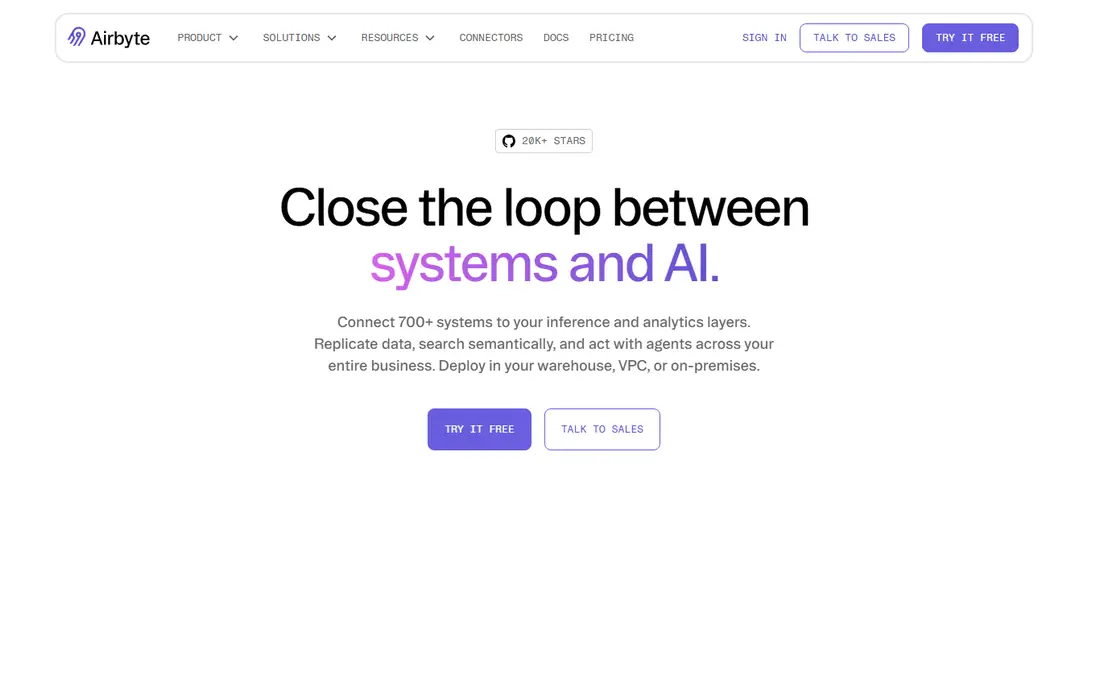
Airbyte gives teams a choice no other tool here matches: run the open-source platform yourself for free, or pay for Airbyte Cloud and skip the operations work. The connector catalog runs past 700 systems, and the hybrid deployment model keeps the data plane inside your own environment while Airbyte runs only the control plane, which suits companies with strict data residency rules. Cloud pricing starts at a $10 minimum with volume-based credits on top.
The honest catch is that self-hosted is only free in license terms. Infrastructure, monitoring, upgrades, and the engineering time to keep connectors healthy commonly cost $500 to $3,000 per month at real scale, which can exceed a managed bill. Airbyte fits teams that already run infrastructure well, need custom connectors, or must keep data inside their own cloud for compliance reasons.
What we like- Open-source core with 700-plus connectors
- Self-hosted option keeps data in your environment
- Cloud starts at a $10 minimum
Watch out for- Self-hosted running costs add up
- Large gap between self-serve Cloud and contract tiers
#3Hevo Data
Best for: No-code pipelines for small teams4.4/5 on
G2 (295 reviews, checked Oct 2026)
Visit hevodata.com
Starting priceFree
Free planYes
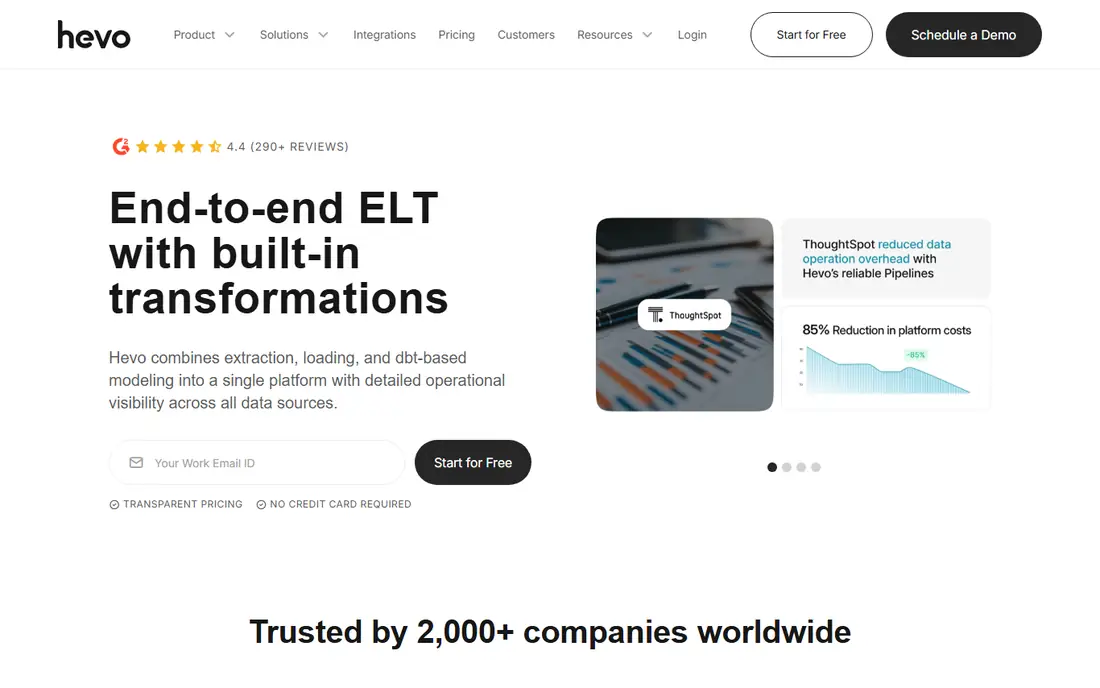
Hevo is the friendliest managed pipeline tool for small data teams. Pipelines are built without code, schema drift is handled automatically, and failed records recover without manual work. The free tier covers 1 million events, and the Starter plan begins at $239 per month, which makes Hevo one of the cheapest managed entry points for a company moving its first 50 or so sources into a warehouse.
Event billing is the thing to model carefully. Every record write counts, including repeats, so sources that update the same rows frequently can multiply events fast. Hevo's own dashboard helps here, with quota alerts that let you pause a pipeline before it overshoots. For startups and small companies that want a working warehouse pipeline in an afternoon without hiring a data engineer, Hevo is the easiest on-ramp.
What we like- Free tier with 1 million events
- Simple no-code setup
- Automatic schema drift handling
Watch out for- Event-based billing punishes high-frequency updates
- Smaller connector catalog than Fivetran
#4Qlik Talend Cloud
Best for: Enterprise integration suites3.7/5 on
Capterra (3 reviews, checked Oct 2026)
Visit qlik.com
Starting priceSee website
Free planFree trial
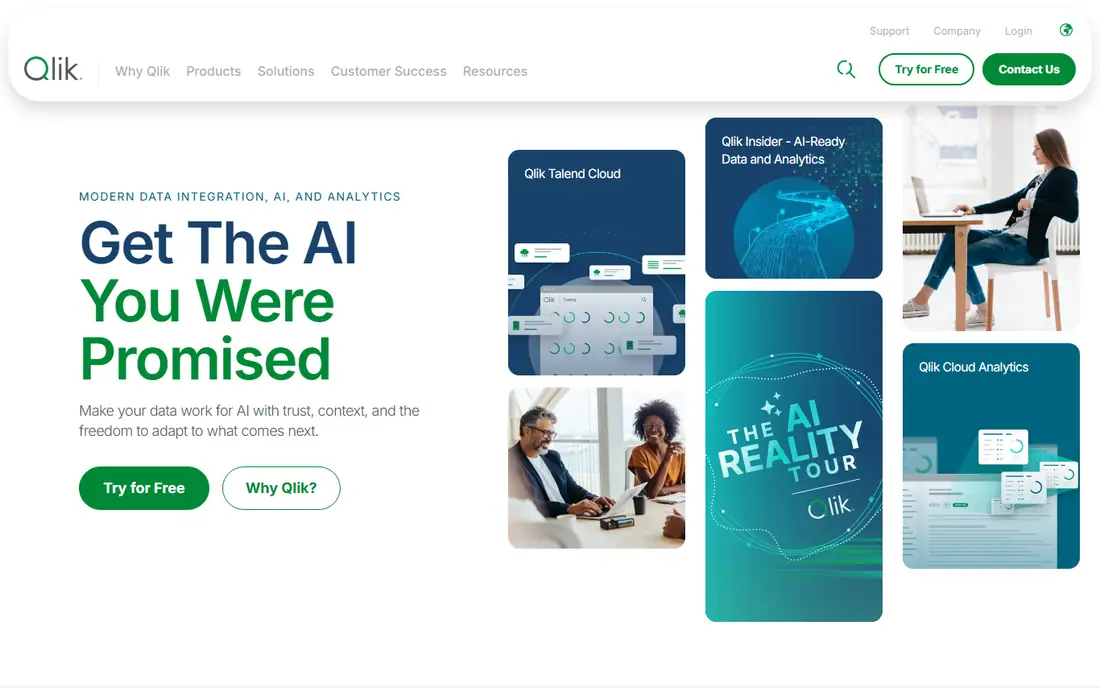
Qlik Talend Cloud is where two familiar names now live. Qlik acquired Talend and folded both Talend's integration suite and Stitch's loader technology into one cloud platform, and new buyers are directed there rather than to standalone Stitch or Talend plans. The platform covers ingestion, transformation, data quality, and governance in one place, with a catalog built for enterprise sources like SAP, Oracle, and mainframe systems alongside common SaaS apps.
That breadth comes with enterprise buying friction: pricing is quote-based, implementation usually involves services or partner help, and small teams will find the platform heavier than Fivetran or Hevo. For large organizations standardizing on one integration vendor across analytics, governance, and AI initiatives, Qlik Talend Cloud is the suite to evaluate, especially if you already use Qlik analytics.
What we like- Broad enterprise connector and transformation suite
- Stitch and Talend technology combined
- Strong governance tools
Watch out for- Pricing is quote-based
- Suite complexity exceeds what small teams need
Starting priceSee website
Free planFree trial
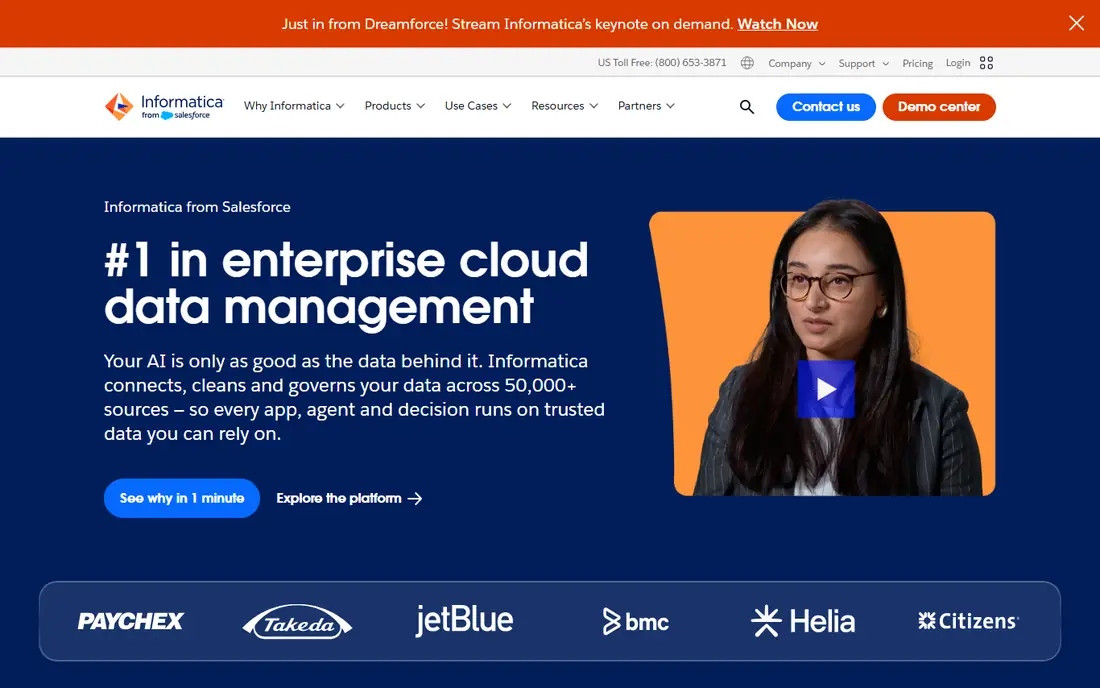
Informatica's Intelligent Data Management Cloud is the enterprise platform for organizations that treat data integration as part of a larger governance story. Beyond moving data, it profiles and cleans data, catalogs where data came from, manages master records for customers and products, and monitors quality across systems. The integration piece alone offers 300-plus connectors across clouds, apps, and databases in a single pipeline view.
Informatica now sits inside Salesforce, which strengthens its position for Salesforce-centered enterprises and raises fair questions about roadmap independence for everyone else. Pricing is quote-based and the platform rewards dedicated data teams rather than casual users. For regulated industries and large enterprises where governance, lineage, and compliance matter as much as the pipeline itself, Informatica is the heavyweight option.
What we like- More than 300 connectors
- Built-in data quality, catalog, and governance
- Now part of Salesforce
Watch out for- Quote-based pricing
- Platform breadth means a longer learning curve
Starting pricePay per use
Free planNo
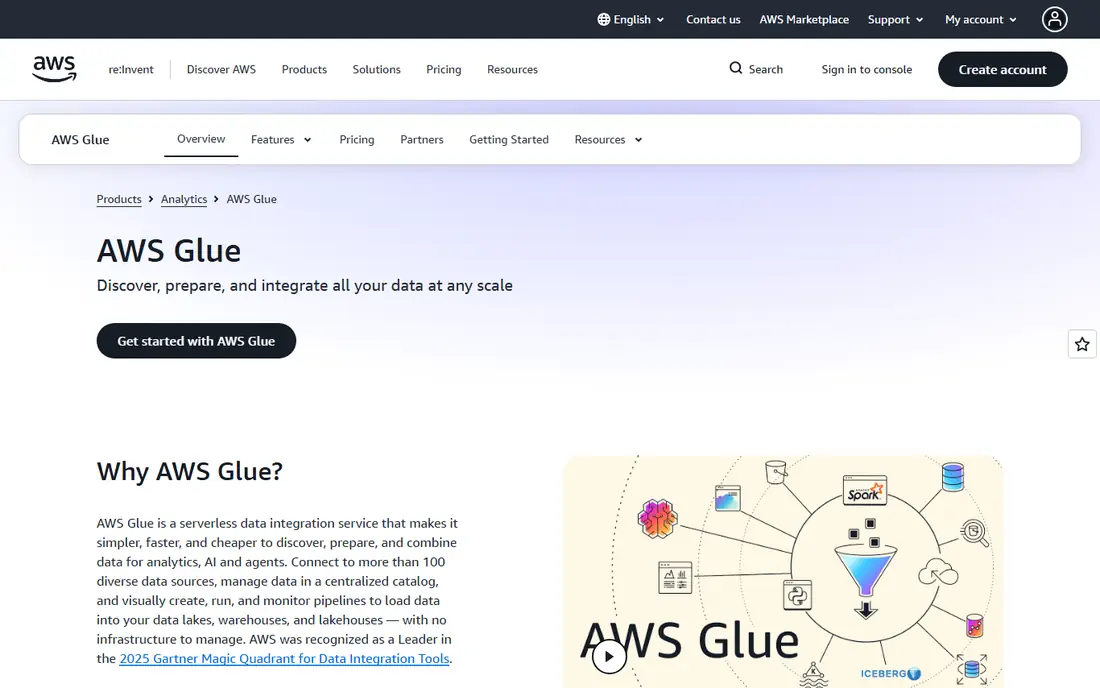
AWS Glue is the integration service for teams already committed to AWS. It is a serverless Spark-based ETL service that discovers, prepares, and combines data from more than 100 sources into lakes, warehouses, and lakehouses, with a central Data Catalog, automated schema discovery, and visual pipeline building alongside code-based jobs. Billing is per second for data processing units used, with no upfront costs, and newer Spark Declarative Pipelines remove much of the orchestration code that used to be hand-written.
The trade is skill and scope. Glue expects engineers comfortable with Spark, Python, or Scala, and costs swing with job runtime, cluster size, and frequency, so idle dev endpoints and over-provisioned jobs quietly inflate bills. It also fits naturally only inside AWS. For AWS shops that want integration, catalog, and transformation in one serverless service without paying a separate ELT vendor, Glue is the natural core of the stack.
What we like- Serverless Spark ETL with no servers to manage
- Data Catalog and crawlers included
- Billed by the second
Watch out for- Requires Spark and Python skills
- Costs vary with job size and frequency
- AWS-only by design
Starting pricePay per use
Free planFree trial
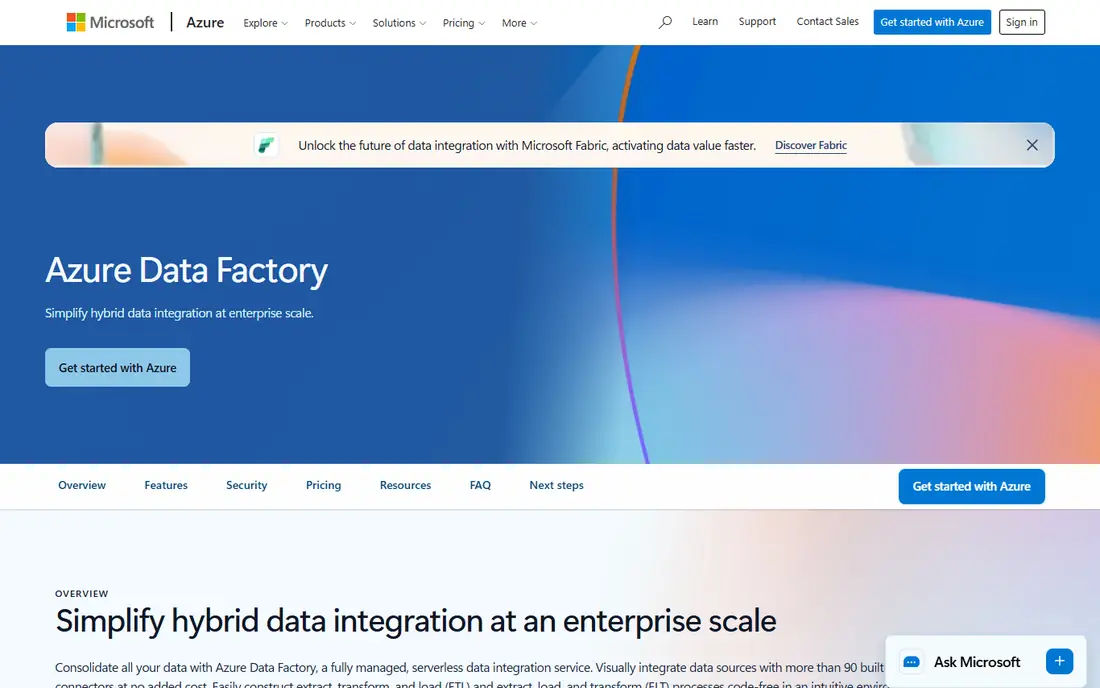
Azure Data Factory is Microsoft's fully managed, serverless integration service, and it suits teams already running on Azure or SQL Server. More than 90 built-in connectors cover SaaS apps like Salesforce and ServiceNow, enterprise warehouses like Oracle and Teradata, and every Azure data service, and pipelines can be built visually without code or written in code where needed. It is also the only fully compatible path for lifting existing SQL Server Integration Services packages into the cloud, with Microsoft claiming up to 88 percent cost savings through Azure Hybrid Benefit.
Pricing is pay-as-you-go for pipeline runs and data movement, which keeps entry cheap but demands cost monitoring as volumes grow. The overlap with Synapse pipelines, which share the Data Factory experience, can confuse new buyers about which service to pick. For Microsoft-centered organizations, especially those modernizing SSIS estates, Data Factory is the obvious integration layer.
What we like- More than 90 built-in connectors
- Code-free visual pipelines
- SSIS migration path
Watch out for- Azure-centered
- Pay-as-you-go costs need monitoring
- Synapse overlap can confuse buyers
#8Matillion
Best for: Warehouse-native transformation4.4/5 on
G2 (83 reviews, checked Oct 2026)
Visit matillion.com
Starting priceSee website
Free planFree trial
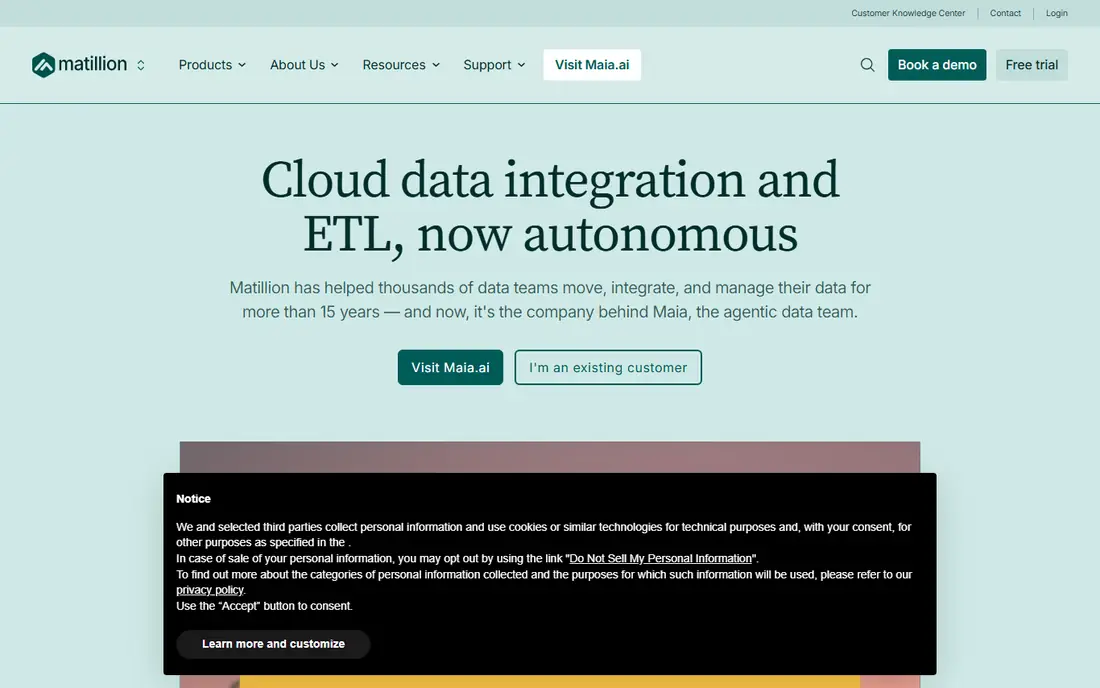
Matillion takes a different approach from the ELT loaders above: its pipelines run inside your cloud warehouse rather than on separate compute, which keeps data movement tight and lets teams use warehouse power for transformation. The drag-and-drop builder claims roughly three times the productivity of hand-written SQL, and the platform covers more than 150 connectors with orchestration and governance across Snowflake, Databricks, BigQuery, and Redshift.
The company has rebranded its platform as Maia Foundation, with an agentic Maia Team layer that plans, builds, tests, and fixes pipelines under human review. Pricing is quote-based, and the warehouse-native design pays off most for teams already standardized on one of the four supported warehouses. For data teams that want visual pipeline building with serious transformation depth inside their warehouse, Matillion is a strong alternative to code-heavy approaches.
What we like- Drag-and-drop pipelines that run inside your warehouse
- 150-plus connectors
- New agentic Maia layer
Watch out for- Quote-based pricing
- Warehouse-centric design suits Snowflake, Databricks, BigQuery, and Redshift users best
#9Estuary
Best for: Real-time CDC pipelines4.7/5 on
G2 (35 reviews, checked Oct 2026)
Visit estuary.dev
Starting priceSee website
Free planFree trial
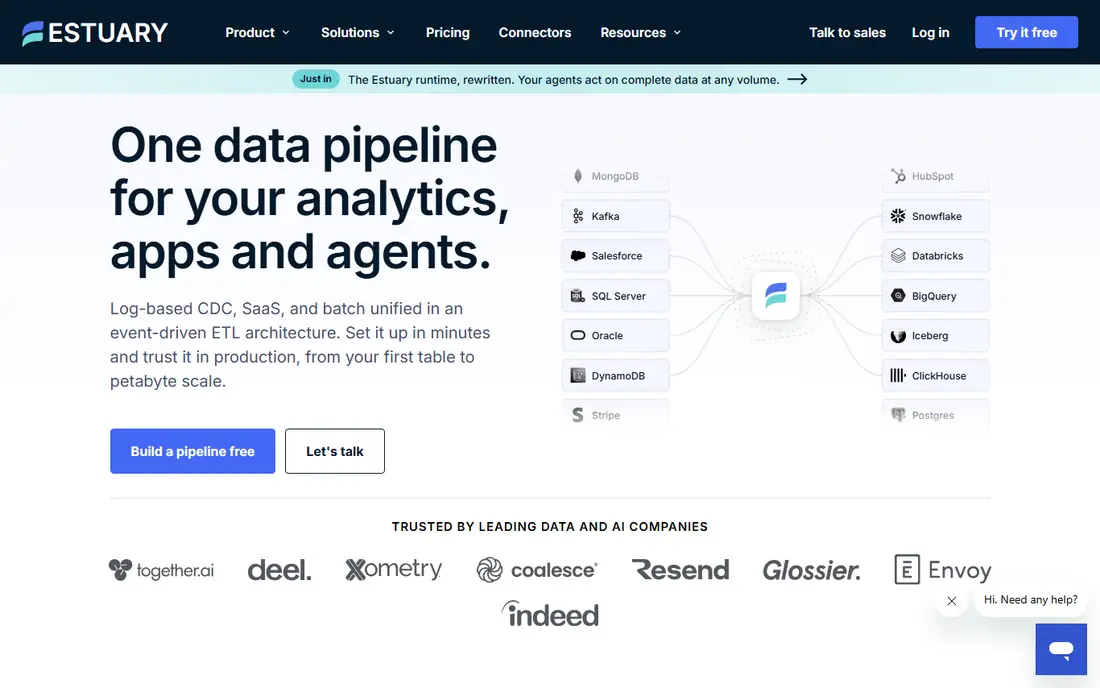
Estuary is the real-time option in this list. Its log-based change data capture backfills full history, then streams every insert, update, and delete as it happens, with data stored in your own cloud bucket under enforced schemas and destinations synced on schedules from real time to hourly. The catalog covers more than 150 sources and 60 destinations, including warehouses, lakes, vector databases for AI workloads, and operational systems through reverse ETL.
The streaming-first design is overkill for teams that only need nightly batch loads, and the destination catalog is smaller than Fivetran's or Informatica's. But for AI features, fraud checks, and operational dashboards that need data minutes old instead of hours old, Estuary's latency and its habit of keeping data in your own storage are genuine advantages. A 30-day trial with no credit card required makes it easy to test on a real CDC source.
What we like- Log-based change data capture with sub-second latency
- Data stays in your own cloud bucket
- 30-day trial with no credit card
Watch out for- Smaller destination catalog than the giants
- Streaming-first design is more than batch-only teams need
How we chose
We compared vendor pricing pages, current 2026 pricing guides, and the vendors' own homepages, opening each homepage to confirm it loads and belongs to the product named. Every tool here moves data into warehouses, lakes, or operational systems in production today. We applied two corrections during checking. First, Stitch and Talend are listed as Qlik Talend Cloud, since Stitch's own homepage now directs new buyers there and Talend's technology lives in the same platform. Second, we dropped Rivery after its homepage returned only a bot-verification page, so we could not confirm the product page; the nine tools listed all passed the homepage check.
What to decide before you buy
Start with your warehouse and your team's skills, because those two facts eliminate most options. If you run Snowflake, BigQuery, Databricks, or Redshift and want minimal code, start with Fivetran, Hevo, or Airbyte Cloud. If you run AWS or Azure end to end, Glue or Data Factory will integrate more cheaply and deeply than any outside tool. If your team writes Spark or SQL daily, Matillion or a cloud service gives you control that managed loaders do not.
Next, model the bill on your real data, not the vendor's example. Count monthly active rows for Fivetran, events for Hevo, volume synced for Airbyte, and job runtime for Glue and Data Factory, then run a trial on one representative source for a full month. Watch for the cost drivers that surprise buyers: deletes counted as active rows, high-frequency updates multiplying events, and idle endpoints on cloud services. Finally, check connector coverage for the three sources you cannot live without, including how each vendor handles schema changes and API updates, since a missing or brittle connector costs more than any price difference.
Frequently asked questions
What is the difference between ETL and ELT?
ETL transforms data before loading it into the warehouse, while ELT loads raw data first and transforms it inside the warehouse. Most tools here follow ELT, since modern warehouses transform data cheaply and keeping raw data makes it easier to fix transformations later. AWS Glue and Azure Data Factory support both patterns, while Fivetran, Airbyte, and Hevo focus on ELT loading.
Which data pipeline tool is cheapest for a small company?
Hevo's free tier covers 1 million events and Fivetran's free tier covers 500,000 monthly active rows, so either can run a small company's core sources at no cost. Airbyte self-hosted is free in license terms but usually costs more in infrastructure and engineering time. For a team with no data engineer, Hevo's no-code setup is the cheapest in total effort.
Do I need a data engineer to run these tools?
Not for the managed loaders. Fivetran, Hevo, Airbyte Cloud, and Estuary are built for analysts and small teams to set up without code. AWS Glue, Azure Data Factory, and Matillion reward data engineering skills, and Informatica and Qlik Talend Cloud usually involve dedicated data teams or implementation partners.
How do I estimate what Fivetran or Hevo will cost?
Count the rows or events that change each month, not your total table size. For Fivetran, add up monthly active rows per connection, remembering that deletes count since 2026. For Hevo, count every record write including repeats from high-frequency sources. Run a trial on your largest source for a month and scale the bill from the measured result.
Can these tools move data in real time?
Yes, with different latencies. Estuary's log-based CDC delivers sub-second to minute-level freshness, Fivetran and Airbyte offer near-real-time syncs on many database sources, and Hevo supports real-time replication for databases. Batch-only sources like some SaaS APIs sync on schedules from minutes to hours regardless of tool, so check the connector's sync frequency for your specific sources.
What happens to my pipelines if a vendor changes pricing?
Managed vendors have changed pricing models before, and the practical defense is keeping your warehouse as the system of record with raw data intact. If a loader becomes too expensive, you can switch tools and re-sync from sources without losing history, provided you kept raw tables. Avoid tools that transform data only inside their own platform with no raw copy elsewhere.
Sources we checked (10)
- https://fivetran.com/
- https://airbyte.com/
- https://hevodata.com/
- https://www.qlik.com/
- https://www.informatica.com/
- https://aws.amazon.com/glue/
- https://azure.microsoft.com/en-us/products/data-factory
- https://www.matillion.com/
- https://estuary.dev/
- https://datrick.com/etlelt-pricing-guide
Is your product missing or out of date?
We review this list regularly. Vendors can request a listing, send updated pricing or ask about featured placement.

Shihab Mia · Founder, Rankite
Shihab has 5+ years in B2B and SaaS SEO. He writes Rankite's software buying guides from pricing pages, documentation and public user reviews. More about Shihab.