How we make this list: we compare pricing pages, product documentation and public user reviews. Ratings come from G2, Capterra or Trustpilot, with the date we checked them.
Key takeaways
- Fivetran is the best managed ELT platform for teams that want reliable pipelines without maintaining connectors.
- Airbyte suits teams that want open-source flexibility and the broadest connector catalog with self-hosting options.
- dbt is the standard for the transformation layer, turning raw warehouse data into clean, documented models.
- Matillion fits data teams that want visual pipeline building with serious transformation power.
- Estuary is the pick for real-time pipelines that need change data capture with sub-second latency.
Quick comparison
| Tool | Best for | Starting price | Free plan |
|---|
 Fivetran Fivetran | managed ELT without connector maintenance | See website | See website |
 Airbyte Airbyte | open-source flexible data integration | See website | See website |
 Stitch Stitch | simple ELT for straightforward needs | See website | See website |
 dbt dbt | transformation layer for warehouse data | See website | See website |
 Matillion Matillion | visual pipelines with deep transformation | See website | See website |
 Hevo Data Hevo Data | no-code pipelines for analytics teams | See website | See website |
 Estuary Estuary | real-time CDC pipelines | See website | See website |
 Rivery Rivery | data integration with reverse ETL | See website | See website |
Is your product missing or out of date?
We review this list regularly. Vendors can request a listing, send updated pricing or ask about featured placement.
The best data pipeline software
Starting priceSee website
Free planSee website
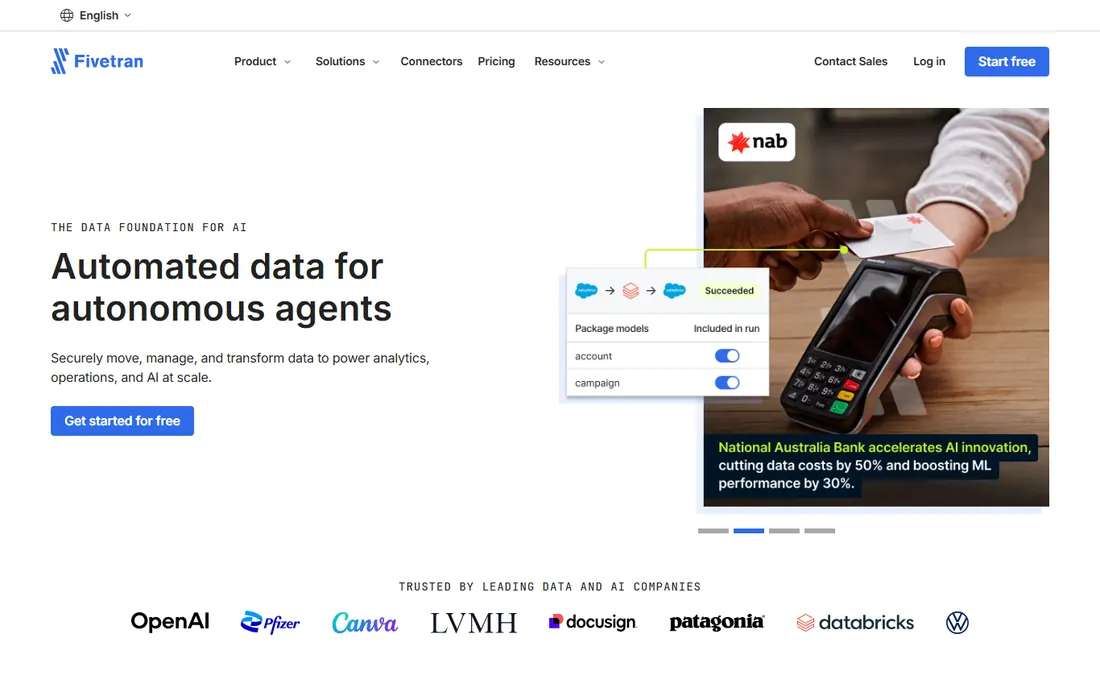
Fivetran is the default answer for teams that want data pipelines to just work. Connectors for hundreds of SaaS sources and databases are fully managed: Fivetran handles API changes, schema drift, and reliability, while your team focuses on analysis. The ELT model loads raw data into your warehouse, where dbt or SQL handles transformation.
The trade-off is cost and control. Consumption-based pricing scales with data volume, and heavy pipelines can get expensive. Customization is limited compared with building on Airbyte. But for teams that would rather pay than maintain connectors, Fivetran's reliability record justifies the premium.
What we like- Fully managed connectors with automatic schema handling
- Broad SaaS source coverage
- Reliable and low-maintenance
Watch out for- Consumption-based pricing can surprise at scale
- Less customization than open-source alternatives
Starting priceSee website
Free planSee website
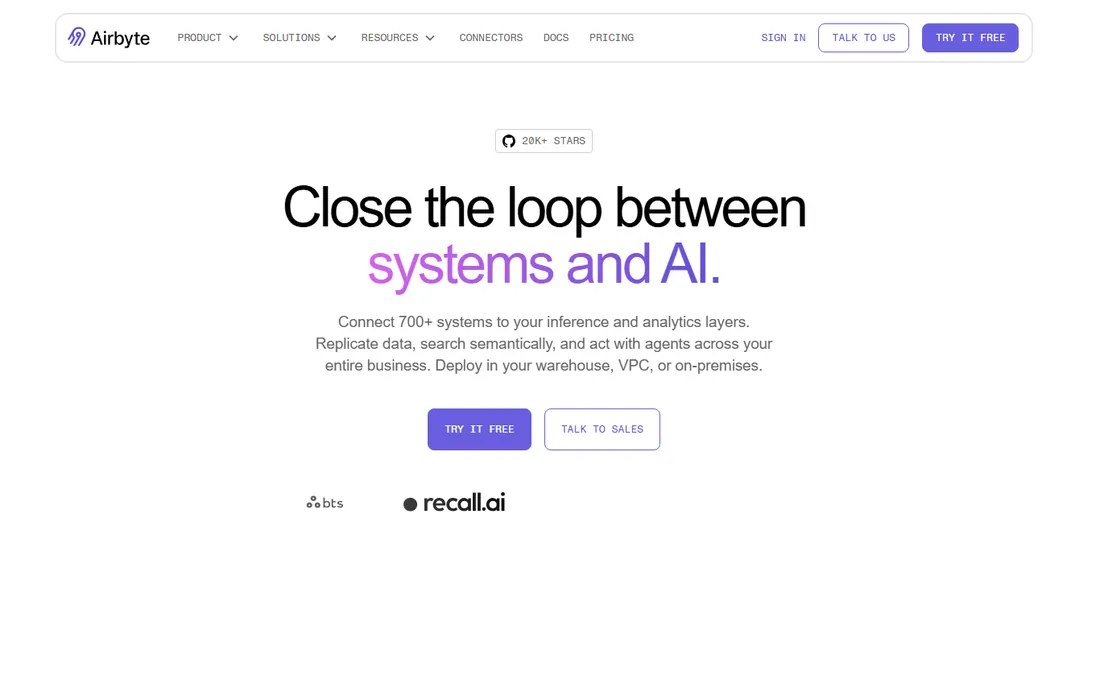
Airbyte took the open-source route to data integration and built the largest connector catalog in the industry. Teams can self-host for control and cost, use Airbyte Cloud for convenience, and build custom connectors when the catalog falls short. The community contributes connectors at a pace no single vendor could match.
Open source means responsibility. Self-hosted Airbyte needs monitoring, scaling, and connector maintenance from your team. Connector quality varies, especially for newer or community-built ones. But for teams with engineering capacity that want flexibility and broad coverage, Airbyte is the most versatile option.
What we like- Open-source with the largest connector catalog
- Self-hosting and cloud options
- Active community building connectors
Watch out for- Self-hosted deployments need operational care
- Connector quality varies across the catalog
Starting priceSee website
Free planSee website
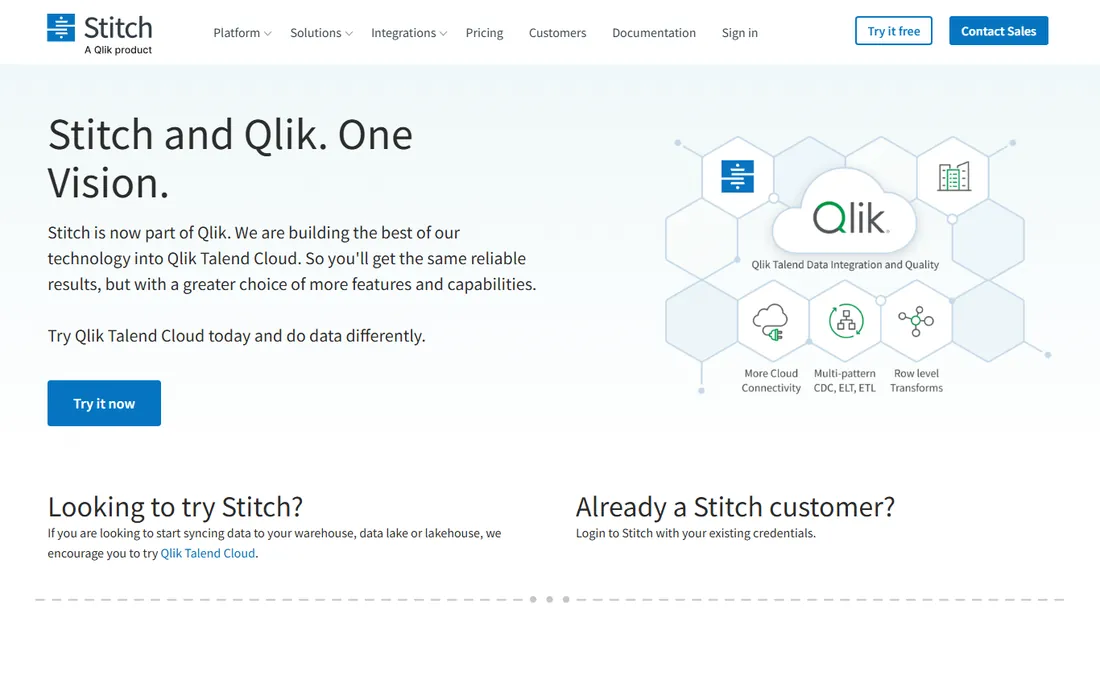
Stitch keeps ELT simple: connect a source, pick a destination, and replicate. Now part of Qlik, it serves teams whose needs are straightforward replication of common sources into a warehouse. Setup takes minutes, and the pricing is accessible for smaller operations.
Teams with complex transformation needs, exotic sources, or high-volume databases will outgrow it. Stitch does not try to compete with Fivetran's managed depth or Airbyte's catalog breadth. For simple replication jobs that just need to run reliably, that focus is a feature.
What we like- Simple setup for common sources
- Part of the Qlik data integration family
- Good for basic replication needs
Watch out for- Connector depth trails the leaders
- Less suited to complex transformations
Starting priceSee website
Free planSee website
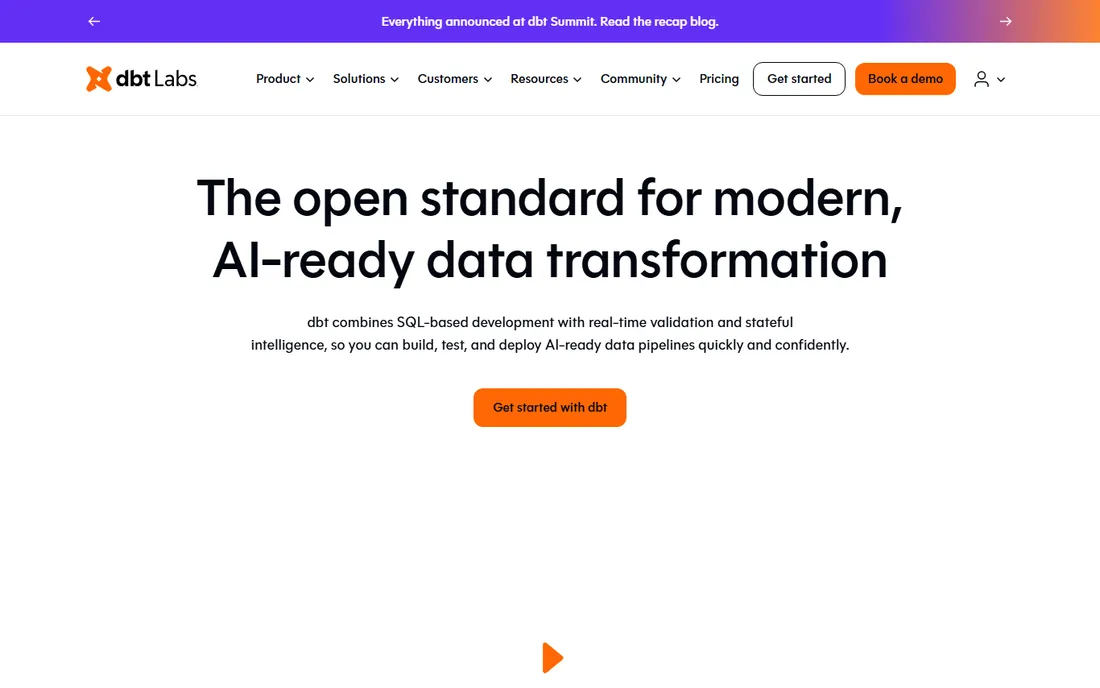
dbt does not move data into your warehouse; it transforms data once it is there. That narrow focus made it the standard: analysts write SQL models with version control, testing, and documentation, turning raw replicated tables into trusted datasets. The package ecosystem and community are unmatched for analytics engineering.
It is not a standalone pipeline solution. You still need Fivetran, Airbyte, or similar for extraction and loading, plus orchestration for scheduling. And it assumes SQL fluency. But as the transformation layer in a modern data stack, dbt is close to a default choice.
What we like- Industry-standard transformation framework with version control
- Huge community and package ecosystem
- Dbt Cloud adds orchestration and CI
Watch out for- It is the T in ELT, not a full pipeline tool
- SQL and analytics engineering skills required
Starting priceSee website
Free planSee website
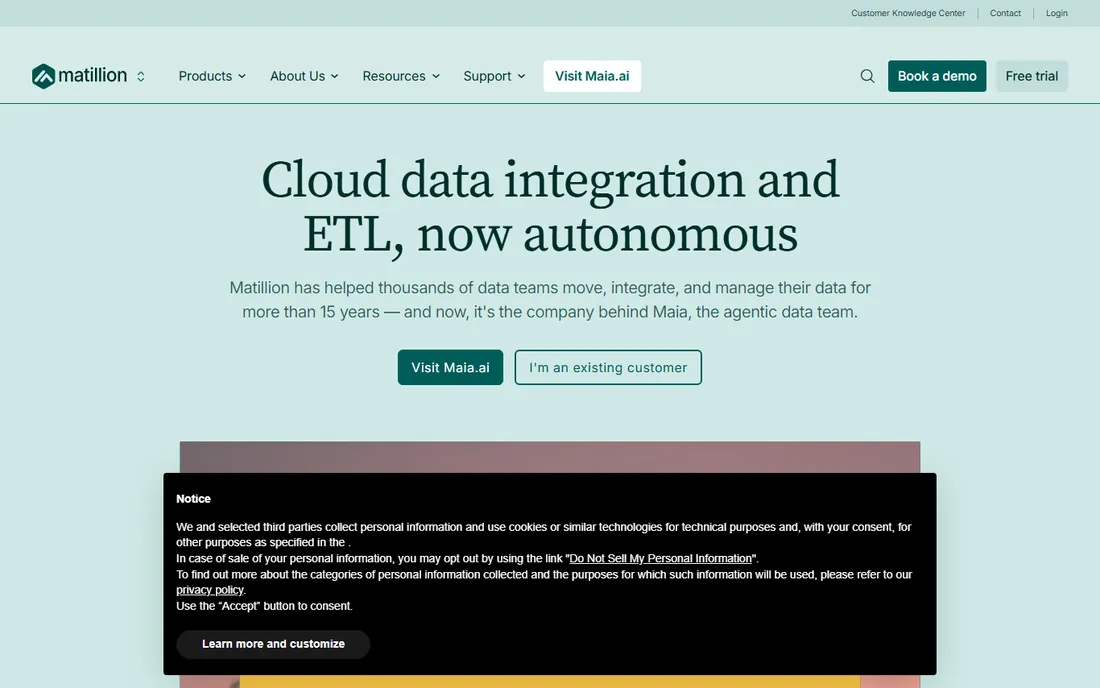
Matillion gives data engineers a visual environment for building pipelines that run inside cloud warehouses like Snowflake, BigQuery, and Redshift. The visual designer covers both ETL and ELT patterns with deep transformation components, appealing to teams that want power without writing everything in code. Enterprise features like version control and orchestration are built in.
This is a platform for committed data teams, with pricing to match. Casual users may find it more than they need. But for organizations running serious transformation workloads on cloud warehouses, Matillion's combination of visual building and depth is distinctive.
What we like- Visual pipeline designer with serious transformation depth
- Strong cloud warehouse integrations
- Handles complex ETL and ELT patterns
Watch out for- Pricing aimed at serious data teams
- Learning curve for the full platform
Starting priceSee website
Free planSee website
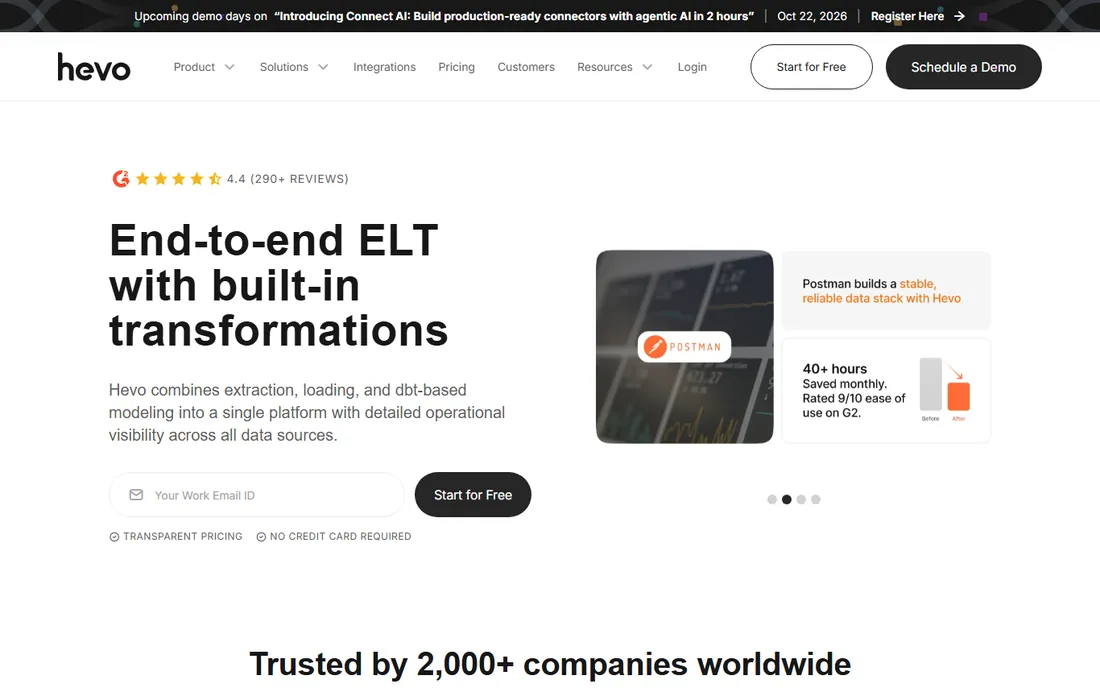
Hevo Data targets analytics teams that need pipelines without data engineers. The no-code interface sets up streaming and batch pipelines from databases, SaaS apps, and files to warehouses, with schema mapping and transformations handled visually. Pricing is accessible, and the free tier lets small teams start without budget approval.
Power users will find customization limits, and governance features are lighter than enterprise platforms. But Hevo's pitch is speed for non-specialists, and on that measure it delivers. Growing companies that need analytics data flowing this week, not next quarter, should shortlist it.
What we like- No-code pipeline setup with 150+ integrations
- Real-time streaming options
- Accessible pricing for growing teams
Watch out for- Advanced customization is limited
- Enterprise governance features trail leaders
Starting priceSee website
Free planSee website
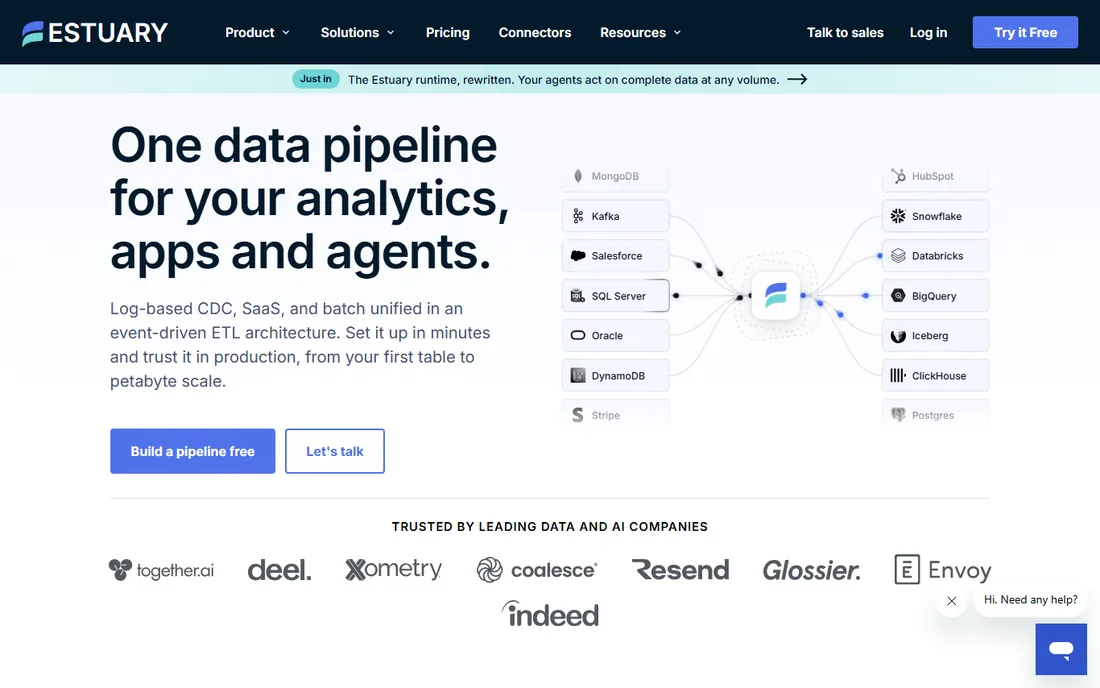
Estuary is built for real-time data movement. Its change data capture streams database changes to warehouses and lakes with sub-second latency and exactly-once delivery guarantees, a meaningful step beyond batch ELT for operational analytics and event-driven use cases. The platform handles backfills, schema evolution, and replays without engineering heroics.
Teams with purely batch needs may find the real-time machinery unnecessary. And as a newer vendor, the ecosystem is smaller than Fivetran's or Airbyte's. But when freshness matters, minutes-old data is not fresh enough, and Estuary is the most focused answer on this list.
What we like- Real-time change data capture with sub-second latency
- Exactly-once delivery semantics
- Generous free tier
Watch out for- Real-time focus means less for pure batch shops
- Newer vendor with a smaller ecosystem
Starting priceSee website
Free planSee website
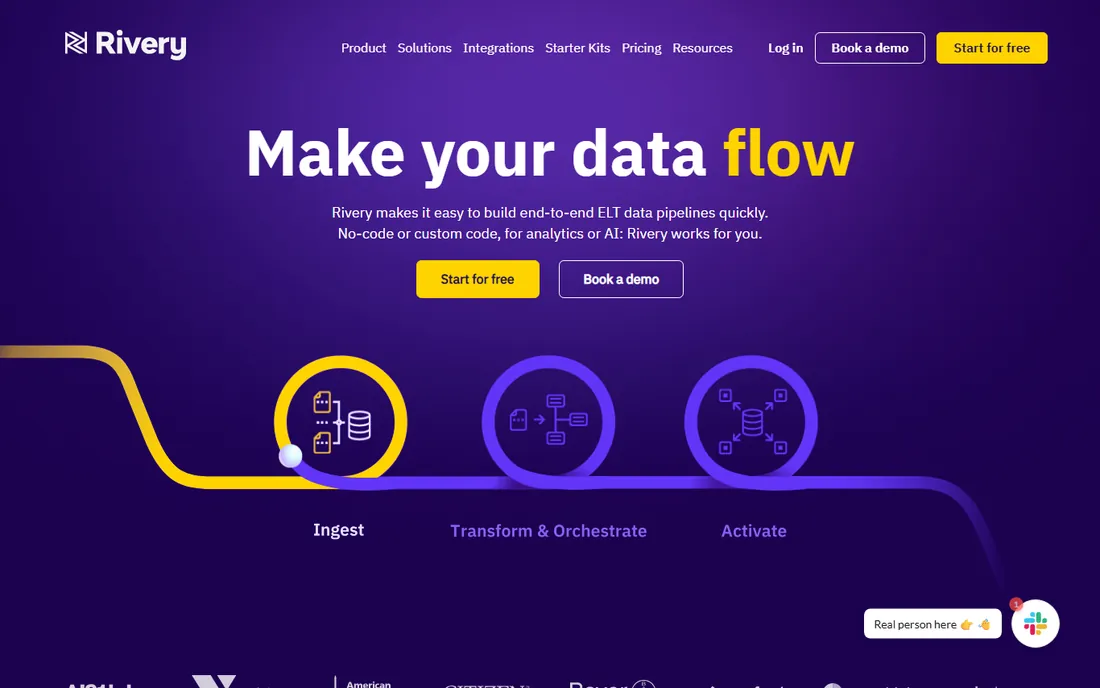
Rivery covers the full data lifecycle: ingest into the warehouse, transform, orchestrate, and push data back out to operational systems with reverse ETL. That last piece matters for teams activating warehouse data in CRMs, ad platforms, and support tools. The visual orchestration handles complex multi-step workflows.
Credit-based pricing requires attention as usage grows. And Rivery lacks the name recognition of Fivetran or dbt, which matters for hiring and community support. But as a single platform for integration, transformation, orchestration, and reverse ETL, it covers more ground than most competitors.
What we like- Full data integration plus reverse ETL to operational tools
- Visual workflow orchestration
- Good API and custom source support
Watch out for- Credit-based pricing needs monitoring
- Brand recognition trails the biggest names
ELT vs ETL: which pattern fits
The industry has largely moved to ELT: load raw data into the warehouse first, then transform it with dbt or SQL. ELT is simpler to operate, preserves raw data for reprocessing, and takes advantage of cheap warehouse compute. Most tools on this list default to ELT.
ETL still fits specific cases: strict compliance requirements that forbid raw data in the warehouse, heavy transformations that would waste warehouse credits, or legacy architectures built around it. Matillion handles both patterns well. Choose ELT unless you have a concrete reason not to; the operational simplicity compounds over time.
What to check before you buy
Connector coverage for your specific sources decides more than any feature list. List every source you need, including versions and API quirks, and verify each one during the trial. A vendor with 500 connectors that lacks your two critical ones is worse than a vendor with 100 that has both.
Then model the pricing against your actual volumes. Consumption-based pricing rewards small pipelines and punishes large ones; seat-based or flat pricing behaves the opposite. Run a month of realistic volume through the trial and project the annual cost. Ask about overage behavior, because surprise bills are the most common complaint in this category.
Finally, test failure handling. Kill a sync mid-run, change a source schema, and revoke a credential, then watch how the platform responds. Good pipeline tools detect, alert, and recover gracefully. Bad ones fail silently or require manual cleanup. Reliability under failure is the whole product.
Frequently asked questions
What is data pipeline software?
It is software that moves data from sources like databases, SaaS applications, and files into destinations like data warehouses and lakes, on a schedule or in real time. It handles extraction, loading, schema management, and often transformation and orchestration.
What is the difference between ETL and ELT?
ETL transforms data before loading it into the destination, while ELT loads raw data first and transforms it inside the destination. ELT dominates modern cloud data stacks because warehouse compute is cheap and keeping raw data enables reprocessing. ETL persists for compliance-heavy or legacy scenarios.
What is change data capture (CDC)?
CDC detects and streams changes from a source database, such as inserts, updates, and deletes, in near real time. It keeps destinations continuously fresh without full reloads. Tools like Estuary specialize in CDC, while batch tools sync on schedules.
What is reverse ETL?
Reverse ETL moves data from the warehouse back into operational tools like CRMs, marketing platforms, and support systems. It activates analytics data where teams work. Rivery includes reverse ETL; standalone tools also exist for this job.
How much does data pipeline software cost?
Pricing models vary: consumption-based (Fivetran, Airbyte Cloud), credit-based (Rivery), tiered subscriptions (Hevo, Matillion), and open-source self-hosting (Airbyte, dbt Core). Model costs against your data volumes and source count, since the cheapest option at small scale may not stay cheapest.
Do I still need dbt if I have Fivetran?
Usually yes. Fivetran handles extraction and loading; dbt handles transformation. They are designed to work together, and the Fivetran-plus-dbt combination is one of the most common modern data stacks. Some platforms bundle transformation, but dbt remains the standard for the T in ELT.
How we chose
We selected data pipeline tools that appear consistently in data engineering shortlists on G2, data community forums, and practitioner discussions, covering managed ELT, open source, transformation, and real-time CDC. Each vendor's site was checked to confirm the product is current in 2026. Pricing details come from vendor pages where published; usage-based pricing is noted as such. No hands-on pipeline testing was conducted for this guide.
Sources we checked (13)
- https://www.fivetran.com
- https://www.airbyte.com
- https://www.stitchdata.com
- https://www.getdbt.com
- https://www.matillion.com
- https://www.hevodata.com
- https://www.estuary.dev
- https://www.rivery.io
- https://slashdot.org/software/comparison/Airbyte-vs-Fivetran-vs-dbt/
- https://slashdot.org/software/comparison/Airbyte-vs-Stitch/
- https://slashdot.org/software/comparison/Hevo-vs-Matillion/
- https://slashdot.org/software/comparison/Hevo-vs-Rivery/
- https://sourceforge.net/software/compare/Apache-Spark-vs-Fivetran-vs-dbt/
Is your product missing or out of date?
We review this list regularly. Vendors can request a listing, send updated pricing or ask about featured placement.

Shihab Mia · Founder, Rankite
Shihab has 5+ years in B2B and SaaS SEO. He writes Rankite's software buying guides from pricing pages, documentation and public user reviews. More about Shihab.