How we make this list: we compare pricing pages, product documentation and public user reviews. Ratings come from G2, Capterra or Trustpilot, with the date we checked them.
Key takeaways
- Gorgias is the strongest fit for Shopify stores, because order data, tickets and revenue tracking live in one helpdesk.
- Zendesk suits larger teams that need omnichannel support, deep reporting and a large app marketplace.
- Freshdesk, Tidio and Help Scout give small stores a low-cost start, with free plans or low entry prices.
- Ticket-based pricing, like Gorgias, can beat per-seat pricing for teams with many part-time agents or seasonal staff.
- AI chat and automation help most on order status, returns and shipping questions, which dominate ecommerce support volume.
Quick comparison
| Tool | Best for | Starting price | Free plan |
|---|
 Gorgias | Shopify stores | $10 per month | No |
 Zendesk | Large omnichannel teams | $55 per agent/month | Free trial |
 Freshdesk | Budget helpdesk | $0 per month | Yes |
 Help Scout | Simple shared inbox teams | $20 per user/month | No |
 Intercom | Chat-first support and messaging | $39 per seat/month | Free trial |
 Zoho Desk | Zoho ecosystem users | $14 per agent/month | Yes |
 Tidio | Small stores needing chat | $0 per month | Yes |
 Richpanel | Self-service and order support | $29 per month | No |
Is your product missing or out of date?
We review this list regularly. Vendors can request a listing, send updated pricing or ask about featured placement.
The best ecommerce customer service software
#1Gorgias
Best for: Shopify stores4.6/5 on
G2 (569 reviews, checked Oct 2026)
Visit gorgias.com
Starting price$10 per month
Free planNo
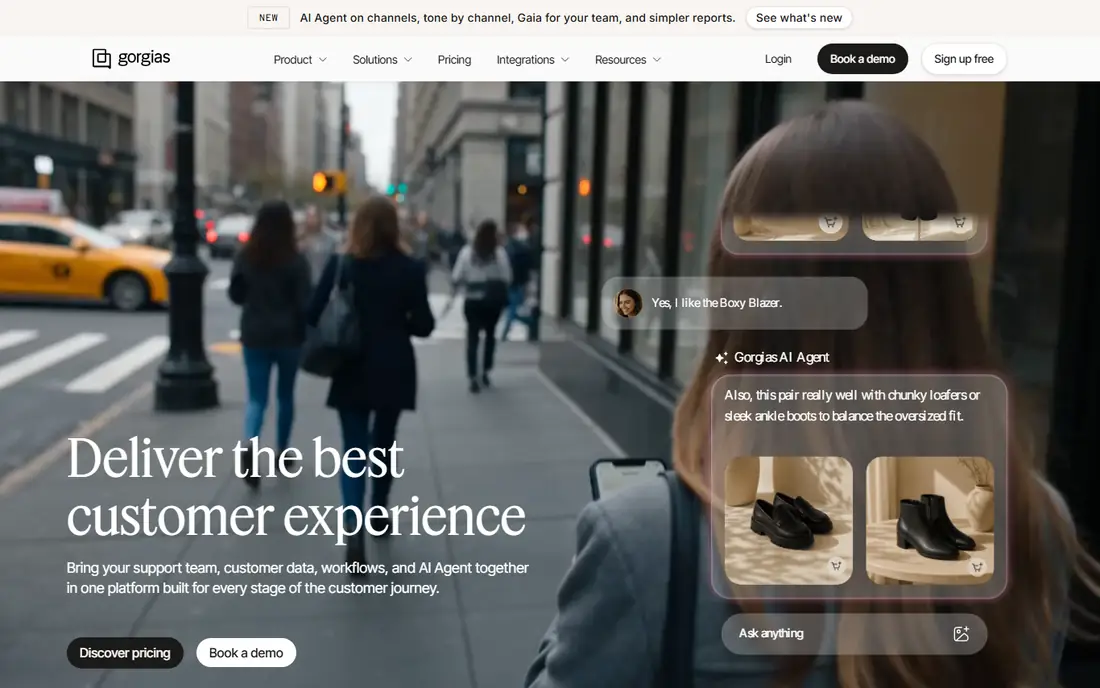
Gorgias was built for ecommerce, and that focus shows in daily work. Agents see order history, tracking, refunds and customer details inside the ticket, so they rarely switch tabs to answer a where-is-my-order question. Revenue tracking links support conversations to orders, which helps a store owner see which issues affect repeat purchases. Pricing is ticket-based on entry plans, so a store with many seasonal agents does not pay per seat for each helper.
The main limit is ecosystem fit. Gorgias works with other platforms, but its deepest value comes from Shopify. Stores on WooCommerce or a custom stack should check integration depth before committing. For a Shopify brand with real ticket volume, Gorgias is the most purpose-built option here.
What we like- Deep Shopify order sync
- Ticket-based pricing with no seat fees on entry plans
- AI agent for common questions
Watch out for- Best value is tied to Shopify
- Advanced reporting needs higher tiers
Starting price$55 per agent/month
Free planFree trial
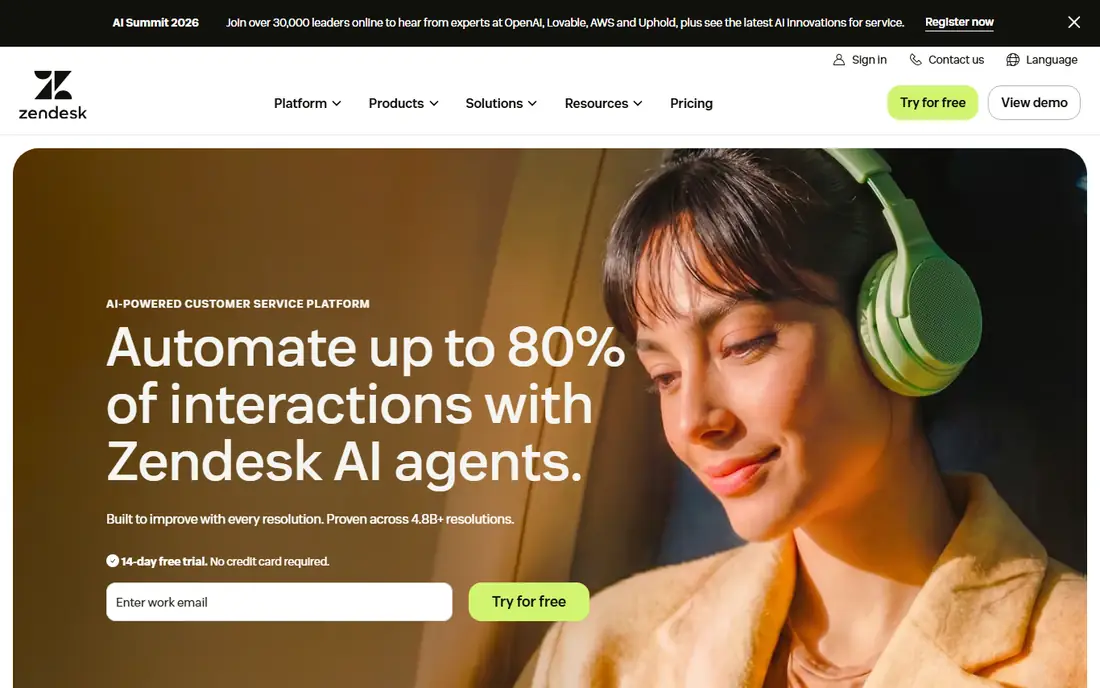
Zendesk suits ecommerce teams that have outgrown a simple inbox. It pulls email, chat, phone, social and messaging into one queue, with routing, macros, triggers and reporting that scale to hundreds of agents. The app marketplace adds shipping, CRM and survey tools, and AI routing can send order questions to the right team automatically.
That power brings cost and complexity. Per-agent pricing adds up quickly, and AI and voice features often require higher tiers or add-ons. Small stores may find Zendesk heavy for basic email and chat. Large or fast-growing brands that need control, reporting and scale will get more value from it.
What we like- Omnichannel tickets, chat, voice and social
- Large app marketplace
- Strong reporting
Watch out for- Price rises with agents and add-ons
- Setup takes time for small teams
Starting price$0 per month
Free planYes
Freshdesk gives small ecommerce stores a proper helpdesk without an upfront cost. The free plan covers email ticketing, a knowledge base and basic collaboration, which is enough for a new store handling a modest ticket volume. Paid tiers add chat, phone, automation and AI assistance as the team grows.
Shopify integration exists, but order context is not as deep as Gorgias. Teams that need one-click refunds or detailed order timelines inside every ticket may find Freshdesk lighter. For a store that wants a clean, low-cost helpdesk and can grow into paid features later, Freshdesk is a sensible start.
What we like- Free plan for small teams
- Ticketing plus knowledge base
- Multi-channel inbox
Watch out for- AI and advanced automation need paid tiers
- Shopify depth is lighter than Gorgias
#4Help Scout
Best for: Simple shared inbox teams4.4/5 on
G2 (431 reviews, checked Oct 2026)
Visit helpscout.com
Starting price$20 per user/month
Free planNo
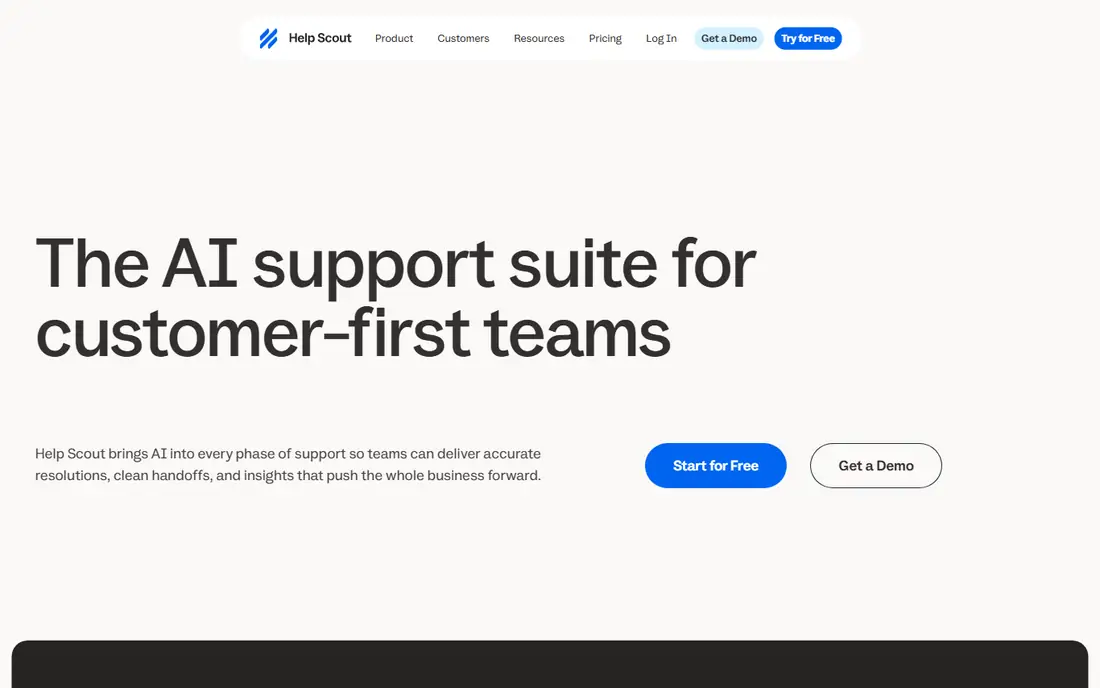
Help Scout appeals to teams that want support to feel personal and simple. The shared inbox, collision detection and internal notes help small teams avoid duplicate replies. A knowledge base and live chat cover self-service and real-time questions, and the interface is easy to learn for new hires.
Automation and reporting are lighter than Zendesk or Gorgias, so very large teams may outgrow it. Help Scout fits a small to mid-size store that values email quality, clear ownership and a calm inbox over complex workflows. Trial it with your real ticket mix before deciding.
What we like- Clean shared inbox
- Knowledge base and live chat
- Easy for non-technical teams
Watch out for- No free plan
- Automation is lighter than Zendesk
#5Intercom
Best for: Chat-first support and messaging4.5/5 on
G2 (3,918 reviews, checked Oct 2026)
Visit intercom.com
Starting price$39 per seat/month
Free planFree trial
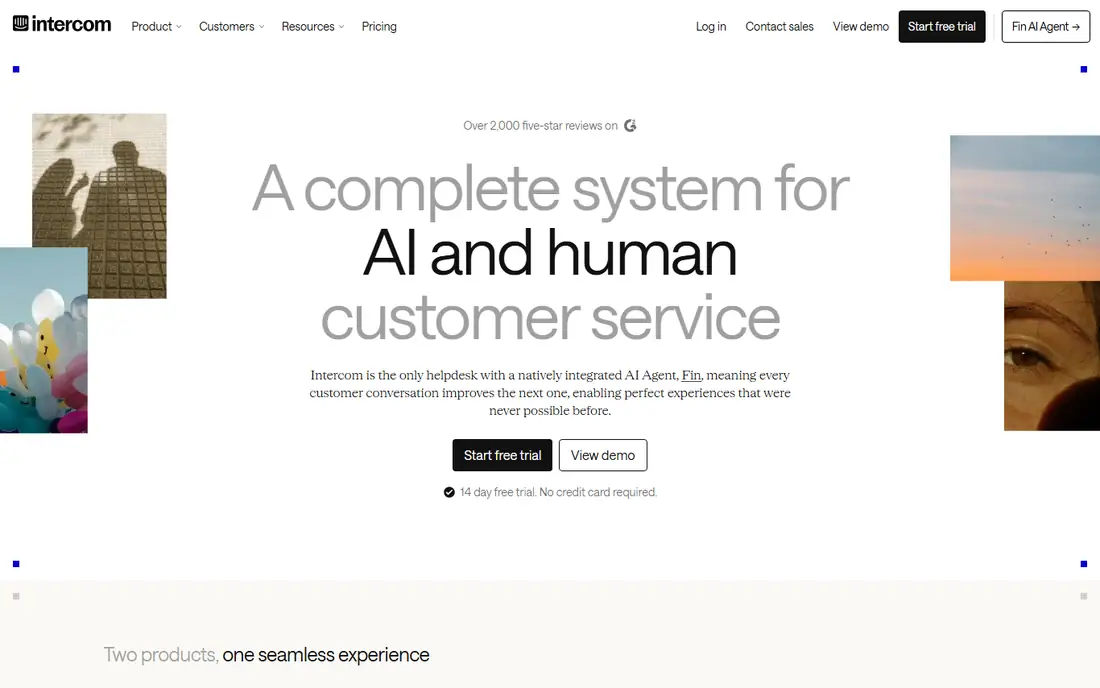
Intercom is best for stores that sell through chat and proactive messaging. Its AI agent, Fin, can resolve common order, shipping and return questions, and targeted messages can guide shoppers during checkout or after purchase. The platform also supports product tours and onboarding messages, which helps stores that sell complex products.
Email-heavy teams may find Intercom less natural than a traditional helpdesk, because chat sits at the center. Per-seat pricing also grows with team size. Intercom suits a store that wants to reduce tickets with chat automation and engage shoppers in real time, rather than only answering an email queue.
What we like- Strong live chat and AI agent
- Targeted messages and product tours
- Good Shopify app
Watch out for- Per-seat pricing adds up
- Email ticketing is less central than chat
#6Zoho Desk
Best for: Zoho ecosystem users4.4/5 on
G2 (8,002 reviews, checked Oct 2026)
Visit zoho.com
Starting price$14 per agent/month
Free planYes
Zoho Desk offers a low-cost helpdesk with ticketing, automation, a knowledge base and an AI assistant. Stores already using Zoho CRM, Zoho Inventory or Zoho Books benefit most, because customer and order context flows between apps without extra tools. The free plan helps very small teams start without a subscription.
The interface is functional rather than polished, and Shopify order integration is not as deep as Gorgias. Teams outside the Zoho ecosystem should weigh that trade. For a Zoho-based store that wants affordable, capable support software, Zoho Desk is a strong value pick.
What we like- Low price
- Context-aware AI assistant
- Strong Zoho CRM and app integrations
Watch out for- Interface feels dated to some users
- Ecommerce order depth varies by integration
#7Tidio
Best for: Small stores needing chat4.6/5 on
G2 (1,967 reviews, checked Oct 2026)
Visit tidio.com
Starting price$0 per month
Free planYes
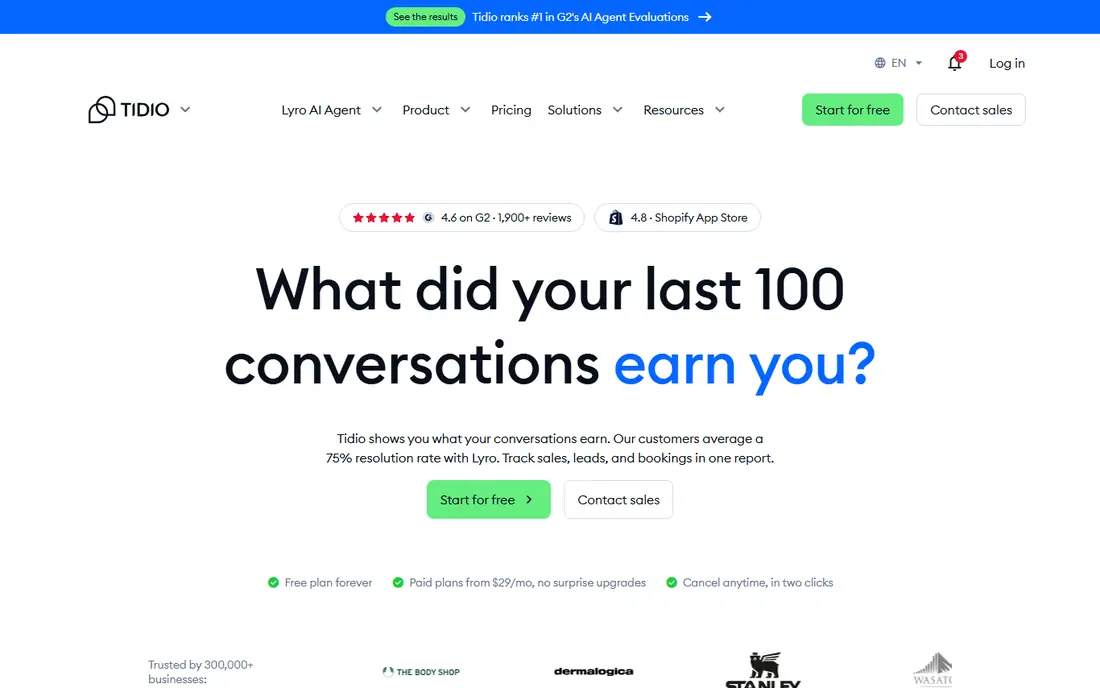
Tidio helps small stores add live chat and a chatbot quickly. The free plan covers basic chat, which is enough for a new store to answer pre-sale questions and order queries in real time. The Lyro AI add-on can handle common questions automatically, and Shopify setup is straightforward.
Tidio is not a full helpdesk replacement for a high-volume store. Ticket management, reporting and complex routing are lighter than Zendesk or Gorgias. Use Tidio when chat is your main channel and ticket volume is modest, and move to a full helpdesk when email volume and team size grow.
What we like- Free plan with chat
- AI chatbot add-on
- Easy Shopify setup
Watch out for- Ticketing is lighter than a full helpdesk
- AI costs extra
Starting price$29 per month
Free planNo
Richpanel focuses on self-service for ecommerce. Shoppers can track orders, start returns, change addresses and edit subscriptions through a portal, which cuts tickets before they reach an agent. Agents also get Shopify order actions inside tickets, so refunds and edits happen without switching systems.
Pricing depends on seats, conversations and AI usage, so get a quote based on your ticket volume. Richpanel suits stores with high return, exchange and order-edit volume, where self-service saves the most agent time. Smaller stores with low volume may find a simpler helpdesk cheaper.
What we like- Self-service portal for order issues
- Shopify order actions inside tickets
- AI agents for common requests
Watch out for- Pricing and AI costs need careful checking
- Smaller app ecosystem
How we chose
We compared vendor pricing pages, Shopify and WooCommerce integrations, channel coverage, automation and AI features, and user reviews on G2, Capterra and Reddit. We favored tools with real ecommerce order context, clear pricing and a free plan or trial, and we kept enterprise tools where their scale and reporting matter for larger brands. We treated AI claims cautiously, focusing on what each tool automates in practice: order status, returns, shipping and address changes.
Choosing by store size and ticket mix
A new store should start simple. Pick a free or low-cost tool, connect it to your store, and build a knowledge base for the top ten questions. Most of those will be order status, shipping times, returns and discount codes. Answering those well, with order data visible, matters more than buying advanced AI on day one.
A growing store should look at ticket-based versus per-seat pricing. If you add seasonal agents, ticket-based pricing can save money. If you have a stable team and heavy chat volume, per-seat pricing may be clearer. Check how each tool handles returns, exchanges and subscription edits, because those actions drive the most back-and-forth. Finally, test reporting. A good helpdesk shows first response time, resolution time, ticket volume by issue type and customer satisfaction, so you can fix the store problems that create tickets in the first place.
Setting up for fewer tickets
Publish clear shipping, return and delivery pages, and link them from order confirmation emails. Add tracking links to every shipped order. Create macros for common answers, but leave room for agents to personalize replies. Those steps reduce repeat contacts more reliably than any single software feature.
Measuring whether support is actually improving
Software alone does not improve support, so track a few numbers after you switch tools. Watch first response time, full resolution time, tickets per order, repeat contact rate and customer satisfaction scores for at least a month. Compare those numbers with the period before the switch, and split them by issue type, because a tool may speed up order questions while slowing down return handling. Share the results with your team each week, and use them to update macros, knowledge base articles and store pages. If tickets about the same shipping question keep arriving, fix the shipping page or the tracking email, rather than only answering faster. That loop, from ticket data to store fix, is where a helpdesk earns its cost.
Frequently asked questions
What is ecommerce customer service software?
It is helpdesk and chat software that connects support tickets to store orders, so agents can see purchases, tracking and refunds inside a conversation. It usually covers email, chat, social and phone, plus a knowledge base and automation for common questions.
Is Gorgias only for Shopify?
Gorgias works best with Shopify, where its order sync is deepest, but it also integrates with other platforms and channels. Stores on WooCommerce or BigCommerce should check integration depth and order actions before buying.
How much should a small store pay for a helpdesk?
Many small stores start free with Freshdesk or Tidio, or under $30 per month with Gorgias or Richpanel entry plans. Costs rise with agents, tickets or AI usage. Compare total cost at your real ticket volume, not just the headline plan price.
Do I need AI chat for my store?
AI helps most when many tickets ask the same order, shipping or return questions. It can resolve those quickly and free agents for complex cases. It helps less for unique product advice or sensitive complaints, where a human reply works better.
What is the difference between ticket-based and per-seat pricing?
Ticket-based pricing charges by ticket volume, so adding part-time agents costs little extra. Per-seat pricing charges per agent, so costs rise with team size even if ticket volume stays flat. Choose based on whether your team or your ticket volume grows faster.
Sources we checked (8)
- https://www.gorgias.com/pricing
- https://www.zendesk.com/pricing/
- https://www.freshworks.com/freshdesk/pricing/
- https://www.helpscout.com/pricing/
- https://www.intercom.com/pricing
- https://www.zoho.com/desk/pricing.html
- https://www.tidio.com/pricing/
- https://www.richpanel.com/pricing
Is your product missing or out of date?
We review this list regularly. Vendors can request a listing, send updated pricing or ask about featured placement.

Shihab Mia · Founder, Rankite
Shihab has 5+ years in B2B and SaaS SEO. He writes Rankite's software buying guides from pricing pages, documentation and public user reviews. More about Shihab.