How we make this list: we compare pricing pages, product documentation and public user reviews. Ratings come from G2, Capterra or Trustpilot, with the date we checked them.
Key takeaways
- Signifyd is the best chargeback-guarantee fraud prevention for mid-market and enterprise retailers.
- Riskified suits large enterprises that want fully automated order approval with a guarantee.
- NoFraud is the pick for small and mid-size stores that want a guarantee with fast setup.
- Forter fits enterprises that want identity-based decisions across the full customer journey.
- FraudLabs Pro is the budget option for small stores that need basic fraud screening.
Quick comparison
| Tool | Best for | Starting price | Free plan |
|---|
 ClearSale ClearSale | international fraud prevention | See website | See website |
 NoFraud NoFraud | SMB chargeback guarantee | See website | See website |
 Riskified Riskified | enterprise automated approval | See website | See website |
 Signifyd Signifyd | guaranteed fraud decisions | See website | See website |
 Forter Forter | identity-based fraud prevention | See website | See website |
 Kount Kount | Equifax-backed fraud suite | See website | See website |
 Sift Sift | digital trust platform | See website | See website |
 FraudLabs Pro FraudLabs Pro | budget fraud screening | See website | See website |
Is your product missing or out of date?
We review this list regularly. Vendors can request a listing, send updated pricing or ask about featured placement.
The best ecommerce fraud prevention software
Starting priceSee website
Free planSee website
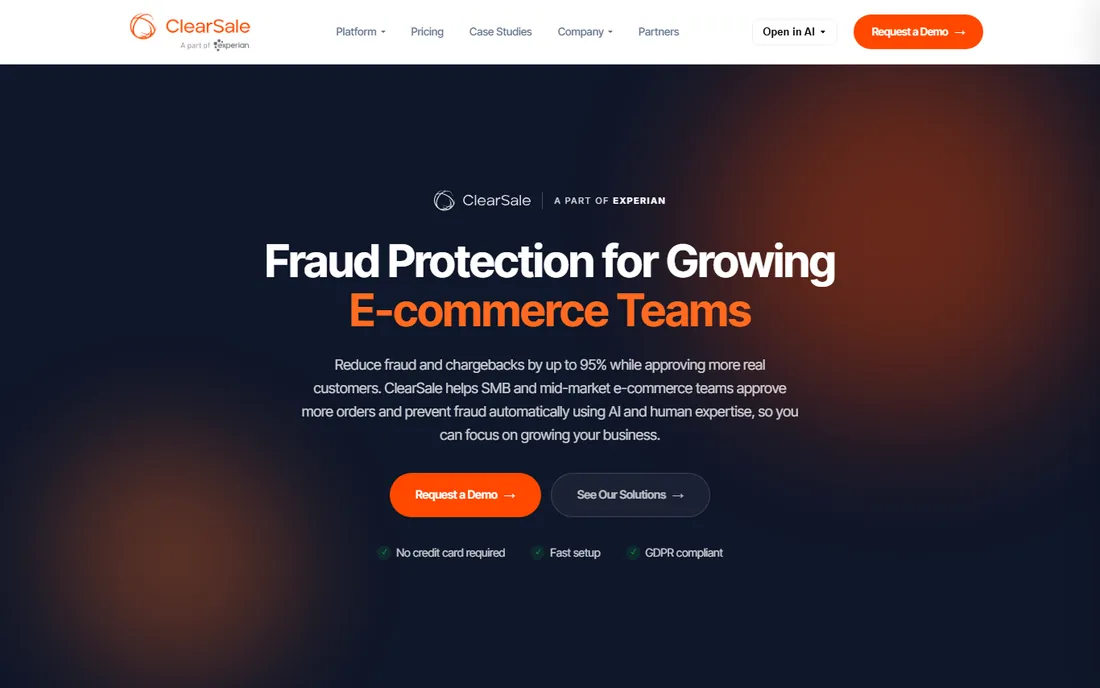
ClearSale combines machine learning with human fraud analysts who review suspicious orders, a hybrid approach that catches what pure automation misses. With deep experience in international markets and high-risk regions, it suits merchants selling cross-border. Chargeback guarantee plans shift fraud liability to ClearSale.
Human review means edge-case orders take longer to clear than fully automated decisions. And pricing goes through sales. But for merchants in fraud-heavy categories or regions, the analyst layer provides judgment that algorithms alone cannot.
What we like- Hybrid AI plus human analyst review
- Strong international coverage
- Chargeback guarantee available
Watch out for- Human review adds latency on edge cases
- Pricing needs sales engagement
Starting priceSee website
Free planSee website
NoFraud brings chargeback-guarantee fraud prevention to small and mid-size merchants, with quick setup (particularly on Shopify) and pricing that starts accessibly. A free plan covers basic screening for low volumes. The 100% chargeback guarantee on approved orders gives smaller stores enterprise-style protection.
Enterprise features and global depth trail the bigger platforms. Guarantee terms and exclusions deserve careful reading. But for SMBs that previously could not afford guaranteed fraud prevention, NoFraud fills an important gap.
What we like- Chargeback guarantee with accessible pricing
- Fast Shopify setup
- Free plan available
Watch out for- SMB focus means less enterprise depth
- Guarantee terms need review
Starting priceSee website
Free planSee website
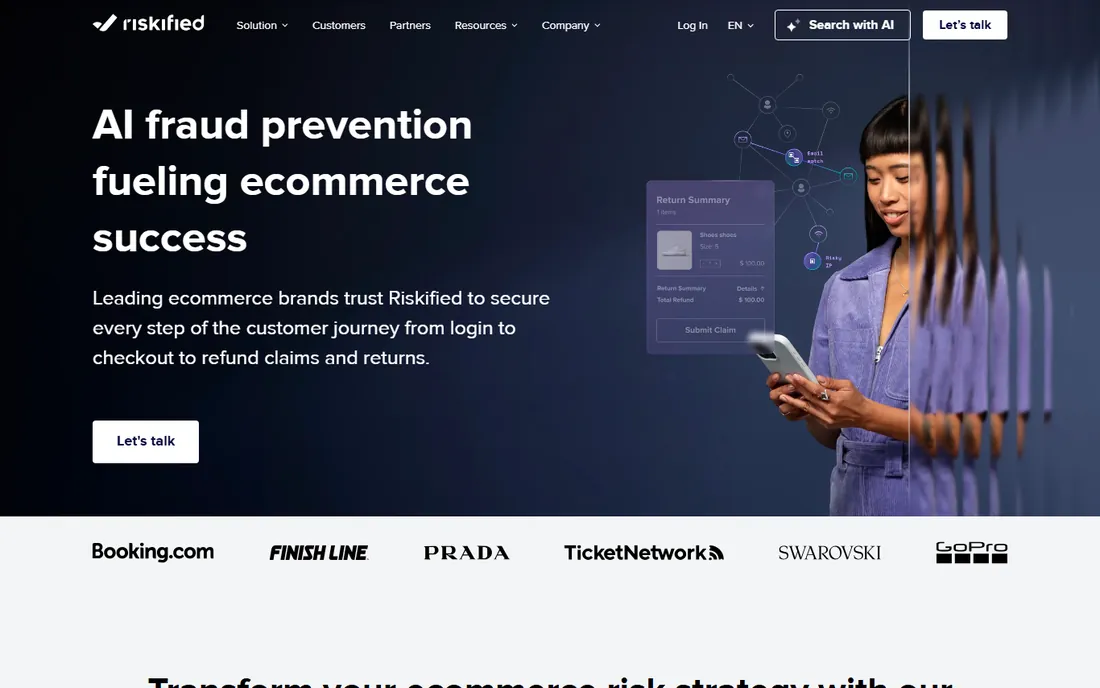
Riskified offers fully automated fraud decisions backed by a chargeback guarantee: approve more orders, never review manually, and Riskified absorbs fraud losses. Large enterprises with high order volumes get instant decisions at scale. The machine learning improves with the network data across Riskified's merchant base.
Pricing as a percentage of approved order value becomes significant at scale. And it is built for enterprise, not small stores. But for large retailers that want fraud prevention to disappear into the background, Riskified's automation is the benchmark.
What we like- Fully automated decisions with chargeback guarantee
- Strong enterprise references
- No manual review needed
Watch out for- Enterprise pricing
- Percentage-of-order pricing adds up at scale
Starting priceSee website
Free planSee website
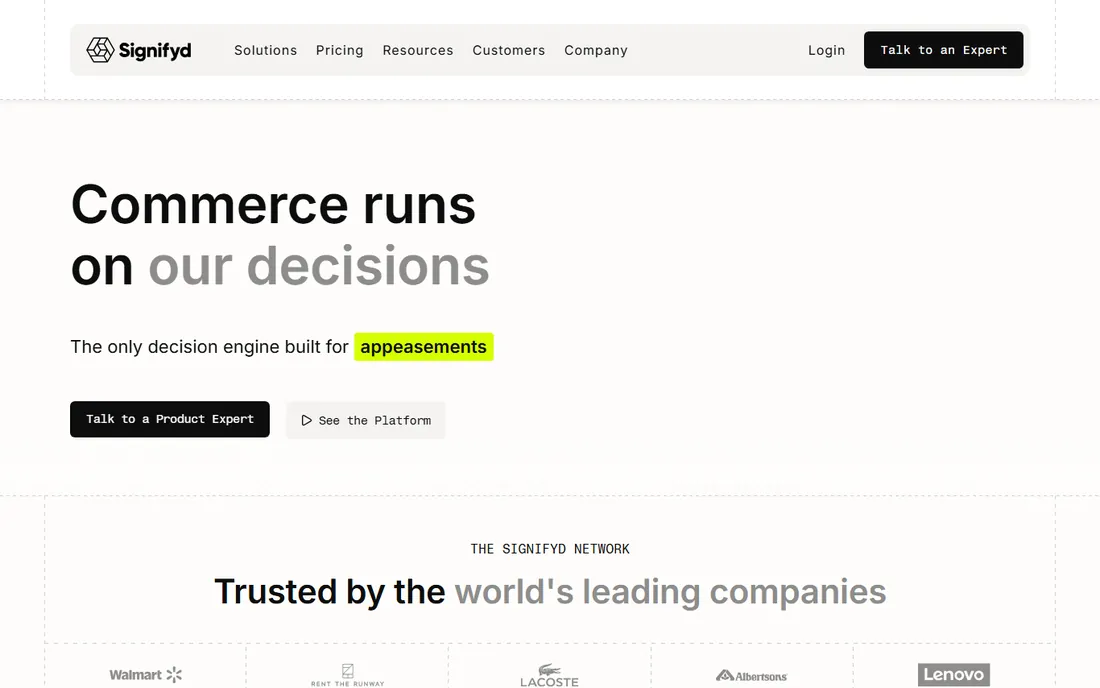
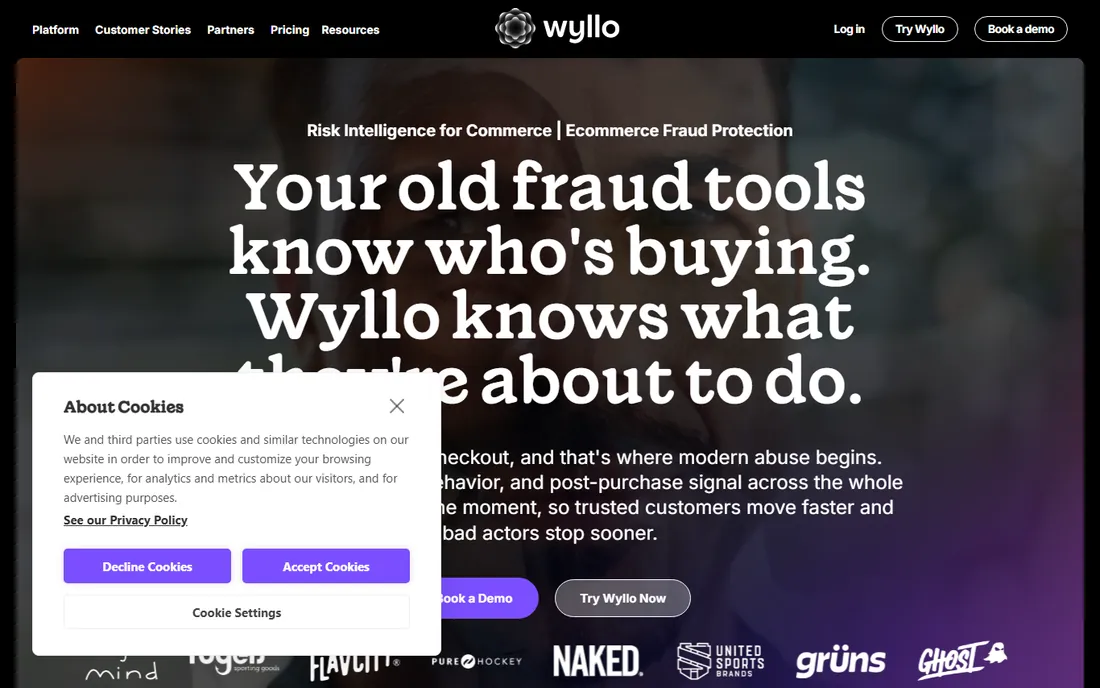
Signifyd provides guaranteed fraud protection: orders it approves are covered against fraudulent chargebacks, with the company absorbing the loss. Beyond payments, it addresses return abuse, promo abuse, and policy violations. Integrations cover all major ecommerce platforms, and the guarantee lets merchants approve borderline orders confidently.
The percentage-of-volume pricing model needs modeling against your margins. Guarantee terms exclude certain scenarios. But Signifyd's combination of decision automation and financial backing makes it the most recommended option in its segment.
What we like- 100% financial guarantee on approved orders
- Broad platform integrations
- Abuse and policy protection
Watch out for- Pricing as percentage of volume
- Guarantee has terms and conditions
Starting priceSee website
Free planSee website
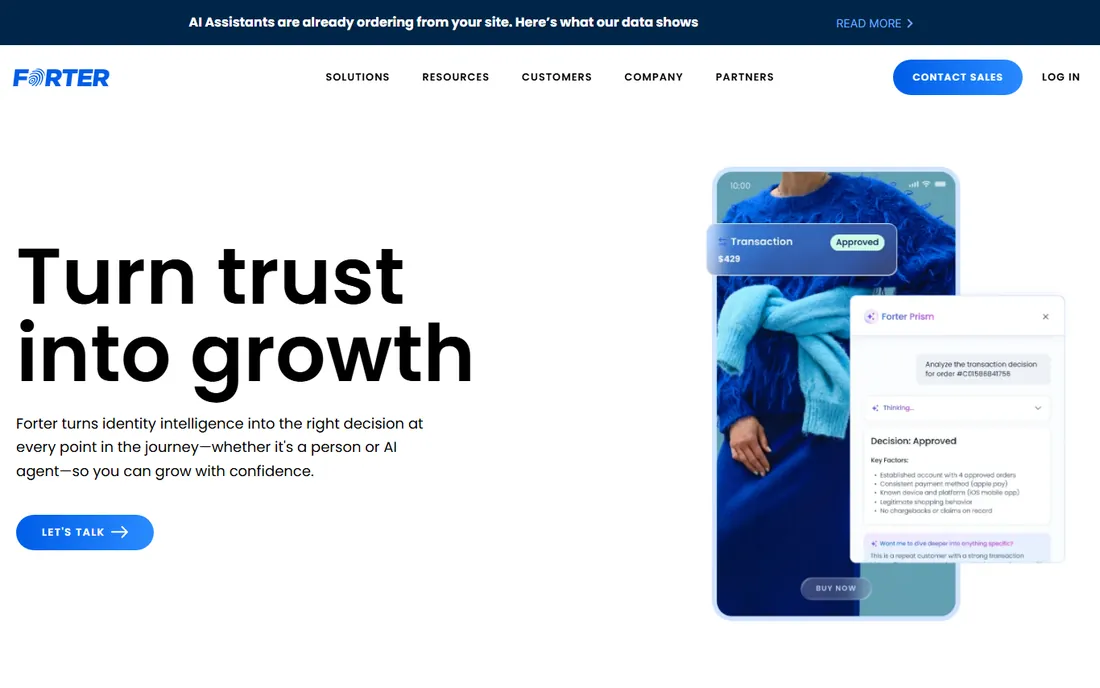
Forter's identity graph connects billions of online identities, letting it recognize legitimate customers instantly and spot fraudsters across merchants. Decisions extend beyond checkout to account creation, loyalty programs, and returns. The result is fewer false declines and no manual review queues for enterprise merchants.
It is priced and sold for enterprise. Implementation requires integration work. But for large merchants where false declines cost more than fraud itself, Forter's identity-based accuracy directly protects revenue.
What we like- Identity graph across global merchant network
- Decisions across the customer journey
- Eliminates manual review
Watch out for- Enterprise focus and pricing
- Integration effort
Starting priceSee website
Free planSee website
Kount, now part of Equifax, combines fraud prevention with identity verification powered by Equifax's data assets. The suite covers payments fraud, account takeover, and digital identity, with analytics that risk teams appreciate. Enterprises wanting one vendor for fraud and identity find the combination compelling.
The enterprise sales process and platform complexity exceed what small merchants need. But for organizations already using Equifax data or needing deep identity capabilities alongside fraud prevention, Kount's integrated suite is strong.
What we like- Backed by Equifax data assets
- Comprehensive fraud and identity suite
- Strong analytics
Watch out for- Enterprise sales process
- Complexity for simple needs
Starting priceSee website
Free planSee website
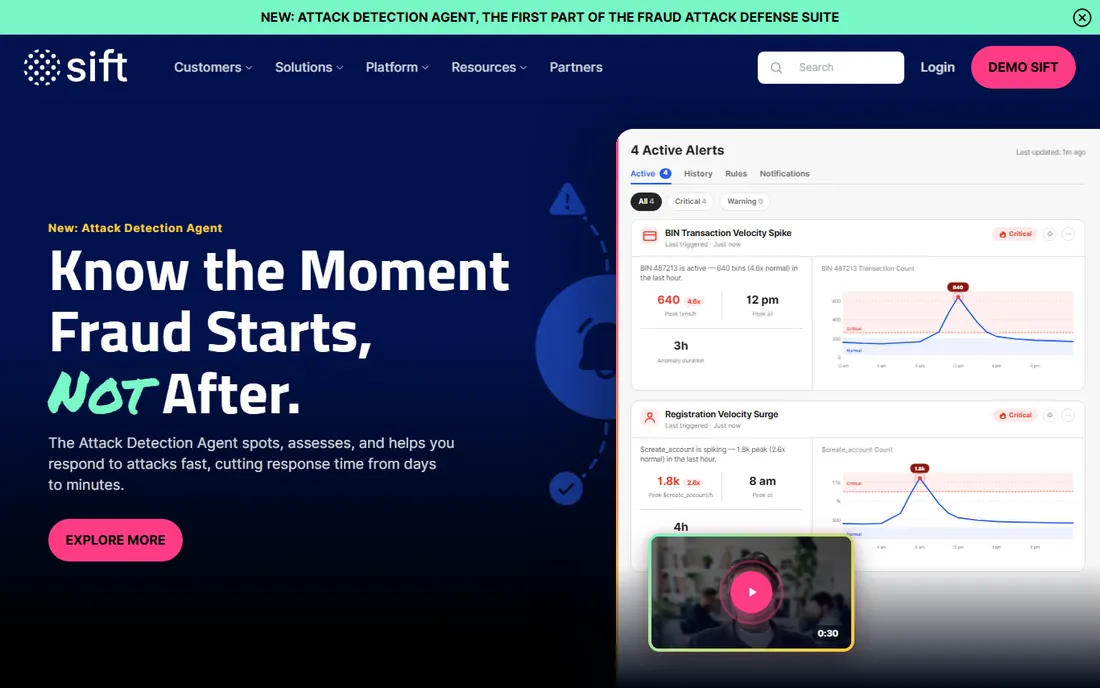
Sift positions as a digital trust and safety platform: payment fraud, account takeover, content abuse, and spam, all scored by machine learning on a massive data network. Marketplaces and platforms with diverse abuse problems get unified protection. The workflow tools help trust and safety teams investigate efficiently.
Chargeback guarantees are less central than at Signifyd or Riskified. Pricing goes through sales. But when fraud is one of several trust problems, Sift's breadth beats point solutions that only handle payments.
What we like- Broad digital trust coverage beyond payments
- Large data network
- Good for marketplaces
Watch out for- Guarantee options less central
- Pricing needs sales engagement
Starting priceSee website
Free planSee website
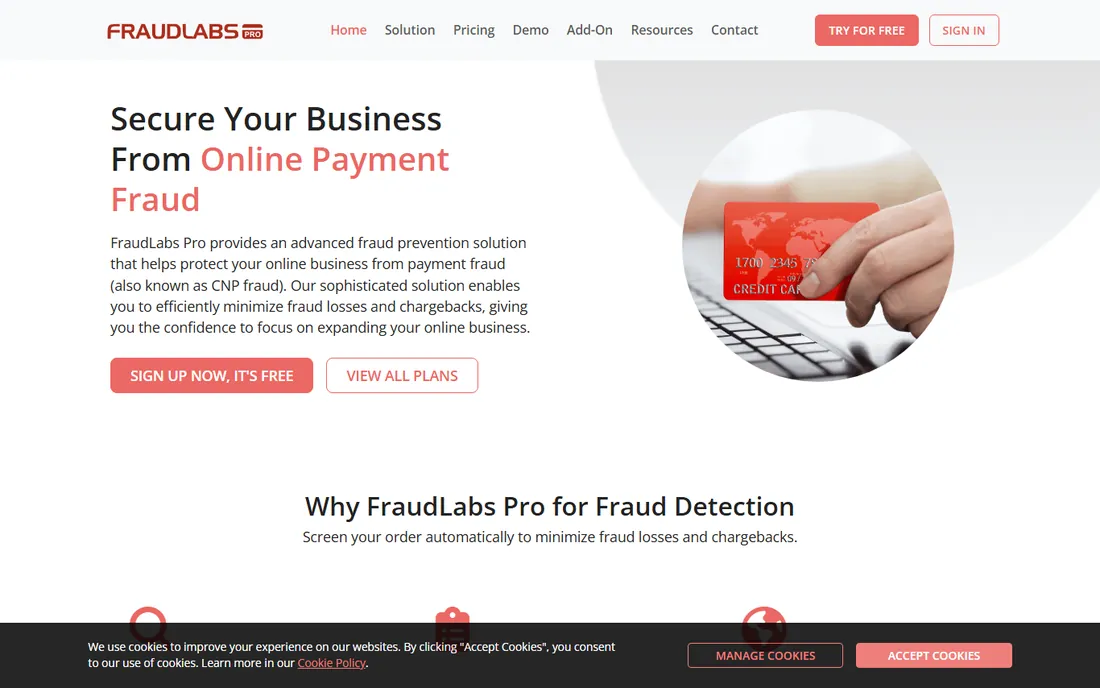
FraudLabs Pro offers straightforward fraud screening at prices small stores can afford, with a free tier for low volumes. The API is simple to integrate, and the rule-based screening catches common fraud patterns. For stores processing modest volumes, it provides meaningful protection without enterprise cost.
It lacks the machine learning depth and guarantees of the leaders. High-volume or high-risk merchants will outgrow it. But as an affordable starting point, FraudLabs Pro beats having no fraud screening at all.
What we like- Affordable with a free tier
- Simple API integration
- Good for small stores
Watch out for- Less sophisticated than enterprise platforms
- No chargeback guarantee
What to check before you buy
Start by measuring your current fraud costs honestly: chargeback rates, false decline rates, and manual review hours. Many merchants discover false declines cost more than fraud. This diagnosis determines whether you need a guarantee-focused vendor (Signifyd, Riskified, NoFraud) or an accuracy-focused one (Forter, Kount). Getting this right matters more than any feature comparison.
Then evaluate the guarantee terms carefully. Chargeback guarantees have exclusions, claim processes, and coverage limits. Read the fine print on what counts as covered fraud, how claims are filed, and what happens with friendly fraud. The guarantee is only as good as its terms. Ask vendors for their actual claim payout rates and average claim resolution times, not just the marketing promise.
Finally, test integration with your stack. Most vendors offer plugins for Shopify, Magento, WooCommerce, and Salesforce Commerce. Confirm your specific platform version is supported, check how decisions appear in your order workflow, and understand what happens when the vendor's service is unreachable. Fraud prevention should never block legitimate checkout during an outage. Run a pilot on a portion of traffic first, comparing approval rates and chargeback rates against your baseline before full rollout.
Guarantee vs accuracy: which matters more
Guarantee vendors absorb fraud losses, which simplifies budgeting: you pay a known percentage and stop worrying. Accuracy vendors reduce false declines, which grows revenue: more good orders approved. The best choice depends on your margins and decline rates. High-margin businesses often benefit more from accuracy; low-margin businesses from guarantees. Some merchants use both: a guarantee vendor for checkout and accuracy tooling elsewhere.
There is also a middle path worth considering. Some vendors let you tune the approve-decline threshold, trading fraud risk against decline risk explicitly. If your data shows that declines cluster in specific segments (new customers, international orders, high-value carts), targeted rules or step-up authentication for those segments can capture most of the benefit without a wholesale vendor change. The vendors that support this kind of tuning give risk teams real control rather than a black box.
Frequently asked questions
What is ecommerce fraud prevention software?
It is software that screens online orders for fraud before fulfillment, using machine learning, rules, and data networks to approve legitimate orders and block fraudulent ones. Many vendors back their decisions with chargeback guarantees.
What is a chargeback guarantee?
The vendor promises to reimburse you for fraudulent chargebacks on orders it approved. This shifts fraud liability from the merchant to the vendor. Terms, exclusions, and claim processes vary, so read the guarantee details carefully.
How much does fraud prevention cost?
Pricing models include percentage of order value (typically under 1-3%), per-transaction fees, and monthly subscriptions. Enterprise contracts are custom. Factor in the cost of false declines, not just the vendor fee, when evaluating ROI.
What are false declines?
False declines are legitimate orders rejected as fraud. They cost revenue directly and damage customer relationships. Industry false decline rates often exceed actual fraud rates, making decline reduction as important as fraud blocking.
Do I need fraud prevention if my payment processor has fraud tools?
Processor fraud tools provide basic screening, but dedicated vendors offer deeper analysis, guarantees, and lower false decline rates. High-volume or high-risk merchants typically benefit from dedicated solutions; low-risk small stores may find processor tools sufficient.
How long does implementation take?
Plugin-based integrations (Shopify, WooCommerce) can go live in days. Custom API integrations take weeks. Enterprise deployments with custom rules and workflows take longer. Most vendors offer guided onboarding.
What is friendly fraud and can vendors stop it?
Friendly fraud is when legitimate customers dispute valid charges, claiming they did not make the purchase or never received the item. It is harder to prevent than stolen-card fraud because the transaction looks legitimate. Some vendors offer representment services to fight these chargebacks, and evidence tools (delivery confirmation, device data) improve win rates. No vendor eliminates friendly fraud entirely.
How we chose
We selected ecommerce fraud prevention tools that appear consistently in fraud prevention shortlists on G2, ecommerce community discussions, and industry comparisons, covering guarantee-based vendors and broader trust platforms. Each vendor's site was checked to confirm the product is current in 2026. Pricing details come from vendor pages where published; percentage-of-volume and enterprise models are noted as such. No hands-on fraud testing was conducted for this guide.
Sources we checked (13)
- https://www.clear.sale
- https://www.nofraud.com
- https://www.riskified.com
- https://www.signifyd.com
- https://www.forter.com
- https://www.kount.com
- https://www.sift.com
- https://www.fraudlabspro.com
- https://slashdot.org/software/comparison/ClearSale-vs-Signifyd/
- https://slashdot.org/software/comparison/ClearSale-vs-Forter-vs-NoFraud/
- https://www.ringly.io/blog/riskified-alternatives
- https://www.ringly.io/blog/signifyd-alternatives
- https://github.com/ishandutta2007/awesome-e-commerce-fraud-prevention/blob/HEAD/README.md
Is your product missing or out of date?
We review this list regularly. Vendors can request a listing, send updated pricing or ask about featured placement.

Shihab Mia · Founder, Rankite
Shihab has 5+ years in B2B and SaaS SEO. He writes Rankite's software buying guides from pricing pages, documentation and public user reviews. More about Shihab.