How we make this list: we compare pricing pages, product documentation and public user reviews. Ratings come from G2, Capterra or Trustpilot, with the date we checked them.
Key takeaways
- This article is general information only, not financial advice. Crypto staking can lose money through price drops, slashing, lock-ups, and platform failure, and high APY figures usually signal higher risk.
- Commission, not headline APY, decides your real return. Lido at 10 percent and Rocket Pool at 14 percent beat exchange commissions of 25 to 35 percent on the same ETH yield.
- For beginners, Coinbase and Kraken offer simple, no-minimum staking with custodial security, at the cost of higher commissions.
- For the best net ETH yield, Rocket Pool at roughly 2.9 percent net beats Lido at roughly 2.75 percent and Coinbase standard at roughly 1.95 percent, based on 2026 guides.
- US readers should check availability carefully: Binance global is not for US residents, and staking rules vary by state and platform.
Quick comparison
| Tool | Best for | Starting price | Free plan |
|---|
 Coinbase | Beginners, simple staking | Free | Yes |
 Kraken | Flexible and bonded staking | Free | Yes |
 Lido | Liquid ETH staking | Free | Yes |
 Rocket Pool | Best net ETH yield | Free | Yes |
 Binance | Widest asset variety | Free | Yes |
 Crypto.com | Card and app ecosystem | Free | Yes |
 Jito | Solana liquid staking | Free | Yes |
 Marinade | Solana staking with MEV | Free | Yes |
Is your product missing or out of date?
We review this list regularly. Vendors can request a listing, send updated pricing or ask about featured placement.
Starting priceFree
Free planYes
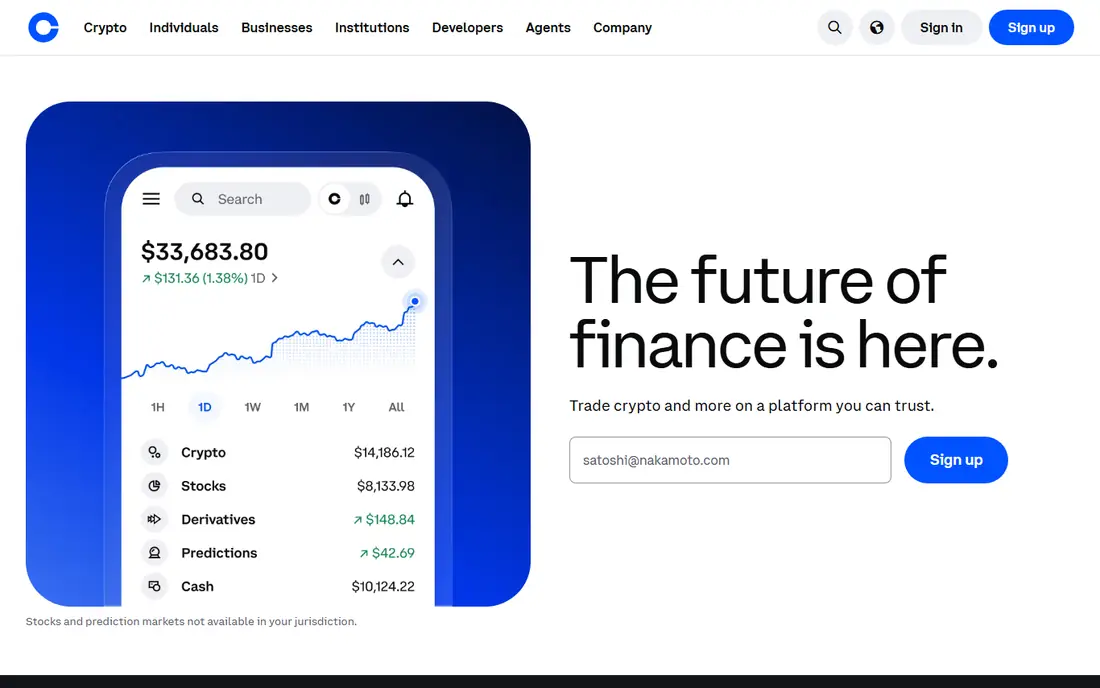
Coinbase is the best starting point for beginners, offering simple, no-minimum staking on major assets with custodial security on a regulated US platform. One-click staking, clear rewards tracking, and strong compliance make it the lowest-friction way to start.
The commission is the highest here: 35 percent standard, or 25.25 percent for Coinbase One Premium subscribers, which cuts net ETH APY to about 1.95 percent standard or 2.39 percent Premium against a roughly 3 percent gross yield. For simplicity over yield, Coinbase fits. For yield, look elsewhere.
What we like- Simplest staking for beginners
- No minimum on most assets
- Custodial security and regulated US platform
- Coinbase One reduces commission
Watch out for- Highest commission here at 35 percent standard, 25.25 percent for One Premium
- Net ETH APY only about 1.95 percent standard
- Limited asset list
Starting priceFree
Free planYes
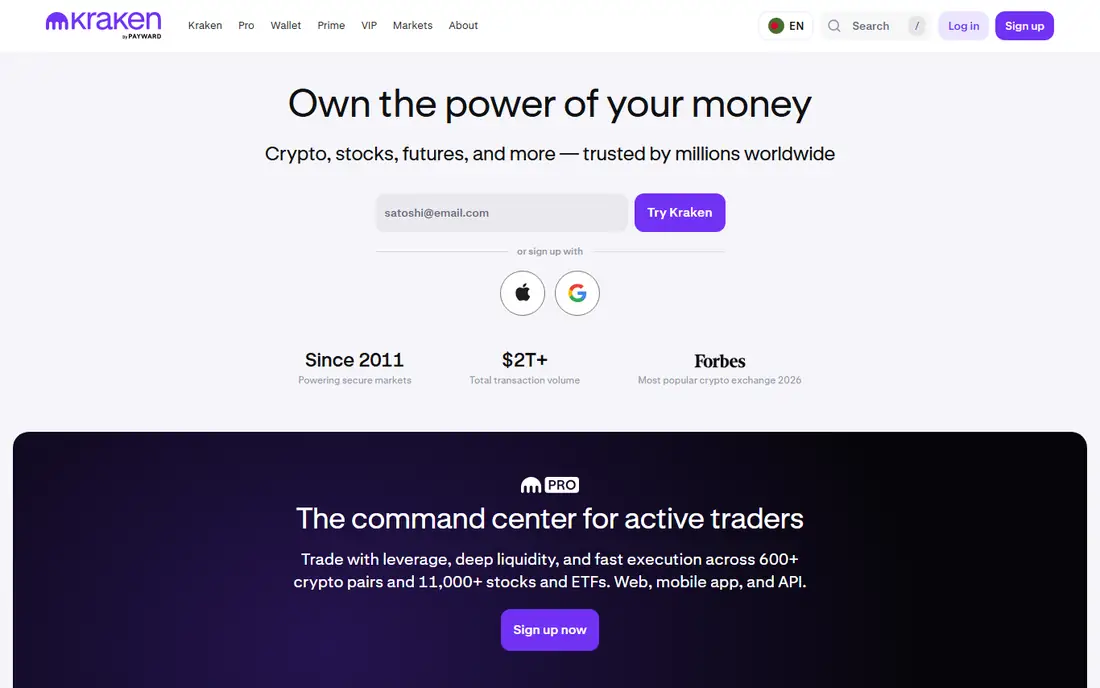
Kraken offers 25-plus staking assets with a choice between flexible staking, which removes bonding waits, and bonded staking, which pays more. Its bonded ETH tier at 26 percent commission against a 3.5 percent gross yield delivers about 2.6 percent net, beating Coinbase standard clearly.
Flexible staking charges 30 percent commission, which lowers net yield, and bonded tiers carry lock-up waits. For a regulated exchange with a real choice between flexibility and yield, Kraken is the strongest exchange pick here.
What we like- 25-plus assets
- Flexible and bonded options
- Bonded ETH net around 2.6 percent
- Long operating history and strong security reputation
Watch out for- Bonded commission 10 to 26 percent by asset
- Flexible staking commission 30 percent
- Bonded tiers carry lock-up waits
Starting priceFree
Free planYes
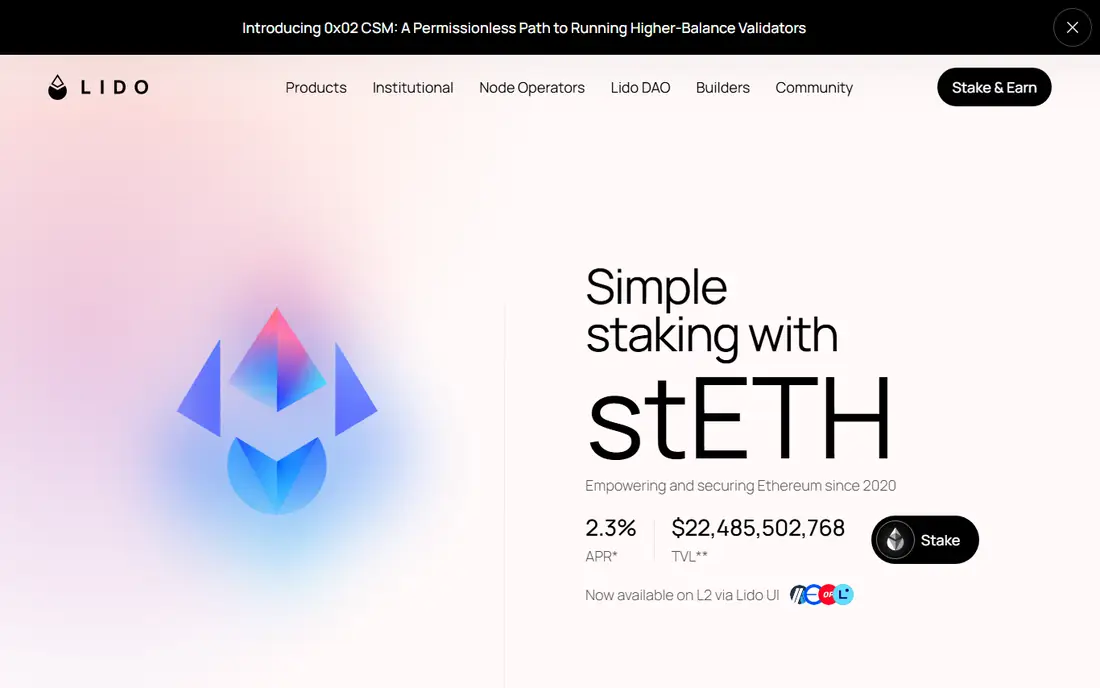
Lido is the largest liquid staking protocol, charging a 10 percent fee split between node operators and the DAO treasury. With Ethereum gross yield near 3.06 percent in October 2026, Lido returns about 2.75 percent net, and its stETH token stays tradable while staked, so funds are not locked in the traditional sense.
Risks include stETH trading below ETH value during market stress, plus smart contract and governance risks inherent to any DeFi protocol. For liquid ETH staking at a low fee, Lido is the most established option.
What we like- 10 percent fee, lowest among major liquid staking protocols
- Liquid stETH token stays tradable
- No lock-up beyond the ETH exit queue
Watch out for- ETH-focused, with USDC options limited
- StETH can trade below ETH value in stress
- Smart contract and governance risks
Starting priceFree
Free planYes
Rocket Pool offers the best net ETH yield among major liquid staking protocols, at about 2.9 percent net after its 14 percent total fee and 0.05 percent deposit fee on minting rETH. Its permissionless node operator network is more decentralized than Lido curated set, and liquid staking needs only 0.01 ETH.
Running a validator node needs 8 or 16 ETH plus RPL collateral, so most users will use liquid staking. Gas fees make very small stakes costly. For the best net ETH yield with decentralization, Rocket Pool leads this list.
What we like- Best net ETH yield here at about 2.9 percent
- Permissionless node operator network
- RETH liquid token
- Only 0.01 ETH minimum for liquid staking
Watch out for- 14 percent total fee plus 0.05 percent deposit fee on minting rETH
- ETH only
- Gas fees make small stakes costly
Starting priceFree
Free planYes
Binance supports staking across 100-plus proof-of-stake cryptocurrencies, the widest variety here, with flexible and fixed terms, auto-invest plans, and principal-protected options on some products. For a user holding many smaller assets, no other platform covers as much ground.
The bonded commission near 39.95 percent cuts net ETH yield to about 2.1 percent, and Binance global is not available to US residents, who must use Binance US with a different asset list. For variety outside the US, Binance is unmatched. For ETH yield, it is not.
What we like- Staking across 100-plus proof-of-stake assets
- Flexible and fixed terms
- Auto-invest plans
- Principal-protected options on some products
Watch out for- Bonded commission near 39.95 percent, cutting net ETH yield to about 2.1 percent
- Binance global is not for US residents
- Regulatory history needs checking
Starting priceFree
Free planYes
Crypto.com offers staking on 30-plus assets with reported rates up to 16 percent APR on select assets, plus card cashback and app perks for CRO holders. Its mobile experience is simple, which suits users who already use the Crypto.com app and card.
Maximum rates apply to few assets and often require CRO lock-ups, and custody risks apply as with any exchange. For an app-and-card user who wants staking in the same place, Crypto.com is convenient. For pure yield, specialist protocols beat it.
What we like- 30-plus staking assets
- Up to 16 percent APR reported on some assets
- Card and app perks for CRO holders
- Simple mobile experience
Watch out for- Reported maximum rates apply to few assets
- CRO lock-ups gate the best perks
- Exchange custody risks apply
Starting priceFree
Free planYes
Jito is the leading Solana liquid staking protocol, combining staking rewards with MEV rewards in its JitoSOL token. Its 4 percent fee is low, and unstaking is instant or up to one epoch, which beats long unbonding periods on other chains.
It covers SOL only, MEV rewards vary with network activity, and Solana network and smart contract risks apply. For Solana holders who want liquid staking with MEV upside, Jito is the best pick here.
What we like- Solana liquid staking with JitoSOL
- Staking plus MEV rewards
- 4 percent fee
- Instant unstaking option or up to one epoch wait
Watch out for- SOL only
- MEV rewards vary
- Solana network risks and smart contract risks apply
Starting priceFree
Free planYes
Marinade Finance is the other leading Solana liquid staking protocol, charging a 6 percent performance fee conditional on mSOL outperforming the baseline Solana staking rate. It reported about 7.41 percent APY on SOL in early 2026, the highest Solana figure here, with a liquid mSOL token for DeFi use.
The performance fee structure is complex, and Solana network risks apply as with Jito. For Solana holders chasing the highest reported APY, Marinade leads, but compare its net figure against Jito on the day you stake, since both move with network conditions.
What we like- 6 percent performance fee, conditional on mSOL outperforming the baseline Solana rate
- About 7.41 percent APY on SOL reported in early 2026
- Liquid mSOL token
Watch out for- SOL only
- Performance fee structure is complex
- Solana network risks apply
How we chose
We compared platforms on net yield after commission, custody model, asset variety, lock-up terms, liquid token availability, and regulatory status, using 2026 guides and protocol data. We included custodial exchanges and non-custodial protocols, since the custody choice matters as much as yield, and we left out platforms with no credible current product or extreme APY claims without verifiable backing. APY figures change daily with network conditions, so treat every figure here as a snapshot, not a promise.
Start with custody comfort, then technical ability, then net yield, then jurisdiction risk. Beginners who want simplicity point to Coinbase or Kraken. ETH holders who want yield point to Rocket Pool or Lido. Asset variety points to Binance outside the US. Solana holders point to Jito or Marinade. Never stake money you cannot afford to lose, and never chase a high APY without asking why it is high.
Understand the risks before you stake
Staking locks funds for a period on many platforms, and unstaking triggers protocol unbonding windows plus platform processing delays. Slashing penalizes staked positions when a validator misbehaves or goes offline. Custodial staking adds counterparty risk: Celsius, BlockFi, and FTX all froze staking-related balances before bankruptcy proceedings resolved. Liquid staking tokens can trade below the underlying asset value in market stress. Price drops in the staked asset itself usually dwarf yield: a 3 percent APY does not compensate for a 30 percent price fall.
Frequently asked questions
What is the best crypto staking platform?
For beginners, Coinbase and Kraken are simplest. For net ETH yield, Rocket Pool at about 2.9 percent leads Lido at about 2.75 percent and Coinbase standard at about 1.95 percent. For Solana, Jito and Marinade lead. The best platform depends on asset, custody comfort, and yield priority.
Is crypto staking safe?
Staking carries real risks: price drops, slashing, lock-ups, smart contract bugs, and custodial platform failure. Reputable exchanges reduce some risks but add counterparty exposure, while non-custodial protocols remove custody risk but add technical and smart contract risk. Never stake funds you cannot afford to lose.
What is the difference between APY and APR?
APY includes compounding, so it reads higher than APR at the same underlying rate. Compare platforms on net APY after commission, calculated as gross rate multiplied by one minus the commission rate, rather than on headline gross figures.
Can I unstake at any time?
It depends. Liquid staking tokens like stETH, rETH, JitoSOL, and mSOL stay tradable, so you can exit by selling, though possibly below underlying value. Bonded and locked staking requires waiting through unbonding periods, which range from days to weeks by chain and platform.
Is staking legal in the US?
The SEC and CFTC March 2026 interpretation gives basic protocol staking clearer legal footing in the US, though a further proposed rule remains unfinished as of late 2026. Availability varies by platform and state, so check your platform terms and state rules before staking.
Should I stake on an exchange or a protocol?
Exchange staking is simpler, with one-click onboarding and support, but commissions run 25 to 35 percent and custody risk applies. Protocol staking through Lido or Rocket Pool costs 10 to 14 percent in fees and removes custody risk, but needs wallet management and carries smart contract risk. For large positions, the fee difference alone can exceed hundreds of dollars per year.
Sources we checked (8)
- https://www.coinbase.com
- https://www.kraken.com
- https://www.lido.fi
- https://www.rocketpool.net
- https://www.binance.com
- https://www.crypto.com
- https://www.jito.network
- https://www.marinade.finance
Is your product missing or out of date?
We review this list regularly. Vendors can request a listing, send updated pricing or ask about featured placement.

Shihab Mia · Founder, Rankite
Shihab has 5+ years in B2B and SaaS SEO. He writes Rankite's software buying guides from pricing pages, documentation and public user reviews. More about Shihab.