How we make this list: we compare pricing pages, product documentation and public user reviews. Ratings come from G2, Capterra or Trustpilot, with the date we checked them.
Key takeaways
- Binance, Bybit, and OKX offer the deepest futures markets and lowest entry maker fees, but futures on those platforms are not available to US residents.
- Kraken and Coinbase Advanced are the clearer US routes to regulated crypto derivatives, with lower borrowing and narrower contract ranges.
- Entry futures fees cluster around 0.02 percent for makers and 0.05 to 0.06 percent for takers on major global platforms, while volume tiers lower those rates further.
- Borrowed funds magnify losses as well as gains, and liquidation can happen quickly in volatile markets. This is not financial advice.
Quick comparison
| Tool | Best for | Starting price | Free plan |
|---|
 Binance | Deepest futures liquidity and market range | 0.02% maker fee | Free trial |
 Bybit | Futures depth with copy trading options | 0.02% maker fee | Free trial |
 OKX | Competitive futures fees and product range | 0.02% maker fee | Free trial |
 Bitget | Futures with copy trading for beginners | 0.02% maker fee | Free trial |
 Kraken | Regulated futures access for US and EU users | 0.02% maker fee | Free trial |
 Coinbase Advanced | US-regulated derivatives through a familiar platform | See website | Free trial |
 KuCoin | Wide altcoin futures range | 0.02% maker fee | Free trial |
 Gate.io | Broad futures market coverage | 0.02% maker fee | Free trial |
Is your product missing or out of date?
We review this list regularly. Vendors can request a listing, send updated pricing or ask about featured placement.
Starting price0.02% maker fee
Free planFree trial
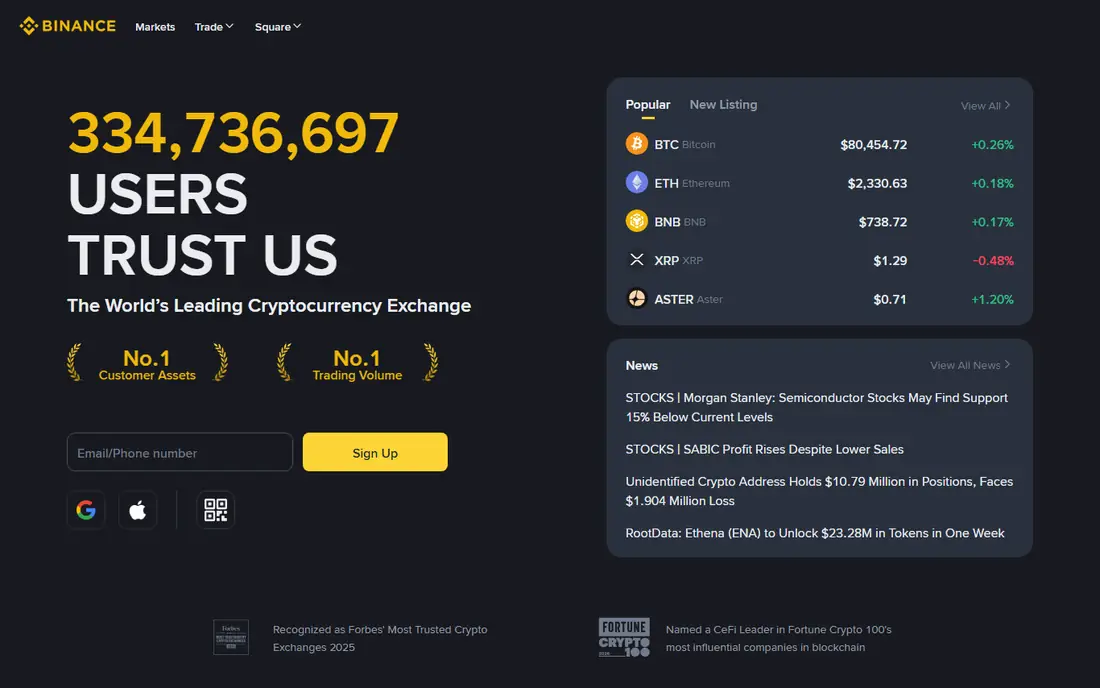
Binance remains the benchmark for crypto futures liquidity. Its perpetual markets cover major coins and many altcoins, order books are deep, and entry futures fees start at 0.02 percent for makers and around 0.05 percent for takers, with lower rates at higher volume tiers. Risk tools such as isolated margin, stop orders, and position limits help traders control exposure, though they do not remove liquidation risk.
US access is the decisive limit. Binance futures are not available to US residents, so US readers should look at Kraken or Coinbase Advanced instead. Traders outside the US should still confirm that Binance serves their country and that their account verification is complete before depositing funds. For non-US traders who value liquidity above all, Binance is hard to beat.
What we like- More than 300 perpetual markets
- Futures maker fee from 0.02 percent
- Deep order books and risk tools
Watch out for- Futures not available to US residents
- Regulatory history requires careful account checks
Starting price0.02% maker fee
Free planFree trial
Bybit competes closely with Binance on futures depth, with more than 400 perpetual markets and entry fees of 0.02 percent for makers and 0.055 percent for takers. Copy trading lets newer traders follow experienced traders, though copying does not guarantee profit and past performance does not predict future results. The platform also offers a full derivatives suite, including options and structured products for advanced users.
US residents cannot use Bybit futures, and the platform suffered a large security incident in early 2025, so account safety practices matter. Use strong authentication, withdrawal allowlists, and a separate email for trading accounts. For non-US traders who want deep futures markets and copy trading in one place, Bybit is a strong alternative to Binance.
What we like- More than 400 perpetual markets
- Futures fees from 0.02 percent maker
- Copy trading and derivatives tools
Watch out for- Futures not available to US residents
- Past security incident requires attention to account safety
#3
OKX
Best for: Competitive futures fees and product range
Visit okx.com
Starting price0.02% maker fee
Free planFree trial
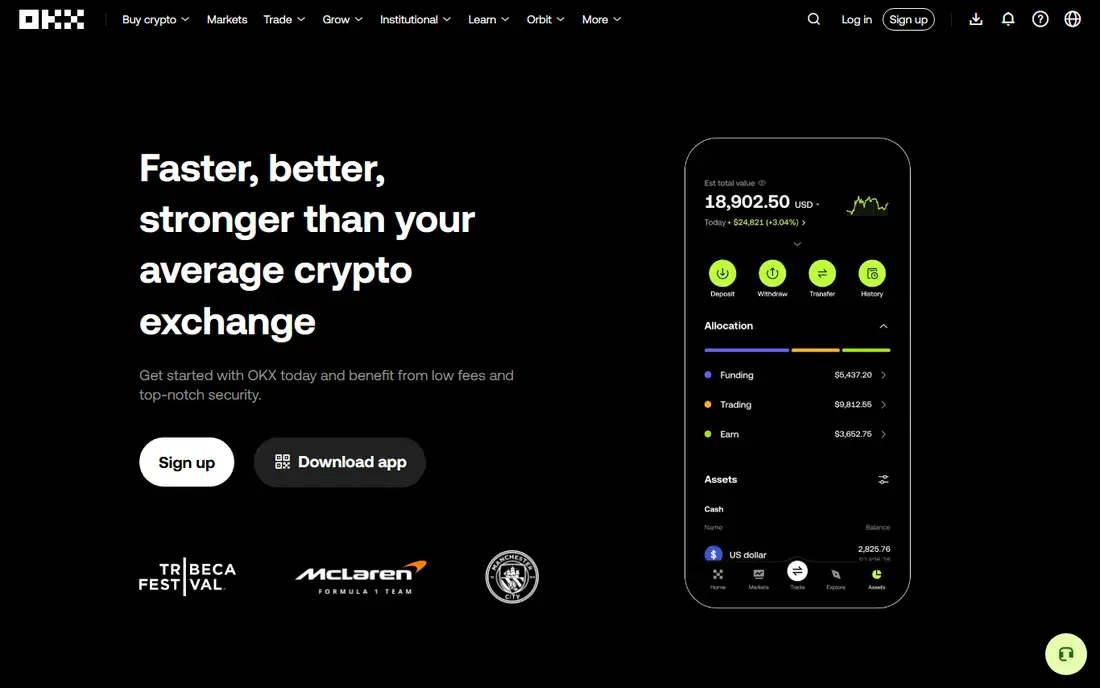
OKX offers a broad trading platform where spot, futures, and options sit in one account, which simplifies portfolio management for active traders. Entry futures fees start at 0.02 percent for makers and 0.05 percent for takers, matching the major global rivals, and volume tiers reduce those rates further. The platform also provides portfolio margin for qualified users and a range of order types for risk management.
Beginners may find the interface crowded, because spot, derivatives, earn products, and Web3 tools share the same account. US residents cannot access OKX futures, so US readers should treat OKX as a reference point rather than a usable option. For non-US traders who want one account for several product types, OKX balances fees, depth, and features well.
What we like- More than 300 perpetual markets
- Futures fees from 0.02 percent maker
- Spot, futures, and options in one account
Watch out for- Futures not available to US residents
- Product range can overwhelm beginners
Starting price0.02% maker fee
Free planFree trial
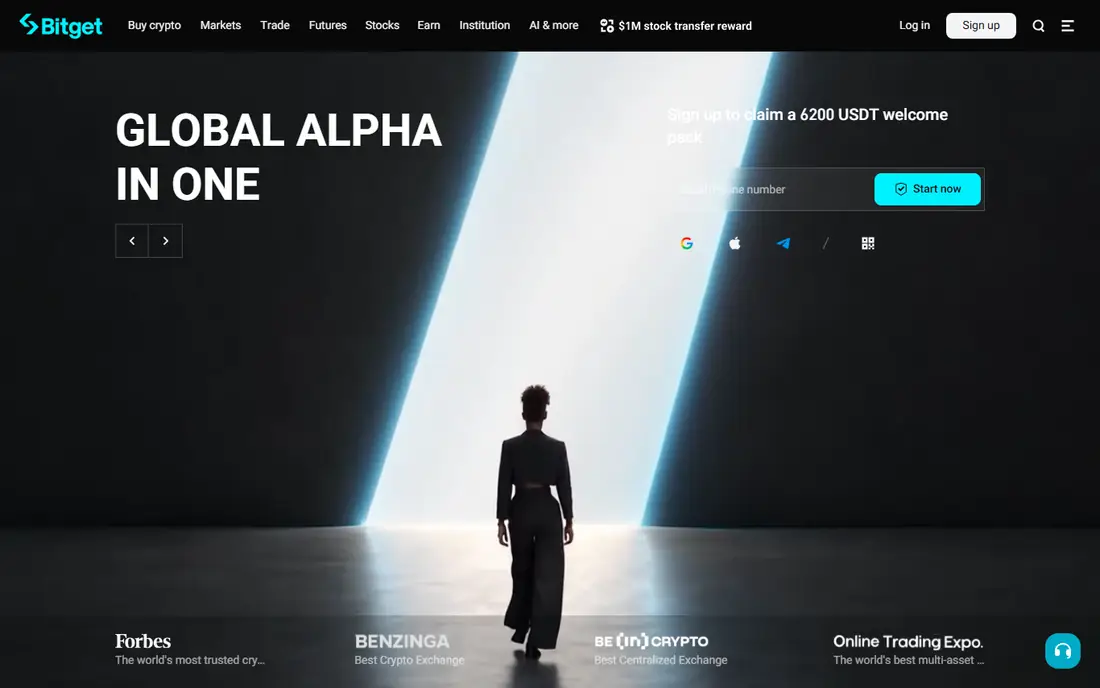
Bitget built its reputation on copy trading, where users can follow traders and mirror their futures positions automatically. That feature appeals to beginners who want to learn by watching experienced traders, though it does not remove risk, because a copied position can liquidate just as quickly as a direct trade. Entry futures fees start at 0.02 percent for makers and 0.06 percent for takers.
Regional access varies, so confirm that futures trading is available in your country before you deposit. Bitget also offers spot trading, earn products, and a wallet, which makes it a broader platform than a futures-only exchange. For traders who value copy trading and a wide market range, Bitget is a credible alternative to Bybit.
What we like- Copy trading with a large trader pool
- Futures fees from 0.02 percent maker
- Wide futures market range
Watch out for- Futures access varies by region
- Copy trading carries the same liquidation risk as direct trading
#5
Kraken
Best for: Regulated futures access for US and EU users
Visit kraken.com
Starting price0.02% maker fee
Free planFree trial
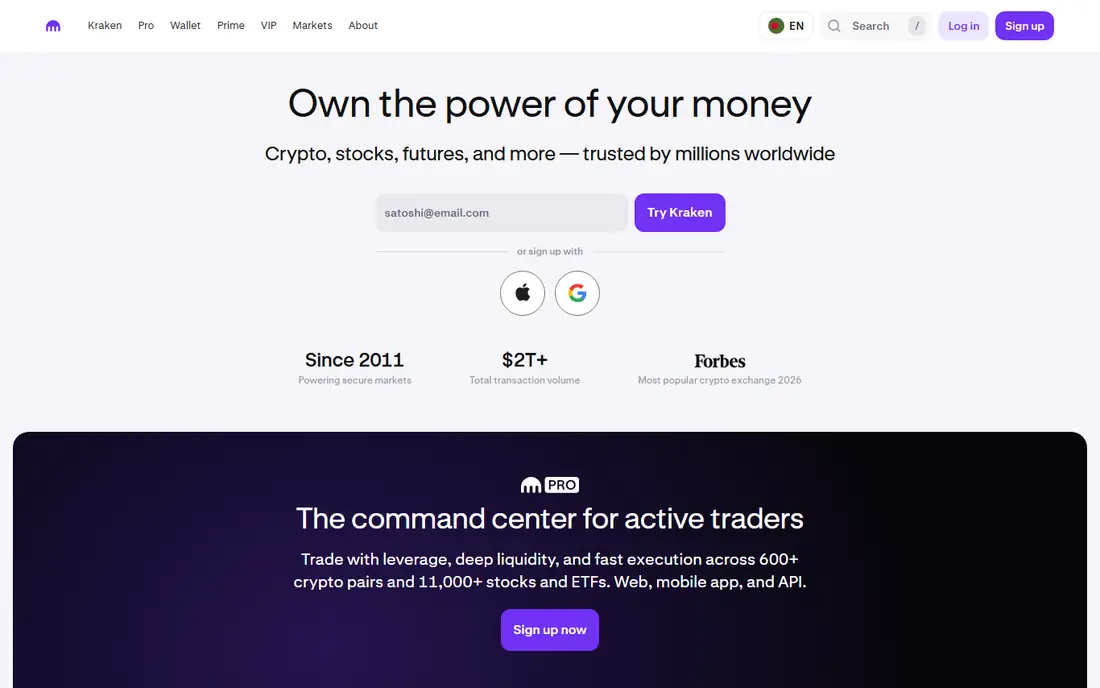
Kraken is the most practical regulated route for many US readers. In the US, Kraken Derivatives US offers CFTC-regulated contracts, including CME micro contracts, while EU users can access a wider Kraken futures range under MiCA rules. Entry futures fees start at 0.02 percent for makers and 0.05 percent for takers, with volume tiers lowering rates further.
The trade-off is range. Kraken lists more than 300 perpetual markets in some regions, but US futures access is narrower than on global platforms, and borrowing limits are lower. That narrower range is the price of regulation, and for many US traders it is worth paying. Kraken suits traders who prioritize regulated access, account security, and a long operating history over maximum market count.
What we like- Regulated derivatives in the US through Kraken Derivatives US and in the EU under MiCA
- Futures fees from 0.02 percent maker
- Long operating history
Watch out for- Fewer perpetual markets than Binance or Bybit
- US futures range is narrower than global platforms
#6
Coinbase Advanced
Best for: US-regulated derivatives through a familiar platform
Visit coinbase.com
Starting priceSee website
Free planFree trial
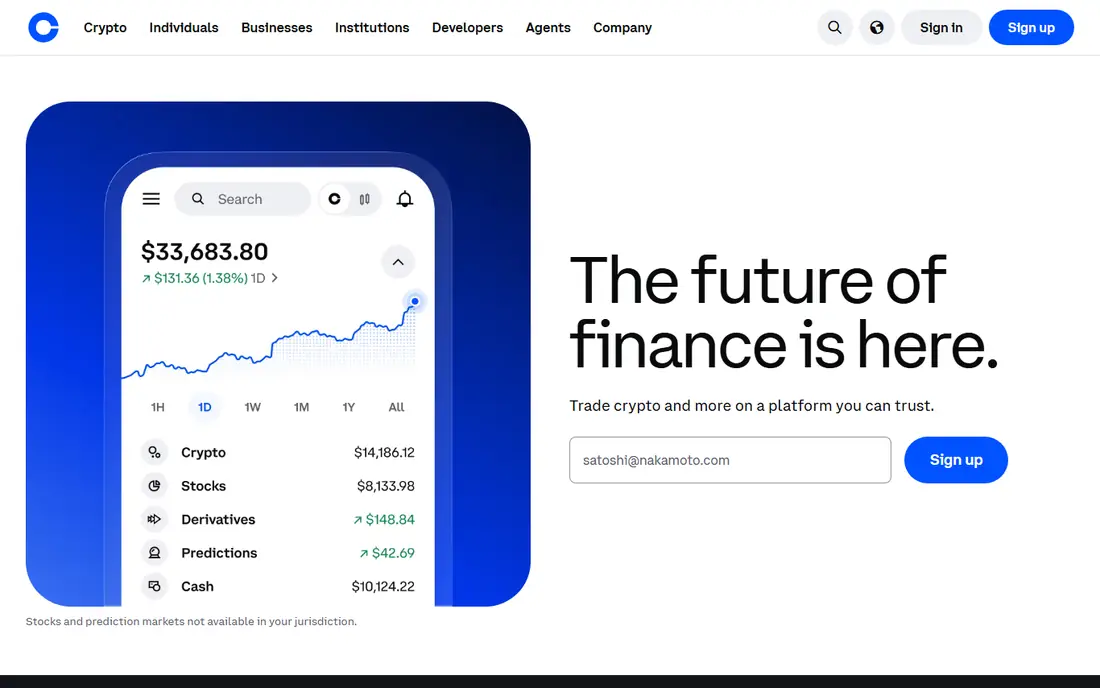
Coinbase Advanced offers US traders a regulated path to crypto derivatives without leaving the Coinbase ecosystem. Futures are offered through Coinbase Financial Markets, a CFTC-regulated entity, which gives US users a clearer legal framework than offshore platforms. Existing Coinbase users also benefit from a familiar interface, custody, and security practices.
Range and borrowing are the limits. Coinbase Advanced futures focus on major coins such as Bitcoin and Ether, with borrowing far below the 100x available on some global platforms. Fees also vary by product and region, so check the current fee page for the exact contract you plan to trade. For US beginners who value regulation and simplicity over maximum borrowing, Coinbase Advanced is the safest starting point.
What we like- CFTC-regulated derivatives in the US through Coinbase Financial Markets
- Familiar interface for existing Coinbase users
- Strong custody and security practices
Watch out for- Futures range is limited to major coins
- Borrowing is lower than global platforms
- Fees vary by product and region
Starting price0.02% maker fee
Free planFree trial
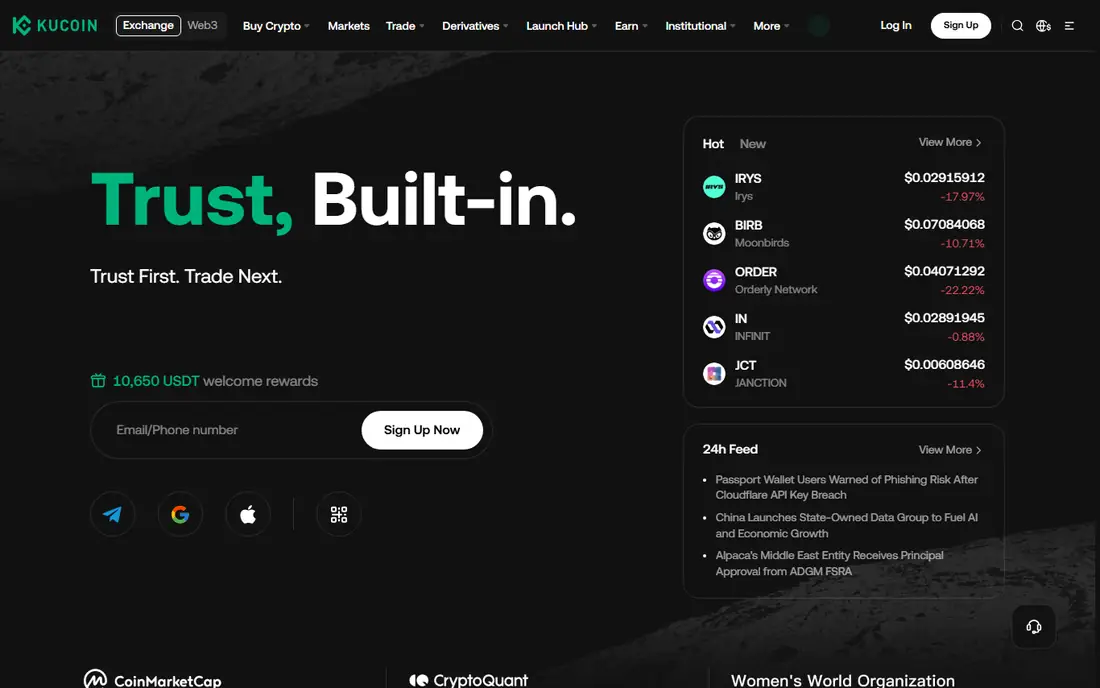
KuCoin appeals to traders who want futures on altcoins beyond the major coins. Its futures range covers many smaller tokens, and entry fees start at 0.02 percent for makers and 0.06 percent for takers. Trading bots, grid strategies, and a range of order types add tools for active traders who manage many positions.
US access is restricted, and regulatory status varies by country, so KuCoin is not a US futures option. Traders outside the US should confirm availability in their region and use strong security practices, including withdrawal allowlists. For non-US altcoin traders, KuCoin's breadth is its main advantage over more concentrated platforms.
What we like- Wide altcoin futures coverage
- Futures fees from 0.02 percent maker
- Trading bots and derivatives tools
Watch out for- US access is restricted
- Regulatory status varies by region
Starting price0.02% maker fee
Free planFree trial
Gate.io closes the list with one of the broadest market ranges among major exchanges, covering a large number of spot and futures pairs. Entry futures fees start at 0.02 percent for makers and 0.05 percent for takers, which keeps it competitive with Binance and OKX. That breadth suits traders who want exposure to smaller tokens that larger platforms do not list.
US access is restricted, so US readers should not plan around Gate.io for futures. Beginners may also find the interface crowded, with many products, promotions, and trading tools competing for attention. For non-US traders who prioritize market coverage, Gate.io offers a wide alternative to the top three global platforms.
What we like- Very broad futures and spot market coverage
- Futures fees from 0.02 percent maker
- Long-running exchange
Watch out for- US access is restricted
- Interface can feel crowded for beginners
How we chose
We compared platforms that offer crypto futures today, using vendor fee pages, product documentation, and public reviews. We favored platforms with deep futures liquidity, published maker and taker fees, risk management tools, and a clear statement of US access. We treated US access as a deciding factor, because a platform with the lowest fees is not useful to a US reader if futures are unavailable in the US. This is not financial advice, and borrowing trading carries a high risk of loss.
Start with your location, because it decides which platforms you can legally use. US readers should shortlist Kraken and Coinbase Advanced first, while non-US readers can compare Binance, Bybit, OKX, Bitget, KuCoin, and Gate.io on fees and market range. Once location narrows the list, compare fees, borrowing limits, and liquidation rules for the specific contracts you plan to trade.
Fees, funding rates, and borrowing
Maker and taker fees are only part of the cost. Perpetual futures also charge funding payments between long and short positions, usually every eight hours, and those payments can add up for positions held for days. Borrowing multiplies both gains and losses, and a small price move can liquidate a highly borrowingd position. Start with low borrowing, use isolated margin to limit risk to one position, and set stop orders before you enter a trade.
Risk controls, security, and regulation
Check whether the platform offers stop-loss and take-profit orders, position limits, and margin alerts, and test those tools with a small position first. Security matters just as much: enable two-factor authentication, use withdrawal allowlists, and keep most funds off an exchange if you are not actively trading. Regulation is not a guarantee against loss, but a CFTC-regulated US platform or a MiCA-licensed EU platform offers clearer recourse than an unregulated offshore venue.
Practice, position size, and record keeping
Use a demo or testnet account if available, and start live trading with a small amount you can afford to lose completely. Keep a record of each trade, including entry, exit, borrowing, fees, and funding payments, so you can see your true cost over time. If futures trading causes stress, losses beyond your plan, or pressure to recover losses quickly, pause trading and reassess. Futures are a high-risk product, and most short-term borrowingd traders lose money.
Frequently asked questions
What is the best crypto futures trading platform for US users?
Kraken and Coinbase Advanced are the clearest US options, because they offer regulated derivatives access in the US. Kraken provides a wider derivatives range through Kraken Derivatives US, while Coinbase Advanced offers a simpler, familiar route for major coins. Global platforms such as Binance and Bybit do not offer futures to US residents.
How much are crypto futures fees?
Entry futures fees on major global platforms start around 0.02 percent for makers and 0.05 to 0.06 percent for takers. Volume tiers, native token discounts, and VIP programs can lower those rates. Funding payments, withdrawal fees, and spreads add further costs, so check the full fee page for your platform and contract.
What borrowing can I use on crypto futures?
Borrowing varies by platform, region, and contract. Global platforms offer up to 100x or more on some Bitcoin contracts, while US-regulated platforms offer far lower borrowing. Higher borrowing increases liquidation risk sharply, so beginners should use low borrowing and isolated margin.
Is crypto futures trading risky?
Yes. Borrowed funds magnify losses, funding payments add cost over time, and volatile markets can liquidate positions quickly. Futures trading is not suitable for money you cannot afford to lose. This is not financial advice, and you should understand liquidation, margin, and funding before trading.
Can beginners use copy trading for futures?
Copy trading is available on Bybit and Bitget, and it lets you mirror experienced traders automatically. Copying does not remove risk, because a copied position can still liquidate, and past performance does not predict future results. Beginners should start with small amounts, review the trader's history, and understand the strategy being copied.
Do I need to pay tax on crypto futures trades?
In the US, crypto futures trades can create taxable events, and reporting rules depend on the contract type and your tax situation. Keep complete trade records, including fees and funding payments, and speak to a tax professional about your specific trades. Tax rules vary by country, so non-US traders should check local rules.
Sources we checked (8)
- https://www.binance.com
- https://www.bybit.com
- https://www.okx.com
- https://www.bitget.com
- https://www.kraken.com
- https://www.coinbase.com
- https://www.kucoin.com
- https://www.gate.io
Is your product missing or out of date?
We review this list regularly. Vendors can request a listing, send updated pricing or ask about featured placement.

Shihab Mia · Founder, Rankite
Shihab has 5+ years in B2B and SaaS SEO. He writes Rankite's software buying guides from pricing pages, documentation and public user reviews. More about Shihab.