How we make this list: we compare pricing pages, product documentation and public user reviews. Ratings come from G2, Capterra or Trustpilot, with the date we checked them.
Key takeaways
- The best crowdfunding platforms in 2026 split by funding model: Kickstarter and Indiegogo for reward campaigns, GoFundMe for donations, Patreon for recurring memberships, and Wefunder for equity rounds.
- Kickstarter is the largest reward platform, with 273,367 projects funded and 8.55 billion dollars pledged since 2009, but its overall success rate is only 42 percent.
- Platform fees run from 0 percent on GoFundMe and Kiva to 10 percent on Patreon, plus payment processing of about 3 percent on most platforms, so total cost runs 8 to 10 percent on a typical reward campaign.
- No platform guarantees funding: the crowd does not show up by itself, and most successful campaigns bring their own audience to the platform.
Quick comparison
| Tool | Best for | Starting price | Free plan |
|---|
 Kickstarter | Creative product launches | 5% of funds raised | Yes |
 Indiegogo | Tech gadgets | 5% of funds raised | Yes |
 GoFundMe | Personal causes | 0% platform fee | Yes |
 Patreon | Creator memberships | 10% of earnings | Yes |
 Wefunder | Community equity rounds | 7.9% on success | No |
 StartEngine | Equity crowdfunding access | 5% to 10% | No |
 Kiva | Microloans | 0% interest, no fees | Yes |
 Fundable | Startup profiles | $179 per month | No |
Is your product missing or out of date?
We review this list regularly. Vendors can request a listing, send updated pricing or ask about featured placement.
Starting price5% of funds raised
Free planYes
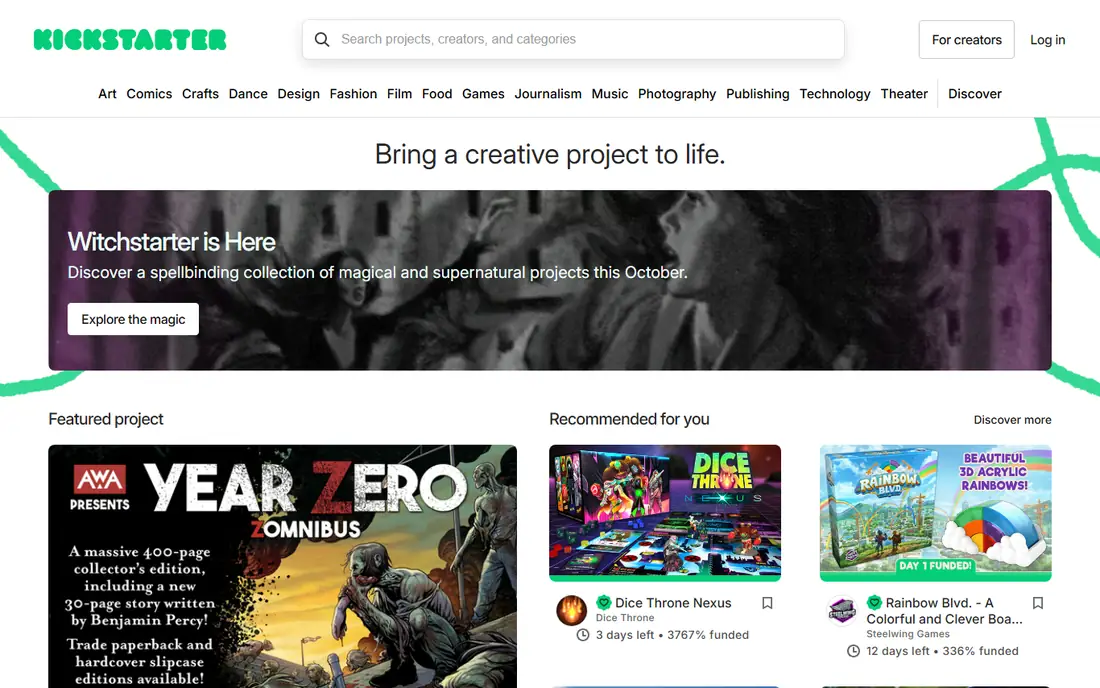
Kickstarter is the world's largest reward-based crowdfunding platform, built for creators launching physical products, games, films, and art projects. Since 2009 it has funded 273,367 projects with 8.55 billion dollars pledged and nearly 24 million backers.
The platform uses an all-or-nothing model: backers are not charged unless the campaign reaches its goal, which builds trust because supporters know their money only moves when a campaign is viable. Fees run 5 percent platform plus 3 percent plus 0.30 dollars processing per pledge, or about 8.3 percent on a funded 20,000 dollar project. For creative product launches, Kickstarter leads.
What we like- Largest reward-based platform with nearly 24 million backers
- All-or-nothing trust builds backer confidence
- Strong for games, film, and hardware
Watch out for- All-or-nothing means a campaign at 95 percent returns every dollar
- Overall success rate only 42 percent
- Technology projects succeed at just 23.9 percent
Starting price5% of funds raised
Free planYes
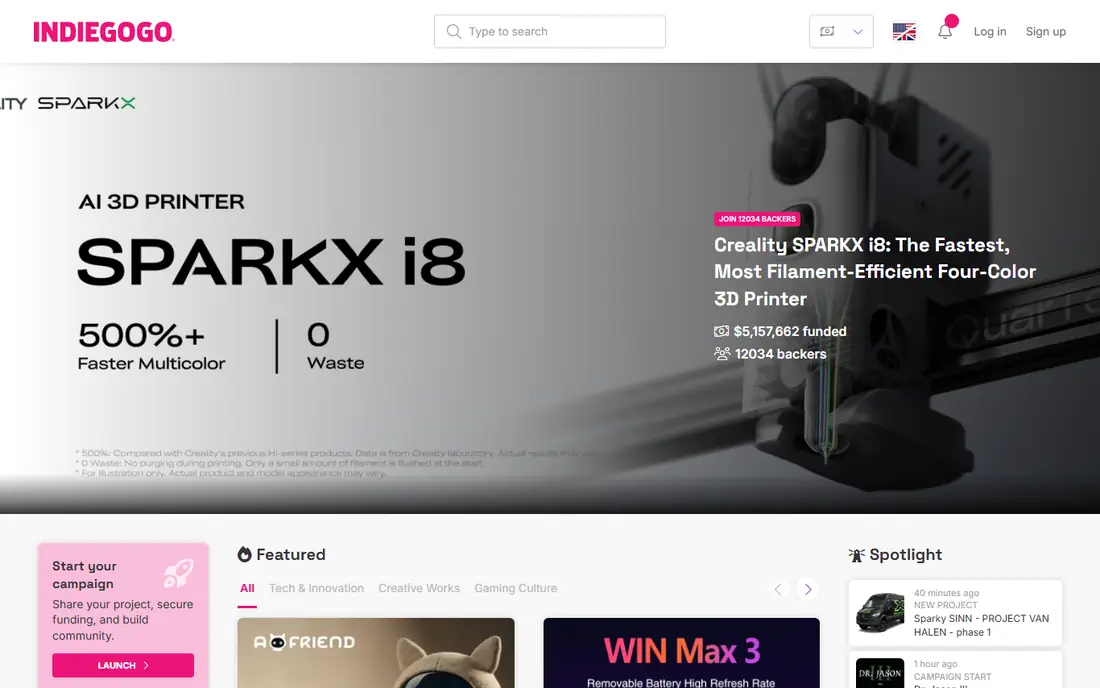
Indiegogo suits tech gadgets and products that want global reach with flexible timelines. Its post-campaign sales through InDemand let funded campaigns keep selling after the campaign ends, which suits hardware teams with long production cycles.
Fees run 5 percent platform plus 3 percent plus 0.20 dollars processing, and new campaigns use all-or-nothing funding since October 2025. For tech gadgets with post-campaign sales, Indiegogo is the best pick.
What we like- Global reach for tech gadgets
- Flexible and fixed funding options
- Post-campaign sales through InDemand
Watch out for- All-or-nothing for new campaigns since October 2025
- Success rates run 18 to 25 percent
- Fees match Kickstarter at about 8 to 10 percent total
Starting price0% platform fee
Free planYes
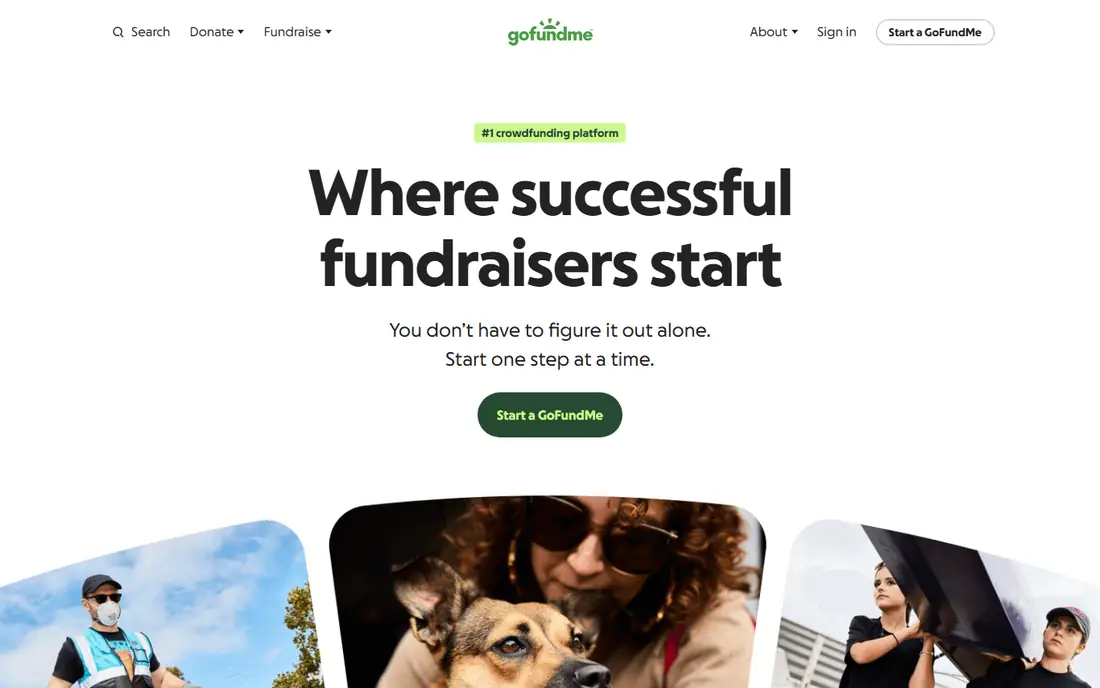
GoFundMe is the benchmark for personal and nonprofit causes, with a 0 percent platform fee and keep-what-you-raise model. Donors cover payment processing of 2.9 percent plus 0.30 dollars per donation, and the platform's huge personal-cause audience suits medical, emergency, and community fundraisers.
It is not built for product launches, and recurring donations can add fees. For personal causes and charity fundraisers, GoFundMe leads.
What we like- 0 percent platform fee for personal causes
- Keep-what-you-raise model
- Largest donation audience for personal and medical causes
Watch out for- Payment processing still costs 2.9 percent plus 0.30 dollars per donation
- Recurring donations add a 5 percent fee in some cases
- Not built for product launches
#4Patreon
Best for: Creator memberships4.2/5 on
G2 (63 reviews, checked Oct 2026)
Visit patreon.com
Starting price10% of earnings
Free planYes
Patreon suits creators who want ongoing support rather than a one-time campaign. Membership tiers with exclusive content build recurring monthly income, and the platform is free to start, with fees charged only as you earn.
The standard platform fee is 10 percent for new creators plus payment processing, which is the highest in this list, and subscription income takes time to build. For recurring income for creators and artists, Patreon is the best pick.
What we like- Free to start, you pay only as you earn
- Recurring monthly income for creators
- Membership tiers with exclusive content
Watch out for- 10 percent platform fee for new creators plus processing
- Subscription income takes time to build
- Legacy pricing exceptions confuse comparisons
Starting price7.9% on success
Free planNo
Wefunder suits startups that want community rounds, turning customers into investors through equity crowdfunding. Its fee of 7.9 percent applies on success only, paid by the company, with escrow and all-or-nothing protection for investors.
It is US only, and securities rules add legal complexity, with raises needing regulatory filings. For community equity rounds, Wefunder leads.
What we like- Community rounds that turn customers into investors
- Success-only fee of 7.9 percent
- Escrow and all-or-nothing protection for investors
Watch out for- US only
- Securities rules add legal complexity
- No free plan and raises need regulatory filings
Starting price5% to 10%
Free planNo
StartEngine suits early-stage startups that want equity crowdfunding access. Its Regulation CF raises carry a 10,000 dollar minimum, with an investor audience built for startup equity.
Fees run 6 to 10 percent typical in Regulation CF, plus 3.5 percent paid by the investor, with offering-specific issuer terms and other costs, and the company publishes no working pricing page, so figures come from SEC filings. For equity crowdfunding access, StartEngine is the best pick.
What we like- Equity crowdfunding access for early-stage startups
- Investor audience for Regulation CF raises
- Minimum raise of 10,000 dollars
Watch out for- Fees of 6 to 10 percent typical in Regulation CF plus 3.5 percent paid by the investor
- No published working pricing page
- Offering-specific costs vary
Starting price0% interest, no fees
Free planYes
Kiva suits microloans for small businesses, farmers, and community projects. Its debt model charges 0 percent interest with no fees, funded by a global lender community that backs borrowers directly.
Loan amounts are small beside equity raises, and fundraising takes time with lender endorsement. For microloans at zero cost, Kiva leads.
What we like- 0 percent interest and no fees for borrowers
- Debt model suits small businesses and farmers
- Global lender community
Watch out for- Loan amounts are small beside equity raises
- Fundraising takes time and lender endorsement
- US availability varies by program
Starting price$179 per month
Free planNo
Fundable suits established startups that want structured fundraising profiles for reward and equity raises. Its pages help startups present their story, team, and terms to potential backers and investors.
The monthly subscription of 179 dollars applies regardless of outcome, with no free plan, and backer traffic is thinner than Kickstarter or GoFundMe. For startup profiles with a network to bring, Fundable rounds out the list.
What we like- Startup profiles for reward and equity raises
- Structured fundraising pages
- Suits established startups with a network
Watch out for- Monthly subscription of 179 dollars regardless of outcome
- No free plan
- Less backer traffic than Kickstarter or GoFundMe
How we chose
We ranked platforms by audience size, fee transparency, funding model fit, regulatory compliance, and success rates. We favored platforms that publish fees clearly, since processing fees charged by Stripe, PayPal, or Adyen apply on every platform and hidden costs change the real total. We gave extra weight to funding model fit, because an all-or-nothing campaign and a keep-what-you-raise campaign behave differently when a goal is missed.
We also weighed success rates honestly. Kickstarter overall success runs 42 percent, with comics at 67.7 percent and technology at just 23.9 percent, while Indiegogo runs 18 to 25 percent, so category matters more than platform choice. A great product in a weak category still faces long odds, while a strong community can carry an average product past its goal. Fee conflicts across sources were handled by using the most commonly cited figure, so readers should check the vendor pricing page before launching.
Buying guide
Start with funding model. Reward campaigns suit Kickstarter and Indiegogo, donations suit GoFundMe, recurring creator income suits Patreon, microloans suit Kiva, and equity suits Wefunder and StartEngine. Picking the wrong model costs more than picking the wrong platform.
Next, calculate total cost on a realistic raise. On a funded 20,000 dollar project with 200 pledges of 100 dollars, Kickstarter costs about 1,660 dollars total, or 8.3 percent, while GoFundMe costs about 640 dollars in processing alone. Budget for that total, not just the platform fee.
Finally, build your audience before launch. A specific, believable goal, a pre-launch audience, and consistent backer updates separate funded campaigns from stalled ones, since the crowd does not show up by itself. Vague asks get scrolled past, while campaigns that go live to an existing community fund significantly faster, and supporters who feel informed give more and share wider. No platform guarantees funding, and most successful campaigns bring their own audience. This article is general information, not financial or legal advice, and equity raises in particular need professional advice on securities rules and tax treatment before you launch. Budget for fulfillment too.
Frequently asked questions
What is the best crowdfunding platform overall?
Kickstarter leads for creative product launches, GoFundMe for personal causes, Patreon for recurring creator income, and Wefunder for community equity rounds. The best pick depends on your funding model, and on whether you need the trust of all-or-nothing or the flexibility of keep-what-you-raise.
How much do crowdfunding platforms charge?
Platform fees run from 0 percent on GoFundMe and Kiva to 10 percent on Patreon, plus payment processing of about 3 percent. A funded 20,000 dollar Kickstarter project costs about 1,660 dollars total, or 8.3 percent, while GoFundMe costs about 640 dollars in processing alone on the same raise.
What is the difference between all-or-nothing and keep-what-you-raise?
All-or-nothing returns every dollar if the goal is missed, which builds backer trust, while keep-what-you-raise lets you keep whatever you collect. Kickstarter uses all-or-nothing, GoFundMe uses keep-what-you-raise, and the real cost of all-or-nothing is a campaign at 95 percent that returns every dollar despite nearly succeeding.
Can I guarantee my campaign will fund?
No. No platform guarantees funding, and success rates run 42 percent on Kickstarter overall and 18 to 25 percent on Indiegogo. A pre-launch audience and consistent updates matter more than platform choice, and campaigns that go live to an existing community fund significantly faster than campaigns that launch cold.
Do equity crowdfunding platforms need legal advice?
Yes. Equity raises involve securities rules, escrow, and regulatory filings, so get professional legal and financial advice before launching a Wefunder or StartEngine raise. This article is general information, not legal advice, and offering terms, investor limits, and disclosure duties vary by raise type and jurisdiction.
Sources we checked (0)
Is your product missing or out of date?
We review this list regularly. Vendors can request a listing, send updated pricing or ask about featured placement.

Shihab Mia · Founder, Rankite
Shihab has 5+ years in B2B and SaaS SEO. He writes Rankite's software buying guides from pricing pages, documentation and public user reviews. More about Shihab.