How we make this list: we compare pricing pages, product documentation and public user reviews. Ratings come from G2, Capterra or Trustpilot, with the date we checked them.
Key takeaways
- HubSpot is the strongest all-in-one choice, with a genuinely useful free CRM and marketing tools that scale with the team.
- ActiveCampaign offers the deepest automation for the money, starting at $15 a month for small businesses.
- Brevo is the budget pick for large lists, since its pricing scales on sends rather than contacts.
- Klaviyo suits ecommerce brands, while Mailchimp remains the easiest start for newsletters and small audiences.
Quick comparison
| Tool | Best for | Starting price | Free plan |
|---|
 HubSpot | Teams that want CRM and marketing in one system | Free CRM; Marketing Hub Starter $15/seat/month (annual) | Yes |
 ActiveCampaign | Small businesses that want the deepest automation for the money | $15/month (annual) | Free trial (14 days) |
 Brevo | Businesses with large lists and small budgets | Free; Starter $9/month | Yes |
 Klaviyo | Ecommerce brands that live on email and SMS revenue | Free (250 contacts); from $20/month | Yes |
 Mailchimp | Beginners, newsletters, and small audiences | Free (500 contacts); Essentials $13/month | Yes |
 Keap | Small businesses that want sales pipeline plus marketing automation | See website | Free trial |
 GetResponse | Marketers who also run webinars | From $19/month | Free trial |
 Constant Contact | Local businesses and nonprofits that want simple email | From $12/month | Free trial |
 Drip | Ecommerce brands wanting Klaviyo-style automation with flexibility | See website | Free trial |
Is your product missing or out of date?
We review this list regularly. Vendors can request a listing, send updated pricing or ask about featured placement.
The best CRM email marketing software
#1HubSpot
Best for: Teams that want CRM and marketing in one system1.5/5 on
Trustpilot (1,178 reviews, checked Oct 2026)
Visit hubspot.com
Starting priceFree CRM; Marketing Hub Starter $15/seat/month (annual)
Free planYes
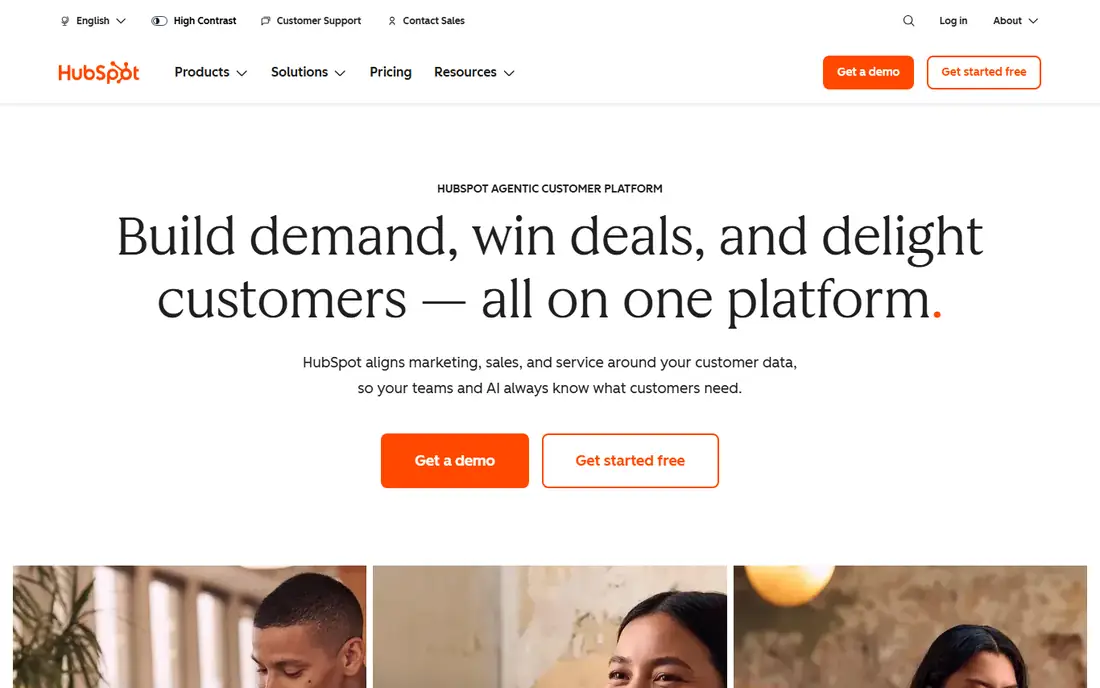
HubSpot's strategy is the free CRM as a wedge. Unlimited contacts with deal pipelines, basic marketing tools, and reporting cost nothing, and Marketing Hub Starter at $15 per seat a month adds email automation, landing pages, and lead scoring for small teams. Because the CRM and the marketing engine share one database, every email open and site visit lands on the contact record automatically.
The bills arrive later. Marketing Hub Professional costs several hundred dollars a month, contact-tier pricing punishes growing lists, and AI features can cost extra. HubSpot is the right choice when marketing and sales must share one system and the budget allows growth; it is the wrong choice when you only need email.
What we like- Free CRM with contacts, deals, and tickets
- Huge integration marketplace
- Excellent onboarding
Watch out for- Costs escalate fast on Professional tiers
- Contact-based pricing punishes list growth
#2ActiveCampaign
Best for: Small businesses that want the deepest automation for the money4.4/5 on
G2 (14,789 reviews, checked Oct 2026)
Visit activecampaign.com
Starting price$15/month (annual)
Free planFree trial (14 days)
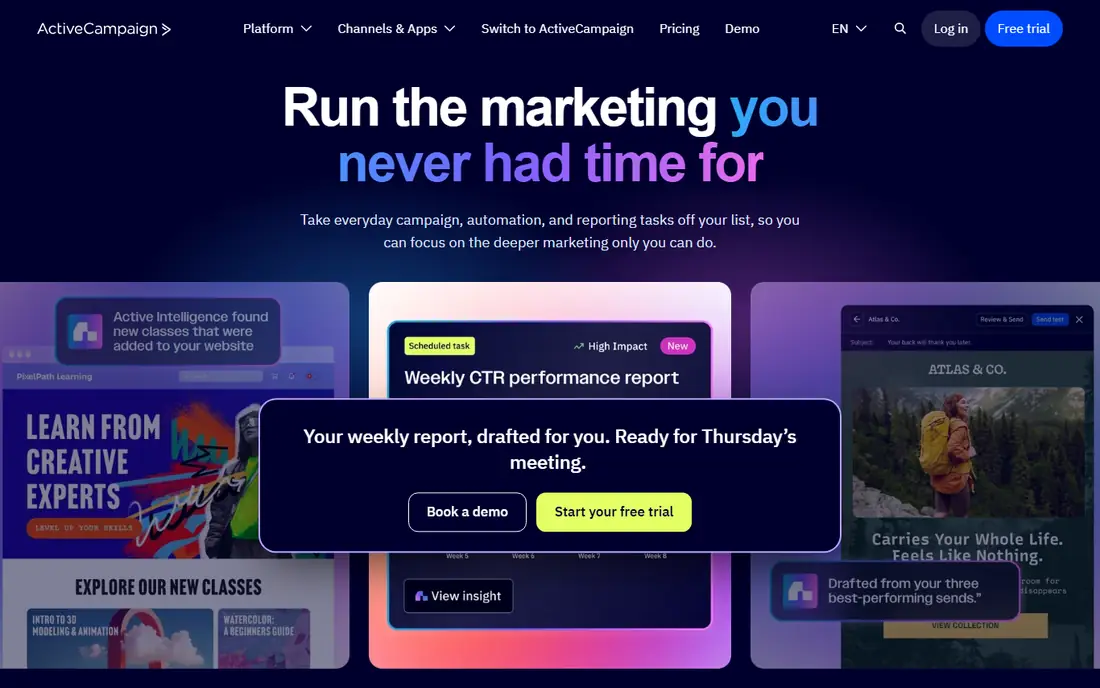
ActiveCampaign's automation builder is the standard other tools are measured against. Visual journeys with conditions, splits, goals, and site tracking let a small team run sophisticated campaigns without enterprise software, and the built-in CRM keeps deals beside campaigns. Starter at $15 a month makes that power unusually affordable.
New users should expect a learning curve. The builder rewards time invested, and beginners may find Mailchimp or Constant Contact faster for a first newsletter. For businesses that live on automated sequences, ActiveCampaign delivers the best return per dollar in this list.
What we like- Visual automation builder with deep logic
- Built-in CRM
- Strong deliverability reputation
Watch out for- Steeper learning curve than Mailchimp
- No permanent free plan
#3Brevo
Best for: Businesses with large lists and small budgets4.5/5 on
G2 (2,747 reviews, checked Oct 2026)
Visit brevo.com
Starting priceFree; Starter $9/month
Free planYes
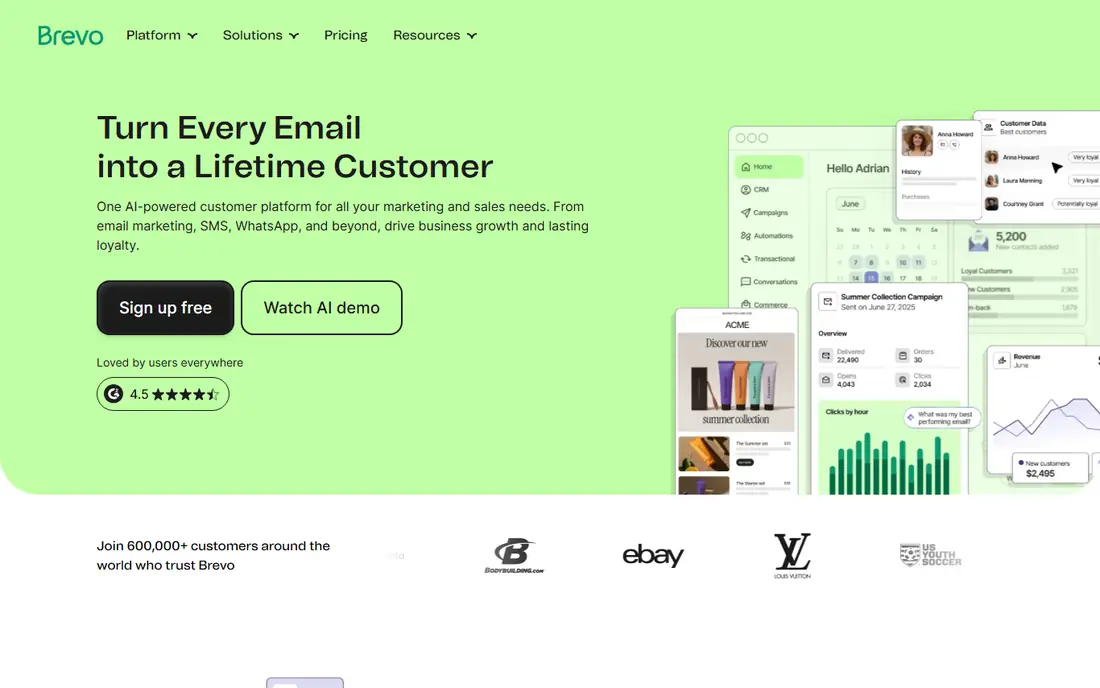
Brevo, formerly Sendinblue, wins on pricing logic. Most tools charge by contacts, so a large but rarely emailed list costs a fortune. Brevo charges by emails sent, with a free plan covering 300 emails a day and Starter at $9 a month, which makes it the cheapest serious option for big lists.
Automation depth trails ActiveCampaign, and the template library is less polished than Mailchimp's. For a business with a large list and a modest sending schedule, Brevo's pricing model alone can justify the switch.
What we like- Pricing based on emails sent, not contacts
- Free plan with 300 emails a day
- SMS and chat included
Watch out for- Automation is less deep than ActiveCampaign
- Templates feel plainer
#4Klaviyo
Best for: Ecommerce brands that live on email and SMS revenue4.6/5 on
G2 (1,368 reviews, checked Oct 2026)
Visit klaviyo.com
Starting priceFree (250 contacts); from $20/month
Free planYes
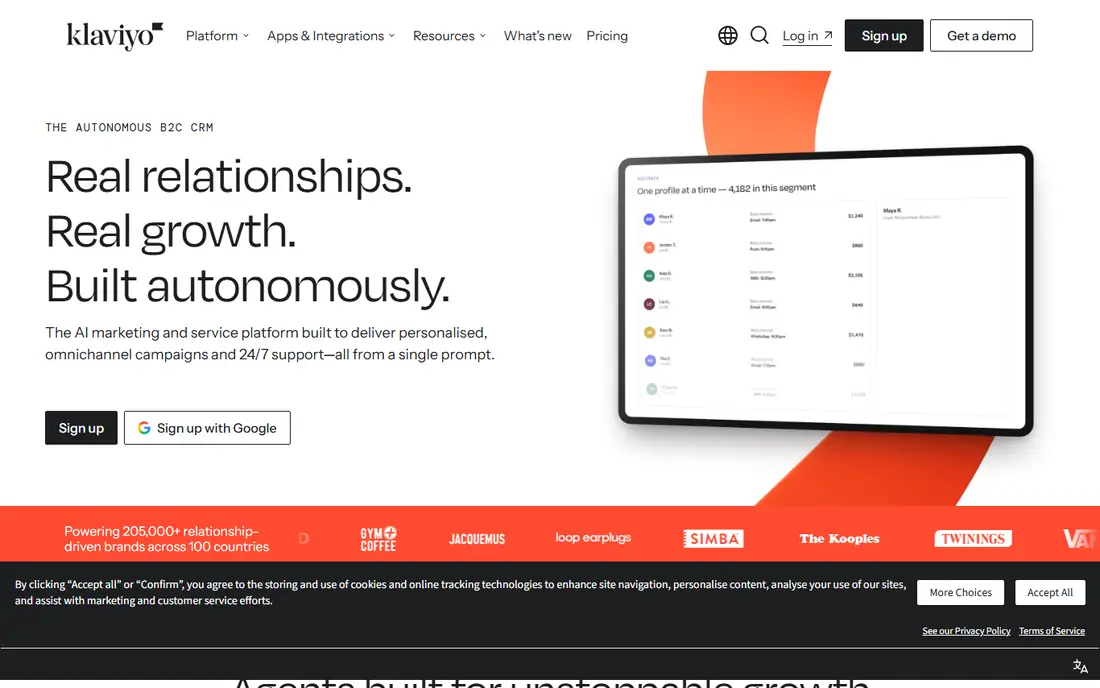
Klaviyo is built for stores. Purchase history, browsing behavior, and predicted lifetime value drive segments and flows, so abandoned cart, win-back, and replenishment campaigns run on real store data rather than guesses. Email and SMS share one automation builder, which suits brands that sell through both channels.
Costs scale with the list, and SMS sends draw on separate credits, so a text-heavy program costs more than the headline plan suggests. For ecommerce brands, the revenue per campaign usually justifies it; for non-store businesses, Klaviyo's strengths go unused.
What we like- Deep Shopify and store data for targeting
- Abandoned cart and post-purchase flows
- SMS in the same builder
Watch out for- SMS credits cost extra
- Pricing climbs quickly as the list grows
#5Mailchimp
Best for: Beginners, newsletters, and small audiences4.4/5 on
G2 (5,436 reviews, checked Oct 2026)
Visit mailchimp.com
Starting priceFree (500 contacts); Essentials $13/month
Free planYes
Mailchimp remains the easiest on-ramp to email marketing. The editor is friendly, templates look good out of the box, and the free plan covers 500 contacts, which is enough for a new newsletter or a small shop. Customer journey basics and signup forms work without training.
Growing businesses often outgrow it. Automation depth lags the leaders, and contact-based pricing climbs fast past the free tier. Start with Mailchimp when simplicity matters most, and plan a migration path if automation becomes central.
What we like- Easiest editor to learn
- Generous template library
- Free plan for up to 500 contacts
Watch out for- Automation is weaker than ActiveCampaign or HubSpot
- Costs rise steeply as contacts grow
#6Keap
Best for: Small businesses that want sales pipeline plus marketing automation3.8/5 on
G2 (30 reviews, checked Oct 2026)
Visit keap.com
Starting priceSee website
Free planFree trial
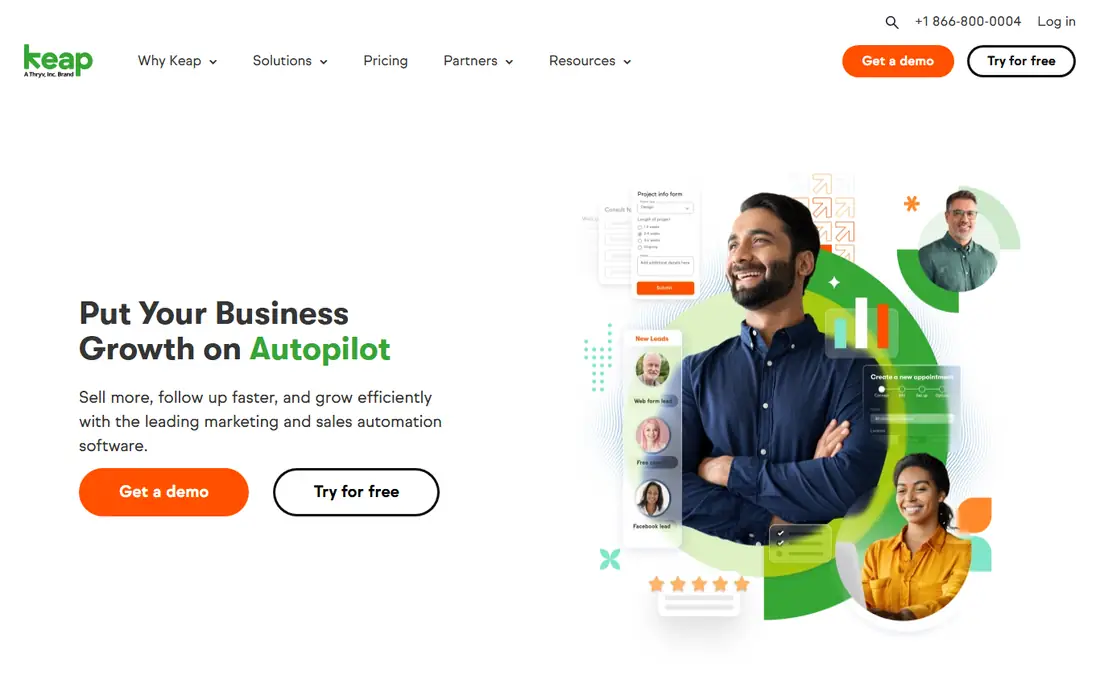
Keap, formerly Infusionsoft, targets service businesses that sell by phone and appointment. The CRM tracks leads through a pipeline, automation follows up by email and text, and invoicing plus payments close the loop without extra software. That combination suits coaches, consultants, and home services.
Pricing requires a conversation rather than a quick check, which frustrates comparison shoppers, and parts of the interface feel older than rivals. For a service business that wants pipeline and marketing in one place, Keap's all-in-one shape still appeals.
What we like- CRM, pipeline, and automation in one tool
- Invoicing and payments built in
- Good for service businesses
Watch out for- Pricing is not published plainly
- Interface feels dated in places
#7GetResponse
Best for: Marketers who also run webinars4.3/5 on
G2 (1,143 reviews, checked Oct 2026)
Visit getresponse.com
Starting priceFrom $19/month
Free planFree trial
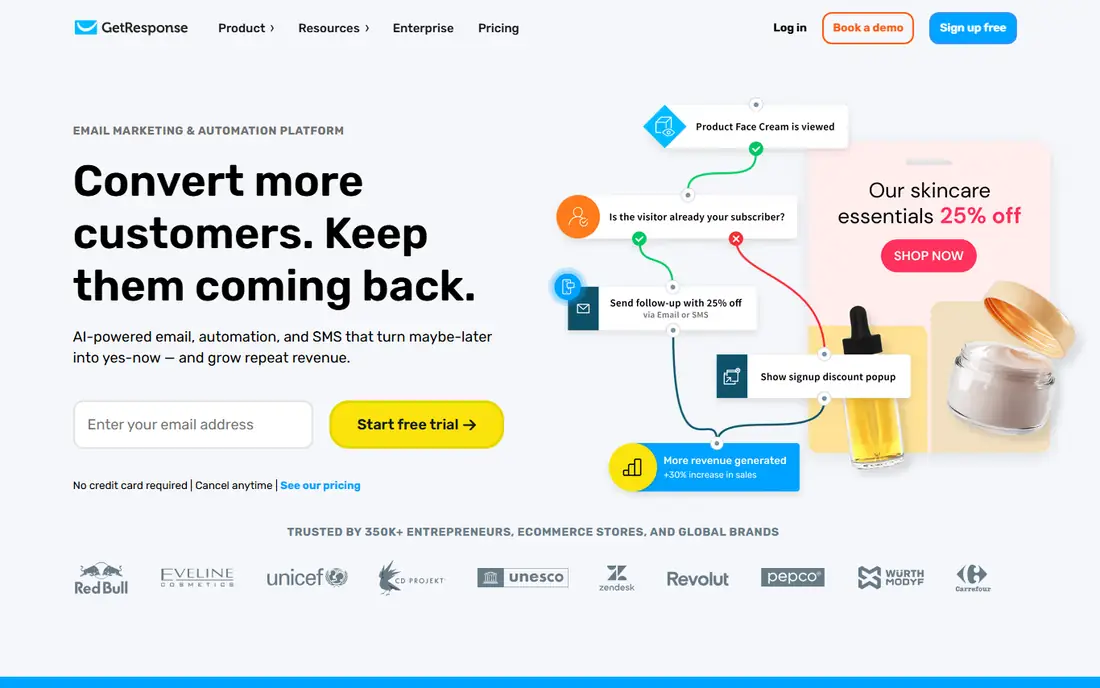
GetResponse stands out by bundling webinars with email marketing. A marketer can run a live session, capture registrants, and follow up with automated sequences without a separate webinar tool, and landing pages plus funnels complete the package. Starting at $19 a month, it is priced for serious small teams.
The email editor takes getting used to, and there is no permanent free plan, only a trial. For teams whose funnel includes webinars, the bundle saves a subscription; for pure email senders, Brevo or Mailchimp cost less.
What we like- Webinar hosting built in
- Automation builder and funnels
- Landing pages included
Watch out for- No permanent free plan
- Email editor is less intuitive than Mailchimp's
#8Constant Contact
Best for: Local businesses and nonprofits that want simple email4.1/5 on
G2 (7,393 reviews, checked Oct 2026)
Visit constantcontact.com
Starting priceFrom $12/month
Free planFree trial
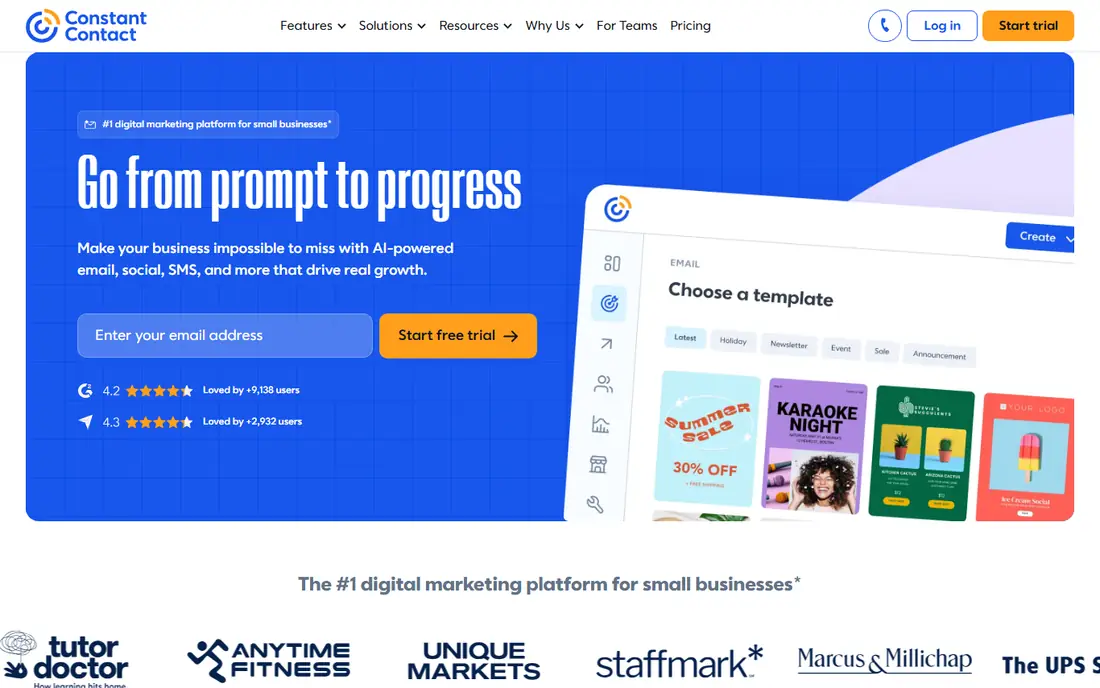
Constant Contact is the plain, dependable choice for local organizations. Campaigns go out quickly, templates suit events and announcements, and event registration plus donation tools help nonprofits and community groups. Support by phone is a real plus for less technical users.
Automation stays basic compared with ActiveCampaign or HubSpot, and there is no free plan beyond a trial. For a local business sending a monthly newsletter and event invites, Constant Contact's simplicity is the feature.
What we like- Very simple campaign builder
- Event and donation tools
- Good phone support reputation
Watch out for- Automation is basic
- No permanent free plan
#9Drip
Best for: Ecommerce brands wanting Klaviyo-style automation with flexibility4.4/5 on
G2 (480 reviews, checked Oct 2026)
Visit drip.com
Starting priceSee website
Free planFree trial
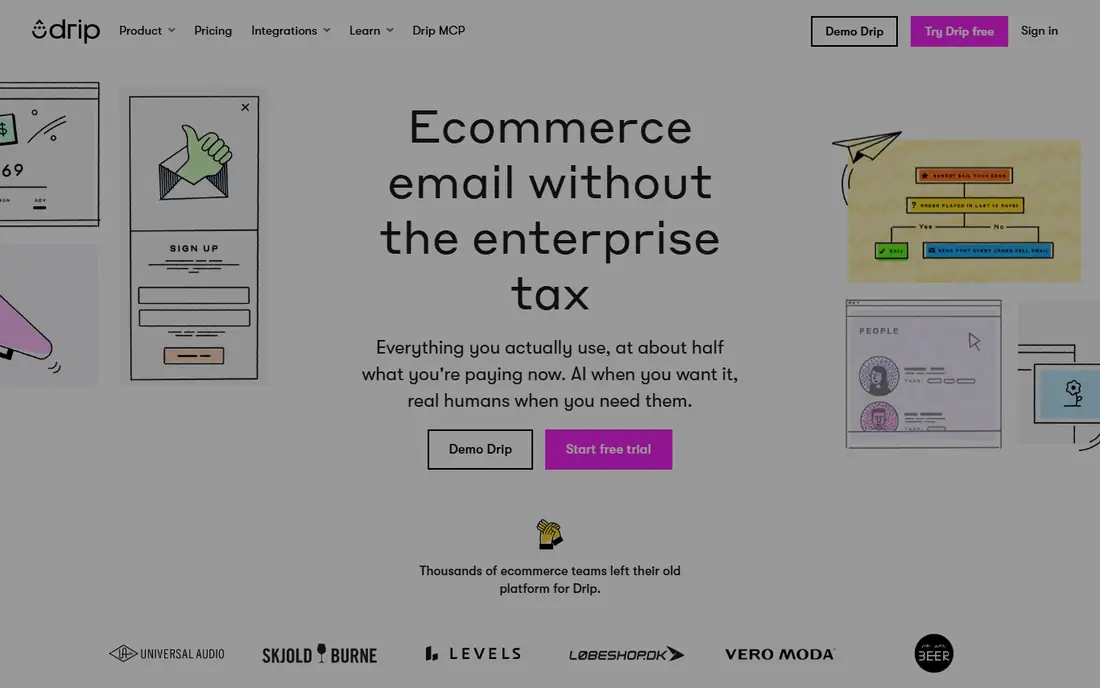
Drip offers ecommerce automation in the same spirit as Klaviyo, with a visual workflow builder and deep store integrations. Segmentation by behavior and purchase history supports the flows online stores rely on, from welcome series to post-purchase follow-ups.
Pricing transparency is weaker, with larger lists moving to custom quotes, and the integration ecosystem is smaller than Klaviyo's. Stores that want an alternative to Klaviyo, or that prefer Drip's builder, will find a capable tool here.
What we like- Visual workflow builder
- Strong ecommerce integrations
- Flexible segmentation
Watch out for- Pricing is quote-based for larger lists
- Smaller ecosystem than Klaviyo
How we chose
We picked tools that combine a contact database with email marketing and automation, rather than pure email senders, and checked entry prices against vendor pricing pages in October 2026. Public reviews on G2 and Capterra helped confirm automation depth and support quality. Enterprise-only platforms without small-business plans were excluded, as were CRMs with only token email features.
What to weigh before you buy
The cheapest plan is rarely the cheapest year. Three checks prevent the most common regret.
Model your cost at twice your list size
Most tools here price by contacts, so a list that doubles can triple the bill. Price each option at double your current contacts, and check whether unsubscribed or inactive contacts still count toward the tier.
Decide how much automation you will actually build
A visual builder is wasted if you only send a monthly newsletter, and a basic tool frustrates a team running ten sequences. List the automations you will run in the first 90 days, then buy the tool that covers those, not the one with the longest feature page.
Check deliverability and migration help
Ask about dedicated sending domains, list import tools, and whether the vendor helps migrate automations from your current tool. A cheap plan that lands in spam, or a migration that rebuilds every flow by hand, costs more than a pricier plan that handles both.
Keep your list clean from the start
Remove bounced addresses, honor unsubscribes immediately, and separate engaged subscribers from cold ones. Senders with clean lists get better inbox placement, which matters more than any template or subject line trick. Most tools here offer sunset flows that stop mailing people who never open, and turning one on early protects your sender reputation as the list grows.
Frequently asked questions
What is CRM email marketing software?
It is software that combines a customer database with email marketing, so every open, click, purchase, and site visit lands on the contact record and can trigger the next message. Pure email tools bolt on a list; these tools put the CRM first.
Which CRM email marketing tool is best for a small business?
ActiveCampaign for automation depth at $15 a month, HubSpot when sales and marketing must share one system, and Brevo when the list is large and the budget is small. The right pick depends on list size and how much automation you will build.
Is HubSpot really free?
The CRM is free, with contacts, deals, tickets, and basic marketing tools included. Paid Marketing Hub plans add automation, landing pages, and advanced reporting, starting at $15 per seat a month on Starter.
How much does email marketing software cost per month?
Entry plans in this list run from $9 to $20 a month, with free tiers from HubSpot, Brevo, Klaviyo, and Mailchimp. Costs rise with contacts and sends, so model the price at twice your current list size.
Can I switch tools without losing my list?
Yes. Every tool here imports contacts by file, and most offer migration help for lists and basic campaigns. Automated workflows usually need rebuilding, so budget time for that when switching.
Sources we checked (9)
- https://www.hubspot.com/pricing/marketing
- https://www.activecampaign.com/pricing
- https://www.brevo.com/pricing/
- https://www.klaviyo.com/pricing
- https://mailchimp.com/pricing/
- https://keap.com
- https://www.getresponse.com/pricing
- https://www.constantcontact.com/pricing
- https://www.drip.com
Is your product missing or out of date?
We review this list regularly. Vendors can request a listing, send updated pricing or ask about featured placement.

Shihab Mia · Founder, Rankite
Shihab has 5+ years in B2B and SaaS SEO. He writes Rankite's software buying guides from pricing pages, documentation and public user reviews. More about Shihab.