How we make this list: we compare pricing pages, product documentation and public user reviews. Ratings come from G2, Capterra or Trustpilot, with the date we checked them.
Key takeaways
- Taboola and Outbrain are the two big self-serve networks: Taboola's own guidance says budget $50/day or 10x your target CPA, while Outbrain's help center documents a $20/day campaign minimum.
- Testing on a budget? MGID (from $100 deposit) and Revcontent ($50/day campaign minimum per its official help docs) are the cheapest credible starting points.
- For premium or brand-safe placements, look at Dianomi (finance and luxury publishers, 8B+ monthly impressions per the company), Nativo (branded content, now part of Life360) and TripleLift (programmatic creative formats).
- Sharethrough works differently: there is no self-serve login for advertisers, you buy its native inventory through a DSP or private marketplace deal.
Quick comparison
| Tool | Best for | Starting price | Free plan |
|---|
 Taboola Taboola | Large-scale content discovery and performance campaigns | CPC (no fixed minimum; Taboola recommends $50/day or 10x target CPA) | No |
 Outbrain Outbrain | Performance and direct-response advertisers on the open web | CPC (from $20/day campaign minimum per advertiser help center) | No |
 MGID MGID | Small budgets learning native advertising | From $100 minimum deposit (CPC bids from ~$0.01) | No |
 Revcontent Revcontent | Advertisers who want selective, high-engagement placements | CPC/vCPM ($50/day campaign minimum per official help docs) | No |
 TripleLift TripleLift | Brands wanting creative, high-impact programmatic formats | See website (custom/programmatic buying) | No |
 Sharethrough Sharethrough | Programmatic buyers who want native inventory at scale | See website (bought via DSP or private marketplace; no self-serve) | No |
 Nativo Nativo | Branded content and storytelling campaigns | See website (custom quote) | No |
 Dianomi Dianomi | Finance, business and luxury brands on premium publishers | See website (custom quote) | No |
Is your product missing or out of date?
We review this list regularly. Vendors can request a listing, send updated pricing or ask about featured placement.
The best content syndication platforms
Your team just published the definitive guide to something your customers care about. It took three weeks, two subject-matter interviews and one very patient designer. Three days later, 61 people have read it, and 40 of them work at your company. Content syndication exists for exactly this moment: instead of waiting for Google to notice, you pay to place that article as a recommended link on publisher sites, inside the "You May Like" boxes readers actually click. The eight platforms below cover the real market, from $100 test budgets to six-figure brand campaigns.
#1
Taboola
Best for: Large-scale content discovery and performance campaigns
Visit taboola.com
Starting priceCPC (no fixed minimum; Taboola recommends $50/day or 10x target CPA)
Free planNo
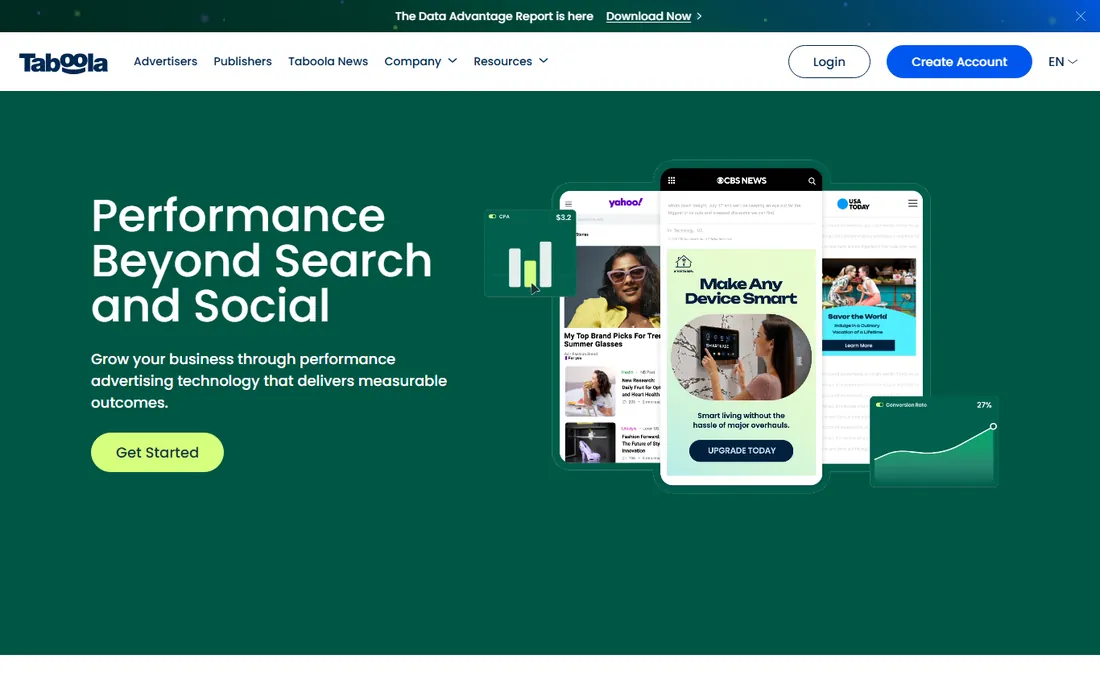
Taboola is the biggest name in content recommendation, and the Yahoo partnership is the reason it stays there. Your sponsored links appear inside recommendation widgets on thousands of publisher sites plus Yahoo's owned properties, catching readers in a content-consuming mindset rather than a banner-blind one. The advertiser platform, now branded Realize, has moved beyond classic "around the web" boxes into conversion-focused bidding (Maximize Conversions), first-party audience targeting and broader creative formats.
The budget guidance is unusually specific for this industry. Taboola's own materials tell Maximize Conversions advertisers to set a daily budget of at least 10 times their target cost per action, with a $50/day floor when the target sits under $5. Work backwards and a $50 target CPA means $500 a day, which is a real budget line, not a trial. Bids can start around a cent in cheap geos, but competitive US placements clear far higher. Test Taboola when you have a proven landing page and at least a few thousand dollars to learn with; sampling it with $300 teaches you nothing.
What we like- Enormous publisher footprint anchored by the exclusive Yahoo native partnership (Yahoo Finance, News, Sports, AOL)
- The Realize platform now covers the full performance funnel beyond classic native
- Detailed placement-level reporting
Watch out for- No published rate card, so costs are pure auction
- The $50/day or 10x-CPA guidance means serious tests start around $1,500/month
- Creative approval can be strict
#2
Outbrain
Best for: Performance and direct-response advertisers on the open web
Visit outbrain.com
Starting priceCPC (from $20/day campaign minimum per advertiser help center)
Free planNo
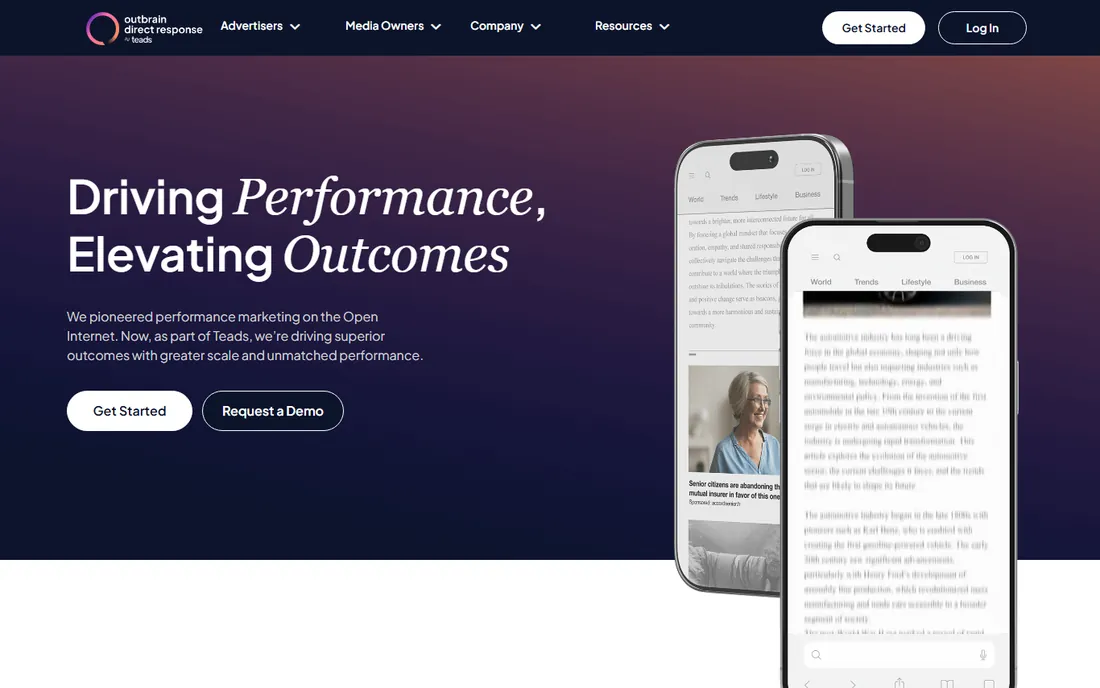
Outbrain.com today is a different animal than the Outbrain of five years ago. After merging with Teads in February 2025, the combined company split the business: brand advertising now runs under the Teads name, while outbrain.com became "Outbrain Direct Response," a platform explicitly built for performance marketers, affiliates and direct-response buyers on the open internet. If you remember Outbrain as the premium brand-safe network, recalibrate: this is now the conversion-focused sibling.
What did not change is the buying model. Standard campaigns run on CPC with budget controls at the daily, monthly and campaign level, and the advertiser help center documents a $20/day campaign minimum. That makes Outbrain one of the cheaper credible tests in this list, though reviewers consistently note higher CPCs than Taboola for comparable US inventory. It fits advertisers with a direct-response offer and a landing page built to convert cold content traffic. Brand advertisers wanting premium storytelling should look at Teads or Nativo instead.
What we like- Long-running native platform with premium publisher relationships
- The current outbrain.com is explicitly built for direct response and affiliate-style performance
- CPC bidding with daily, monthly and campaign budget controls
Watch out for- The brand business moved to Teads after the 2025 merger, so the offering is narrower than the old Outbrain
- CPCs typically run higher than Taboola's
- Strict content policies
#3
MGID
Best for: Small budgets learning native advertising
Visit mgid.com
Starting priceFrom $100 minimum deposit (CPC bids from ~$0.01)
Free planNo
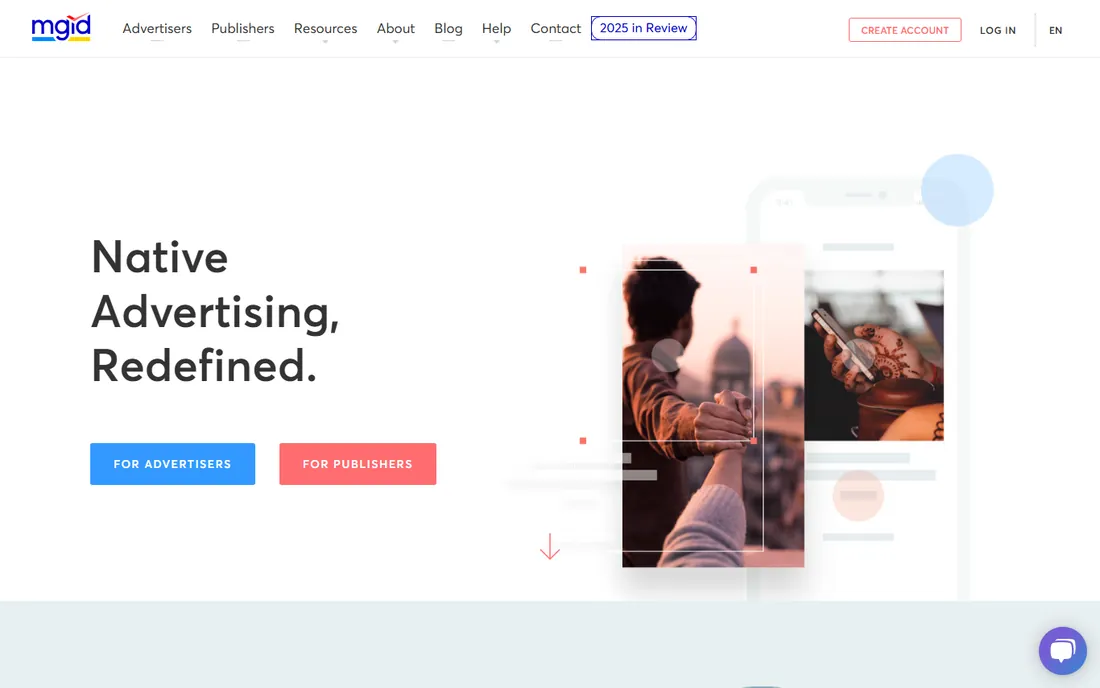
MGID is where smaller budgets go to learn native advertising without embarrassment. The $100 minimum deposit is the lowest among the established networks, and CPC bids start around a cent in tier-2 and tier-3 geos (expect $0.015 to $0.10 for tier-1). The platform covers native, push, display and video, with selective bidding and rule-based optimization tools that are genuinely useful once you have conversion data flowing.
The honest tradeoff is inventory quality. MGID's reach is broad rather than premium, which means your first job is building placement whitelists and blacklists, not admiring the dashboard. The company's own account managers advise $500 to $1,500 for a first budget to collect enough data, which tells you the $100 deposit is a door, not a test. For affiliate marketers and media buyers who know how to filter traffic, MGID is a workhorse. For brand advertisers who flinch at appearing next to questionable content, it is not.
What we like- The lowest entry point among the serious networks at a $100 deposit
- CPC bids from about a cent in cheaper geos
- Native, push, display and video formats in one dashboard with rule-based optimization
Watch out for- Traffic quality is mixed, so whitelists and blacklists are mandatory work
- Account managers push for $500 to $1,500 first budgets to gather data
- Weaker US premium publisher footprint than Taboola or Outbrain
#4
Revcontent
Best for: Advertisers who want selective, high-engagement placements
Visit revcontent.com
Starting priceCPC/vCPM ($50/day campaign minimum per official help docs)
Free planNo
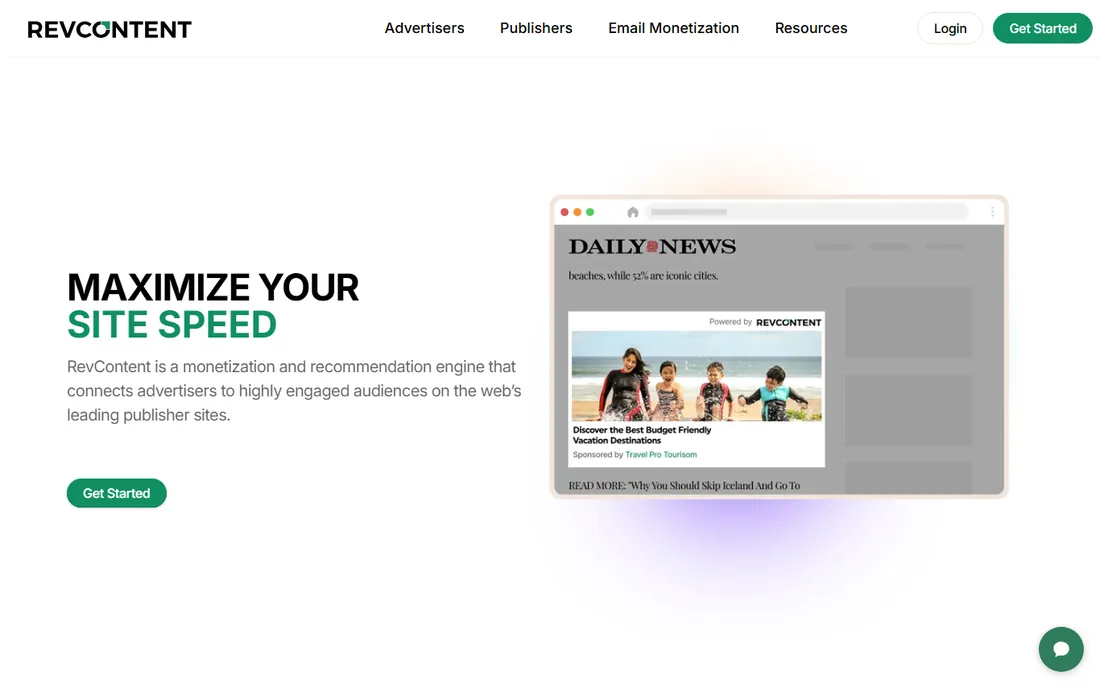
Revcontent sells selectivity as its product. Where MGID takes breadth, Revcontent curates: publishers must be approved, and the network's pitch is that fewer, better placements beat more, cheaper ones. Advertisers get transparency down to the traffic-source level, which is exactly what you need to cut losers fast. The widgets are lightweight and fast, a real consideration if you care about the landing experience, and bidding runs on CPC or viewable CPM.
The official help documentation sets a $50/day campaign minimum, and the company's homepage positions itself around no universal spend requirement at the account level, which confuses some buyers. Treat the $50/day as the real number for planning. Revcontent suits advertisers who have been burned by junk traffic on cheaper networks and would rather pay more per click for cleaner sources. It is a middleweight: more curated than MGID, less scale than Taboola.
What we like- Highly selective publisher marketplace, which keeps traffic quality above the budget networks
- Transparent reporting down to the traffic-source level
- Lightweight widgets that do not wreck page speed
Watch out for- The $50/day campaign minimum prices out the smallest testers
- Stricter content policies than MGID
- Smaller overall reach than Taboola
#5
TripleLift
Best for: Brands wanting creative, high-impact programmatic formats
Visit triplelift.com
Starting priceSee website (custom/programmatic buying)
Free planNo
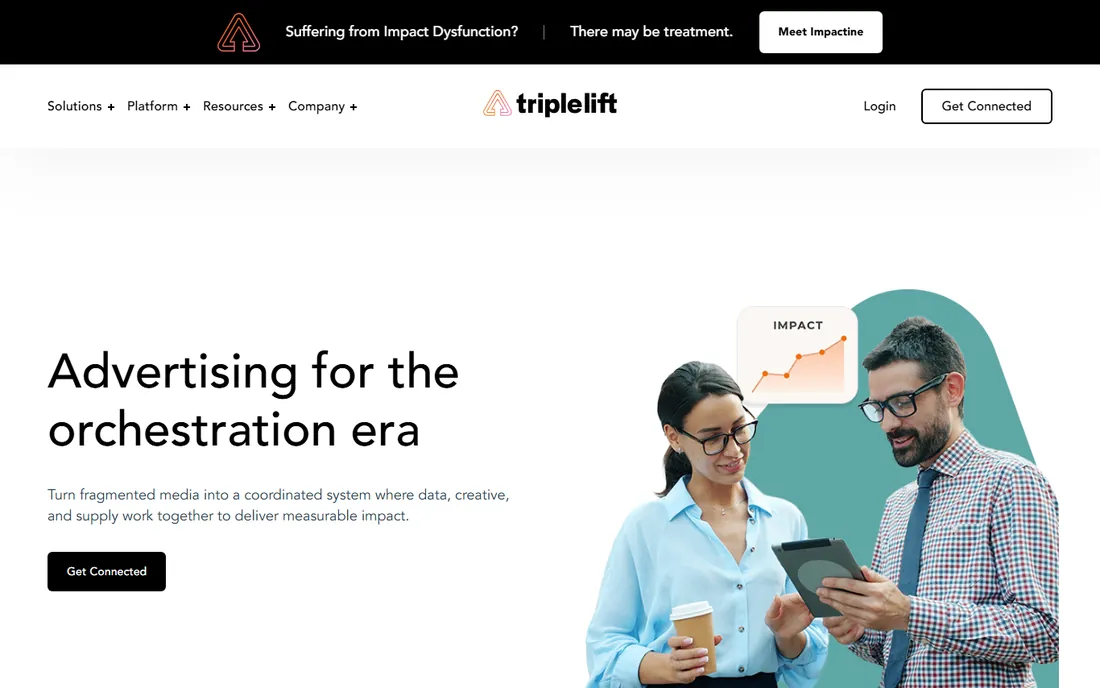
TripleLift stopped being just a native ad network a while ago. Today it describes itself as a creative SSP for the "orchestration era," and the product matches the ambition: dozens of formats from in-feed native images to cinemagraphs, scroll-triggered stories, branded video and a full CTV suite including pause ads and QR spots. The pitch is that creative quality drives the outcome, and the formats are genuinely more interesting than the standard headline-plus-thumbnail box.
The buying motion is programmatic, not self-serve. You work through managed deals or programmatic pipes, which means this is a platform for brands and agencies with real budgets, not a $500 test. Reviewers note pricing can feel steep for small businesses, which is the polite way of saying the entry point is high. Choose TripleLift when the creative is the strategy and you need formats that make people stop scrolling. Choose Taboola or MGID when the content link is the strategy and the creative just needs to get clicked.
What we like- The most creative format library in this list (scroll, cinemagraph, carousel, CTV pause ads, branded video)
- Programmatic buying through a creative-focused SSP
- Strong CTV and retail media options
Watch out for- No self-serve small-budget path
- Pricing is entirely custom and programmatic
- Overkill if you just want cheap content-discovery clicks
Starting priceSee website (bought via DSP or private marketplace; no self-serve)
Free planNo
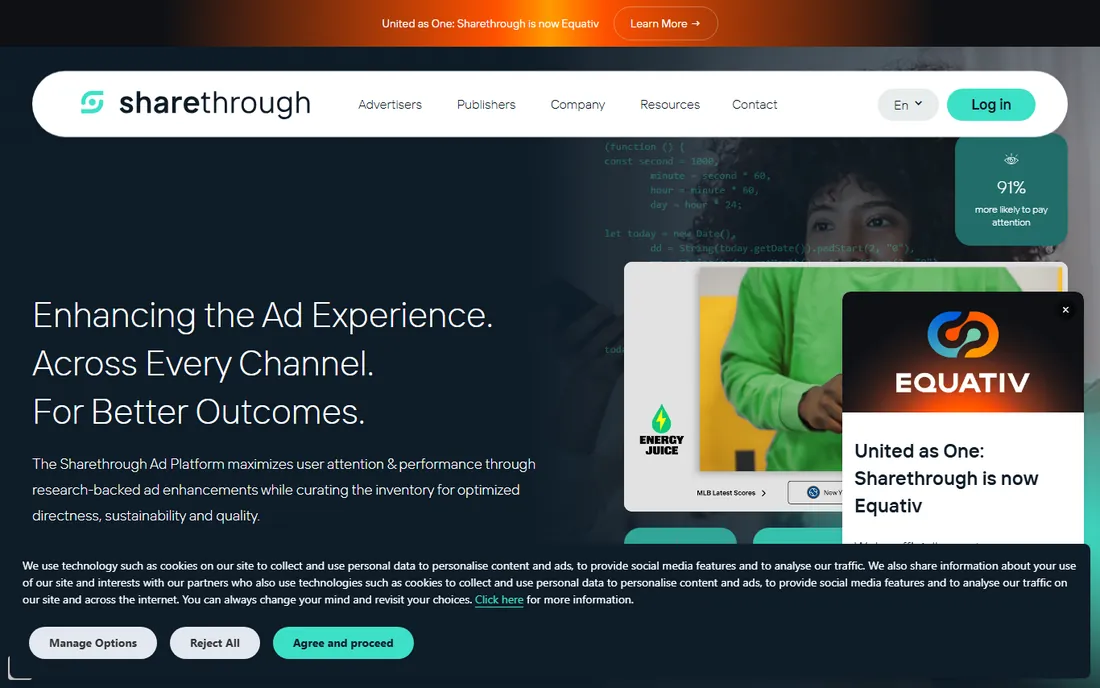
Sharethrough is the odd one out in this list: you cannot open an account and launch a campaign. It is a supply-side platform, which means advertisers reach its native inventory through demand-side platforms (The Trade Desk and similar) or private marketplace deal IDs. The technology takes your existing display or outstream creative and reshapes it with Dynamic Ad Templates so it fits the look of each publisher page automatically, which removes the usual native creative production tax.
That structure decides the fit. If your team already buys programmatically, Sharethrough is an efficient way to add native reach, and buyers report no campaign minimums. If you are a small business looking for a login and a $100 test, this is not your platform. Note the Equativ merger: the combined company is large and the integration is ongoing, so expect some toolset changes during 2026. Pricing is quotation-based and reflected in supply-path margins rather than a rate card.
What we like- Native inventory that adapts standard display and outstream creative automatically through Dynamic Ad Templates
- No campaign minimums reported by buyers
- Attention-curated ORION packages and GreenPMP sustainability options
Watch out for- No self-serve interface for direct advertisers, you must buy through a DSP
- Now merged with Equativ, so the toolset is in transition
- Quote-based with no public rates
Starting priceSee website (custom quote)
Free planNo
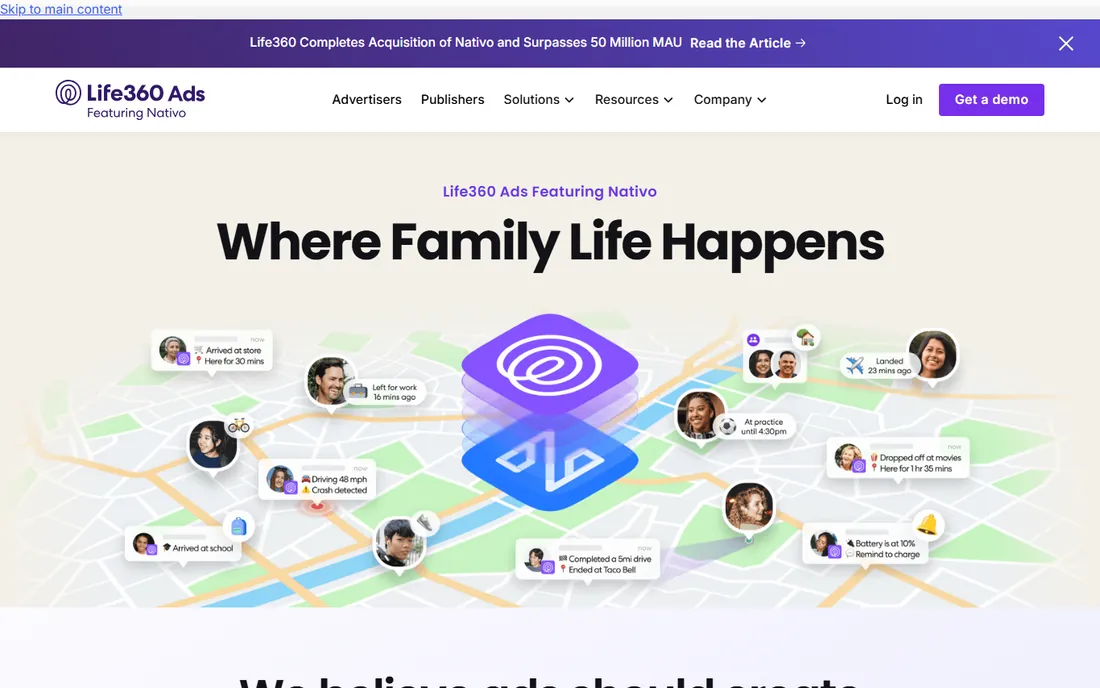
Nativo is the branded-content specialist in a list dominated by performance networks. Instead of optimizing for the cheapest click to an article, it is built for brands telling a story: sponsored content formats, predictive audiences, and measurement around attention and engagement rather than just CTR. That positioning survived its acquisition by Life360, which now presents the offering as "Life360 Ads featuring Nativo" with an emphasis on reaching families where real life happens.
Everything about the buying motion is enterprise. Pricing is custom-quoted, campaigns are managed, and there is no $100 self-serve door. That is a feature, not a bug, for the target buyer: a brand team running a content-led campaign with a five-figure budget gets a partner, not a dashboard. Performance marketers chasing cheap leads should stay with Taboola, Outbrain or MGID. Brand and content marketers who need their story told well, measured properly and placed safely should talk to Nativo.
What we like- Built specifically for branded content rather than cheap clicks
- Predictive audiences and content-first formats
- Now backed by Life360's family-focused audience data
Watch out for- Custom-quoted with no self-serve path for small budgets
- Narrower performance-tracking culture than the CPC networks
- The Life360 acquisition means the product is evolving
#8
Dianomi
Best for: Finance, business and luxury brands on premium publishers
Visit dianomi.com
Starting priceSee website (custom quote)
Free planNo
Dianomi is the premium corner of this list, and it does not pretend otherwise. The network runs native placements across 320+ premium publishers in finance, business and luxury lifestyle, including Apple News inventory that is genuinely hard to buy elsewhere. The audience story is affluence: the company cites 500 million devices reached, 8 billion monthly native impressions, and 8 out of 10 of the world's largest asset managers as clients. As a London-listed company (Dianomi PLC), its advertiser numbers are public, and they show average spend around £109,000 per advertiser per half-year.
That number is the whole review. If you are a wealth manager, fintech, luxury brand or B2B company selling to executives, Dianomi puts your content in front of the exact readers you want, in environments your compliance team will approve. If your budget has three zeros instead of six, start with MGID or Revcontent. There is no self-serve signup and no published pricing; every engagement starts with a conversation.
What we like- The most premium publisher lineup here (320+ publishers including major financial titles and Apple News)
- Affluent audience the company quantifies at 500M+ devices and 8B+ monthly impressions
- Pay-per-engagement options
Watch out for- Enterprise budgets only: the company's own reports show average advertiser spend around £109k per half-year
- Custom-quoted with no self-serve
- Finance-heavy audience limits some verticals
How we chose
We started with the searches buyers run: best content syndication platforms, native advertising platforms, content discovery networks and Taboola alternatives. For each candidate we opened the vendor's own homepage to confirm it still operates and fits the category, which is how Adblade (now closed to new campaigns) and Content.ad (unreachable) dropped out. We checked official help documentation for minimum budgets where vendors publish them (Revcontent's $50/day, Taboola's $50/day or 10x CPA guidance) and used "See website" everywhere else rather than repeating unverified third-party figures. The final eight mix self-serve CPC networks, managed brand platforms, a programmatic SSP and a premium vertical network, so the list covers every budget from $100 tests to enterprise campaigns.
The expensive mistake in this category is picking the platform before defining the job. Start with the buying motion. If you want to log in today, set a daily budget and launch, your options are Taboola, Outbrain, MGID and Revcontent. If you want a managed brand campaign with custom creative, talk to Nativo or Dianomi. If you buy media programmatically through a DSP, add TripleLift and Sharethrough to the plan. There is no universal best; there is only the best fit for how you buy.
Next, match the pricing model to your goal. CPC networks (Taboola, Outbrain, MGID, Revcontent) charge per click, which suits traffic and lead goals where you can measure the click's value. CPM and vCPM options suit awareness campaigns where the impression is the product. Dianomi's pay-per-engagement model charges when readers actually engage with the content, which changes the math for brand campaigns. Do not compare a $0.10 CPC on MGID with a premium Dianomi placement; they are different products with different audiences.
Then check the content rules before you fall in love with a platform. Every network in this list moderates creative, and the strictness varies enormously. Taboola and Outbrain reject aggressive health claims, before-and-after images and misleading advertorials. Revcontent is selective about both publishers and advertisers. Dianomi's premium publishers will not run anything that smells like clickbait. Write your headlines for the strictest network on your shortlist, and you will pass everywhere.
What a first test actually costs
The minimum deposit is not the test budget, and confusing the two is how $100 disappears with nothing learned. A real first test needs enough clicks to judge creative and placements: most media buyers want at least a few thousand clicks per creative angle before calling a winner. At a $0.30 average CPC, that is $900 to $1,500 per angle, which is why MGID's account managers suggest $500 to $1,500 for a first budget and Taboola's guidance points to $1,500 a month at the $50/day floor.
Structure the test the same way on any network. Pick one landing page and one conversion event. Run three to five headline and image combinations, not twenty. Give it three to four weeks; the first week's data is noise while the algorithm learns. Read the placement report weekly from day one and block the losers, because 20 percent of placements usually drive 80 percent of the waste. Set a hard loss limit in writing before you launch: the amount you are willing to spend to learn that the channel does not work. Content syndication rewards patient, systematic buyers and punishes hopeful ones.
Frequently asked questions
What is content syndication?
Content syndication means paying to place your content, usually articles, videos or guides, as recommended links on third-party publisher sites. Readers see your piece in "You May Like" or "Around the Web" boxes and click through to your site. It is a paid distribution channel for content marketing, not a link-building scheme: the goal is readers, leads or sales from the content itself.
How much does it cost to start?
Entry points range from MGID's $100 minimum deposit to Revcontent's $50/day campaign minimum, Outbrain's $20/day minimum and Taboola's recommended $50/day. A meaningful first test usually costs $500 to $1,500 on the budget networks and $1,500+ on Taboola. Premium options like Dianomi and Nativo are custom-quoted and built for five and six-figure annual budgets.
Taboola or Outbrain: which is better?
They are more different than they look since Outbrain's 2025 merger with Teads. Taboola remains the broad content-discovery network with the Yahoo partnership and the biggest reach; Outbrain.com is now explicitly a direct-response performance platform. Most serious buyers test both with the same creative and landing page, then follow the cost per conversion. Neither is universally better; the cheaper converter for your offer wins.
Do I need a big budget for content syndication?
No, but you need a real one. MGID and Revcontent let you start learning with a few hundred dollars, and Outbrain's $20/day minimum keeps the door low. What does not work is a $100 "let's see what happens" budget: at typical CPCs that buys a few hundred clicks, which is not enough data to judge anything. Budget for at least a few thousand clicks before you decide the channel works or not.
Will native ads work for B2B lead generation?
They can, with the right expectations. Native traffic is cold, interruptive traffic: readers came for an article, not your demo. B2B campaigns that work here usually gate a genuinely useful asset (a benchmark report, a calculator, an assessment) rather than pushing a demo request, and they nurture the leads by email. Dianomi is the strongest fit for B2B audiences in this list given its executive readership; Taboola and Outbrain work for broader B2B plays with patient funnels.
Sources we checked (12)
- https://taboola.com
- https://outbrain.com
- https://mgid.com
- https://revcontent.com
- https://triplelift.com
- https://www.sharethrough.com
- https://nativo.com
- https://dianomi.com
- https://help.revcontent.com/knowledge/guide-to-creating-a-campaign
- https://github.com/taboola/realize-claude-plugin/blob/HEAD/knowledge/budget.md
- https://www.vanturamarketing.com/taboola-ads-pros-and-cons/
- https://www.dianomi.com
Is your product missing or out of date?
We review this list regularly. Vendors can request a listing, send updated pricing or ask about featured placement.

Shihab Mia · Founder, Rankite
Shihab has 5+ years in B2B and SaaS SEO. He writes Rankite's software buying guides from pricing pages, documentation and public user reviews. More about Shihab.