How we make this list: we compare pricing pages, product documentation and public user reviews. Rankite is independent; if a vendor ever pays for a featured spot, that listing is clearly labeled Partner.

Key takeaways
- Jasper leads for marketing teams that need brand voice control and campaign workflows, not just a chatbot.
- Copy.ai and Writesonic compete on value for teams producing high volumes of marketing copy.
- Anyword differentiates with predictive performance scoring, which matters when copy has to convert, not just read well.
- Frase is the pick for SEO content specifically, while Sudowrite and Descript serve fiction writers and video creators respectively.
Quick comparison
| Tool | Best for | Starting price | Free plan |
|---|
 Jasper Jasper | Marketing teams needing brand consistency | See website | Free trial |
 Copy.ai Copy.ai | Teams producing marketing copy at volume | See website | Free tier |
 Writesonic Writesonic | Affordable SEO articles and ad copy | See website | Free trial |
 Anyword Anyword | Copy that needs to convert | See website | Free trial |
 Frase Frase | SEO content research and writing | See website | Free trial |
 Hypotenuse Hypotenuse | Ecommerce product descriptions at scale | See website | Free trial |
 Rytr Rytr | Budget AI writing for individuals | See website | Free tier |
 Sudowrite Sudowrite | Fiction writers and novelists | See website | Free trial |
 Descript Descript | Video and podcast creators | See website | Free tier |
Is your product missing or out of date?
We review this list regularly. Vendors can request a listing, send updated pricing or ask about featured placement.
The best AI platforms for content creation
#1
Jasper
Best for: Marketing teams needing brand consistency
Visit jasper.ai
Starting priceSee website
Free planFree trial
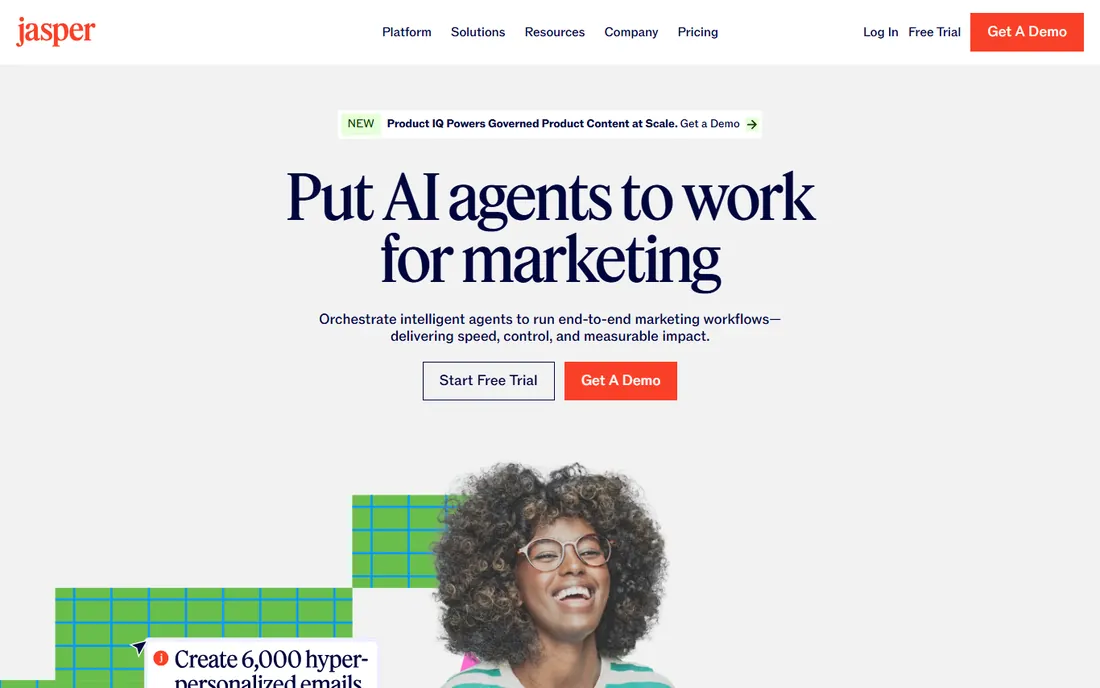
Jasper built its position by serving marketing teams rather than individual writers. Brand voice settings keep output on-tone, campaign templates structure real marketing work, and collaboration features suit teams producing content at scale. The integrations with Surfer and other tools fit SEO workflows.
Individuals and small blogs will find it expensive for what amounts to assisted drafting. But marketing departments that need AI output to sound like the brand, every time, will find Jasper's controls worth the premium.
What we like- Strong brand voice controls
- Campaign workflows for teams
- Good integrations
Watch out for- Premium pricing
- Overkill for individual bloggers
#2
Copy.ai
Best for: Teams producing marketing copy at volume
Visit copy.ai
Starting priceSee website
Free planFree tier
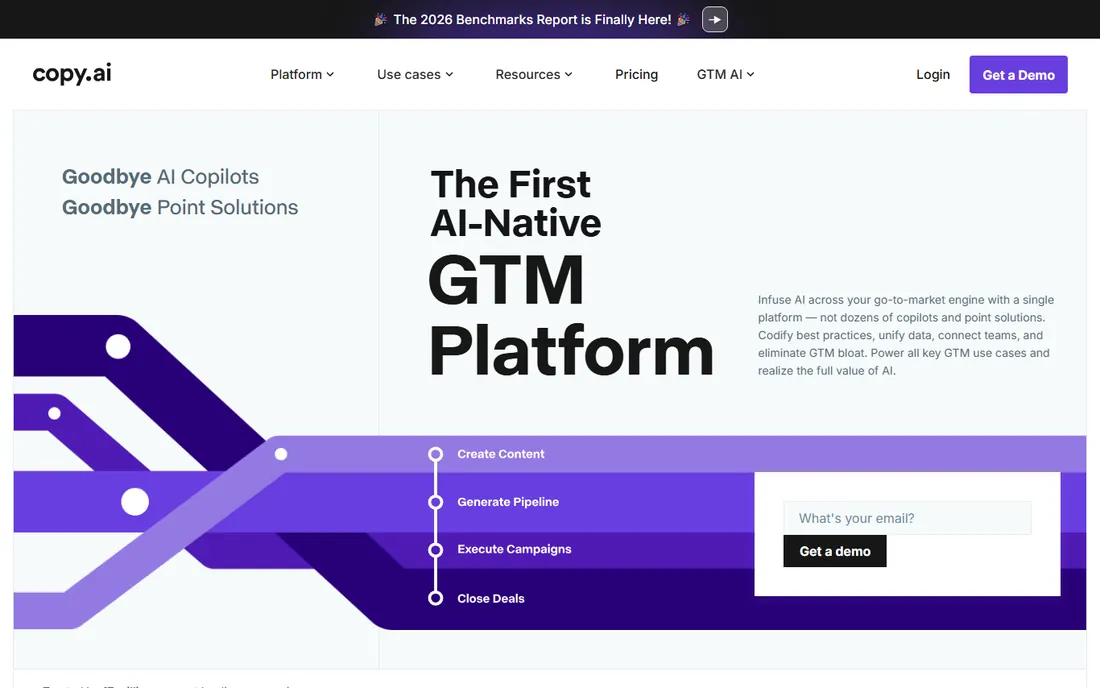
Copy.ai evolved from a copywriting tool into a go-to-market platform with AI workflows for sales and marketing teams. The free tier is genuinely useful, and the workflow builder automates repetitive content tasks like prospecting emails and product descriptions.
Raw output quality varies and needs human editing, like all these tools. But for teams that need volume with structure, Copy.ai's workflows beat chatting with a generic AI.
What we like- Generous free tier
- Strong workflow automation
- Good for sales and marketing teams
Watch out for- Output quality needs editing
- Brand voice controls trail Jasper
Starting priceSee website
Free planFree trial
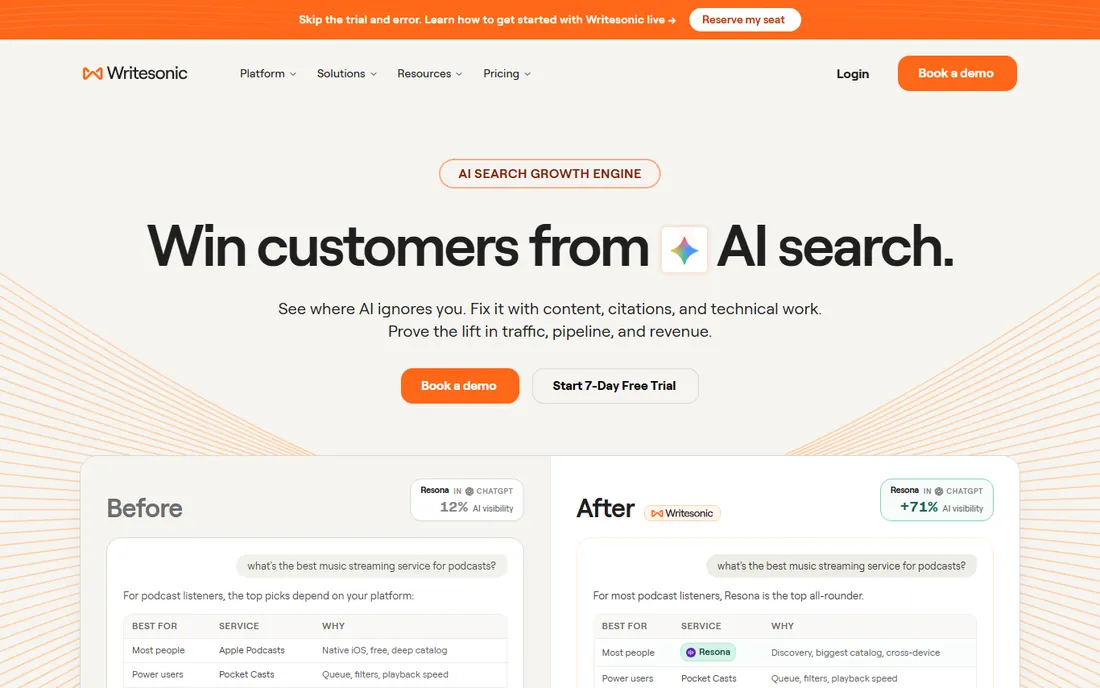
Writesonic targets the practical middle: affordable AI writing with templates for articles, ads, product descriptions and more. The SEO article workflow includes keyword handling and structure that bloggers need. Pricing undercuts Jasper significantly.
Long-form output still needs substantial editing for quality publication. But for marketers and bloggers producing regular content on a budget, Writesonic delivers acceptable drafts fast.
What we like- Competitive pricing
- SEO-focused article writer
- Good template library
Watch out for- Long-form quality needs heavy editing
- Interface is busy
Starting priceSee website
Free planFree trial
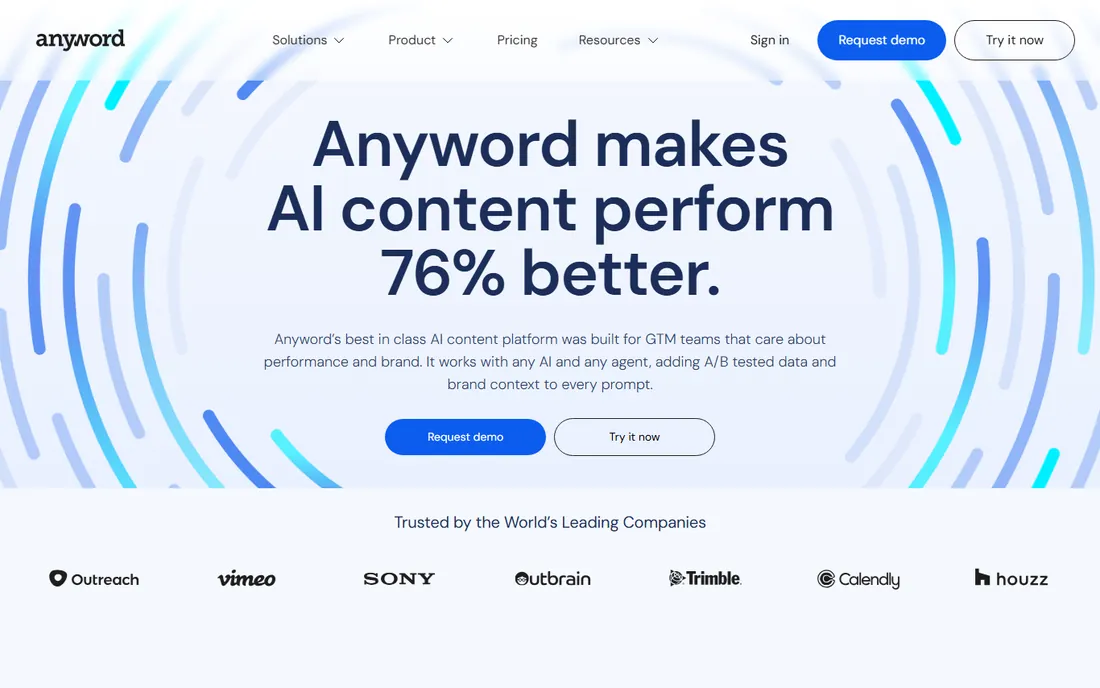
Anyword's differentiator is prediction: it scores copy variants on likely performance before you publish. For ads, landing pages and email subject lines, that data-driven edge matters more than prose quality. Marketers optimizing for conversion get a testing shortcut.
Long-form content is not its strength, and the pricing targets businesses. But when the metric is conversion rate rather than word count, Anyword's approach is unique.
What we like- Predictive performance scoring
- Strong for ads and landing pages
- Data-driven approach
Watch out for- Priced for businesses
- Less suited to long-form content
Starting priceSee website
Free planFree trial
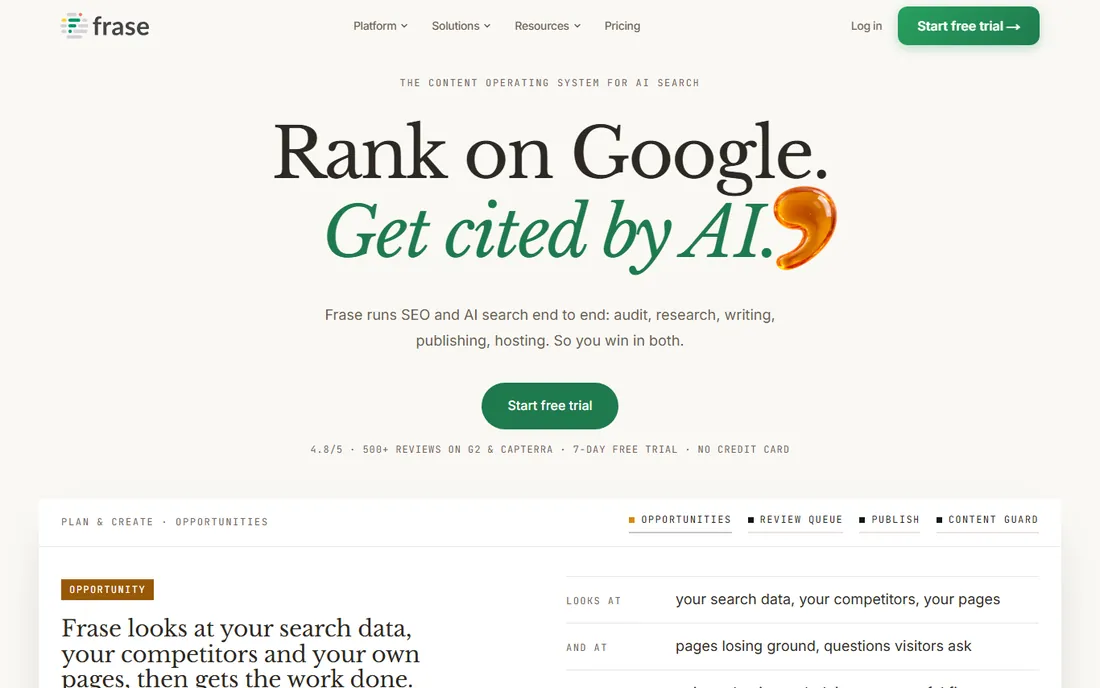
Frase is the SEO writer's tool: analyze what's ranking, build a content brief from the SERP, research the questions people ask, then draft with an AI assistant guided by those factors. The workflow mirrors how SEO content is actually produced.
It assumes you have an SEO strategy; without keyword targets, it is just a writer. But content teams publishing to rank will find the research-to-draft pipeline saves hours per article.
What we like- Content briefs from SERP analysis
- Question research
- Writing assistant tied to ranking factors
Watch out for- Narrow SEO focus
- Needs an SEO strategy to be useful
Starting priceSee website
Free planFree trial

Hypotenuse solves the ecommerce content problem: thousands of product descriptions, category pages and SEO meta content that no team can write manually. Batch generation with brand tone controls, plus Shopify integration, fits catalog businesses.
Outside ecommerce it has little to offer. But retailers and brands with large catalogs will find it purpose-built for their exact pain.
What we like- Built for product content
- Batch generation
- Good Shopify integration
Watch out for- Narrow ecommerce focus
- Less useful outside retail
Starting priceSee website
Free planFree tier
Rytr is the budget option that actually works: a free tier with monthly character limits and paid plans costing a fraction of Jasper. The interface is simple, the use cases cover the basics, and the output is serviceable for drafts and ideas.
Do not expect Jasper-level quality or features. But for students, freelancers and bloggers who need AI assistance without a $50 subscription, Rytr is the honest cheap pick.
What we like- Very affordable with a usable free tier
- Simple interface
- 30+ use cases
Watch out for- Output quality trails premium tools
- Fewer advanced features
Starting priceSee website
Free planFree trial
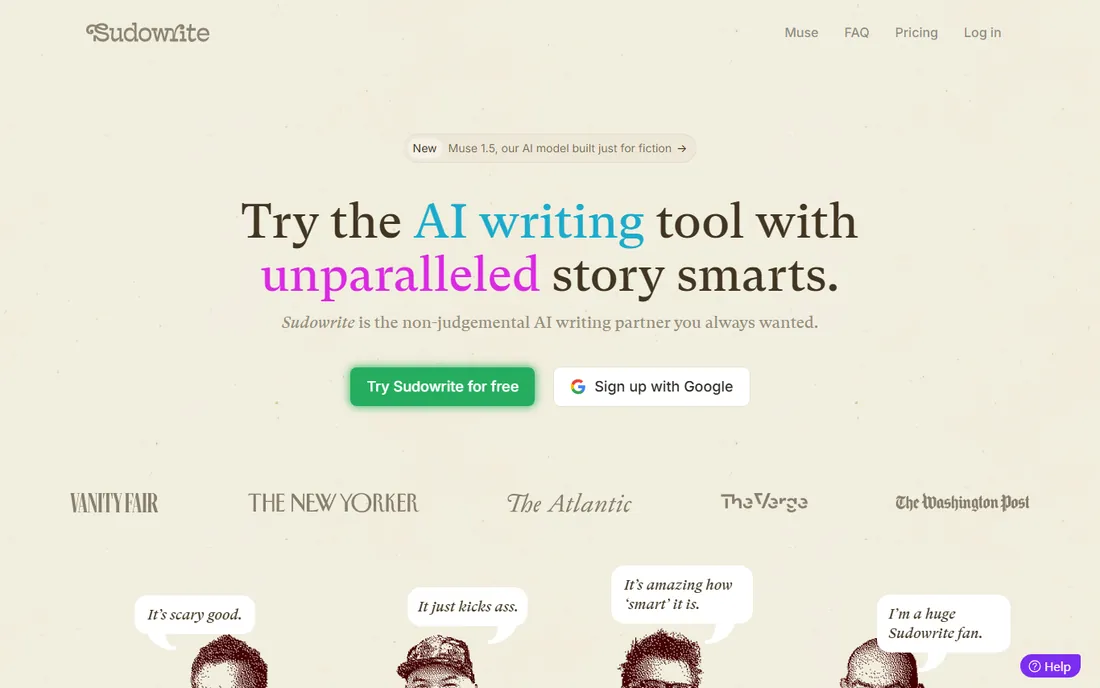
Sudowrite is the only tool here built for fiction: story beats, character development, descriptive expansion and writer's block tools designed with novelists. The writing community around it is enthusiastic for good reason.
Marketing teams should ignore it entirely. But fiction writers who tried generic AI and found it soulless will find Sudowrite speaks their language.
What we like- Built for creative writing
- Story engine and brainstorming tools
- Beloved by authors
Watch out for- Useless for marketing copy
- Subscription for a niche
Starting priceSee website
Free planFree tier
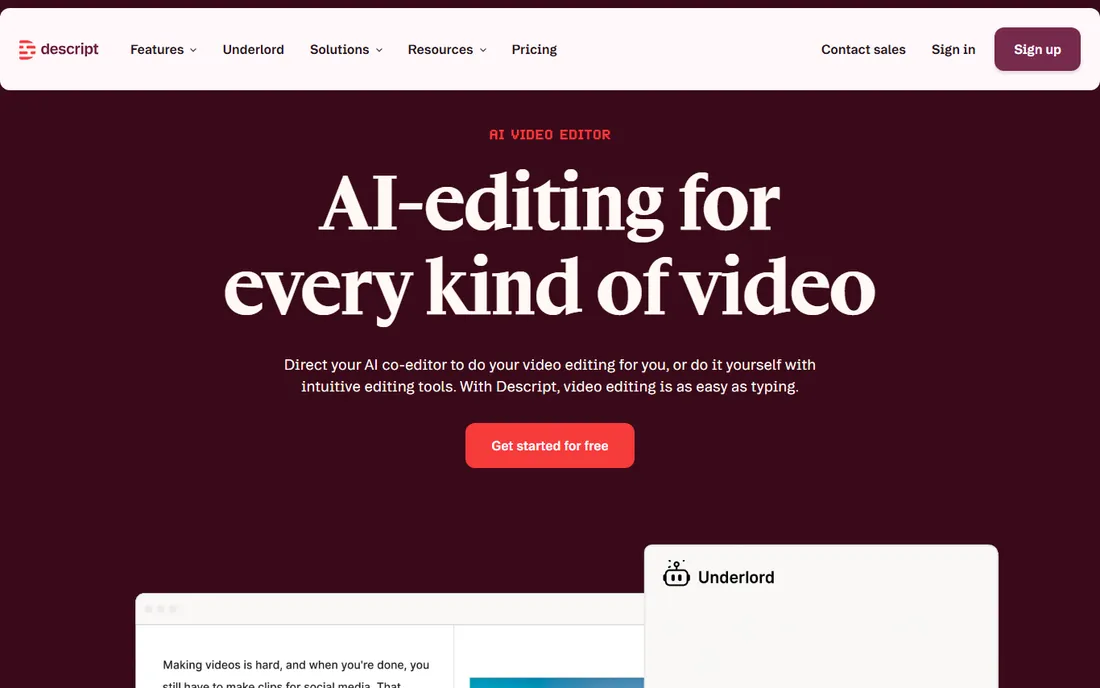
Descript belongs on a content creation list because it rethinks video and audio: transcribe your recording, then edit the text to edit the media. Overdub creates AI voiceovers, filler-word removal cleans podcasts, and the workflow suits creators publishing regularly.
It is not for blog posts. But creators whose content is video or audio will find Descript's text-based editing faster than any timeline editor.
What we like- Edit video by editing text
- AI voices and overdub
- Great for podcast workflows
Watch out for- Not a writing tool
- Learning curve on the editing paradigm
The honest limits of AI content tools
Every tool here produces drafts, not finished content. Google's stance rewards helpful, original content regardless of how it is produced, but AI output without human expertise, editing and fact-checking rarely clears that bar. The winning workflow is AI for speed plus human judgment for quality.
Also watch for sameness. AI writing has recognizable patterns, and audiences are developing an ear for it. Brand voice features, thorough editing and genuine subject-matter input are what separate usable AI content from the flood of generic filler.
How we chose
We compared platforms on output quality, workflow fit for real content jobs, brand control, pricing and honest limitations. We verified each vendor's homepage and current positioning, reviewed creator and marketer feedback on G2, Reddit and industry communities, and weighted practical publishing workflows over demo impressions. We did not publish AI-generated content as a test.
Editing AI drafts: a workflow that actually works
The draft is the starting line, not the finish. A practical editing pass has four stages. First, the structural edit: does the piece say what it should, in an order that makes sense? AI drafts often bury the point or repeat themselves. Fix the structure before touching sentences.
Second, the expertise pass: add what the AI cannot know. Your original examples, your data, your contrarian take, the specific detail that proves you have done this before. This is the pass that separates publishable content from filler. If you have nothing to add, the piece probably should not exist.
Third, the accuracy check. Verify every claim, number, name and date. AI tools hallucinate confidently, and the errors hide in plausible-sounding sentences. Check quotes against sources, statistics against primary data, and product details against the vendor's current site. One wrong fact destroys more trust than ten bland paragraphs.
Fourth, the voice edit: read it aloud and cut everything that sounds like a robot wrote it. Vary sentence length, kill the transitional phrases AI loves, and make sure it sounds like you on a good day. This pass is fast once you develop an ear for it, and it is what makes AI-assisted content actually worth reading.
Budget the time honestly. A good AI-assisted article still takes a skilled writer one to three hours for a standard post. Anyone promising ten-minute blog posts is promising ten-minute quality. The tools make experts faster; they do not make novices expert.
Mistakes that make AI content fail
The number one mistake is publishing raw output. Unedited AI text has recognizable patterns, generic phrasing and occasional hallucinations. Readers and search engines both discount it. Every piece needs the human passes: structure, expertise, accuracy and voice. Skipping them is not a workflow; it is spam.
Second is the generic prompt. "Write a blog post about email marketing" produces generic content because the input was generic. Good AI output needs good input: the angle, the audience, the key points, the examples, the tone. The thirty minutes spent on a detailed brief pays back in draft quality many times over.
Third is fact-checking nothing. AI tools invent statistics, misattribute quotes and describe products that do not exist, all in confident prose. Verify every factual claim against a primary source before publishing. One fabricated statistic in an otherwise good article destroys the credibility of everything around it.
Fourth is ignoring originality. If the AI can write it from training data, so can every competitor with the same tool. The pieces worth publishing contain something the AI could not know: your data, your experience, your interviews, your contrarian view. Lead with the original material and use AI for the scaffolding, not the substance.
Finally, scaling volume before nailing quality. Teams that go from zero to fifty AI articles a month usually produce fifty mediocre articles. Perfect the workflow on five pieces first: the prompts, the editing passes, the fact-checking. Then scale what works. Quality systems scale; rushed systems just produce more rush.
Frequently asked questions
Will Google penalize AI-generated content?
Google says it rewards helpful content regardless of production method. In practice, unedited AI content rarely meets the quality bar. Use AI for drafts and add real expertise, editing and fact-checking.
Which tool is best for blog posts?
Frase for SEO-driven posts, Jasper for brand-consistent team content, Writesonic for budget volume. All need human editing before publishing.
Can AI replace freelance writers?
For first drafts and routine content, it reduces the workload. For expert, original or brand-defining content, human writers remain essential. Most teams land on a hybrid workflow.
How much do these tools cost?
Free tiers cover light use. Paid plans typically run $15 to $100+ per month depending on volume and features. Model your monthly word count against plan limits.
Do I need to disclose AI use?
Practices vary by industry and platform. Some publishers disclose; most do not for AI-assisted drafts. Check your industry's norms and any client requirements.
What about AI images and video?
This list covers text and editing tools. Image and video generation are separate categories with their own leaders. Descript covers the video editing side of AI-assisted creation.
Sources we checked (9)
- https://www.jasper.ai/
- https://www.copy.ai/
- https://writesonic.com/
- https://www.anyword.com/
- https://www.frase.io/
- https://www.hypotenuse.ai/
- https://rytr.me/
- https://www.sudowrite.com/
- https://www.descript.com/
Is your product missing or out of date?
We review this list regularly. Vendors can request a listing, send updated pricing or ask about featured placement.

Shihab Mia · Founder, Rankite
Shihab has spent more than a decade helping SaaS and e-commerce brands grow through search. He writes Rankite's software buying guides from pricing pages, documentation and public user reviews. More about Shihab.