How we make this list: we compare pricing pages, product documentation and public user reviews. Ratings come from G2, Capterra or Trustpilot, with the date we checked them.
Key takeaways
- Enterprise shippers needing multimodal visibility should evaluate project44 and FourKites; both are quote-based with annual contracts.
- Mid-size importers wanting tracking without enterprise contracts should look at Terminal49 (free tier: 10 containers) and ShipsGo (3 free credits).
- Developer teams that want to embed tracking in their own systems should evaluate Vizion's API-first data.
- EU forwarders around Antwerp and Rotterdam should look at Dockflow's terminal-level data.
The best container tracking software
A container sitting at a port costs money every day it sits there. Detention and demurrage fees turn "we didn't know it arrived" into a five-figure invoice, which is why container tracking software exists: to know where every box is, when it will arrive, and which ones need action today. The category splits into enterprise visibility platforms, API data providers, and focused tracking tools. Buying the wrong tier means paying enterprise prices for dashboard views or building UIs on raw API data.
The eight tools below cover the real market, from the two visibility giants to the free-tier tools a mid-size importer can start with this week.

#1
project44
Best for: Large shippers, retailers, and 3PLs needing multimodal visibility
Visit project44.com
Starting priceSee website (quote-based; enterprise)
Free planNo (demo only)
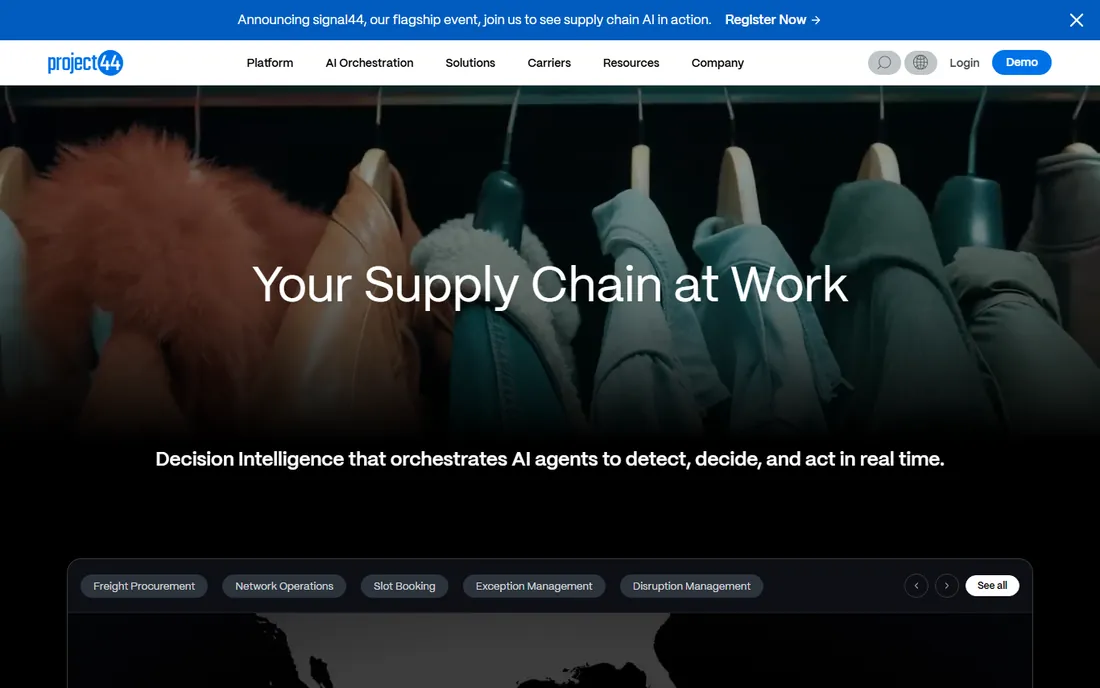
project44 is one of the two giants of supply chain visibility. Its pitch goes beyond tracking dots on a map: a decision-intelligence platform covering ocean, air, road, and rail with predictive ETAs and exception automation that cuts manual tracking work. The carrier network scale is the moat; more carriers connected means fewer blind spots.
The commercial reality is enterprise through and through: quote-only pricing, annual contracts, and a significant implementation involving EDI or API integrations with your carriers and TMS plus onboarding. Small shippers should look at the focused tools below instead. For large operations where a day of dwell time costs real money, the predictive and automation layer justifies the enterprise motion.
What we like- Decision-intelligence platform spanning shipment visibility, TMS, yard, and e-commerce logistics
- Massive carrier network with hundreds of millions of daily events
- AI agents that detect and act on disruptions
Watch out for- Quote-only enterprise pricing shuts out small shippers
- Broad platform can be heavy to implement

#2
FourKites
Best for: Enterprise supply chain teams wanting autonomous execution
Visit fourkites.com
Starting priceSee website (quote-based; enterprise)
Free planNo (demo only)
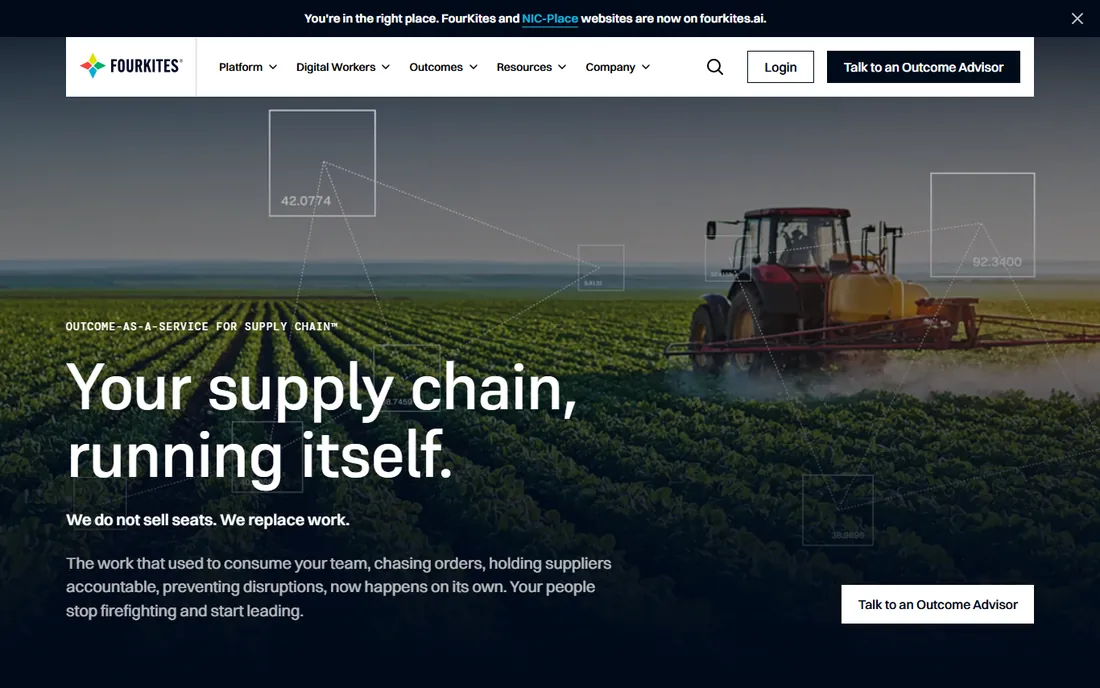
FourKites' 2026 story is "Outcome-as-a-Service": not dashboards but AI agents that do the work. Named agents contact carriers, reschedule appointments, process documents, and notify customers around the clock. For enterprise teams drowning in exception management, autonomous execution is a genuine step beyond visibility.
The diligence item is the rebrand itself. When a vendor repositions from platform to outcomes, confirm exactly which outcomes your contract includes; the demo's agents and the quote's agents should match. Pricing is opaque and value scales with volume, so smaller teams will pay for capacity they do not use. Setup involves carrier onboarding and systems integration. For enterprises ready to automate the follow-up, not just see the problem, FourKites leads.
What we like- AI agents that contact carriers, reschedule appointments, and file disputes autonomously
- Millions of daily tracked events across 1,600-plus brands
- Strong ocean outcomes including detention and demurrage disputes
Watch out for- No published pricing
- 2026 rebrand means confirming contract inclusions matters

#3
Terminal49
Best for: Importers and mid-size shippers wanting tracking without enterprise contracts
Visit terminal49.com
Starting priceSee website (Free, Lite, Essential, and Complete tiers)
Free planYes (free tier: up to 10 active containers, 3 users, per vendor pricing page)
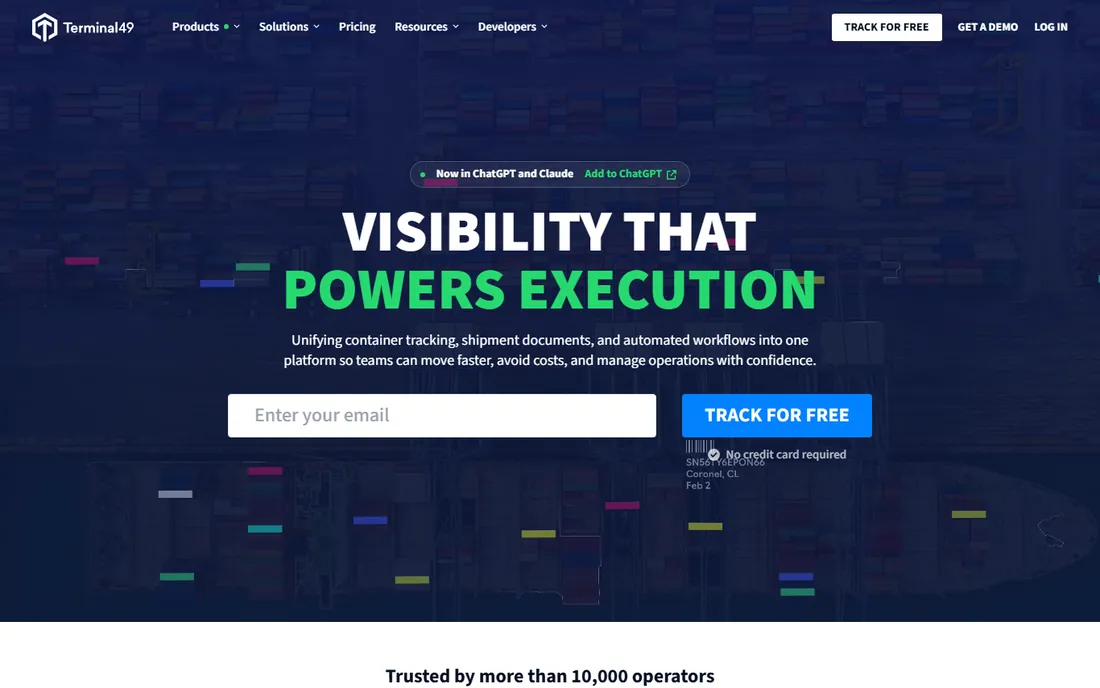
Terminal49 is the accessible answer to container tracking. Real-time milestones from carrier, terminal, vessel AIS, and intermodal rail sources, standardized into one dashboard with proactive alerts on at-risk containers. Last-free-day tracking directly attacks demurrage fees, which is where the ROI lives for importers.
The free tier (10 active containers, 3 users) lets a small operation validate the data quality before spending anything; growing teams move to paid tiers quickly, so model per-container pricing against your volume. Setup is self-serve: sign up, add containers, connect via API, with no EDI project required. For mid-size shippers that need reliable tracking this week, this is the pragmatic pick.
What we like- Real-time milestones across carrier, terminal, vessel, and rail
- Modern API with webhooks
- Exception alerts and last-free-day tracking that cut demurrage
Watch out for- Free tier caps at 10 containers
- Per-container pricing needs modeling against volume

#4
ShipsGo
Best for: SMB forwarders and shippers wanting affordable visibility plus route planning
Visit shipsgo.com
Starting priceSee website (credit-based: 1 credit per new shipment, plus annual API fee)
Free planYes (3 free credits for new users)
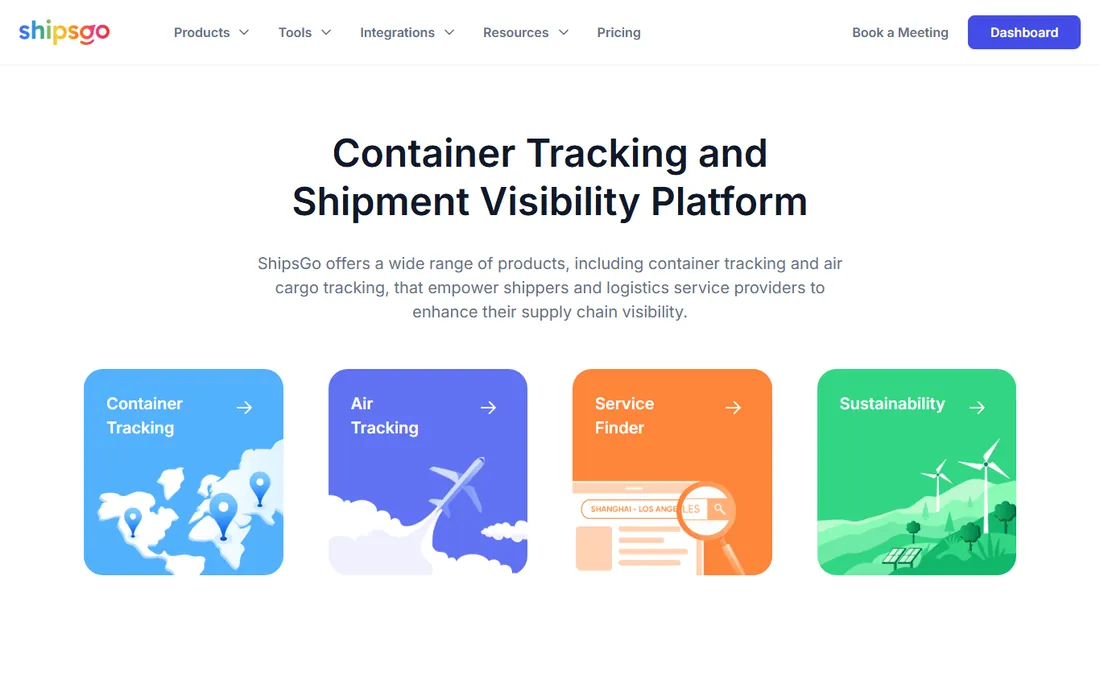
ShipsGo combines tracking with something the giants do not emphasize: route planning. Service Finder uses completed-voyage data to compare carriers on real reliability rather than published schedules, which changes how forwarders choose routings. The sustainability module with CO2 calculation and offsetting answers the emissions questions shippers increasingly face.
The credit system needs a spreadsheet. Each new shipment consumes one credit, with an annual API usage fee on top, so high-volume users must budget carefully rather than assuming linear costs. Setup is self-serve with dashboard and API. For SMB forwarders that want visibility plus genuine route intelligence at a manageable price, ShipsGo's value equation is strong.
What we like- Tracks 130-plus carriers with millions of shipments tracked
- Service Finder compares 300,000-plus ocean routes on real transit-time data
- Sustainability module with CO2 calculation
Watch out for- Credit model can confuse forecasting at scale
- Air cargo tracking still in beta

#5
Vizion
Best for: Software teams and 3PLs embedding tracking into their own systems
Visit vizionapi.com
Starting priceSee website (usage-based API pricing; tier docs on vendor site)
Free planNot confirmed; check vendor site
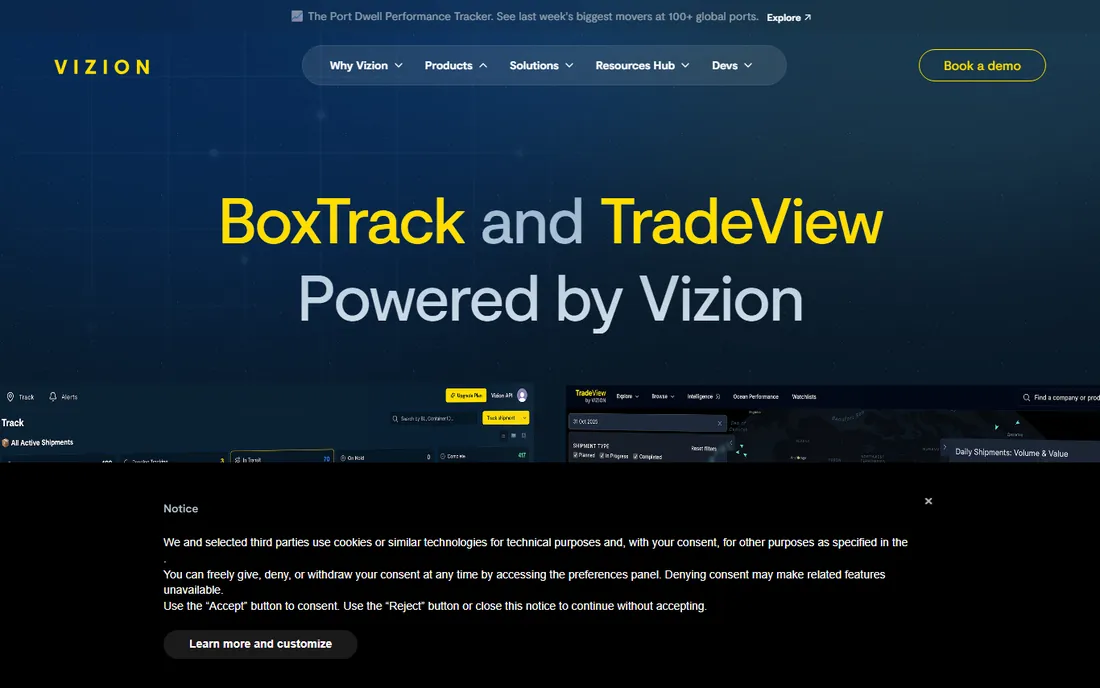
Vizion sells data, not dashboards. Standardized milestone events via REST API and webhooks, with thousands of unique events mapped to a standard milestone set, refreshed from EDI, AIS, port, and terminal sources at low latency. TradeView adds trade intelligence for sourcing decisions.
The honest framing: this is infrastructure for API-capable teams. If you want a dashboard with alerts, buy Terminal49 or ShipsGo. If you want clean tracking data inside your own TMS, ERP, or customer portal, Vizion's data quality and uptime are the product. Setup is fast for developers. Check the plan tiers on the vendor docs site before committing, since usage-based pricing needs volume modeling.
What we like- API-first standardized container events pushed to your ERP, TMS, or spreadsheets
- Near-total ocean coverage from EDI, AIS, port, and terminal sources
- Trade intelligence on hundreds of millions of suppliers
Watch out for- Developer-oriented
- You build the UI and workflows yourself
- Public pricing details are thin

#6
Gnosis Freight
Best for: US importers and large shippers focused on detention and demurrage reduction
Visit gnosisfreight.com
Starting priceSee website (quote-based)
Free planNo (demo only)
Gnosis Freight's distinction is lifecycle coverage. Most tracking tools watch port to port; Gnosis follows the container from booking through empty return, including the landside legs where detention and demurrage actually accrue. For US importers whose costs concentrate in those drayage and terminal windows, that coverage is the ROI.
Pricing requires a sales conversation, and the UI depth favors dedicated logistics teams over casual users. Setup involves data connections to carriers and terminals with vendor support. For importers measuring success in reduced accessorial fees rather than prettier dashboards, the lifecycle framing fits the actual cost structure.
What we like- Container Lifecycle Management from booking to empty return
- Near-total global coverage with predictive ETAs
- Tracking engine available via API
Watch out for- No public pricing
- Positioning favors importers over freight forwarders

#7
GoComet
Best for: Mid-market to enterprise shippers wanting visibility plus workflow automation
Visit gocomet.com
Starting priceSee website (quote-based)
Free planNo (demo only)
GoComet combines tracking with the surrounding workflows: rates, compliance, disruption management, and payment controls in one AI-native platform. The positioning suits Asia and Middle East trade lanes particularly, where its network and customer base concentrate.
The platform breadth is both the appeal and the caution: you get more than tracking, but you need proper onboarding to use it well, and the quote-only enterprise pricing means a sales-led buying process. The vendor claims first value in about six weeks with guided deployment. For mid-market shippers that want visibility that does things, not just shows things, GoComet belongs in the evaluation.
What we like- AI-native platform automating freight coordination end to end
- Thousands of carrier integrations with large annual volumes
- AI workers executing workflows inside customer rules
Watch out for- Enterprise sales motion with no public pricing
- Smaller network than the US giants

#8
Dockflow
Best for: Freight forwarders operating around Antwerp and Rotterdam
Visit dockflow.com
Starting priceSee website (quote-based; paid proof of concept after demo)
Free planNo (demo, then paid proof of concept)
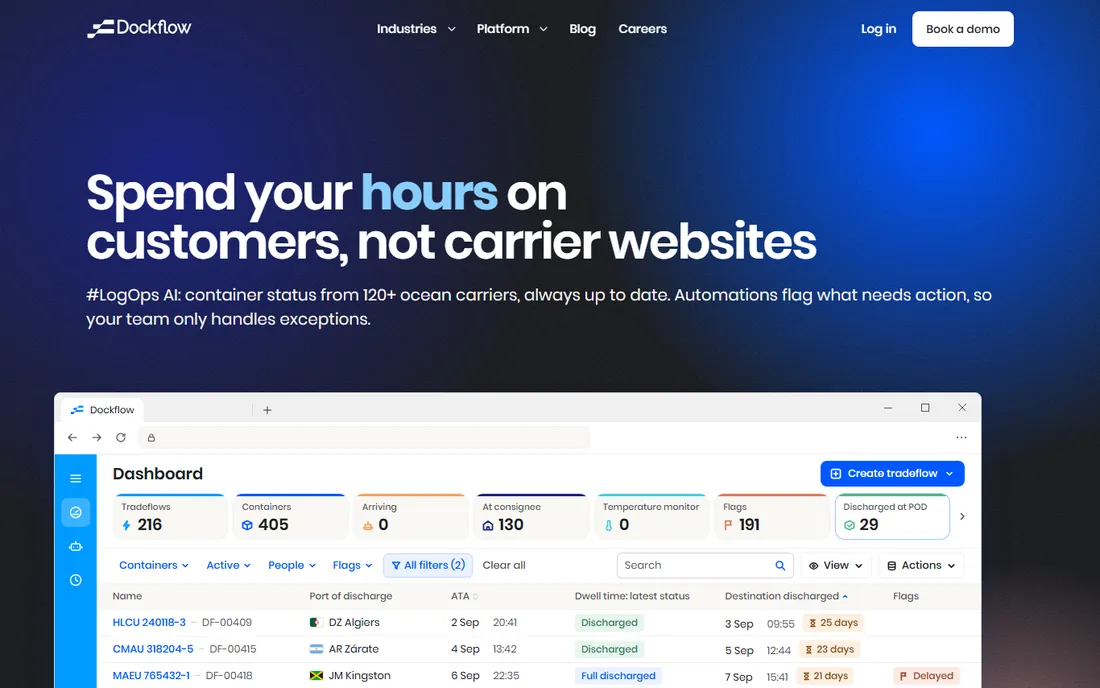
Dockflow wins on terminal depth. As an official supplier in the Antwerp and Rotterdam port ecosystems, it sees release status, gate moves, and terminal events that generic carrier tracking misses. The demurrage and dwell-time tracker with free-day alerts speaks directly to forwarder economics.
The footprint is the limitation: outside the EU port cluster, coverage thins. The buying motion is sales-led (demo, then a paid proof of concept), which filters for serious buyers. Setup is fast since it runs on your existing port subscriptions, and EU hosting addresses GDPR concerns. For forwarders living on free-time math in Antwerp and Rotterdam, the terminal-level data is unmatched.
What we like- Terminal-level data with demurrage and dwell-time tracking
- Official integrations with Antwerp and Rotterdam terminal systems
- Control-tower map with conversational AI
Watch out for- EU-centric footprint limits global coverage
- No public pricing or self-serve tier
Quick comparison
| Tool | Best for | Starting price | Free plan |
|---|
| project44 | Large shippers, retailers, and 3PLs needing multimodal visibility | See website (quote-based; enterprise) | No (demo only) |
| FourKites | Enterprise supply chain teams wanting autonomous execution | See website (quote-based; enterprise) | No (demo only) |
| Terminal49 | Importers and mid-size shippers wanting tracking without enterprise contracts | See website (Free, Lite, Essential, and Complete tiers) | Yes (free tier: up to 10 active containers, 3 users, per vendor pricing page) |
| ShipsGo | SMB forwarders and shippers wanting affordable visibility plus route planning | See website (credit-based: 1 credit per new shipment, plus annual API fee) | Yes (3 free credits for new users) |
| Vizion | Software teams and 3PLs embedding tracking into their own systems | See website (usage-based API pricing; tier docs on vendor site) | Not confirmed; check vendor site |
| Gnosis Freight | US importers and large shippers focused on detention and demurrage reduction | See website (quote-based) | No (demo only) |
| GoComet | Mid-market to enterprise shippers wanting visibility plus workflow automation | See website (quote-based) | No (demo only) |
| Dockflow | Freight forwarders operating around Antwerp and Rotterdam | See website (quote-based; paid proof of concept after demo) | No (demo, then paid proof of concept) |
Is your product missing or out of date?
We review this list regularly. Vendors can request a listing, send updated pricing or ask about featured placement.
Frequently asked questions
How much does container tracking software cost?
Two markets: enterprise platforms (project44, FourKites, Gnosis, GoComet) price by custom quote with annual contracts; focused tools publish tiers or usage models (Terminal49's per-container tiers, ShipsGo's credits, Vizion's API usage). Start with a free tier or trial to validate data quality before engaging enterprise sales.
What is the difference between milestone tracking and AIS tracking?
Milestone tracking follows shipment events (gate in, loaded, discharged, delivered) from carrier EDI and terminal data. AIS tracks vessel positions via satellite. Good platforms combine both: AIS shows where the ship is, milestones show what is happening to your container. Evaluate milestone completeness, not just map dots.
How do we reduce detention and demurrage with tracking?
The mechanism is early warning: last-free-day alerts, at-risk container flags, and discharge notifications that reach the right person in time to act. Tools with terminal-level data (Dockflow) or lifecycle coverage (Gnosis) catch the landside delays where fees accrue. Measure fee reduction quarterly; that is the ROI.
Do we need API integration or is a dashboard enough?
Dashboards suffice for teams managing tens of containers manually. Beyond that, API or webhook integration into your TMS or ERP pays off: automated milestone updates eliminate manual tracking work and feed customer notifications. Vizion exists precisely for teams that want data without a dashboard.
How accurate are predictive ETAs?
Better than schedules, worse than certainty. Models trained on completed voyages (ShipsGo's Service Finder approach) beat carrier-published schedules on reliability ranking. Treat ETAs as planning inputs with confidence ranges, not promises, and verify accuracy against your lanes during a trial.
Can small shippers afford container tracking?
Yes. Terminal49's free tier covers 10 containers, ShipsGo offers free credits, and both have self-serve paid tiers far below enterprise contracts. Start there; move to enterprise platforms when volume or complexity (multimodal, multi-region) outgrows them.
The demurrage math
Before buying, quantify the problem. Pull last quarter's detention and demurrage invoices and categorize by cause: late pickup, missed free days, documentation delays. Most shippers find a handful of repeat patterns that tracking alerts would have prevented. Price the software against that number, not against the feature list. A tool that prevents two demurrage incidents a month pays for itself at almost any tier; a tool nobody checks during the free-day window does not, at any price.
How we chose
We started with the searches buyers actually run: best container tracking software and its variants. For each candidate we opened the vendor's own homepage, recorded the pricing model as stated (quote-based, tiered, credit, or usage), and compared coverage, data sources, and company-size fit against practitioner discussion and public sources. Where the vendor publishes no prices we wrote "See website" rather than guessing. The shortlist spans enterprise platforms to free-tier tools because a global 3PL and a 20-container importer are not buying the same thing.
Sources we checked (8)
- https://www.project44.com/
- https://fourkites.com/
- https://terminal49.com/
- https://shipsgo.com/
- https://vizionapi.com/
- https://gnosisfreight.com/
- https://gocomet.com/
- https://dockflow.com/
Is your product missing or out of date?
We review this list regularly. Vendors can request a listing, send updated pricing or ask about featured placement.

Shihab Mia · Founder, Rankite
Shihab has 5+ years in B2B and SaaS SEO. He writes Rankite's software buying guides from pricing pages, documentation and public user reviews. More about Shihab.