How we make this list: we compare pricing pages, product documentation and public user reviews. Rankite is independent; if a vendor ever pays for a featured spot, that listing is clearly labeled Partner.
Key takeaways
- Samsara is the strongest pick for mixed fleets that want OEM data, GPS trackers, and maintenance in one dashboard.
- Tenna is the best construction-only platform, built around how contractors actually run equipment across job sites.
- Fleetio suits maintenance-first shops; it pulls in OEM telematics instead of selling you its own hardware.
- Caterpillar VisionLink and Komatsu Komtrax are the obvious defaults if your fleet is mostly one brand, and both now handle non-OEM machines too.
- Trackunit and Zonar fit rental companies and large mixed fleets that need device-agnostic telematics at scale.
Quick comparison
| Tool | Best for | Starting price | Free plan |
|---|
 Samsara Samsara | Mixed fleets unifying OEM and GPS data | See website | See website |
 Tenna Tenna | Contractors wanting a construction-built platform | See website | See website |
 Teletrac Navman Teletrac Navman | Global fleets with video telematics | See website | See website |
 Fleetio Fleetio | Maintenance-first equipment management | See website | See website |
 Verizon Connect Verizon Connect | Large fleets on the Verizon network | See website | See website |
 Caterpillar VisionLink Caterpillar VisionLink | Cat-heavy fleets | See website | See website |
 Komatsu Komtrax Komatsu Komtrax | Komatsu machine owners | See website | See website |
 Topcon Topcon | Machine control plus tracking | See website | See website |
 Trackunit Trackunit | Rental and OEM-agnostic IoT fleets | See website | See website |
 Zonar Zonar | Construction fleets with inspection workflows | See website | See website |
Is your product missing or out of date?
We review this list regularly. Vendors can request a listing, send updated pricing or ask about featured placement.
The best construction machine tracking software
Starting priceSee website
Free planSee website
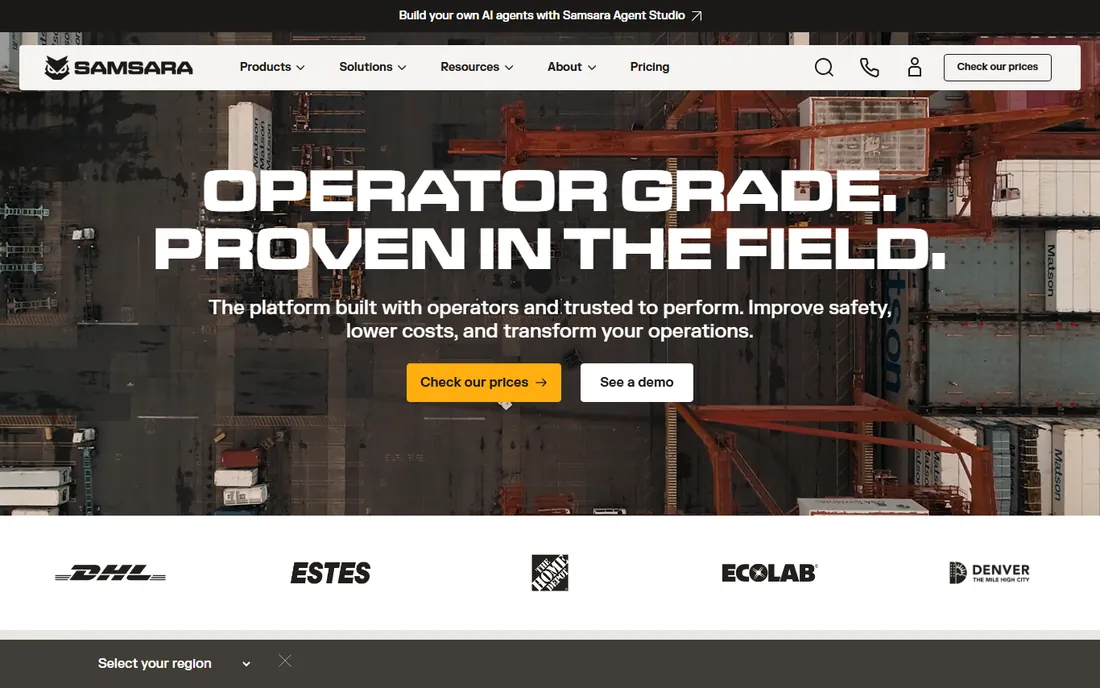
Samsara has become the default shortlist pick for contractors running mixed fleets because it solves the hardest problem first: one dashboard for everything. Its OEM integrations pull telematics data from Caterpillar, Komatsu, John Deere, Volvo, CASE and Vermeer without extra hardware, while its own Asset Gateways cover the rest of the powered fleet and asset tags cover small gear. For a contractor juggling five brands across three job sites, that consolidation is the whole pitch.
The construction-specific features go beyond dots on a map. Time on Site reports use geofences and GPS data to support customer billing, maintenance scheduling can run off engine hours, and fault-code alerts push to technicians before a machine strands a crew. The honest catch is commercial: Samsara sells like an enterprise vendor, with pricing behind a quote wall. Smaller shops should demo it against a simpler tool before signing, because the breadth you pay for only matters if you use it.
What we like- Deep OEM integrations for Cat, Komatsu, John Deere, Volvo and others
- Asset Gateways cover powered and unpowered equipment
- Strong maintenance scheduling and fault-code alerts
Watch out for- Quote-only enterprise pricing with a sales-led process
- Can be more platform than a sub-50-asset fleet needs
#2
Tenna
Best for: Contractors wanting a construction-built platform
Visit tenna.com
Starting priceSee website
Free planSee website
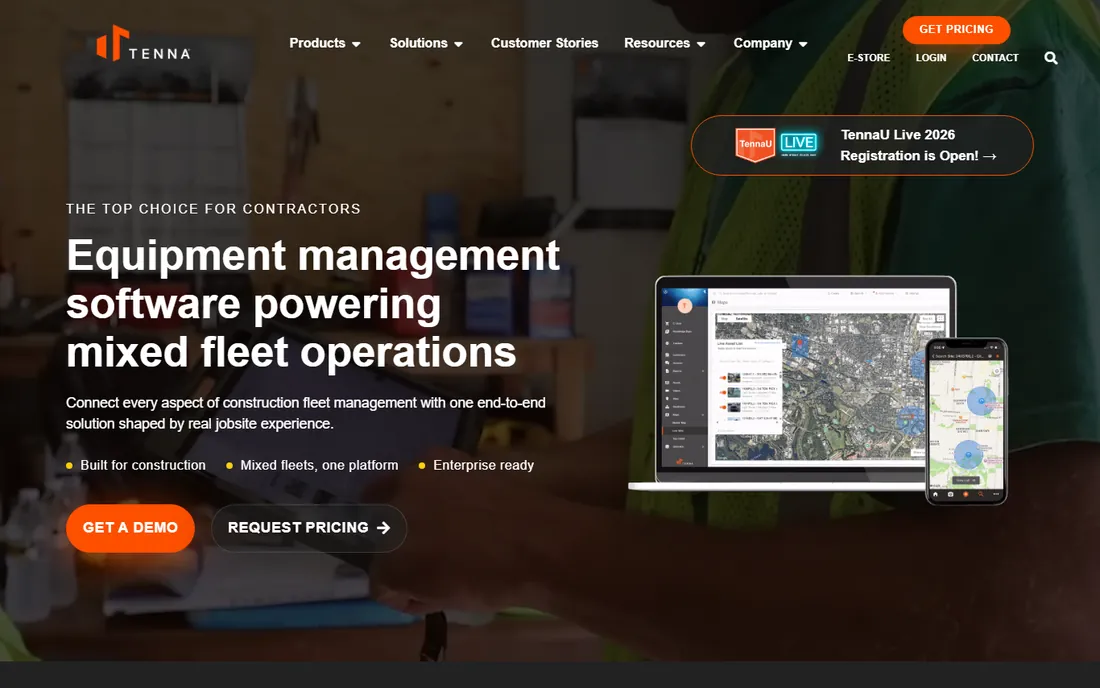
Tenna was designed for contractors rather than adapted from trucking software. The platform tracks everything from hand tools (QR and RFID) to heavy equipment (GPS) in one asset register, and layers on dispatch, utilization reporting and equipment job costing. Its founding team came out of the construction industry, and the product still reflects that in its workflows.
Where Tenna gives ground is breadth. A general fleet platform will have more third-party integrations and a bigger partner ecosystem. Pricing is also quote-only, which makes quick comparison shopping harder. For a contractor that wants equipment management software shaped by real jobsite experience, Tenna is the most construction-native option on this list.
What we like- Purpose-built for construction mixed fleets
- QR, RFID and GPS tracking for tools through heavy iron
- Job costing and dispatch features contractors actually use
Watch out for- Narrower integration marketplace than general fleet platforms
- Quote-based pricing with no public numbers
Starting priceSee website
Free planSee website
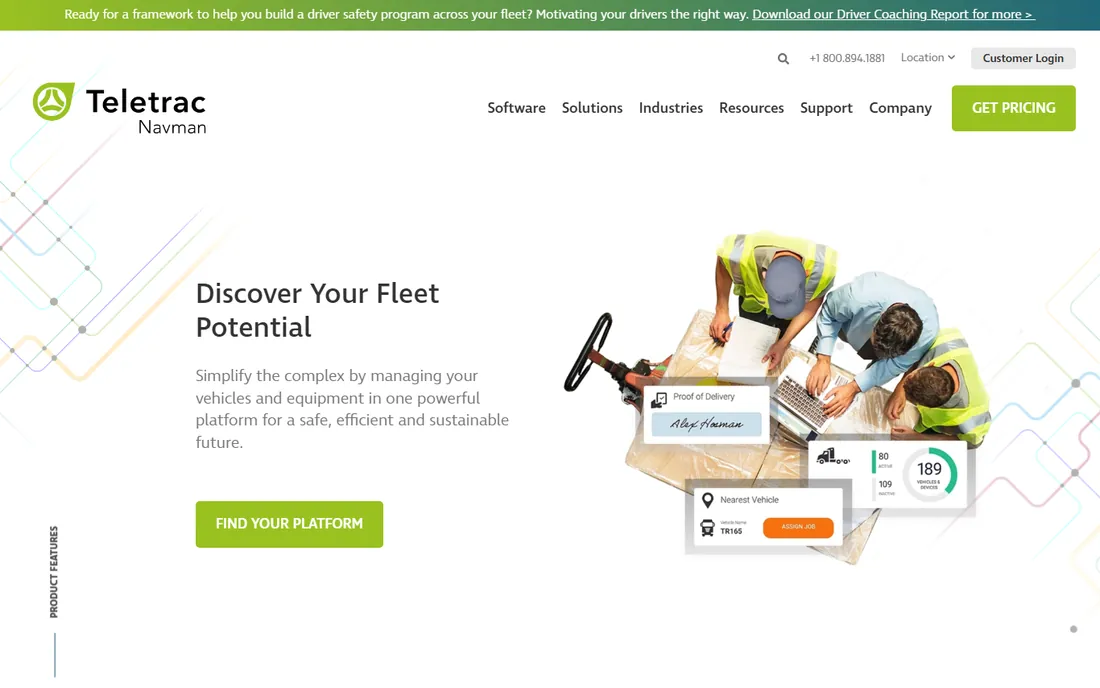
Teletrac Navman has been in GPS fleet tracking long enough to have refined the unglamorous parts: second-by-second tracking, geofencing tied to jobsite reporting, engine fault codes and maintenance planning in one system. Its equipment tracking covers utilization by site, fuel data and a mobile app for field teams. Companies with operations across regions benefit from its US, UK, Australian and New Zealand presence.
The tradeoff is that you buy into an ecosystem with hardware, installation and typically multi-year terms. That is standard for enterprise telematics, but the total cost of ownership is harder to pin down from a brochure. Fleets that value a proven global vendor with deep construction references will find it dependable; fleets that want month-to-month flexibility should ask about contract length before committing.
What we like- TN360 platform scales from a dozen assets to thousands
- Rugged GPS trackers for heavy equipment with engine-hour and fuel data
- Strong global support footprint
Watch out for- Sales process is quote-driven with hardware commitments
- The platform can feel heavier than newer cloud-native rivals
Starting priceSee website
Free planSee website
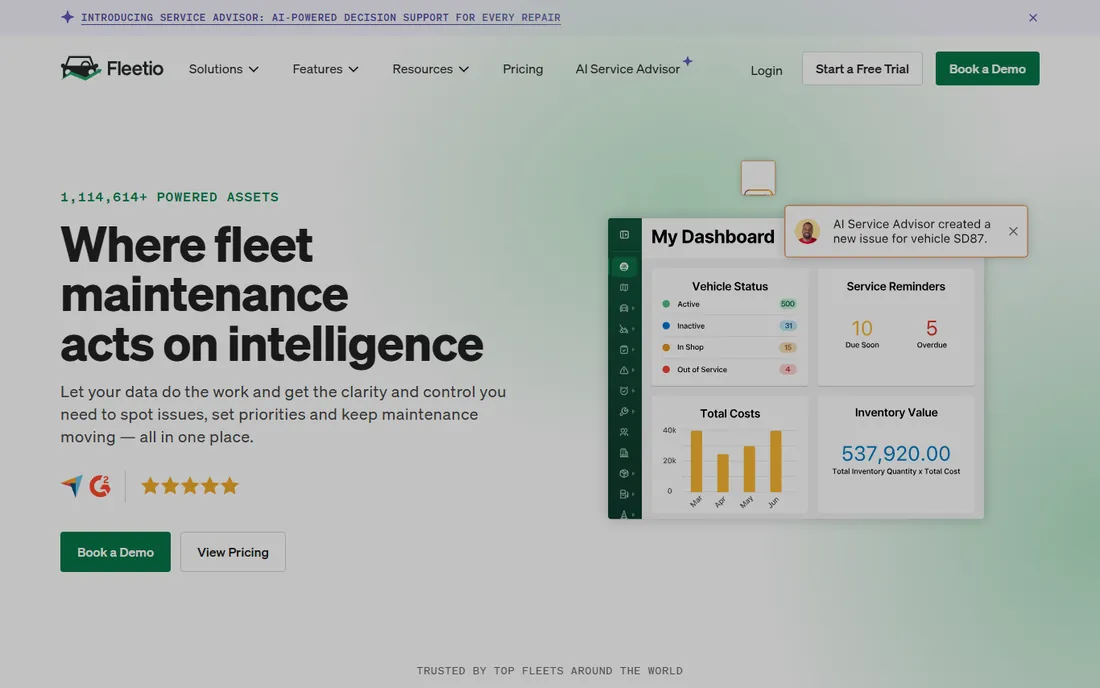
Fleetio approaches the problem from the shop rather than the map. It is fundamentally a fleet maintenance platform that happens to ingest telematics, which makes it the right pick when your pain is downtime, repair approvals and true equipment cost per hour. Its OEM integrations with Caterpillar VisionLink and John Deere Operations Center pull engine hours, fault codes and location into the same asset profile where work orders live.
That architecture is also its limitation. Fleetio does not sell you GPS trackers, so you still need OEM telematics or another provider feeding data in. If you already have hardware in the field, Fleetio is a clean consolidation layer. If you are starting from zero, you are buying two systems, and the per-asset monthly fee means a 300-machine fleet should negotiate volume pricing.
What we like- Excellent work orders, inspections and cost tracking
- OEM integrations with Caterpillar VisionLink and John Deere Operations Center
- Unlimited users on paid plans
Watch out for- Not a native GPS provider, so you pair it with your own telematics devices
- Per-asset pricing adds up on large fleets
Starting priceSee website
Free planSee website

Verizon Connect's construction offering is more equipment-aware than its trucking roots might suggest. The platform tracks engine hours and maintenance history for loaders, cranes, dozers and backhoes, runs geofence alerts on battery-powered trackers for generators and dumpsters, and folds in AEMP telematics standards for consistent mixed-fleet data. Fleets that already run Verizon for connectivity often find the bundled relationship convenient.
The buying experience is the weak point. Everything runs through sales, pricing is opaque until late in the process, and the standard terms skew long. None of that disqualifies it, but you should line up a competing quote before your first Verizon demo so the negotiation stays honest. For large fleets that want one vendor for vehicles and yellow iron on a major carrier network, it remains a serious contender.
What we like- Dedicated heavy-equipment tracking with engine hours, PTO and idle reporting
- Battery-powered trackers for unpowered assets
- Reveal platform covers vehicles, drivers and equipment together
Watch out for- Quote-only pricing with a sales-heavy buying process
- Contract terms tend to favor longer commitments
#6
Caterpillar VisionLink
Best for: Cat-heavy fleets
Visit cat.com
Starting priceSee website
Free planSee website
VisionLink is the path of least resistance for Cat owners, and Caterpillar has been steadily turning it into a genuine fleet platform. Newer machines ship with core telematics data included, the platform now visualizes mixed fleets including non-Cat equipment, and features like the fleet age chart help with replacement planning. Because your dealer provisions it, the people selling you the machine are the same people setting up your tracking.
That dealer dependency cuts both ways. A good Cat dealer makes onboarding painless; a weak one leaves you waiting on support. And while VisionLink handles other brands, a fleet with zero Cat machines has little reason to pick it over a neutral platform. If Cat iron dominates your yard, start here.
What we like- Core telematics data standard on newer Cat machines
- Now supports Cat and non-Cat equipment in one view
- Dealer network provides local implementation help
Watch out for- Sold and supported through Cat dealers, so the experience varies by dealer
- Least compelling if you run no Cat iron at all
Starting priceSee website
Free planSee website
Komtrax is the oldest OEM telematics system in this category, and its age shows in the best way: it is deeply proven. The hardware comes standard on new Komatsu machines, the system tracks location, operating hours, fuel and fault codes, and satellite options keep remote-site machines visible where cellular coverage dies. There are documented cases of stolen excavators recovered within the hour because Komtrax pinpointed them.
The honest limitation is scope. Komtrax exists to serve Komatsu owners, and while it is excellent at that, a mixed fleet needs something else as the system of record. Support flows through the dealer network rather than a direct SaaS relationship. If your fleet bleeds Komatsu yellow, Komtrax should be running on every machine before you spend a dollar on third-party trackers.
What we like- Hardware standard on new Komatsu machines at no extra device cost
- Satellite and cellular coverage for remote sites
- Theft recovery is a proven strength
Watch out for- Komatsu-centric by design, with limited value for other brands
- Account setup and support run through dealers
Starting priceSee website
Free planSee website
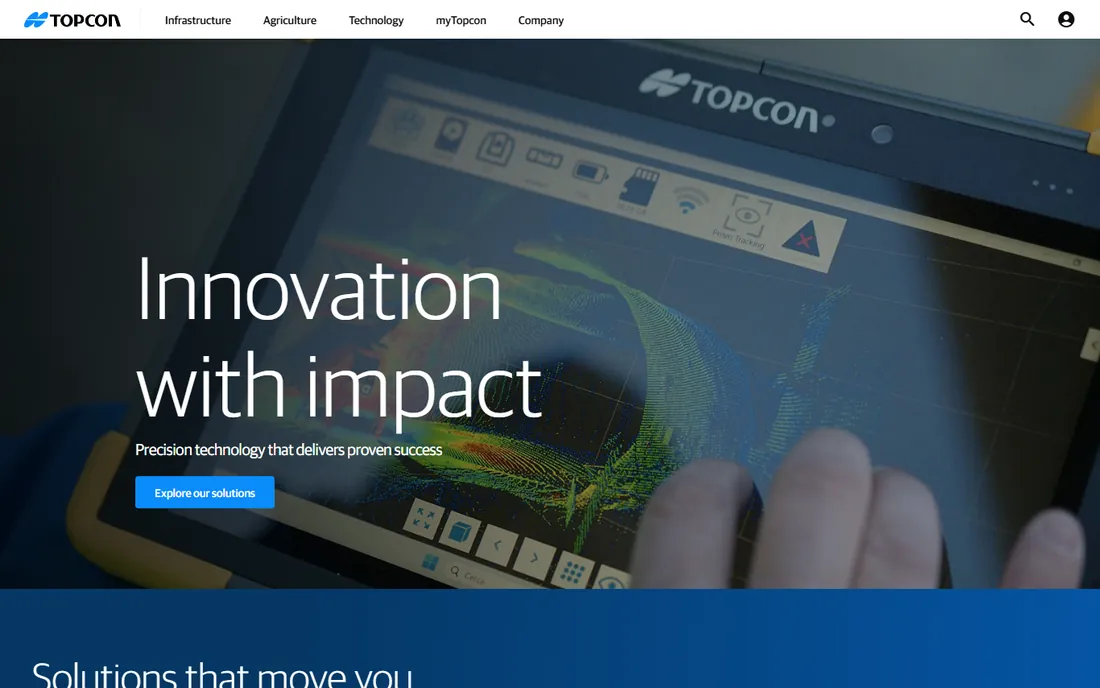
Topcon earns its place for contractors who already live in its ecosystem. If your dozers and excavators run Topcon machine control, Sitelink3D already gives you a real-time view of the jobsite, and the Tierra platform extends that into fleet tracking, geofences and productivity alerts. The HT-30 hardware even tracks haul truck loads and material movement, tying telematics to production quantities rather than just locations.
As a pure tracking vendor, though, Topcon is not trying to out-Samsara Samsara. Its telematics story is strongest when paired with its positioning and machine-control products. The right buyer is a contractor already invested in Topcon grade control who wants tracking that speaks the same language as the rest of the site.
What we like- Sitelink3D and Tierra connect telematics to real-time jobsite management
- Strong in machine control and precision positioning
- Haul truck and material tracking via connected hardware
Watch out for- Telematics is one piece of a surveying and machine-control portfolio, not the core focus
- Pricing flows through dealers and integrators
Starting priceSee website
Free planSee website
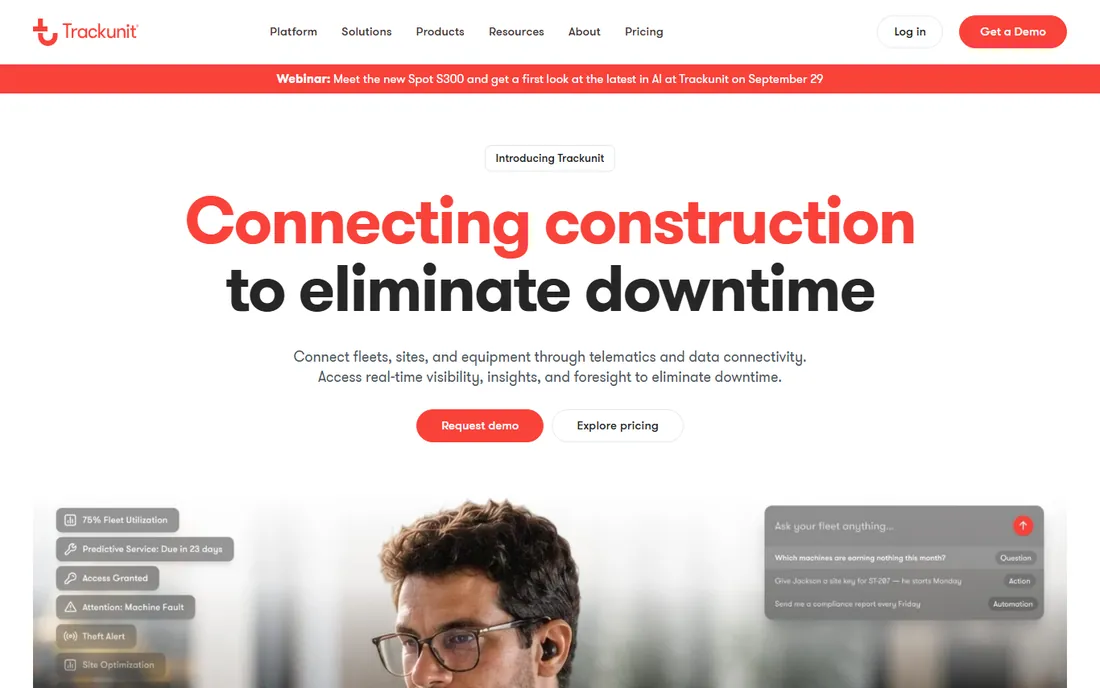
Trackunit is the telematics specialist that much of the construction industry runs on without knowing it. The Danish company provides the IoT backbone for rental houses, dealers and OEMs, and its Iris platform harmonizes machine data from every source into one interface. Its device range covers rugged TU units for heavy equipment, Kin Bluetooth tags that track tools for up to five years, and keypads for operator access management.
The company's recent combination with ZTR expanded its North American footprint, which matters for US buyers evaluating support coverage. Pricing is enterprise and quote-driven, so Trackunit fits fleets with real scale rather than a ten-machine contractor. If you are a rental company or a large contractor standardizing telematics across brands, it belongs on every shortlist.
What we like- Purpose-built IoT platform for construction with Iris data cloud
- Strong with rental companies, OEMs and dealers
- Bluetooth tags track small tools for years on one battery
Watch out for- Quote-based pricing aimed at larger fleets
- The platform's depth can overwhelm small contractors
#10
Zonar
Best for: Construction fleets with inspection workflows
Visit zonar.com
Starting priceSee website
Free planSee website
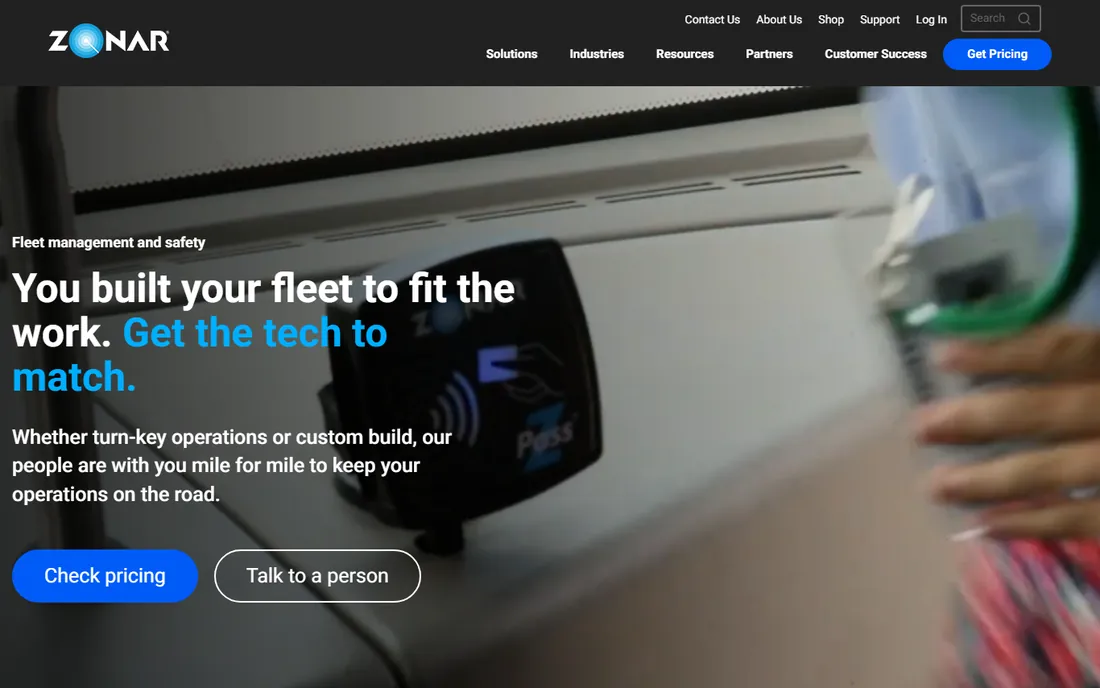
Zonar brings something most tracking vendors do not: proven electronic vehicle inspections. Its EVIR system is battle-tested in regulated fleets, and that inspection discipline transfers well to construction, where pre-shift walkarounds on heavy equipment are both a safety requirement and a maintenance input. SightIQ layers utilization analytics and diagnostics over the tracking data, and the ZTrak tag covers unpowered assets with a field-replaceable battery rated up to ten years.
Two caveats deserve attention. Zonar's roots are in trucking and school buses, so construction buyers should verify the workflows they need are first-class. And Continental sold Zonar to GPS Trackit in 2024, so the product roadmap now answers to a new owner. Neither is disqualifying, but both belong in your vendor questions.
What we like- SightIQ platform covers utilization, diagnostics and asset tracking across mixed fleets
- ZTrak device tracks unpowered assets for up to a decade
- Electronic inspections are a genuine differentiator
Watch out for- Heritage in trucking and pupil transport means construction is one vertical among several
- Acquired by GPS Trackit in 2024, so the roadmap bears watching
How we chose
We built this list from vendor documentation, pricing pages, product announcements and public reviews on G2, Capterra and Reddit. Every product here exists today and serves construction fleets in the US. We weighted construction-specific features (engine hours, geofenced jobsites, unpowered-asset tracking, maintenance scheduling) over generic vehicle tracking. No vendor paid for placement, and we did not do hands-on trials of the hardware.
What to look for before you buy
Start with your fleet mix, because it decides the architecture. A single-brand fleet can often run on the OEM's own system (VisionLink or Komtrax) and save the cost of aftermarket hardware. A mixed fleet needs a neutral platform that ingests OEM data through standards like AEMP 2.0 alongside its own GPS devices, or you will end up logging into four portals every morning.
Also separate powered from unpowered assets in your requirements. Excavators need engine hours and fault codes via CAN-bus or OEM integration; generators and toolboxes need battery-powered trackers with geofence alerts, where battery life is the spec that matters. Vendors that do both well are rarer than marketing pages suggest, so ask for a live demo on your actual asset types.
Then interrogate the commercial terms. Most enterprise telematics runs on multi-year contracts with per-device monthly fees plus hardware and installation, and the headline per-asset price rarely survives contact with a quote. Ask what happens to your data if you leave and who owns the hardware. Integrations with tools like HCSS and Procore separate platforms that reduce admin work from dashboards that just look busy.
Finally, plan the rollout like the operations project it is. Hardware installation across job sites takes weeks, not days, and the value only arrives when dispatchers and mechanics actually use the alerts. Budget for training, assign one internal owner, and pilot on twenty machines before you commit the whole fleet.
How pricing usually works
Construction telematics pricing has three moving parts. First is the software license, usually priced per asset per month, with powered equipment costing more than unpowered tags. Second is hardware: GPS trackers, battery tags and installation labor, sometimes financed into the monthly fee and sometimes paid upfront. Third is implementation, which covers onboarding, training and integrations.
OEM systems like Komtrax and VisionLink change the math because the hardware ships with the machine, so you are mainly paying for platform access through your dealer. Aftermarket platforms look cheaper per device until you add installation across a dispersed fleet. When vendors refuse to publish prices, get at least three quotes and normalize them to a three-year total cost per asset.
Frequently asked questions
Do I need separate trackers if my machines already have OEM telematics?
Usually not. Most modern Cat, Komatsu, John Deere and Volvo machines ship with factory telematics, and platforms like Samsara, Fleetio and Trackunit can ingest that data directly. You typically only need aftermarket hardware for older machines and unpowered assets like trailers and tools.
What is the difference between GPS tracking and telematics?
GPS tracking tells you where an asset is. Telematics adds what the asset is doing: engine hours, idle time, fuel burn, fault codes and utilization. Pure GPS is fine for theft recovery; it is not enough for fleet management.
How accurate is construction equipment GPS?
Modern GNSS trackers are typically accurate within a few feet in open conditions, which is plenty for jobsite geofencing and utilization reporting. Accuracy degrades near tall structures, in deep cuts and under heavy canopy. If you need centimeter precision for grade work, that is a machine-control problem, not a tracking problem.
Can these systems help with equipment theft?
Yes, and theft recovery is one of the clearest ROI cases. Geofence alerts notify you the moment a machine leaves a jobsite after hours, and live location data goes straight to law enforcement. Battery-powered hidden trackers on high-value attachments add a layer thieves rarely find.
Should a small contractor buy enterprise telematics?
Usually not at full enterprise scale. Under about 30 assets, the per-device fees and contract minimums of platforms like Samsara or Verizon Connect are hard to justify. Start with the OEM systems on your newest machines plus affordable battery trackers, and graduate when the fleet grows.
Sources we checked (10)
- https://samsara.com/
- https://tenna.com/
- https://teletracnavman.com/
- https://www.fleetio.com
- https://verizonconnect.com/
- https://cat.com/visionlink
- https://komatsu.com/
- https://topconpositioning.com/
- https://trackunit.com/
- https://zonar.com/
Is your product missing or out of date?
We review this list regularly. Vendors can request a listing, send updated pricing or ask about featured placement.

Shihab Mia · Founder, Rankite
Shihab has spent more than a decade helping SaaS and e-commerce brands grow through search. He writes Rankite's software buying guides from pricing pages, documentation and public user reviews. More about Shihab.