How we make this list: we compare pricing pages, product documentation and public user reviews. Ratings come from G2, Capterra or Trustpilot, with the date we checked them.
Key takeaways
- Zappi and quantilope suit large CPG teams that need normed, repeatable concept reads at scale.
- Conjointly is the most accessible self-serve option for mid-size teams that run occasional studies.
- Suzy and Attest win on speed and reach when you need a fast read from real consumers.
- NielsenIQ BASES remains the choice for a final volumetric forecast before a launch gate.
Quick comparison
| Tool | Best for | Starting price | Free plan |
|---|
 Zappi | Enterprise-scale automated concept testing | See website | No |
 quantilope | Advanced methods like conjoint and MaxDiff | See website | No |
 Conjointly | Self-serve conjoint and concept tests | $2,895 per year | Yes |
 Qualtrics | Enterprise survey programs and tracking | $420 per month | Yes |
 Suzy | Fast quant reads with a live qual layer | See website | No |
 Attest | Global consumer reach on flat rates | See website | No |
 Upsiide | Fast mobile-native concept screening | See website | No |
 NielsenIQ BASES | Volumetric sales forecasting at the launch gate | See website | No |
Is your product missing or out of date?
We review this list regularly. Vendors can request a listing, send updated pricing or ask about featured placement.
#1
Zappi
Best for: Enterprise-scale automated concept testing
Visit zappi.io
Starting priceSee website
Free planNo
Zappi is built for CPG companies that test concepts constantly rather than once a year. Its normative database lets a team compare a new concept against historical results in the same category, which turns a single score into a judgment about whether the idea is strong, average, or weak. Automated workflows keep study setup consistent, so results stay comparable across brands and quarters, which matters when leadership compares this year with last.
The honest catch is scale and cost. Zappi is priced and set up for enterprise teams, and a small brand will find the onboarding heavy for a handful of tests. If your team runs dozens of concepts a year and needs every result benchmarked the same way, Zappi earns its place. If you test rarely, a self-serve tool will be faster and cheaper.
What we like- Deep CPG normative database
- Automated workflows for repeated studies
- Built for large brand teams
Watch out for- Enterprise pricing and onboarding
- More platform than a small team needs
Starting priceSee website
Free planNo
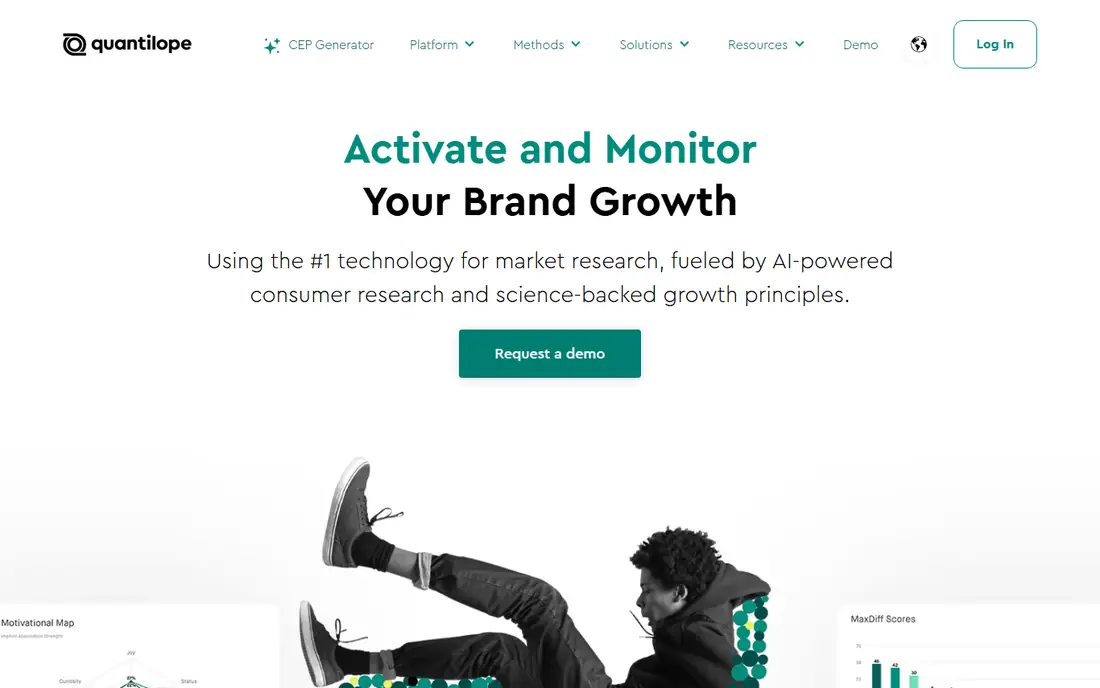
quantilope suits insights teams that need more than a thumbs-up score. It automates conjoint, MaxDiff, and TURF analyses, so a team can test pricing trade-offs and portfolio choices alongside basic concept appeal. Results arrive in interactive reports that stakeholders can explore without waiting for a analyst to rebuild charts.
That depth comes with a learning curve. Teams without research training will need time to choose methods and read outputs correctly, and the price reflects the sophistication. For a brand team deciding pack sizes, flavors, and price points together, quantilope is a strong pick. For a quick screen of ten names, it is more tool than the job needs.
What we like- Automated conjoint, MaxDiff, and TURF
- Real-time analysis
- Multi-country study support
Watch out for- Steeper learning curve without research training
- More than simple screening needs
Starting price$2,895 per year
Free planYes
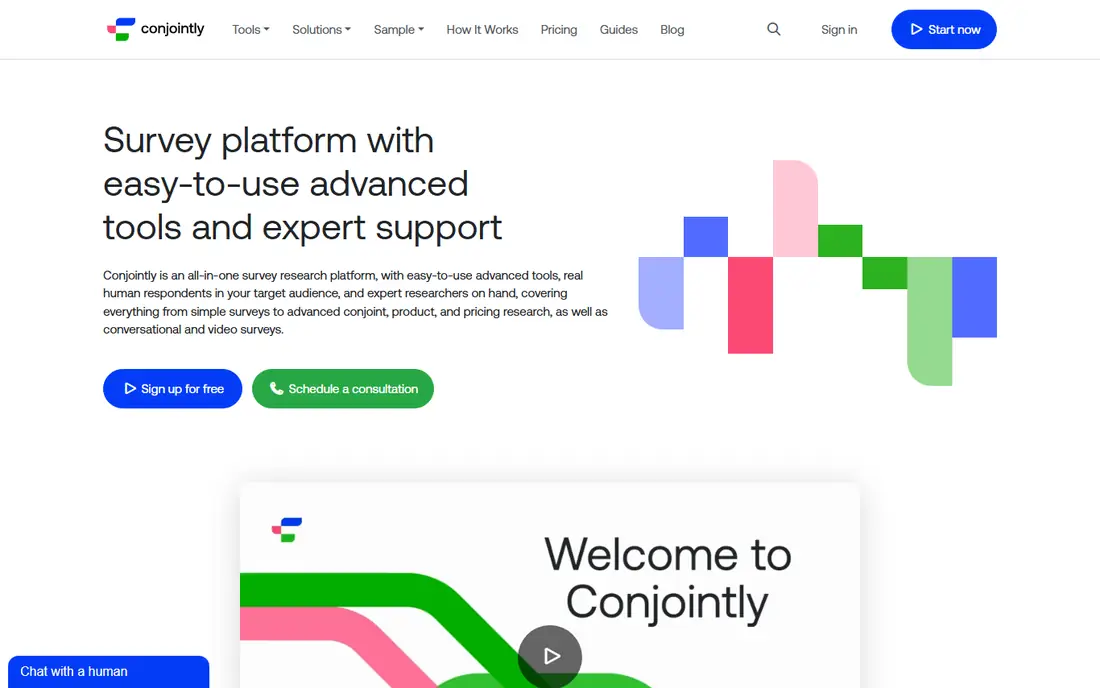
Conjointly is the easiest entry point on this list for a mid-size CPG team. The Basic tier costs nothing and covers simple surveys, while the Professional licence at $2,895 per team per year opens advanced methods including conjoint, Kano, claims tests, and MaxDiff. Templates guide you through setup, and sample size tools help you avoid running a study too small to trust.
Panel responses are priced separately, with recent average bids around $1.55 per complete response, so a large sample adds real cost. Support is also tiered, with limited consultation hours on Professional. Even so, for teams that run occasional studies without an agency, Conjointly gives the best balance of method depth and control over spend.
What we like- Guided templates for conjoint, MaxDiff, and claims tests
- Published pricing
- Free basic tier
Watch out for- Panel costs add up per response
- Advanced support sits on higher tiers
Starting price$420 per month
Free planYes
Qualtrics is the broadest platform here, covering concept testing as one part of a larger research program. Its Strategic Research plan at $420 per month, billed annually, includes guided solutions for concept testing, conjoint, and MaxDiff, plus dashboards that track results over time. Teams that already use Qualtrics for brand tracking can add concept tests without buying another tool.
The downside is scope. Qualtrics can feel large for a single study, and full enterprise pricing is only available by quote. Training matters too, since the advanced analysis features reward users who know the platform. For a company that wants one research system across many question types, Qualtrics is the safe enterprise choice.
What we like- Guided concept testing solutions
- Huge template library
- Strong dashboards and analysis
Watch out for- Full enterprise pricing is quote-based
- Advanced features need training
#5
Suzy
Best for: Fast quant reads with a live qual layer
Visit suzy.com
Starting priceSee website
Free planNo
Suzy is built for speed. Its owned panel returns survey results quickly, and the live interview feature lets researchers follow a survey with real conversations in the same platform. That combination helps a brand team that needs a number on Monday and the reason behind it by Wednesday, without fielding two separate studies.
Suzy is sold as an annual licence, and published guide figures put typical pricing in the higher five figures per year, so it fits teams with steady research volume. It is less suited to highly specialized methods than quantilope or Conjointly. If your bottleneck is time rather than method depth, Suzy removes it.
What we like- Owned always-on consumer panel
- Fast turnaround
- Live interview layer for follow-ups
Watch out for- Annual licence pricing
- Less suited to deep methodological studies
#6Attest
Best for: Global consumer reach on flat rates4.5/5 on
G2 (169 reviews, checked Oct 2026)
Visit askattest.com
Starting priceSee website
Free planNo
Attest helps CPG teams that sell in many markets and need the same concept tested everywhere. Its panel reaches consumers across dozens of countries, and flat-rate pricing makes budgeting a multi-market study simpler than negotiating each market separately. Fielding is fast, and results arrive in a dashboard built for brand and marketing readers rather than statisticians.
The trade-off is method depth. Attest covers standard concept tests well but does not match specialist tools on conjoint or volumetric modeling. For a global screen that must be consistent across markets, Attest is a strong choice. For a final pricing decision, pair it with a deeper method tool.
What we like- Large global panel across many countries
- Flat published rate structure
- Fast fielding
Watch out for- Less depth on advanced methods
- Analysis tools are simpler than specialist platforms
Starting priceSee website
Free planNo
Upsiide is designed for the early funnel, when a team has thirty ideas and needs to keep five. Its mobile-native surveys feel natural on a phone, which helps response quality for consumer concepts, and its market simulator estimates share of choice between competing ideas. That makes it useful for innovation teams that screen often and kill ideas early.
Pricing is custom, by project or subscription, so budgeting takes a sales conversation. Upsiide is also a screening tool, not a forecasting tool, so a winning concept still needs validation before launch. Used at the right stage, it saves the most expensive resource in innovation, which is time spent on weak ideas.
What we like- Mobile-first surveys
- Share-of-choice simulator
- Built to screen many concepts quickly
Watch out for- Custom pricing
- Less suited to final-stage forecasting
#8
NielsenIQ BASES
Best for: Volumetric sales forecasting at the launch gate
Visit nielseniq.com
Starting priceSee website
Free planNo
NielsenIQ BASES plays a different role from every other tool on this list. It does not just score a concept, it forecasts the sales volume a launch might achieve, using models built from hundreds of thousands of prior forecasts. That forecast is what senior leaders want before they approve factory capacity, media spend, and retail listings.
BASES is project-based and priced accordingly, and it takes longer than an automated screen. No team would use it to test thirty early ideas. But at the final gate, when one or two concepts remain and the decision is expensive, BASES gives the most defensible number available. Use fast tools early, and BASES late.
What we like- Audited forecasting models
- Long track record with CPG launches
- Trusted at gate decisions
Watch out for- Project-based pricing
- Slowest and most expensive option here
How we chose
We compared vendor pricing pages, product documentation, and public reviews, and we judged each platform on method depth, panel quality, speed, and fit for CPG decisions. Enterprise tools with unpublished pricing are listed as See website rather than given a figure from a third-party guide, because those guides often disagree. We did not claim hands-on testing. The method note matters here, because a concept score is only useful if the sample, method, and benchmark behind it are sound.
What to check before you pick
Match the tool to the stage of your funnel. Early screening needs speed and low cost per concept, so mobile-first and self-serve tools win. Mid-stage work needs trade-off methods such as conjoint and MaxDiff, where specialist platforms earn their price. Late-stage work needs a forecast that finance and sales will trust, which is a different purchase entirely.
Also check the sample behind the score. Ask who the respondents are, how they were recruited, and whether the panel covers your actual buyers, not just easy-to-reach consumers. Check whether results are normed against your category, because a raw appeal score without a benchmark is hard to act on. Finally, confirm turnaround time in writing, because a fast tool that queues your study for a week is not fast at all. Also confirm who owns the data and whether you can re-run the same study next quarter for a comparable trend.
Frequently asked questions
What is concept testing for CPG brands?
Concept testing shows a product idea, pack, claim, or price to target consumers before launch and measures appeal, uniqueness, purchase intent, and reasons for liking or rejecting it. Good testing kills weak ideas early, when changes are cheap, and gives strong ideas evidence for investment.
How many concepts should we test at once?
Early screens can handle twenty or more ideas with a fast mobile tool, since the goal is to cut the list. Later stages should test only a few refined concepts with deeper methods, because each additional concept adds sample cost and respondent fatigue.
Do we need a volumetric forecast for every launch?
No, reserve forecasting for launches with major capacity, media, or listing commitments. Smaller line extensions and flavor variants can usually proceed on strong concept scores and trade-off results without a full forecast.
What sample size is enough for a concept test?
It depends on the decision and the differences you need to detect. A rough screen can work with a few hundred respondents per concept, while a close call between two finalists needs a larger sample. Your platform sample size tool, or a statistician, should confirm the number before fielding.
Can one platform cover the whole funnel?
Rarely. Most CPG teams use two or three tools: a fast screener early, a method specialist in the middle, and a forecaster at the gate. Buying one tool for every stage usually means paying for depth you do not use early and accepting weak forecasts late.
Sources we checked (8)
- https://www.zappi.io
- https://www.quantilope.com
- https://www.conjointly.com
- https://www.qualtrics.com
- https://www.suzy.com
- https://www.askattest.com
- https://www.upsiide.com
- https://www.nielseniq.com
Is your product missing or out of date?
We review this list regularly. Vendors can request a listing, send updated pricing or ask about featured placement.

Shihab Mia · Founder, Rankite
Shihab has 5+ years in B2B and SaaS SEO. He writes Rankite's software buying guides from pricing pages, documentation and public user reviews. More about Shihab.