How we make this list: we compare pricing pages, product documentation and public user reviews. Ratings come from G2, Capterra or Trustpilot, with the date we checked them.
Key takeaways
- Applitools is the best AI visual testing platform for catching UI regressions humans miss.
- Mabl suits teams that want low-code end-to-end testing with auto-healing built in.
- Testim (Tricentis) fits enterprises standardizing test automation on the Tricentis platform.
- Katalon is the value pick for teams that want a broad test automation platform at moderate cost.
- LambdaTest suits teams that need cross-browser and mobile testing at scale.
Quick comparison
| Tool | Best for | Starting price | Free plan |
|---|
 Applitools Applitools | AI visual testing | See website | See website |
 Mabl Mabl | low-code end-to-end testing | See website | See website |
 Testim Testim | enterprise test automation | See website | See website |
 Functionize Functionize | intelligent test automation | See website | See website |
 Katalon Katalon | broad test automation platform | See website | See website |
 LambdaTest LambdaTest | cross-browser testing at scale | See website | See website |
 ACCELQ ACCELQ | codeless enterprise testing | See website | See website |
Is your product missing or out of date?
We review this list regularly. Vendors can request a listing, send updated pricing or ask about featured placement.
Starting priceSee website
Free planSee website
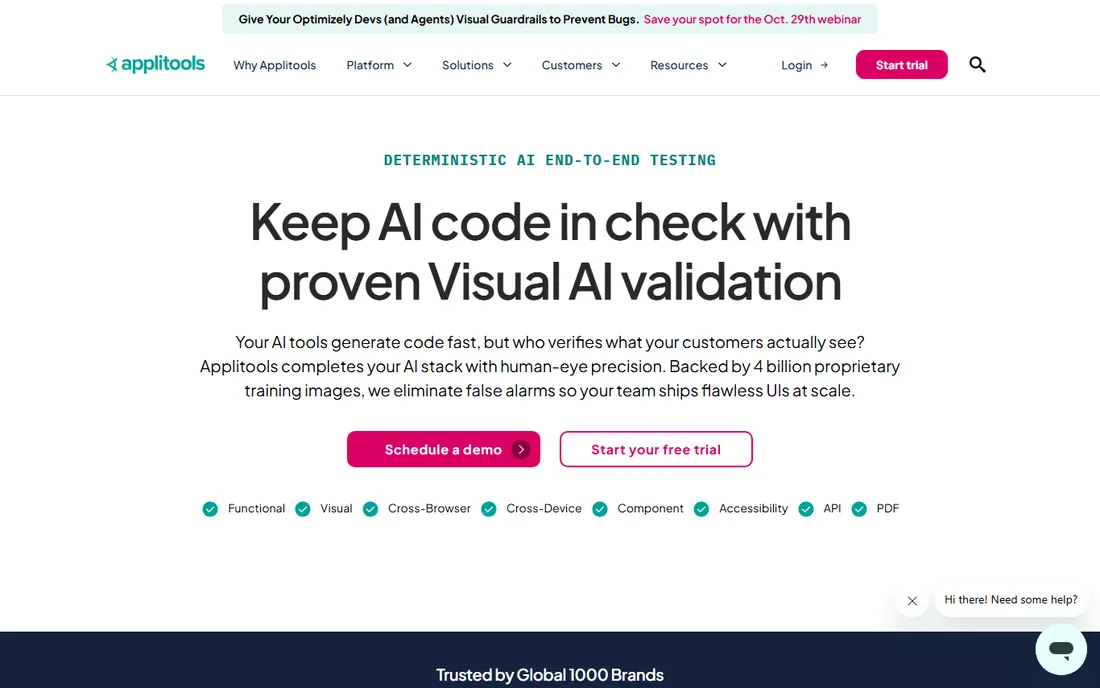
Applitools' Visual AI compares application screenshots intelligently, distinguishing meaningful UI changes from irrelevant rendering differences. It runs across browsers, devices, and viewports, catching visual regressions that functional assertions miss. The platform integrates with Selenium, Cypress, Playwright, and other frameworks, so teams add visual testing to existing suites.
Pricing reflects the enterprise positioning. And visual testing covers appearance, not behavior, so functional tests remain necessary. But for applications where the UI is the product, Applitools finds bugs that no amount of DOM assertions would catch.
What we like- Visual AI catches real UI bugs while ignoring noise
- Cross-browser and device coverage
- Integrates with existing test frameworks
Watch out for- Premium pricing
- Visual testing complements rather than replaces functional tests
Starting priceSee website
Free planSee website
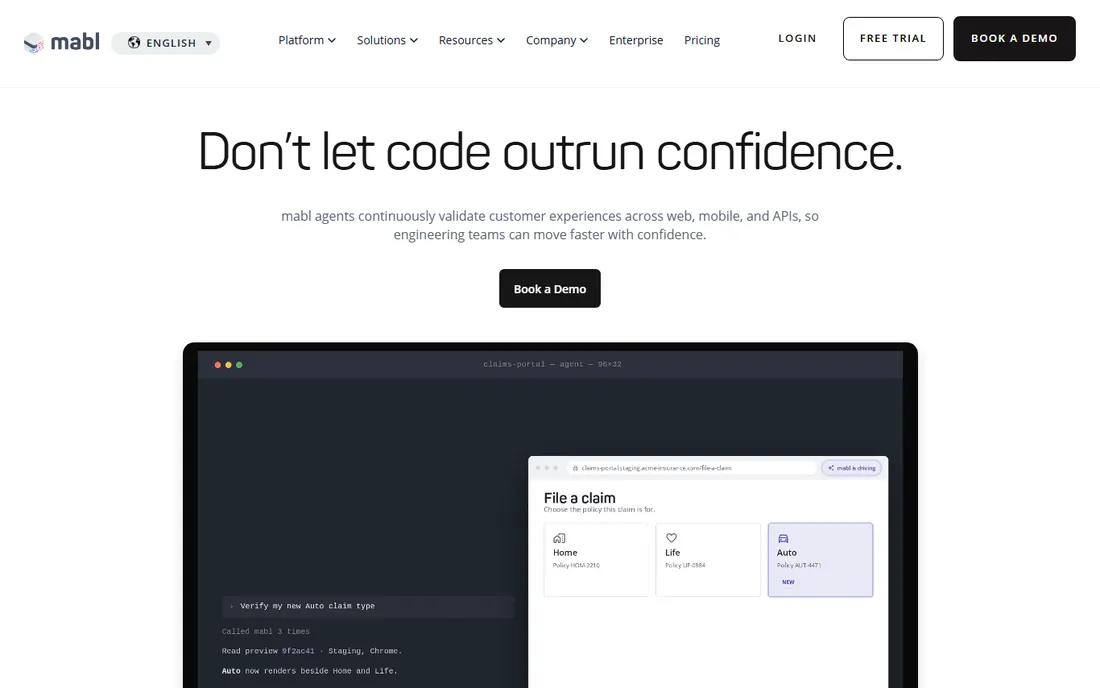
Mabl combines low-code test creation with machine learning that auto-heals tests when the application changes. Tests record in the browser, heal themselves against minor UI changes, and run in the cloud with visual checks included. Teams without deep automation expertise can build reliable suites quickly.
Execution is cloud-only, which may concern teams with strict data requirements. And usage-based pricing needs monitoring. But Mabl's core promise, tests that maintain themselves, addresses the biggest cost in test automation: keeping suites green as the application evolves.
What we like- Auto-healing tests reduce maintenance
- Low-code creation plus code when needed
- Unified functional and visual testing
Watch out for- Cloud-only execution
- Pricing scales with usage
Starting priceSee website
Free planSee website
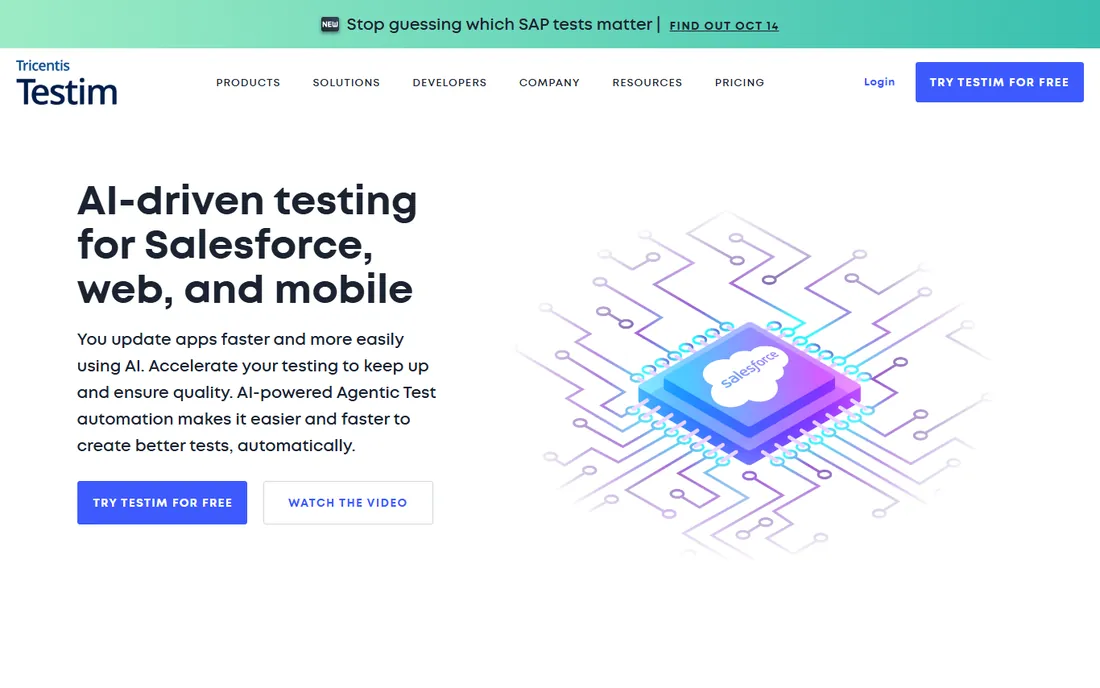
Testim, now part of Tricentis, uses AI to create stable element locators and self-healing tests for web applications. It handles dynamic, complex applications like Salesforce well, where traditional locators break constantly. Integration with the broader Tricentis platform covers the full testing lifecycle from planning to reporting.
Enterprise pricing puts it beyond small teams. And its advantages compound within the Tricentis ecosystem. But for enterprises already invested in Tricentis, or teams testing notoriously flaky applications, Testim's stability is worth the investment.
What we like- AI-stabilized locators reduce flakiness
- Part of the Tricentis platform
- Good for Salesforce and complex apps
Watch out for- Enterprise pricing
- Best value within the Tricentis ecosystem
Starting priceSee website
Free planSee website
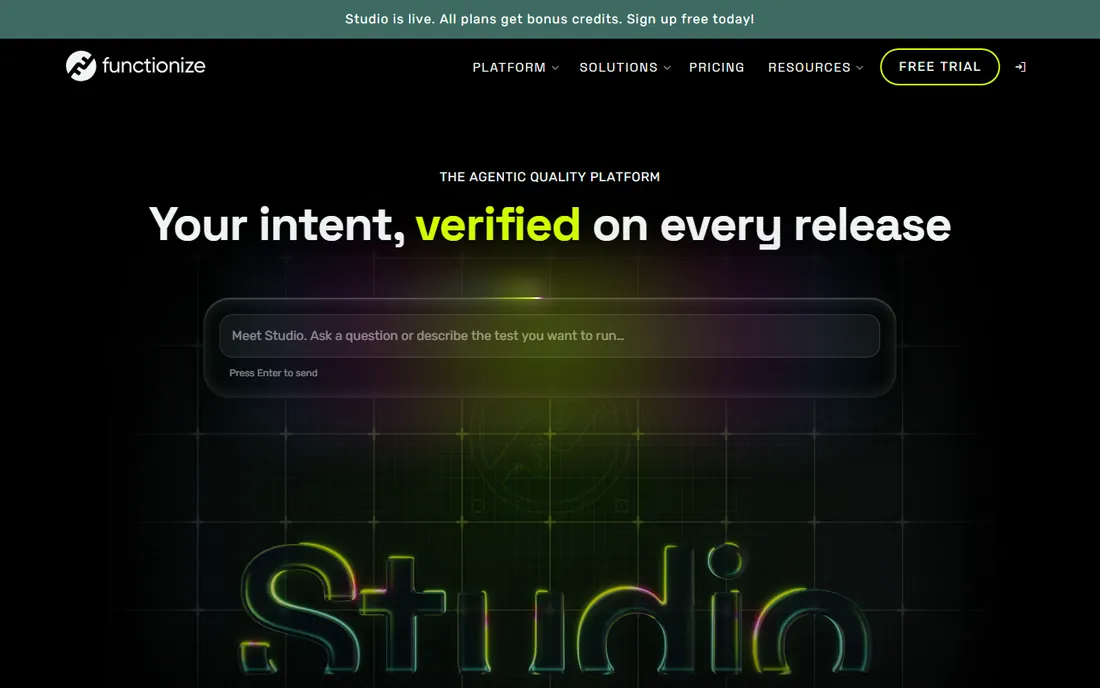
Functionize lets teams create tests in natural language, with machine learning handling execution and maintenance. The platform runs tests across browsers and devices in the cloud, analyzes failures intelligently, and reduces the scripting burden on QA teams. It targets the gap between manual testing and full automation engineering.
Brand recognition trails the category leaders, which matters in conservative procurement. Pricing goes through sales. But for QA teams that think in test cases rather than code, Functionize's natural language approach lowers the automation barrier meaningfully.
What we like- Natural language test creation
- Machine learning maintenance
- Cloud execution with broad browser coverage
Watch out for- Less known than the leaders
- Pricing requires sales engagement
Starting priceSee website
Free planSee website
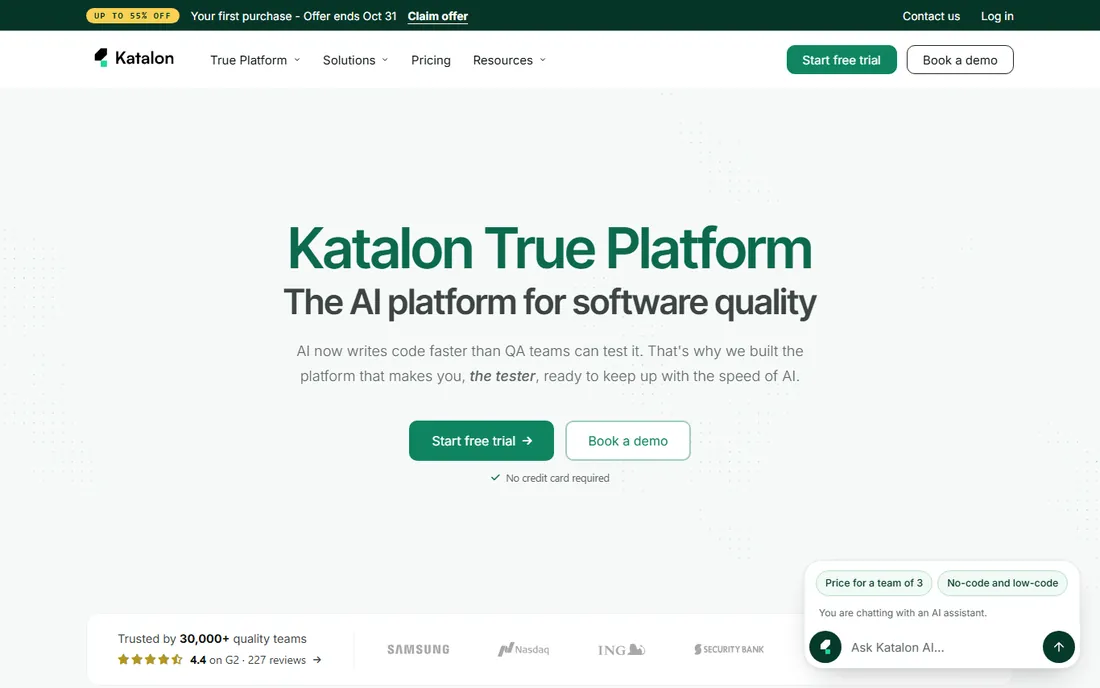
Katalon Studio offers web, mobile, API, and desktop test automation in one platform with a free tier that teams can start on immediately. The AI-assisted features help with test creation and maintenance, though they are less advanced than purpose-built AI tools. The community and documentation make self-service adoption realistic.
Specialist tools beat it on pure AI capability. And serious usage moves to paid plans. But Katalon's breadth at its price point makes it the pragmatic choice for teams that need coverage across testing types without enterprise budgets.
What we like- Covers web, mobile, API, and desktop testing
- Free tier for getting started
- Active community
Watch out for- AI features trail the specialists
- Advanced needs push toward paid tiers
Starting priceSee website
Free planSee website
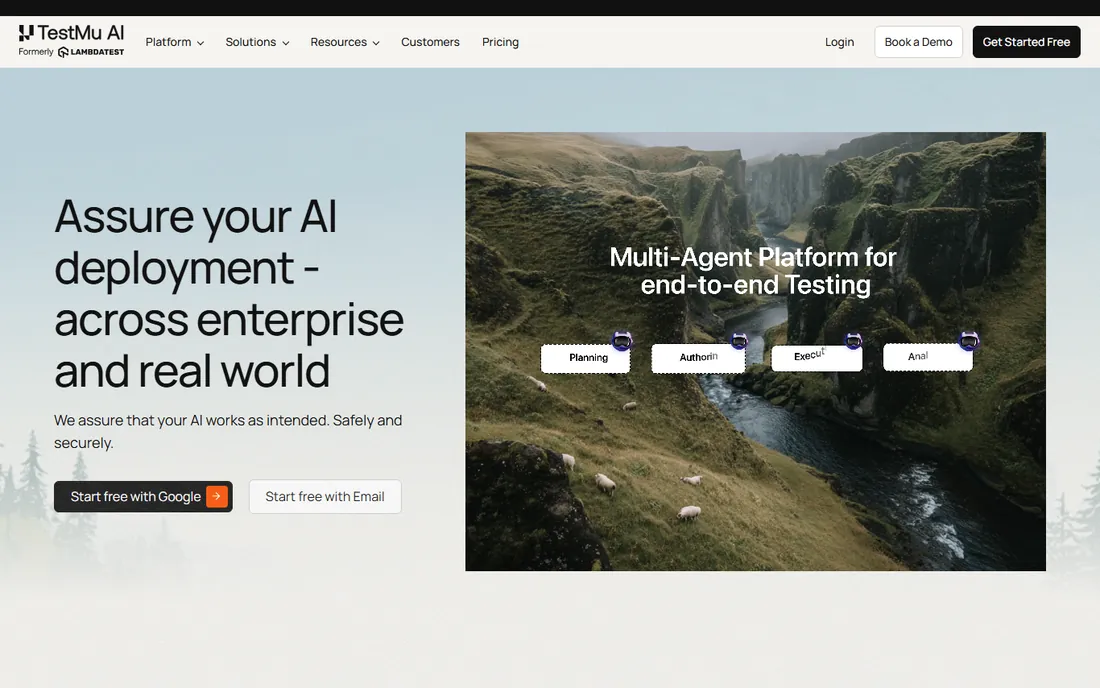
LambdaTest provides cloud-based cross-browser and mobile testing across thousands of browser-OS combinations, with AI features like KaneAI assisting test creation and analysis. The free tier is genuinely useful, and pricing undercuts some competitors. Teams that need broad compatibility coverage get it without maintaining device labs.
The AI capabilities are newer additions rather than the platform's foundation. And real-device availability varies. But for the core job of testing across browsers and devices at scale, LambdaTest's grid plus growing AI assistance is a strong combination.
What we like- Huge browser and device grid
- KaneAI for AI test assistance
- Competitive pricing with a free tier
Watch out for- AI testing features newer than core grid
- Grid quality varies by configuration
Starting priceSee website
Free planSee website
ACCELQ offers codeless test automation where tests are designed in natural language and the platform handles the technical execution. It unifies API and UI testing in one flow, with AI assisting maintenance and analysis. Enterprise teams with large QA organizations and limited coding capacity find it a good fit.
The enterprise focus shows in pricing and sales process. Developer-led teams that prefer code-first tools will find it constraining. But for business-analyst-driven QA at enterprise scale, ACCELQ's codeless depth is among the best available.
What we like- Truly codeless automation with natural language
- API and UI testing unified
- Strong enterprise references
Watch out for- Enterprise focus means higher cost
- Less suited to developer-led teams
What to check before you buy
Start by identifying your testing bottleneck. Flaky tests point to self-healing tools like Mabl or Testim. Visual regressions point to Applitools. Coverage gaps across browsers point to LambdaTest. Broad manual testing backlogs point to codeless platforms like ACCELQ or Functionize. Buying AI testing without diagnosing the problem leads to shelfware.
Then trial on your actual application, not a demo site. Run the tool against your real UI with its dynamic elements, authentication flows, and edge cases. Measure how many tests stay green over two weeks of normal development. Vendor demos show ideal conditions; your application shows the truth. Involve the people who will maintain the tests in the trial, because their daily experience determines adoption more than any feature list.
Finally, evaluate the maintenance story honestly. Every vendor promises self-healing, but the implementations differ in what they handle automatically and what still needs human attention. Ask specifically about your hardest maintenance problems: dynamic IDs, canvas elements, shadow DOM, third-party widgets. The answers reveal whether the AI is real or marketing. Also check CI/CD integration depth: tests that cannot run reliably in your pipeline will not get run at all.
AI testing: what the AI actually does
The AI in these tools does a few concrete things: stabilizing element locators when UIs change, distinguishing meaningful visual differences from noise, generating test steps from natural language, and analyzing failures to suggest fixes. It does not write your test strategy, understand your business logic, or replace QA judgment. Set expectations accordingly: AI testing reduces maintenance and speeds creation, but humans still decide what to test.
A practical way to think about it: traditional test automation breaks when the application changes; AI testing tools try to bend instead of breaking. The best ones learn from your application's patterns over time, getting more accurate as they see more runs. But they still need clean test design underneath. AI cannot rescue a suite of poorly structured tests, and teams that treat these tools as magic tend to be disappointed. Treat them as force multipliers for good QA practice, not substitutes for it.
Frequently asked questions
What are AI software testing tools?
They are test automation platforms that use machine learning to reduce test maintenance, create tests faster, and find bugs more effectively. Common AI capabilities include self-healing locators, visual comparison, natural language test creation, and intelligent failure analysis.
Will AI testing replace QA engineers?
No. AI testing automates test creation and maintenance, but QA engineers still design test strategy, define what to test, interpret results, and investigate complex failures. The tools make QA teams more productive; they do not eliminate the need for QA judgment.
What is visual testing?
Visual testing captures screenshots of your application and compares them against baselines to detect unintended UI changes. AI-powered visual testing, like Applitools, distinguishes real bugs from irrelevant rendering differences, reducing false positives.
What is self-healing in test automation?
Self-healing means tests automatically adapt when the application changes, for example when a button's ID changes or an element moves. Instead of failing, the test finds the element using alternative attributes. This reduces the maintenance burden of keeping test suites green.
Codeless vs code-based testing: which is better?
Codeless tools let non-programmers create tests faster and are good for business-driven QA. Code-based tools give developers more control and fit developer-led teams. Many platforms now blend both. Choose based on who will write and maintain the tests.
How much do AI testing tools cost?
Pricing varies from free tiers (Katalon, LambdaTest) to enterprise contracts costing tens of thousands annually. Most use per-user or usage-based pricing. Factor in implementation and training time, not just licenses, when budgeting.
How do we get started with AI testing?
Start with one painful, high-value test suite rather than boiling the ocean. Pick the suite that breaks most often or takes the most maintenance time, trial two or three tools against it, and measure maintenance effort over a month. Expand from the winner. This focused approach produces a clear ROI story that justifies wider rollout.
Can AI testing tools test mobile apps?
Yes, several tools on this list cover mobile: Katalon and LambdaTest have dedicated mobile testing, and Mabl and Applitools support mobile web and native apps to varying degrees. Confirm your specific platforms (iOS, Android, versions) and whether testing uses real devices or emulators before committing.
How we chose
We selected AI testing tools that appear consistently in test automation shortlists on G2, QA community discussions, and industry analyst coverage, with demonstrable AI capabilities beyond marketing claims. Each vendor's site was checked to confirm the product is current in 2026. Pricing details come from vendor pages where published; enterprise and usage-based models are noted as such. No hands-on test execution was conducted for this guide.
Sources we checked (12)
- https://www.applitools.com
- https://www.mabl.com
- https://www.testim.io
- https://www.functionize.com
- https://www.katalon.com
- https://www.lambdatest.com
- https://www.accelq.com
- https://Slashdot.org/software/comparison/Applitools-vs-Functionize/
- https://slashdot.org/software/comparison/Applitools-vs-mabl/
- https://sourceforge.net/software/compare/Functionize-vs-Testim-vs-mabl/
- https://Slashdot.org/software/comparison/LambdaTest-vs-accelQ/
- https://Slashdot.org/software/comparison/Katalon-Studio-vs-Tosca-vs-accelQ/
Is your product missing or out of date?
We review this list regularly. Vendors can request a listing, send updated pricing or ask about featured placement.

Shihab Mia · Founder, Rankite
Shihab has 5+ years in B2B and SaaS SEO. He writes Rankite's software buying guides from pricing pages, documentation and public user reviews. More about Shihab.