How we make this list: we compare pricing pages, product documentation and public user reviews. Rankite is independent; if a vendor ever pays for a featured spot, that listing is clearly labeled Partner.
Key takeaways
- Crayon and Klue are the dedicated CI platforms: pick Crayon for broad signal tracking, Klue for sales battlecards.
- Similarweb and Semrush answer "what are competitors doing online" with traffic and keyword data, no CI team required.
- AlphaSense serves strategy and research teams that live in filings, transcripts and broker research.
- Owler and Visualping cover the lightweight end: free company tracking and page-change monitoring.
- The dedicated platforms are quote-priced for annual contracts; budget accordingly and assign an owner before buying.
The best competitive intelligence software
Your competitor just changed their pricing page, launched a feature you do not have, and hired five enterprise AEs. You found out from a customer who asked about it on a call. Competitive intelligence software exists to end that pattern: tracking rivals' websites, pricing, launches, hiring, reviews and traffic, then turning the noise into something your team can use. These eight cover the real market, from dedicated CI platforms to traffic estimators.

#1
Crayon
Best for: Companies with a dedicated competitive intelligence owner
Visit crayon.co
Starting priceSee website (custom quote)
Free planNo
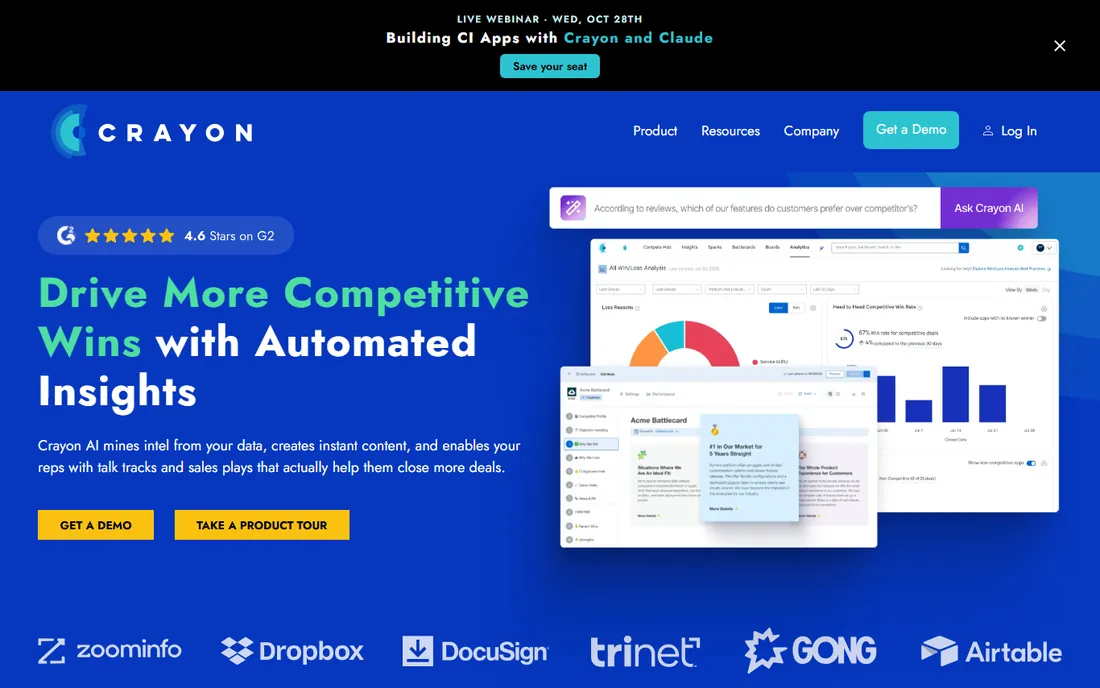
Crayon is the category-defining CI platform: it monitors competitors' websites, pricing pages, product launches, news, job postings and reviews, then uses AI to surface the changes that matter. The output lands where teams work, Slack, Salesforce, email, as battlecards and intel briefs. Gartner named it a Leader in competitive intelligence platforms, and its integrations run deep.
The catch is commitment. Pricing is quote-only enterprise, there is no self-serve tier, and reviewers consistently say it needs someone owning it full time to pay off. Occasional competitive curiosity does not justify it. Buy Crayon when competitive intelligence is someone's job and sales needs battlecards that stay current.
What we like- Automated tracking of competitor websites, pricing, news and reviews
- AI-filtered insights cut the noise
- Strong battlecard tools for sales teams
Watch out for- Enterprise pricing with no self-serve option
- Needs a dedicated owner to deliver value
- Can surface noise alongside real signals

#2
Klue
Best for: Sales teams that need battlecards in live deals
Visit klue.com
Starting priceSee website (custom quote)
Free planNo
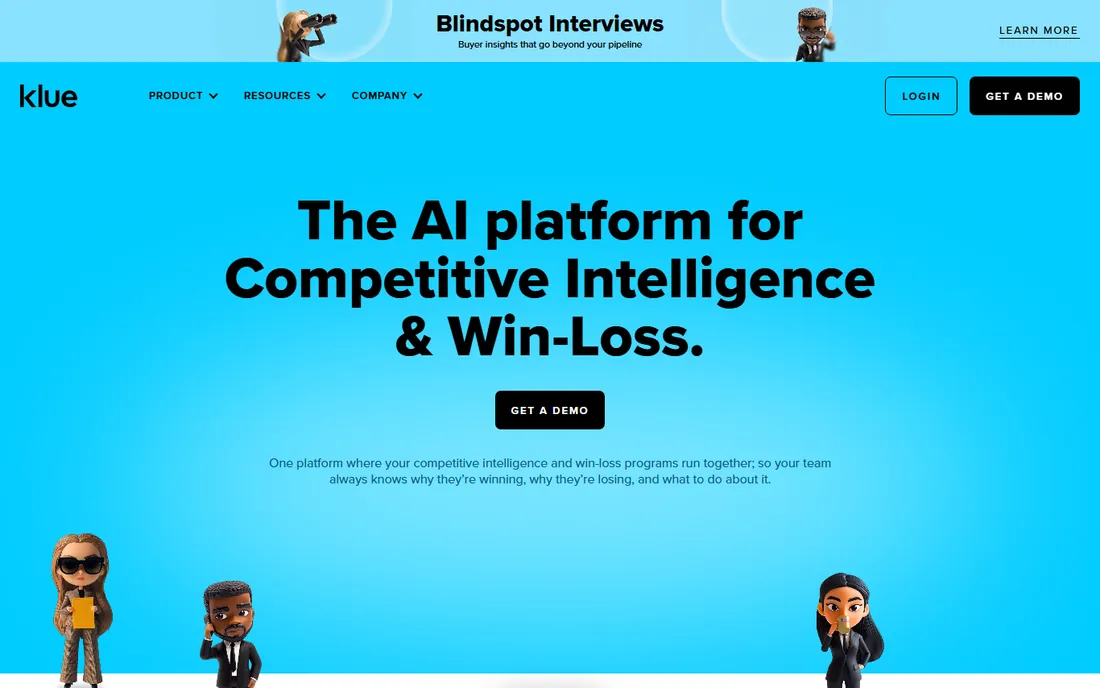
Klue is narrower than Crayon on purpose: it exists to arm sales reps in live deals. It gathers competitive intel from across the web plus your internal sources, Gong calls, Slack, documents, and turns it into battlecards reps can query mid-call, including through an embedded chatbot. When the use case is "win the deal in front of us," Klue is the sharper tool.
Like Crayon it is quote-priced with annual contracts, and it assumes you have a sales team to enable. Product-led companies with no sales floor will not get the value. Choose Klue when sales enablement is the job; choose Crayon when the intelligence team is broader.
What we like- Battlecards built for in-call use with a rep-facing chatbot
- Collects intel from internal sources like call recordings
- Narrower and more focused than Crayon
Watch out for- Annual contracts at enterprise prices
- Less broad than Crayon for market monitoring
- Built for companies with sales teams
#3
Contify
Best for: Market and competitive intelligence teams wanting curated feeds
Visit contify.com
Starting priceSee website (custom quote)
Free planNo
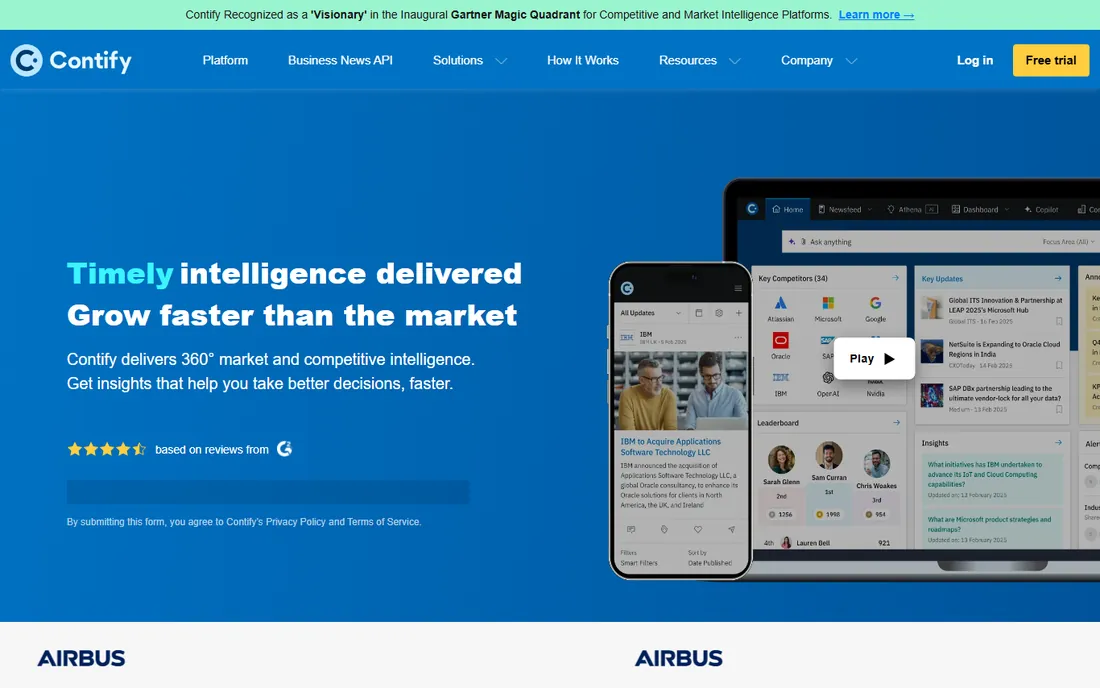
Contify serves the classic CI team workflow: curated feeds of competitor and market updates, organized by taxonomy, delivered as dashboards, newsletters and alerts. It is built for intelligence professionals who monitor many companies and topics systematically, with filtering that keeps the signal usable. FeaturedCustomers rates it a market leader in the category.
It is less about sales battlecards and more about the intelligence function itself, so sales-led buyers should compare Crayon and Klue first. Pricing is custom. For teams where CI is a discipline with deliverables, Contify's curation model fits well.
What we like- Curated intelligence feeds with taxonomy and noise filtering
- Newsletter and dashboard delivery
- Strong in enterprise CI teams
Watch out for- Quote-only pricing
- Less sales-enablement tooling than Crayon or Klue
- The value depends on feed configuration
Starting priceSee website (plans from reviewer-reported $199/month)
Free planYes (limited free tier)
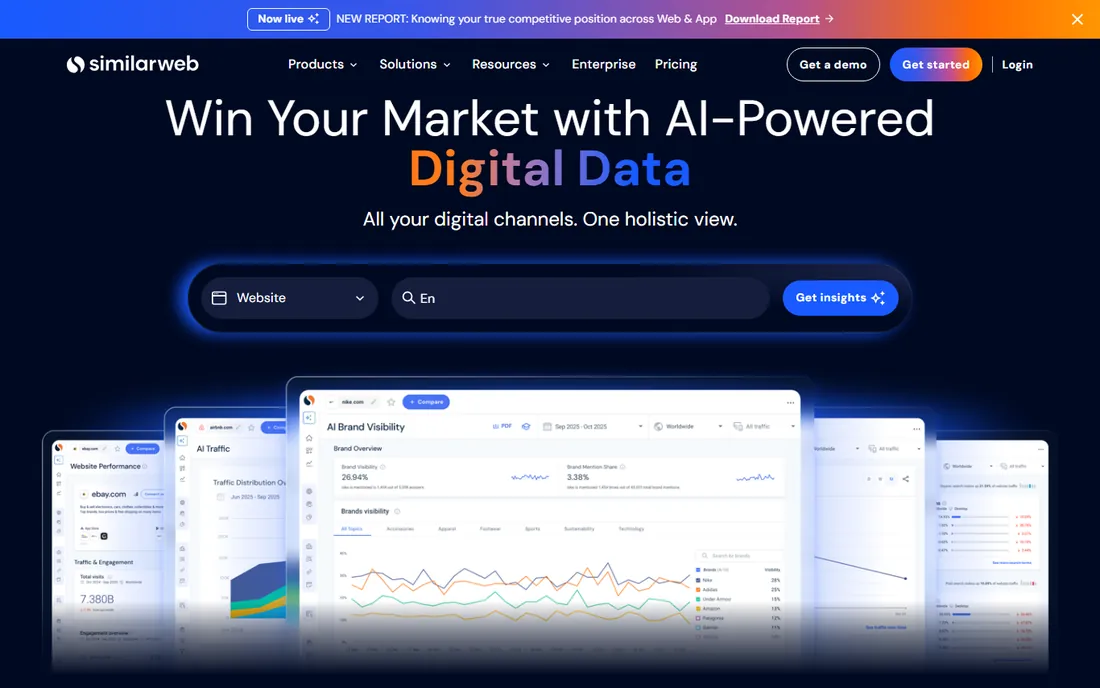
Similarweb answers the first question in any competitive analysis: how big is their audience? Estimated visits, engagement, traffic sources, referral mix and app data let you size competitors and spot channel shifts. The free tier gives a taste, and self-serve plans make it accessible without an enterprise contract.
Estimated is the operative word: the numbers are modeled, and small sites get noisy estimates. Treat it as directional, and triangulate with other sources for important decisions. For digital marketers and strategists who need quick competitive reads, it is the fastest answer available.
What we like- Estimated traffic, engagement and referral data for any site
- App intelligence included
- Self-serve plans for smaller teams
Watch out for- Data is estimated, not measured
- Lower-tier plans limit history and features
- Enterprise features need the expensive tiers
Starting priceSee website (tiered monthly plans)
Free planYes (limited free tier)
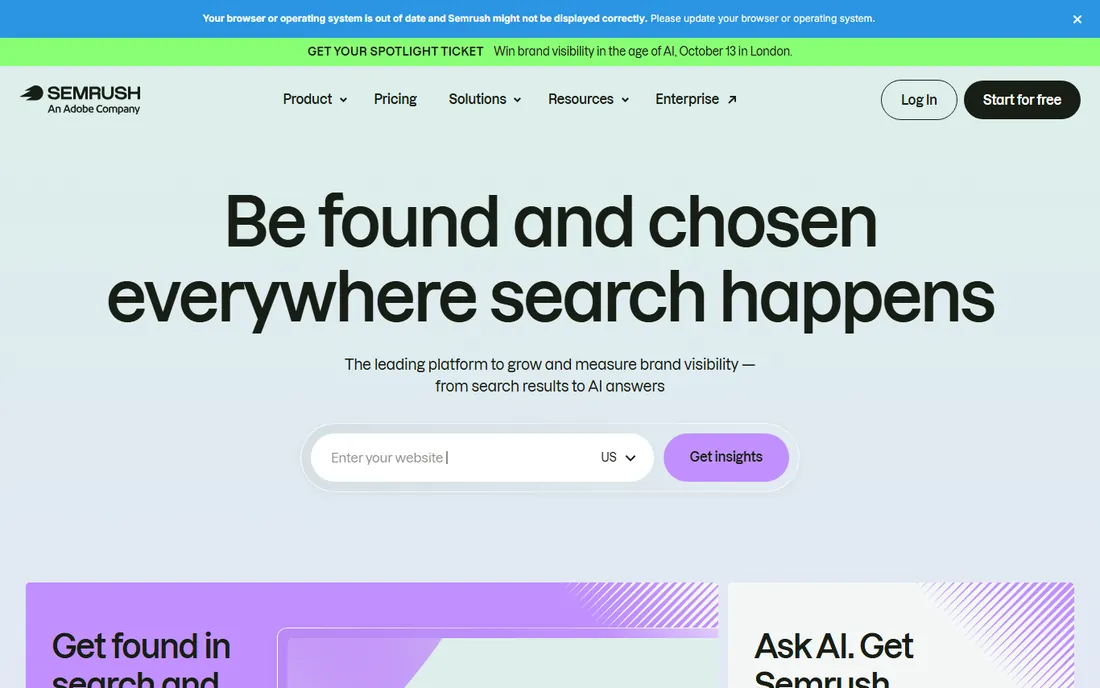
Semrush is the competitive tool most marketers already have a login for. It shows competitors' organic keywords, rankings, backlinks, paid search ads and estimated traffic, which covers the "what are they doing in search" question completely. Traffic Analytics adds audience sizing, and newer AI-visibility features track brand mentions in AI answers.
It is search marketing first; pricing pages, product launches and hiring signals are not its job. Data is thinnest in non-English markets and niche B2B. But when the competitive question is digital marketing performance, Semrush is the default, and the free tier handles occasional checks.
What we like- Deep keyword, backlink and ad data on competitors
- Traffic analytics for sizing
- The toolkit marketers already know
Watch out for- SEO-centric, thin outside search marketing
- Data depth varies by market
- Costs climb with add-ons and users

#6
AlphaSense
Best for: Strategy, consulting and investment teams doing deep research
Visit alpha-sense.com
Starting priceSee website (custom quote)
Free planNo
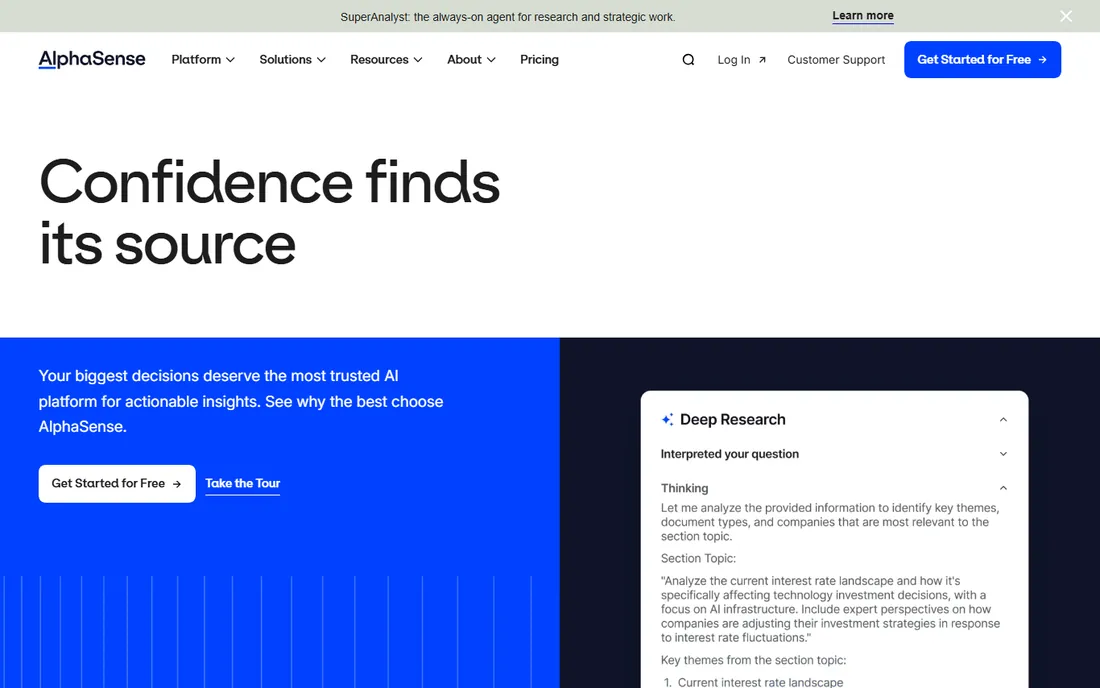
AlphaSense is competitive intelligence for people who read 10-Ks: strategy teams, consultants and investors tracking market shifts in research-heavy industries. It aggregates regulatory filings, earnings transcripts, broker research, news and expert interviews, then layers generative search and agentic research tools over the top. When the question is "what is happening in this market," it finds answers humans would take weeks to compile.
Marketing teams tracking pricing pages will find it oversized and overpriced. This is a research platform with enterprise contracts. For corporate strategy, corp dev and investment work, it is in a class of its own.
What we like- Vast source base: filings, transcripts, broker research, expert interviews
- Generative search across it all
- Built for research-heavy industries
Watch out for- Enterprise pricing
- Overkill for marketing teams
- The learning curve matches the depth
Starting priceSee website (freemium)
Free planYes
Owler is the casual end of CI: follow companies, get news alerts, funding updates and competitor suggestions, free. For a founder or marketer keeping an eye on ten rivals, it delivers 80 percent of the awareness value at zero cost. Paid tiers add more follows and features without enterprise pricing.
The data is shallow and partly crowd-sourced, so verify anything important. There are no battlecards, no website change tracking, no deep analytics. But as a free radar screen for competitor news, Owler is the easiest win on this list.
What we like- Free company profiles with news, funding and competitor lists
- Affordable paid tiers
- Simple competitive sets to follow
Watch out for- Data depth is shallow next to dedicated platforms
- Crowd-sourced data needs verification
- Limited workflow tooling
Starting priceSee website (plans from reviewer-reported $14/month)
Free planYes (limited free checks)
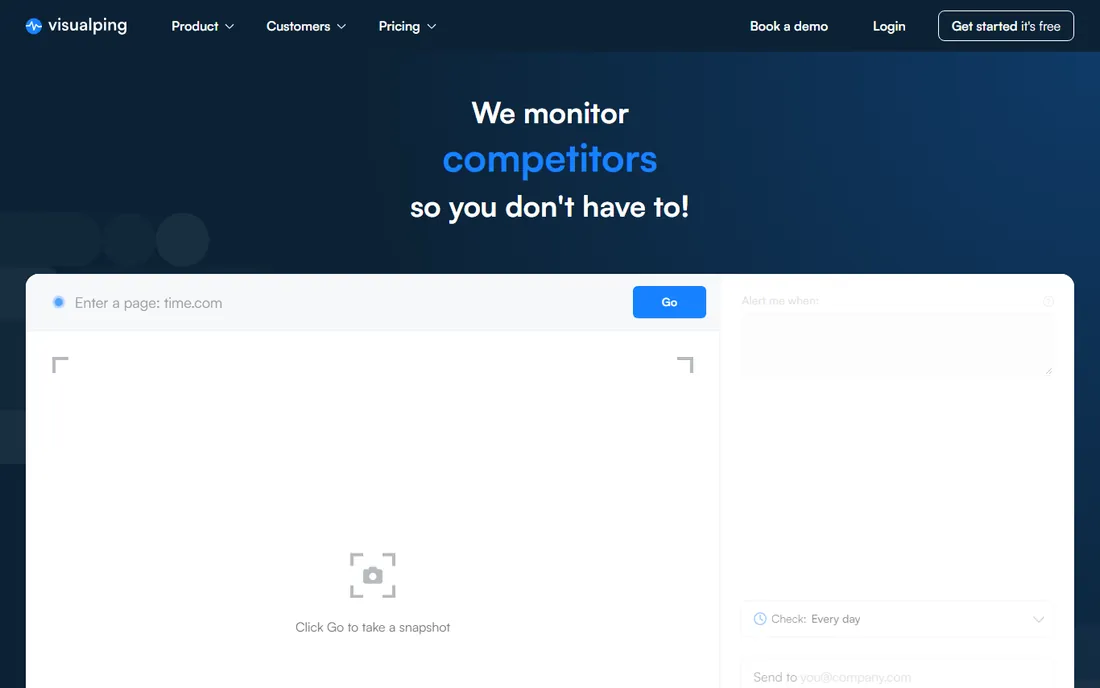
Visualping does one thing well: it watches web pages and tells you when they change. Point it at competitors' pricing pages, feature pages and homepages, and you get alerts with visual diffs showing exactly what moved. For catching pricing changes and messaging shifts, it is remarkably effective for the price.
It is not a CI platform: no news aggregation, no traffic data, no battlecards. Some protected pages block its checks. But as a complement to everything else here, or as the entire CI stack for a solo marketer, a handful of monitored pages covers the highest-signal changes cheaply.
What we like- Watches any public URL and alerts on changes
- Dead simple to set up
- Cheap enough for individuals
Watch out for- Page-level only, no broader intelligence
- Visual diffs need interpretation
- Anti-bot pages can defeat it
Quick comparison
| Tool | Best for | Starting price | Free plan |
|---|
| Crayon | Companies with a dedicated competitive intelligence owner | See website (custom quote) | No |
| Klue | Sales teams that need battlecards in live deals | See website (custom quote) | No |
| Contify | Market and competitive intelligence teams wanting curated feeds | See website (custom quote) | No |
 Similarweb Similarweb | Sizing competitors' web traffic and market share | See website (plans from reviewer-reported $199/month) | Yes (limited free tier) |
 Semrush Semrush | SEO and PPC competitive analysis | See website (tiered monthly plans) | Yes (limited free tier) |
| AlphaSense | Strategy, consulting and investment teams doing deep research | See website (custom quote) | No |
 Owler Owler | Lightweight company tracking on a budget | See website (freemium) | Yes |
 Visualping Visualping | Monitoring specific competitor page changes cheaply | See website (plans from reviewer-reported $14/month) | Yes (limited free checks) |
Is your product missing or out of date?
We review this list regularly. Vendors can request a listing, send updated pricing or ask about featured placement.
Build versus buy: the spreadsheet stage
Before buying any of this, be honest about whether you have outgrown the free stage. Ten competitors, Owler alerts, Visualping on their pricing pages and a shared doc of observations covers most small companies. The paid platforms earn their keep when the competitor set is large, the updates are constant, and sales needs battlecards that someone maintains.
The buying trigger is usually pain: a lost deal where the rep was blindsided, or an intelligence owner drowning in manual checking. Buy the platform that matches the pain. Sales blindsided means Klue or Crayon. Drowning in manual checks means Crayon or Contify. "How big are they" means Similarweb. Do not buy enterprise CI for curiosity.
What to check before you buy
Check who owns it. Every dedicated platform here underperforms without a named owner; confirm the headcount before the contract. Check the competitor coverage: trial with your actual competitor set and verify the data quality on the companies you care about, not the vendor's demo examples. Check integrations: Slack, Salesforce and email delivery decide whether intel gets used or ignored.
Check the contract: annual terms are standard on the enterprise tools, so negotiate the competitor count, seat count and renewal terms up front. Check data sources for your market: B2B niche coverage varies widely. And check overlap with tools you own: Semrush plus Visualping plus Owler may already cover a marketing team's needs.
How we chose
We started with the searches buyers use: best competitive intelligence software, competitor monitoring tools and competitive analysis tools. For each candidate we checked the vendor's own site for current positioning and pricing approach, read recent analyst and review coverage, and compared data sources, workflow fit and pricing model. Where pricing could not be confirmed on the vendor's page, we wrote "See website".
Frequently asked questions
What is the difference between Crayon and Klue?
Both track competitors and build battlecards. Crayon is broader, monitoring more signal types for a dedicated intelligence function. Klue is narrower and sales-focused, built to help reps win live deals with in-call tools. Companies with a CI team lean Crayon; sales-led organizations lean Klue.
How much does competitive intelligence software cost?
The dedicated platforms (Crayon, Klue, Contify, AlphaSense) are quote-priced enterprise contracts, typically annual. Similarweb and Semrush have self-serve tiers in the low hundreds per month. Owler and Visualping have free tiers with cheap paid plans. Budget follows the depth you need.
Can I do competitive intelligence for free?
Yes, to a point. Owler tracks company news free, Visualping monitors page changes free, and Similarweb and Semrush have limited free tiers. That stack covers awareness. Battlecards, deep monitoring and curated feeds are what the paid platforms add.
Is it legal to monitor competitors' websites?
Monitoring public websites is standard practice. Do not circumvent login walls or technical barriers, do not misrepresent yourself to gain access, and do not copy copyrighted content wholesale. Track public signals and keep your own analysis separate from their content.
How do I get sales to actually use battlecards?
Put them where reps already work: in the CRM, in Slack, in call tools. Keep cards short and current; stale battlecards get ignored faster than no battlecards. Assign an owner to update them, and tie updates to real competitive events, not a calendar.
Sources we checked (8)
- https://crayon.co
- https://klue.com
- https://contify.com
- https://similarweb.com
- https://semrush.com
- https://alpha-sense.com
- https://owler.com
- https://visualping.io
Is your product missing or out of date?
We review this list regularly. Vendors can request a listing, send updated pricing or ask about featured placement.

Shihab Mia · Founder, Rankite
Shihab has spent more than a decade helping SaaS and e-commerce brands grow through search. He writes Rankite's software buying guides from pricing pages, documentation and public user reviews. More about Shihab.