How we make this list: we compare pricing pages, product documentation and public user reviews. Rankite is independent; if a vendor ever pays for a featured spot, that listing is clearly labeled Partner.
Key takeaways
- Circle is the most complete modern option, starting at $89 a month, with courses, events, payments and AI tools in one platform.
- Mighty Networks and Skool compete for the creator community crown, with Skool winning on simplicity and gamification.
- Discourse is the open-source forum standard, ideal for discussion-heavy communities that want full control.
- Hivebrite, Higher Logic Vanilla and Bettermode serve organizations and brands, while Heartbeat and Geneva cover chat-first community groups.
Quick comparison
| Tool | Best for | Starting price | Free plan |
|---|
 Circle Circle | Creators building all-in-one communities | $89 per month (billed annually) | Free trial (14 days) |
 Mighty Networks Mighty Networks | Creator communities with courses and events | See website | Free trial |
 Skool Skool | Simple, gamified learning communities | See website | Free trial |
 Discourse Discourse | Discussion-heavy communities with full control | See website | Yes (self-hosted) |
 Hivebrite Hivebrite | Branded communities for organizations | See website | No |
 Higher Logic Vanilla Higher Logic Vanilla | Enterprise customer communities | See website | No |
 Bettermode Bettermode | Customizable communities for brands | See website | Yes |
 Heartbeat Heartbeat | Chat-first communities with courses | See website | Free trial |
 Geneva Geneva | Free chat-based community groups | Free | Yes |
Is your product missing or out of date?
We review this list regularly. Vendors can request a listing, send updated pricing or ask about featured placement.
#1
Circle
Best for: Creators building all-in-one communities
Visit circle.so
Starting price$89 per month (billed annually)
Free planFree trial (14 days)
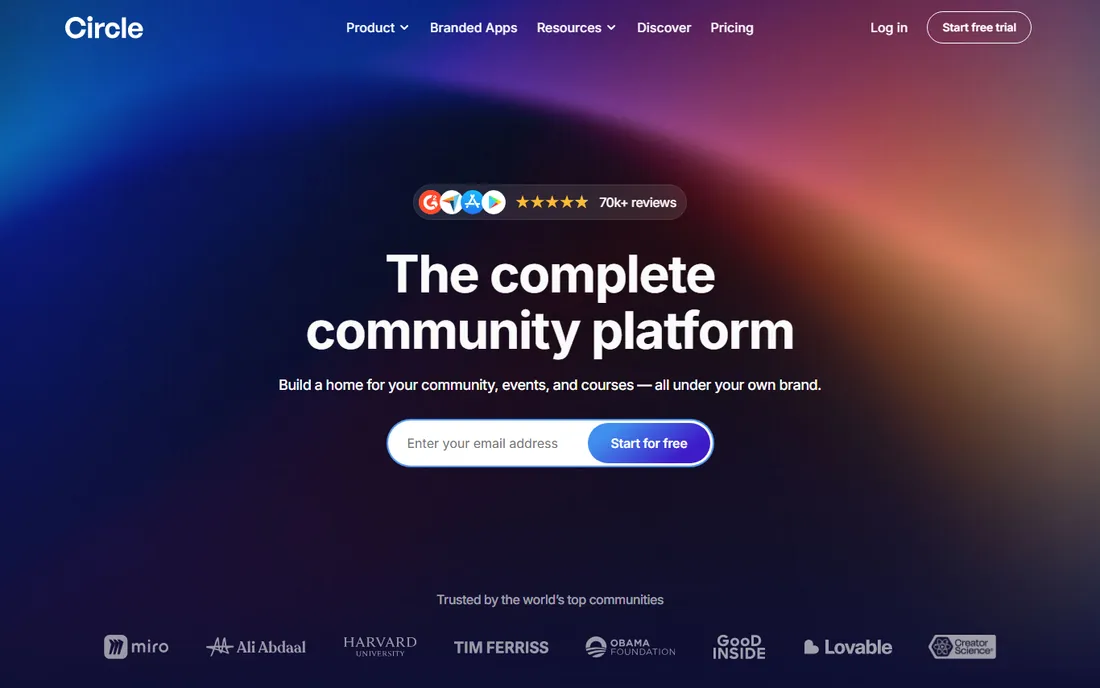
Circle has become the default recommendation for creators building paid communities. Discussions, live streams, courses, events, member payments and email live in one platform with a member experience that feels modern on web and mobile. The Professional plan starts at $89 a month on annual billing, with Business at $199 adding workflows, API access and AI tools.
The costs beyond the subscription deserve attention: Circle takes 2 percent of member payments on Professional (1 percent on Business), plus Stripe's processing fees. A 14-day free trial lets you test the full product. For creators who want one platform instead of a course tool plus a forum plus an email tool, Circle is the most complete package.
What we like- Courses, events, payments and email in one
- Polished member experience
- Strong AI features
Watch out for- Transaction fees on member payments
- Advanced features need higher tiers
Starting priceSee website
Free planFree trial
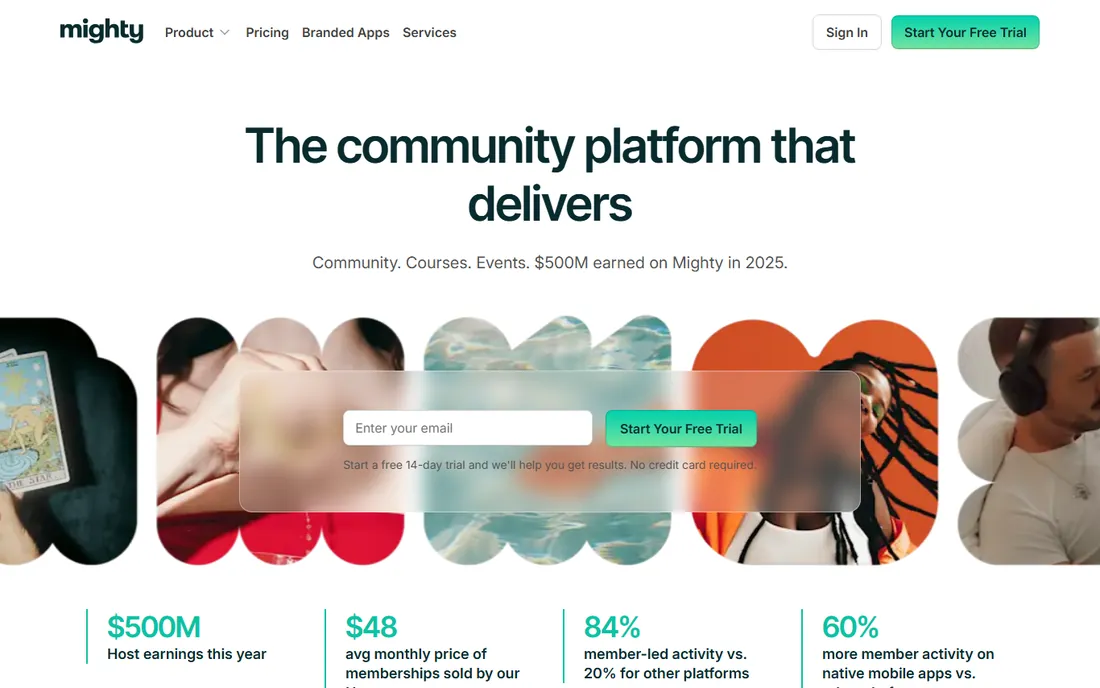
Mighty Networks has served creators and educators for years with a combination of community spaces, online courses, events and memberships. It is particularly strong for cohort-based courses and membership programs where the community and the curriculum reinforce each other. Branded mobile apps give members a native experience.
The platform packs a lot in, and the interface can feel busy compared with Circle's cleaner design. Key features sit in higher tiers. But for educators running cohort programs, Mighty Networks' course-community integration remains one of the best in the category.
What we like- Courses, community and events in one
- Branded mobile apps
- Strong for cohort programs
Watch out for- Interface can feel busy
- Pricing tiers gate key features
Starting priceSee website
Free planFree trial
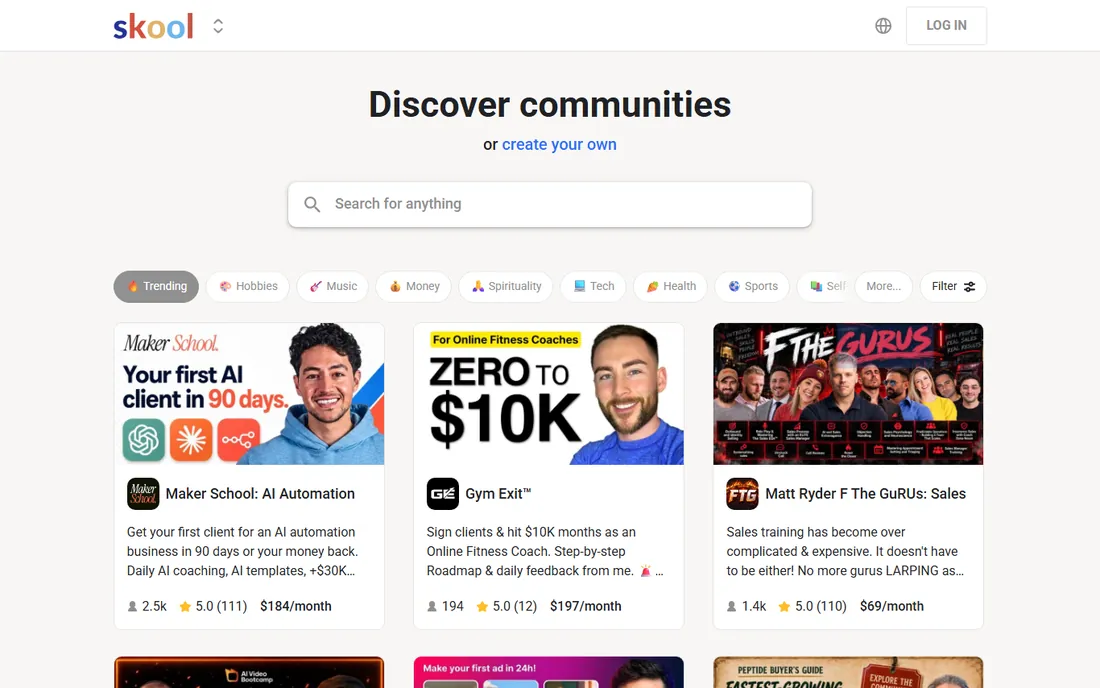
Skool does less than its competitors and does it with unusual focus: a community feed, a classroom for courses, a calendar for events and a leaderboard that gamifies participation. Members earn points for contributing, which drives the engagement loop that most communities struggle to create. The simplicity is the product.
The trade-off is depth. No complex workflows, limited customization, fewer integrations. Communities that need sophisticated structures will outgrow it. But for creators who want members posting, learning and showing up, Skool's focused simplicity works remarkably well.
What we like- Dead simple to use
- Gamification drives engagement
- Clean focused design
Watch out for- Fewer features than Circle
- Limited customization
Starting priceSee website
Free planYes (self-hosted)
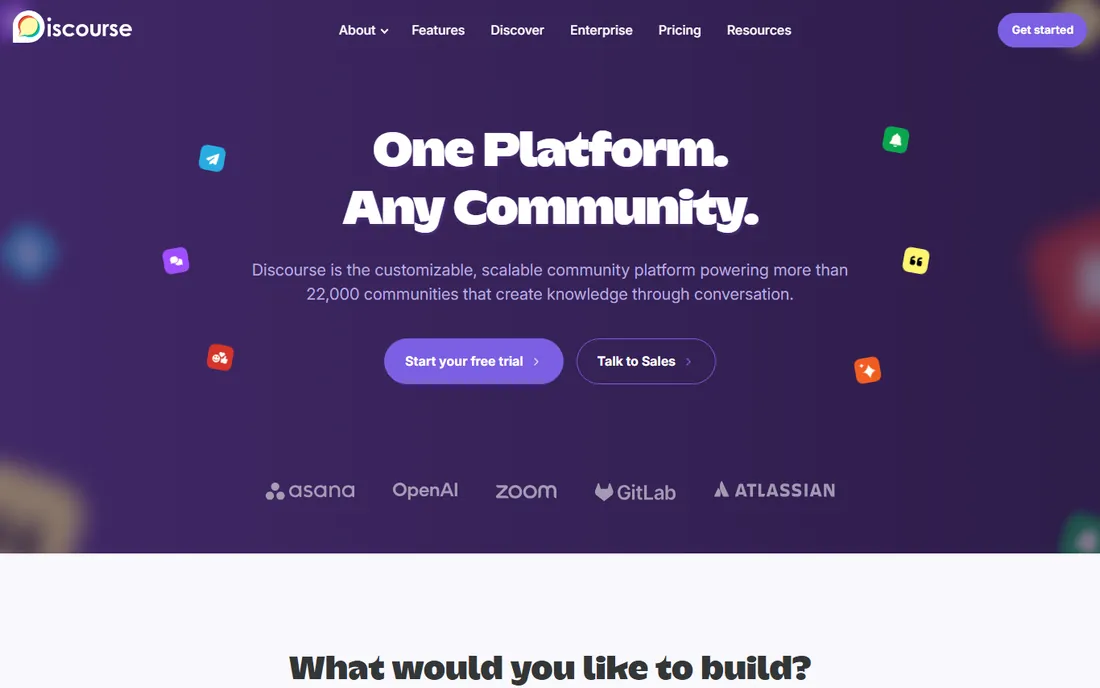
Discourse is the open-source standard for internet forums, powering everything from open-source project communities to customer support forums. The discussion format, topics, replies, solved markers, trust levels, is the best implementation of classic forum software ever built, and the plugin ecosystem extends it enormously.
It is a forum, not a social network: communities wanting chat-style feeds or course platforms should look elsewhere. Self-hosting is free but needs technical maintenance; managed hosting plans handle that for a fee. For organizations that want to own their community infrastructure completely, nothing beats it.
What we like- Open source and self-hostable
- Best-in-class forum software
- Huge plugin ecosystem
Watch out for- Forum format, not a modern social feed
- Self-hosting needs technical skill
Starting priceSee website
Free planNo
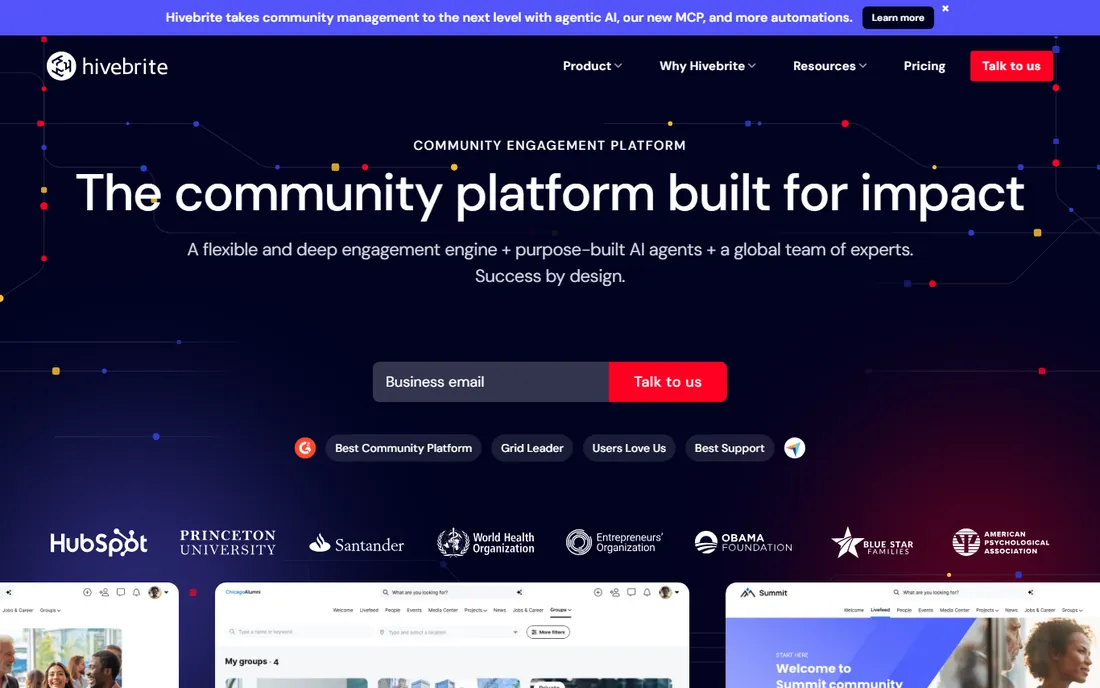
Hivebrite builds fully branded private community platforms for organizations: alumni networks, professional associations, corporate communities. Member directories, events, subgroups, mentoring, fundraising and content come in a white-labeled package that looks like the organization's own product, not a third-party tool.
This is enterprise software with enterprise pricing and implementation. Individual creators should not be here. But for institutions that need a private network serving thousands of members with organizational branding and governance, Hivebrite is purpose-built for exactly that.
What we like- Fully branded private networks
- Strong for alumni and associations
- Event and fundraising tools
Watch out for- Enterprise pricing
- Implementation is a project
Starting priceSee website
Free planNo
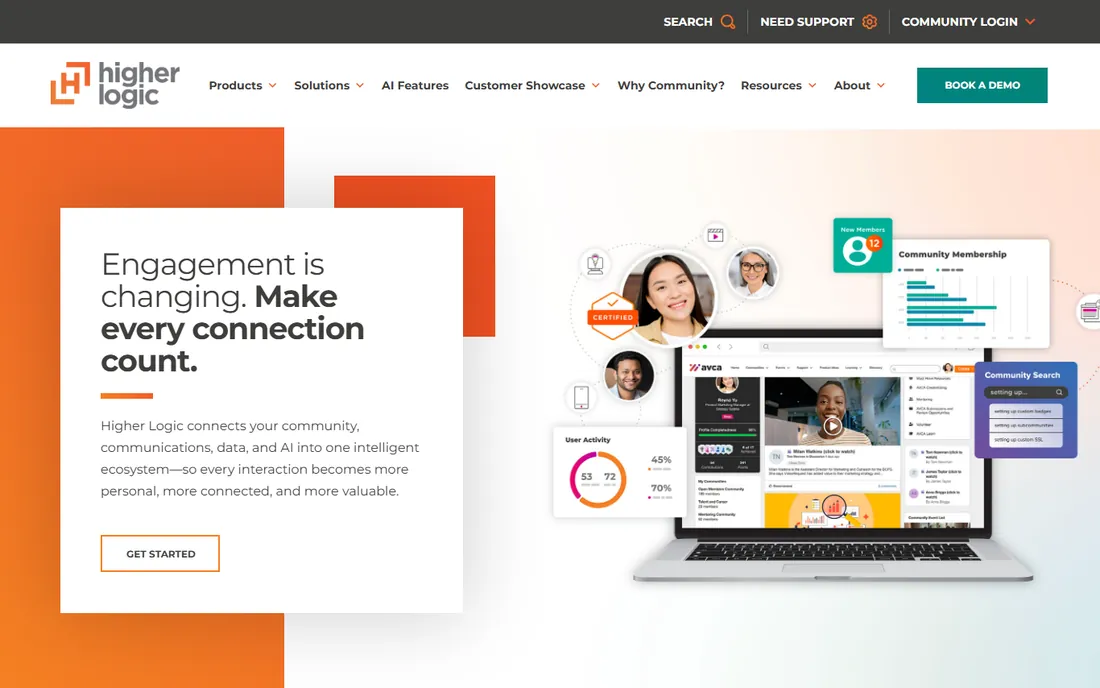
Higher Logic's Vanilla platform serves enterprise customer communities: support forums, ideation, advocacy programs and customer success at scale. The moderation tools, gamification and analytics are built for communities with tens of thousands of members, and the integrations connect community data to CRM and support systems.
The enterprise positioning is total: pricing, sales cycle and implementation all assume an organizational buyer. Creator communities will find it heavy and expensive. For companies where community is a customer success strategy, Vanilla's enterprise depth is the point.
What we like- Proven at enterprise scale
- Strong moderation and gamification
- Salesforce integrations
Watch out for- Enterprise pricing and sales cycle
- Less suited to creator communities
Starting priceSee website
Free planYes
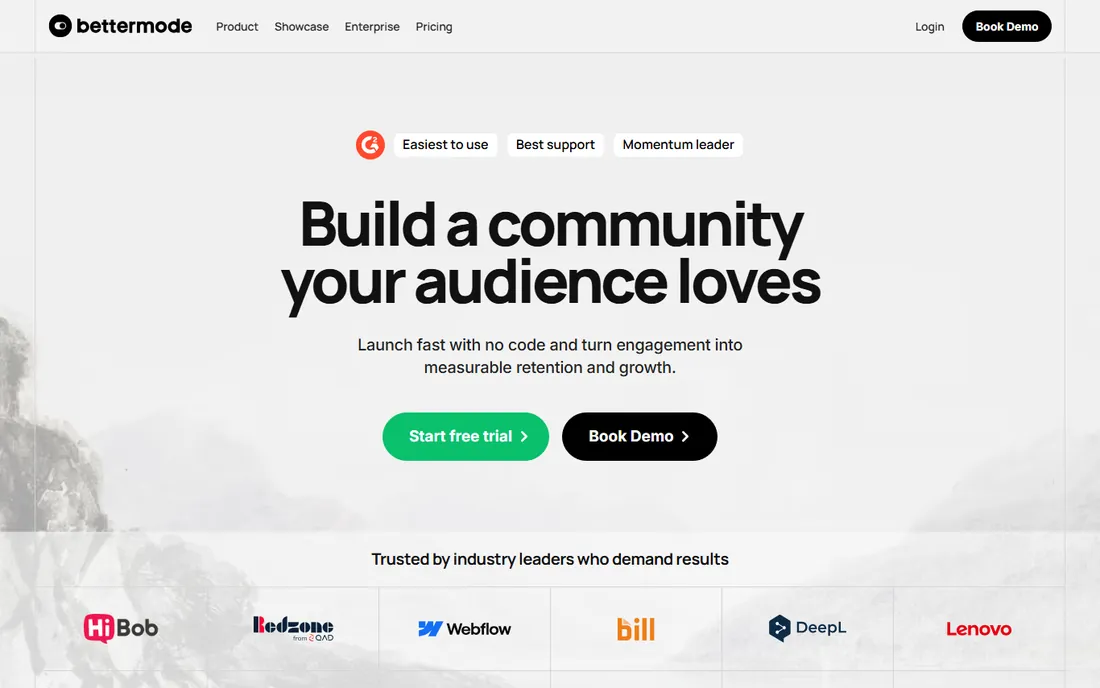
Bettermode, formerly Tribe, offers a highly customizable community platform that brands can shape to their needs. Spaces, widgets, themes and integrations adapt to different use cases, from customer communities to internal groups. The free tier lets small communities start without cost.
The flexibility cuts both ways: more customization means more setup decisions. The ecosystem of templates and integrations is smaller than Circle's. But for brands that want their community to look and behave exactly as designed, Bettermode's customization depth is a real advantage.
What we like- Highly customizable
- Modern interface
- Free tier available
Watch out for- Customization complexity
- Smaller ecosystem than Circle
Starting priceSee website
Free planFree trial
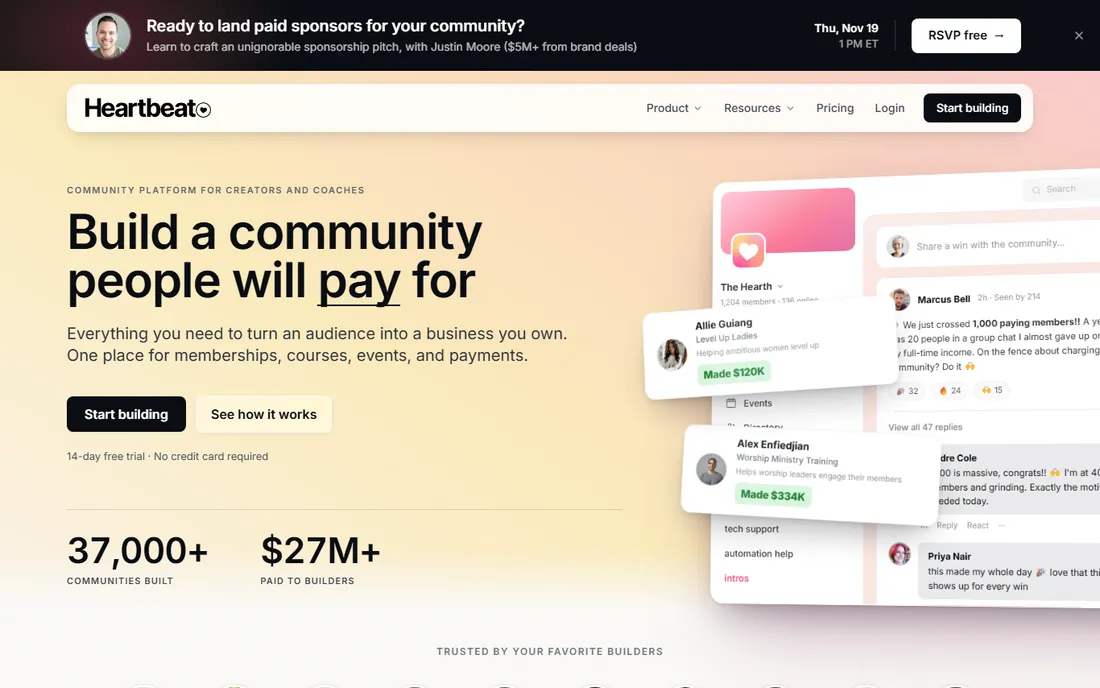
Heartbeat blends real-time chat with courses, events and community spaces, aimed at coaches, educators and creators whose communities live in conversation. The design is clean and modern, and the combination of chat immediacy with structured learning content fits coaching programs well.
The company is smaller than Circle or Mighty Networks, so the integration catalog and the pace of feature development reflect that. Pricing is positioned accessibly. For communities where the chat is the product and courses support it, Heartbeat's chat-first design is the right shape.
What we like- Real-time chat plus courses and events
- Clean modern design
- Good for coaching
Watch out for- Smaller company
- Fewer integrations
Starting priceFree
Free planYes

Geneva is the free option for community groups that live in chat. Rooms for different topics, forums for longer discussions, events and polls come in a simple app that groups can set up in minutes. For hobby groups, local communities and fan groups, the price is unbeatable.
Monetization features are limited compared with Circle or Mighty Networks, and the structure suits casual groups better than businesses. But as the best app for community groups that just need a home, Geneva proves that free does not have to mean bad.
What we like- Completely free
- Chat rooms plus forums and events
- Simple setup
Watch out for- Limited monetization features
- Less structure than paid platforms
How we chose
We covered community platforms as buyers encounter them: creator communities, organizational communities, forums and chat groups. We verified each product is actively offered in 2026, checked pricing pages and documentation, and favored tools with real adoption. Social media groups and messaging apps were excluded; this list is about owned community spaces. Where pricing could not be confirmed on the vendor's materials, we used See website.
The category splits by who the community serves. Creator communities (courses, memberships, coaching) belong with Circle, Mighty Networks, Skool or Heartbeat. Organizational communities (alumni, associations, customers) belong with Hivebrite, Higher Logic Vanilla or Bettermode. Discussion communities belong with Discourse. Casual chat groups belong with Geneva.
Within the creator segment, the choice is about complexity tolerance. Skool wins on simplicity, Circle on completeness, Mighty Networks on course-community integration, Heartbeat on chat-first design. Pick the one whose shape matches how your members actually interact, not the one with the longest feature list.
The engagement problem
Every community platform eventually faces the same problem: getting members to show up. Software helps at the margins: gamification, digests, notifications, events. But the research is consistent that engaged communities come from clear purpose, good onboarding and active hosts, not from features.
When evaluating, ask how each platform supports the human work. Onboarding sequences, welcome automations, digest emails and moderation tools are the features that actually move engagement. Then budget your own time accordingly: the most common cause of dead communities is an absent host, not the wrong software.
Frequently asked questions
What is community platform software?
It is software for building owned online communities: discussion spaces, chat, events, courses, member directories and payments in a branded environment you control. Unlike social media groups, you own the member relationships and the data, and no algorithm decides who sees what.
How much does community platform software cost?
Creator platforms start around $89 a month (Circle Professional, billed annually) with higher tiers for advanced features. Enterprise platforms like Hivebrite and Higher Logic are quote-based. Discourse is free self-hosted, Geneva is free, and Bettermode offers a free tier.
Can I migrate from a Facebook group?
Yes, and many communities do. The hard part is not the software but moving the members: expect a fraction to make the jump. Successful migrations offer something the Facebook group cannot, like courses, events or better discussions, and run both in parallel during the transition.
Do I need a mobile app?
Members increasingly expect one. Circle, Mighty Networks and others offer mobile apps, with fully branded apps typically reserved for enterprise tiers. For most creator communities, the vendor's standard app is enough; custom branded apps matter for organizational communities.
How do communities make money?
The common models are paid memberships, course sales, event tickets and sponsorships. Platforms take a cut of transactions (for example, Circle's 2 percent on Professional) plus payment processing fees. Model the all-in cost of a member payment before choosing, since fees vary significantly.
What is the difference between Circle and Discourse?
Circle is a modern all-in-one platform with courses, events, payments and a social-style feed, aimed at creators. Discourse is open-source forum software optimized for structured discussion, aimed at communities that want full control. They serve different community shapes.
Sources we checked (9)
- https://circle.so/pricing
- https://www.mightynetworks.com
- https://www.skool.com
- https://www.discourse.org
- https://hivebrite.io
- https://www.higherlogic.com
- https://bettermode.com
- https://www.heartbeat.chat
- https://www.geneva.com
Is your product missing or out of date?
We review this list regularly. Vendors can request a listing, send updated pricing or ask about featured placement.

Shihab Mia · Founder, Rankite
Shihab has spent more than a decade helping SaaS and e-commerce brands grow through search. He writes Rankite's software buying guides from pricing pages, documentation and public user reviews. More about Shihab.