How we make this list: we compare pricing pages, product documentation and public user reviews. Ratings come from G2, Capterra or Trustpilot, with the date we checked them.
Key takeaways
- Zoho Inventory offers the lowest entry cost, with a free plan for 50 orders a month and paid plans from $29 a month.
- Cin7 suits multichannel brands that have outgrown basic tools, starting at $349 a month, with broad integrations.
- Manufacturers should compare Katana, Fishbowl, and Unleashed, because production and costing depth differ sharply.
- NetSuite suits mid size to large companies that want inventory inside a full ERP, but it is quote based and implementation heavy.
- Check order, user, warehouse, and SKU limits on each plan, because those limits, not the headline price, often force an upgrade.
Quick comparison
| Tool | Best for | Starting price | Free plan |
|---|
 Cin7 | Multichannel product businesses that need scale | $349 per month | Free trial |
 Zoho Inventory | Small sellers who want the most for the least | $29 per month | Yes |
 NetSuite | Mid size to large companies needing full ERP | See website | No |
 Katana | Manufacturers and product businesses that also make | See website | Yes |
 inFlow | B2B and wholesale sellers | $99 per month | Free trial |
 Sortly | Simple visual tracking for small teams | $49 per month | Yes |
 Fishbowl | Manufacturers and distributors on QuickBooks | $229 per month | No |
 Unleashed | Wholesalers needing lot and serial traceability | See website | No |
Is your product missing or out of date?
We review this list regularly. Vendors can request a listing, send updated pricing or ask about featured placement.
The best cloud based inventory management software
#1
Cin7
Best for: Multichannel product businesses that need scale
Visit cin7.com
Starting price$349 per month
Free planFree trial
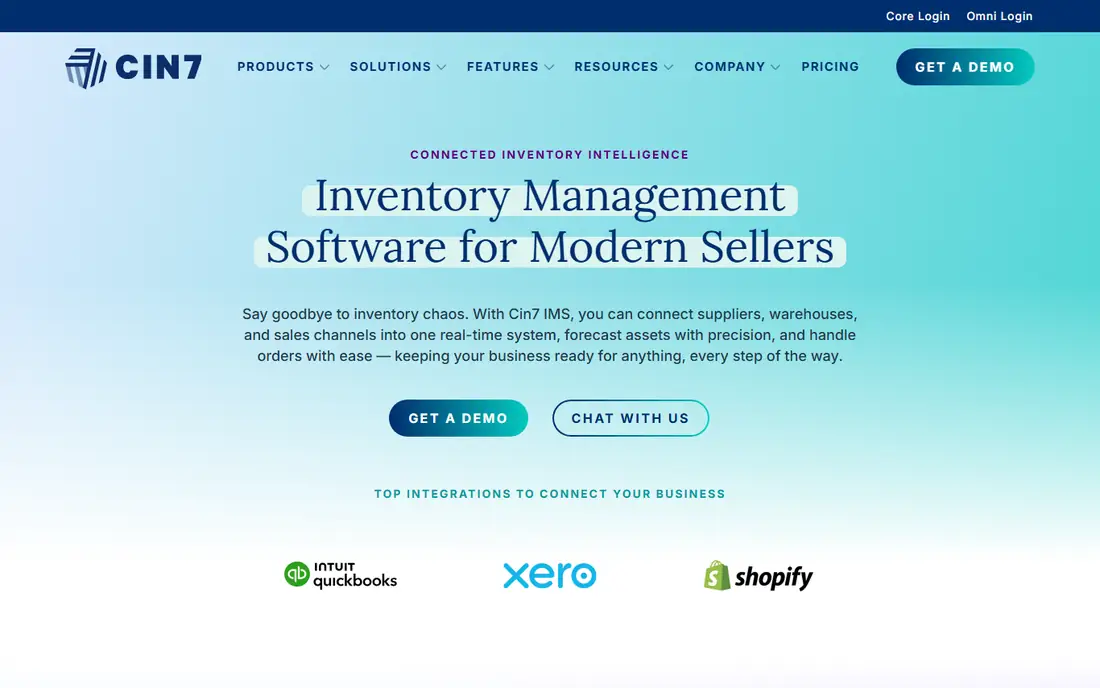
Cin7, with its Core product for mid market brands and Omni for larger operations, is built for businesses that sell across Shopify, Amazon, wholesale, and retail at the same time. Stock, orders, and accounting stay connected, so a sale on one channel reduces available stock everywhere, and purchase orders can be raised from forecasted demand rather than guesswork. The integration count, commonly cited above 700, covers ecommerce, accounting, shipping, and marketplace tools that growing brands rely on.
The price reflects that scope. Core starts at $349 a month, with a 14 day free trial, and Omni is quote based for larger operations. Small sellers will find that heavy, and implementation takes longer than a simple tracker, because channel mappings, warehouse setup, and accounting sync need care. For a multichannel brand that has outgrown spreadsheets or a basic app, Cin7 is a strong, scalable choice.
What we like- 700 plus integrations
- Multichannel stock sync
- Built in EDI on higher plans
- Demand forecasting tools
Watch out for- Starting price is high for small sellers
- Setup and learning curve are longer than basic tools
- Some features need higher tiers
#2Zoho Inventory
Best for: Small sellers who want the most for the least4.4/5 on
G2 (91 reviews, checked Oct 2026)
Visit zoho.com
Starting price$29 per month
Free planYes
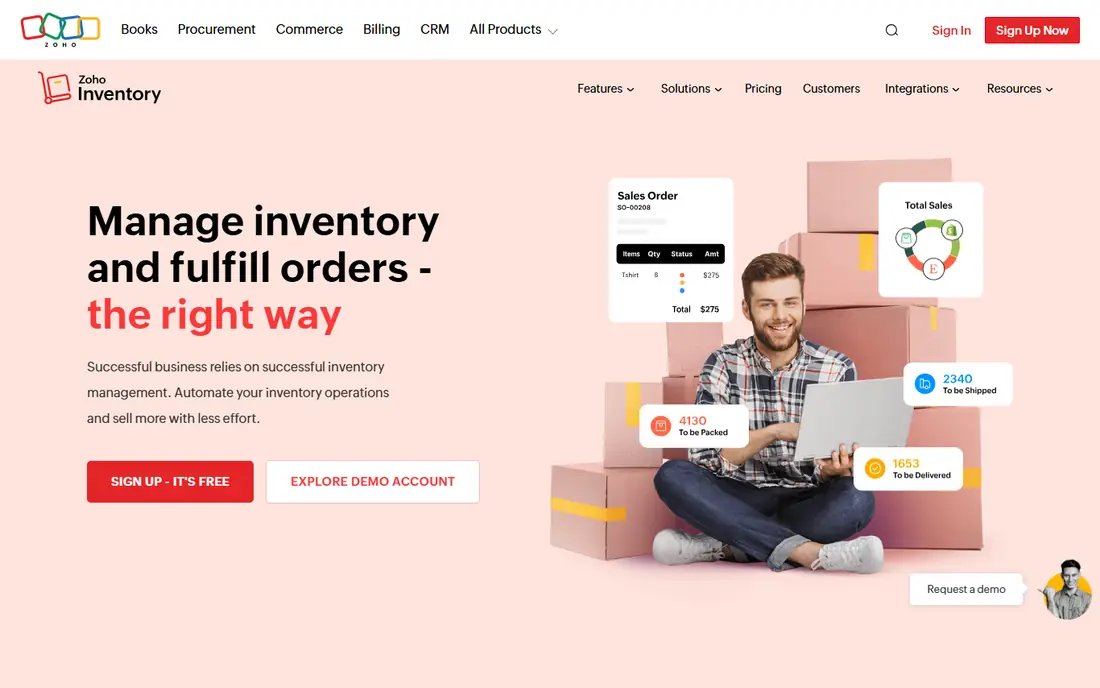
Zoho Inventory resets expectations for small sellers. The free plan handles 50 orders a month for one user at one location, which is enough for a side business or a new store to run properly. Standard, at $29 a month billed annually, raises that to 500 orders, three users, and two locations, and pricing is per organization rather than per seat, which keeps costs down for a small team. Integration with Zoho Books and Zoho CRM also makes accounting and customer data easier to keep in sync.
The tier structure is the catch. Order volume, user count, and warehouse limits all rise with the plan, so a business that grows past 500 orders a month moves to Professional at $79 a month, and automation, fulfillment, and advanced reporting wait on higher tiers. If you already use Zoho apps, the value case is even stronger. For a small seller starting cloud inventory, Zoho Inventory is the first tool to check.
What we like- Free plan for 50 orders a month
- Flat per organization pricing, not per seat
- Deep Zoho Books and CRM integration
Watch out for- Order, user, and location caps rise with plan, so growing sellers upgrade fast
- Advanced automation sits on higher tiers
#3NetSuite
Best for: Mid size to large companies needing full ERP4.1/5 on
G2 (4,963 reviews, checked Oct 2026)
Visit netsuite.com
Starting priceSee website
Free planNo
NetSuite, from Oracle, is not just inventory software: it is an ERP that includes inventory, financial management, order management, CRM, and automation in one cloud system. That breadth suits mid size to large companies with multiple warehouses, subsidiaries, or complex fulfillment, because stock, accounting, and customer data share one record. Advanced automation, demand planning, and reporting also help companies that have outgrown a standalone inventory app.
The cost and effort are enterprise scale. Pricing is quote based, implementation involves process design, data migration, and training, and a small seller will find the system disproportionate. NetSuite also offers a free product tour rather than a free trial, so evaluation is sales led. For a scaling company that needs ERP depth, NetSuite is a long term platform. For a small store, start with Zoho, Sortly, or inFlow instead.
What we like- Full ERP with inventory, financials, CRM, and automation in one system
- Strong multi subsidiary and multi warehouse support
- Advanced reporting
Watch out for- Quote based pricing with implementation costs
- Implementation is a major project
- Overkill for small sellers
#4Katana
Best for: Manufacturers and product businesses that also make4.4/5 on
G2 (117 reviews, checked Oct 2026)
Visit katanamrp.com
Starting priceSee website
Free planYes
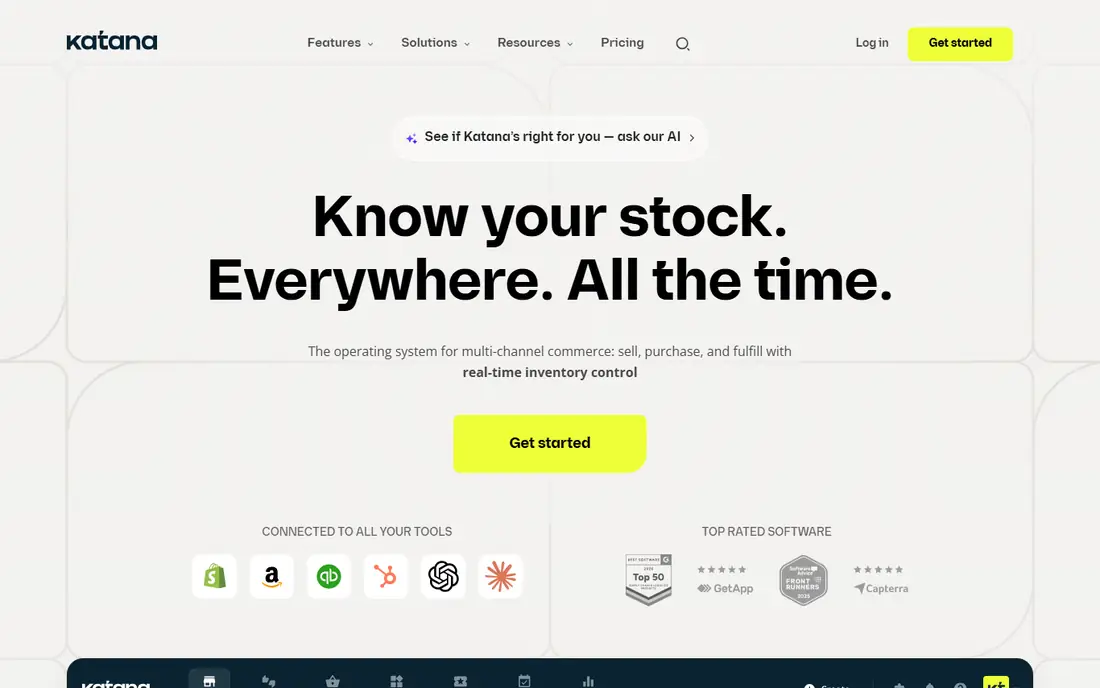
Katana combines inventory management with manufacturing resource planning, which is rare at its price point. A maker can track raw materials, build a bill of materials, plan production, and see finished stock in one system, rather than running inventory in one app and production in a spreadsheet. Integrations with Shopify, WooCommerce, QuickBooks, and Xero keep sales and accounting in sync, which matters for small manufacturers selling direct to consumer.
Pricing needs a direct check, because Katana has revised its plans and entry points over time, and some sources cite different starting figures. A free plan with limited scope is available, with paid plans for larger operations. Advanced shop floor and planning features also sit on higher tiers. For a product business that manufactures, assembles, or kits its goods, Katana is one of the best cloud options.
What we like- End to end manufacturing with bill of materials tracking
- Shop floor planning
- Ecommerce and accounting integrations
Watch out for- Pricing has changed over time, so confirm the current plan
- Advanced manufacturing features need higher tiers
Starting price$99 per month
Free planFree trial
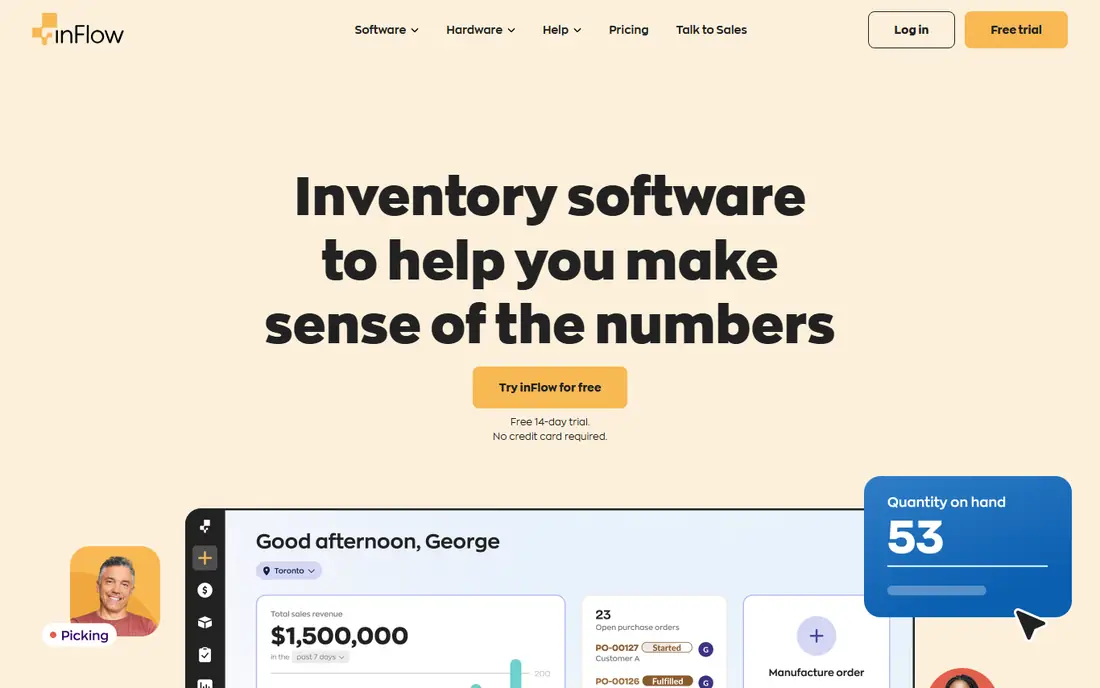
inFlow suits B2B and wholesale sellers who need structure: customer specific pricing, showrooms for wholesale buyers, sales orders, purchase orders, and invoicing in one system. A wholesaler can let buyers browse a showroom, place orders, and receive invoices without a separate B2B portal, while warehouse staff pick, pack, and track stock with barcodes. That wholesale focus sets inFlow apart from tools built mainly for direct to consumer sellers.
The starting price, $99 a month billed annually, with a 14 day free trial, is mid range, and higher tiers add users, locations, and automation. Multichannel ecommerce brands with heavy Amazon and Shopify volume may find Cin7 deeper for channel sync. For a wholesale or B2B seller that needs order structure and customer pricing, inFlow is a well matched choice.
What we like- B2B showrooms and invoicing automation
- Structured wholesale workflows
- Barcode and multi location support
Watch out for- Ecommerce depth is less than Cin7 for multichannel brands
- Pricing rises with plan tier for advanced features
#6Sortly
Best for: Simple visual tracking for small teams4.3/5 on
G2 (27 reviews, checked Oct 2026)
Visit sortly.com
Starting price$49 per month
Free planYes
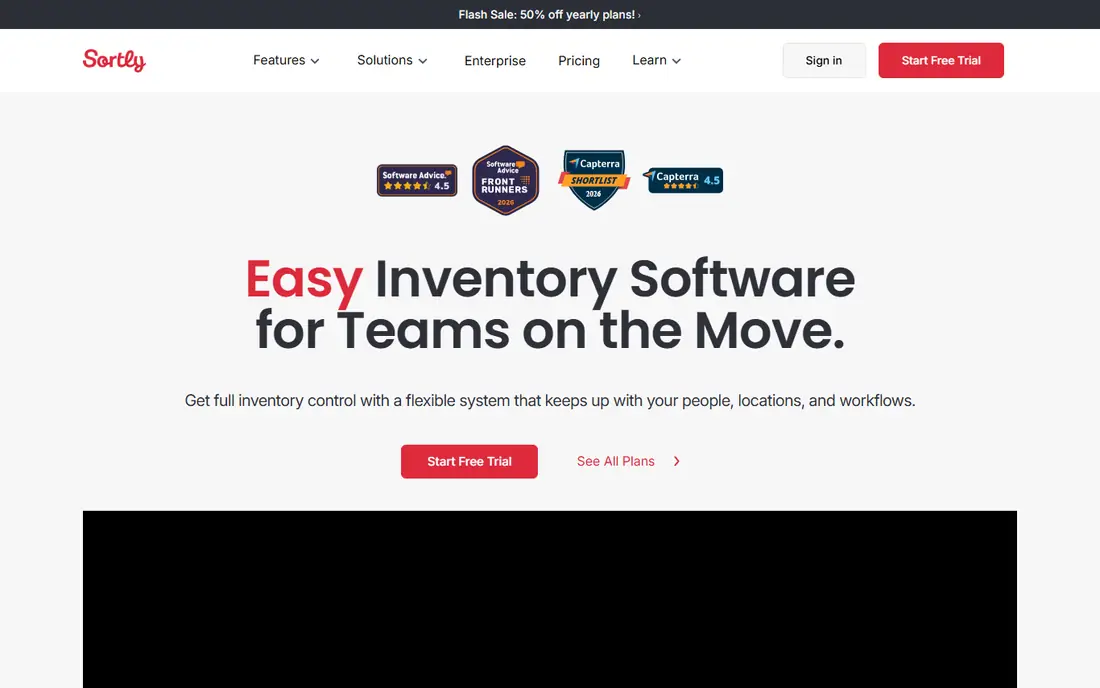
Sortly is the simplest tool in this list, and that simplicity is its appeal. Teams track equipment, supplies, materials, and finished goods visually, with photos, folders, barcodes, and QR codes, and reorder alerts flag low stock before it runs out. A small business that needs to know what it has, where it is, and when to reorder, without learning an ERP, can set Sortly up quickly and train staff in hours, not weeks.
The limit is depth. Sortly does not match Cin7 for multichannel order sync, Katana for manufacturing, or NetSuite for ERP, so a growing ecommerce brand will outgrow it. Paid plans start at $49 a month, with a free plan for limited items and a 14 day trial on paid plans. For a small team that wants visual, low friction tracking, Sortly is an excellent starting point.
What we like- Visual, easy to learn interface
- Barcode and QR scanning
- Reorder alerts and simple reporting
Watch out for- Not built for complex manufacturing or multichannel order management
- Paid plans start at $49 a month for advanced features
#7Fishbowl
Best for: Manufacturers and distributors on QuickBooks4.0/5 on
G2 (274 reviews, checked Oct 2026)
Visit fishbowl.com
Starting price$229 per month
Free planNo
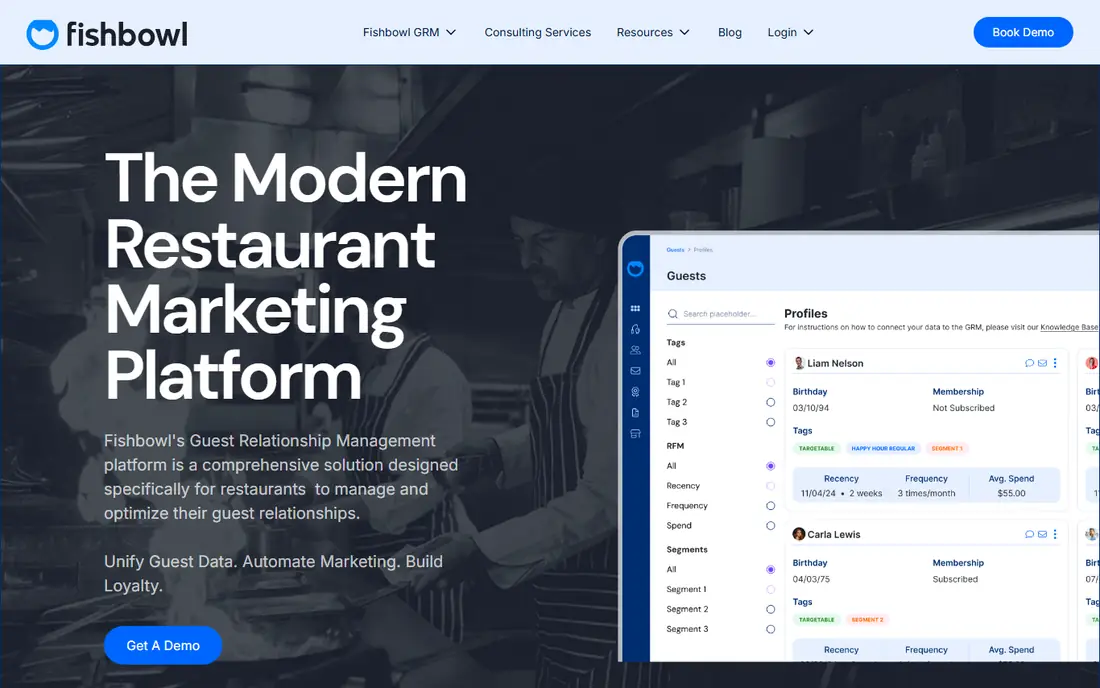
Fishbowl is built for manufacturers and distributors that run QuickBooks and need warehouse depth that QuickBooks alone does not provide. Real time assembly tracking, multi warehouse management, barcode scanning, and manufacturing workflows connect to QuickBooks for accounting, so stock movements and costs stay in sync with the books. That QuickBooks link is the reason many Fishbowl buyers choose it over a standalone inventory app.
The price starts at $229 a month billed annually for Essentials, with no free plan, only a demo, and setup requires planning for warehouse locations, units of measure, and assembly structures. Companies that do not use QuickBooks will get less value, and should compare Katana or Unleashed instead. For a QuickBooks based manufacturer or distributor, Fishbowl is a proven, deep option.
What we like- Real time assembly and warehouse tracking
- Deep QuickBooks integration
- Manufacturing and distribution depth
Watch out for- QuickBooks centric, so non QuickBooks users get less value
- No free plan, demo only
- Setup takes time
Starting priceSee website
Free planNo
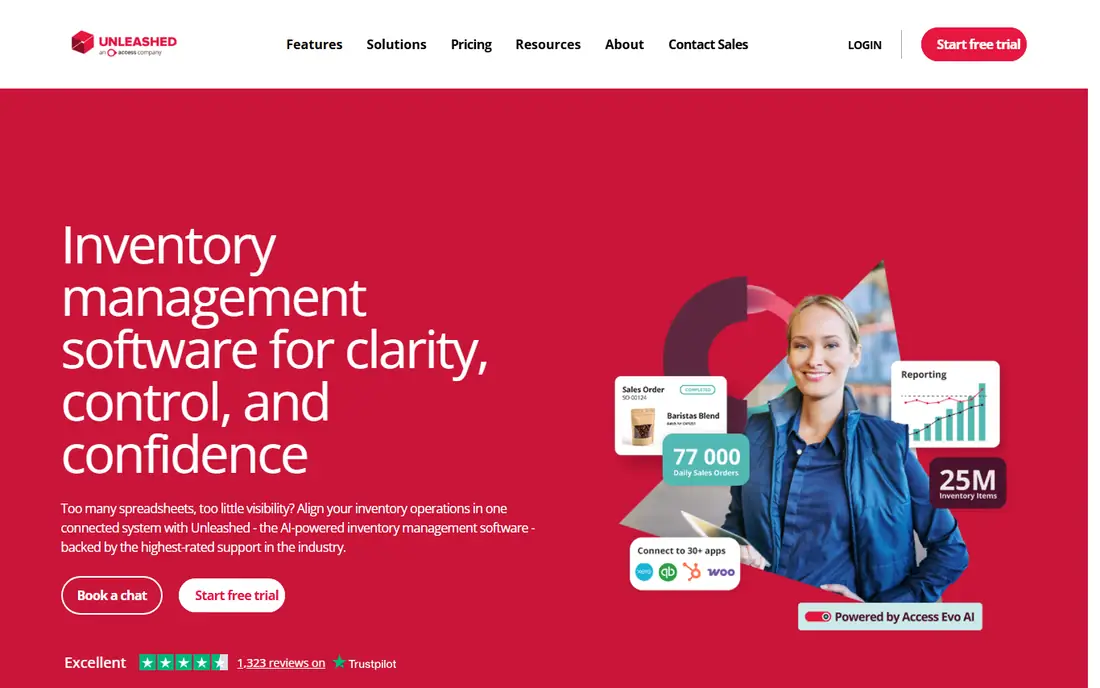
Unleashed suits wholesalers, distributors, and manufacturers that need traceability: which batch went to which customer, what it cost, and where it sits now. Lot and serial tracking, landed costing, and advanced manufacturing logic help businesses in food, beverage, supplements, and other regulated or batch sensitive markets, where a recall or audit needs a clear trail. Multi warehouse and multi currency support also help companies selling across regions.
Pricing is quote based in many cases, so get a written figure for your user count, warehouses, and modules, and budget for implementation and training. Simple retailers will find Unleashed heavy, and should start with Zoho or Sortly. For a wholesaler or manufacturer where costing and traceability are non negotiable, Unleashed is a strong, specialized choice.
What we like- Strong costing, batch, and serial tracking
- Advanced manufacturing logic
- Multi warehouse and multi currency support
Watch out for- Quote based pricing in many cases
- Implementation and training take time
- Overkill for simple retail tracking
How we chose
We compared vendor pricing pages, plan limits for orders, users, warehouses, and SKUs, manufacturing and multichannel depth, accounting integrations, and public reviews on G2 and Capterra. We favored cloud tools with a clear fit for a stated operation size, a published starting price where available, and a trial or free plan where offered, and we marked pricing as See website where vendors publish no stable list price.
How to choose without overbuying
Start with your operation, not a feature list. Count your SKUs, sales channels, warehouses, order volume per month, and whether you manufacture, assemble, or only resell. A reseller with 200 SKUs and one channel needs a different tool from a manufacturer with 2,000 SKUs, three warehouses, and bills of materials. Write those numbers down, then check each plan limit against them, because a tool that looks cheap can become expensive when you hit an order or location cap.
Next, test the integrations that matter. Connect your ecommerce platform, accounting system, and shipping tool in a trial, and run a real order from sale to pick, pack, and invoice. Check how stock updates, how backorders are handled, and how returns affect counts. Finally, ask about data export, contract length, and support hours, because switching inventory systems later is painful, and a vendor that locks your data in is a risk.
Questions to ask every vendor
- What are the order, user, warehouse, and SKU limits on each plan.
- How does stock sync across my sales channels, and how fast.
- What accounting, ecommerce, and shipping integrations are included.
- How do I export all stock, order, and costing data if I leave.
- What implementation, training, and support are included in the price.
Frequently asked questions
What is cloud based inventory management software?
Cloud based inventory software runs on the vendor servers and is accessed through a browser or app, so stock, orders, and reports stay in sync across locations and devices without a local server. It also handles updates, backups, and security, while your team accesses the same live stock count from warehouse, store, or home.
How much does cloud inventory software cost?
Starting prices in this list range from free for limited plans at Zoho and Sortly to $349 a month for Cin7 Core, with NetSuite and Unleashed quote based. Total cost depends on users, warehouses, order volume, and modules, so compare plan limits, not just the headline price.
Do I need inventory software if I only sell on Shopify?
Shopify tracks basic stock, but it does not handle multi warehouse, purchase orders, manufacturing, or multi channel sync well. If you sell on more than one channel, hold stock in more than one place, or manufacture goods, a dedicated inventory tool prevents overselling and stock errors.
What is the difference between Cin7 and Zoho Inventory?
Cin7 suits multichannel brands that need broad integrations, EDI, and forecasting at $349 a month and up, while Zoho Inventory suits small sellers with a free plan and paid plans from $29 a month. Choose Cin7 for scale and channel depth, and Zoho for low cost and simplicity.
Can inventory software handle manufacturing?
Some tools can, and some cannot. Katana, Fishbowl, and Unleashed include bills of materials, production planning, and costing, while Sortly and basic Zoho plans focus on tracking finished stock. If you manufacture, confirm bill of materials, work orders, and costing in a trial before you buy.
How long does implementation take?
Simple tools can go live in days to a few weeks, while multichannel or ERP implementations can take weeks to months depending on data migration, channel mappings, and training. Clean your SKU, supplier, and stock data before migration, because dirty data is the most common cause of a slow go live.
Sources we checked (9)
- https://www.cin7.com
- https://www.zoho.com/inventory/
- https://www.netsuite.com
- https://katanamrp.com
- https://www.inflowinventory.com
- https://www.sortly.com
- https://www.fishbowl.com
- https://www.unleashedsoftware.com
- https://www.cin7.com/blog/best-inventory-management-software-solutions/
Is your product missing or out of date?
We review this list regularly. Vendors can request a listing, send updated pricing or ask about featured placement.

Shihab Mia · Founder, Rankite
Shihab has 5+ years in B2B and SaaS SEO. He writes Rankite's software buying guides from pricing pages, documentation and public user reviews. More about Shihab.