How we make this list: we compare pricing pages, product documentation and public user reviews. Rankite is independent; if a vendor ever pays for a featured spot, that listing is clearly labeled Partner.
Key takeaways
- The published-price options top out at QuickBooks Online Advanced ($340/month, 25 users) and Business Central Premium ($110/user/month); everything above that is quote-based.
- NetSuite, Sage Intacct and Acumatica dominate the mid-market, but none publish prices: expect $25,000 to $170,000 a year in licenses depending on users and modules.
- Xero ($90/month, unlimited users) and Zoho Books ($60/month Premium) are the budget cloud options, but they are accounting tools, not ERPs: no native multi-entity consolidation.
- Acumatica's unlimited-user, consumption-based pricing is the outlier: it rewards companies with many occasional users instead of punishing them per seat.
Quick comparison
| Tool | Best for | Starting price | Free plan |
|---|
 NetSuite NetSuite | Growing companies that need a complete cloud ERP, not just accounting | See website (quote-based; analysts report base ~$999/month plus per-user fees) | No |
 Sage Intacct Sage Intacct | Finance-led organizations that want best-in-class accounting depth | See website (quote-based; analysts report ~$25,000-$35,000/year typical mid-market) | No |
 Acumatica Acumatica | Companies with many users who hate per-seat pricing | See website (consumption-based; unlimited users) | No |
 Dynamics 365 Business Central Dynamics 365 Business Central | Microsoft-centric companies outgrowing entry-level accounting | $80/user/month (Essentials, billed annually) | Free trial (30 days) |
 QuickBooks Online Advanced QuickBooks Online Advanced | QuickBooks users who need more users and reporting without an ERP migration | $340/month (25 users included) | Free trial (30 days) |
 Xero Xero | Teams that want unlimited users at a flat price | $90/month (Established) | Free trial (30 days) |
 Zoho Books Zoho Books | Budget-conscious teams already using Zoho apps | $60/month (Premium, billed annually) | Yes (free for businesses under $50K annual revenue) |
 Multiview Multiview | Mid-market firms that want a guided, partner-led ERP implementation | See website (quote-based) | No |
 Certinia Certinia | Companies running on Salesforce that need native financials | See website (quote-based) | No |
Is your product missing or out of date?
We review this list regularly. Vendors can request a listing, send updated pricing or ask about featured placement.
The best cloud accounting software for medium-sized businesses
Here is the stat that frames this whole category: independent cost trackers put a typical NetSuite mid-market deployment at $60,000 to $170,000 a year in licenses alone, before the $50,000 to $150,000 implementation. That is the price of outgrowing small-business accounting. These nine platforms are what companies buy when QuickBooks or Xero stops being enough: multi-entity consolidation, revenue recognition, advanced inventory, and audit trails that survive due diligence.
#1
NetSuite
Best for: Growing companies that need a complete cloud ERP, not just accounting
Visit netsuite.com
Starting priceSee website (quote-based; analysts report base ~$999/month plus per-user fees)
Free planNo
NetSuite is the default answer when a mid-market company says "we need a real ERP." The base platform subscription starts around $999 a month per industry trackers, with per-user licenses adding roughly $99 to $199 each, and modules like Advanced Inventory or SuiteCommerce stacking on top. A 15 to 20-user company typically lands at $4,000 to $12,000 a month in licenses.
The strength is the suite: one system for accounting, inventory, procurement, order management and CRM, with OneWorld handling multi-subsidiary consolidation across currencies. The weakness is the buying process: nothing is published, contracts run multi-year, and renewal increases are a known complaint. Get competing quotes and negotiate the renewal cap before signing.
What we like- The broadest suite: financials, inventory, order management, CRM and ecommerce in one cloud system
- True multi-subsidiary consolidation with OneWorld
- Massive partner and developer ecosystem
Watch out for- No published pricing, so every deal is a negotiation
- Implementations commonly run $50,000 to $150,000 on top of licenses
- The breadth can overwhelm finance-only teams
#2
Sage Intacct
Best for: Finance-led organizations that want best-in-class accounting depth
Visit sage.com
Starting priceSee website (quote-based; analysts report ~$25,000-$35,000/year typical mid-market)
Free planNo
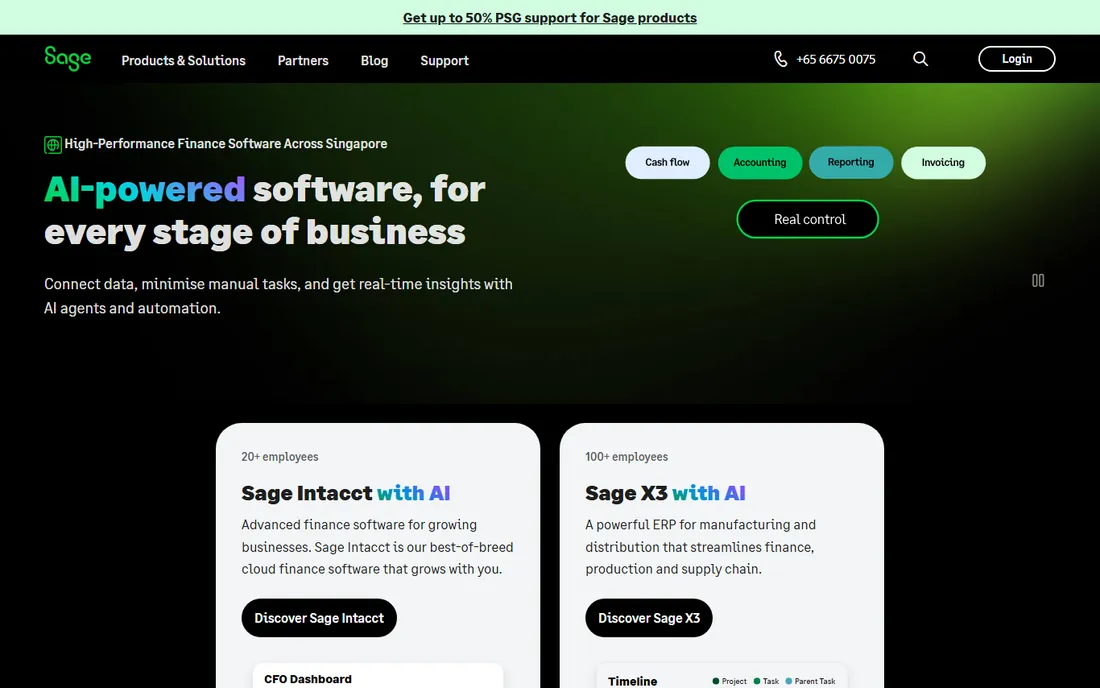
Sage Intacct wins when the buyer is the CFO, not the COO. Its dimensional general ledger lets finance slice results by department, project, location or any custom dimension without a bloated chart of accounts. Revenue recognition, grant tracking for nonprofits and subscription billing are first-class. Typical mid-market deployments run $25,000 to $35,000 a year in licenses per analyst reports, with modules adding more.
The trade-offs are transparency and scope. Sage will not put a price on its website, and per-user licenses reported at several hundred dollars a month make large finance teams expensive. Companies that also need deep inventory or manufacturing usually pair Intacct with other systems or choose NetSuite. Buy Intacct for accounting excellence; buy NetSuite for operational breadth.
What we like- The deepest pure accounting functionality: dimensions-based chart of accounts, strong revenue recognition and multi-entity management
- Favored by SaaS, nonprofit and professional services firms
- Good Salesforce integration
Watch out for- Sage publishes no pricing at all
- Per-user licensing gets expensive as the finance team grows
- Operational modules (inventory, manufacturing) are thinner than NetSuite's
Starting priceSee website (consumption-based; unlimited users)
Free planNo
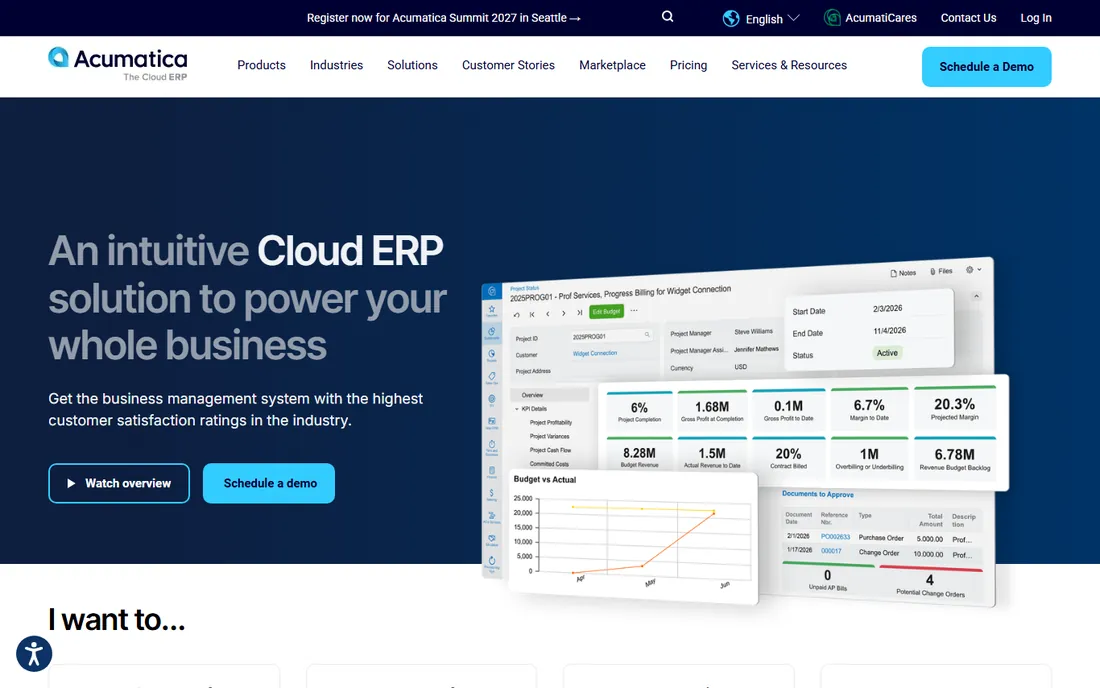
Acumatica's pitch is simple: stop paying per user. Instead of seat licenses, you pay for the applications you use and the transaction volume you run, with unlimited users included. For a 50-person company where 40 people touch the ERP occasionally, that math beats every per-seat competitor. Typical mid-market subscriptions run $25,000 to $50,000 a year per industry reports.
The industry editions are genuinely tailored: manufacturing, distribution, construction, retail and field service each get purpose-built workflows. Deployment flexibility is real too: SaaS, private cloud or perpetual license, with the option to switch. The catch is the channel: you buy through partners, so vet the partner as carefully as the product.
What we like- Unlimited users: pricing is based on transaction volume and resources, not seats
- Strong industry editions for manufacturing, distribution, construction and retail
- Flexible deployment: SaaS, private cloud or perpetual
Watch out for- Pricing is quote-based through partners, so budgeting requires a conversation
- The partner-dependent model means implementation quality varies
- Smaller marketplace than NetSuite
#4
Dynamics 365 Business Central
Best for: Microsoft-centric companies outgrowing entry-level accounting
Visit microsoft.com
Starting price$80/user/month (Essentials, billed annually)
Free planFree trial (30 days)
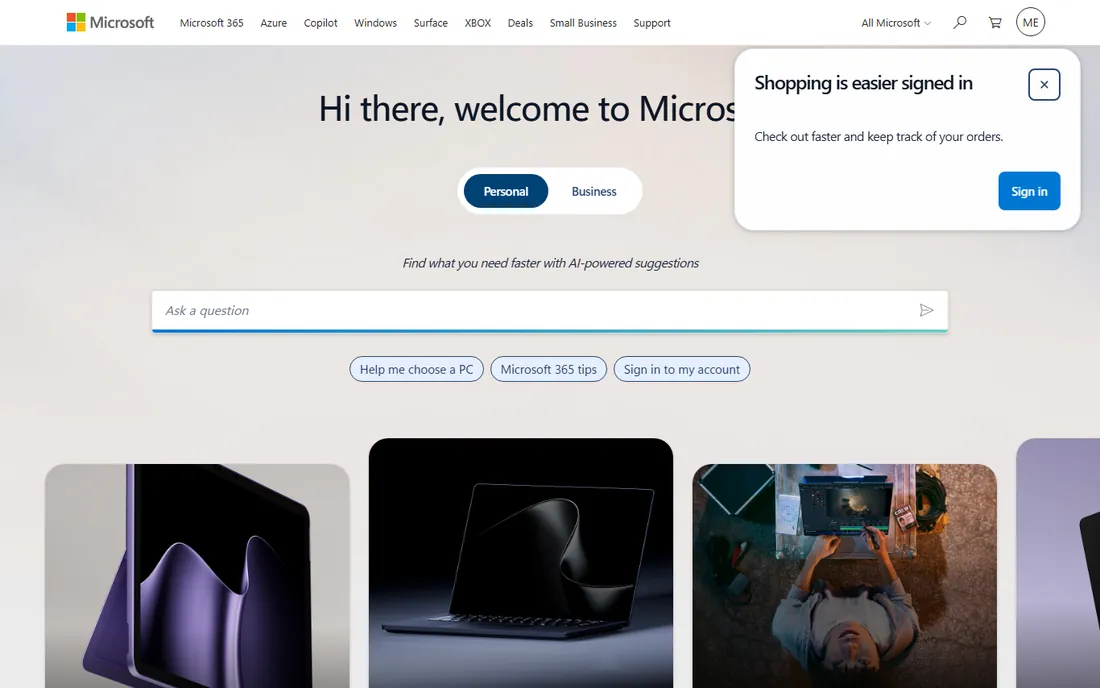
Business Central is Microsoft's mid-market ERP, and its advantage is the stack you already own: Outlook, Excel, Teams and Power BI connect natively, and Copilot assists with bank reconciliation and invoice processing in the cloud version. Essentials at $80 per user per month covers finance, sales, purchasing, inventory and projects; Premium at $110 adds manufacturing and service management; Team Members at $8 covers light users.
The license math is transparent but the project math is not: partners report $50,000 to $150,000 in implementation for 25 to 50 users, plus ISV add-ons at $1,000 to $25,000 a year. The no-mixing rule for Essentials and Premium users complicates license planning. It is the natural step for companies on Dynamics GP (support ends 2029) or NAV.
What we like- Published per-user pricing: Essentials $80, Premium $110, Team Members $8
- Native integration with Microsoft 365, Teams and Power BI
- Premium adds manufacturing and service management
Watch out for- Implementation typically costs $50,000 to $150,000 for mid-market, dwarfing the licenses
- Essentials and Premium users cannot be mixed in one tenant
- The ecosystem depends on partners for industry depth
#5
QuickBooks Online Advanced
Best for: QuickBooks users who need more users and reporting without an ERP migration
Visit quickbooks.intuit.com
Starting price$340/month (25 users included)
Free planFree trial (30 days)
QuickBooks Online Advanced is the last stop before ERP. At $340 a month it includes 25 users with custom roles, batch invoicing, Spreadsheet Sync, revenue recognition and fixed-asset depreciation, plus 24/7 Priority Circle support. For a company that has run on QuickBooks for years, it delays a painful migration by two or three years.
The August 2026 price increase (from $275) stung, and the sixth straight year of increases is a pattern worth noting. The real limits are structural: no native multi-entity consolidation, no advanced manufacturing, and inventory that frustrates warehouse teams. Buy Advanced to buy time; plan the ERP move while you use it.
What we like- The ceiling of the QuickBooks world: 25 users, custom permissions, batch transactions and advanced reporting
- Familiar to every US accountant and bookkeeper
- No implementation project required
Watch out for- $340 a month after the August 2026 increase, up from $275
- Still not true multi-entity accounting with automated eliminations
- Inventory depth is limited for warehouse operations
#6
Xero
Best for: Teams that want unlimited users at a flat price
Visit xero.com
Starting price$90/month (Established)
Free planFree trial (30 days)
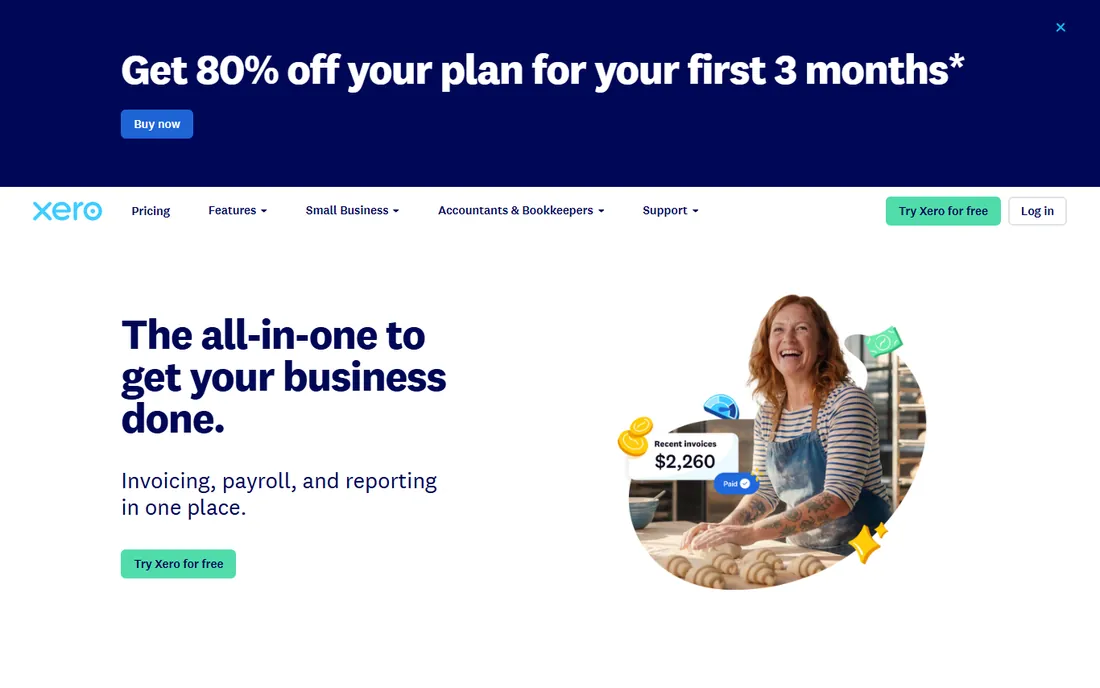
Xero's commercial trick is the flat subscription: Early $25, Growing $55, Established $90 a month, each with unlimited users. For a medium business with a dozen people touching the books, that undercuts every per-seat competitor dramatically. Established adds multi-currency, project tracking, expense claims and 180-day cash flow forecasting.
But Xero is accounting software, not an ERP. Multi-entity consolidation, advanced inventory and manufacturing need marketplace apps at $50 to $200 a month each, and the stack of add-ons can approach ERP money without ERP cohesion. It is the right call when your needs stop at accounting with many users; it is the wrong call when you need operations in the same system.
What we like- Unlimited users on every plan: a 15-person team pays the same $90 as a sole proprietor
- The best bank reconciliation experience in the category
- 1,000-plus app marketplace
Watch out for- Not an ERP: no native multi-entity consolidation or advanced inventory
- US payroll runs through partners like Gusto, not natively
- Prices rose to $97/month for Established from October 2026
#7
Zoho Books
Best for: Budget-conscious teams already using Zoho apps
Visit zoho.com
Starting price$60/month (Premium, billed annually)
Free planYes (free for businesses under $50K annual revenue)
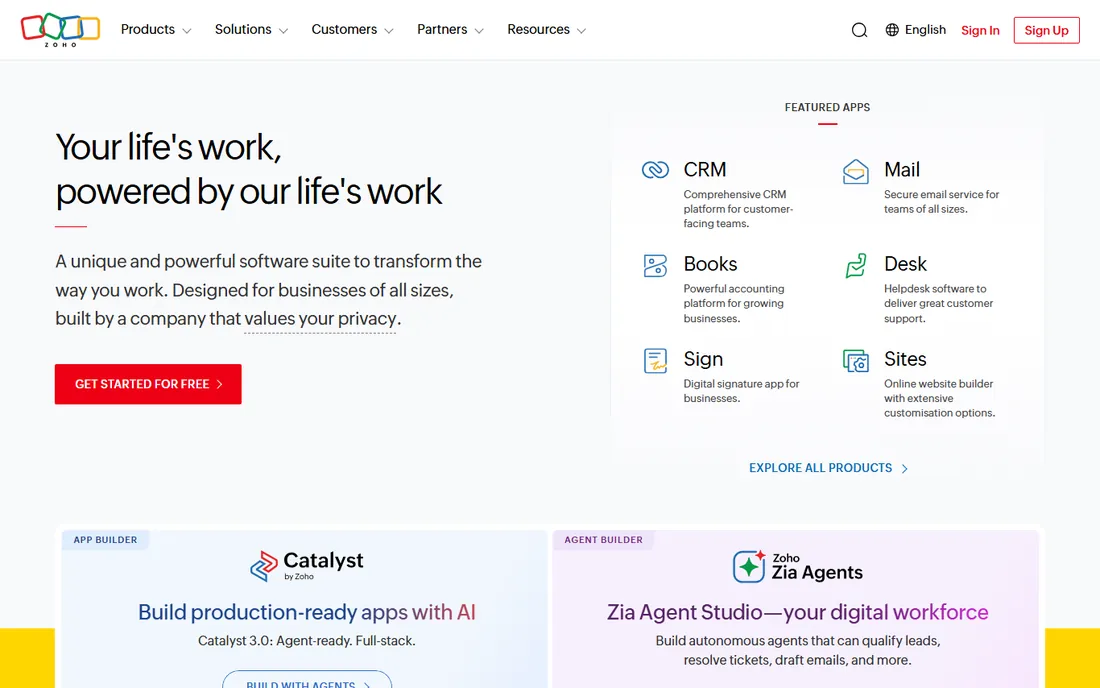
Zoho Books is the value end of this list: six tiers from free to Ultimate at $240 a month, all priced per organization rather than per user. Premium at $60 a month (annual) gives 10 users, budgeting, fixed-asset management, cash flow forecasting and custom modules. The free plan covers businesses under $50,000 in annual revenue with no time limit.
The ecosystem is the argument: with Zoho CRM, Zoho Inventory and Zoho Payroll, a medium business can run its operations on one vendor at a fraction of ERP cost. The weakness is depth: revenue recognition, multi-entity consolidation and advanced controls are basic compared with Intacct or NetSuite. For a 50-person services company, it is often enough; for a multi-entity group, it is not.
What we like- The cheapest credible option: Premium at $60 a month covers 10 users with budgeting and fixed assets
- Free plan is genuinely free under the revenue threshold
- Deep integration with Zoho CRM, Inventory and the rest of the suite
Watch out for- Smaller US accountant ecosystem than QuickBooks or Xero
- Advanced features trail the ERP-grade tools
- Multi-entity and consolidation features are basic
#8
Multiview
Best for: Mid-market firms that want a guided, partner-led ERP implementation
Visit multiview.com
Starting priceSee website (quote-based)
Free planNo

Multiview targets the exact buyer this article serves: the mid-market company that has outgrown QuickBooks and wants a finance system with proper multi-entity support, budgeting and reporting. Its implementations are partner-led, which suits companies that want guidance rather than a self-serve signup.
The honest caveats are scale-related: fewer third-party integrations, a smaller talent pool of experienced users, and pricing you can only learn through a sales conversation. For companies that value a guided implementation over ecosystem size, it belongs on the shortlist next to Intacct and Acumatica.
What we like- Purpose-built for mid-market finance teams with strong reporting and budgeting
- Partner-led implementations with industry experience
- Handles multi-entity and intercompany accounting
Watch out for- Quote-only pricing with no public numbers
- Smaller ecosystem and marketplace than the big three
- Brand recognition is lower, which matters for hiring
#9
Certinia
Best for: Companies running on Salesforce that need native financials
Visit certinia.com
Starting priceSee website (quote-based)
Free planNo
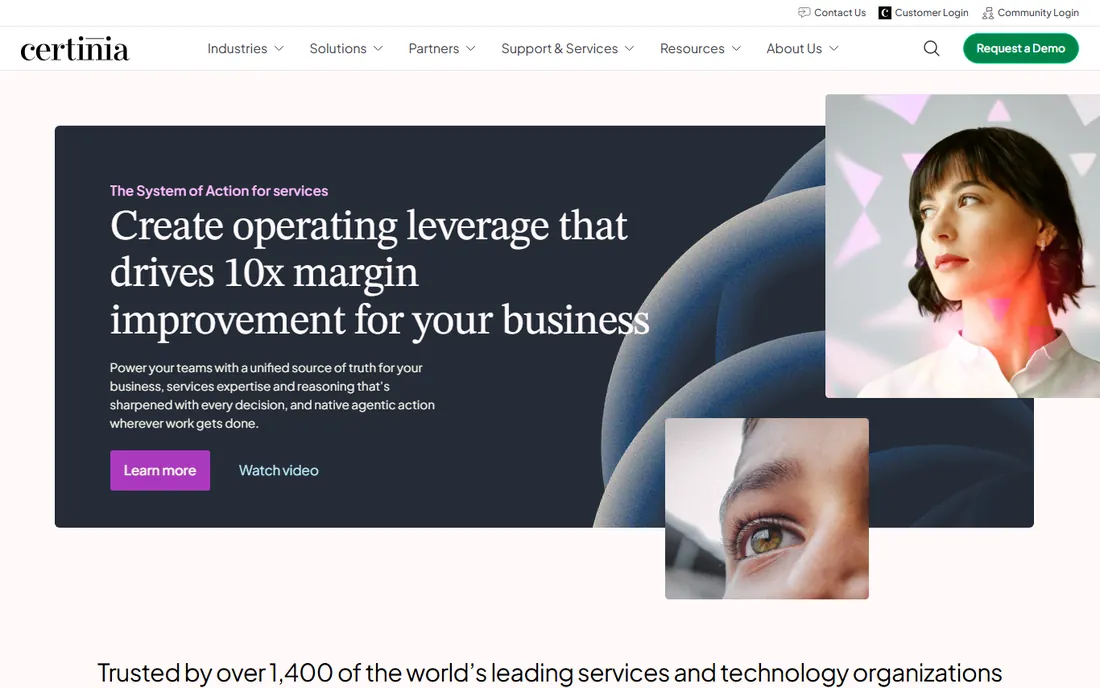
Certinia (formerly FinancialForce) is the answer for one specific buyer: the services company already running Salesforce. Because it is built on the Salesforce platform, services delivery, billing, revenue recognition and financials share one data model with the CRM: no integrations, no reconciliation between systems. Professional services automation is the standout.
Outside that buyer, it makes little sense: you need Salesforce licenses underneath, pricing is entirely quote-based, and the product assumes a services business model. But for a Salesforce-native consultancy or SaaS company, the unified quote-to-cash flow is something the general ERPs cannot match without integration projects.
What we like- Built natively on the Salesforce platform: financials, professional services automation and billing share one data model
- Quote-to-cash runs without integrations
- Strong for services businesses
Watch out for- Requires Salesforce, which sets a high platform floor
- Quote-based pricing with no transparency
- Overkill for companies not already committed to the Salesforce ecosystem
Four of the nine tools here publish no prices, and that is not an accident. Above roughly $25,000 a year, accounting software becomes a negotiated enterprise purchase: the vendor prices your user count, your entities, your modules and your contract length. NetSuite, Sage Intacct, Acumatica, Multiview and Certinia all play this game.
That changes how you buy. Shortlist on fit first: multi-entity needs, industry requirements, existing stack. Then run a structured RFP and make the vendors compete on the full three-year cost, including implementation, add-ons and renewal caps. Never accept the first quote, and never sign without a renewal increase cap in writing. The buyers who overpay are the ones who negotiate the license and forget the renewal.
Per-user vs unlimited users: the pricing model that decides your bill
The deepest divide in this category is not features but the pricing model. Per-user tools (NetSuite, Business Central, Intacct) charge for every seat: a 40-user deployment at $100 a seat is $4,000 a month before modules. Unlimited-user tools (Acumatica by consumption, Xero and Zoho Books by flat subscription) charge for the organization: the same 40 users cost a flat fee.
Count your real users before you compare. If 30 of your 40 users log in weekly to approve expenses or check reports, per-seat pricing punishes you and consumption or flat pricing wins. If only 8 people touch the system daily, per-seat is cheaper. Most medium businesses are surprised by the count: run a 30-day usage audit on your current system before the RFP, because the vendors will price the number you give them.
Frequently asked questions
When should a medium business move from QuickBooks to an ERP?
The usual triggers: more than 25 users needing access, multiple entities requiring consolidated reporting, revenue recognition rules you are handling in spreadsheets, or inventory complexity QuickBooks cannot model. QuickBooks Online Advanced at $340 a month delays the move, but once two of those triggers fire, start the ERP evaluation.
How much does NetSuite really cost for a mid-market company?
Industry trackers put the typical mid-market NetSuite deployment at $60,000 to $170,000 a year in licenses, with implementation adding $50,000 to $150,000 one-time. Oracle publishes no prices, so treat every figure as a planning range and get a scoped quote. Multi-year contracts can lock in 10 to 20 percent discounts.
Is Sage Intacct or NetSuite better for a services company?
Sage Intacct usually wins for finance-led services firms: deeper revenue recognition, subscription billing and project accounting, with good Salesforce integration. NetSuite wins when the company also needs operational depth: inventory, procurement or order management. Get both quoted; Intacct often costs less for pure finance needs.
Can Xero or Zoho Books work for a medium-sized business?
Yes, if the needs stop at accounting. Xero Established at $90 a month with unlimited users, or Zoho Books Premium at $60 a month, handle invoicing, bills, expenses and reporting for companies up to 100-plus employees. They break down at multi-entity consolidation, advanced inventory and manufacturing: that is the ERP line.
What does implementation typically cost?
For the ERP-grade tools, budget one to two times the first-year subscription for implementation: $50,000 to $150,000 is typical for 25 to 50 users on NetSuite or Business Central. Data migration, integrations and training are the big line items. Fixed-fee implementation quotes beat time-and-materials for budget control.
Should we worry about renewal price increases?
Yes. Annual increases of 5 to 10 percent are common, and some buyers report spikes of 50 percent at renewal on quote-based contracts. Negotiate a renewal cap into the initial contract, keep a credible alternative warm, and start the renewal conversation six months early. The vendors count on inertia.
How we chose
We started with the searches finance leaders run: cloud accounting software for midsize business, mid-market ERP, NetSuite alternatives and QuickBooks Advanced vs ERP. For each candidate we verified it is actively sold as a cloud product in 2026, classified its pricing model (published per-user, flat subscription, or quote-based), and checked what the mid-market buyer actually gets: multi-entity support, revenue recognition and implementation scope. Published prices come from vendor pages and recent pricing guides; quote-based tools are marked "See website" with analyst-reported ranges for planning.
Sources we checked (14)
- https://www.brokenrubik.com/blog/netsuite-pricing-the-definitive-guide
- https://saasrat.com/products/netsuite
- https://www.theledgerlabs.com/how-much-does-netsuite-cost/
- https://www.dualentry.com/blog/best-sage-intacct-alternatives
- https://toperppartners.com/blog/acumatica-pricing/
- https://dynamicbusiness.com/ai-tools/acumatica-2026-r2-empowers-industry-specific-growth.html
- https://topdynamicspartners.com/insights/microsoft-dynamics-365-cost-guide-2026
- https://msdynamicsworld.com/blog-post/business-central-implementation-cost-complete-pricing-guide
- https://www.workforce.com/news/quickbooks-online-price-increase
- https://www.techrepublic.com/article/quickbooks-online-reviews/
- https://ifeeltech.com/blog/xero-accounting-software-review
- https://www.flozic.ai/blog/reviews/xero-review
- https://cpaadvisor.us/articles/zoho-books-review/
- https://saasrat.com/products/zoho-books
Is your product missing or out of date?
We review this list regularly. Vendors can request a listing, send updated pricing or ask about featured placement.

Shihab Mia · Founder, Rankite
Shihab has spent more than a decade helping SaaS and e-commerce brands grow through search. He writes Rankite's software buying guides from pricing pages, documentation and public user reviews. More about Shihab.