How we make this list: we compare pricing pages, product documentation and public user reviews. Rankite is independent; if a vendor ever pays for a featured spot, that listing is clearly labeled Partner.
Key takeaways
- Sage Intacct and NetSuite are the two purpose-built answers for midsize complexity: multi-entity, multi-currency and audit-ready close. Both are custom-quoted.
- The step-up tier with published prices is real: QuickBooks Online Advanced ($340/month), Xero Established ($90/month) and Dynamics 365 Business Central ($80/user/month).
- Budget options that scale further than expected: Zoho Books ($15/month), FreshBooks ($23/month) and Odoo-style value from AccountingSuite ($19/month).
- Acumatica's unlimited-user model changes the math for companies where per-seat pricing punishes growth.
Quick comparison
| Tool | Best for | Starting price | Free plan |
|---|
 Sage Intacct Sage Intacct | Midsize companies with complex multi-entity accounting | See website (custom quote) | No |
 NetSuite NetSuite | Midsize companies that need accounting plus operations in one system | See website (custom quote) | No |
 Dynamics 365 Business Central Dynamics 365 Business Central | Midsize businesses already standardized on Microsoft | $80/user/month (Essentials, annual billing) | Free trial (30 days) |
 QuickBooks Online Advanced QuickBooks Online Advanced | Companies that want to stay on QuickBooks while scaling up | $340/month | Free trial (30 days) |
 Xero Xero | Midsize teams that want unlimited users and clean double-entry books | $25/month (Early) | Free trial (30 days) |
 Zoho Books Zoho Books | Midsize teams that need solid accounting at the lowest price | $15/month (Standard, annual billing) | Yes |
 FreshBooks FreshBooks | Service businesses that live on invoicing and time billing | $23/month (Lite) | Free trial (30 days) |
 Acumatica Acumatica | Midsize companies that want ERP power without per-seat pricing | See website (custom quote) | No |
 AccountingSuite AccountingSuite | Product businesses that need inventory with their accounting | $19/month (Start-Up) | Free trial (30 days) |
Is your product missing or out of date?
We review this list regularly. Vendors can request a listing, send updated pricing or ask about featured placement.
Cloud accounting that survives the jump from small to midsize
There is a moment every growing company hits: the month-end close that used to take two days now takes two weeks. Entities multiply, currencies appear, the auditors ask questions the software cannot answer, and the entry-level ledger starts creaking. The best cloud accounting software for a medium-sized business is the one that handles that jump without forcing a second migration in three years. These nine platforms cover the real midsize market, from full financial suites to affordable ledgers that punch above their price.
Starting priceSee website (custom quote)
Free planNo
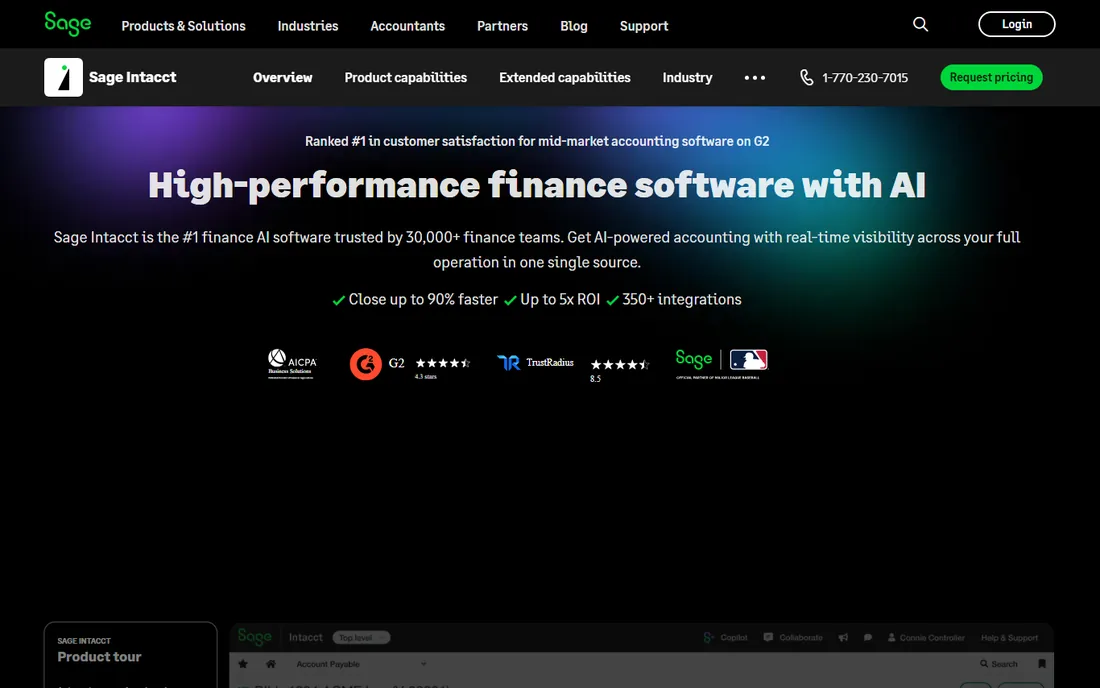
Sage Intacct is the finance team's answer to growth. Where entry-level tools flatten everything into one company file, Intacct keeps each entity's books separate and consolidates on dimensions like location, department and project. Multi-currency, intercompany eliminations and audit trails come standard rather than as workarounds. Finance leaders at companies with several entities or international operations consistently land here.
The buying process is enterprise-shaped: annual contracts, custom quotes based on modules and entities, and implementations that take months with a partner. It is also accounting-first rather than operations-first, so companies that need inventory and manufacturing depth pair it with other systems or look at NetSuite. For pure financial complexity at the midsize level, Intacct is the benchmark everything else gets compared to.
What we like- Dimensional chart of accounts built for multi-entity consolidation
- Strong financial reporting without spreadsheet gymnastics
- Deep ecosystem of payroll, expense and planning integrations
Watch out for- Quote-based annual pricing with no public numbers
- Implementation is a project that needs experienced partners
#2
NetSuite
Best for: Midsize companies that need accounting plus operations in one system
Visit netsuite.com
Starting priceSee website (custom quote)
Free planNo
NetSuite is what midsize companies buy when the problem is bigger than accounting. If inventory, warehousing, order management and ecommerce all need to share one database with the ledger, NetSuite does it natively. Multi-subsidiary management with automated eliminations handles international growth, and the platform's maturity means almost every edge case has a module or a partner solution.
The cost is the conversation. Oracle publishes no prices, and the total depends on the base license, users, modules and implementation scope. Companies should budget the implementation as a separate line item, because partner-led projects for multi-entity setups are substantial. NetSuite rewards companies that commit to it as their operating platform. Those that only need better accounting should look at Intacct or the tier below.
What we like- One cloud system for financials, inventory, order management, CRM and HR
- Scales from tens to thousands of users without reimplementation
- Huge partner and integration ecosystem
Watch out for- No published pricing and a long sales cycle
- First-year costs with implementation commonly reach five figures
Starting price$80/user/month (Essentials, annual billing)
Free planFree trial (30 days)
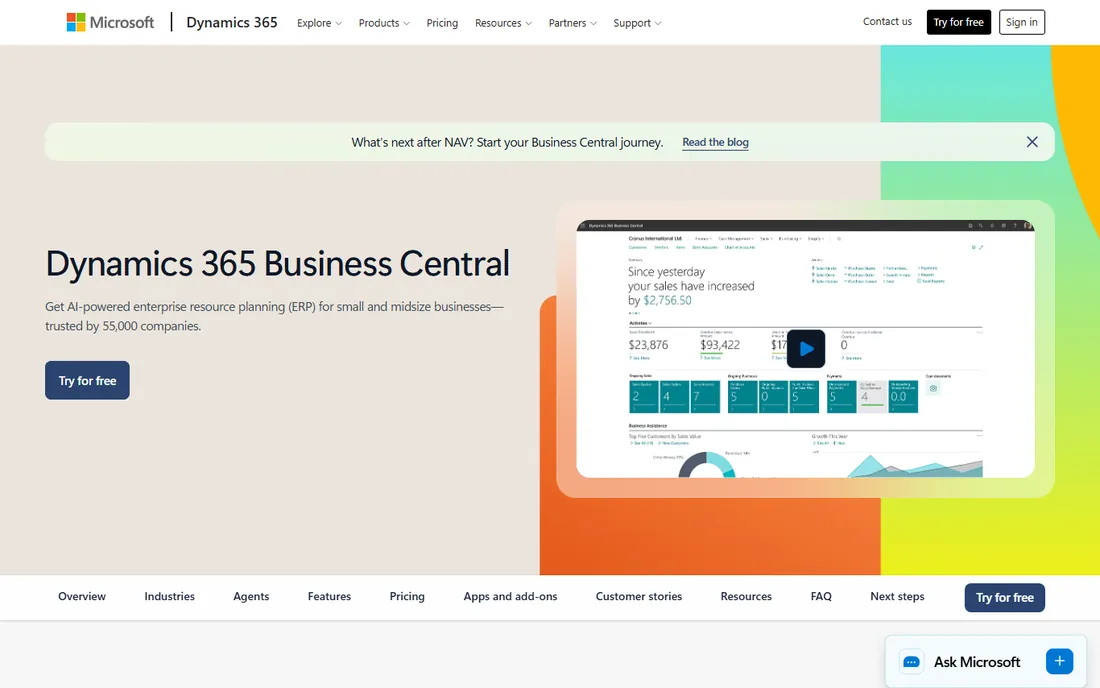
Business Central is Microsoft's midsize ERP, and its pitch is straightforward: real ERP depth with published prices. Essentials at $80 per user per month (annual billing) covers financials, inventory, purchasing and sales; Premium at $110 adds manufacturing and service management. For companies living in Outlook, Excel and Teams, the integration story is genuinely strong, and Power BI reporting comes naturally.
The honest catch is implementation. Business Central is approachable by ERP standards but still needs partner-led setup, data migration and training. It is not the afternoon signup that QuickBooks Online is. Companies should also model the seat math: at $80 per user, a 40-person team pays $3,200 a month before any partner costs. For Microsoft shops ready for ERP, it is the most transparent path. For lighter needs, the accounting tools below cost less.
What we like- Published per-user pricing, rare among mid-market ERPs
- Deep integration with Microsoft 365, Teams and Power BI
- Covers finance, inventory, purchasing, projects and manufacturing basics
Watch out for- Implementation needs a partner and is not plug-and-play
- The per-user price climbs fast for large teams, and Premium is $110 per user per month
Starting price$340/month
Free planFree trial (30 days)
QuickBooks Online Advanced is the top of Intuit's cloud ladder, and for many midsize companies it is the path of least resistance. The same interface the team knows, stretched to 25 users with better permissions, batch transactions, custom dashboards and dedicated support. Companies already on Plus can upgrade without migrating anything, which removes the biggest cost of switching: the migration itself.
The price move deserves attention. Intuit raised Advanced from $275 to $340 per month in August 2026, and at that price the gap to Xero Established ($90) and Zoho Books looks wide. Advanced also has real ceilings: single-entity design, no true manufacturing, and reporting that still leans on exports for complex analysis. It is the right choice for companies whose complexity is users and volume rather than entities and operations. Past that, Intacct or NetSuite awaits.
What we like- Supports up to 25 users with custom roles and permissions
- Custom fields, workflow automation and advanced reporting
- The US accountant network every finance hire knows
Watch out for- List price rose to $340 per month in August 2026, a steep jump from $275
- Still an accounting tool, not an ERP, so multi-entity and manufacturing depth are limited
#5
Xero
Best for: Midsize teams that want unlimited users and clean double-entry books
Visit xero.com
Starting price$25/month (Early)
Free planFree trial (30 days)
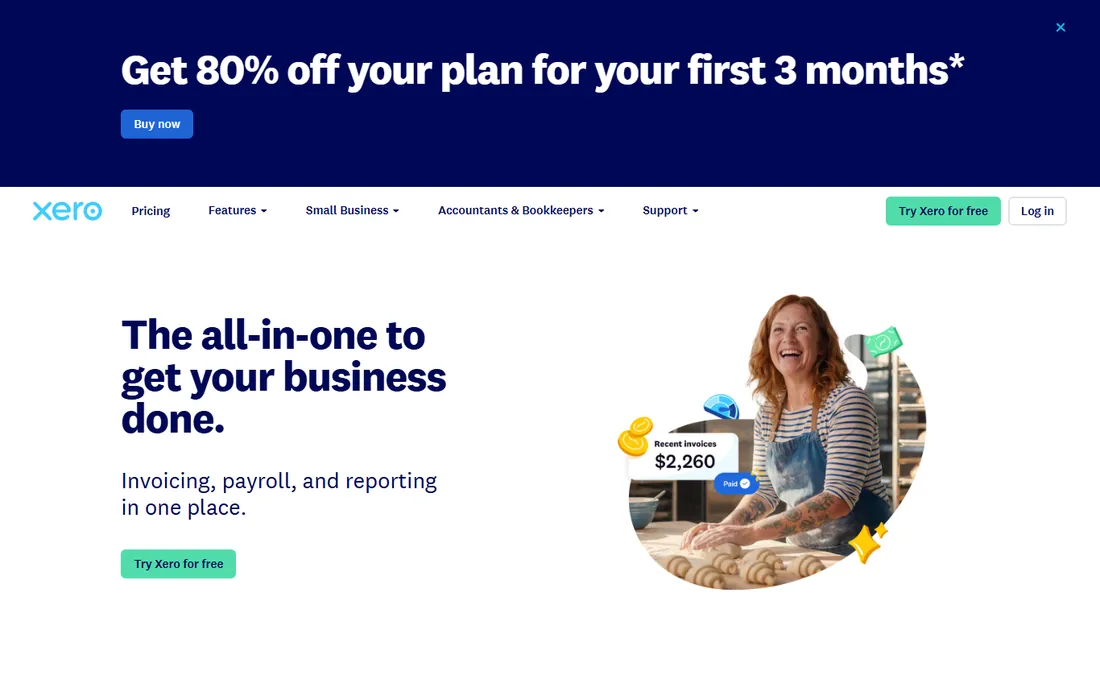
Xero's commercial trick is simple: every plan includes unlimited users. A 30-person company pays the same subscription as a freelancer, which makes it dramatically cheaper than per-seat competitors at team scale. The product backs it up with clean double-entry accounting, excellent bank feeds and reconciliation, and an app ecosystem that covers the gaps (Gusto for payroll, Cin7 for inventory). Plans run Early at $25, Growing at $55 and Established at $90 per month.
The gaps are regional and structural. US companies get payroll through integrations rather than native, and fewer American accountants live in Xero than in QuickBooks, which can complicate year-end. Inventory is basic, so product businesses add a marketplace app. For service-led midsize companies with real headcount, though, Xero's unlimited-user math is the best value on this list.
What we like- Unlimited users on every plan, which changes the economics for larger teams
- The best bank reconciliation experience in the category
- 1,000-plus app marketplace for payroll, expenses and inventory
Watch out for- US payroll runs through partners rather than natively
- Multi-currency and advanced features sit on the $90 Established plan
#6
Zoho Books
Best for: Midsize teams that need solid accounting at the lowest price
Visit zoho.com
Starting price$15/month (Standard, annual billing)
Free planYes
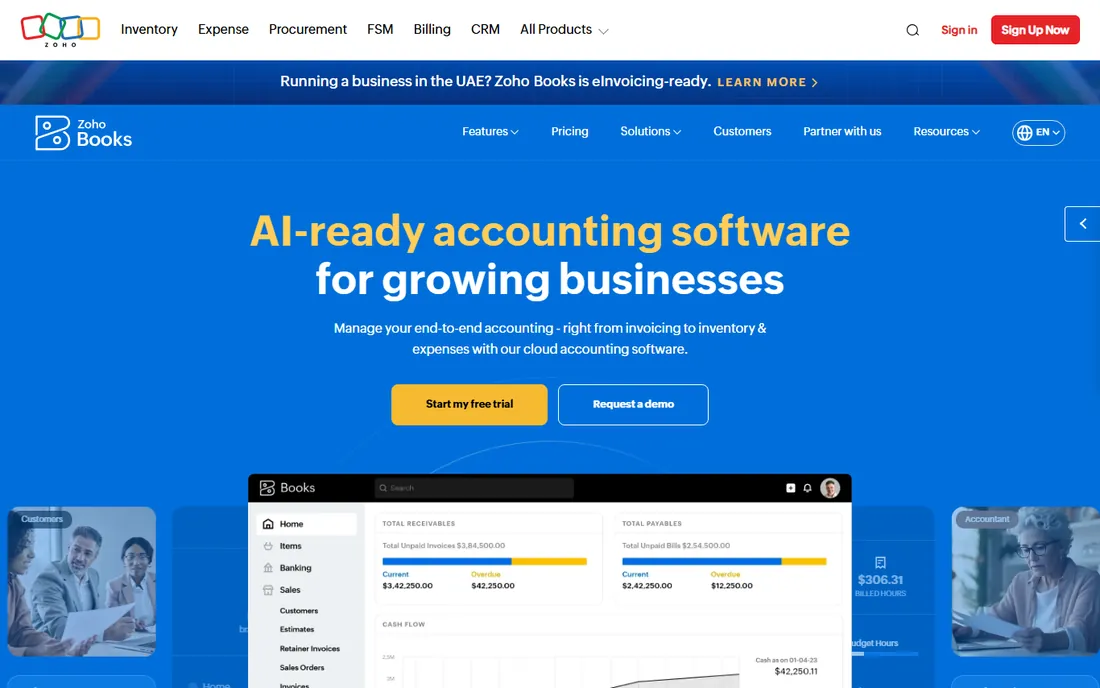
Zoho Books keeps showing up in midsize shortlists because the price gap is hard to ignore: Standard at $15 per month (annual billing) for three users, scaling through Professional at $40, Premium at $60, Elite at $120 and Ultimate at $240. The feature set is serious, with multi-currency, automated workflows, bank feeds and solid reporting. Companies already using Zoho CRM or Zoho Inventory get a connected stack for a fraction of the usual cost.
The limitations are ecosystem-shaped. Outside Zoho's world, integrations are thinner than QuickBooks or Xero, and the US accountant network is smaller, which matters at audit time. Inventory depth is basic in Books itself. But for a midsize company whose accounting needs are standard and whose budget is real, Zoho Books delivers 90 percent of the function at 20 percent of the price.
What we like- Prices far below Western competitors with a genuine free plan
- Multi-currency, automation and project billing on affordable tiers
- Deep integration with the rest of the Zoho suite
Watch out for- Fewer US accountants work in Zoho than in QuickBooks or Xero
- Advanced inventory and warehousing need the separate Zoho Inventory product
#7
FreshBooks
Best for: Service businesses that live on invoicing and time billing
Visit freshbooks.com
Starting price$23/month (Lite)
Free planFree trial (30 days)
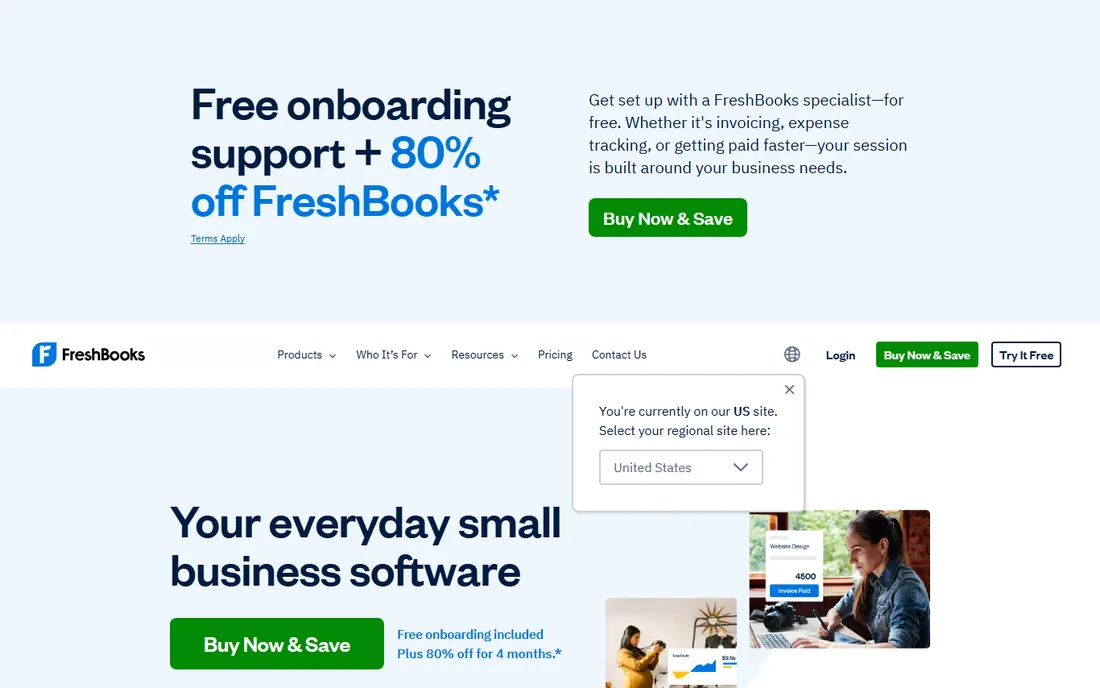
FreshBooks is accounting for businesses that sell hours, not goods. Time tracking, expenses and projects flow onto invoices without retyping, and clients can pay by card, ACH or digital wallets. Plans are Lite at $23 per month (5 billable clients), Plus at $43 (50 clients) and Premium at $70 (unlimited), with a 30-day free trial and 10 percent off for annual billing.
The pricing structure needs a calculator. Every plan is essentially a one-person plan: additional team members cost $11 each per month, so a five-person team on Plus pays $87 rather than $43. Payroll and advanced payments are separate add-ons. Product businesses should look elsewhere entirely. But for agencies, consultancies and freelancers scaling into midsize, FreshBooks remains the most pleasant billing-centric ledger available.
What we like- The best invoicing-to-payment flow in the category, with time tracking feeding invoices directly
- Clean, approachable interface teams adopt fast
- Solid project and expense features from the Plus tier up
Watch out for- Client caps on lower tiers (5 on Lite, 50 on Plus)
- Extra team members cost $11 per month each, so team pricing climbs
- Not built for inventory or product businesses
#8
Acumatica
Best for: Midsize companies that want ERP power without per-seat pricing
Visit acumatica.com
Starting priceSee website (custom quote)
Free planNo
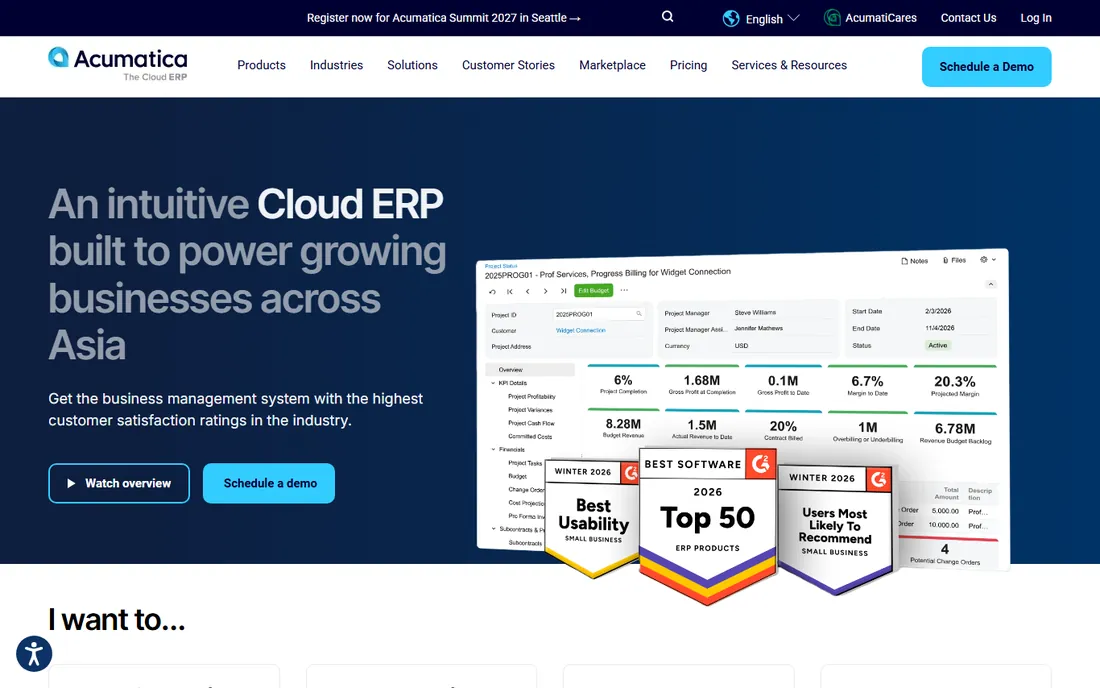
Acumatica is the ERP for companies that did the per-seat math and flinched. Instead of charging per user, it prices on transaction volume tiers plus the applications you use, with unlimited users included. For a midsize company with 80 employees touching the system, the difference against $80 to $110 per-seat competitors is enormous. The product itself is a genuine cloud ERP: financials, distribution, manufacturing, project accounting and CRM in one database.
The unfamiliar pricing is the hurdle. Transaction-volume tiers are harder to forecast than per-seat prices, and quotes come through partners after scoping. Implementation is a real project. But for companies where everyone from the warehouse to the front office needs system access, Acumatica's model is structurally cheaper than the per-user alternatives, and the product depth justifies the shortlist slot.
What we like- Unlimited users, so growth in headcount does not grow the license bill
- Full cloud ERP with financials, distribution, manufacturing and project accounting
- Flexible deployment options
Watch out for- Consumption-based pricing by transaction volume is unfamiliar and quote-only
- Implementations need partners and take months
Starting price$19/month (Start-Up)
Free planFree trial (30 days)
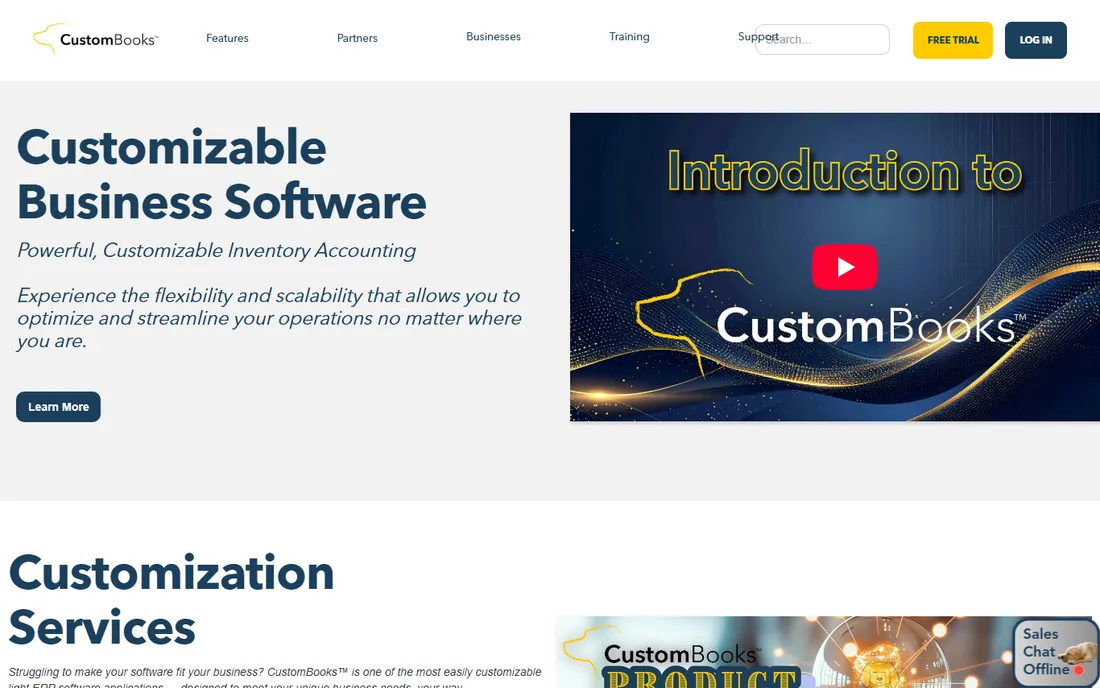
AccountingSuite is the quiet specialist: cloud accounting built around inventory, aimed at the businesses that QuickBooks Online serves poorly. Start-Up at $19 per month covers basic accounting, while Business at $99, Professional at $249 and Pro with eCommerce at $349 add sales, purchasing, inventory and ecommerce depth. Unlimited users on every plan keeps team costs flat.
The trade-off is ecosystem. Fewer accountants know it, fewer apps integrate with it, and the reporting depth does not match Intacct or NetSuite. But for a product business doing a few million in revenue that needs real inventory accounting without an ERP project, AccountingSuite covers the essentials at a price the bigger tools cannot touch. It is the pragmatic middle between entry ledgers and full ERP.
What we like- Inventory, order management and accounting in one cloud product
- Published pricing from $19 per month
- Unlimited users on every plan
Watch out for- Smaller ecosystem and fewer integrations than the big names
- The interface and depth trail the enterprise tools
The real cost beyond the subscription
The subscription price is the smallest number in most midsize accounting decisions. Take Business Central at $80 per user per month: for 30 users that is $2,400 a month, $28,800 a year, before a partner touches the implementation. Partner-led ERP implementations commonly run from tens of thousands into six figures depending on entities, integrations and data cleanup. The license gets the headlines; the services get the budget.
Then come the layers vendors do not put on the pricing page. Payroll is usually separate: native in some tools, a partner integration in others, always an extra line. Payment processing fees sit outside every subscription here. Multi-entity tools charge by entity or module, per-user tools charge by headcount, and transaction-tier tools like Acumatica charge by volume. Model your actual shape, users, entities, transactions, before comparing.
Two questions keep the total honest. First, what does year two cost, after introductory discounts expire and the annual uplift applies? Second, what does it cost to leave? Data export quality varies wildly, and the cheaper the tool, the more likely your history lives in formats that do not migrate cleanly. The best midsize purchase is the one you will not need to redo in three years, even if the first year costs more.
How we chose
We started with the searches midsize buyers run: cloud accounting software for medium business, mid-market accounting software, and QuickBooks alternatives for growing companies. For each candidate we opened the vendor's own pricing page, checked prices against public reviews on G2 and Capterra and practitioner discussion on Reddit, and compared multi-entity support, user models, inventory depth, integrations and fit for companies of 50 to 500 people. Where a vendor publishes no price we wrote "See website" rather than guessing.
Picking the right tier for a midsize company
Match the tool to your complexity, not your headcount. A 200-person services company with one entity and one currency runs beautifully on Xero Established or Zoho Books Premium. A 40-person company with four entities and three currencies needs Sage Intacct regardless of headcount. Entities, currencies and audit requirements decide the tier; headcount decides the bill.
Run the user math before falling in love with a per-seat price. Business Central at $80 per user looks reasonable until you count every warehouse tablet and part-time bookkeeper. Xero's unlimited users and Acumatica's unlimited-user ERP exist precisely because seat math punishes growing companies. List everyone who will touch the system, including occasional users, then price each option against that list.
Pilot with real data, not the demo dataset. Import three months of actual transactions, run a real close, and produce the reports your board actually reads. Every tool here demos beautifully; the differences appear in your chart of accounts, your approval workflows and your weirdest customer. A two-week pilot with real data reveals more than two months of sales calls. And involve the auditors early: the cheapest tool that fails the audit is the most expensive mistake on this list.
Frequently asked questions
What is the best cloud accounting software for a medium-sized business?
There is no single answer, but the tiers are clear. Sage Intacct and NetSuite lead for multi-entity complexity. Dynamics 365 Business Central ($80/user/month), QuickBooks Online Advanced ($340/month) and Xero Established ($90/month) cover the step-up tier with published prices. Zoho Books ($15/month) and FreshBooks ($23/month) handle simpler needs at low cost.
How much does accounting software cost for a midsize company?
Published prices range from $15 per month (Zoho Books) to $340 per month (QuickBooks Online Advanced), plus per-user tools like Business Central at $80 per user per month. The ERP tier is custom-quoted. Implementation, payroll, payment processing and integrations sit on top of every subscription here, so budget the total, not the headline.
When should a company move from QuickBooks to an ERP?
The usual triggers are multiple entities, multiple currencies, inventory across warehouses, or a close process that keeps breaking. QuickBooks Online Advanced stretches to 25 users, which covers headcount growth. When the limitation is structure rather than seats, that is the migration signal, and Sage Intacct or NetSuite is the typical destination.
Is Xero good for medium-sized businesses?
Yes, particularly for service-led companies. Unlimited users on every plan makes it the best value for larger teams, and the accounting core is excellent. The caveats are US payroll through partners, fewer American accountants in the ecosystem, and basic native inventory. Product-heavy midsize companies usually pair it with an inventory app or choose differently.
What is multi-entity accounting?
Accounting where each subsidiary, location or division keeps its own books and the system consolidates them automatically, handling intercompany transactions and currency conversion. Sage Intacct and NetSuite do this natively. Entry-level tools keep one set of books, which forces spreadsheet consolidation as entities multiply. If you have more than one legal entity, this feature decides your shortlist.
How long does it take to implement midsize accounting software?
Cloud ledgers like Xero, Zoho Books and FreshBooks go live in days or weeks. QuickBooks Online Advanced is an upgrade, not a migration, for existing users. ERP implementations (NetSuite, Intacct, Business Central, Acumatica) typically run three to nine months with a partner. Data cleanup is the usual schedule risk: clean the chart of accounts before migration, not during.
Sources we checked (2)
- https://www.g2.com/categories/accounting
- https://www.capterra.com/accounting-software/
Is your product missing or out of date?
We review this list regularly. Vendors can request a listing, send updated pricing or ask about featured placement.

Shihab Mia · Founder, Rankite
Shihab has spent more than a decade helping SaaS and e-commerce brands grow through search. He writes Rankite's software buying guides from pricing pages, documentation and public user reviews. More about Shihab.