How we make this list: we compare pricing pages, product documentation and public user reviews. Ratings come from G2, Capterra or Trustpilot, with the date we checked them.
Key takeaways
- Medidata Rave is the default electronic data capture system for large trials, while Veeva Vault leads when CTMS, EDC, and the trial master file must live on one platform.
- Castor and Medrio suit smaller sponsors, device firms, and academic teams that need a compliant study running in weeks, not quarters.
- Every enterprise platform here is priced by quote, and implementation, validation, and training usually cost more than the first year of licences.
- Compliance is not a feature tier: 21 CFR Part 11 controls, audit trails, and validation evidence are mandatory wherever the data supports a regulatory submission.
Quick comparison
| Tool | Best for | Starting price | Free plan |
|---|
 Medidata Rave | EDC for large sponsor and CRO trials | See website | No |
 Veeva Vault | One platform for EDC, CTMS, and eTMF | See website | No |
 Oracle Clinical One | Sponsors standardised on Oracle | See website | No |
 Castor | Small teams and academic studies | See website | Yes |
 Medrio | Fast study builds for biotech and devices | See website | No |
 Advarra | Sites, IRB, and trial operations together | See website | No |
 Florence Healthcare | Site documents and eISF workflows | See website | No |
 RealTime CTMS | Site networks running many studies | See website | No |
Is your product missing or out of date?
We review this list regularly. Vendors can request a listing, send updated pricing or ask about featured placement.
The best clinical trial software
#1Medidata Rave
Best for: EDC for large sponsor and CRO trials4.7/5 on
G2 (27 reviews, checked Oct 2026)
Visit medidata.com
Starting priceSee website
Free planNo
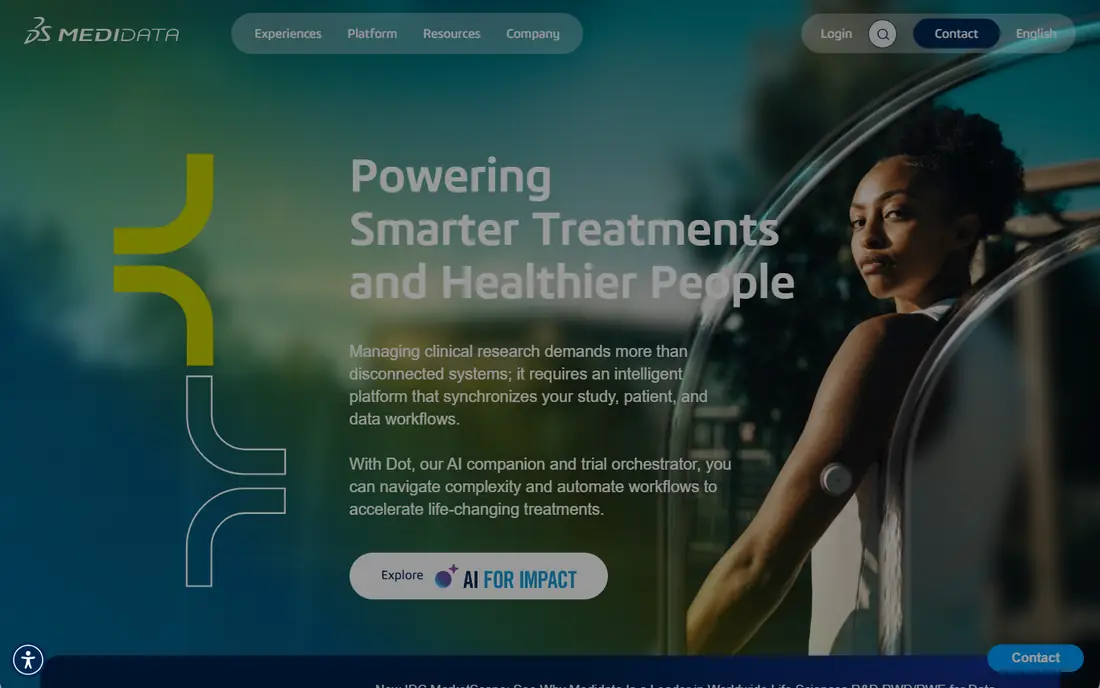
What we like- Rave is the closest thing the industry has to a default EDC, cited in the 2025 ISR benchmarking survey as the most preferred system among sponsors, and that installed base pays off because most experienced site coordinators already know it. Mid study changes deploy without downtime, which matters on adaptive trials, and the surrounding Medidata platform adds CTMS, eCOA, eConsent, randomisation, and imaging that share one data model. Rave Companion pulls data from electronic health records into the EDC, cutting manual transcription at sites.
Watch out for- Cost is the most common complaint in reviewer data, and smaller sponsors feel the enterprise pricing hardest. Reviewers also rate the interface below newer entrants for day to day friendliness. The ecosystem's depth creates dependence: study builds, reporting, and integrations all assume Medidata skills in your team or your CRO.
#2Veeva Vault
Best for: One platform for EDC, CTMS, and eTMF4.1/5 on
G2 (54 reviews, checked Oct 2026)
Visit veeva.com
Starting priceSee website
Free planNo
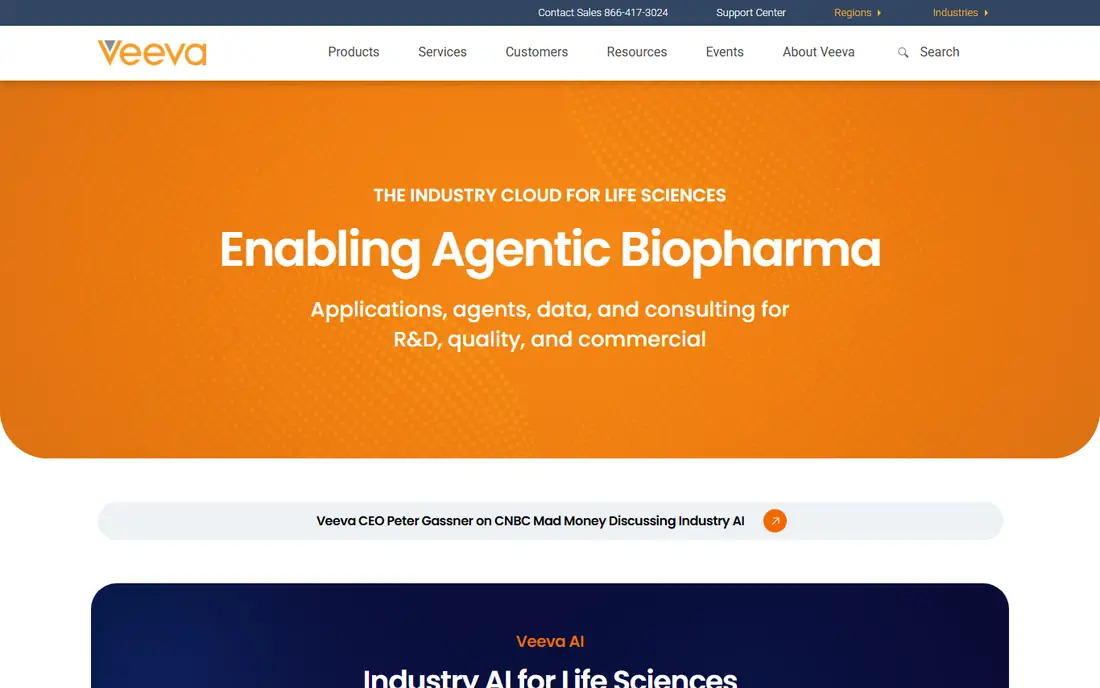
What we like- Veeva Vault Clinical Suite puts Vault EDC, Vault CTMS, and Vault eTMF on one platform with shared data and documents, which removes the handoffs that plague multi vendor setups. The eTMF is a category benchmark, with expected document logic and completeness dashboards that inspection readiness reviews praise, and Vault EDC has won complex trial work on study build speed. For sponsors standardising long term, the single vendor, single validation story is the draw.
Watch out for- Veeva pricing targets mid to large pharma, and smaller sponsors are quoted accordingly. Moving a whole clinical stack to one vendor is a multi year commitment with real migration effort. Organisations that only need one job, such as EDC alone, pay suite prices for a single tool's work.
#3
Oracle Clinical One
Best for: Sponsors standardised on Oracle
Visit oracle.com
Starting priceSee website
Free planNo
What we like- Oracle Clinical One unifies data collection, randomisation, and trial supply on Oracle's cloud, and it connects naturally to Oracle's safety and life sciences products, including the Argus safety platform many sponsors already run. Randomisation and supply are built in rather than bolted on, which simplifies validation of the combined system. For an Oracle standardised enterprise, one vendor covers clinical, safety, and data needs under one contract.
Watch out for- Pricing is opaque and bundled into wider Oracle negotiations, so standalone comparisons are hard. Organisations outside the Oracle ecosystem gain less from the integration story and carry platform weight they did not need. Implementation runs through Oracle sized projects, which smaller sponsors find slow and expensive.
#4Castor
Best for: Small teams and academic studies4.6/5 on
G2 (126 reviews, checked Oct 2026)
Visit castoredc.com
Starting priceSee website
Free planYes
What we like- Castor is the self service end of this market: investigators and small sponsors build compliant studies themselves with a modern interface, eConsent and survey tools alongside the EDC, and validation documentation provided rather than commissioned. Academic and non commercial studies under its inclusion and time limits can run free, which is why universities and device startups start here. Study builds take days to weeks rather than the enterprise platforms' months.
Watch out for- Castor's depth in complex global phase III operations is thinner than Rave or Vault, and very large sponsors may outgrow its reporting and integration options. The free tier is restricted by study size and duration, so commercial work pays standard rates. Enterprise support and global site networks are lighter than the big suites.
#5Medrio
Best for: Fast study builds for biotech and devices4.2/5 on
G2 (255 reviews, checked Oct 2026)
Visit medrio.com
Starting priceSee website
Free planNo
What we like- Medrio sells speed: its EDC and eClinical tools are built so small teams can configure studies without programmers and launch quickly, which suits biotech and medical device firms running early phase and post market studies. Pricing scales with study complexity rather than enterprise seat models. The interface rates well with site users, which matters because coordinators live in the EDC daily.
Watch out for- Medrio does not offer the full suite breadth of Veeva or Medidata, so CTMS and eTMF may need separate tools. Very complex multinational trials can push past its comfort zone. There is no free tier for live studies, so testing happens in demos and sandboxes.
Starting priceSee website
Free planNo
What we like- Advarra is unusual on this list because it combines technology with the services around trials: its Clinical Conductor CTMS serves sites and site networks, and the company is also a major IRB and research services provider, so ethics review, site operations, and consulting sit under one roof. For hospitals, health systems, and site networks, that combination simplifies vendor management. Its site facing tools are built by people who run the site side of trials daily.
Watch out for- Advarra is site and services centred, so a sponsor looking for a sponsor side EDC suite should look at the platforms above instead. Pricing is by quote across both software and services, which makes like for like comparison work. Organisations outside North America get less from its IRB strength.
Starting priceSee website
Free planNo
What we like- Florence attacks the document bottleneck: its eBinders platform gives sites an electronic investigator site file and eRegulatory workflows, and its eTMF connects site documents to the sponsor file, which is where trial master file completeness usually fails. Remote monitoring works far better when site documents live in a shared system instead of email and shared drives. Thousands of sites already run Florence, which lowers the training burden when a sponsor adopts it.
Watch out for- Florence is a document and site workflow layer, not an EDC or CTMS, so it complements rather than replaces your core systems. Value depends on site adoption: a sponsor whose sites will not work in it gains little. Pricing is by quote and scales with sites and studies, so small trials should confirm the entry cost carefully.
Starting priceSee website
Free planNo
What we like- RealTime CTMS is built from the site's chair: study management, scheduling, recruitment tracking, and participant payment features for research sites and site networks running many concurrent studies. Its eDOCS and text based recruitment tools address the two jobs sites complain about most, documents and enrolment. Directory pricing reports put entry costs in the hundreds of dollars per month range, far below enterprise suites, though you should confirm the current figure.
Watch out for- RealTime serves the site side, so sponsors still need their own EDC and eTMF. Its brand and support footprint are smaller than Advarra's in the same site niche. Integrations with sponsor systems vary, so networks should test data exchange with their main sponsors' platforms before committing.
How we chose
We compared these platforms by trial job first: data capture, trial management, the master file, and site workflows, since no single tool wins all four. Within each job we weighed validation and audit trail depth, study build speed, integration with the other systems a trial needs, and pricing transparency. We favoured vendors with verifiable adoption among sponsors, CROs, or sites in 2026 comparison reporting. Every enterprise price here is quote based, so we marked see website rather than repeat directory estimates that vendors do not publish themselves.
How to choose the right clinical trial software
Start by mapping your jobs. A sponsor running global phase III trials needs the Rave or Veeva class of EDC and a serious eTMF. A device firm or academic unit running a handful of studies needs Castor or Medrio economics and speed. A site network needs CTMS and document tools, RealTime, Advarra, or Florence, more than it needs a sponsor suite. Buying by job prevents the classic error of purchasing an enterprise platform to solve a site paperwork problem.
Then make validation and inspection readiness part of the buying decision, not an afterthought. Ask each vendor for its validation package, audit trail samples, 21 CFR Part 11 and Annex 11 evidence, and how mid study changes and data exports are handled at close out. Price the whole programme: licences, implementation, integrations with safety and labs, training for sites, and per study fees over your realistic three year pipeline. Finally, pilot on one real study before a portfolio commitment, and involve the sites who will use the system daily, since a platform coordinators hate quietly taxes every visit. This guide is general information about software selection, not regulatory advice for your trial.
Frequently asked questions
What is the difference between EDC, CTMS, and eTMF?
EDC, electronic data capture, holds the participant data collected during visits: labs, adverse events, outcomes. A CTMS, clinical trial management system, runs the operations: sites, visits, budgets, and milestones. An eTMF, electronic trial master file, holds the regulated documents that prove the trial was run properly, from protocols to monitoring reports. A complete trial needs all three functions, bought as a suite or as separate tools.
Does clinical trial software have to be validated?
Yes, for trials supporting regulatory submissions. Sponsors must be able to show the system works as intended and protects data integrity, with audit trails, access controls, and electronic signature compliance under rules such as 21 CFR Part 11 in the US and Annex 11 in the EU. Vendors provide validation documentation and test evidence, but the sponsor remains responsible for confirming the system as configured for their study.
How much does clinical trial software cost?
Enterprise platforms are priced by quote based on studies, sites, participants, and modules, and directory estimates for per user pricing vary too widely to budget from. Smaller platforms publish simpler models: RealTime is reported in the hundreds of dollars per month for sites, and Castor offers restricted free use for small academic studies. In all cases, implementation, validation, integrations, and training usually exceed the first year licence cost, so ask for a total programme price.
Can small companies and academic teams run compliant trials without enterprise software?
Yes. Castor and Medrio exist for exactly that case, providing compliant EDC with validation support at small team prices, and Castor's academic terms can make small non commercial studies free. What small teams cannot skip is process: trained users, documented procedures, and a proper trial master file, whether that lives in a dedicated eTMF or a controlled system such as Florence at the site level.
What should I check about integrations before buying?
Map the systems your trial already touches: safety databases, central labs, EHR feeds at sites, randomisation and supply, eConsent, and payment tools. Suite vendors such as Veeva, Medidata, and Oracle reduce integration work inside their own products, while best of breed tools must prove working connections to your exact stack. Ask for reference customers running your combination, not a generic integration logo page.
Sources we checked (0)
Is your product missing or out of date?
We review this list regularly. Vendors can request a listing, send updated pricing or ask about featured placement.

Shihab Mia · Founder, Rankite
Shihab has 5+ years in B2B and SaaS SEO. He writes Rankite's software buying guides from pricing pages, documentation and public user reviews. More about Shihab.