How we make this list: we compare pricing pages, product documentation and public user reviews. Ratings come from G2, Capterra or Trustpilot, with the date we checked them.
Key takeaways
- CTMS software differs from EDC: CTMS manages study operations, sites, budgets, and documents, while EDC captures patient data, though many platforms now do both.
- Sponsor, CRO, and site needs differ sharply: sponsors need portfolio oversight, CROs need multi-study efficiency, and sites need simple daily workflows.
- Integration decides value: a CTMS that connects to EDC, eTMF, and payment systems saves more time than one with a longer feature list but no connections.
- Validation and audit trails are non-negotiable for regulated trials, so confirm 21 CFR Part 11 compliance and audit history before buying.
- Pricing is almost always quote-based and scales with studies, sites, and users, so compare total cost across your actual trial portfolio.
Quick comparison
| Tool | Best for | Starting price | Free plan |
|---|
 Veeva Vault CTMS | Enterprise sponsors on the Veeva platform | See website | No |
 Medidata CTMS | Unified platform with AI trial orchestration | See website | No |
 Oracle Siebel CTMS | Large sponsors needing deep configurability | See website | No |
 IBM Clinical Development | Enterprise clinical data and trial management | See website | No |
 Medrio | No-code EDC plus trial tools for sponsors and CROs | See website | No |
 Castor | Self-service trials for biotech and academia | See website | No |
 RealTime CTMS | Research sites and site networks | See website | No |
 Advarra CTMS | Sites wanting CTMS with IRB integration | See website | No |
Is your product missing or out of date?
We review this list regularly. Vendors can request a listing, send updated pricing or ask about featured placement.
The best clinical trial management software
#1
Veeva Vault CTMS
Best for: Enterprise sponsors on the Veeva platform
Visit veeva.com
Starting priceSee website
Free planNo
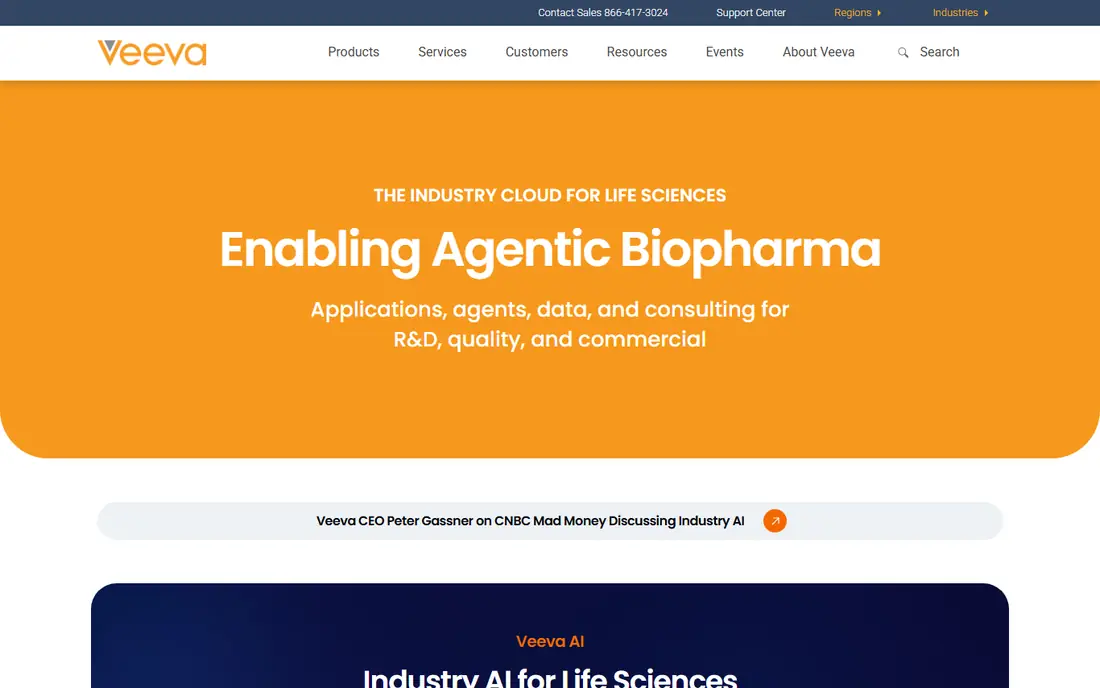
Veeva Vault CTMS sits inside Veeva's industry cloud for life sciences, which covers R and D, quality, and commercial operations. For sponsors already using Veeva applications, the CTMS connects study planning, site management, monitoring, and trial master file content in one system, reducing the reconciliation work that comes from stitching separate vendors together. Veeva's position as a public benefit corporation focused entirely on life sciences also gives sponsors confidence in its long-term roadmap.
The trade-offs are enterprise scale: pricing and implementation suit larger sponsors better than small biotech teams, and standalone CTMS value is lower outside the Veeva ecosystem. For enterprise sponsors standardizing on Veeva, Vault CTMS is the natural core of trial operations.
What we like- Part of the industry cloud for life sciences
- Unified with Veeva EDC, eTMF, and study startup
- Strong sponsor adoption
Watch out for- Enterprise pricing and implementation
- Best value inside the wider Veeva ecosystem
Starting priceSee website
Free planNo
Medidata positions its platform as the unified answer to disconnected clinical systems, synchronizing study, patient, and data workflows with an AI companion called Dot that navigates complexity and automates trial orchestration. The company reports use in 80 percent of FDA novel drug approvals, more than 42,000 clinical trials, and engagement with more than 12 million patients, with 70 billion data points processed annually. Its clinical data studio gives cross-functional teams one place for data management, central monitoring, and medical review.
Medidata is an enterprise platform, so small sponsors may find pricing and implementation heavier than they need. For sponsors and CROs running complex, multi-site trials that need data, patient, and study management unified, Medidata is one of the strongest platforms available.
What we like- Unified platform across study, patient, and data workflows
- AI companion Dot for trial orchestration
- Used in 80 percent of FDA novel drug approvals
Watch out for- Enterprise scale and pricing
- Breadth can overwhelm small teams
#3
Oracle Siebel CTMS
Best for: Large sponsors needing deep configurability
Visit oracle.com
Starting priceSee website
Free planNo
Oracle's Siebel CTMS has long been the enterprise standard for sponsors that need deep configurability across study planning, site management, monitoring, and payments. As part of Oracle's broader health and life sciences suites, it can connect to Oracle's cloud infrastructure, AI data platform, and health applications, which suits large sponsors standardizing on Oracle technology. Its configurability lets sponsors model unusual trial designs and reporting needs that simpler tools cannot.
That configurability comes with implementation complexity and longer deployment times, and newer cloud-native rivals often feel more modern. For large sponsors with complex, global trial portfolios and existing Oracle investments, Siebel CTMS remains a proven enterprise choice.
What we like- Deep configurability for complex sponsor processes
- Part of Oracle's life sciences and health suites
- Global enterprise support
Watch out for- Implementation complexity
- Older interface reputation versus newer cloud-native rivals
#4
IBM Clinical Development
Best for: Enterprise clinical data and trial management
Visit ibm.com
Starting priceSee website
Free planNo
IBM's clinical development offerings bring enterprise data management, analytics, and trial management to sponsors and CROs that need scale and governance. IBM's strengths in AI, through watsonx, and in cloud infrastructure appeal to organizations building data-driven trial operations, and its global consulting arm can support large implementations. For sponsors already running on IBM technology, the integration story is compelling.
IBM is a vast company, so clinical trial software is one business among many, and buyers should confirm the current product roadmap and support model for their region. For enterprise sponsors prioritizing data governance and analytics depth, IBM Clinical Development is a solid option.
What we like- Enterprise-grade data management and analytics
- Global support infrastructure
- Integration with IBM's AI and cloud tools
Watch out for- Clinical trial focus is one part of a vast company
- Pricing is enterprise-grade
#5Medrio
Best for: No-code EDC plus trial tools for sponsors and CROs4.2/5 on
G2 (255 reviews, checked Oct 2026)
Visit medrio.com
Starting priceSee website
Free planNo
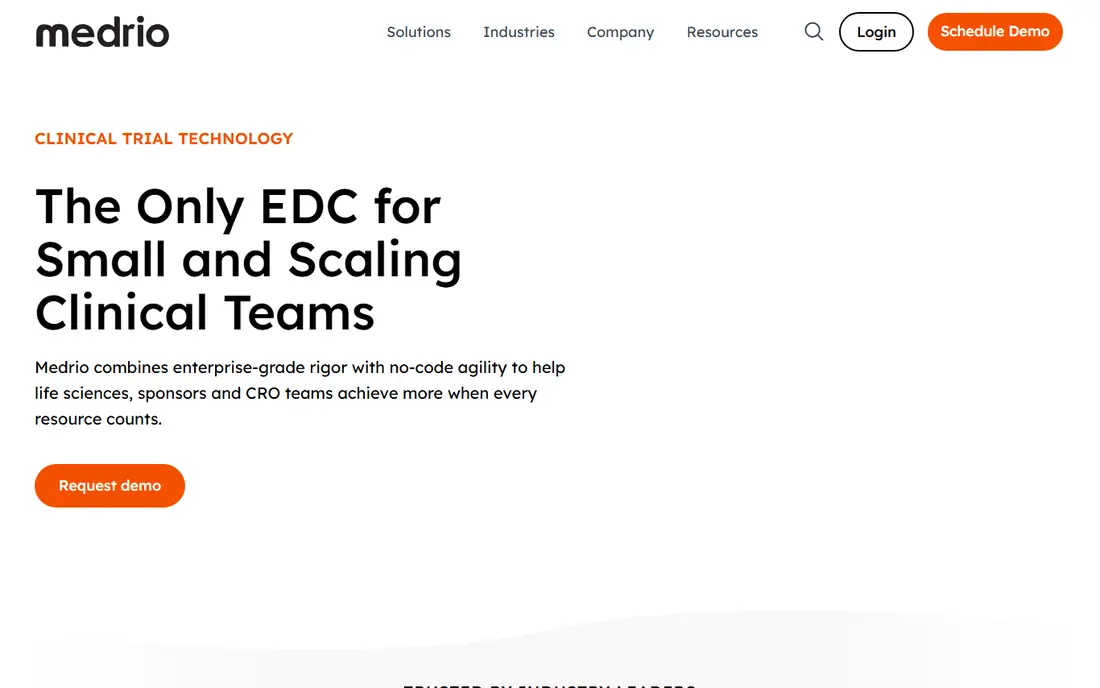
Medrio combines enterprise-grade rigor with no-code agility, offering a fully validated, audit-ready EDC backed by more than 20 years of clinical use across thousands of completed trials. Its platform integrates EDC and clinical data management with ePRO and eCOA, eConsent, and randomization, and sponsors can configure, adapt, and manage studies without a programmer. A dedicated expert service team supports database build, data management, and biostatistics.
Medrio is smaller than Veeva or Medidata, so its CTMS module depth should be evaluated against your specific operational needs. For sponsors and CROs that want validated data capture plus trial tools without enterprise complexity or hidden costs, Medrio is a strong mid-market choice.
What we like- Fully validated, audit-ready EDC with no-code configuration
- Integrated ePRO, eConsent, and randomization
- Expert service team
Watch out for- Smaller than enterprise rivals
- CTMS depth varies by module
#6Castor
Best for: Self-service trials for biotech and academia4.6/5 on
G2 (126 reviews, checked Oct 2026)
Visit castoredc.com
Starting priceSee website
Free planNo
Castor is an AI-native clinical trial platform covering EDC, eCOA and ePRO, eConsent, and an AI tool called Catalyst that turns source documents and EHR data into structured, audit-ready records, with a human reviewer confirming every result before it enters the record. Its self-service model lets teams build and deploy studies in weeks with minimal support, and it reports more than 19,000 studies, more than 900 customers, and strong ratings on Capterra and G2. Academic researchers form a large part of its community.
Castor's sweet spot is biotech, medical device, and academic teams that value speed and self-service over enterprise CTMS depth. For fast-moving teams that need a modern, usable trial platform without a long implementation, Castor is an excellent fit.
What we like- Self-service study building in weeks
- AI data extraction with human review
- 19,000-plus studies and 900-plus customers
Watch out for- Less enterprise CTMS depth than Veeva or Oracle
- Pricing scales with study complexity
Starting priceSee website
Free planNo
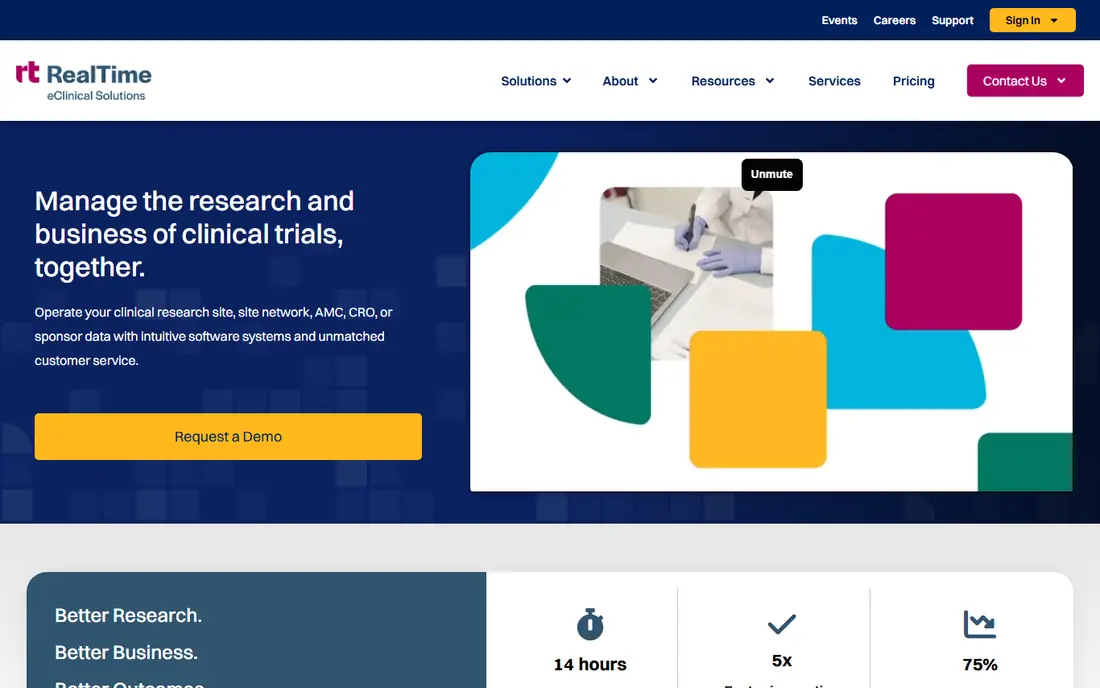
RealTime eClinical Solutions builds software for the site side of trials: its CTMS manages studies, staff, finances, documents, and workflows from one connected platform, alongside eSource for point-of-care data capture, eReg for inspection-ready regulatory documents, and GlobalPay for site payments. Its Site Operations Management System bundles these tools so sites avoid multiple logins, trainings, and vendor invoices. Academic medical centers, health systems, site networks, and CROs are its core customers.
For sponsors seeking portfolio-level oversight, RealTime is less central than Veeva or Medidata. For research sites and networks that need daily operations to run smoothly, RealTime is one of the best site-focused CTMS options available.
What we like- Built for sites, site networks, academic centers, and CROs
- Connected CTMS, eSource, eReg, and payments
- Strong site-focused service
Watch out for- Site-centric design suits sponsors less
- Smaller ecosystem than enterprise platforms
Starting priceSee website
Free planNo
Advarra's CTMS, formerly Clinical Conductor, serves research sites with trial operations and budget management, now connected to Advarra's IRB oversight and protocol systems. Advarra reports that 50,000 investigators use its solutions, more than 12,000 open protocols are overseen annually, 88 percent of NCI-designated cancer centers use its technology, and more than 3,500 institutions trust it. Client stories cite Clinical Conductor as the CTMS of choice for trial operations and budget management, and UCSF recovered significant revenue and cut costs using Advarra's OnCore system.
Advarra's ecosystem centers on sites and IRB workflows, so pure sponsor portfolio management is less of its focus. For research sites and academic centers that want CTMS integrated with IRB and compliance systems, Advarra is a leading choice.
What we like- Clinical Conductor CTMS now under Advarra
- Integration with Advarra IRB and protocol systems
- Used across thousands of institutions
Watch out for- IRB-centric ecosystem suits sites more than sponsors
- Enterprise sponsor features vary
How we chose
We selected tools that genuinely manage clinical trial operations, covering sponsor, CRO, and site perspectives, and that offer CTMS functionality rather than only EDC or only patient recruitment. We favored platforms with documented regulatory compliance, integration breadth, and adoption across the industry. Pricing is quote-based across this market, so every starting price is listed as "See website." We did not run trials on any platform, so treat vendor adoption claims as starting points for demos and reference checks.
What to check before you hire
Start with your role. Sponsors should prioritize portfolio oversight, monitoring, and integration with EDC and eTMF, while sites should prioritize daily workflows, budgeting, and payment tracking. Next, confirm validation: ask for 21 CFR Part 11 compliance documentation, audit trails, and validation packages, and check how upgrades are validated.
Test integrations with your existing EDC, safety, and finance systems during a pilot, since a CTMS that cannot exchange data cleanly creates manual work. Clarify pricing drivers: number of studies, sites, users, and modules all affect cost, so model your actual portfolio rather than comparing list prices. Finally, check support and training: trial teams work under deadline pressure, and responsive, knowledgeable support matters more than a long feature list.
Frequently asked questions
What is clinical trial management software?
Clinical trial management software, or CTMS, manages the operational side of trials: study planning and startup, site selection and management, monitoring visits, document tracking, budgets, and payments. It complements EDC software, which captures patient data, and eTMF software, which manages trial master file documents.
How is CTMS different from EDC?
CTMS manages trial operations such as sites, timelines, and budgets, while EDC captures and manages clinical data from case report forms. Many modern platforms combine both, but the distinction matters when evaluating whether a tool covers your operational needs or only your data needs.
How much does CTMS software cost?
Pricing is almost always quote-based and depends on the number of studies, sites, users, and modules. Small teams may pay a few thousand dollars per study, while enterprise sponsors pay far more across a portfolio. Request a quote modeled on your actual trial volume.
Do I need a validated system?
Yes, for regulated trials. Systems handling clinical trial data and records should comply with FDA 21 CFR Part 11 and equivalent regulations, including audit trails, electronic signatures, and validation documentation. Confirm compliance before purchase, not after implementation.
Can small biotech companies use enterprise CTMS tools?
They can, but mid-market tools like Castor and Medrio often fit better, with faster implementation and lower cost. Enterprise tools suit sponsors with large, complex portfolios, while smaller teams benefit from self-service platforms that deploy in weeks.
Sources we checked (8)
- https://www.veeva.com
- https://www.medidata.com
- https://www.oracle.com
- https://www.ibm.com
- https://www.medrio.com
- https://www.castoredc.com
- https://www.realtime-ctms.com
- https://www.advarra.com
Is your product missing or out of date?
We review this list regularly. Vendors can request a listing, send updated pricing or ask about featured placement.

Shihab Mia · Founder, Rankite
Shihab has 5+ years in B2B and SaaS SEO. He writes Rankite's software buying guides from pricing pages, documentation and public user reviews. More about Shihab.