How we make this list: we compare pricing pages, product documentation and public user reviews. Rankite is independent; if a vendor ever pays for a featured spot, that listing is clearly labeled Partner.
Key takeaways
- Your customer data lives in a dozen tools and none of them agree on who anyone is. A customer data platform fixes that by collecting events, resolving identities, and sending clean audiences everywhere.
- Twilio Segment (free up to 1,000 monthly tracked users, Team from $120 per month) is the accessible packaged CDP. Hightouch (free tier, paid from $350 per month) is the warehouse-native alternative.
- Six of the nine platforms here publish no prices: Tealium, mParticle, Bloomreach, ActionIQ, Treasure Data and Amperity are all quote-only enterprise deals.
- If you already run Snowflake, BigQuery or Databricks, the composable CDPs (Hightouch, ActionIQ, RudderStack) activate data where it lives instead of copying it.
Quick comparison
| Tool | Best for | Starting price | Free plan |
|---|
 Twilio Segment Twilio Segment | SaaS and product-led companies needing a developer-friendly CDP | $0 (Free, 1,000 monthly tracked users); Team from $120/month | Yes |
 Tealium Tealium | Enterprises with complex data governance needs | See website (quote-based; no public pricing) | No |
 mParticle mParticle | Digital brands and mobile-first companies | See website (quote-based; no public pricing) | No |
 Bloomreach Bloomreach | E-commerce and retail brands wanting CDP plus personalization | See website (quote-based; no public pricing) | No |
 ActionIQ ActionIQ | Large enterprises with a cloud data warehouse | See website (quote-based; no public pricing) | No |
 Treasure Data Treasure Data | Global enterprises with massive customer data volumes | See website (quote-based; no public pricing) | No |
 Hightouch Hightouch | Data teams that want warehouse-native activation | $0 (Free, 2 active syncs/month); paid self-serve from $350/month | Yes |
 RudderStack RudderStack | Developer-led teams wanting an open-source, warehouse-first pipeline | Free tier available; paid Growth from ~$265/month (third-party estimate, unverified) | Yes (free tier) |
 Amperity Amperity | Retail, restaurant and hospitality brands with messy identity data | See website (quote-based; no public pricing) | No |
Is your product missing or out of date?
We review this list regularly. Vendors can request a listing, send updated pricing or ask about featured placement.
Your customer data lives in a dozen tools and none of them agree on who anyone is. The email platform has one version of the customer, the ad platforms have another, the warehouse has a third, and the mobile app has a fourth. A customer data platform (CDP) is supposed to end that: it collects behavioral events, resolves identities into unified profiles, and sends clean audiences and attributes back out to every tool. The category has split into two architectures (packaged and composable), and buying the wrong one for your data maturity wastes six figures. These nine cover both.
#1
Twilio Segment
Best for: SaaS and product-led companies needing a developer-friendly CDP
Visit segment.com
Starting price$0 (Free, 1,000 monthly tracked users); Team from $120/month
Free planYes
Segment is the CDP most teams start with. Collect events once through developer-friendly SDKs, route them to 400-plus destinations, and build audiences and predictive traits for mid-market teams. The free plan (1,000 monthly tracked users) gets data flowing in days with no sales call.
The pricing model is the catch. MTUs include anonymous visitors, so a busy content site burns through the $120-per-month Team tier (10,000 MTUs, roughly $10 to $12 per 1,000 overage) quickly. Identity resolution, data governance and HIPAA eligibility need the custom-quoted Business tier. For a SaaS company with a sane visitor-to-user ratio, it is the easiest CDP to adopt.
What we like- 400-plus destinations and 700-plus integrations
- Developer-friendly SDKs
- Free plan lets small teams start without a sales call
Watch out for- MTU pricing gets expensive fast for high-traffic B2C sites
- Identity resolution and governance gated to Business tier
Starting priceSee website (quote-based; no public pricing)
Free planNo
Tealium is the enterprise incumbent. The combination of tag management, a customer data hub and real-time activation, with strong consent and privacy tooling, suits media, retail and financial services companies where governance is non-negotiable. The 1,000-plus integration marketplace covers nearly every vendor.
Everything is sales-quoted and implementations often run months with partner help, so plan budget and timeline accordingly. This is not a tool you trial on a credit card. For a regulated enterprise with complex data flows, the governance depth justifies the process. For everyone else, it is overkill.
What we like- Real-time data collection with 1,000-plus integrations
- Strong data governance and consent management
- AudienceStream CDP with ML-powered audiences
Watch out for- Quote-only enterprise pricing with high total cost of ownership
- Implementation needs professional services
Starting priceSee website (quote-based; no public pricing)
Free planNo
mParticle (now owned by Rokt) is built for the mobile era. The API-first architecture collects customer data in real time from apps and connected devices, with identity resolution tuned for mobile and forward-to-warehouse capabilities. Media and ad-tech activation is a particular strength.
The catch is access: enterprise-only pricing with no public rate card, and teams report a learning curve in configuration. Setup is sales-led with professional services. If your customers live in your app, the mobile-first design matters. If they live on your website, Segment or a composable option is simpler.
What we like- Real-time API-first architecture for mobile and connected devices
- Strong audience segmentation
- Deep partner ecosystem for media and ad-tech
Watch out for- Enterprise pricing only
- Reviewers note admin complexity
#4
Bloomreach
Best for: E-commerce and retail brands wanting CDP plus personalization
Visit bloomreach.com
Starting priceSee website (quote-based; no public pricing)
Free planNo
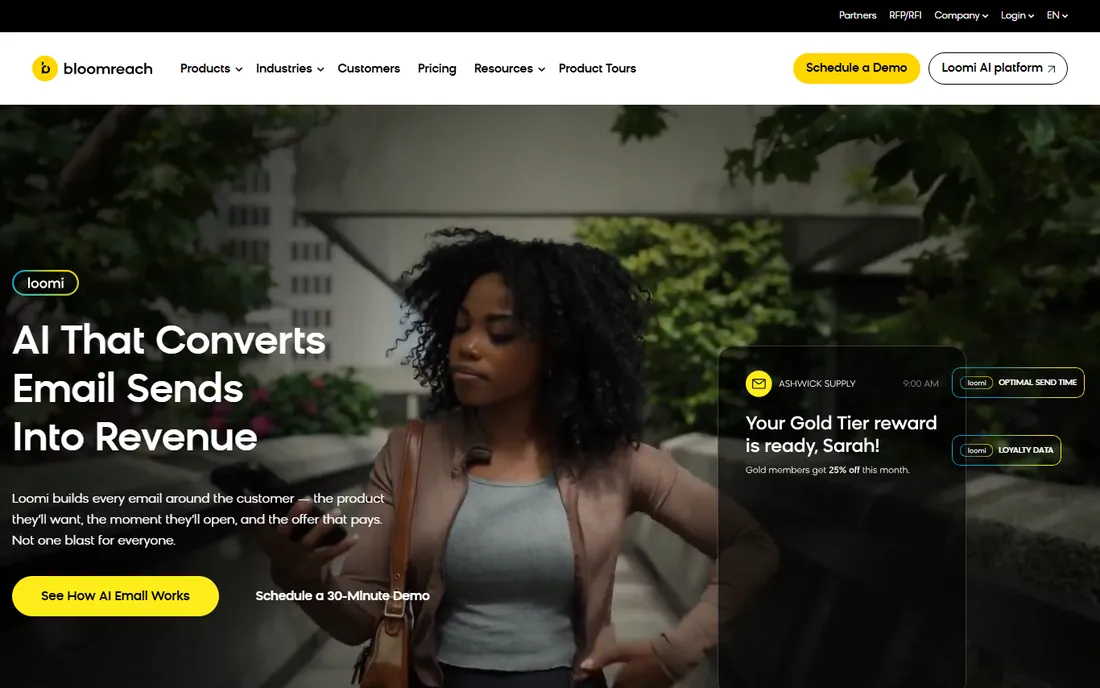
Bloomreach does not sell a CDP in isolation; it sells a commerce cloud where the CDP, personalization, site search and campaign execution share one customer-plus-product data model. AI-driven product recommendations and journeys run on unified data, which is exactly what a retailer wants.
The pricing is custom-quoted for retailers with meaningful digital revenue, and the deepest value comes from buying the full suite rather than the CDP alone. Small stores should look elsewhere. For a mid-market or enterprise retailer, the unified model beats stitching a standalone CDP to a separate personalization tool.
What we like- CDP unified with engagement, personalization and content in one commerce cloud
- AI-driven recommendations and journey builder
- Strong e-commerce fit
Watch out for- Quote-only pricing for mid-market and enterprise retailers
- Deepest value needs the full suite
Starting priceSee website (quote-based; no public pricing)
Free planNo
ActionIQ is the composable CDP for the warehouse era, now sold as part of Uniphore's platform (Uniphore acquired ActionIQ in late 2024; it remains a distinct, sold product). Instead of copying customer data into a separate CDP database, audiences and journeys run directly on Snowflake, BigQuery or Databricks, with marketer self-serve audience building on top. Identity resolution and journey orchestration are enterprise-grade.
The entry bar is the filter: you need a mature warehouse, engineering support and an enterprise contract (no public pricing). Setup is a multi-month program. If your data already lives in a warehouse and your marketers cannot touch it, this is the way in. If you have no warehouse, start with a packaged CDP.
What we like- Composable CDP built for Snowflake, BigQuery and Databricks
- Marketer self-serve audiences on existing data
- Strong identity resolution and journey orchestration
Watch out for- Enterprise-only pricing
- Requires a modern warehouse and data engineering investment
Starting priceSee website (quote-based; no public pricing)
Free planNo
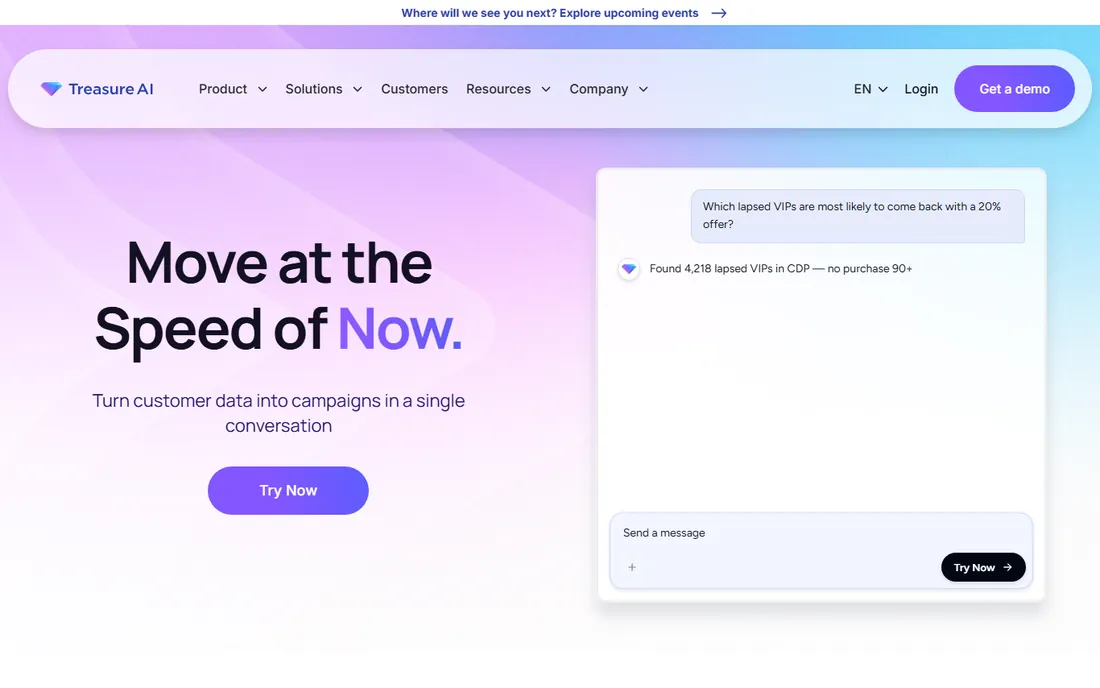
Treasure Data is built for scale that most companies will never need: billions of records, complex identity graphs, multi-brand and multi-region deployments, with ML-powered predictions built in. Automotive, retail and CPG giants run on it.
Pricing is entirely custom with enterprise minimums, and the platform expects a data-savvy team. Implementation is a services engagement over months. Unless your data volume genuinely breaks other tools, the scale is not worth the cost and complexity. When nothing else handles your volume, this is the answer.
What we like- Handles massive data volumes with built-in machine learning
- Strong for multi-brand, multi-region deployments
- Flexible identity resolution
Watch out for- Quote-only pricing with high minimums
- Needs dedicated data resources
Starting price$0 (Free, 2 active syncs/month); paid self-serve from $350/month
Free planYes
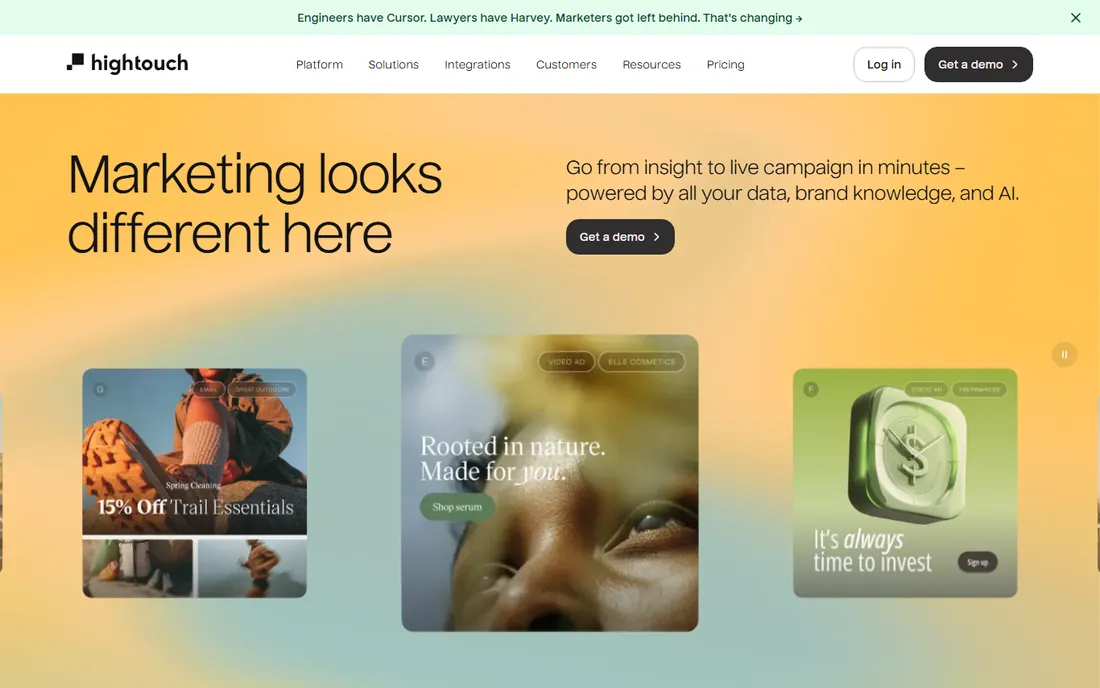
Hightouch is reverse ETL grown into a composable CDP. Sync customer data from your warehouse to 200-plus destinations with SQL or a no-code audience builder, and the data never leaves Snowflake, BigQuery or Databricks. The free tier (2 active syncs per month) and transparent self-serve pricing (paid from $350 per month per vendor-supplied listings) lower the entry bar dramatically versus the enterprise CDPs.
The dependency is absolute: no warehouse, no Hightouch. Advanced identity resolution and governance trail the packaged platforms. For a data team that already lives in a warehouse and wants marketing activation without a six-figure CDP contract, this is the pragmatic choice.
What we like- Warehouse-native: data stays in your warehouse with no separate CDP database
- No-code audience builder for marketers
- Free tier and transparent self-serve pricing
Watch out for- Requires a data warehouse
- Advanced identity resolution trails traditional CDPs
#8
RudderStack
Best for: Developer-led teams wanting an open-source, warehouse-first pipeline
Visit rudderstack.com
Starting priceFree tier available; paid Growth from ~$265/month (third-party estimate, unverified)
Free planYes (free tier)
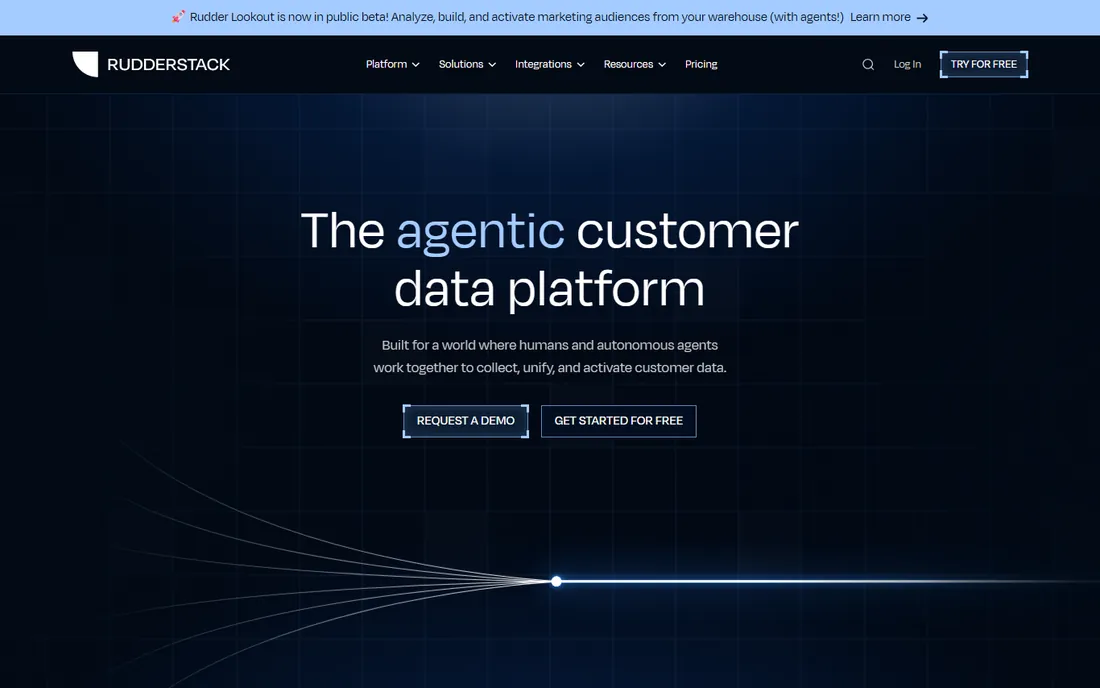
RudderStack is the developer's CDP. Open-source core, warehouse-first architecture, event collection from SDKs, in-flight transformations, and routing to unlimited destinations, all without Segment's price tag. The transformation layer is genuinely strong for teams that think in code.
Paid plans are opaque (Growth estimated around $265 per month, unverified), and you need engineers to run it well. The free tier covers real usage for small teams. For a developer-led company that wants data infrastructure it controls, the open-source core is the differentiator.
What we like- Open-source core with warehouse-first architecture
- Unlimited destinations on most tiers
- Developer-friendly with a strong transformation layer
Watch out for- Paid pricing is opaque
- Needs engineering resources to get full value
#9
Amperity
Best for: Retail, restaurant and hospitality brands with messy identity data
Visit amperity.com
Starting priceSee website (quote-based; no public pricing)
Free planNo
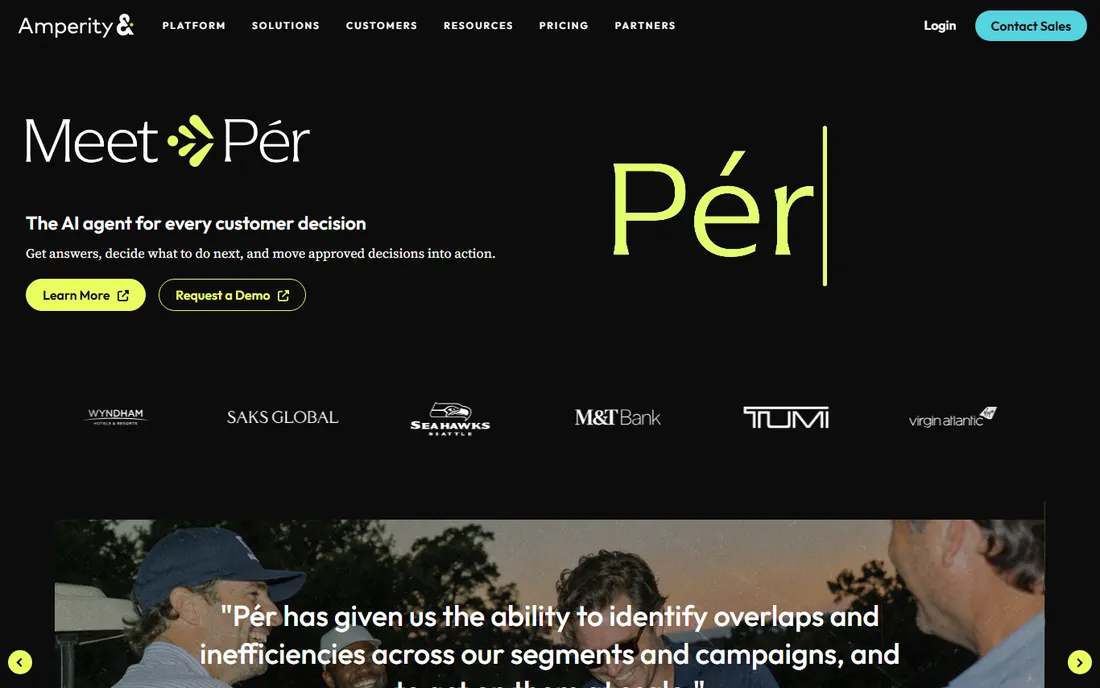
Amperity exists for one hard problem: stitching identities across POS, e-commerce, loyalty and guest data into durable customer profiles. The AI-powered identity resolution engine is the best in the category at turning messy inputs into usable profiles, feeding segments to ad platforms and personalization tools.
Enterprise-only pricing with no public numbers, and a data-intensive implementation that needs IT partnership over months. If your identity problem is genuinely hard (franchise POS data, loyalty programs, guest Wi-Fi), the specialization justifies it. If your data is already clean, a cheaper CDP resolves identities fine.
What we like- Best-in-class AI-powered identity resolution for messy customer data
- Strong in retail and hospitality loyalty use cases
- Unified profiles feed paid and owned channels
Watch out for- Enterprise-only, quote-based pricing
- Data-heavy implementation takes months
Packaged CDP vs. composable CDP: the architecture decision
The category's big fork is where the data lives. Packaged CDPs (Segment, Tealium, mParticle, Bloomreach, Treasure Data, Amperity) ingest your customer data into their own database, resolve identities there, and activate outward. They work without a warehouse and ship the deepest identity resolution and governance, but your data now lives in two places and the contracts are enterprise-grade.
Composable CDPs (Hightouch, ActionIQ, RudderStack) run on your warehouse. Audiences, journeys and syncs execute against Snowflake, BigQuery or Databricks directly, so there is no second database and no data duplication. They need a mature warehouse and engineering support, and their identity resolution is usually thinner. Choose packaged if you have no warehouse or need best-in-class governance. Choose composable if your warehouse is the system of record and your marketers cannot reach it.
How to choose a CDP without overbuying
Start with your data maturity, not the vendor's pitch. No warehouse and a small data team: shortlist Segment (free tier) and RudderStack (free tier). Warehouse in place with a data team: shortlist Hightouch and ActionIQ. Regulated enterprise with governance requirements: shortlist Tealium. Retailer wanting personalization too: shortlist Bloomreach. Messy identity across POS and loyalty: shortlist Amperity.
Then check the pricing unit before you fall in love. Segment charges per MTU (including anonymous visitors), which punishes high-traffic content sites. Warehouse-native tools charge per sync or row, which is predictable if you model it. Enterprise CDPs are all custom quotes: get the three-year total, including implementation services, before you compare. And trial on your real event volume, not a demo dataset.
How we chose
We started with the CDPs marketing and data teams actually evaluate: the packaged leaders, the composable challengers, and the open-source option. For each candidate we opened the vendor's own pricing page, checked the architecture (packaged vs. warehouse-native) against documentation, and read public reviews on G2, Capterra and practitioner discussion on Reddit. Where a price could not be verified on the vendor's page we wrote "See website" rather than guessing, and third-party pricing figures are flagged as reported, not confirmed.
Frequently asked questions
What is a CDP and do I need one?
A customer data platform collects behavioral data from your website, app and other touchpoints, resolves identities into unified customer profiles, and sends audiences and attributes to your marketing, advertising and analytics tools. You need one when customer data is scattered across tools that disagree, and manual exports cannot keep up.
What is the difference between a CDP and a data warehouse?
A warehouse stores all your data for analysis; a CDP is purpose-built for customer identity resolution and activation to marketing tools. Composable CDPs blur the line by running on your warehouse. If your warehouse already holds clean customer data, a composable CDP may be all you need.
How much does a CDP cost?
From $0 (Segment free tier, Hightouch free tier, RudderStack free tier) to six-figure enterprise contracts. Self-serve packaged CDPs run around $120 per month (Segment Team) to $350-plus (Hightouch paid). Enterprise CDPs (Tealium, mParticle, Bloomreach, ActionIQ, Treasure Data, Amperity) are all custom-quoted, typically starting in the tens of thousands annually plus implementation.
What is a composable CDP?
A composable CDP runs on your existing cloud data warehouse instead of copying data into its own database. Audiences, identity resolution and activations execute against Snowflake, BigQuery or Databricks directly. It avoids data duplication but requires a mature warehouse and data engineering support.
Can a small team use a CDP?
Yes, on the self-serve tier. Segment's free plan (1,000 monthly tracked users), Hightouch's free tier (2 syncs per month) and RudderStack's free tier all work for small teams without a sales call. The enterprise CDPs are not built for small teams: minimums, implementation services and annual contracts put them out of reach.
Sources we checked (11)
- https://www.twilio.com/en-us/products/connections/pricing
- https://tealium.com
- https://mparticle.com
- https://bloomreach.com
- https://actioniq.com
- https://treasuredata.com
- https://hightouch.com/docs/pricing/ss-pricing
- https://rudderstack.com/pricing/
- https://amperity.com
- https://www.g2.com/categories/customer-data-platform
- https://www.capterra.com/customer-data-platform-software/
Is your product missing or out of date?
We review this list regularly. Vendors can request a listing, send updated pricing or ask about featured placement.

Shihab Mia · Founder, Rankite
Shihab has spent more than a decade helping SaaS and e-commerce brands grow through search. He writes Rankite's software buying guides from pricing pages, documentation and public user reviews. More about Shihab.