How we make this list: we compare pricing pages, product documentation and public user reviews. Rankite is independent; if a vendor ever pays for a featured spot, that listing is clearly labeled Partner.
Key takeaways
- SimpleTexting and EZ Texting are the most approachable platforms for small business SMS marketing.
- TextMagic's pay-as-you-go pricing suits businesses with irregular texting volume.
- Podium combines texting with review management for local businesses.
- Attentive is the enterprise choice for e-commerce SMS marketing at scale.
Quick comparison
| Tool | Best for | Starting price | Free plan |
|---|
 SimpleTexting SimpleTexting | Small business SMS marketing | See website | Free trial |
 EZ Texting EZ Texting | Easy mass texting | See website | Free trial |
 TextMagic TextMagic | Pay-as-you-go texting | See website | Free trial |
 SlickText SlickText | Feature-rich SMS campaigns | See website | Free trial |
 Podium Podium | Local business messaging | See website | Free trial |
 Sakari Sakari | CRM-integrated texting | See website | Free trial |
 Textedly Textedly | Affordable bulk SMS | See website | Free trial |
 Salesmessage Salesmessage | Sales team texting | See website | Free trial |
 Attentive Attentive | E-commerce SMS at scale | See website | No |
Is your product missing or out of date?
We review this list regularly. Vendors can request a listing, send updated pricing or ask about featured placement.
The best business texting software
Starting priceSee website
Free planFree trial
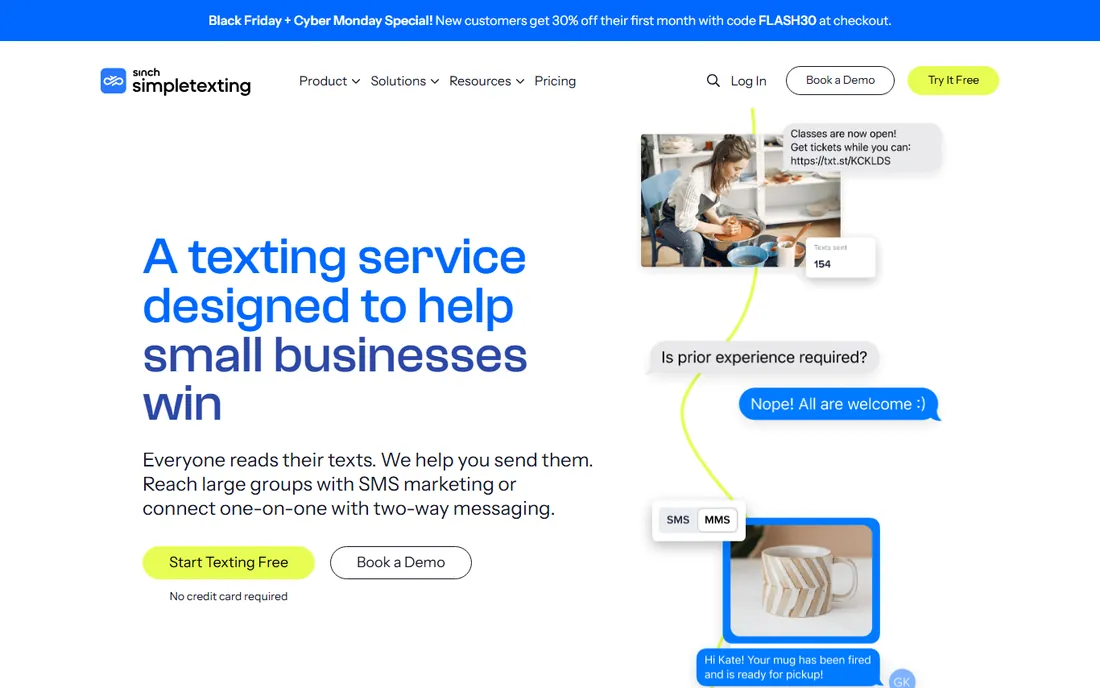
SimpleTexting lives up to its name: small businesses can launch SMS campaigns, keywords and automations without training. MMS picture messaging, drip campaigns and integrations with common CRMs cover the essentials. The interface is clean enough for a business owner to run personally.
Pricing is credit-based, so heavy months cost more; watch usage. Advanced automation sits on higher tiers. For a small business starting SMS marketing, SimpleTexting's simplicity wins.
What we like- Easy to use
- MMS support
- Good automation features
Watch out for- Credit-based pricing needs monitoring
- Advanced features on higher tiers
Starting priceSee website
Free planFree trial
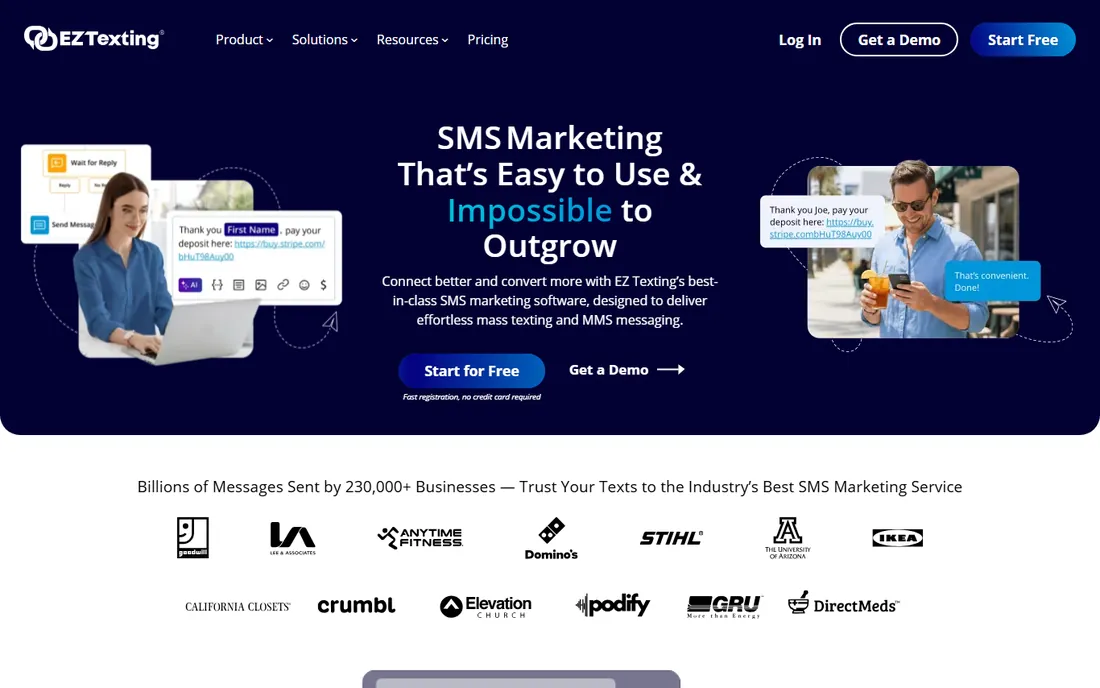
EZ Texting focuses on doing one thing well: sending text campaigns to your list. List management, scheduling, keywords and reporting work without fuss. Deliverability is solid, which matters more than features for broadcast texting.
Marketing automation depth trails SimpleTexting and SlickText. For businesses that mainly need reliable mass texting (announcements, promotions, reminders), EZ Texting's focus is exactly right.
What we like- Very easy mass texting
- Good deliverability
- Straightforward pricing
Watch out for- Fewer advanced automation features
- Design dated in places
Starting priceSee website
Free planFree trial
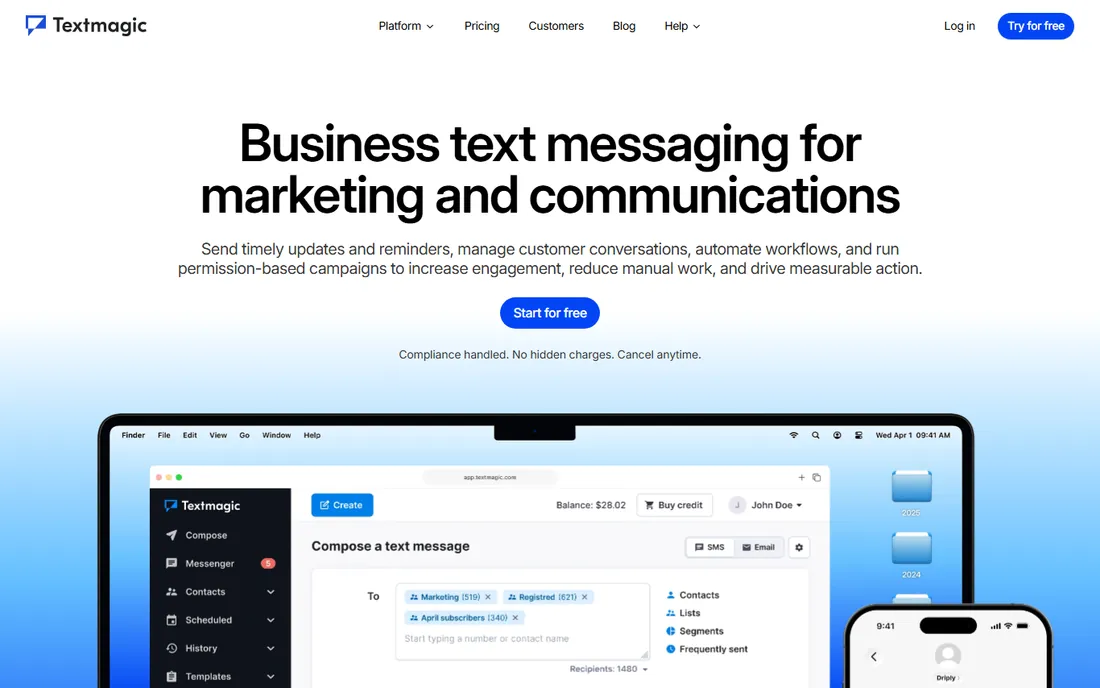
TextMagic sells texts, not subscriptions: buy credits and pay per message with no monthly fee. That suits businesses with irregular volume (seasonal reminders, occasional alerts) and developers who need an SMS API. Global coverage spans many countries.
High-volume senders pay more per message than subscription competitors. Marketing automation is thinner. For transactional texting and API use without a monthly commitment, TextMagic's model is the most flexible.
What we like- Pay-as-you-go with no subscription
- Global coverage
- API for developers
Watch out for- Per-message costs add up at volume
- Fewer marketing features
Starting priceSee website
Free planFree trial
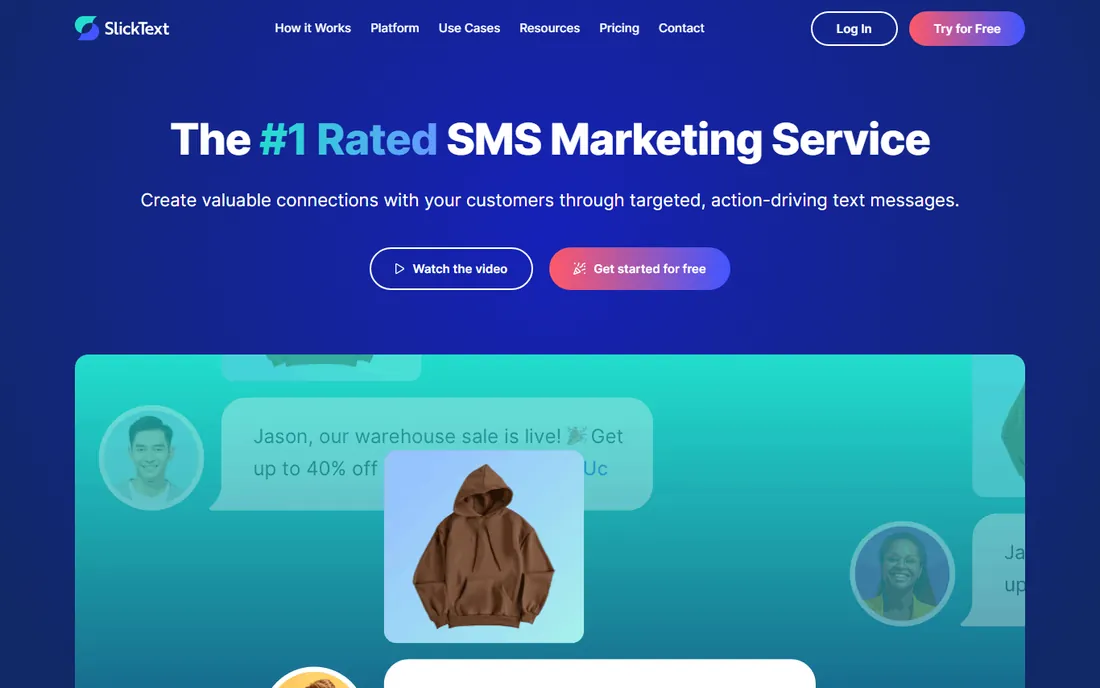
SlickText packs serious marketing features into SMS: automated workflows, drip campaigns, surveys, loyalty programs and detailed analytics. Support gets strong reviews from users. It suits marketers who want email-style sophistication in text form.
The price reflects the depth, and advanced features take learning. For businesses where SMS is a primary marketing channel rather than an afterthought, SlickText's feature set justifies the cost.
What we like- Deep feature set
- Good automation workflows
- Strong support
Watch out for- Pricing higher than bare-bones options
- Learning curve on advanced features
Starting priceSee website
Free planFree trial
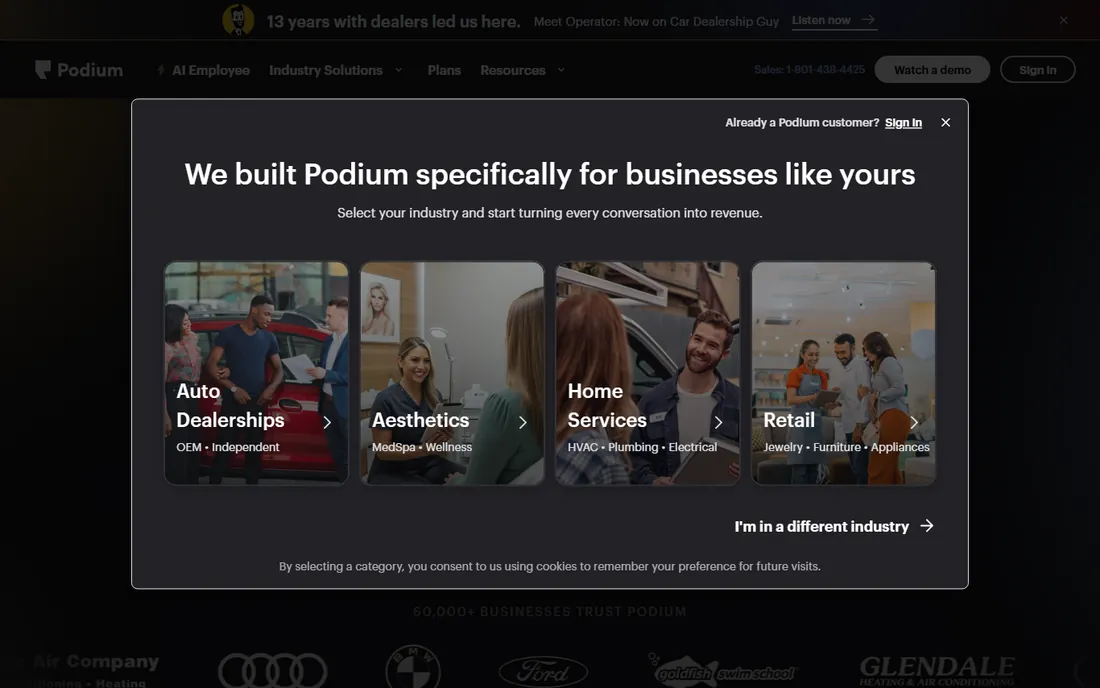
Podium bundles business texting with review management, webchat and payments. Local businesses (auto shops, dentists, contractors) text customers, request Google reviews and collect payments in one platform. The combined workflow is the selling point.
As a pure texting tool it is priced like a suite. Businesses that only need SMS will find cheaper options. For local businesses that want messaging, reviews and payments together, Podium consolidates three subscriptions.
What we like- Texting plus review management
- Great for local businesses
- Payments via text
Watch out for- Priced as a suite
- Overkill for texting alone
Starting priceSee website
Free planFree trial
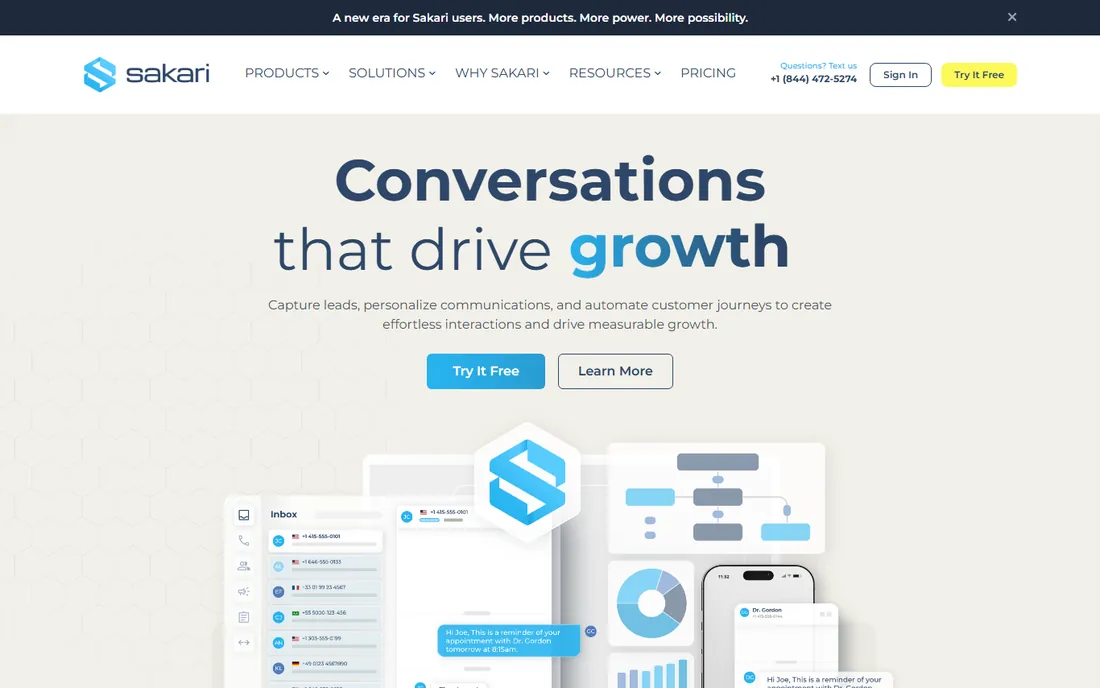
Sakari integrates SMS deeply with HubSpot, Salesforce and other CRMs: two-way conversational texting logged against contacts, automated sequences and team inboxes. Sales and support teams text from the CRM they already use.
Bulk marketing campaign features are lighter than SimpleTexting or SlickText. For businesses where texting must live inside the CRM workflow, Sakari's integrations are the reason to choose it.
What we like- Deep HubSpot and CRM integrations
- Conversational texting
- Good for sales teams
Watch out for- Smaller vendor
- Marketing campaign features lighter
Starting priceSee website
Free planFree trial
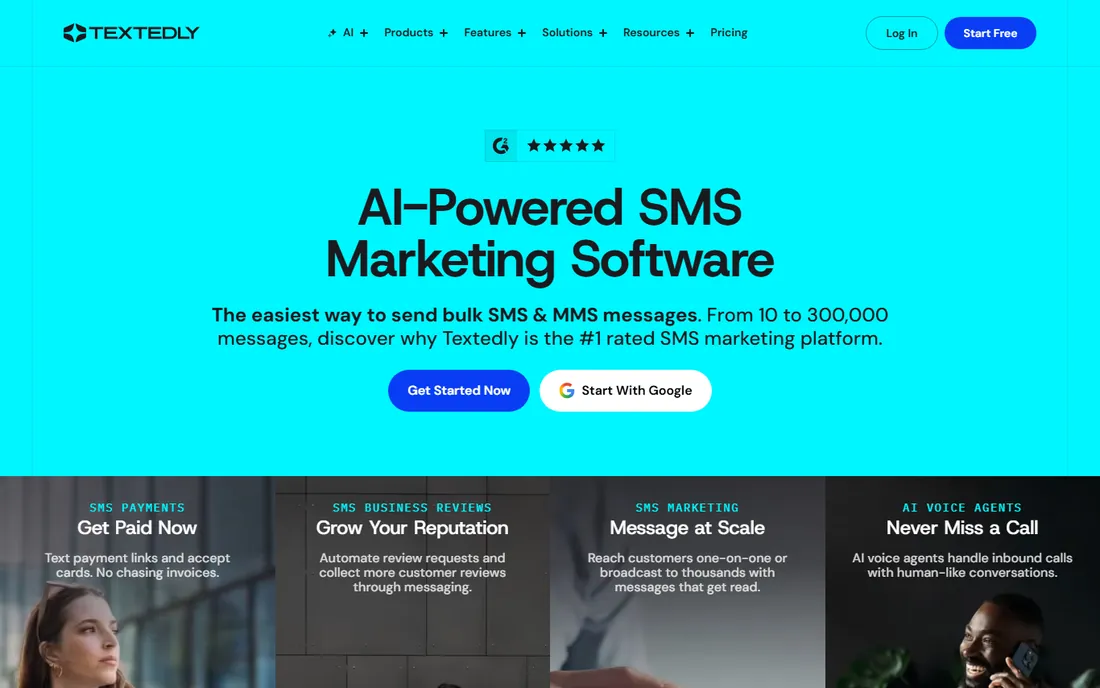
Textedly competes on price: affordable tiers with unlimited keywords and a simple interface for bulk SMS. Small businesses get mass texting, scheduling and basic automation without premium pricing.
Integrations and advanced automation trail the leaders. For a business that needs dependable bulk texting at the lowest sustainable price, Textedly delivers.
What we like- Affordable plans
- Unlimited keywords
- Simple interface
Watch out for- Fewer integrations
- Basic automation
Starting priceSee website
Free planFree trial
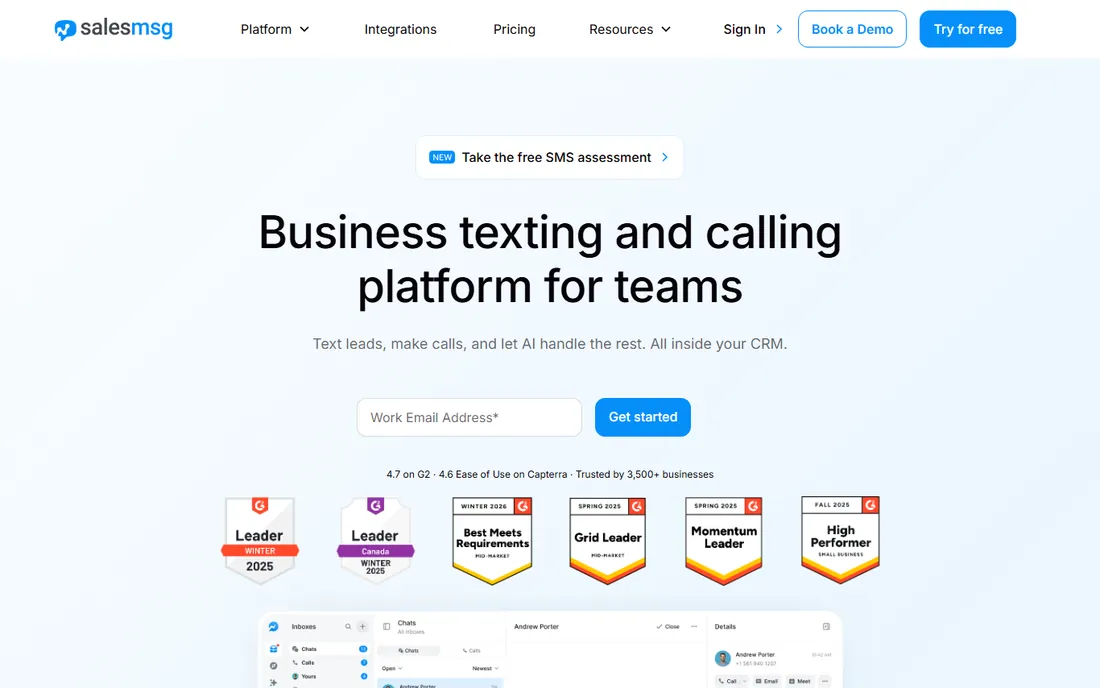
Salesmessage (formerly Salesmsg) builds texting for sales teams: shared team inboxes, conversational messaging, automation and CRM integrations that keep texts in the sales workflow. Reps text prospects from a business number with full history.
Bulk marketing campaigns are not its strength. For sales organizations that live on text conversations, the sales-specific design beats generic SMS tools.
What we like- Built for sales conversations
- Team inboxes
- CRM integrations
Watch out for- Sales focus limits marketing use
- Formerly Salesmsg (rebrand transition)
Starting priceSee website
Free planNo
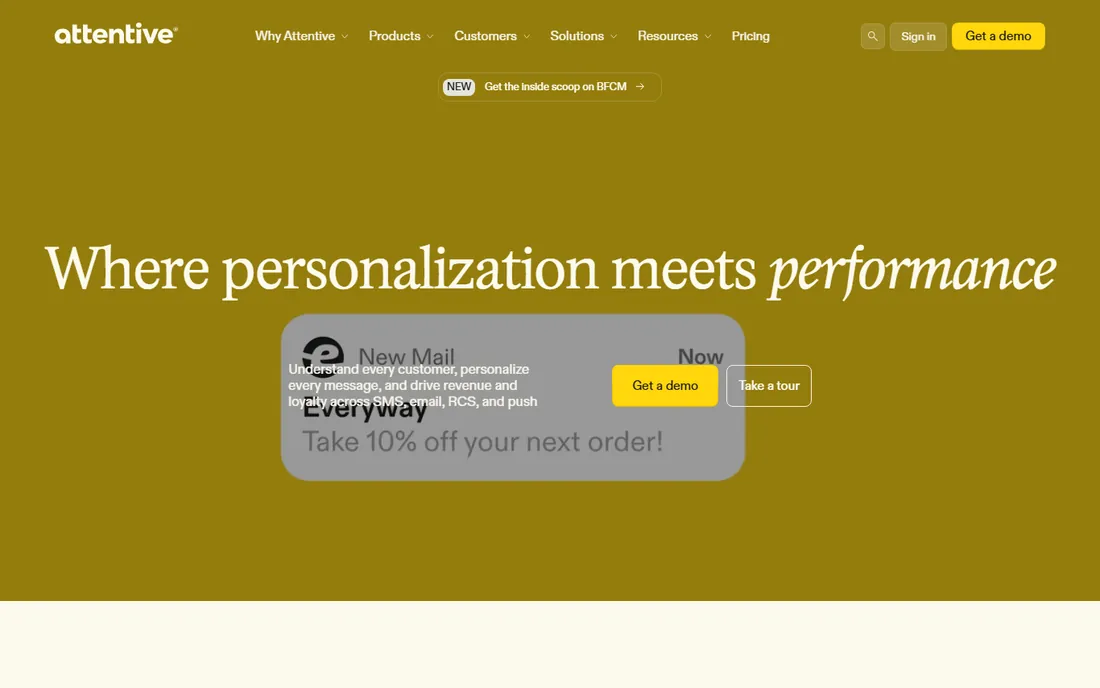
Attentive is the enterprise SMS platform for e-commerce: advanced segmentation, personalized campaigns, list growth tools and detailed revenue attribution. Retail brands run serious SMS programs on it with measurable ROI.
Pricing is enterprise and quote-based; small businesses should look elsewhere. For e-commerce companies where SMS drives significant revenue, Attentive's sophistication and deliverability justify the investment.
What we like- Best-in-class e-commerce SMS
- Advanced segmentation
- Strong ROI data
Watch out for- Enterprise pricing
- Overkill for non-retail
Compliance: the part you cannot skip
Business texting is regulated. US businesses need express consent before marketing texts (TCPA), must identify the sender, and must honor opt-outs immediately (reply STOP). 10DLC registration is now required for application-to-person texting from local numbers. Every tool here helps with compliance, but the legal responsibility is yours. Register your brand and campaigns, keep consent records, and never buy lists.
Credits vs subscriptions
Pricing comes in two models: subscription with included messages (SimpleTexting, SlickText, EZ Texting) and pay-as-you-go credits (TextMagic). Subscriptions suit steady volume; pay-as-you-go suits irregular use. Estimate your monthly message count honestly, including MMS (which costs more), before comparing. The cheapest plan at your actual volume wins, not the cheapest headline price.
Writing texts people actually answer
Business texting fails most often at the writing, not the software. Companies blast generic messages and wonder why response rates disappoint, while the businesses getting 40 percent reply rates follow a few consistent principles. The first is brevity with purpose. A text should contain one idea and one action. "Hi Sarah, your appointment is tomorrow at 2 PM. Reply C to confirm or R to reschedule." That is the entire message. Every extra sentence halves the response rate. If the message needs three paragraphs, it should have been an email. Texts earn attention through conciseness; spend that attention carefully.
Personalization goes beyond the first name. Merge fields with names are table stakes; real personalization references the customer's context. "Your order ships today" beats "Good news" "Dr. Lee is ready for you" beats "Your appointment is soon." Use the data you have: purchase history, appointment details, location, previous interactions. The texting platforms here all support custom fields; the question is whether your data flows into them. Connect the CRM properly before worrying about copy. A generic text sent through excellent software still performs like a generic text.
Timing and frequency are the trust equation. The right message at the wrong time is spam. Respect business hours for the recipient's timezone (the software should handle this automatically). Frequency caps matter enormously: even willing subscribers tune out past two to four marketing texts per month. Transactional messages (confirmations, alerts) have more latitude because they are expected. Every message should pass the value test: does the recipient gain something (information, convenience, a deal worth having)? Messages that only serve the sender get opt-outs. Track opt-out rate per campaign; a spike tells you exactly which message crossed the line.
The call to action must be thumb-friendly. "Reply YES to claim" works because the response is one word. Links should be short and lead to mobile-optimized pages; a text linking to a desktop-only form wastes the click. For complex actions, the text should start a conversation, not complete a transaction: "Want to reschedule? Reply with a better time and we will sort it." Then a human or automation handles the rest. Two-way texting is the medium's superpower; broadcasts that ignore replies leave half the value on the table. Staff the inbox or automate the responses; unanswered replies train customers that texting you is pointless.
Test everything like email marketers learned to a decade ago. A/B test message variants on small segments before full sends: different openers, different CTAs, different lengths. The results often surprise; the message you were sure would win frequently loses. Keep a swipe file of your best performers with their response rates. Over time, patterns emerge about what your specific audience answers. Also test send times systematically; the best hour for a restaurant's lunch promotion differs from a B2B appointment reminder. Texting gives instant feedback through replies and opt-outs; use that feedback loop aggressively. The businesses dominating SMS are not guessing better; they are testing more.
Frequently asked questions
How much does business texting software cost?
Small business plans typically run $25 to $100+ per month plus message costs, varying by volume. Pay-as-you-go options have no monthly fee. Enterprise e-commerce platforms are quote-based. Model your message volume before comparing.
Do we need a short code or will a regular number work?
Most small businesses use 10DLC local numbers now; short codes suit very high volume senders. 10DLC requires brand and campaign registration but costs far less than a short code. Your vendor handles the registration process.
Can customers reply to our texts?
Yes, two-way texting is standard. Replies land in a team inbox where staff respond. This is essential for support and sales use cases; one-way broadcast only suits announcements.
Is business texting legal?
Yes, with consent and compliance. Get express opt-in, identify your business, provide opt-out instructions and honor them immediately, and register for 10DLC. Follow the rules and texting is both legal and effective.
What is a good opt-in rate for SMS lists?
Well-placed opt-ins (checkout, keywords, website popups) convert 5 to 15% of visitors. SMS lists are smaller than email lists but far more engaged, with open rates above 90%. Quality beats quantity.
Can we automate appointment reminders by text?
Yes. Most tools here support automated reminders, confirmations and follow-ups via workflows or integrations. This single use case often pays for the software in reduced no-shows.
How we chose
We compared the business texting tools small and mid-size companies actually buy, from budget bulk SMS to enterprise e-commerce platforms. Pricing varies by volume across the category; we mark published models where known. We weighted ease of use, deliverability, compliance support and fit for different use cases. No hands-on testing was performed; assessments rest on documentation and public reviews.
Sources we checked (9)
- https://simpletexting.com/
- https://www.eztexting.com/
- https://www.textmagic.com/
- https://www.slicktext.com/
- https://www.podium.com/
- https://sakari.io/
- https://www.textedly.com/
- https://www.salesmessage.com/
- https://www.attentive.com/
Is your product missing or out of date?
We review this list regularly. Vendors can request a listing, send updated pricing or ask about featured placement.

Shihab Mia · Founder, Rankite
Shihab has spent more than a decade helping SaaS and e-commerce brands grow through search. He writes Rankite's software buying guides from pricing pages, documentation and public user reviews. More about Shihab.