How we make this list: we compare pricing pages, product documentation and public user reviews. Ratings come from G2, Capterra or Trustpilot, with the date we checked them.
Key takeaways
- Slack and Microsoft Teams split the market by estate: Slack for companies choosing chat first, Teams for the Microsoft 365 majority, where it is already in the licence.
- Google Workspace is the collaboration suite for companies living in Gmail and Docs, with Chat and Meet included from $7 per user per month reported.
- Zoom Workplace and Webex lead when meetings, phones, and rooms matter as much as messages.
- Rocket.Chat and Mattermost are the self hosted answer for regulated and security conscious organisations that cannot put internal chat in someone else's cloud.
- The tool rarely decides whether collaboration works. Channel habits, meeting discipline, and where decisions get written down decide that, and no purchase fixes them.
Quick comparison
| Tool | Best for | Starting price | Free plan |
|---|
 Slack | Chat first company communication | $8.75 per user per month | Yes |
 Microsoft Teams | Microsoft 365 companies | $4 per user per month | Yes |
 Google Workspace | Gmail and Docs centred teams | $7 per user per month | No |
 Zoom Workplace | Meeting led collaboration | $16.99 per user per month | Yes |
 Webex | Enterprise meetings and calling | See website | Yes |
 Discord | Communities and informal teams | Free | Yes |
 Rocket.Chat | Self hosted regulated chat | Free | Yes |
 Mattermost | Self hosted DevOps collaboration | Free | Yes |
Is your product missing or out of date?
We review this list regularly. Vendors can request a listing, send updated pricing or ask about featured placement.
#1Slack
Best for: Chat first company communication4.5/5 on
G2 (39,944 reviews, checked Oct 2026)
Visit slack.com
Starting price$8.75 per user per month
Free planYes
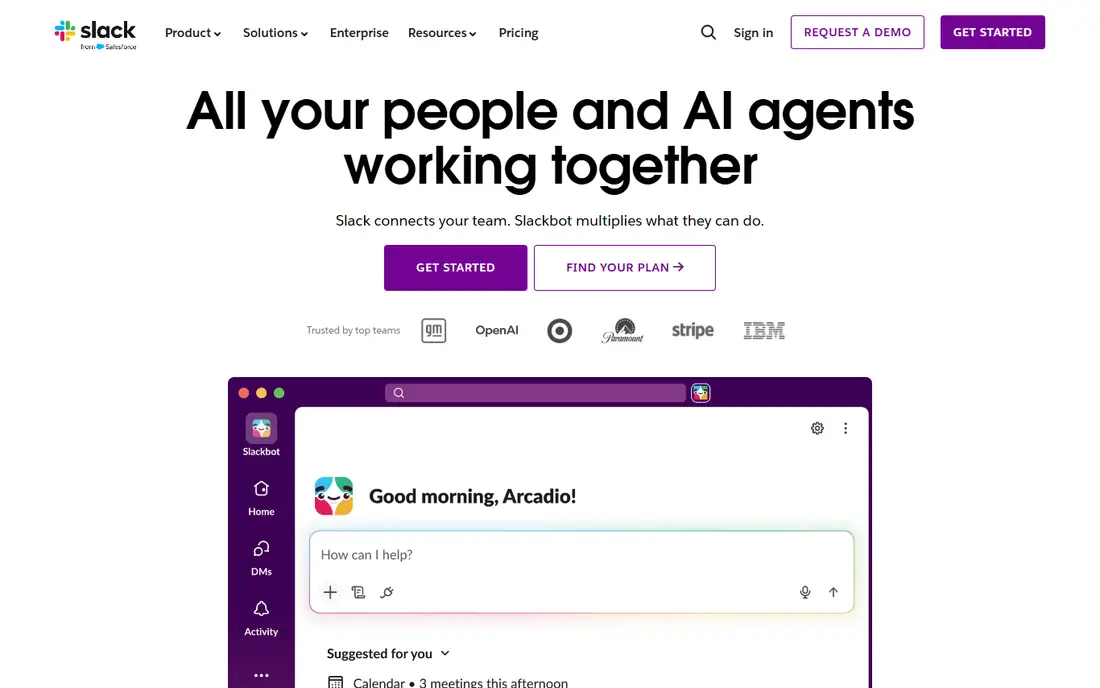
Slack is the collaboration tool employees ask for by name: fast, searchable channels where a company's work is visible, plus huddles for quick calls and a canvas for shared notes. Owned by Salesforce, it keeps adding AI summaries and CRM context for customer facing teams.
The trade off is excellence against duplication: most Slack customers also pay for an office suite whose chat they ignore. Slack fits companies that treat chat as the main workplace and will pay per seat for the best version of it, especially technology and media teams.
What we like- The best messaging experience in the category: channels, threads, huddles, and search that people genuinely like
- The largest integration library in business software
- Slack AI and Salesforce integration deepening for sales led companies
- Pro reported at $8.75 per user per month billed annually
Watch out for- Costs real money per seat beside your office suite
- Free plan limits message history to 90 days
- Notification overload is a culture problem Slack enables
#2Microsoft Teams
Best for: Microsoft 365 companies4.4/5 on
G2 (19,330 reviews, checked Oct 2026)
Visit microsoft.com
Starting price$4 per user per month
Free planYes
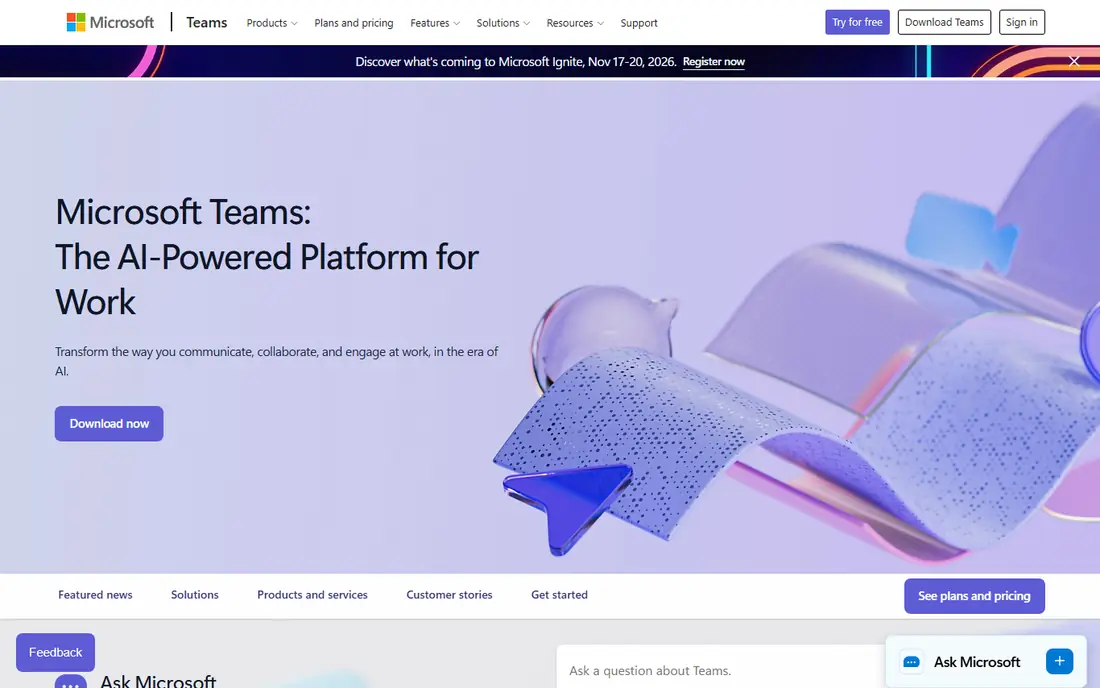
Teams is the default for the simple reason that most businesses already pay for it inside Microsoft 365: chat, channels, meetings for hundreds, file collaboration in Office formats, and telephony options, under enterprise compliance controls. For a Microsoft shop, every rival must beat free with the licence.
The trade off is breadth and price against feel. Teams fits the Microsoft 365 majority, regulated industries needing its compliance depth, and any company that refuses to pay twice for collaboration.
What we like- Included across Microsoft 365 business plans, and standalone Essentials is reported at $4 per user per month
- Chat, meetings, files, and Office editing in one licence
- Copilot AI features in the Microsoft stack
- Enterprise governance and compliance tooling
Watch out for- Interface density frustrates chat first users
- Feature sprawl across the suite
- The best experience assumes the full Microsoft estate
Starting price$7 per user per month
Free planNo
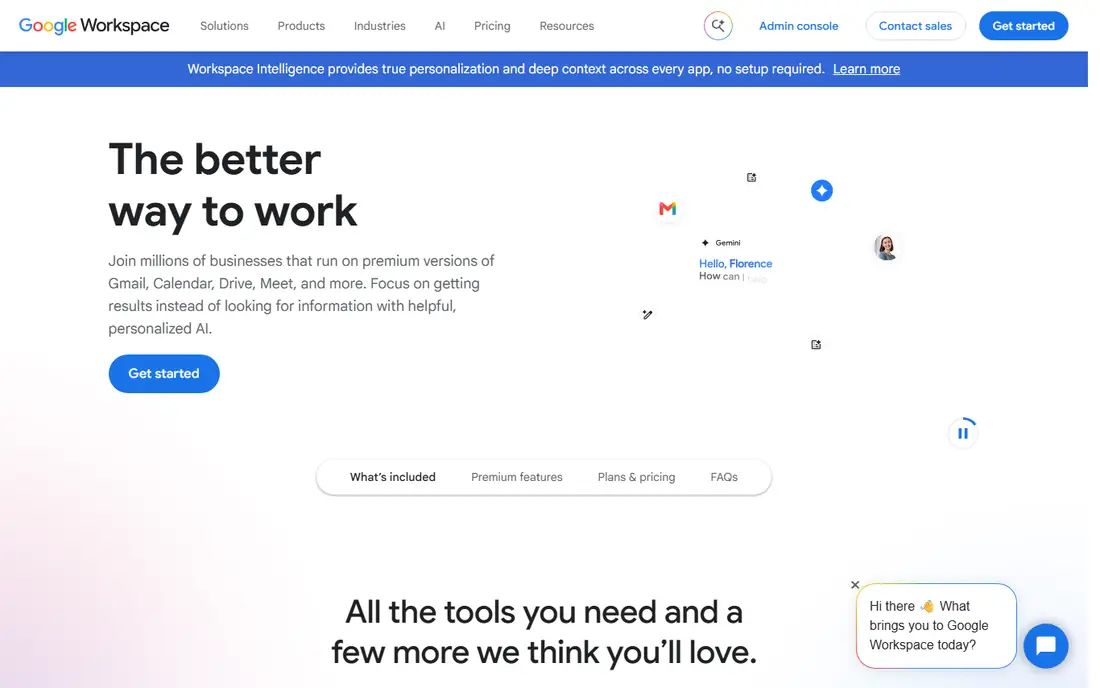
Google Workspace collaborates document first: the shared Doc with six cursors is still the category's best trick, and Chat and Meet cover messaging and meetings inside the same subscription that runs the company's email. Starter at a reported $7 per user per month is the entry point.
The trade off is document brilliance against chat depth. Workspace fits startups, agencies, and education led organisations whose work lives in documents and email more than in channels.
What we like- Docs, Sheets, and Slides collaboration remains the smoothest in the business
- Chat spaces and Meet are built into the suite people already use
- Business Starter reported at $7 per user per month
- Gemini AI woven through the apps
Watch out for- Chat is less loved than Slack for high volume teams
- Advanced admin and security features need higher tiers
- Organisations outside the Google estate gain less
Starting price$16.99 per user per month
Free planYes
Zoom Workplace is the meeting company's answer to the suite: the calls everyone trusts, with team chat, phone, whiteboard, and documents wrapped around them and an AI companion summarising meetings into the record. For meeting heavy cultures it is the centre that makes sense.
The trade off is meeting excellence against everyday messaging depth. Zoom fits distributed companies whose collaboration happens live, and organisations replacing desk phones with Zoom Phone in the same contract.
What we like- The meeting quality and reliability benchmark
- Workplace bundles chat, phone, whiteboard, and docs around it
- AI Companion included in paid plans
- Pro reported at $16.99 per user per month
Watch out for- Chat and docs trail Slack and Google as daily drivers
- The bundle's value depends on using phone and meetings heavily
- Free meetings cap at 40 minutes
#5Webex
Best for: Enterprise meetings and calling4.2/5 on
G2 (18,925 reviews, checked Oct 2026)
Visit webex.com
Starting priceSee website
Free planYes
Webex is the enterprise communications suite: meetings, cloud calling, messaging, and Cisco's room hardware under one contract, with the security posture large regulated organisations require. It rarely wins a startup's heart and often wins a bank's procurement.
The trade off is enterprise depth against lightness. Webex fits large organisations, especially Cisco networking and calling estates, that buy communications as infrastructure.
What we like- Cisco grade meeting, calling, and contact centre depth
- Strong in regulated and government settings
- Devices and room systems from the same vendor
- A free plan covers basic meetings
Watch out for- Pricing is plan and quote based beyond basics
- The app experience trails Zoom for casual users
- Value concentrates in Cisco estates
#6Discord
Best for: Communities and informal teams4.6/5 on
G2 (43 reviews, checked Oct 2026)
Visit discord.com
Starting priceFree
Free planYes
Discord collaborates the way gaming communities do: persistent voice rooms, fast text channels, and no ceremony. Startups, creators, open source projects, and student teams run real work on it because it is free and genuinely pleasant.
The trade off is culture against governance. The day a company needs legal hold, data residency, or access audits, Discord is disqualified. Discord fits informal teams and communities with no regulated data and no compliance officer.
What we like- Free with unlimited message history
- Voice channels people actually enjoy sitting in
- Threads, forums, and roles suit community shaped teams
- Zero procurement friction for small groups
Watch out for- No business compliance, retention, or admin controls worth the name
- Data and safety posture built for consumers
- Clients and auditors will ask questions
#7Rocket.Chat
Best for: Self hosted regulated chat4.2/5 on
G2 (374 reviews, checked Oct 2026)
Visit rocket.chat
Starting priceFree
Free planYes
Rocket.Chat exists for the organisations that cannot use Slack: governments, defence contractors, banks, and hospitals whose rules say internal messages stay on their own infrastructure. It delivers channels, video, and integrations under that control, free in its community form.
The trade off is control against convenience, chosen deliberately. Rocket.Chat fits regulated and sovereignty bound organisations that will trade user delight for custody of the data.
What we like- Open source and self hostable, including air gapped deployments
- Used by governments, defence, and healthcare organisations with data control duties
- Federation and omnichannel customer chat options
- Free community edition
Watch out for- Self hosting means your team runs and secures it
- Polish and app ecosystem trail Slack
- Advanced enterprise features sit in paid editions
#8Mattermost
Best for: Self hosted DevOps collaboration4.3/5 on
G2 (369 reviews, checked Oct 2026)
Visit mattermost.com
Starting priceFree
Free planYes
Mattermost is the self hosted collaboration platform engineering and security teams choose: chat wired into their pipelines and incident playbooks, running on infrastructure they control, including networks that never touch the internet.
The trade off is technical fit against general appeal. Mattermost fits DevOps, defence, and critical infrastructure teams whose collaboration tool must live inside their own perimeter.
What we like- Open source, self hosted chat built for technical teams
- Strong DevOps integrations, playbooks, and workflow features
- Deploys in classified and offline environments
- Free entry edition
Watch out for- Aimed at technical users
- Business wide adoption meets resistance
- Hosted convenience is not the point of the product
How we chose
We compared the collaboration platforms companies actually standardise on, separating the suites (Teams, Google Workspace), the chat and meeting leaders (Slack, Zoom, Webex), the informal free option (Discord), and the self hosted pair (Rocket.Chat, Mattermost), because the right comparison depends on your estate and your regulator. Pricing was recorded from vendor pages in October 2026; Webex is marked See website for its quote based plans above the basics. Every platform here covers chat, meetings, and file sharing at some level, so we judged centre of gravity rather than feature checklists.
Start with the estate you already pay for. A Microsoft 365 company should run a serious Teams pilot before buying Slack seats for everyone, and a Google Workspace company should test whether Chat covers the need, because the cheapest collaboration tool is the one in the existing licence. Choose the centre of gravity next: chat first teams pick Slack, document first teams pick Google, meeting first teams pick Zoom, and regulated teams start from custody with Rocket.Chat or Mattermost. Trial with one real department for a month and measure the habits, not the features: are decisions ending up written in searchable channels, or still dying in meetings and private messages? Whichever platform wins, set the conventions at rollout: channel naming, what belongs in chat against documents, and retention settings your legal duties require. Migration pain in this category is real and mostly social, so one decisive move beats a year of running two tools.
Frequently asked questions
Can we use Slack free for the whole company?
You can start, but the free plan keeps only 90 days of message history and limits integrations, which quietly deletes the company memory that makes chat valuable. Most companies that adopt Slack seriously land on Pro at a reported $8.75 per user per month.
Is Teams good enough, or do we need Slack?
For most Microsoft 365 companies, Teams is good enough and already paid for; its chat, meetings, and compliance cover the need. Slack wins where chat is the primary workplace and its experience and integrations justify a second subscription. Run the pilot with your heaviest chat users, not with IT.
What is the best free collaboration tool?
Discord for informal teams that need unlimited free chat and voice, Google and Microsoft free tiers for basic meetings and documents, and Rocket.Chat or Mattermost community editions for teams that must self host. Each free answer fails differently, so pick by your constraint.
How do self hosted tools compare on security?
They change who holds the risk. Self hosting Rocket.Chat or Mattermost keeps data under your control and satisfies residency and air gap duties, and makes your team responsible for patching and securing the platform. Cloud suites carry certifications your own deployment will not match; regulated buyers weigh both honestly.
Should collaboration chat replace email?
For internal work, mostly: chat is faster, visible, and searchable in a way email threads are not. Email survives for external parties, formal records, and anything legal. The suites here all assume that split, which is why Workspace and Microsoft 365 sell both in one licence.
How much does business collaboration cost per employee?
Anchors: Google Workspace Starter at a reported $7 per user per month, Slack Pro at $8.75, Zoom Workplace Pro at $16.99, Teams inside Microsoft 365 plans or $4 standalone. A typical company pays for one suite and, often, Slack on top, which is the duplication to question at renewal.
Sources we checked (0)
Is your product missing or out of date?
We review this list regularly. Vendors can request a listing, send updated pricing or ask about featured placement.

Shihab Mia · Founder, Rankite
Shihab has 5+ years in B2B and SaaS SEO. He writes Rankite's software buying guides from pricing pages, documentation and public user reviews. More about Shihab.