How we make this list: we compare pricing pages, product documentation and public user reviews. Rankite is independent; if a vendor ever pays for a featured spot, that listing is clearly labeled Partner.
Key takeaways
- Wave, Zoho Books and Found all offer genuinely free plans that cover invoicing, expense tracking and basic reports.
- FreshBooks ($23/month Lite) is the best pick for freelancers who bill clients; QuickBooks Solopreneur ($20/month) is best for tax-first users.
- The self-employed need Schedule C categories, quarterly tax estimates and mileage tracking, not payroll and inventory.
- Watch client caps and promo pricing: FreshBooks Lite allows only 5 billable clients, and most headline prices are short-term discounts.
The shortlist
| Tool |
Best for |
Starting price |
Free plan |
| FreshBooks |
Freelancers who live on invoicing |
$23/month (Lite) |
Free trial |
| Wave |
Zero-cost bookkeeping |
$0 (Starter) |
Yes |
| QuickBooks Solopreneur |
Tax-first self-employed users |
$20/month |
Free trial |
| Xero |
Self-employed planning to grow |
$25/month (Early) |
Free trial |
| Zoho Books |
Free books inside the Zoho ecosystem |
$0 (Free plan) |
Yes |
| Kashoo |
Simple books with unlimited users |
$20/month (TrulySmall) |
Free trial |
| Hurdlr |
Mileage and gig-worker taxes |
$9.99/month (Premium) |
Yes |
| Found |
Banking with bookkeeping built in |
$0 (core features) |
Yes |
The best bookkeeping software for self-employed
Starting price$23/month (Lite)
Free planFree trial (30-day)
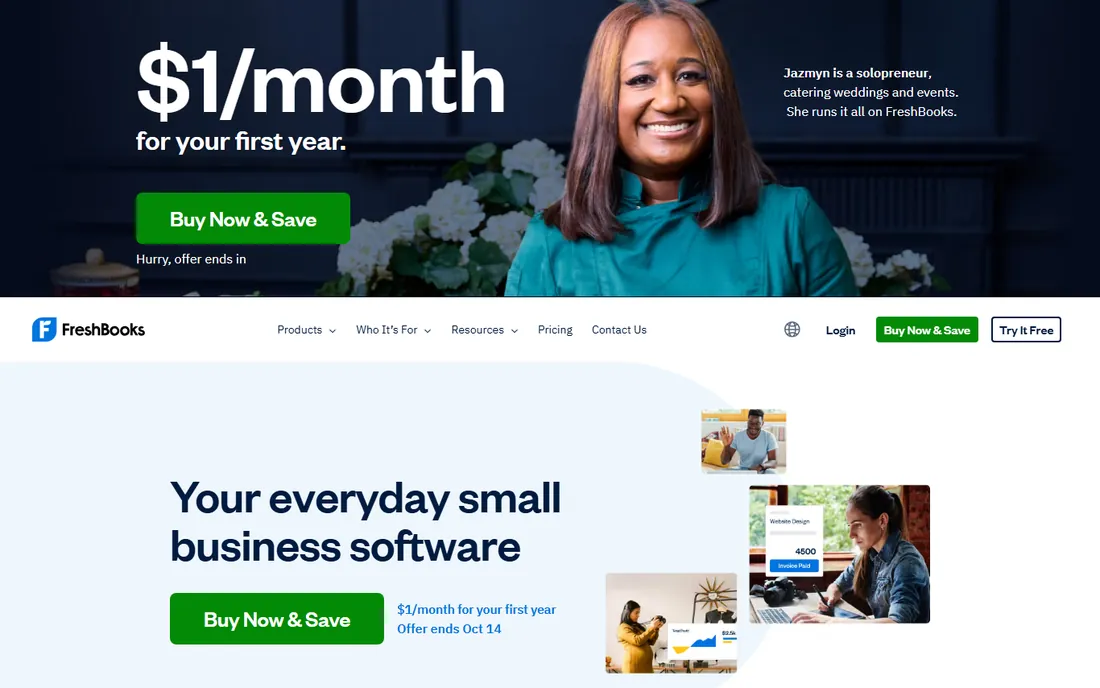
FreshBooks is built for people whose income arrives as invoices. Unlimited invoices on every plan, estimates, recurring billing, late-payment reminders and client portals cover the full getting-paid cycle, and time tracking feeds hours directly onto invoices without retyping. Lite costs $23 per month, Plus $43 and Premium $70, all with a 30-day free trial and annual discounts around 10%.
The number to check before anything else is the client cap. Lite allows 5 billable clients, and that ceiling is the most common reason people upgrade, not features. Every plan also includes a single user; extra team members cost $11 per month each. And the 90%-off prices plastered on the pricing page last three months, budget against list. For service freelancers with a manageable client list, nothing beats the invoicing experience.
What we like- Best invoicing workflow in the category
- Time tracking flows straight onto invoices
- 30-day trial, no card
Watch out for- Lite allows only 5 billable clients
- One user per plan
- Promo pricing hides the real rate
Starting price$0 (Starter)
Free planYes (Starter)
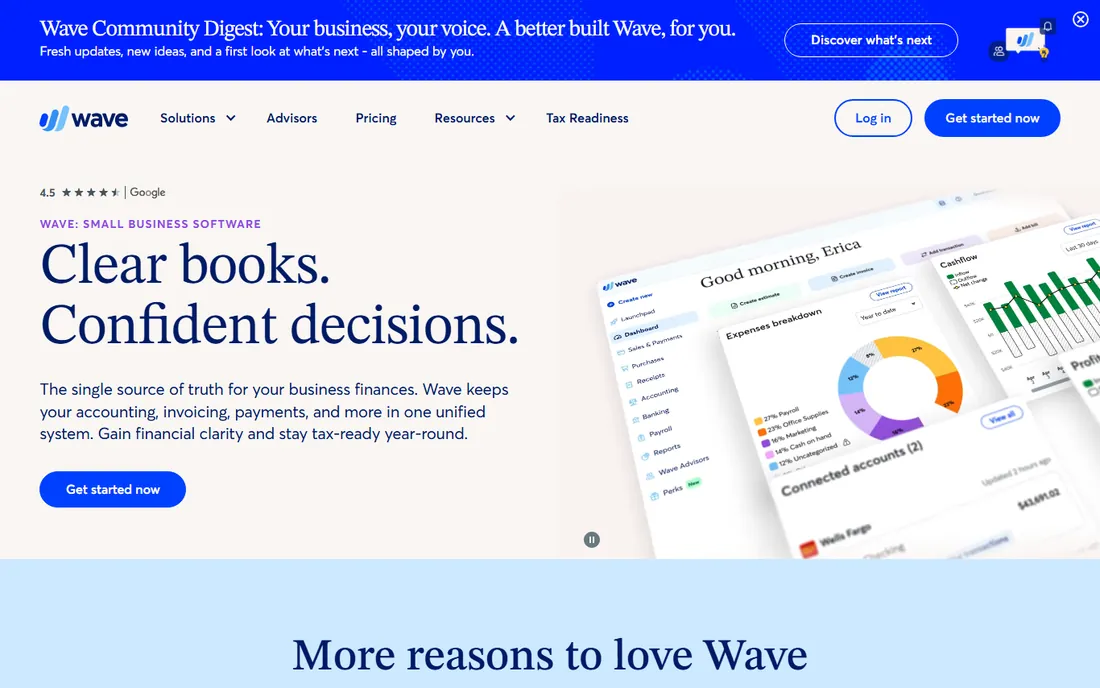
Wave remains the answer to "what is actually free." The Starter plan costs $0 and includes unlimited estimates, invoices, bills and double-entry bookkeeping records, plus profit and loss, balance sheet and cash flow reports, with no user seat limits. Pro at $19 per month adds automatic bank transaction imports, auto-categorization, receipt scanning and multi-user access, and it is genuinely worth it once manual entry eats your evenings.
The free tier is not a trick, but know where Wave earns its money: payment processing at 2.9% + $0.60 per card transaction, and payroll at $40 per month plus $6 per person. There is no inventory tracking and no time tracking, so product sellers and hourly billers should look elsewhere. For freelancers with simple books who transact mostly by invoice, Wave is the cheapest credible option in this entire list.
What we like- Unlimited invoices, bills and bookkeeping records for free
- No user limits
- Simple to set up
Watch out for- Automatic bank imports need $19/month Pro
- No inventory or time tracking
- US and Canada only for payroll
Starting price$20/month
Free planFree trial
QuickBooks Solopreneur (labeled Lite on some Intuit pages, same product at $20 per month) is the direct replacement for the retired QuickBooks Self-Employed. It sorts business from personal expenses, auto-tracks mileage by GPS, estimates quarterly taxes and hands everything to TurboTax at filing time. There is also a limited Free plan with caps on invoices and receipts if you want to try the basics at zero cost.
Compared with FreshBooks it is weaker on invoicing, and compared with QuickBooks Online it is not real double-entry accounting. Its job is narrower: keep a sole trader organized and tax-ready. For freelancers and contractors whose biggest accounting anxiety is estimated taxes and the Schedule C, Solopreneur does that one job well, with the accountant ecosystem of QuickBooks behind it if you ever need to upgrade.
What we like- Schedule C categories and quarterly tax estimates built in
- Automatic mileage tracking
- TurboTax handoff
Watch out for- Thin on real accounting features
- Single user
- Frequent price changes and promo churn
#4
Xero
Best for: self-employed owners who expect to hire and grow
Visit xero.com
Starting price$25/month (Early)
Free planFree trial
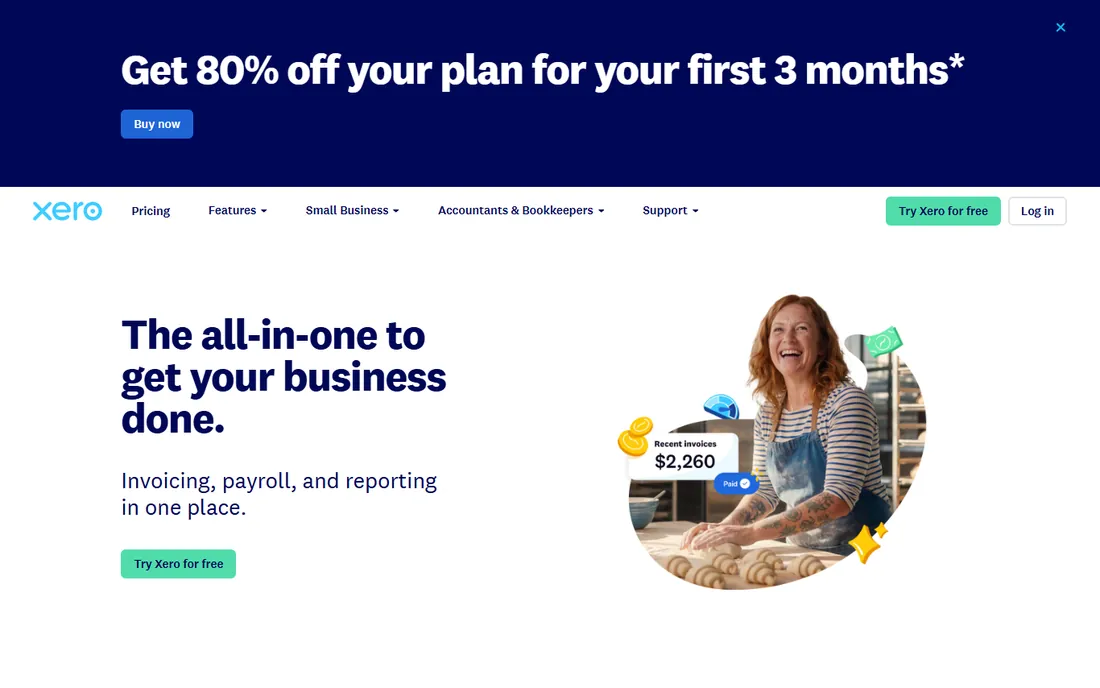
Xero is overkill for a pure freelancer today and exactly right for one who will be a small business tomorrow. Early costs $25 per month with a cap of 20 invoices and 5 bills, Growing $55 removes the caps, and Established $90 adds multi-currency and projects. The defining feature is unlimited users on every plan: your accountant, bookkeeper and future hires access the books at no extra cost, where QuickBooks charges per seat.
US payroll runs through Gusto as a paid add-on rather than natively, and fewer US accountants live in Xero than in QuickBooks, which can create friction at tax time. But the reconciliation experience is the best in small-business accounting, and the 1,000+ app marketplace means the platform grows with you. If growth is the plan, start here rather than migrating later.
What we like- Unlimited users on every plan
- Best-in-class bank reconciliation
- Huge app marketplace
Watch out for- Early caps invoices at 20 per month
- US payroll is a paid add-on
- Less familiar to US accountants

#5
Zoho Books
Best for: self-employed users already in the Zoho ecosystem
Visit zoho.com
Starting price$0 (Free plan)
Free planYes
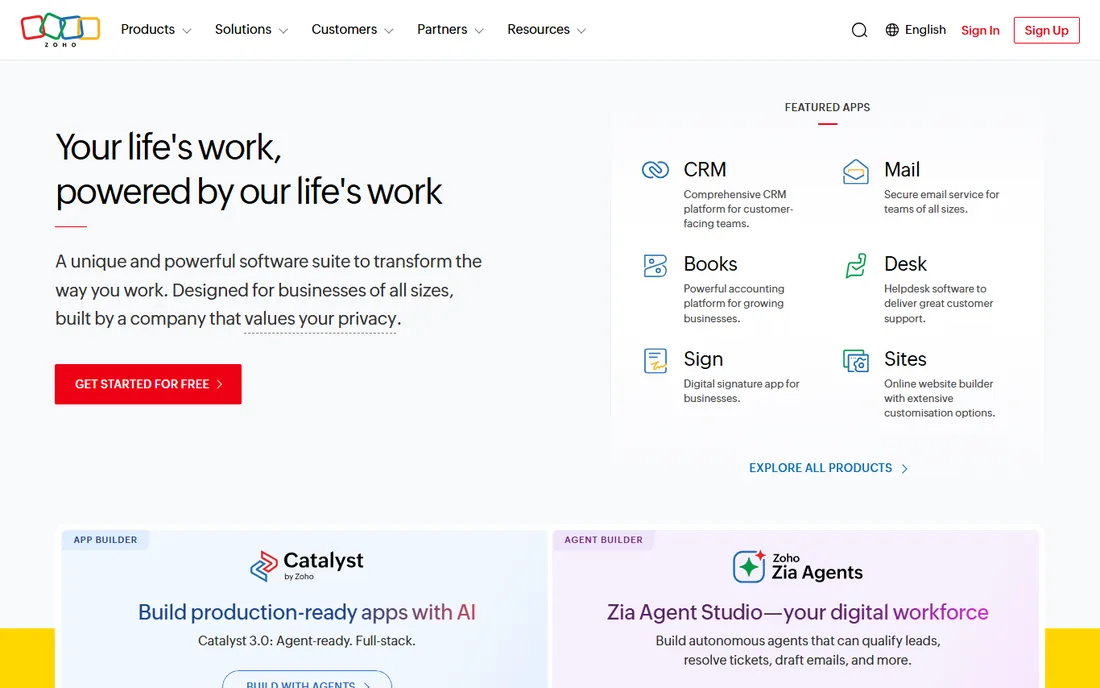
Zoho Books offers one of the most functional free plans in accounting: $0 for one user plus an accountant, up to 1,000 invoices a year, bank reconciliation, expense tracking and basic reporting, for businesses under a country-specific revenue threshold. Paid plans start at Standard, $20 per month or $15 on annual billing, adding bank feeds, more users and higher limits.
The pricing model is per organization rather than per seat, so occasional access for a partner or bookkeeper costs nothing extra. Forty-plus Zoho apps integrate natively, which makes Zoho Books the natural choice if you already use Zoho CRM, Inventory or Projects. US sales tax features lag QuickBooks, and fewer American accountants know the platform. For a freelancer who wants free, real accounting and may grow into the Zoho stack, it is hard to beat.
What we like- Generous permanent free plan
- Pricing per organization, not per user
- 40+ Zoho app integrations
Watch out for- Free plan lacks automated bank feeds
- Sales tax handling is thinner than QuickBooks
- Smaller US accountant network

#6
Kashoo
Best for: self-employed owners who want simple books without per-user fees
Visit kashoo.com
Starting price$20/month (TrulySmall Accounting)
Free planFree trial
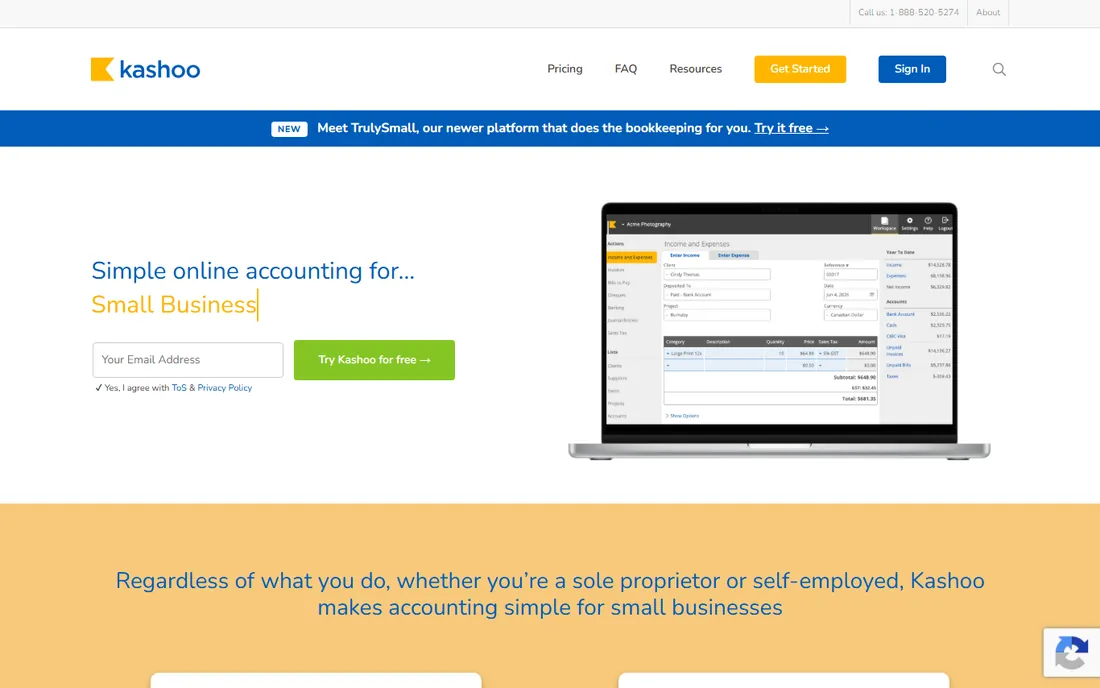
Kashoo targets the owner who does their own books and never wants to think about accounting. TrulySmall Accounting at $20 per month covers invoices, income and expense tracking, sales tax and essential reporting; the full Kashoo plan at $30 adds bank feeds, payments and project tracking. Every plan includes unlimited users, a real saving if a partner or bookkeeper needs access.
The trade-offs are connectivity and depth. The integration list is short, Square and Stripe for payments, a few payroll options, and there is no inventory or time tracking. Reviews are fewer than for the big names, and some users report bank-feed duplication issues. But for straightforward service businesses that want clean, simple books with no seat math, Kashoo's price and simplicity hold up.
What we like- Unlimited users
- Genuinely simple for non-accountants
- Multi-currency included
Watch out for- Thin integration ecosystem
- No inventory or time tracking
- Smaller review footprint

#7
Hurdlr
Best for: gig workers, drivers and anyone deducting mileage
Visit hurdlr.com
Starting price$9.99/month (Premium)
Free planYes (manual tracking)
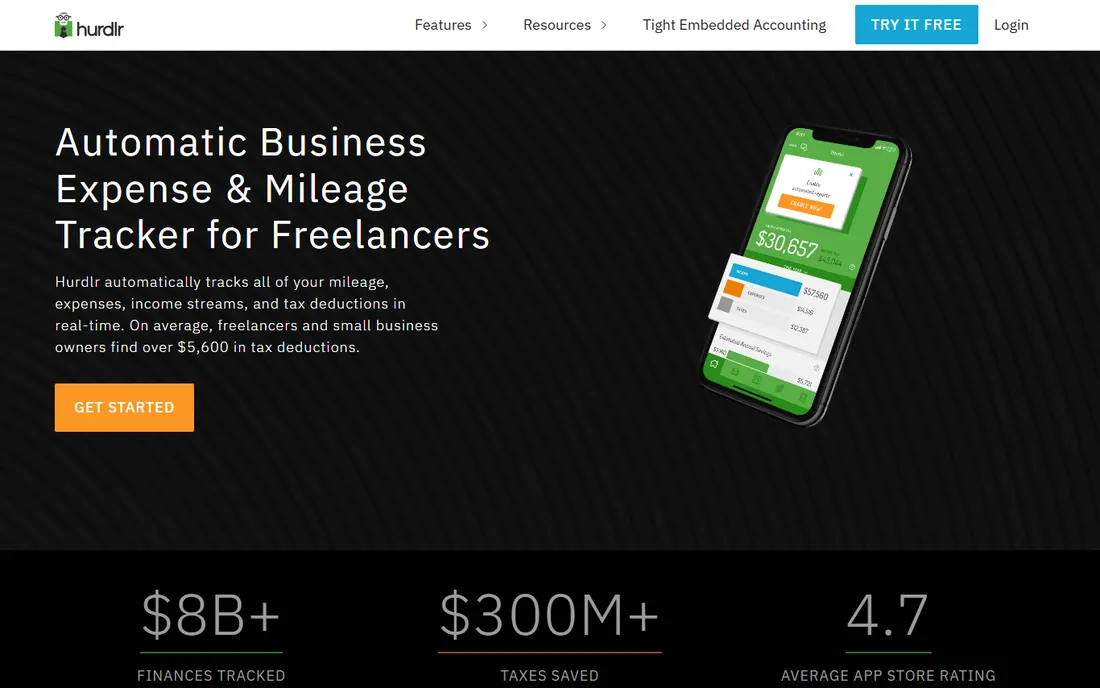
Hurdlr is not really bookkeeping software, it is the tax app for people the tax code was not designed around. Automatic mileage tracking, auto expense and income tracking, and real-time federal, state and self-employment tax estimates run in one mobile app built for rideshare drivers, delivery couriers, realtors, Airbnb hosts and freelancers with platform income. Premium costs $9.99 per month or $99.99 per year; a free tier covers manual tracking.
It connects to Uber, Square, FreshBooks, Stripe, PayPal and thousands of banks to log income automatically. What it will not do is run your full books: invoicing is basic and there is no real ledger. The winning setup for many self-employed workers is Hurdlr for mileage and tax estimates alongside Wave or Zoho Books for the actual accounting. At ten dollars a month, the deductions it surfaces usually pay for it many times over.
What we like- Automatic mileage tracking with real-time tax estimates
- Connects to Uber, Stripe, PayPal and banks
- Gig-work DNA
Watch out for- Not a full accounting system
- Invoicing is basic
- Best as a companion app, not a ledger

#8
Found
Best for: self-employed workers who want banking and books in one app
Visit found.com
Starting price$0 (core features)
Free planYes
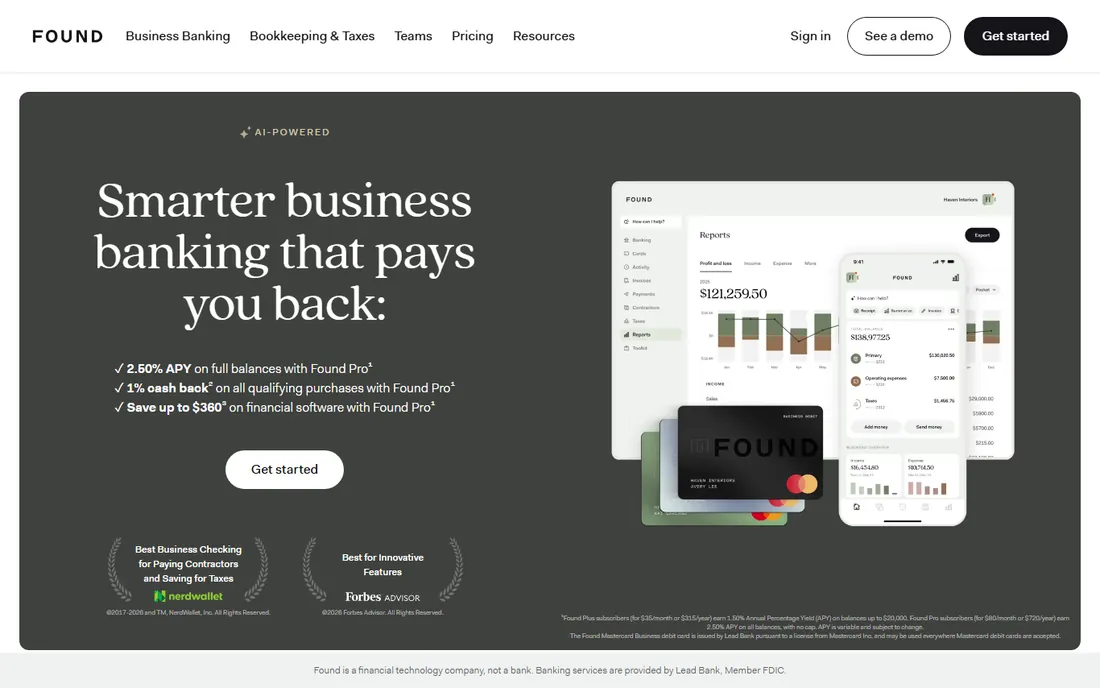
Found merges the business bank account with the bookkeeping. The core product is free: a business checking account with no monthly fees or minimums, automatic expense tracking, mileage tracking, invoicing, quarterly tax estimates and an auto-generated Schedule C form. Found Plus at $19.99 per month adds advanced bookkeeping features, custom rules and tax payments in the app.
Found is a financial technology company, not a bank; banking services run through a partner bank with FDIC insurance. It is not a substitute for full accounting software if you need inventory, payroll or an accountant's general ledger. But for freelancers and contractors who want one app where money lands, gets categorized and gets set aside for taxes, Found removes the most tedious parts of self-employed finance.
What we like- Business banking with no monthly fees
- Automatic expense tracking and write-off detection
- Auto-generated Schedule C
Watch out for- It is a fintech, not a bank
- Advanced bookkeeping needs Plus at $19.99/month
- No payroll
General accounting software assumes employees, inventory and departments. Self-employed bookkeeping has a different checklist: Schedule C expense categories, quarterly estimated tax calculations, mileage tracking, separating business from personal spending, and a clean handoff to a tax preparer or TurboTax. Tools like QuickBooks Solopreneur, Hurdlr and Found are built around this checklist; general ledgers bolt it on.
The second difference is users. Most self-employed people are the entire finance department, plus maybe an accountant at tax time. Per-seat pricing penalizes that model; unlimited-user or per-organization pricing (Xero, Zoho Books, Kashoo, Wave) fits it. Before comparing features, check the user math, it decides the real cost for a one-person business.
Free vs. paid: where the line sits
Three tools here are genuinely free: Wave Starter, Zoho Books Free and Found's core product. All three cover invoicing, expense tracking and basic reports at $0, which is enough for many freelancers. The upgrade triggers are consistent: automatic bank feeds (Wave Pro $19, Zoho Standard $20), advanced bookkeeping rules (Found Plus $19.99), and invoicing depth (FreshBooks $23).
The honest test is hourly value. If manual categorization costs you two hours a month and your time bills at $75, a $19 automation plan pays for itself eleven times over. The tools to avoid are the ones charging small-business prices for freelancer needs: QuickBooks Online Simple Start at $38 and Xero Growing at $55 make sense only when you are hiring or outgrowing the self-employed tier.
Frequently asked questions
What is the best free bookkeeping software for self-employed workers?
Wave Starter is the strongest free option: unlimited invoices, bills and bookkeeping records at $0. Zoho Books Free adds 1,000 invoices a year with a real double-entry ledger. Found's core product is free if you want banking and bookkeeping in one app. All three stay free permanently, not as trials.
How much should a self-employed person pay for bookkeeping software?
Most freelancers need $0 to $25 per month. Free plans from Wave, Zoho Books and Found cover the basics; FreshBooks Lite at $23 and QuickBooks Solopreneur at $20 are the standard paid choices. Pay more only when you hire, add inventory or need multi-currency.
Is FreshBooks or QuickBooks better for freelancers?
FreshBooks is better for freelancers who bill clients: its invoicing, estimates and time tracking are the best in the category. QuickBooks Solopreneur is better for tax-focused users who want mileage tracking, quarterly estimates and a TurboTax handoff. Many freelancers use FreshBooks for invoicing and a tax app like Hurdlr alongside it.
Do I need bookkeeping software if I am self-employed with simple income?
You need records, whether software or spreadsheet. The IRS expects documented income and expenses for Schedule C, and quarterly estimated taxes require knowing your numbers. A free plan from Wave or Zoho Books gives you that structure at zero cost, and it takes less time than a spreadsheet once bank feeds are on.
What is the difference between QuickBooks Solopreneur and QuickBooks Self-Employed?
QuickBooks Self-Employed was retired by Intuit; QuickBooks Solopreneur is its replacement. Solopreneur costs $20 per month, tracks mileage automatically, separates business and personal expenses, estimates quarterly taxes and hands off to TurboTax. Former Self-Employed users migrate to Solopreneur.
Can bookkeeping software file my taxes?
Most bookkeeping tools prepare your numbers but do not file. QuickBooks Solopreneur integrates with TurboTax for filing, Found auto-generates your Schedule C form, and FreeAgent files UK Self Assessment. For US federal filing, expect to use the software's reports inside a tax product or hand them to an accountant.
Sources we checked (16)
- https://www.appventory.com/blog/how-much-does-freshbooks-cost-2026-plans-pricing-hidden-costs-full-breakdown
- https://cpaadvisor.us/articles/freshbooks-review/
- https://www.nerdwallet.com/business/software/reviews/wave-accounting
- https://www.itqlick.com/wave-accounting/pricing
- https://solobuild.io/articles/quickbooks-solopreneur-vs-self-employed
- https://earnly.ai/quickbooks-self-employed-alternatives
- https://ifeeltech.com/blog/xero-accounting-software-review
- https://www.flozic.ai/blog/reviews/xero-review
- https://crm-masters.com/top-products-zoho-pricing-guide/
- https://www.topconsumerreviews.com/best-accounting-software/reviews/zoho-books.php
- https://work-management.org/accounting/kashoo-review/
- https://www.topconsumerreviews.com/best-accounting-software/reviews/kashoo
- https://www.hurdlr.com/self-employed-taxes
- https://play.google.com/store/apps/details?id=app.hurdlr.com&hl=en&gl=us
- https://found.com/willa
- https://www.finder.com/business-banking/found-business-banking
Is your product missing or out of date?
We review this list regularly. Vendors can request a listing, send updated pricing or ask about featured placement.

Shihab Mia · Founder, Rankite
Shihab has spent more than a decade helping SaaS and e-commerce brands grow through search. He writes Rankite's software buying guides from pricing pages, documentation and public user reviews. More about Shihab.