How we make this list: we compare pricing pages, product documentation and public user reviews. Rankite is independent; if a vendor ever pays for a featured spot, that listing is clearly labeled Partner.
Key takeaways
- Aplos is the most popular church-specific accounting tool, built around fund accounting from the ground up.
- PowerChurch and Shelby Systems serve larger congregations that need membership, contributions, and payroll in one system.
- Icon Systems and Church Windows cover the basics well for small churches that cannot justify a big subscription.
- Wave and QuickBooks work for very small churches, but neither understands fund accounting, so reports need manual work.
Quick comparison
| Tool | Best for | Starting price | Free plan |
|---|
 Aplos Aplos | churches wanting true fund accounting | See website | Free trial |
 PowerChurch PowerChurch | larger churches, all-in-one | See website | No |
 Shelby Systems Shelby Systems | mid-size to large churches | See website | No |
 Icon Systems Icon Systems | small churches on a budget | See website | No |
 Breeze Breeze | churches wanting simple ChMS plus giving | See website | No |
 Church Windows Church Windows | small churches, desktop simplicity | See website | No |
 Wave Wave | tiny churches, free accounting | Free | Yes |
 QuickBooks QuickBooks | churches with an accountant already | See website | Free trial |
Is your product missing or out of date?
We review this list regularly. Vendors can request a listing, send updated pricing or ask about featured placement.
The best bookkeeping software for churches
Starting priceSee website
Free planFree trial
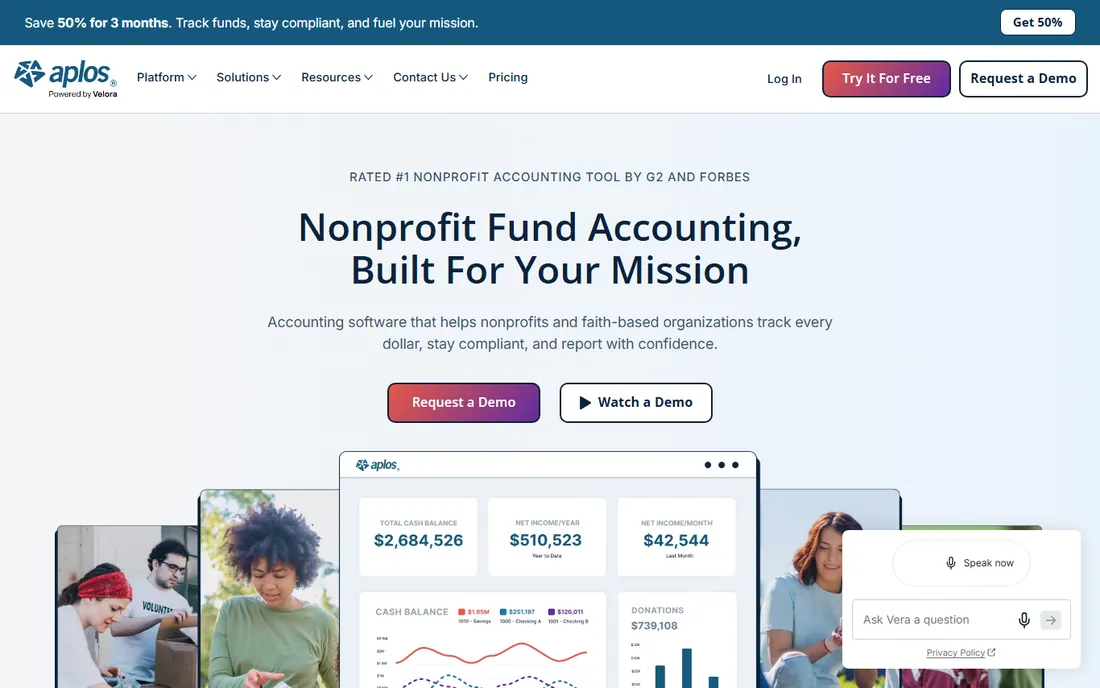
Aplos is built specifically for nonprofits and churches, and the difference shows in the accounting model. Instead of forcing church finances into a for-profit chart of accounts, Aplos uses fund accounting: designated gifts, missions funds, and building campaigns each get their own tracked balance. When a donor asks where their designated gift went, you can answer in seconds.
Donation tracking is integrated, so contributions flow into the books without re-entry, and year-end donor statements generate cleanly. The financial reports are designed for church boards and finance committees, with plain-language statements that do not require an accounting degree to read.
It costs more than Wave or a spreadsheet, and the entry tier has limits that growing churches bump into. But for treasurers who dread the annual audit, fund accounting done right is worth the subscription.
What we like- Fund accounting built in
- Donation tracking and donor statements
- Board-ready financial reports
Watch out for- Costs more than generic tools
- Some advanced features need higher tiers
Starting priceSee website
Free planNo
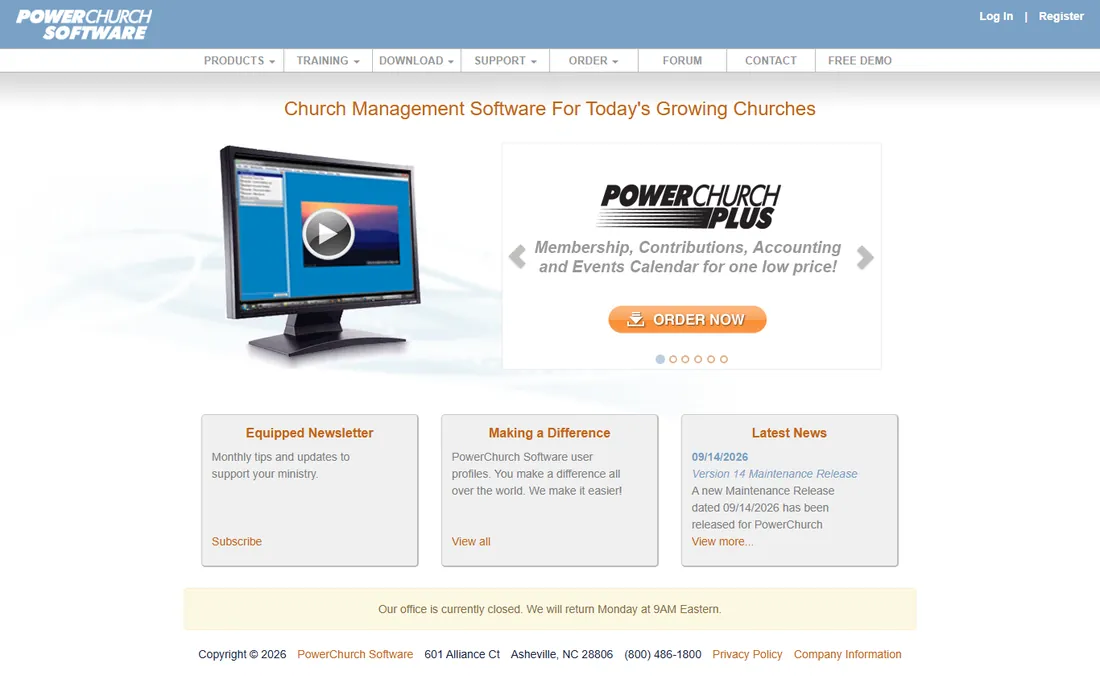
PowerChurch takes the all-in-one route: membership records, contribution tracking, fund accounting, payroll, and even event scheduling in a single system. For churches that want one database instead of five disconnected tools, that consolidation is the appeal.
The accounting handles funds, budgets, and payroll with the specifics churches need, like clergy housing allowances. Contribution records tie directly to member profiles, so the office can see giving history, print statements, and manage pledges without exporting anything.
The interface has not kept pace with modern web apps, and the initial setup asks a lot of questions. But PowerChurch sells a version you can buy outright rather than rent forever, which appeals to churches tired of subscriptions. It rewards churches willing to invest setup time with a system that covers nearly everything.
What we like- Membership, contributions, and accounting in one
- One-time purchase option
- Decades of church-specific development
Watch out for- Interface feels dated
- Setup takes effort
Starting priceSee website
Free planNo
Shelby Systems, part of the Ministry Brands family, serves churches that have outgrown simple tools. ShelbyFinancials handles fund accounting, accounts payable, and payroll, while the broader Shelby platform adds membership, giving, and check-in. Multi-campus churches can consolidate finances across locations.
The reporting is a strong point. Finance teams get the fund-level detail auditors want, and leadership gets dashboards that summarize giving trends and budget health. The system is built for churches with dedicated financial staff rather than a volunteer treasurer.
That positioning shows in the buying process. Pricing is quote-based, implementation takes planning, and small churches will find it heavy. But for a church with a business administrator and multiple campuses, Shelby is built exactly for that complexity.
What we like- Deep church management plus financials
- Strong reporting
- Scalable for multi-campus churches
Watch out for- Enterprise-style pricing
- Implementation is a project
Starting priceSee website
Free planNo
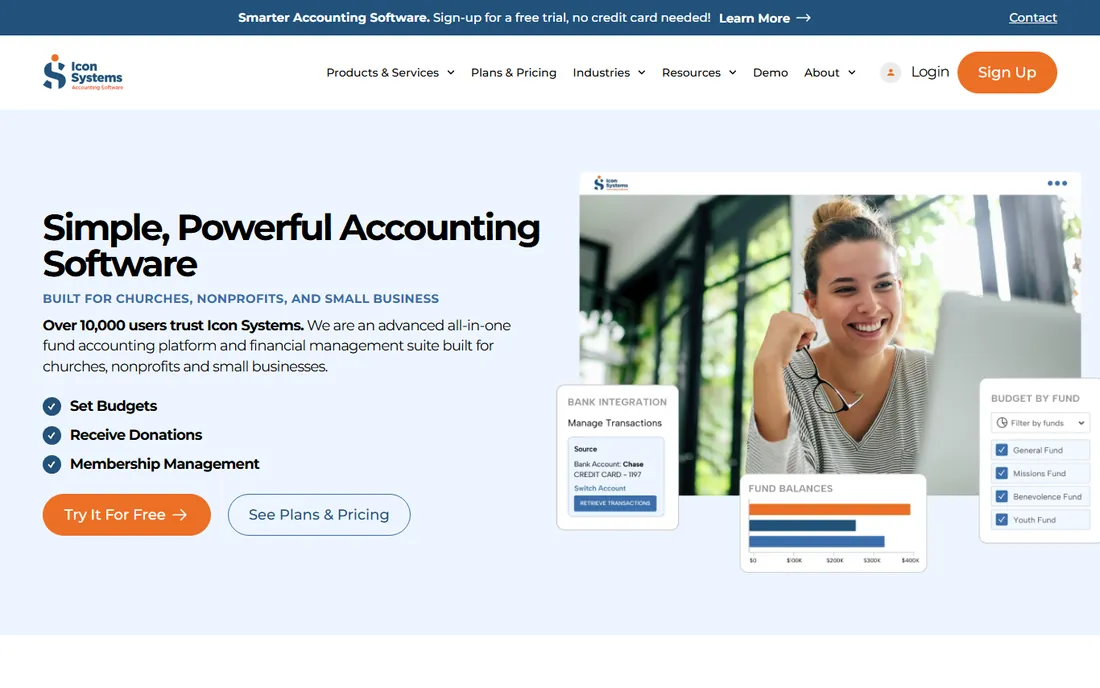
Icon Systems (formerly IconCMO) makes church management software aimed squarely at small and mid-size congregations. The accounting module handles fund accounting basics, contributions, and the reports a small church board needs, without the enterprise overhead.
The practical advantage is simplicity. A volunteer treasurer can learn the system in an afternoon, record weekly offerings, track designated funds, and produce monthly statements. Contribution records generate donor statements at year end with minimal fuss.
You will not find the integration ecosystem of the bigger platforms, and power users may find the reports rigid. But for a church of a few hundred members that needs correct fund accounting at a modest price, Icon Systems hits the mark.
What we like- Affordable church-specific accounting
- Contribution management included
- Simple to learn
Watch out for- Fewer integrations
- Reporting less flexible than bigger tools
Starting priceSee website
Free planNo
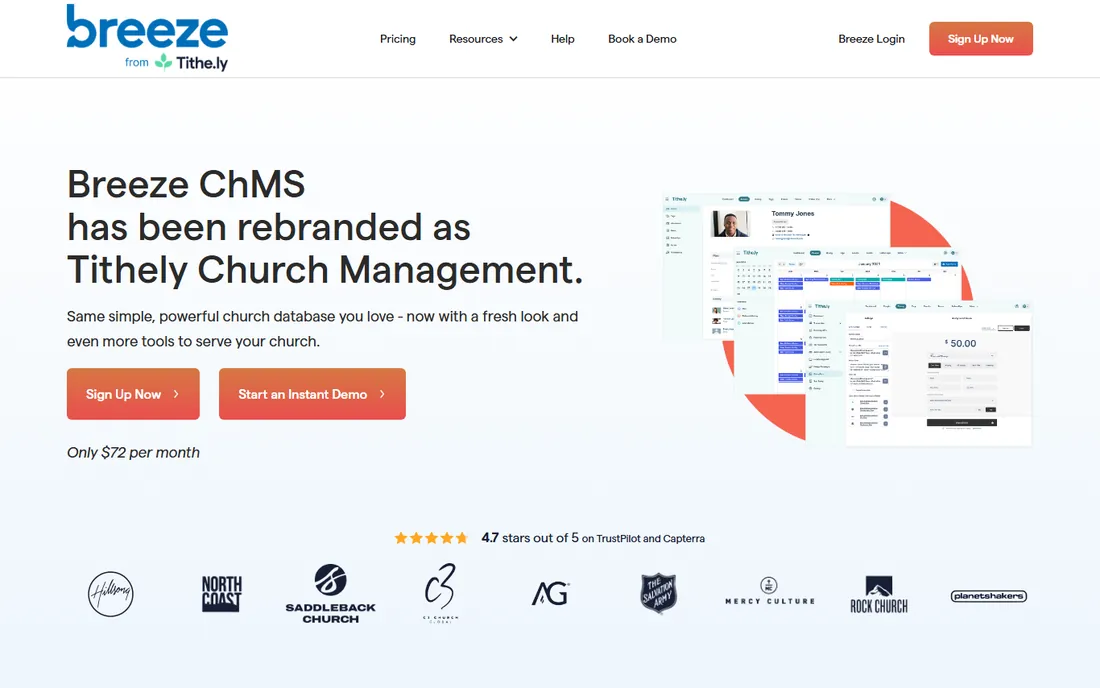
Breeze is a church management system first, with enough financial features to handle donations and simple budgets. Churches love it because volunteers actually use it: the interface is clean, the learning curve is nearly flat, and support has a strong reputation.
Giving management is the financial core. Online donations, contribution records, and donor statements work smoothly, and the people database keeps everything connected to member profiles. For churches whose finances are mostly "track the offerings and pay the bills," that is sufficient.
It is not a full accounting system. There is no real fund accounting, no accounts payable workflow, and no payroll. Churches with complex finances will pair Breeze with Aplos or QuickBooks. But as the people-and-giving layer, Breeze is one of the easiest tools a church can adopt.
What we like- Extremely easy to use
- Flat pricing
- Good people and giving management
Watch out for- Accounting is basic
- Not a full fund accounting system
Starting priceSee website
Free planNo
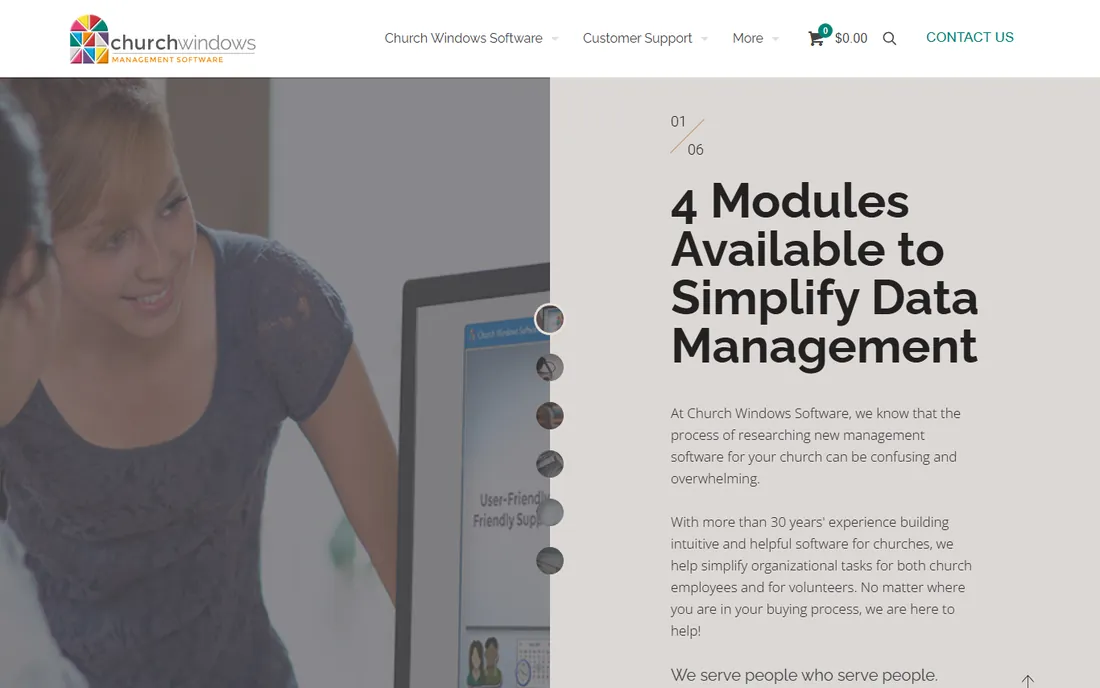
Church Windows has served small churches for years with a modular approach: buy the accounting module, the contributions module, or the membership module as you need them. Each piece does its job without overwhelming a volunteer treasurer.
The accounting module covers the essentials: chart of accounts, budgeting, check writing, and financial reports formatted for church boards. Contributions tracking handles donor records and statements. Everything is designed around how small churches actually operate.
The main caveat is that it is traditional desktop software rather than a modern cloud app. Remote access and multi-user setups need more IT effort than web-based alternatives. For a small church with one office computer and a treasurer who prefers familiar software, that trade is often fine.
What we like- Simple modular design
- Affordable
- Built only for churches
Watch out for- Desktop software, not cloud
- Dated look
Starting priceFree
Free planYes
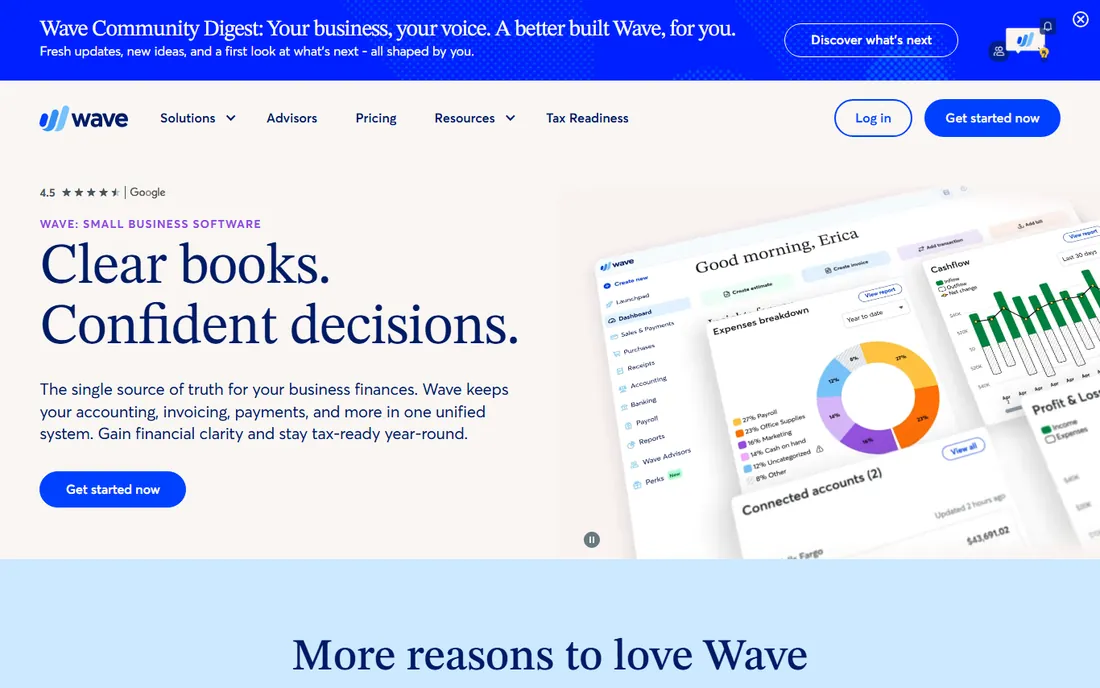
Wave is free accounting software that works fine for very small churches with simple finances. Recording offerings, paying bills, and producing basic profit-and-loss reports costs nothing, which matters when the budget is tight.
The interface is friendly to non-accountants, and the mobile app makes receipt capture easy. For a church plant or a congregation under a hundred members with one bank account and no designated funds, Wave covers the practical needs.
The structural problem is fund accounting. Wave is built for small businesses, so tracking designated gifts separately requires workarounds like separate accounts or classes. As soon as the church has a building fund or missions designations, a church-specific tool will save headaches. Use Wave as a starting point, not a permanent home for growing finances.
What we like- Free accounting and invoicing
- Easy for non-accountants
- Good receipt scanning
Watch out for- No fund accounting
- Limited payroll availability
Starting priceSee website
Free planFree trial
QuickBooks ends up in many churches because the treasurer's accountant already uses it. The reporting is strong, payroll is well supported, and every bookkeeper in town knows the interface. If your church hires outside accounting help, QuickBooks makes their job easy.
The catch is that QuickBooks thinks in profit and loss, not funds. Churches simulate fund accounting with classes or separate accounts, which works but requires someone who understands both QuickBooks and church finance to set up correctly. Done wrong, the reports mislead the board.
For churches with professional accounting support, QuickBooks is a reasonable choice. For volunteer-run finances, a church-specific tool like Aplos will produce correct fund reports with far less expertise required.
What we like- Every accountant knows it
- Strong reporting and payroll
- Huge integration ecosystem
Watch out for- Not built for fund accounting
- Easy to set up wrong for a church
How we chose
We focused on tools churches actually use to manage money, based on vendor documentation, church technology discussions, and public reviews. We prioritized true fund accounting because that is the feature that separates church bookkeeping from small business bookkeeping, and we included generic tools like Wave and QuickBooks because many small churches use them. Pricing is quote-based for several vendors, so we point to vendor pages for current numbers.
What to look for before you buy
Fund accounting is the first question. If your church receives designated gifts, runs a building campaign, or needs to show donors that restricted money stayed restricted, you need software that tracks funds natively. Generic accounting tools can approximate this, but the workarounds break down as complexity grows.
Second, consider who does the books. A volunteer treasurer needs simplicity and clear reports; a church with a business administrator can handle a more powerful system. Match the tool to the skill of the person using it every week, not the person buying it.
Third, think about the full picture. Contributions, membership, and accounting overlap heavily in a church. An all-in-one system like PowerChurch or Shelby reduces double entry, while a best-of-breed approach (Breeze plus Aplos, for example) gives you the best tool for each job at the cost of integration effort.
Common mistakes churches make with bookkeeping software
The most expensive mistake is letting a well-meaning volunteer set up QuickBooks like a business. Months later, the board discovers the financial reports do not reflect restricted funds, and fixing it means rebuilding the chart of accounts.
Another common error is buying for the church you hope to become. A 100-member congregation does not need Shelby's multi-campus consolidation, and the unused complexity just slows down the treasurer. Buy for the church you are, with room to grow one step.
Finally, churches forget the audit trail. Who entered that transaction, when, and why? Whatever tool you choose, make sure it logs changes and restricts who can edit closed periods. Your future auditor will thank you.
Frequently asked questions
What is fund accounting and why do churches need it?
Fund accounting tracks money by its purpose or restriction, not just by income and expense. When a donor gives to the building fund, fund accounting keeps that money visibly separate from general offerings. Churches need it because donors and auditors expect proof that designated gifts were used as intended.
Can a church just use QuickBooks?
Yes, and many do, especially with professional accounting help. QuickBooks can approximate fund accounting with classes or separate accounts. The risk is that a volunteer setup often gets it wrong, producing reports that mislead the board. Church-specific tools handle funds correctly by default.
How much should a church expect to pay?
Small church tools run from free (Wave) to modest monthly subscriptions for church-specific software. Mid-size church platforms are typically quote-based and cost more. The real cost is often the treasurer's time, so a tool that produces board reports in minutes can justify its price quickly.
Do these tools handle clergy payroll and housing allowances?
The church-specific platforms (Aplos, PowerChurch, Shelby, Icon Systems) understand clergy tax treatment including housing allowances. Generic tools like Wave and QuickBooks can process the payroll but need correct configuration. If your church has pastoral staff, this is worth confirming with each vendor.
What about online giving?
Most church platforms either include online giving or integrate with a giving provider. Breeze includes it natively, and Aplos, Shelby, and others connect to common giving tools. Compare the processing fees, not just the software price, since fees apply to every donation.
Sources we checked (8)
- https://www.aplos.com/
- https://www.powerchurch.com/
- https://www.shelbyinc.com/
- https://www.iconsystemsinc.com/
- https://www.breezechms.com/
- https://www.churchwindows.com/
- https://www.waveapps.com/
- https://quickbooks.intuit.com/
Is your product missing or out of date?
We review this list regularly. Vendors can request a listing, send updated pricing or ask about featured placement.

Shihab Mia · Founder, Rankite
Shihab has spent more than a decade helping SaaS and e-commerce brands grow through search. He writes Rankite's software buying guides from pricing pages, documentation and public user reviews. More about Shihab.