How we make this list: we compare pricing pages, product documentation and public user reviews. Ratings come from G2, Capterra or Trustpilot, with the date we checked them.
Key takeaways
- Blue green deployment keeps the old version live until the new version passes checks, so rollback is a traffic switch rather than a redeploy.
- Kubernetes teams get the most direct blue green support from Argo Rollouts and Flagger, while Spinnaker covers more clouds and older workloads.
- Harness, Octopus Deploy, and Google Cloud Deploy suit teams that want a managed service instead of running a delivery platform themselves.
- The main trade-off is control against operating cost: open source tools are free to use but need staff time, while hosted tools charge for convenience.
- Before choosing, confirm which targets the tool supports, how it checks a new release, and how quickly it can switch traffic back.
Quick comparison
| Tool | Best for | Starting price | Free plan |
|---|
 Argo Rollouts | Kubernetes blue green releases | Free | Yes |
 Spinnaker | Multi-cloud delivery at scale | Free | Yes |
 Harness | Enterprise delivery with verification | See website | Free trial |
 Octopus Deploy | Mixed Kubernetes, cloud, and on-prem releases | See website | Free trial |
 Google Cloud Deploy | Google Cloud delivery pipelines | See website | Free trial |
 Azure DevOps | Microsoft stack delivery pipelines | See website | Free trial |
 Flagger | Lightweight Kubernetes progressive delivery | Free | Yes |
 Jenkins | Scripted pipelines on existing infrastructure | Free | Yes |
 Codefresh | GitOps delivery for Kubernetes teams | See website | Free trial |
Is your product missing or out of date?
We review this list regularly. Vendors can request a listing, send updated pricing or ask about featured placement.
Starting priceFree
Free planYes
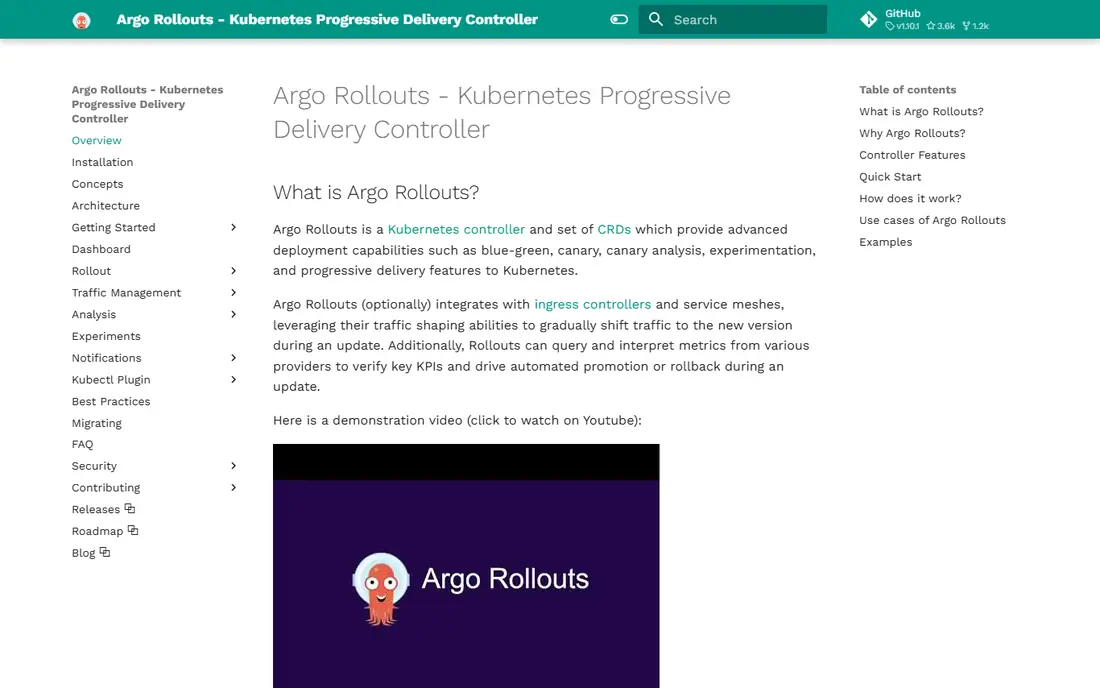
Argo Rollouts replaces a standard Kubernetes Deployment with a Rollout resource that understands blue green releases as a first-class strategy. The new version runs beside the old version, and a preview service can send test traffic to it while production traffic stays on the stable version. When checks pass, promotion moves production traffic to the new version in one controlled step.
The strength of this design is how it connects traffic control with evidence. Rollouts can query Prometheus, Datadog, New Relic, and other metric providers, then pause, promote, or roll back based on the results. That makes it a strong fit for teams already running Kubernetes and Argo CD. The catch is scope: it does not deploy virtual machines, serverless functions, or non-Kubernetes targets, so teams with mixed estates need another tool beside it.
What we like- Native Kubernetes blue green and canary support
- Metric-based promotion and rollback
- Wide ingress and service mesh support
Watch out for- Kubernetes only
- Needs Argo CD or another tool for full GitOps workflows
#2Spinnaker
Best for: Multi-cloud delivery at scale3.9/5 on
G2 (22 reviews, checked Oct 2026)
Visit spinnaker.io
Starting priceFree
Free planYes
Spinnaker comes from a long history of large-scale delivery at Netflix, and that history still shapes the product. Pipelines can deploy across AWS, Google Cloud, Azure, Kubernetes, and other targets, with blue green (called red/black in Spinnaker) as a built-in strategy. Manual judgement stages, automated canary analysis, and pipeline templates give platform teams a lot of control over how releases move.
That control comes with a real operating burden. Spinnaker is a set of services rather than a single application, and running, upgrading, and securing it takes dedicated platform time. Small teams often find that cost hard to justify. For a large organisation with several clouds and strict release gates, however, few open source tools match its breadth.
What we like- Built-in blue green and canary strategies
- Multi-cloud targets
- Mature pipeline and approval controls
Watch out for- Complex to install and operate
- User interface feels dated beside newer platforms
#3Harness
Best for: Enterprise delivery with verification4.6/5 on
G2 (336 reviews, checked Oct 2026)
Visit harness.io
Starting priceSee website
Free planFree trial
Harness positions delivery as a managed service with verification built in, rather than as a set of scripts a team must maintain. A pipeline can deploy a new version to a green environment, run health checks and compare metrics against the previous version, and roll back automatically when the comparison fails. Templates let platform teams set a standard release pattern once and reuse it across services.
That approach suits enterprises that want governance, audit trails, and consistent pipelines without running the control plane themselves. The downside is cost transparency: pricing depends on modules and usage, so buyers need a sales conversation to get a firm number. Teams should also check which features sit in the delivery module and which need another Harness module.
What we like- Blue green and canary delivery with automated verification
- Pipeline templates for large teams
- Broad cloud and Kubernetes support
Watch out for- Pricing is quote-based
- The full platform can be more than a small team needs
#4Octopus Deploy
Best for: Mixed Kubernetes, cloud, and on-prem releases4.4/5 on
G2 (58 reviews, checked Oct 2026)
Visit octopus.com
Starting priceSee website
Free planFree trial
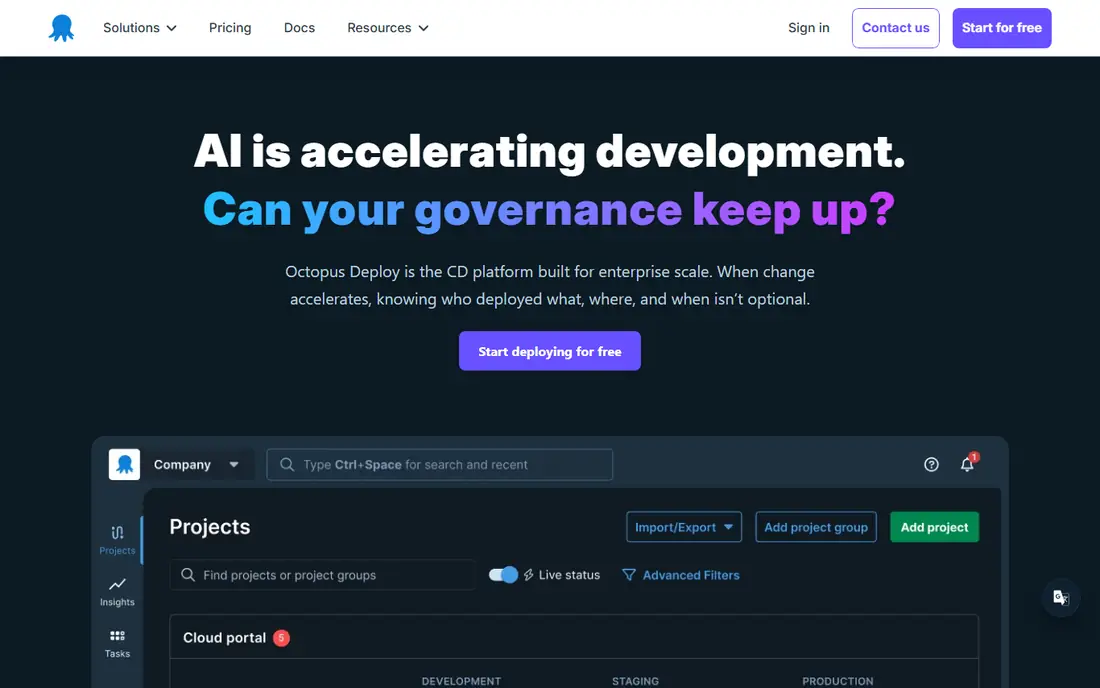
Octopus Deploy takes a different starting point from Kubernetes-first tools. It models environments, projects, and deployment processes, then promotes a release through those environments with approvals and variables at each step. That model works well for teams that still run servers on premises, deploy .NET applications, or manage a mix of Kubernetes clusters and traditional hosts.
Blue green support in Octopus comes from how a team designs its process, for example by deploying to a new slot or target group and switching traffic after checks pass. That flexibility is helpful, but it also means the team must design and test the pattern rather than turning on a single built-in strategy. Buyers who want a ready-made Kubernetes blue green controller may prefer Argo Rollouts, while buyers with varied estates may value Octopus for covering everything in one place.
What we like- Clear environment promotion model
- Strong support for on-prem and Windows workloads
- Useful dashboards and audit history
Watch out for- Blue green patterns often need process design rather than a single button
- Pricing varies by targets and users
Starting priceSee website
Free planFree trial
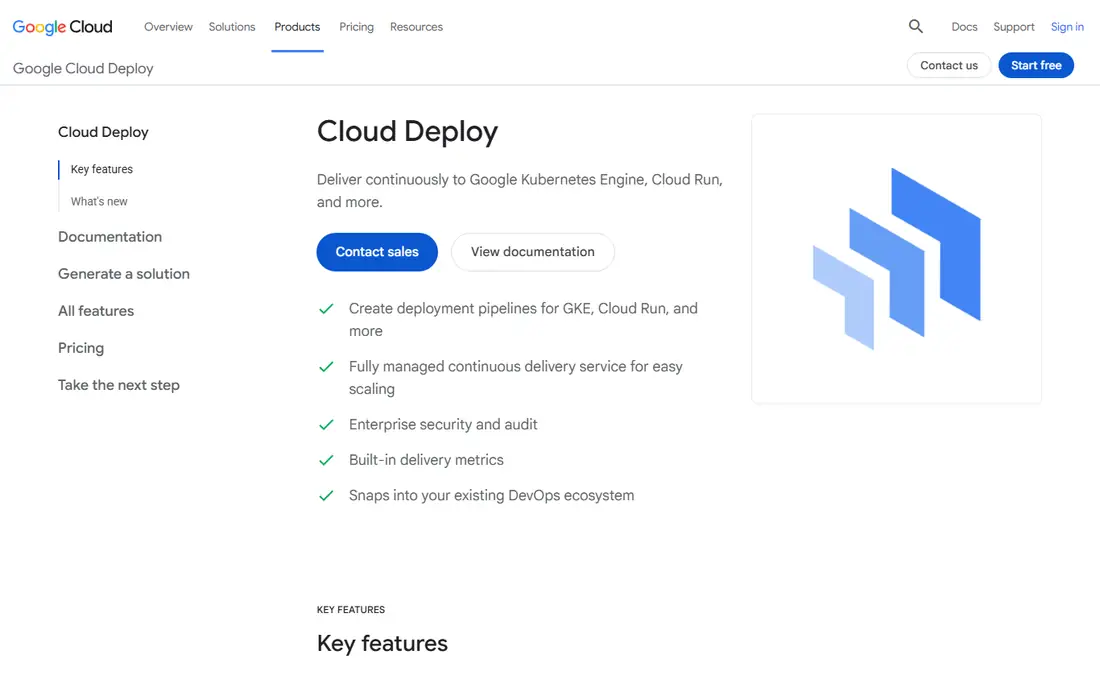
Google Cloud Deploy is a managed delivery service for Google Kubernetes Engine, Cloud Run, and related targets. Teams define a delivery pipeline, move a release through stages such as test, staging, and production, and promote or roll back with a single action in the console, CLI, or API. Built-in metrics show deployment frequency and success, and IAM controls who can approve each stage.
The appeal is simplicity. There is no delivery server to patch, scale, or back up, and the service fits naturally beside other Google Cloud tools. The limit is also clear: it is built for Google Cloud targets first. A team that deploys mainly to AWS, Azure, or on-prem servers will get less from it, and should compare it with a multi-cloud tool before committing.
What we like- Fully managed with no control plane to run
- One-step promotion and rollback
- Canary support for GKE and Cloud Run
Watch out for- Best inside Google Cloud
- Limited value for teams centred on other clouds
Starting priceSee website
Free planFree trial
Azure DevOps covers planning, code, build, and release in one service, and its release pipelines support blue green patterns for Azure App Service slots and Kubernetes workloads. A new version can deploy to a staging slot, pass smoke tests and approvals, and then swap into production. If the swap reveals a problem, swapping back restores the previous version quickly.
This makes Azure DevOps a natural choice for teams already invested in Azure, Microsoft Entra ID, and .NET or other Microsoft-centred stacks. It also works for other stacks, but buyers should weigh the breadth of the suite against what they actually use. A team that only needs delivery may find a narrower tool easier to learn, while a team that wants boards, repos, and pipelines together may value having them in one account.
What we like- Blue green support for App Service and Kubernetes
- Tight Azure and GitHub integration
- Mature approval and gating options
Watch out for- Setup can feel heavy for a single small project
- Pricing depends on users and parallel jobs
Starting priceFree
Free planYes
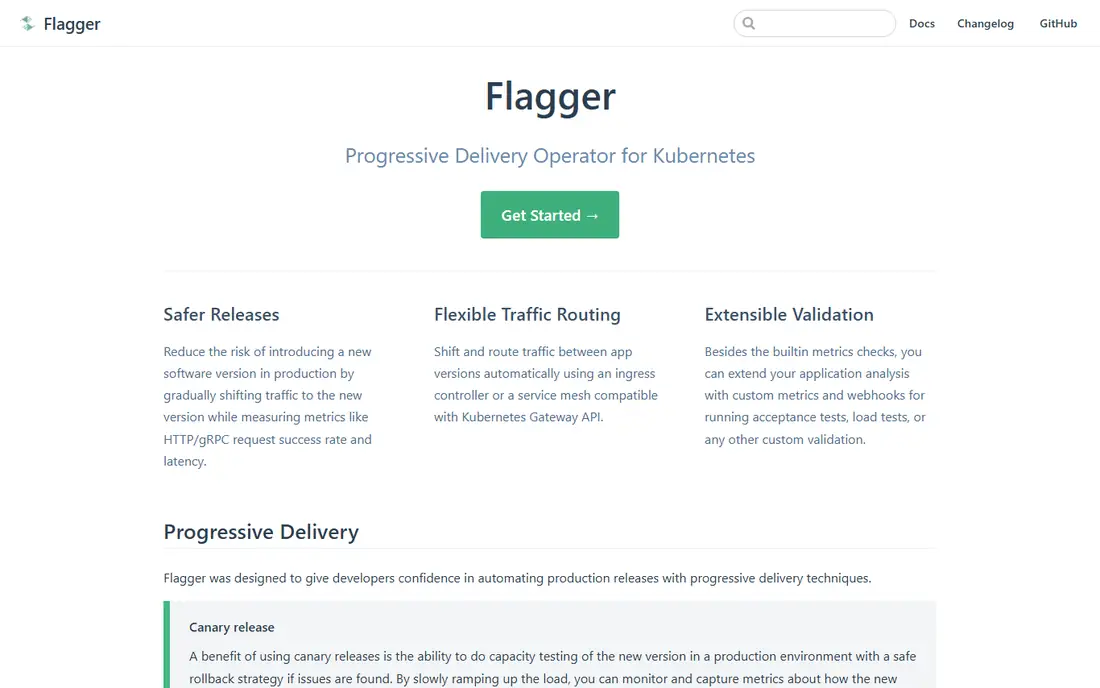
Flagger is a small Kubernetes operator that automates canary, blue green, and A/B releases by watching a workload and shifting traffic gradually or in one switch. It can query Prometheus, Datadog, CloudWatch, and other metric providers, run load tests during a rollout, and roll back automatically when error rates or latency cross a threshold. Notifications go to Slack, Teams, and similar tools.
Compared with Argo Rollouts, Flagger is lighter and pairs naturally with Flux for GitOps workflows. It does less on its own: there is no rich dashboard, and teams often view progress in Grafana. That trade-off suits teams that want progressive delivery without adopting a larger platform. It does not suit teams that need delivery to virtual machines or a visual pipeline builder.
What we like- Simple blue green, canary, and A/B support
- Works with common service meshes and ingress controllers
- Metric-driven rollback
Watch out for- Kubernetes only
- No built-in user interface beyond Grafana dashboards
#8Jenkins
Best for: Scripted pipelines on existing infrastructure4.4/5 on
G2 (570 reviews, checked Oct 2026)
Visit jenkins.io
Starting priceFree
Free planYes
Jenkins is the most flexible tool on this list, and also the least opinionated about blue green deployment. A Jenkins pipeline can build an application, deploy it to a green environment, run tests, switch a load balancer or DNS entry, and switch back on failure. Plugins exist for Kubernetes, AWS, Azure, and many deployment targets, so almost any pattern is possible.
Flexibility is both the benefit and the burden. Nothing about blue green is built in as a single strategy, so the team owns the design, the rollback logic, and the maintenance of plugins and agents. Organisations with an existing Jenkins estate and strong pipeline skills can use it well. Teams starting fresh and wanting blue green out of the box will usually move faster with a purpose-built delivery tool.
What we like- Huge plugin ecosystem
- Runs almost anywhere
- Full control over pipeline logic and blue green steps
Watch out for- Blue green logic must be built and maintained
- Upgrades and plugin management take ongoing effort
Starting priceSee website
Free planFree trial
Codefresh builds on Argo CD and Argo Rollouts to give Kubernetes teams a hosted GitOps control plane with dashboards, promotion flows, and environment views. A team can see which version runs in each cluster, promote a release between environments, and use blue green or canary strategies through the underlying Argo tooling. That hosted layer removes much of the work of running Argo at scale.
The trade-off is focus. Codefresh is aimed squarely at Kubernetes delivery, so it is not the right pick for virtual machine or legacy estates. Pricing also needs a conversation for larger deployments, which makes direct comparison harder. For a Kubernetes team that likes Argo but does not want to operate it alone, Codefresh is a practical middle ground.
What we like- GitOps dashboards across clusters
- Argo-based delivery
- Useful for teams managing many Kubernetes environments
Watch out for- Kubernetes centred
- Pricing is quote-based for larger use
How we chose
We compared vendor documentation, pricing pages, and public reviews on G2, Capterra, and Reddit, and checked which targets each tool supports and how it handles verification and rollback. A tool made this list only if it can run a genuine blue green release, with the old version kept live until the new version is ready, rather than only a rolling update. We also favoured tools that are still actively maintained and that cover different estates, from Kubernetes-only controllers to multi-cloud platforms.
We did not rank on marketing claims. Where a vendor did not publish a clear starting price, we wrote See website instead of guessing. Buyers should still run a trial on their own workload, because blue green behaviour depends on load balancers, ingress controllers, database changes, and stateful services as much as on the delivery tool itself.
Choosing the right blue green pattern for your stack
A blue green release is only as safe as the pieces around it. The tool switches traffic, but databases, caches, background jobs, and external integrations must also handle two versions running at once. Plan that part first, then pick the tool that fits the result.
Match the tool to your targets
Start by listing where the application actually runs. A Kubernetes-only service points toward Argo Rollouts, Flagger, or a hosted GitOps platform. A service spread across clouds points toward Spinnaker or Harness. A service with on-prem servers points toward Octopus Deploy or Jenkins. Choosing a tool built for a different estate creates extra work at every release.
Decide how much verification you need
Some teams only need a health check and a manual approval before switching traffic. Others need metric comparison, load testing, and automatic rollback. Simple needs suit Flagger, Google Cloud Deploy, or Azure DevOps. Stricter needs suit Argo Rollouts or Harness, where analysis templates or verification steps can block a bad release before it serves full traffic.
Check rollback in practice, not on paper
Ask how long a rollback takes, what happens to in-flight requests, and whether database migrations can be reversed. Run a trial release, break it on purpose, and time the recovery. A tool that rolls back in seconds on a demo but needs manual steps in production is not giving the safety blue green promises.
Count the operating cost honestly
Open source tools have no licence fee, but they still cost platform time for installation, upgrades, security patches, and on-call support. Hosted tools charge a fee but remove that work. Compare the two over a year, including the cost of a failed release, rather than comparing licence prices alone.
Frequently asked questions
What is blue green deployment?
Blue green deployment runs two identical production environments. The new version deploys to the idle environment, passes checks there, and then traffic switches from the live environment to the new one. If a problem appears, traffic switches back, which is usually faster than redeploying the old version.
Is blue green deployment the same as a canary release?
No. Blue green switches all traffic at once after verification, while a canary release moves a small share of traffic first and increases it over time. Many tools on this list support both, and teams often use canary releases for risky changes and blue green releases for routine ones.
Do I need Kubernetes to use blue green deployment?
No. Kubernetes makes blue green easier through controllers such as Argo Rollouts and Flagger, but Spinnaker, Octopus Deploy, Azure DevOps, and Jenkins support blue green on virtual machines, App Service slots, and other targets. Choose the tool that matches your current infrastructure.
How does blue green deployment handle database changes?
Database changes need care, because both versions may run at once during a switch. The usual approach is to make database changes backward compatible first, deploy the new application version, and clean up old columns or tables later. A delivery tool alone does not solve this, so plan migrations as part of the release.
Which blue green tool is best for a small team?
A small Kubernetes team should start with Argo Rollouts or Flagger, since both are free and focused. A small team on Google Cloud or Azure should start with the native delivery service for that cloud. A small team with mixed targets should look at Octopus Deploy or a hosted option before taking on Spinnaker.
What is the main risk of blue green deployment?
The main risk is cost and state. Running two production environments doubles the compute for that service during a release, and shared state such as databases, queues, and caches must work with both versions. Test the switch and the switch-back under real traffic patterns before relying on it for a critical release.
Sources we checked (9)
- https://argoproj.github.io/argo-rollouts/
- https://spinnaker.io/
- https://www.harness.io/
- https://octopus.com/
- https://cloud.google.com/deploy
- https://azure.microsoft.com/en-us/products/devops
- https://flagger.app/
- https://www.jenkins.io/
- https://codefresh.io/
Is your product missing or out of date?
We review this list regularly. Vendors can request a listing, send updated pricing or ask about featured placement.

Shihab Mia · Founder, Rankite
Shihab has 5+ years in B2B and SaaS SEO. He writes Rankite's software buying guides from pricing pages, documentation and public user reviews. More about Shihab.