How we make this list: we compare pricing pages, product documentation and public user reviews. Ratings come from G2, Capterra or Trustpilot, with the date we checked them.
Key takeaways
- Duolingo is the best free start for Italian, with bite-sized gamified lessons, while Babbel is the best paid app for real conversations.
- Rosetta Stone suits immersive learners who want to learn without translation, and Pimsleur suits audio-first learners who study on the move.
- Busuu and Memrise add native-speaker practice and community feedback, and Mondly adds VR and daily lessons across 41 languages.
- italki suits learners who want live lessons with a real Italian tutor, priced per lesson with no subscription.
Quick comparison
| Tool | Best for | Starting price | Free plan |
|---|
 Duolingo | A free, fun start to Italian | Free | Yes |
 Babbel | Practical Italian conversations fast | Free to try | Free lessons |
 Rosetta Stone | Immersive Italian without translation | See website | See website |
 Busuu | Community feedback from native Italian speakers | Free | Yes |
 Memrise | Learning Italian the way native speakers really speak it | Free | Yes |
 Pimsleur | Audio-first Italian for commutes and chores | See website | See website |
 italki | Live 1-on-1 lessons with Italian tutors | $5 per hour | See website |
 Mondly | Daily Italian lessons with VR options | Free | Yes |
Is your product missing or out of date?
We review this list regularly. Vendors can request a listing, send updated pricing or ask about featured placement.
The best apps to learn italian
#1Duolingo
Best for: A free, fun start to Italian4.5/5 on
G2 (145 reviews, checked Oct 2026)
Visit duolingo.com
Starting priceFree
Free planYes
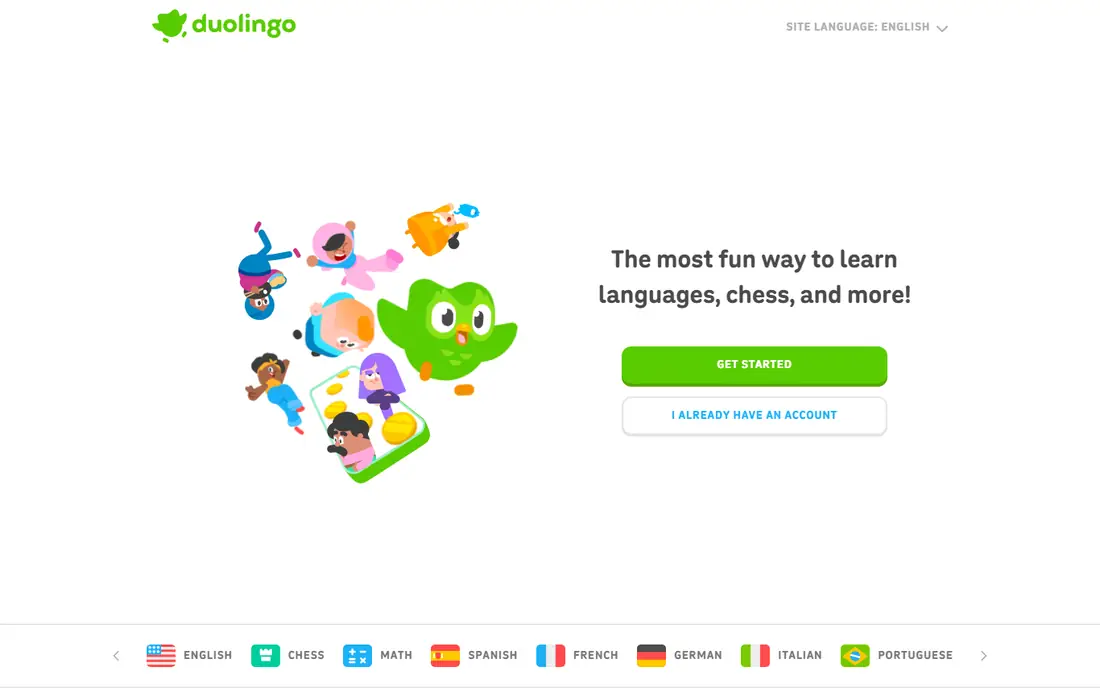
Duolingo calls itself the world's most popular way to learn, and its formula is simple: free, fun and effective. Quick, bite-sized lessons earn points and new levels while building real-world communication skills, with game-like features, challenges and reminders from Duo the owl to keep the habit alive. Lessons adapt to your level and pace using AI and language science.
Duolingo's own page stresses that learning is backed by science, combining research-backed teaching methods with engaging content across reading, writing, listening and speaking. For absolute beginners who want a free, daily Italian habit, Duolingo is the easiest start, and it pairs well with a tutor app later.
What we like- Free with bite-sized lessons
- Game features, streaks and reminders build habits
- Research-backed methods for reading, writing, listening and speaking
Watch out for- Free version has ads and limited hearts
- Grammar explanations are lighter than Babbel
Starting priceFree to try
Free planFree lessons
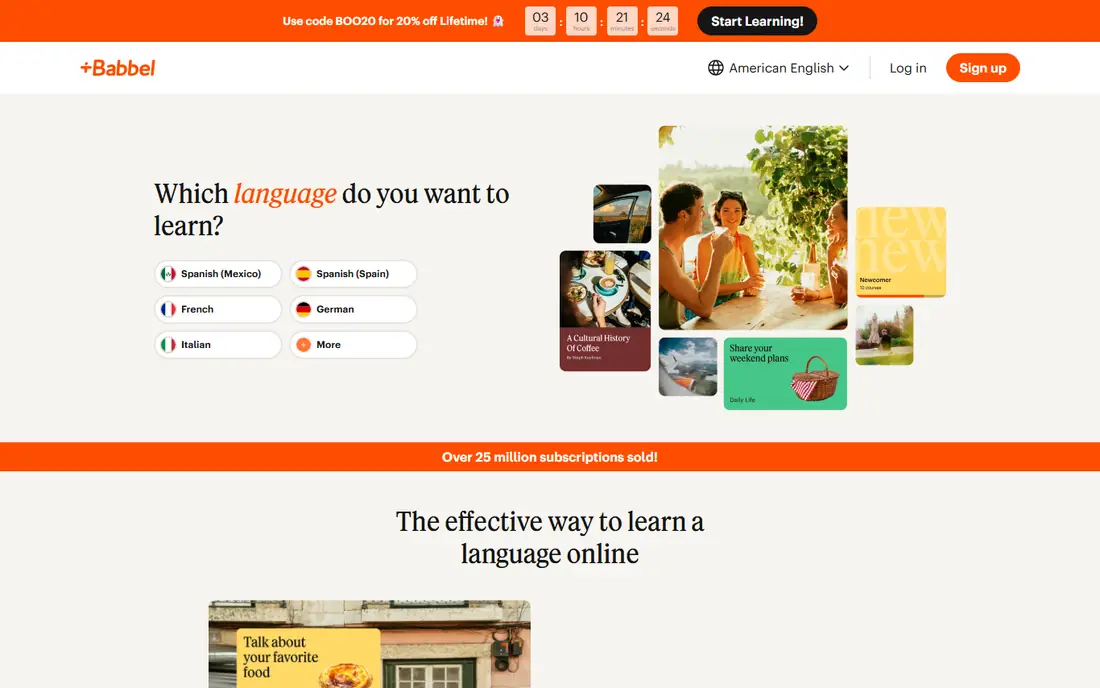
Babbel teaches Italian through practical, real-life conversation skills, with short 10 to 15 minute lessons tailored to your level, interests and time. Its method includes speech recognition for pronunciation, interactive dialogues, grammar tips, podcasts and AI conversation practice, plus culture content. Courses cover Beginner, Intermediate and Advanced levels, with a placement test to find your start.
Babbel reports more than 25 million subscriptions sold and millions of 5-star reviews, with 92 percent of users improving proficiency in just 2 months in its efficacy study. Signing up is free, with the first lesson of every course free and up to 80 free lessons depending on language. For learners who want to speak Italian on a trip or with family soon, Babbel is the strongest paid app.
What we like- Courses by 200+ language experts
- 92% of users improved proficiency in 2 months in a 2016 study
- Speech recognition and interactive dialogues
Watch out for- Full access needs a subscription
- Fewer gamified rewards than Duolingo
#3Rosetta Stone
Best for: Immersive Italian without translation4.2/5 on
G2 (113 reviews, checked Oct 2026)
Visit rosettastone.com
Starting priceSee website
Free planSee website
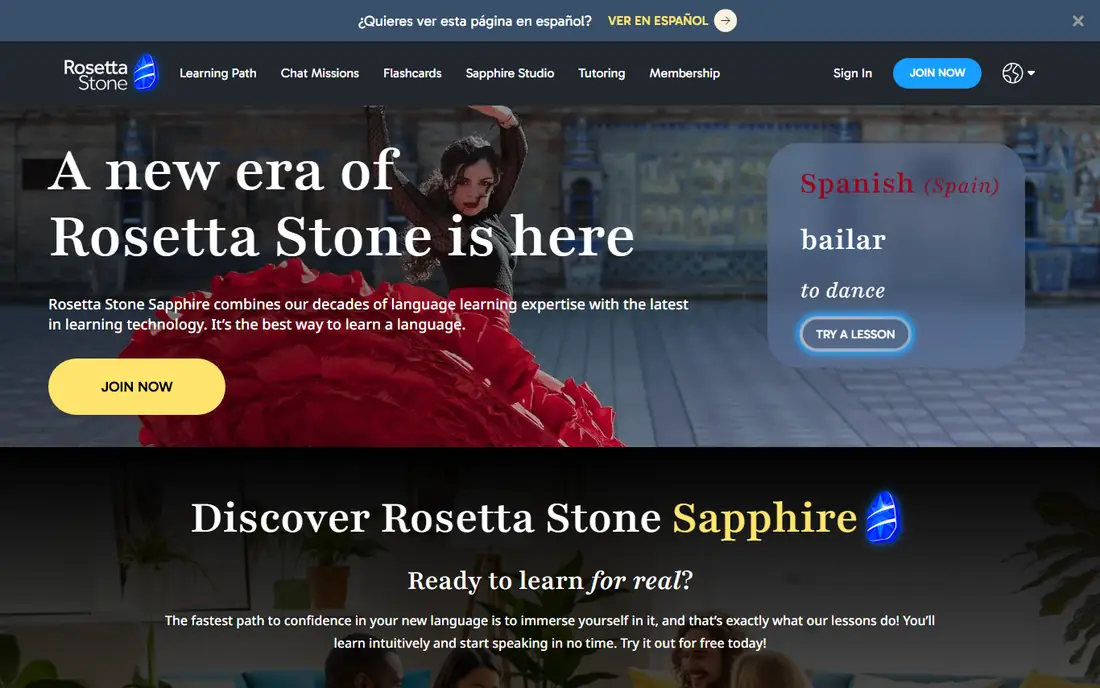
Rosetta Stone's new era pairs decades of language expertise with modern learning technology in Rosetta Stone Sapphire, which the company calls the best way to learn a language. Its classic method teaches through images and context rather than translation, building intuition for Italian words and structures the way children learn.
The platform reports millions of learners worldwide, plus 12,000 corporations, 9,000 public and non-profit organizations and 22,000 educational institutions using it. Italian learners quoted on the homepage praise getting past tourist Italy by speaking Italian. For learners who want a structured, immersive course with a long track record, Rosetta Stone remains a top pick.
What we like- Decades of expertise with the new Sapphire platform
- Immersive image-based learning
- Used by millions of learners, schools and companies
Watch out for- Pricing not shown on the homepage
- Immersion style suits some learners better than grammar-focused ones
#4Busuu
Best for: Community feedback from native Italian speakers4.4/5 on
G2 (71 reviews, checked Oct 2026)
Visit busuu.com
Starting priceFree
Free planYes
Busuu goes beyond the textbook, letting learners practise pronunciation, gain cultural insights and exchange tips with a global community of more than 120 million learners. Its method builds solid foundations across speaking, listening, reading and writing, with instant feedback, immersive videos featuring native speakers, and personalized pronunciation help to beat speaking anxiety.
Courses are simplified into short, focused lessons matched to your goal, with study plans to keep you on track. Busuu holds Google Play Editors' Choice and Apple App Store App of the Year awards. For Italian learners who want real feedback from native speakers, Busuu's community is its standout feature.
What we like- Community corrections from native speakers
- Speaking practice with pronunciation feedback
- Study plans and short focused lessons
Watch out for- Full courses need a premium plan
- Community feedback speed varies by language
#5
Memrise
Best for: Learning Italian the way native speakers really speak it
Visit memrise.com
Starting priceFree
Free planYes
Memrise teaches Italian through thousands of short videos of native speakers, so learners hear the language the way it is really spoken, not robotic textbook audio. Its method has three steps: hear a useful phrase from a real speaker, learn it through smart review, then copy it by recording yourself and comparing rhythm, stress and accent.
The company says learners spending 15 minutes a day can confidently hold a basic conversation in 2 months, and that all words and phrases are approved by native speakers. You can start learning for free, with a paid plan adding extra features. For learners who understand Italian words but struggle when Italians speak fast, Memrise closes that gap best.
What we like- Thousands of short native-speaker videos
- Hear, learn and copy method for natural rhythm and accent
- Free start with paid extras
Watch out for- Less structured grammar teaching than Babbel
- Paid plan needed for full features
#6Pimsleur
Best for: Audio-first Italian for commutes and chores4.3/5 on
G2 (2 reviews, checked Oct 2026)
Visit pimsleur.com
Starting priceSee website
Free planSee website
Pimsleur teaches Italian through listening and speaking, using the scientifically proven Pimsleur Method with spaced repetition to embed language into long-term memory. Lessons follow three steps: learn, recall and build confidence, with flashcards, Quick Match and Speed Round games, role play, and Voice Coach AI for pronunciation feedback and proficiency certificates.
Courses cover 50+ languages, with All Access and single-language Premium subscriptions, and a hands-free driving mode lets you study while jogging, doing laundry or driving. Pimsleur says many learners start speaking conversationally within weeks, with a first conversation after the very first lesson. For audio learners, Pimsleur is unmatched.
What we like- Proven Pimsleur Method with spaced repetition
- Hands-free driving mode
- First conversation after the very first lesson, per the company
Watch out for- Pricing not shown on the homepage
- Less visual and reading practice than app-based rivals
#7italki
Best for: Live 1-on-1 lessons with Italian tutors3.8/5 on
G2 (19 reviews, checked Oct 2026)
Visit italki.com
Starting price$5 per hour
Free planSee website
italki connects learners with certified tutors and group courses across 150+ languages, including Italian, with no subscription or rigid schedule. You find your ideal teacher, book a 1-on-1 lesson, and learn when you want, as much as you want. Lesson lengths run from 30 to 90 minutes, with instant lessons available for learners who want to start right now.
The platform lists a price range of $5 to $25 per hour, with teachers setting their own prices, and two teacher types: professional teachers with proven experience and qualifications, and community tutors who are passionate language lovers. Free learning tools include vocabulary sets, podcasts, quizzes and community posts. For learners who want real conversation with a native Italian speaker, italki is the best investment.
What we like- No subscription, pay as you go
- Professional teachers and community tutors
- Lessons from 30 to 90 minutes plus instant lessons
Watch out for- Quality varies by teacher, so trial lessons matter
- Scheduling across time zones needs planning
Starting priceFree
Free planYes
Mondly by Pearson teaches 41 languages from your native language, on any device, with more than 1,000 language combinations. Its Italian course covers 50 topics for common situations, 41 real conversations for fluency, and quick daily lessons for constant improvement, backed by Pearson's Global Scale of Languages research.
Mondly was named Editors' Choice on Google Play and Best New App by Apple, with more than 1 million ratings and a 4.7 score. Mondly VR offers the most advanced method for learning from your couch, while Mondly for Business serves companies. For learners who want variety, daily habit tools and a taste of VR, Mondly is a strong free start.
What we like- 41 languages with 1,000+ combinations
- 50 topics for common situations
- Mondly VR for immersive practice
- Pearson-backed research
Watch out for- Depth below Babbel for advanced grammar
- VR needs a headset for full benefit
How we chose
We opened each app's homepage in October 2026 to confirm it loads and belongs to the product named. We weighed Italian course quality, speaking practice, grammar coverage, free options, tutor access and learner reviews, favoring apps with proven methods and native-speaker content.
What to look for in an Italian learning app
Start with your goal. Travelers need phrases and listening skills, so Memrise or Pimsleur suit best. Future residents or heritage learners need grammar and conversation, so Babbel or italki suit best. Absolute beginners benefit from a free, gamified start on Duolingo before committing money.
Next, practice speaking from week one. Italian pronunciation is regular and friendly to English speakers, but only speaking practice builds confidence. Use speech recognition, record yourself, or book a tutor, and do not wait until you feel ready, since readiness comes from speaking.
Also plan for Italian's regional variety as you advance. Standard Italian will serve you everywhere, but accents, dialect words and local expressions differ between Milan, Rome, Naples and Sicily. Listening to regional podcasts and speaking with tutors from different regions will train your ear for real Italy, not just textbook Italian.
Finally, build a daily habit you will keep. Fifteen minutes a day beats two hours on Sunday, and combining two apps, such as Duolingo for vocabulary plus italki for conversation, covers more skills than any single app. Add Italian media, music and podcasts as you progress, and your app learning will stick far longer.
Frequently asked questions
What is the best free app to learn Italian?
Duolingo, for a free, gamified daily habit with bite-sized lessons. Memrise and Mondly also offer strong free starts with native-speaker content.
How long does it take to learn Italian with an app?
Basic conversation is possible within 2 months at 15 minutes a day, per Memrise's learner data, and Babbel reports proficiency gains in the same timeframe. Fluency takes longer and needs speaking practice with real people.
Is Babbel or Duolingo better for Italian?
Babbel is better for structured conversation and grammar, while Duolingo is better for a free, motivating daily habit. Many learners use Duolingo free first, then add Babbel for serious study.
Can I learn Italian just by using an app?
Apps build vocabulary, grammar and listening well, but speaking fluency needs live practice. Add italki lessons or conversation exchanges once you know basic phrases.
Do I need to learn Italian grammar separately?
Not separately, but grammar helps. Babbel and Rosetta Stone teach grammar inside lessons, while Duolingo is lighter on explanations. If grammar confuses you, pick an app with explicit grammar tips.
Sources we checked (8)
- https://www.duolingo.com
- https://www.babbel.com
- https://www.rosettastone.com
- https://www.busuu.com
- https://www.memrise.com
- https://www.pimsleur.com
- https://www.italki.com
- https://www.mondly.com
Is your product missing or out of date?
We review this list regularly. Vendors can request a listing, send updated pricing or ask about featured placement.

Shihab Mia · Founder, Rankite
Shihab has 5+ years in B2B and SaaS SEO. He writes Rankite's software buying guides from pricing pages, documentation and public user reviews. More about Shihab.