How we make this list: we compare pricing pages, product documentation and public user reviews. Rankite is independent; if a vendor ever pays for a featured spot, that listing is clearly labeled Partner.

Key takeaways
- SimplePractice is the default for solo and small group practices, combining EHR, scheduling, billing and telehealth in one polished system.
- TherapyNotes and TheraNest serve practices that bill insurance heavily, with workflows built around claims and documentation.
- Valant fits larger behavioral health organizations that need enterprise-grade EHR with outcomes measurement.
- Quenza is different: it extends therapy between sessions with exercises and homework, rather than managing the practice itself.
Quick comparison
| Tool | Best for | Starting price | Free plan |
|---|
 SimplePractice SimplePractice | Solo practitioners and small group practices | See website | Free trial |
 TherapyNotes TherapyNotes | Practices built around insurance billing | See website | Free trial |
 TheraNest TheraNest | Growing practices and nonprofits | See website | Free trial |
 Valant Valant | Large behavioral health organizations | See website | No |
 Quenza Quenza | Extending therapy between sessions | See website | Free trial |
 Power Diary Power Diary | Allied health and multi-disciplinary practices | See website | Free trial |
 Headway Headway | Therapists who want insurance clients without the hassle | See website | No |
 Alma Alma | Therapists building insurance-based practices | See website | No |
 PracticeQ PracticeQ | Intake forms and practice automation | See website | Free trial |
Is your product missing or out of date?
We review this list regularly. Vendors can request a listing, send updated pricing or ask about featured placement.
The best apps for therapists
Starting priceSee website
Free planFree trial
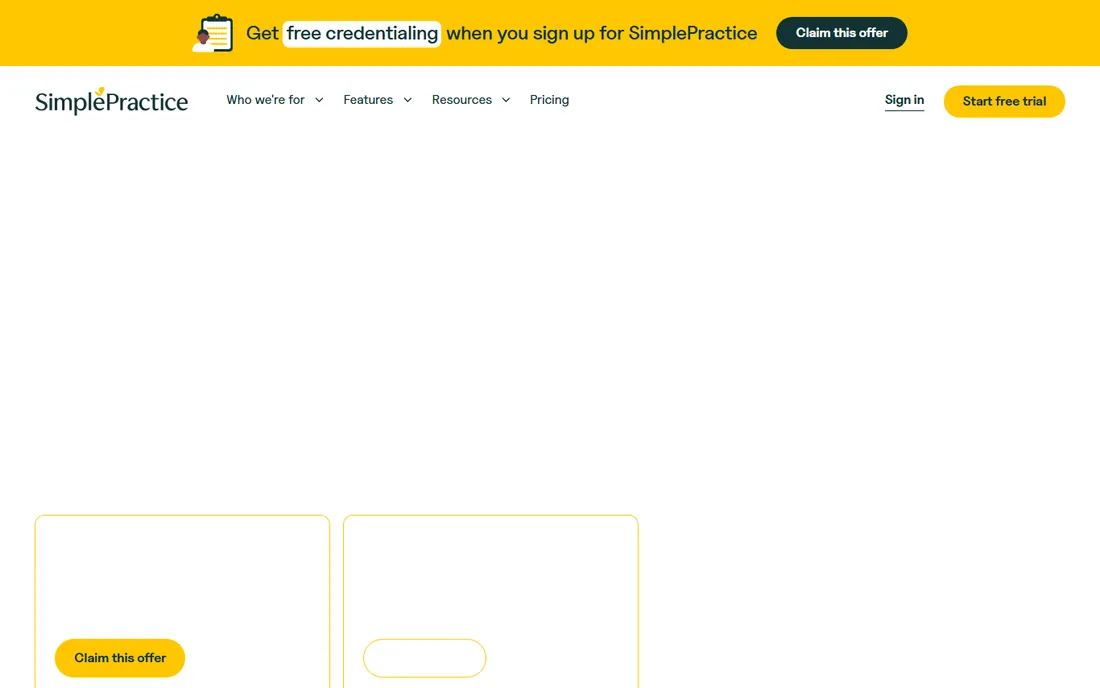
SimplePractice is the practice management standard for independent therapists. Notes, treatment plans, scheduling, billing, secure messaging and telehealth live in one system with a client portal that looks professional. The template library for notes and intake forms saves hours, and the community around the product means endless tutorials.
Group practices pay per clinician, which adds up. And power users occasionally hit reporting limits. But for a solo therapist or small practice wanting one system that handles everything, SimplePractice is the safest recommendation.
What we like- All-in-one EHR, scheduling, billing and telehealth
- Beautiful client portal
- Huge therapist community
Watch out for- Pricing per clinician adds up for groups
- Some advanced reporting needs workarounds
Starting priceSee website
Free planFree trial
TherapyNotes wins with practices that live on insurance revenue. Claims submission, electronic remittance, eligibility checks and denial management are handled thoroughly. The clinical notes are structured for compliance, and the support team understands billing questions.
The interface prioritizes function over beauty, and the telehealth feels bolted on compared to SimplePractice. But if your practice bills insurance for most sessions, billing competence beats aesthetics every time.
What we like- Excellent insurance billing and ERA handling
- Solid clinical documentation
- Reliable support
Watch out for- Interface is functional rather than beautiful
- Telehealth is adequate not great
Starting priceSee website
Free planFree trial
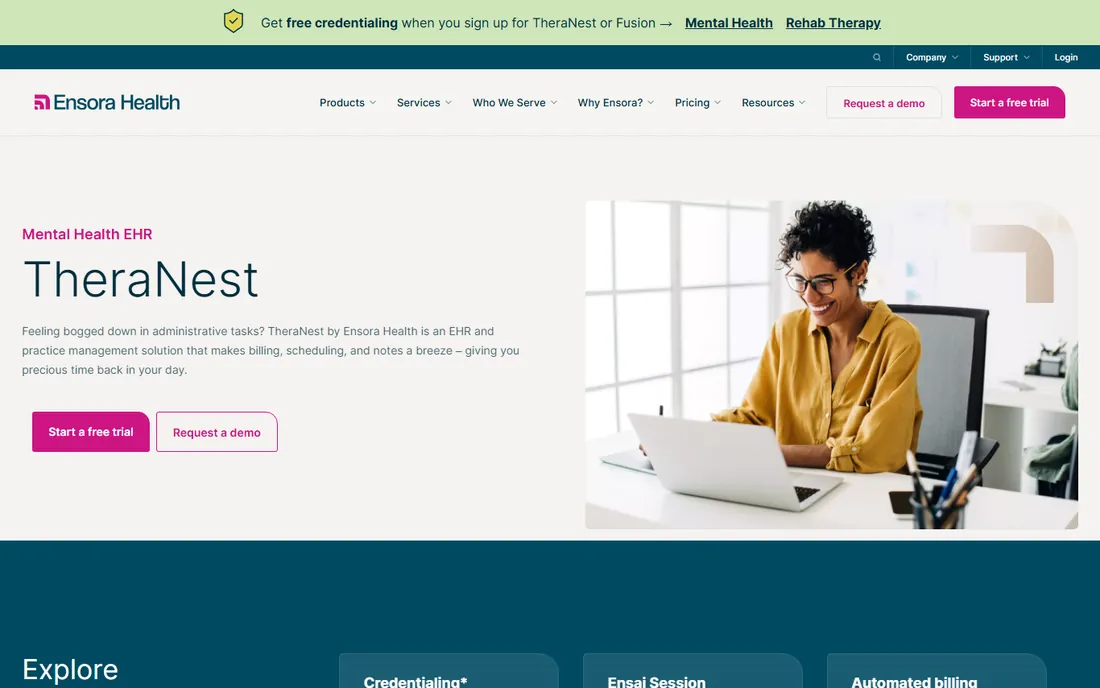
TheraNest serves the middle market: group practices, nonprofits and agencies that need multi-clinician management without enterprise cost. It includes Wiley treatment planners, which clinicians value, and handles scheduling, notes, billing and telehealth competently.
The product feels older than SimplePractice, and the integration ecosystem is smaller. But for organizations watching budgets while managing many clinicians, TheraNest's value is strong.
What we like- Affordable multi-clinician pricing
- Good for nonprofits and agencies
- Wiley treatment planners included
Watch out for- Interface feels dated
- Fewer integrations than leaders
Starting priceSee website
Free planNo

Valant is built for behavioral health at scale: large group practices, treatment centers and organizations that need real EHR depth. Outcomes measurement, e-prescribing, revenue cycle management and compliance reporting reflect enterprise requirements. It handles the complexity that breaks smaller tools.
Solo therapists should look elsewhere; this is organizational software. But behavioral health leaders choosing an EHR for dozens or hundreds of clinicians will find Valant's depth appropriate.
What we like- Enterprise-grade behavioral health EHR
- Outcomes measurement built in
- Handles complex organizations
Watch out for- Overkill for solo practices
- Implementation is a project
Starting priceSee website
Free planFree trial

Quenza does something different: it digitizes the between-session work. Create exercises, meditations, assessments and homework sequences, deliver them through a branded client app, and track completion. Coaches and therapists use it to extend care beyond the 50-minute hour.
It does not do scheduling, billing or notes; pair it with a practice management system. But therapists whose value includes structured between-session work will find Quenza turns that work into a scalable offering.
What we like- Digital exercises, homework and assessments for clients
- White-labeled
- Expands your practice's reach
Watch out for- Not a practice management system
- Adds a subscription on top
Starting priceSee website
Free planFree trial
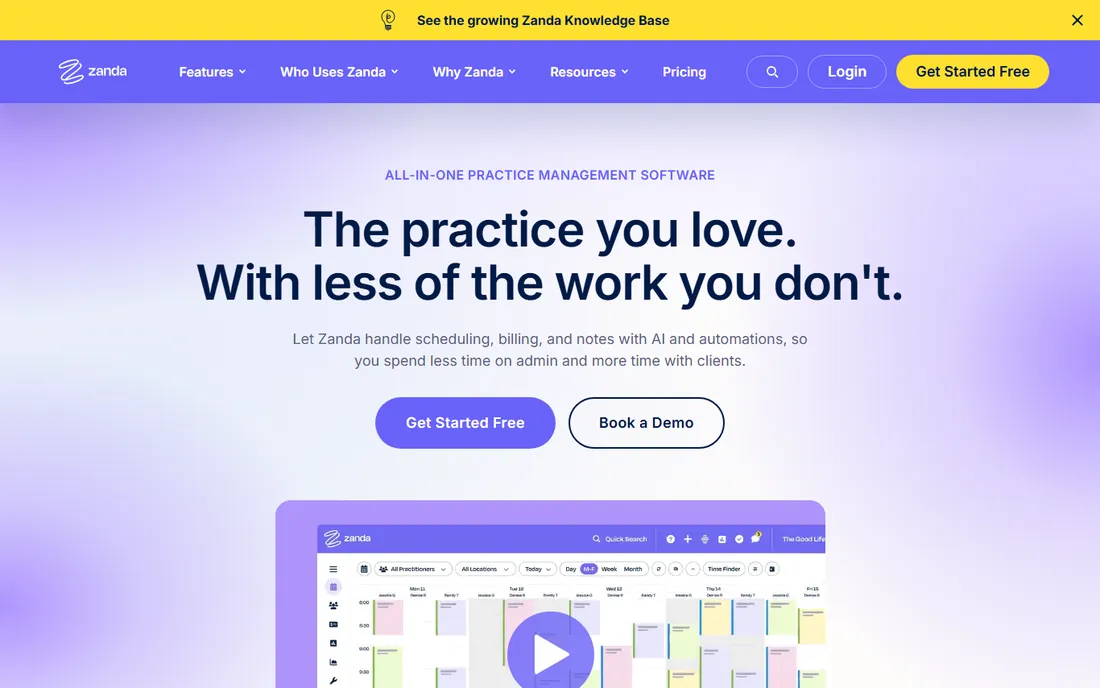
Power Diary serves allied health: physiotherapy, occupational therapy, speech pathology and similar practices. The calendar management, appointment reminders, treatment notes and invoicing fit disciplines where sessions are frequent and scheduling is the bottleneck.
Talk therapists will find SimplePractice more tailored. But multi-disciplinary clinics with several allied health professions get one system that handles them all reasonably.
What we like- Built for physio, OT, speech and similar
- Good calendar and reminders
- Affordable
Watch out for- Less therapy-specific than SimplePractice
- Smaller US presence
#7
Headway
Best for: Therapists who want insurance clients without the hassle
Visit headway.co
Starting priceSee website
Free planNo

Headway is not practice software; it is a path to insurance clients. It credentials you with major insurers, handles billing and claims, and sends you referrals. Therapists who want insurance revenue without the credentialing nightmare or billing overhead join Headway instead of fighting insurers alone.
The trade is independence: you accept Headway's contracted rates and work within its system. But for therapists starting out or adding insurance revenue, the removal of administrative burden is transformative.
What we like- Handles insurance credentialing and billing for you
- Brings client referrals
- Free for providers
Watch out for- You work within Headway's rates and terms
- Less independence
Starting priceSee website
Free planNo

Alma offers therapists a supported path to insurance practice: credentialing, billing, client matching and a professional community. The experience feels more modern and therapist-centered than traditional billing services. Many early-career therapists build their practices on Alma's infrastructure.
Like Headway, you operate within the network's framework. But therapists who want colleagues, referrals and administrative support rather than pure independence will find Alma's model appealing.
What we like- Credentialing, billing and referrals in a supportive network
- Community for therapists
- Modern experience
Watch out for- Membership model with associated costs
- Network-dependent
Starting priceSee website
Free planFree trial

PracticeQ specializes in the front door: online intake forms, questionnaires, consent documents and automated follow-ups that reduce no-shows and admin time. Cash-pay practices use it to professionalize onboarding without a full EHR.
It is not a complete practice management system; most users pair it with SimplePractice or similar. But practices whose bottleneck is intake chaos rather than billing will find PracticeQ's automation immediately valuable.
What we like- Powerful intake and form automation
- Good for cash-pay practices
- Flexible questionnaires
Watch out for- Not a full EHR
- Works best alongside another system
Insurance versus cash pay changes everything
The single biggest decision is your revenue model. Insurance-heavy practices need billing depth: TherapyNotes, TheraNest or Valant, possibly via Headway or Alma. Cash-pay practices need client experience and simplicity: SimplePractice or PracticeQ, with Quenza for between-session value.
Many therapists run hybrid models, and the software should reflect the actual mix. A practice that is 80 percent insurance should not choose tools optimized for cash pay. Be honest about where the money comes from, then pick the tool built for that reality.
How we chose
We compared tools on clinical documentation, scheduling, billing (especially insurance), telehealth quality, client experience and pricing. We verified each vendor's homepage and current positioning, reviewed therapist feedback on professional forums, G2 and review sites, and weighted real practice workflows over feature lists. We did not run live practices on these platforms.
Making telehealth work as well as in-person sessions
Telehealth is now a permanent part of most practices, and the difference between adequate and excellent virtual sessions is mostly preparation. Test your setup before every clinical day: camera framing, lighting, audio quality and internet stability. Clients forgive a lot, but they cannot do therapy with someone they cannot hear.
Set the frame explicitly with clients. Virtual sessions need the same boundaries as office sessions: a private space on both ends, no multitasking, and a plan for technology failures. Agree in advance what happens if the connection drops, who calls whom back, and how you will handle it if a client is in crisis and the video fails. Document these agreements in the treatment record.
Use the digital advantages instead of fighting them. Screen sharing lets you review homework, worksheets and assessments together. The chat function works for grounding exercises and resource links. Some therapists find clients disclose more easily from their own homes, which can deepen the work when handled skillfully.
Mind the compliance details. Your telehealth platform must be HIPAA-compliant with a signed business associate agreement. Know the licensing rules for clients who travel or relocate: practicing across state lines without proper authorization creates real liability. And keep your documentation standards identical to in-person sessions; auditors do not grade on a curve for virtual care.
Finally, protect yourself from burnout. Back-to-back video sessions are more draining than in-person days for most clinicians. Build real breaks into your telehealth schedule, look away from the screen between sessions, and resist the temptation to fill every gap just because there is no commute.
Practice management mistakes therapists make
The most expensive is choosing software on price alone. The cheapest tool that your staff fights daily costs more in wasted time and errors than the premium option everyone uses happily. Calculate the true cost including staff hours, billing errors and your own frustration, not just the subscription line.
Second is neglecting the billing workflow during selection. Therapists evaluate the pretty client portal and discover six months later that the insurance billing is painful. Since revenue depends on billing, evaluate claims submission, ERA handling and denial management as carefully as the scheduling calendar. Ask for a billing demo with your actual payer mix.
Third is the documentation backlog. Notes written days after sessions are worse clinically and legally riskier. Build note completion into the daily workflow: templates that match your modality, voice-to-text where it helps, and a personal rule of notes done before the next client. The software's templates only help if you use them promptly.
Fourth is ignoring the reports. Your practice software generates data on no-show rates, collection rates, clinician productivity and referral sources. Reviewing these monthly turns the system from a digital filing cabinet into a management tool. The therapists who grow sustainably are usually the ones watching the numbers.
Finally, skipping the business associate agreements and security review. Every vendor touching protected health information needs a signed BAA, and you should understand their encryption, access controls and breach procedures. Compliance is not the vendor's job alone; it is yours, and auditors will ask you, not them.
Frequently asked questions
What is the best all-in-one for a solo therapist?
SimplePractice is the most common answer: notes, scheduling, billing, telehealth and a client portal in one system with a free trial to test it.
How much do these tools cost?
Typical pricing runs $30 to $100+ per clinician per month depending on features. Group pricing, billing add-ons and telehealth tiers affect the total. Always trial before committing.
Do I need separate telehealth software?
Most practice management tools include HIPAA-compliant telehealth now. Standalone video tools are rarely needed unless you have specific requirements.
How do Headway and Alma differ from practice software?
They are networks that handle insurance credentialing, billing and referrals, not software you run your practice on. Many therapists use both: Alma or Headway for insurance clients plus SimplePractice for practice management.
Is my client data safe in these apps?
Reputable therapy platforms are HIPAA-compliant with encryption and access controls. Verify each vendor's HIPAA compliance and sign a business associate agreement, which they should offer.
Can I switch systems later?
Yes, but migrating clinical notes and client records takes planning. Export your data regularly, and time migrations for slow periods. Most vendors offer migration assistance.
Sources we checked (9)
- https://www.simplepractice.com/
- https://www.therapynotes.com/
- https://theranest.com/
- https://www.valant.io/
- https://www.quenza.com/
- https://www.powerdiary.com/
- https://www.headway.co/
- https://www.helloalma.com/
- https://www.practiceq.com/
Is your product missing or out of date?
We review this list regularly. Vendors can request a listing, send updated pricing or ask about featured placement.

Shihab Mia · Founder, Rankite
Shihab has spent more than a decade helping SaaS and e-commerce brands grow through search. He writes Rankite's software buying guides from pricing pages, documentation and public user reviews. More about Shihab.