How we make this list: we compare pricing pages, product documentation and public user reviews. Ratings come from G2, Capterra or Trustpilot, with the date we checked them.
Key takeaways
- BrainHQ has the strongest clinical research base, with exercises designed around peer-reviewed studies.
- Lumosity has the broadest game library, with 60 plus games across memory, attention, speed, and problem solving.
- Elevate suits everyday skills, training reading, writing, speaking, and math alongside memory.
- Peak is the budget-friendly polished option, with a full game library and capped free sessions.
- CogniFit and NeuroNation offer clinical-grade assessments and structured programs for targeted training.
- No commercial app has proven it can prevent dementia or broadly improve daily functioning, so keep expectations grounded.
Quick comparison
| Tool | Best for | Starting price | Free plan |
|---|
 Lumosity | Broadest game library | Free | Yes |
 Elevate | Everyday work skills | Free | Yes |
 Peak | Budget polished training | Free | Yes |
 BrainHQ | Strongest research base | Free | Yes |
 CogniFit | Clinical assessment | Free | Yes |
 NeuroNation | Targeted memory training | Free | Yes |
 Memorado | Daily memory workouts | Free | Yes |
 MindPal | Varied brain games | Free | Yes |
Is your product missing or out of date?
We review this list regularly. Vendors can request a listing, send updated pricing or ask about featured placement.
The best apps for memory improvement
Starting priceFree
Free planYes
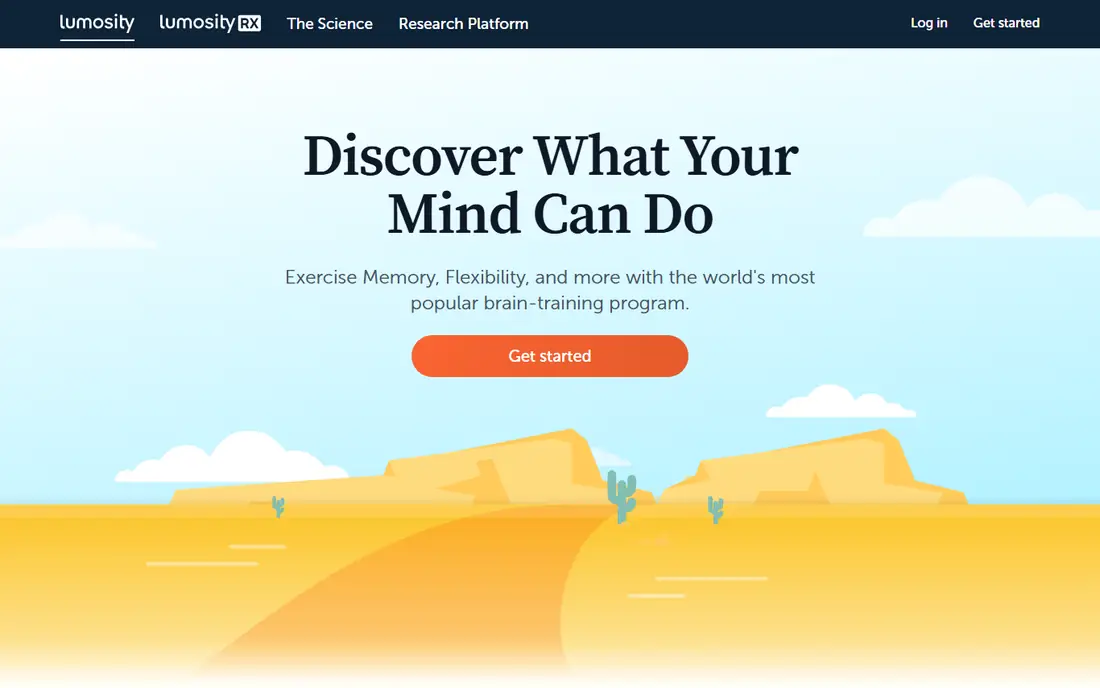
Lumosity is the most familiar brain training app, with more than 120 million members and 60 plus games across memory, attention, speed, flexibility, and problem solving. A free 10-minute Fit Test sets baseline scores by age group, then daily workouts arrive based on your training habits. The Lumosity Performance Index summarizes progress in a single score over time.
Premium pricing varies by guide, cited near 11.99 to 14.99 dollars a month or 59.99 dollars a year, so confirm the current price in the app. The free tier covers 3 games a day, which is enough to test the format. Evidence for Lumosity is mostly near transfer, meaning practice improves the trained games more than it improves unrelated daily tasks, so treat score gains as game gains, not life gains.
What we like- More than 120 million members
- 60 plus games
- Lumosity Performance Index tracks progress
- Free baseline Fit Test
Watch out for- Premium near 14.99 dollars a month in some guides
- Free tier covers 3 games a day
- Evidence is mostly near transfer
Starting priceFree
Free planYes
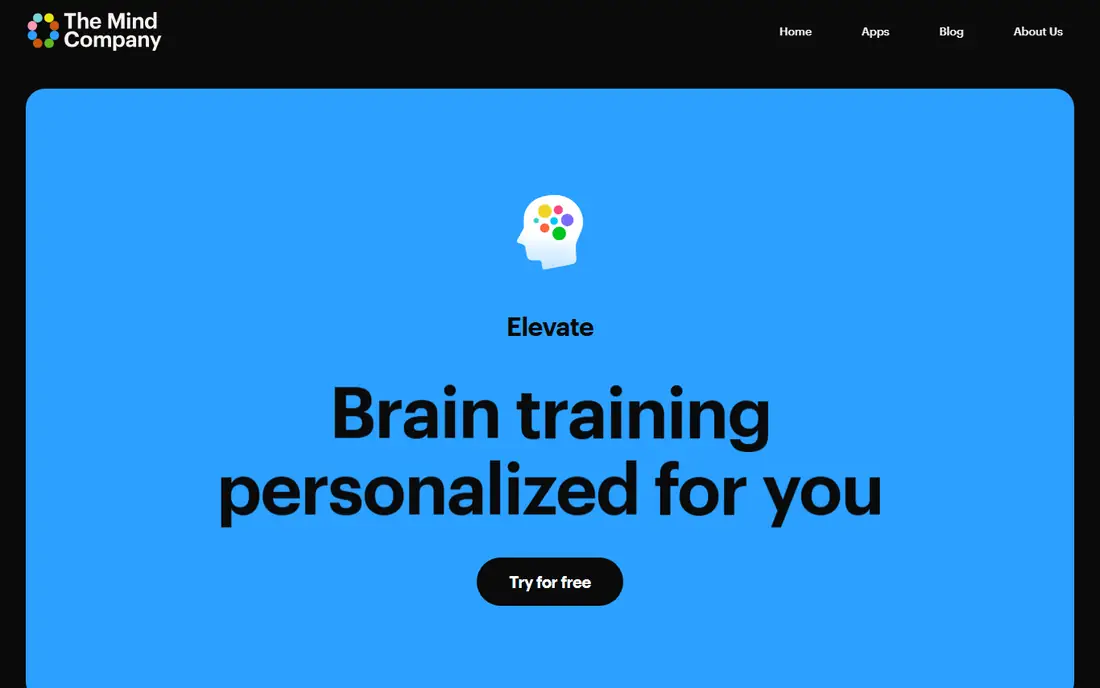
Elevate trains the everyday skills that memory supports: reading comprehension, writing clarity, speaking, and math, alongside direct memory games. You set a daily training focus and choose three to five games per workout, and Elevate fills the session from its 40 plus games based on the skills you need most. As scores rise, games get harder, so the challenge keeps pace.
Premium costs near 9.99 dollars a month or 39.99 dollars a year on the US App Store, while the free tier covers one three-game workout a day plus a game of the week. Elevate suits professionals and students who want sharper everyday thinking rather than abstract brain games, and its performance tab shows skill groups and age-group rankings that motivate steady practice.
What we like- Trains reading, writing, speaking, and math alongside memory
- Personalized daily program
- 40 plus games
- Strong free tier
Watch out for- Premium near 9.99 dollars a month
- Less pure memory focus than BrainHQ
- Games feel like school drills to some users
Starting priceFree
Free planYes
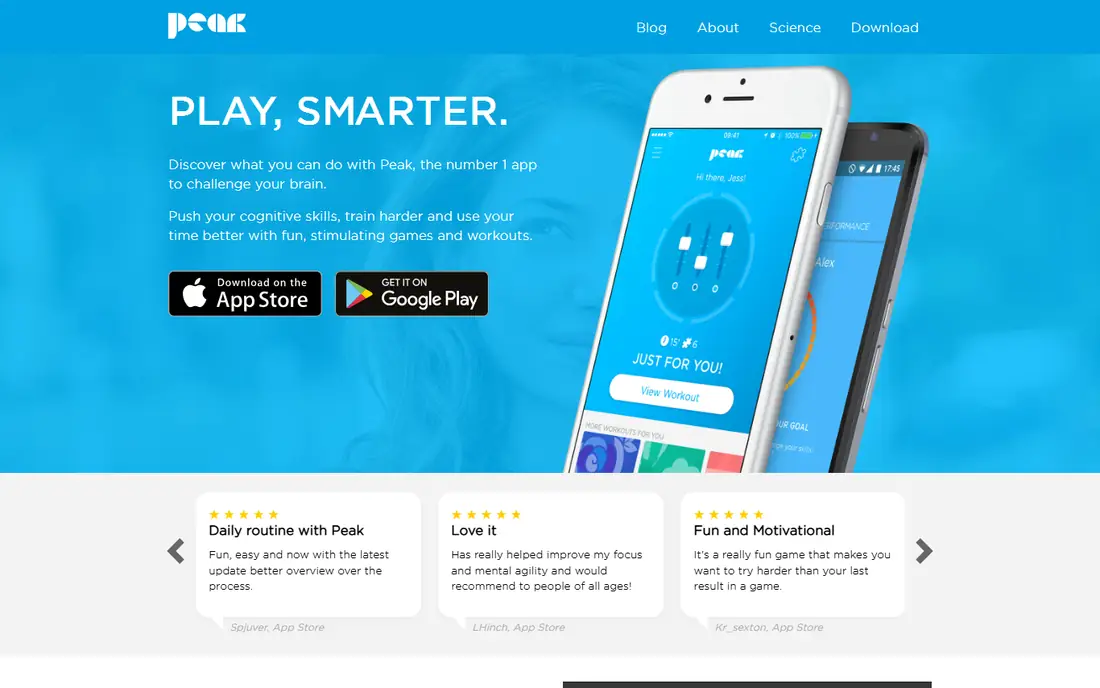
Peak positions itself as a science-backed app with an advisory board of neuroscientists, and its games are well designed across memory, attention, language, and problem solving. The free tier opens the full game library with capped sessions, which makes Peak the best budget test: you can try every game type before paying. Premium is cited near 4.99 to 8 dollars a month depending on the guide.
Evidence for Peak rests largely on an internal study showing improvement on its own in-app assessments, which raises the near-transfer concern, since third-party replication is limited. Still, for a polished daily habit at a low price, Peak is the best value on this list, and its streak and challenge features keep casual users coming back.
What we like- Polished design
- 40 plus games
- Full game library on free tier with capped sessions
- Advisory board of neuroscientists
Watch out for- Premium near 4.99 to 8 dollars a month by guide
- Free sessions capped
- Internal study evidence only
Starting priceFree
Free planYes
BrainHQ has the strongest clinical research base of any app here, with exercises designed around peer-reviewed studies on processing speed, auditory and visual attention, and memory. That research grounding is why clinicians and senior-focused guides rank it first, even though its interface feels less like a game than Lumosity or Peak. The free Daily Spark exercise lets you try one exercise a day without paying.
Premium costs near 14 dollars a month or 96 dollars a year. The game count, near 20 plus, is smaller than Lumosity, but each exercise targets a specific cognitive function with adaptive difficulty. For users who care about evidence over entertainment, especially older adults, BrainHQ is the most defensible choice on this list.
What we like- Strongest clinical research base
- Exercises designed from peer-reviewed studies
- Daily Spark free exercise
- Structured programs
Watch out for- Premium near 14 dollars a month or 96 dollars a year
- Interface less game-like than Lumosity
- Fewer games at 20 plus
Starting priceFree
Free planYes
CogniFit starts with a clinical-grade cognitive assessment that profiles memory, attention, reasoning, and other functions, then builds a structured training program from the results. With 60 plus games, it covers a broad range, and the detailed profile suits users who want to know their strengths and weaknesses before training. That assessment-first design sets CogniFit apart from game-first apps.
Premium is the priciest here, near 19.99 dollars a month or 119.99 dollars a year in guides, and the free tier is limited to the initial assessment plus a few games. The interface feels clinical rather than playful, which suits serious users and less so casual gamers. For a structured, assessment-driven program, CogniFit is the most thorough option available.
What we like- Clinical-grade cognitive assessment
- Structured training programs
- 60 plus games
- Detailed cognitive profile
Watch out for- Premium near 19.99 dollars a month or 119.99 dollars a year
- Free tier limited
- Interface feels clinical
Starting priceFree
Free planYes
NeuroNation focuses on working memory and concentration, with a guided workout plan and adaptive pacing that adjusts difficulty as you improve. Its 30 plus exercises cover memory, attention, and reasoning, and the base version is free, with an assessment and core exercises included. That targeted design suits users whose main complaint is forgetfulness or lost focus rather than general brain fitness.
Premium costs near 12 dollars a month in guides, and some features need a subscription. The game count trails Lumosity, but the guided plan removes the choice paralysis of a huge library. For a user who wants a coach-like plan aimed at memory and concentration, NeuroNation is the most focused pick after BrainHQ.
What we like- Targeted memory and concentration training
- Guided workout plan
- Adaptive pacing
- 30 plus exercises
- Base version free
Watch out for- Premium near 12 dollars a month
- Fewer games than Lumosity
- Some features need a subscription
Starting priceFree
Free planYes
Memorado offers daily memory-focused workouts in a simple interface, with progress tracking that shows improvement over weeks. The free tier covers core workouts, and the app suits users who want a short daily routine without the breadth of Lumosity or the clinical feel of CogniFit. Its games target memory, attention, and logic in bite-size sessions.
The library is smaller than the leaders, research backing is thinner than BrainHQ, and premium pricing varies by guide, so confirm the current price in the app. Memorado fits a casual user who wants a simple daily memory habit and does not need assessments or a huge catalog. For depth, BrainHQ or CogniFit remain stronger choices.
What we like- Daily memory-focused workouts
- Simple interface
- Free tier available
- Progress tracking
Watch out for- Smaller library than leaders
- Less research backing than BrainHQ
- Premium pricing varies by guide
Starting priceFree
Free planYes
MindPal rounds out the list with varied brain games across memory, math, and language in simple daily sessions. The free tier covers core games, progress tracking shows improvement, and the interface stays light enough for a quick daily habit. It suits users who want variety without committing to a large subscription or a clinical program.
Research backing is thinner than BrainHQ, the brand is smaller than Lumosity, and premium pricing varies by guide. MindPal is best as a free daily habit for casual users, or as a second app alongside a specialist such as Elevate for language skills. For evidence-led training, BrainHQ remains the stronger pick.
What we like- Varied brain games across memory, math, and language
- Free tier available
- Simple daily sessions
- Progress tracking
Watch out for- Less research backing
- Smaller brand than Lumosity
- Premium pricing varies by guide
How we chose
We judged apps on four tests: evidence base, free tier depth, cognitive breadth, and current availability in 2026. We dropped apps that are no longer maintained, such as Eidetic, which left the App Store, and we favored apps with published or peer-reviewed research behind their exercises over dressed-up casual games. We also kept the evidence honest: brain games reliably sharpen the specific skills they practice, but no commercial app has proven it can prevent dementia or broadly improve daily functioning.
What to check before you buy
Start with the free tier for two weeks before paying, since most apps here offer a useful free daily workout. Match the app to your goal: BrainHQ or CogniFit for evidence and assessment, Elevate for everyday language and math skills, Peak for budget variety, and Lumosity for the broadest library. Then keep expectations grounded and pair the app with the habits that actually support memory: regular sleep, exercise, and social engagement, which have stronger evidence than any game. This article is general information, not medical advice. If memory problems interfere with daily life, see a clinician rather than relying on an app. A short note in your phone about when lapses happen also helps a clinician judge whether the pattern needs further checks.
Frequently asked questions
Do brain training apps really improve memory?
They reliably improve the specific skills they practice, a pattern called near transfer. Evidence for broad transfer to unrelated daily tasks is much weaker, and no app has proven it can prevent dementia.
Which app has the best research behind it?
BrainHQ has the strongest clinical research base, with exercises designed from peer-reviewed studies. CogniFit also offers clinical-grade assessment and structured programs.
Is there a free brain training app?
Yes. Every app here has a free tier, from BrainHQ Daily Spark to Lumosity 3 games a day and Peak full library with capped sessions. Paid plans remove caps and add programs.
How long should I train each day?
Most apps design sessions around 10 to 20 minutes a day. Consistency matters more than session length, so a short daily habit beats occasional long sessions.
When should I see a doctor about memory?
If memory problems interfere with work, daily tasks, or safety, or if they worsen quickly, see a clinician promptly. Apps are general wellness tools, not diagnostic or medical devices.
Sources we checked (0)
Is your product missing or out of date?
We review this list regularly. Vendors can request a listing, send updated pricing or ask about featured placement.

Shihab Mia · Founder, Rankite
Shihab has 5+ years in B2B and SaaS SEO. He writes Rankite's software buying guides from pricing pages, documentation and public user reviews. More about Shihab.