How we make this list: we compare pricing pages, product documentation and public user reviews. Ratings come from G2, Capterra or Trustpilot, with the date we checked them.
Key takeaways
- YNAB suits people who want a hands-on plan, while Rocket Money and PocketGuard suit people who mainly want to see where money goes.
- Mint shut down in March 2024, so former Mint users should look at Monarch Money or Rocket Money for a similar dashboard view.
- Free plans are real, but bank sync, unlimited accounts, and custom categories usually sit behind a paid plan.
- A shared plan matters for couples: check partner access, shared budgets, and whether the second person pays extra.
- This is general information only, not financial advice, and prices should be checked on the vendor site before subscribing.
Quick comparison
| Tool | Best for | Starting price | Free plan |
|---|
 YNAB | Hands-on zero-based budgeting | $14.99 per month | Free trial |
 Rocket Money | Subscription and spending tracking | Free | Yes |
 Monarch Money | Couples and full money picture | $14.99 per month | Free trial |
 PocketGuard | Simple safe-to-spend view | $12.99 per month | Free trial |
 Goodbudget | Envelope budgeting | Free | Yes |
 EveryDollar | Simple zero-based budgeting | Free | Yes |
 Copilot Money | Apple users who like visuals | $13 per month | Free trial |
 Quicken Simplifi | Spending plans and reports | See website | Free trial |
Is your product missing or out of date?
We review this list regularly. Vendors can request a listing, send updated pricing or ask about featured placement.
The best app to track expenses
#1YNAB
Best for: Hands-on zero-based budgeting4.5/5 on
G2 (30 reviews, checked Oct 2026)
Visit ynab.com
Starting price$14.99 per month
Free planFree trial
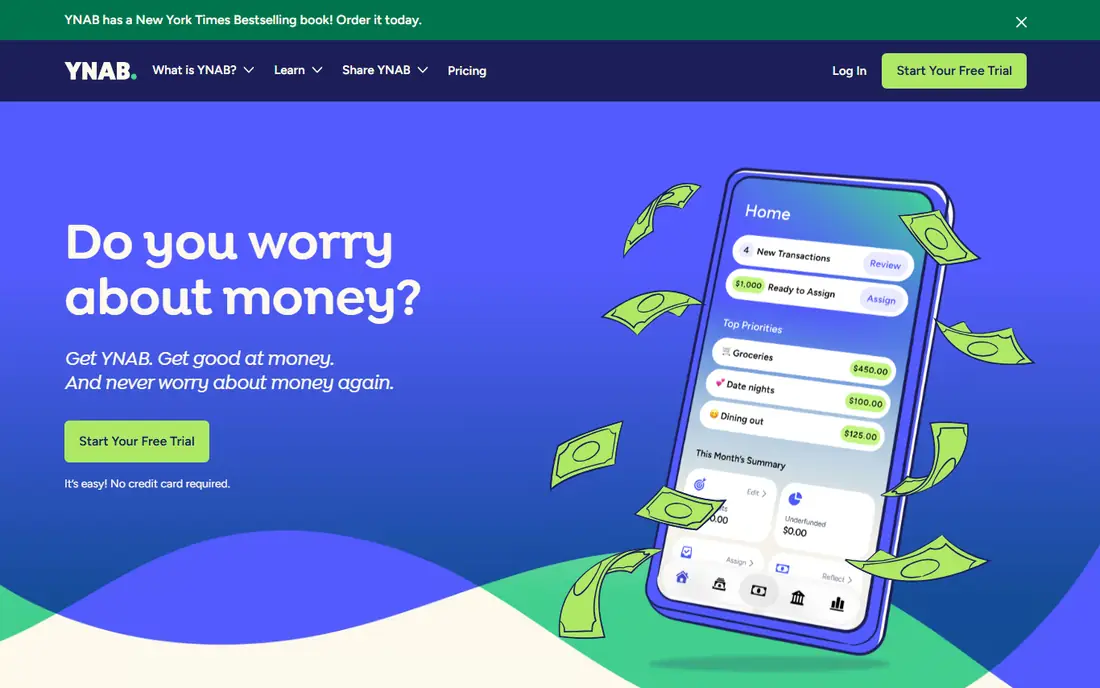
YNAB, short for You Need A Budget, asks you to give every dollar a job before you spend it. That method suits people who overspend in vague categories, such as food delivery or shopping, and want a weekly habit rather than a passive tracker. Bank sync brings transactions in, and the app shows what is left in each category, not just what you spent last month.
The cost and the effort are the trade-offs. YNAB charges $14.99 per month or $109 per year, with a 34-day trial and no free tier, so it is a commitment. It also works best if you check it a few times a week. If you want an app that quietly tracks spending in the background, Rocket Money or Monarch Money may fit better. If you want to change spending behaviour, YNAB is still the strongest method-led pick.
What we like- Clear zero-based method
- 34-day trial
- Strong education and support for new budgeters
Watch out for- No permanent free plan
- Needs regular attention to work well
- Annual price is $109 per year
Starting priceFree
Free planYes
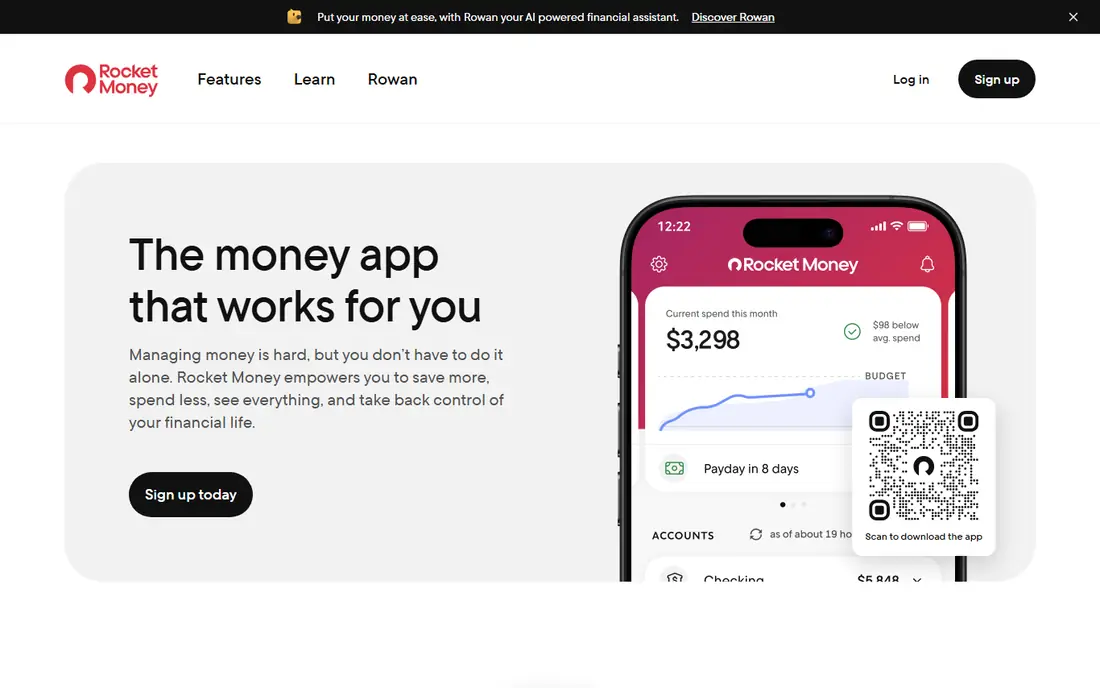
Rocket Money is the easiest free start for expense tracking. Connect accounts, see spending by category, and spot subscriptions you forgot about, all without paying first. That subscription view is the standout feature: many users find a streaming, app, or gym charge they meant to cancel months ago. Paid Premium adds budgeting tools and bill negotiation help.
Premium pricing varies, with public comparisons reporting roughly $7 to $14 per month for Premium, so check the current offer in the app before you commit. Rocket Money is less method-driven than YNAB, which is a plus for passive trackers and a minus for people who want strict envelope rules. Start free, cancel a subscription or two, and then decide if Premium is worth it.
What we like- Free spending and subscription tracking
- Bill negotiation help on paid plans
- Easy cancellation view
Watch out for- Premium pricing is pay-what-you-choose in a range, which makes comparison harder
- Some features need a paid plan
#3Monarch Money
Best for: Couples and full money picture4.7/5 on
G2 (3 reviews, checked Oct 2026)
Visit monarchmoney.com
Starting price$14.99 per month
Free planFree trial
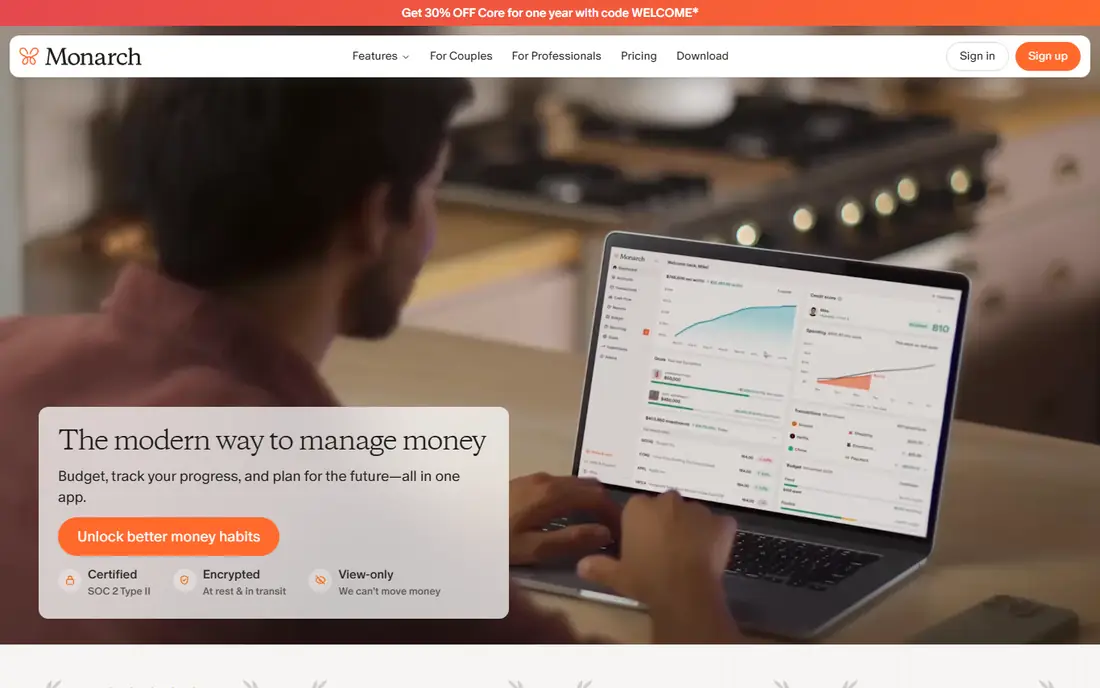
Monarch Money is the closest all-round replacement for Mint for many households. It pulls accounts together, tracks spending, shows net worth and investments, and lets a partner join without an extra seat fee on the core plan. Couples who previously shared a spreadsheet or argued over separate apps often find Monarch easier, because both people see the same budgets and goals.
There is no free tier, only a trial, and the annual price is $99.99 per year, or $14.99 per month. That puts Monarch in the same price band as YNAB, but with a different philosophy: Monarch shows the full picture first, while YNAB pushes a daily budgeting habit. Choose Monarch if you want a shared dashboard and reports, and YNAB if you want a method to follow each week.
What we like- Partner sharing at no extra cost on the core plan
- Net worth, investments, and budgets in one view
- Clean reports
Watch out for- No permanent free plan
- Annual price is $99.99 per year
- Some former Mint users may need time to adjust
Starting price$12.99 per month
Free planFree trial
PocketGuard answers one question well: after bills, savings, and goals, how much can I safely spend? That single figure helps people who do not want to manage dozens of categories. Connect accounts, set bills and goals, and the app does the subtraction for you. It is a good fit for students, new budgeters, and anyone who mainly needs a guardrail, not a full finance suite.
The simplicity cuts both ways. Investors and households with complex accounts may find reports and categories too basic, and the Plus plan at $74.99 per year or $12.99 per month is needed for the full feature set. If you want a simple daily number and you tend to overspend late in the month, PocketGuard is a strong, focused pick.
What we like- Clear In My Pocket figure after bills and goals
- Simple interface
- Good for people who overspend between paydays
Watch out for- Less depth for investors
- Plus price is $74.99 per year
- Free tier is limited
Starting priceFree
Free planYes
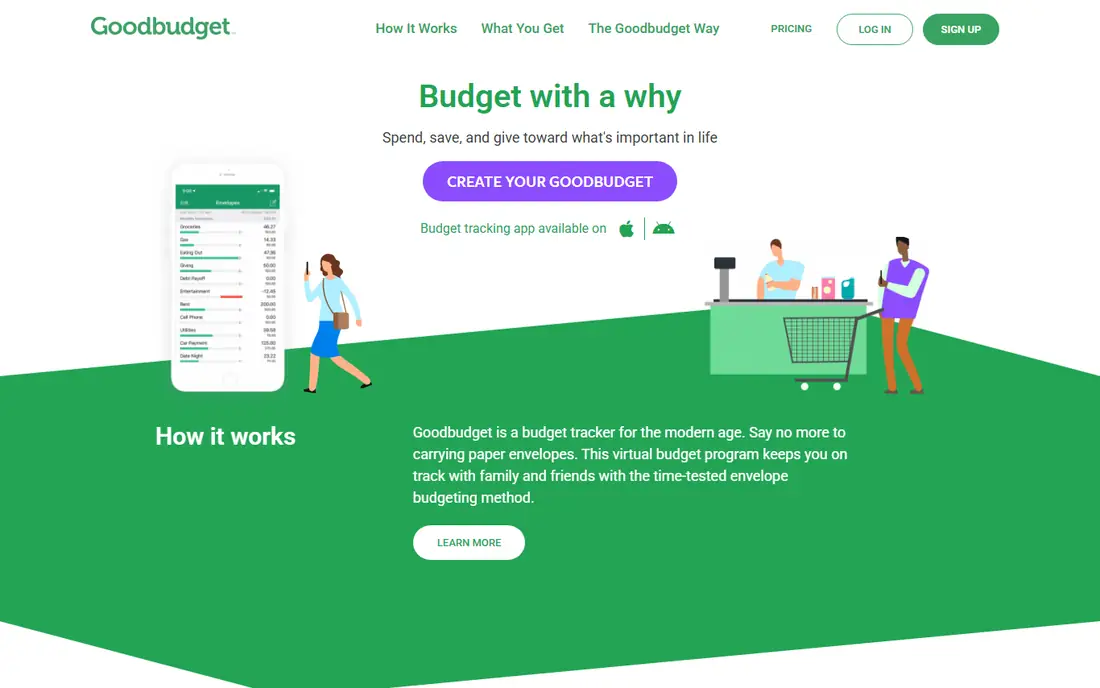
Goodbudget turns the old cash envelope method into an app. Put money into envelopes for rent, food, transport, and fun, then spend from each envelope until it is empty. That visible limit helps people who overspend in one category while another envelope still has money. The free plan includes 20 envelopes, which is enough for a simple household budget.
Goodbudget is less automated than Rocket Money or Monarch Money, and that is by design: manual entry forces attention, but it also takes time. Premium costs $10 per month or $80 per year and adds more envelopes, accounts, and devices. Choose Goodbudget if envelopes make sense to you and you do not mind a little manual work, and choose an automated tracker if you want bank sync to do most of the job.
What we like- True digital envelope method
- Free plan with 20 envelopes
- Syncs across web, iOS, and Android
Watch out for- Manual entry on the free plan for many users
- Bank sync is limited compared with fully automated apps
- Premium is $10 per month
Starting priceFree
Free planYes
EveryDollar, from the Ramsey team, keeps zero-based budgeting simple. Create a monthly budget, assign every dollar to a category, and track spending against that plan. The free version uses manual entry, which suits people who want to stay close to each transaction. The layout is clean, and there are no investment dashboards or complex reports to distract from the budget itself.
Bank sync sits behind Premium, which public comparisons have reported at $79.99 per year or $17.99 per month, though prices change, so verify in the app. That means the free version is best for people who will enter spending by hand, while Premium suits people who want automation. If you follow the Ramsey method or want the simplest zero-based app, EveryDollar is a natural fit.
What we like- Free zero-based budgeting with manual entry
- Simple, clean layout
- Premium adds bank sync
Watch out for- Bank sync needs Premium
- Premium pricing has changed over time, so check the current annual price in the app
Starting price$13 per month
Free planFree trial
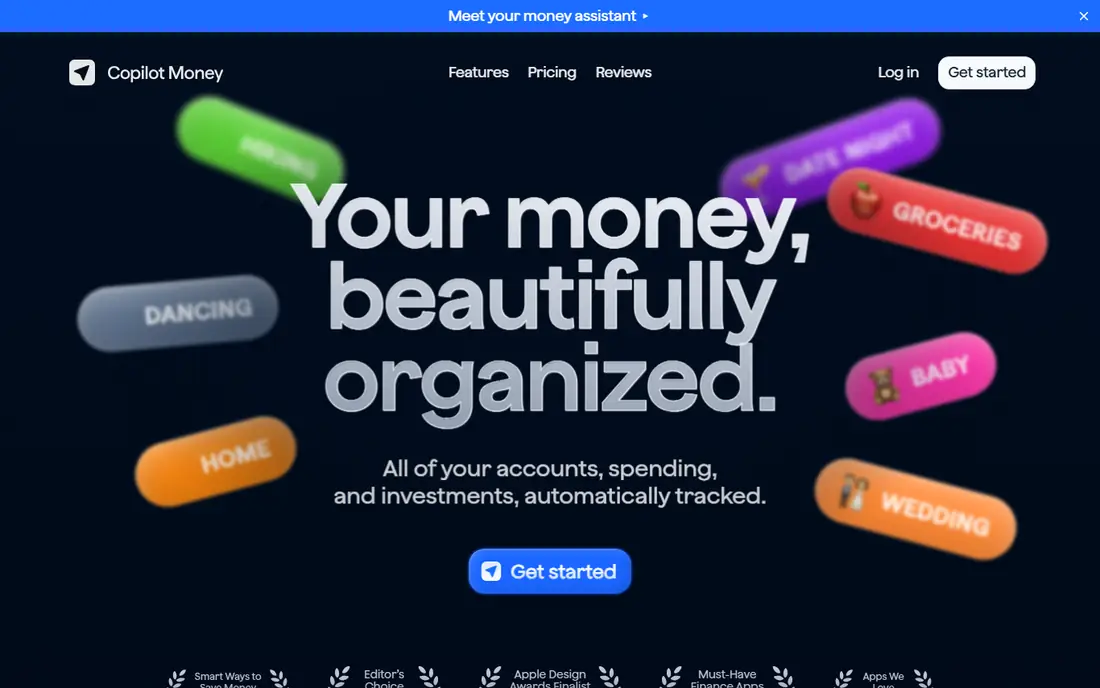
Copilot Money is the visual pick on this list. Spending, budgets, and net worth are shown in clear charts that make patterns easy to spot, such as a rising food bill or a subscription cluster. It suits Apple users who care about design and who will actually open the app because it looks good. Categorisation and transaction review are smooth, and the web version extends it beyond Apple devices.
The price is $13 per month or $95 per year, with a trial rather than a free tier. That is in line with Monarch and YNAB, so the decision comes down to feel: Copilot wins on visuals and ease, YNAB wins on method, and Monarch wins on shared household use. Check current Android support if you do not use Apple devices as your main phone.
What we like- Polished charts and spending visuals
- Strong categorisation
- Works on iPhone, iPad, Mac, and web
Watch out for- Apple-first history means Android users should check current support
- No permanent free plan
- $95 per year
Starting priceSee website
Free planFree trial

Quicken Simplifi builds a personalised spending plan from your accounts, then tracks actual spending against it with reports and projections. It suits people who like to see a month ahead, rather than only looking back at last month. Reports on categories, merchants, and trends help households find the two or three changes that would actually move the needle.
Pricing is the tricky part, because first-year offers and standard rates differ, with public comparisons reporting a lower first-year monthly rate and a higher standard rate. Check the Quicken site for the current price and trial terms before subscribing. Simplifi is a good pick for report lovers and former Quicken users, while YNAB remains better for a strict weekly budgeting habit.
What we like- Personalised spending plans
- Projections and reports
- Long Quicken history in personal finance
Watch out for- Pricing and first-year offers change often
- Interface is more report-led than habit-led
How we chose
We compared expense tracking apps that are available to US users now, with a focus on bank sync, free plans, shared use, and budgeting method. We checked vendor homepages and pricing pages, public documentation, and public reviews on app stores, G2, and Reddit where available. Mint is excluded because it shut down in March 2024, and we note that former Mint users were pointed to Credit Karma, which does not offer the same budgeting tools. Prices change, so where a vendor price was unclear or offered only in the app, we list See website or a trial and direct readers to verify.
How to pick an expense app for your habits
Start with how much attention you want to give money each week. A passive tracker suits people who want awareness without a daily habit, while a method-led app suits people who want to change spending. Next, check bank support for your main accounts, since a tracker that cannot sync your bank will become a manual chore.
If you share money with someone
Check partner access before you pay. Monarch Money includes a partner on the core plan, while other apps may need a second subscription or a shared login, which is less secure. Also check whether budgets, goals, and reports are shared, or whether only account balances are visible to the second person.
If you mainly want to cut subscriptions
Start free with Rocket Money and review its subscription list in the first week. Cancel what you do not use, then decide if a paid plan adds value. A paid tracker should save more than it costs, either through cancelled subscriptions, avoided fees, or clearer spending limits.
If you want a strict budget
Pick YNAB, EveryDollar, or Goodbudget and commit to a weekly review. Set a fixed time, such as Sunday evening, to assign money, check envelopes or categories, and adjust for the week ahead. Without that review, even the best method app becomes just another tracker.
Frequently asked questions
What is the best app to track expenses for free?
Rocket Money and Goodbudget offer the most useful free tiers for tracking, with Rocket Money stronger on subscriptions and bank sync, and Goodbudget stronger on envelope budgeting. EveryDollar is also free for manual zero-based budgeting. For full bank sync and reports, most apps need a paid plan.
What happened to Mint, and what replaces it?
Intuit shut Mint down in March 2024 and pointed users to Credit Karma, which focuses on credit monitoring and does not offer the same monthly budgets. Monarch Money and Rocket Money are common replacements, depending on whether you want a shared dashboard or subscription tracking.
Is YNAB worth $14.99 per month?
It is worth it if you use the zero-based method and check the app a few times a week, because the habit, not the app alone, drives the change. If you want passive tracking only, a free app or a cheaper tracker may give you most of the value for less money. Use the 34-day trial to test the habit before paying for a year.
Can couples use one expense app together?
Yes, but check the sharing terms. Monarch Money includes partner access on its core plan, while other apps vary. Avoid sharing a single login if the app offers a proper partner or household option, since separate access keeps data safer and lets each person set their own alerts.
Do expense apps sell my financial data?
Reputable apps describe data use in their privacy policies, and many earn money from subscriptions rather than selling transaction data. Read the privacy policy for any app you connect to a bank, check data deletion options, and disconnect accounts you no longer use. This is general information only, not financial advice.
Sources we checked (8)
- https://ynab.com
- https://www.rocketmoney.com
- https://www.monarchmoney.com
- https://pocketguard.com
- https://goodbudget.com
- https://www.everydollar.com
- https://copilot.money
- https://www.quicken.com
Is your product missing or out of date?
We review this list regularly. Vendors can request a listing, send updated pricing or ask about featured placement.

Shihab Mia · Founder, Rankite
Shihab has 5+ years in B2B and SaaS SEO. He writes Rankite's software buying guides from pricing pages, documentation and public user reviews. More about Shihab.