How we make this list: we compare pricing pages, product documentation and public user reviews. Ratings come from G2, Capterra or Trustpilot, with the date we checked them.
Key takeaways
- Downloads live behind the paid tier on every service here; the free versions of Spotify and YouTube Music cannot save music for offline play.
- Spotify Premium, now 12.99 dollars a month in the US, has the smoothest download system and finally includes lossless audio, while Apple Music at 11.99 includes lossless and spatial audio as standard.
- YouTube Music is the pick for obscure music, because anything on YouTube, live versions, covers, rarities, can join your offline library.
- Downloaded music is rented, not owned: stop paying and the offline library stops working, on all eight services.
Quick comparison
| Tool | Best for | Starting price | Free plan |
|---|
 Spotify | Easiest downloads and discovery | $12.99 per month | Yes |
 Apple Music | Sound quality and Apple devices | $11.99 per month | No |
 YouTube Music | Rare tracks and music videos | $11.99 per month | Yes |
 Amazon Music Unlimited | Prime households and Alexa | $11.99 per month | No |
 Tidal | Hi-fi quality and artist payouts | $11.99 per month | No |
 Deezer | A clean, independent alternative | $11.99 per month | Yes |
 Qobuz | Owning hi-res downloads outright | See website | No |
 SoundCloud | Independent and unreleased music | Free | Yes |
Is your product missing or out of date?
We review this list regularly. Vendors can request a listing, send updated pricing or ask about featured placement.
The best apps to listen to music offline
Starting price$12.99 per month
Free planYes
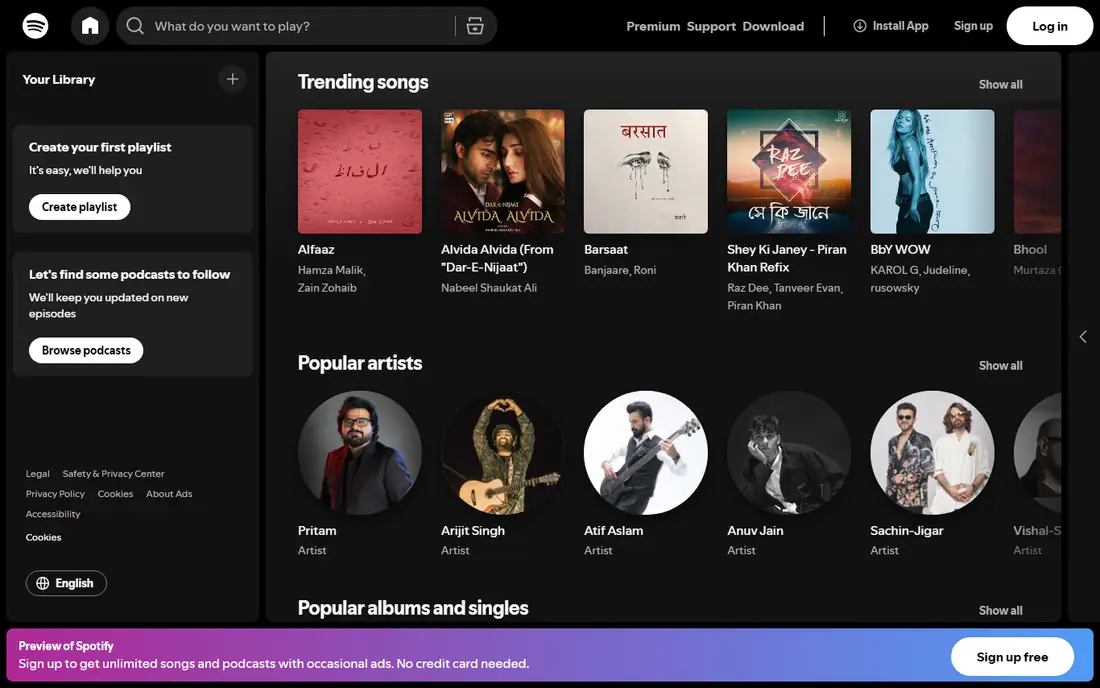
Spotify is the default because the whole loop, find, save, fly, listen, is frictionless, and because everyone you share music with is already on it. For offline specifically, its per playlist control and storage settings are the most mature.
Pay for it if discovery matters. If you mostly replay a fixed library, Apple Music and Tidal deliver the same songs for a dollar less with higher base quality, which adds up across a year of renewals.
What we like- Spotify's download system is the most thought through here: tap a playlist, album or podcast to save it, set downloads to wifi only, choose the quality to balance storage, and smart downloads can refresh a listening mix automatically. Premium now includes lossless audio up to 24 bit, closing the quality gap rivals used to mock. Discovery stays its superpower: algorithmic playlists, daylist and release radar keep an offline library feeling new. The free tier is a real product for online listening, with adverts and limits, though it cannot download.
Watch out for- Premium Individual rose to 12.99 dollars a month in the US in 2026, making it the most expensive mainstream plan here. Download limits apply per device and the app must reconnect periodically or downloads pause. The interface now carries podcasts and audiobooks competing for the same home screen, which pure music listeners complain about. Audiobook hours are capped monthly on most plans.
Starting price$11.99 per month
Free planNo
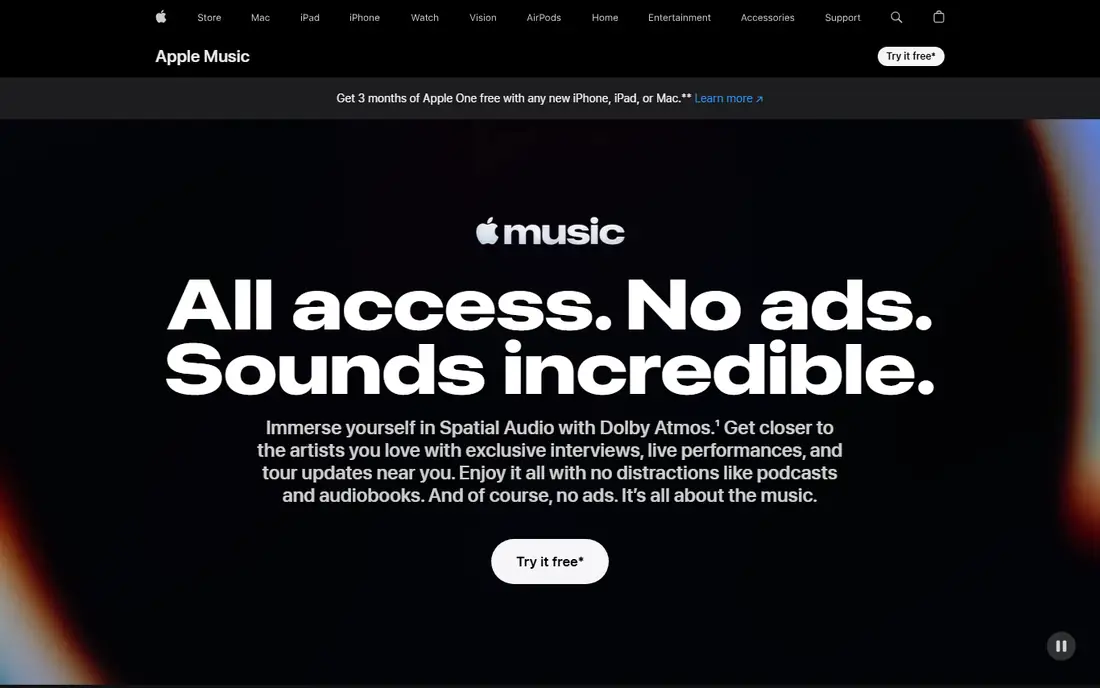
For Apple households, this is the offline service to beat: one subscription fills the phone, the watch and the car, at a dollar under Spotify with better default sound.
The storage warning is the practical one. Set download quality to high rather than lossless for the bulk library, and keep lossless for the albums you love; your future self at a full phone will be grateful.
What we like- Apple Music includes lossless audio and spatial audio with Dolby Atmos in the standard 11.99 dollar plan, no hi-fi tier to climb, so downloads can be true CD quality or better where the catalogue offers it. Downloads work across iPhone, iPad, Mac, Apple Watch and Android, and Apple Watch downloads make it the runner's and swimmer's choice, music on the wrist with no phone. The catalogue matches Spotify's scale. Integration with an existing iTunes era library, including your own uploaded files, is unique here.
Watch out for- There is no free tier, only trials. Lossless files are large, and a phone fills fast if you download thoughtlessly
- The app needs watching in storage settings. Discovery and playlist culture trail Spotify. On Windows and Android it is a guest in someone else's house, functional but plainly secondary. Downloads are tied to your Apple account and region rules.
Starting price$11.99 per month
Free planYes
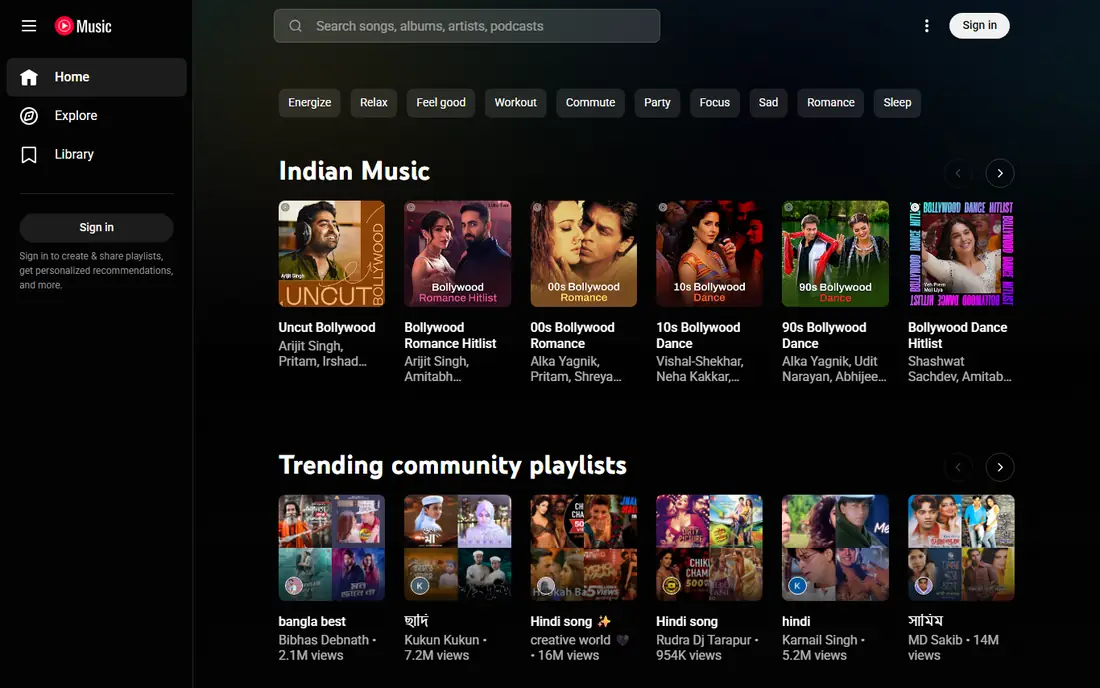
Choose YouTube Music if your taste runs to the unreleased and the live. No other catalogue has the concert recording from 2009 that you actually want to hear on the plane.
For mainstream listening it is level with the field on price and downloads, so the decision is catalogue shape. Your listening history will tell you which attic you live in.
What we like- YouTube Music's catalogue is the official 100 million songs plus the world's attic: live recordings, bootlegs, covers, demos and performances that exist only as YouTube videos, all of it downloadable on Premium or the standalone Music Premium at 11.99 dollars a month. Its smart downloads feature automatically saves music based on your listening for flights you forgot to prepare for. If you already pay for full YouTube Premium, at a higher price, Music Premium is included. The free tier streams with adverts.
Watch out for- Free tier listening on mobile is limited and cannot download or play with the screen off in the way paying users expect. Audio quality on video sourced tracks varies wildly, because the source does. The app merges music and video in ways that sometimes surface odd versions of songs. Playlist and library tools trail Spotify's polish.
Starting price$11.99 per month
Free planNo
Amazon's offer is arithmetic for Prime households: you are already paying the membership, the music discount rides on it, and the speakers in your house already speak Alexa.
Run the numbers if you are not on Prime. At full price it matches Apple and Tidal while offering a weaker app, so its case depends entirely on the Prime discount and the hardware you own.
What we like- For Prime members, Unlimited costs 11.99 dollars a month, 12.99 without Prime, and includes lossless and spatial audio on much of the catalogue, with downloads across phones, tablets, Fire devices and Echo speakers with storage. Households already paying for Prime get one of the cheapest full services here, and voice control through Alexa makes it the kitchen and car friendly option. A limited selection of music is included with Prime itself at no extra cost, in a radio style form, which suits casual listeners before they commit.
Watch out for- The included with Prime tier is not the product most people imagine: it restricts on demand choice compared with Unlimited, a confusion Amazon's naming does nothing to clear. The app is the least loved interface in this list. Discovery trails Spotify. Leaving the Amazon ecosystem makes the library feel rented from a landlord you no longer visit.
#5Tidal
Best for: Hi-fi quality and artist payouts4.6/5 on
G2 (73 reviews, checked Oct 2026)
Visit tidal.com
Starting price$11.99 per month
Free planNo
Tidal is the quality and conscience pick: best in class files for your downloads and a cleaner story about artist pay, at the same price as Apple Music.
Be honest about your headphones before paying for resolution your ears cannot receive. Over good wired headphones or a proper speaker setup, the difference is real and worth having on a plane.
What we like- Tidal rebuilt its pricing into one 11.99 dollar individual plan that includes its full quality range, lossless and hi res FLAC and Dolby Atmos where available, so downloads can be the best sounding files in mainstream streaming. It pays artists at rates it publicises as higher than the giants, which matters to listeners who think about where the money goes. Download controls are clean, and DJ and stem tools serve the dance music crowd. The catalogue covers the mainstream fully.
Watch out for- There is no free tier in most markets now. The app ecosystem, car and speaker support, is thinner than Spotify's. Social and discovery features trail the leaders. Hi res downloads are storage hungry, and over ordinary Bluetooth headphones the quality difference shrinks toward zero, which is the honest caveat for the whole hi-fi claim.
Starting price$11.99 per month
Free planYes
Deezer is for the listener who wants the standard product without the standard landlord. It does the offline job fully, sounds as good as anyone, and leaves you alone to listen.
If your friends all swap Spotify links, the network effect will pull you back. If you listen solo, Deezer's calm is worth the small isolation.
What we like- Deezer, the French independent, offers the mainstream deal at 11.99 dollars: full catalogue, lossless FLAC quality on its paid tier, downloads across devices, and its Flow feature, an endless personal mix that learns your taste with a lighter touch than Spotify's algorithmic push. It has a free tier for online listening. Its smaller size shows as a calmer app, music first, with podcasts present but not dominant. Song recognition is built in.
Watch out for- The user base is smaller, so shared playlists and social features have less network behind them, and some speaker and car integrations lag. US marketing is minimal, which makes it feel obscure despite its age and size in Europe. Free tier limits are real. Catalogue gaps appear at the edges compared with the top three.
Starting priceSee website
Free planNo
Qobuz answers the ownership question this guide opened with. Everything else on this list is a rental that evaporates when you stop paying; a Qobuz purchase is a record on your shelf, in the best digital quality sold.
Most listeners will stream. The listener building a permanent library, especially in classical and jazz, should build it here and stream the rest anywhere.
What we like- Qobuz is two products in one: a streaming subscription with downloads for offline play like the others, and a download store where you buy albums in hi res FLAC and own the files outright, playable anywhere forever, which no subscription rival here offers. Its catalogue leans deep into classical, jazz and audiophile recordings, with editorial and liner note style content. Streaming quality is hi res by design rather than by tier. For collectors, the store is the point: a library that survives cancelling.
Watch out for- Mainstream and social features are the weakest here, and the catalogue has gaps in popular and regional music compared with Spotify. Subscription pricing varies by plan and billing period, so check the site. There is no free tier. The app experience serves collectors rather than casual listeners, and discovery is editorial, not algorithmic.
Starting priceFree
Free planYes
SoundCloud is the specialist: the place your offline library gains the tracks no store sells. Pair it with one mainstream service and the combination covers both the charts and the underground.
On its own it frustrates anyone expecting a complete, consistent offline collection. As a second service for discovery, it has no rival.
What we like- SoundCloud hosts the music that exists nowhere else: demos, mixtapes, DJ sets, underground scenes and tomorrow's artists uploading from bedrooms. Its Go and Go+ subscriptions add offline downloads for tracks the artists have enabled, plus the mainstream catalogue on Go+, and the free tier streams a vast independent library. For discovery at the grassroots, nothing else is close. Artists can enable downloads directly, and some music is free to keep.
Watch out for- Offline rights are patchy by design: only tracks artists or labels have cleared can be saved in the app, so your offline library will have holes no subscription removes. Audio quality is lower than the hi-fi services. The catalogue licensing for mainstream music on Go+ has shifted over the years, so check current terms. The app experience varies between the professional and the chaotic, like its catalogue.
How we chose
We picked music services a US listener can subscribe to in October 2026 that support true offline downloads of a mainstream catalogue, plus Qobuz for owned downloads and SoundCloud for the independent catalogue. Prices are the published US individual monthly rates after the 2026 rises, with Spotify now the most expensive of the majors at 12.99 dollars. Download rules were checked per service, including the free tier limits. No service was hands on tested for this guide; judgements rest on vendor plan pages and current comparison reporting.
How to set up offline listening properly
Download on wifi, at the quality you actually need. A playlist for a train ride does not need lossless files; high quality settings halve the storage of the top tiers. Save lossless for the albums you know by heart.
Prepare the night before, not at the gate. Downloads queue slowly on hotel wifi, and every service needs an occasional online check in; a library that has not checked in for weeks can refuse to play mid flight. Open the app online the day you travel and let it refresh its licences.
Keep a permanent offline core. One playlist of essentials, downloaded and never deleted, means a dead battery on your streaming account, a billing failure or a roaming desert never silences you completely. Rotate its contents every few months and it stays fresh.
Frequently asked questions
Can I listen to Spotify offline for free?
No. Downloads are a Premium feature on Spotify, as on every service here. The free tier needs a connection and carries adverts and play limits on mobile. The same applies to YouTube Music's free tier. Anyone offering a tool to rip streams into permanent free downloads is describing a terms breaking, usually malware carrying detour; the lawful free offline route is a trial subscription timed to your trip.
Do downloaded songs disappear if I cancel?
Yes, on the subscription services. Downloads are encrypted and tied to an active account; when the subscription ends, offline play stops, though your library and playlists usually wait for you if you return. The exception is music you bought outright, such as Qobuz store purchases, which are files you own and keep.
How much storage does offline music take?
Roughly 2.5 to 3.5 MB per song at standard high quality, around 10 MB or more at lossless, and several times that for hi res files. A 500 song library is about 1.5 GB at high quality and 5 GB plus at lossless. Download selectively at the top quality settings, or let the app manage a smart downloads cache with a size cap.
Which app has the best sound quality for downloads?
Apple Music, Tidal and Qobuz lead, with lossless included as standard and hi res up to 24 bit and 192 kHz on parts of their catalogues. Spotify's newer lossless reaches 24 bit and 44.1 kHz. Over Bluetooth earbuds the gaps narrow sharply, because the connection itself compresses the audio; wired headphones and good speakers are where the quality tiers earn their price.
Can I download music to my watch or a second phone?
Apple Music is the strongest here, with Apple Watch downloads for phone free listening. Spotify also supports downloads to its apps on watches and multiple devices within account limits, as do the other majors on phones and tablets. Every service caps the number of devices holding downloads at once, so clear an old phone's library when you replace it.
Sources we checked (0)
Is your product missing or out of date?
We review this list regularly. Vendors can request a listing, send updated pricing or ask about featured placement.

Shihab Mia · Founder, Rankite
Shihab has 5+ years in B2B and SaaS SEO. He writes Rankite's software buying guides from pricing pages, documentation and public user reviews. More about Shihab.