How we make this list: we compare pricing pages, product documentation and public user reviews. Ratings come from G2, Capterra or Trustpilot, with the date we checked them.
Key takeaways
- Smule and StarMaker suit singers who learn by performing, since duets, community feedback, and large song catalogs keep practice frequent and fun.
- Sing Sharp, Vanido, and Yousician suit singers who want structured training, since they add pitch feedback, exercises, and lessons rather than karaoke alone.
- WeSing, Singa, and KaraFun suit singers who want a big song library and simple recording, with free tiers that cover casual practice well.
- Free tiers vary widely, so check which songs, exercises, and recording features stay free before building a daily routine around one app.
Quick comparison
| Tool | Best for | Starting price | Free plan |
|---|
 Smule | Duets and community singing | See website | Yes |
 StarMaker | Competitions and social karaoke | See website | Yes |
 WeSing | Social karaoke parties | See website | Yes |
 Singa | Karaoke with a clean catalog | See website | Yes |
 KaraFun | Large karaoke library | See website | Yes |
 Sing Sharp | Pitch feedback and exercises | See website | Yes |
 Vanido | Daily vocal exercises | See website | Yes |
 Yousician | Structured singing lessons | See website | Yes |
Is your product missing or out of date?
We review this list regularly. Vendors can request a listing, send updated pricing or ask about featured placement.
The best apps to learn singing for free
Starting priceSee website
Free planYes
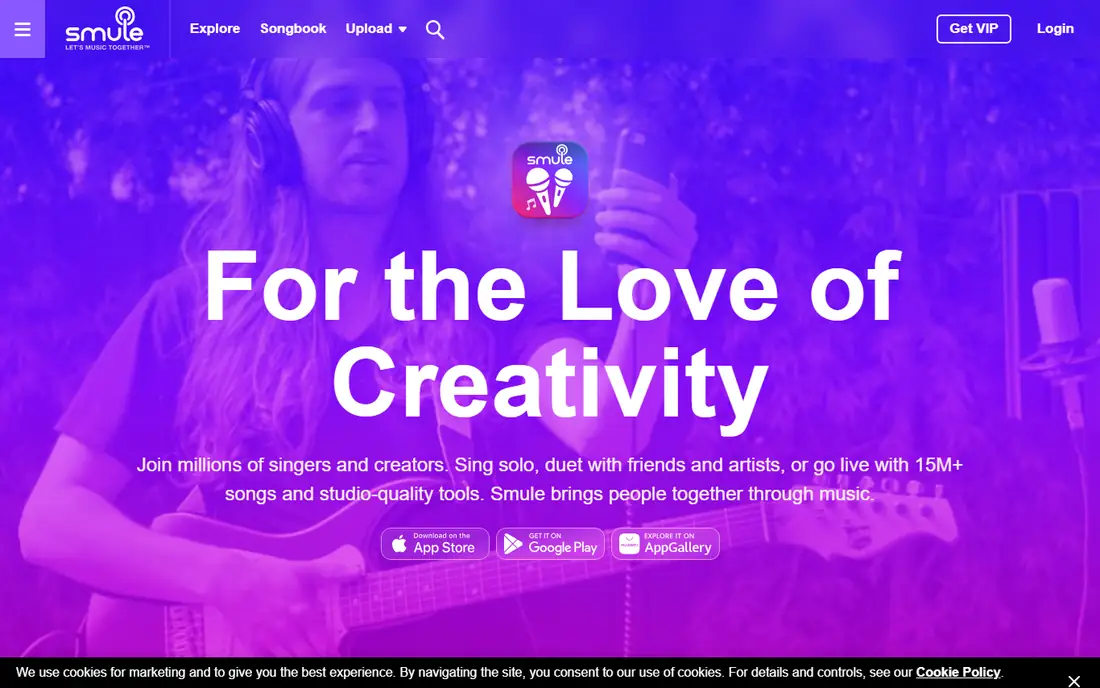
Smule is the best-known singing app for a reason. It pairs a large song catalog with duets, group songs, and live singing rooms, so practice feels social rather than solitary. You can sing solo, join an open duet, or record with other singers around the world. Real-time pitch guidance and vocal effects help you hear when you drift off key, and scrolling lyrics keep you on track through unfamiliar songs.
The free tier covers selected songs and duets, but the full catalog and some recording options need a VIP subscription. The social side is also a double-edged sword: likes, comments, and feeds can pull attention away from actual practice. Smule suits singers who stay motivated by performing for others and who want the biggest community. Set a practice goal before opening the app, so social browsing does not replace singing time.
What we like- Huge song catalog
- Duets with other singers
- Vocal effects and pitch guidance
Watch out for- Full catalog needs a VIP subscription
- Social feed can distract from practice
Starting priceSee website
Free planYes
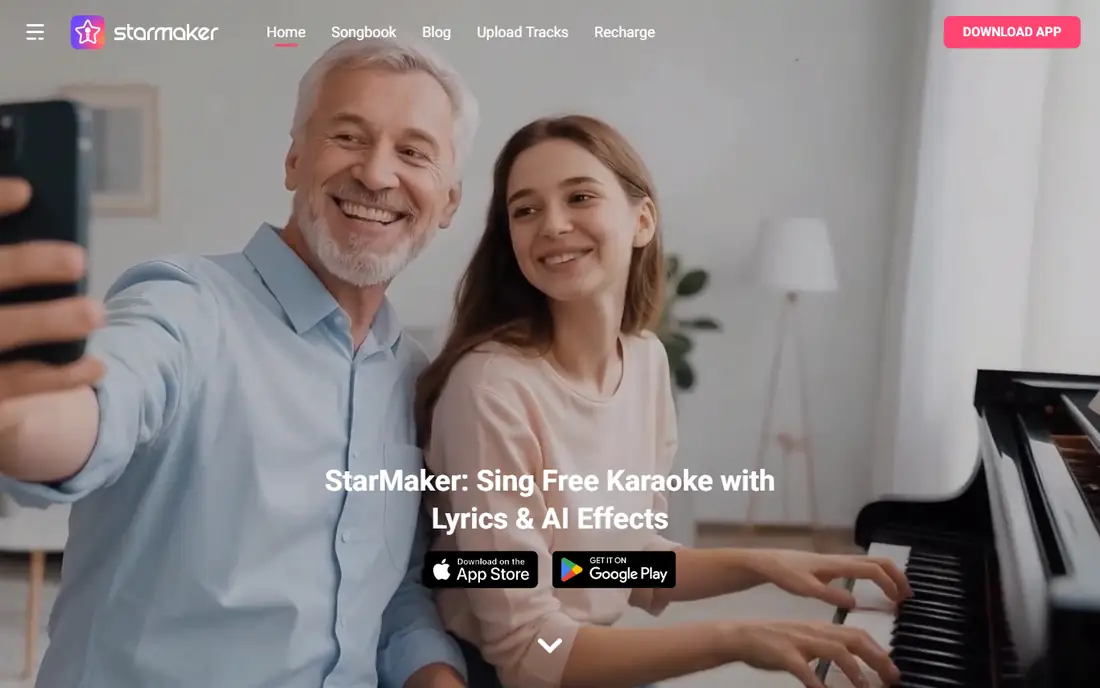
StarMaker leans into the talent-show side of singing. You can record solo performances, join virtual bands, enter competitions, and sing duets with other users. The catalog covers Western pop, Latin music, and a deep range of Asian pop, which suits multilingual singers better than most rivals. Real-time pitch tracking shows how close you sit to the target notes, which turns karaoke into genuine practice.
The free tier includes a solid song selection and basic recording tools, while premium access extends the catalog and effects. The gamified interface feels playful, but the feeds, coins, and contests can distract from focused training. StarMaker suits singers who thrive on competition and community feedback. If you prefer quiet, structured lessons, pair it with an exercise app rather than relying on it alone.
What we like- Large multilingual catalog
- Competitions and virtual bands
- Pitch tracking
Watch out for- Some songs and effects need payment
- Interface feels busy with social features
Starting priceSee website
Free planYes
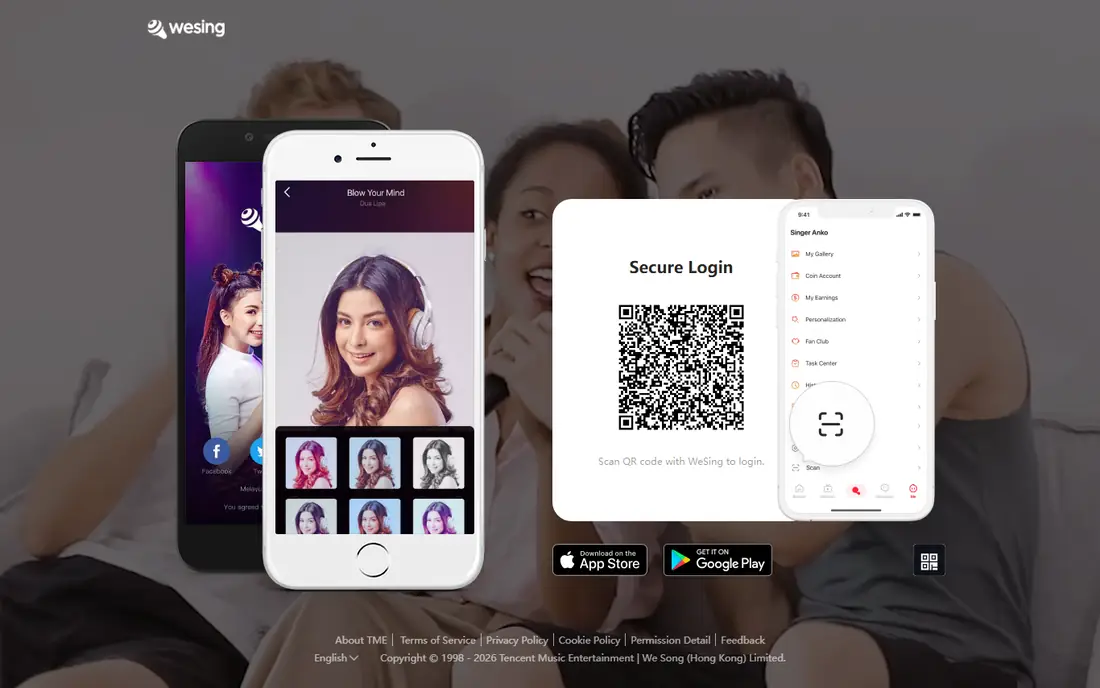
WeSing, built by Tencent, is a social karaoke app with a strong following across Asia and beyond. You can record audio and video covers, join live karaoke parties, and share performances with a large community. Recording quality is strong for a phone app, and the party rooms make singing feel like an event rather than a chore. For singers who practice inconsistently, that social pull is a real advantage.
WeSing is weaker as a training tool. It offers little in the way of structured lessons, pitch drills, or range exercises, so progress depends on how much you sing rather than what you practice. The free tier covers core singing and party features without a mandatory subscription. WeSing suits social singers who want fun first and training second. Use it alongside a drill app if your goal is measurable vocal improvement.
What we like- Live karaoke parties
- Studio-quality recording
- Large community
Watch out for- Social features dominate
- Less structured vocal training than lesson apps
Starting priceSee website
Free planYes
Singa is a karaoke service with a cleaner, less cluttered feel than its social rivals. The catalog is large and licensed, and the app works on phones as well as computers, which suits singers who practice at a desk or with a bigger screen. The interface focuses on picking a song and singing it, without feeds, coins, or competitions competing for attention. That simplicity makes Singa easy to fit into a daily routine.
The free tier gives a taste of the catalog but limits full access, so heavy users will hit paywalls. Singa also lacks the duet and community depth of Smule and StarMaker, which matters if social motivation drives your practice. Singa suits singers who want straightforward karaoke practice without social noise. It pairs well with a pitch-training app for singers who want both repertoire and technique.
What we like- Clean interface
- Large licensed catalog
- Works on phones and computers
Watch out for- Free tier limits song access
- Fewer community features than Smule
Starting priceSee website
Free planYes
KaraFun is a long-running karaoke service with one of the largest song libraries in this list. The player is simple: pick a song, follow the lyrics, and sing. Offline mode on paid plans suits parties and practice without a reliable connection, and the catalog covers many genres and languages. For singers who mainly want to practice songs they love, KaraFun removes friction and gets out of the way.
The free tier is limited, and KaraFun offers almost no vocal training, pitch feedback, or lessons. It is a karaoke player, not a singing teacher, so technique gains come only from repetition and self-listening. KaraFun suits singers who already know the basics and want repertoire above all. Beginners should combine it with an exercise app, or they may rehearse bad habits without feedback.
What we like- Very large song library
- Offline mode on some plans
- Simple player
Watch out for- Free tier is limited
- Training features are minimal
Starting priceSee website
Free planYes
Sing Sharp is one of the few apps on this list built around training rather than karaoke. It offers vocal exercises, real-time pitch feedback, and a built-in range test, so you can measure progress instead of guessing. The exercise variety covers warm-ups, scales, and pitch drills, and the free tier is reasonably generous for daily practice. For singers who want to fix pitch problems, Sing Sharp gives the most direct feedback per minute.
The main limits are platform and repertoire. Recent store checks found Sing Sharp on Google Play for Android, but not in the US App Store, so iPhone users should check availability before committing. Song practice is also limited compared with karaoke apps. Sing Sharp suits Android users who want exercise-driven improvement. Pair it with a karaoke app for songs, and use the range test monthly to track progress.
What we like- Real-time pitch feedback
- Vocal range test
- Exercise variety
Watch out for- Android only in recent store checks
- Song practice is limited
Starting priceSee website
Free planYes
Vanido builds a short daily exercise routine around your voice, with pitch detection that shows whether you hit each note. The approach is closer to a fitness app than a karaoke app: open it, do the day's exercises, and close it. That structure suits beginners who want guidance without choosing exercises themselves. The pitch feedback is immediate, so you learn to hear and correct drift while you sing.
Vanido is not a karaoke app, so its song library is small and repertoire practice is limited. Advanced lessons and some features sit behind payment, though the free tier covers a useful daily routine. Vanido suits singers who want a ten-minute daily habit and measurable pitch progress. Combine it with a karaoke app for songs, and keep sessions short and regular rather than long and rare.
What we like- Personalized daily exercises
- Pitch detection
- Simple routine
Watch out for- Smaller song library
- Advanced lessons need payment
Starting priceSee website
Free planYes
Yousician offers the most structured curriculum on this list, with singing lessons that open in sequence and track streaks and levels. Lessons cover pitch, timing, and technique, and the app listens to your singing and gives feedback as you go. That guidance suits beginners who want to be told what to practice next, rather than designing their own routine. The gamified progress system also helps motivation over months.
The free tier is limited, so serious users will need a subscription, and singing is one instrument among guitar, piano, and others, so the price buys more than voice alone. Yousician suits learners who want a course, not just an app, and who like streaks and levels. If your only goal is pitch accuracy, a focused drill app may give more value per minute. Yousician is best for singers who want structure and are willing to pay once the free tier runs out.
What we like- Step-by-step singing curriculum
- Gamified progress
- Feedback on pitch and timing
Watch out for- Free tier is limited
- Singing is one instrument among several
How we chose
We compared singing apps on free tier generosity, pitch feedback, lesson structure, song catalog size, and ease of daily use, using vendor pages, app store listings, and public user experience. The reference buyer was a beginner who wants to learn singing without paying, so genuinely free features mattered more than premium catalogs. Pitch feedback and structured exercises were weighted heavily, since karaoke alone does not teach technique. Platform availability was checked, since some apps are Android only. Free tier limits were treated as reported by comparison guides, since vendors change them often, so verify current limits in the store listing before committing.
How to learn singing with a free app
Split practice between drills and songs
Spend ten minutes on pitch drills and exercises, then twenty minutes singing songs. Drills build accuracy, while songs build stamina, phrasing, and confidence. Apps like Sing Sharp, Vanido, and Yousician cover the drill half, while Smule, StarMaker, and KaraFun cover the song half. Skipping drills leaves pitch problems unaddressed, while skipping songs leaves technique disconnected from real music. A split routine keeps both halves progressing together, and it fits into thirty minutes a day.
Use pitch feedback every session
Pitch feedback is the main advantage of a singing app over singing alone in a room. Watch the pitch display while you sing scales, and note which notes you consistently miss. Sharp notes often come from tension, while flat notes often come from low energy or poor breath support. Record yourself weekly and compare recordings, since daily progress is hard to hear. Keep a simple log of your range test results each month, so improvement is visible even when it feels slow.
Protect your voice while you practice
Warm up before singing, stay hydrated, and stop if your voice feels hoarse or painful. Beginners often push too hard, too fast, and strain their voices, which sets progress back by weeks. Limit intense practice to thirty minutes a day at first, and rest your voice on days it feels tired. Avoid whispering when hoarse, since whispering strains the voice more than soft speaking. If hoarseness lasts more than two weeks, or you feel pain when singing, see a doctor or voice specialist rather than pushing through.
Stay consistent with a routine you enjoy
The best app is the one you open daily, so pick tools that fit your habits. Social singers should lean on Smule or StarMaker, while structured learners should lean on Yousician or Vanido. Set a fixed practice time, keep sessions short, and track streaks where the app supports them. Review your routine monthly, and swap apps if motivation fades. Progress in singing is slow and uneven, so consistency over months matters more than any single app feature.
Frequently asked questions
Can I really learn to sing with a free app?
Yes, for basics. Free apps teach pitch accuracy, breath control, and routine through exercises and feedback, which covers the first months of learning well. Advanced technique, like belting, vibrato control, and style, benefits from a teacher who can hear and correct you in person. Treat apps as a strong start, and add lessons later if you want to advance beyond the basics.
Which free singing app is best for beginners?
Yousician suits beginners who want a structured course, while Vanido and Sing Sharp suit beginners who want short daily drills with pitch feedback. Smule and StarMaker suit beginners who learn best by singing songs socially. Pick based on how you stay motivated, since consistency matters more than the app itself. Try two free tiers for a week each before settling on one routine.
Do I need a good microphone to use these apps?
No, a phone microphone works fine for pitch feedback and practice. A quiet room matters more than an expensive microphone, since background noise confuses pitch detection. If you record performances to share, a wired headset or a basic USB microphone improves sound quality noticeably. Start with your phone, and upgrade only if recording quality becomes a real limit.
How long should I practice singing each day?
Start with twenty to thirty minutes a day, including a warm-up, and build gradually as your voice strengthens. Short daily sessions beat one long weekly session, since vocal muscles develop through regular use. Stop if your voice feels tired or hoarse, and rest it fully the next day. Consistency over months produces more progress than intensity over days.
Are free singing apps safe for children?
Most singing apps are social platforms with public sharing, so children should use them with adult supervision and private account settings. Check the app's age rating, turn off public sharing, and review who can contact or comment on your child's performances. For younger children, a drill app used offline or with sharing disabled is safer than a social karaoke app. Always review privacy settings before a child posts any recording.
Sources we checked (0)
Is your product missing or out of date?
We review this list regularly. Vendors can request a listing, send updated pricing or ask about featured placement.

Shihab Mia · Founder, Rankite
Shihab has 5+ years in B2B and SaaS SEO. He writes Rankite's software buying guides from pricing pages, documentation and public user reviews. More about Shihab.