How we make this list: we compare pricing pages, product documentation and public user reviews. Ratings come from G2, Capterra or Trustpilot, with the date we checked them.
Key takeaways
- Babbel is the best structured app for German grammar and conversation.
- Duolingo suits free habit building at beginner level.
- Busuu adds native-speaker feedback on writing and speaking.
- Pimsleur suits audio learners who learn while commuting.
- italki gives real conversation with tutors from $6 per lesson.
Quick comparison
| Tool | Best for | Starting price | Free plan |
|---|
 Duolingo | Free habit building | Free; Super from $13 per month | Yes |
 Babbel | Structured German | From $15 per month | First lesson free |
 Rosetta Stone | Immersion | From $12 per month | Free trial |
 Busuu | Native-speaker feedback | Free; Premium from $73 per year | Yes |
 Pimsleur | Audio learning | From $20 per month | Free trial |
 Memrise | Vocabulary | Free; Pro from $6 per month | Yes |
 Lingoda | Live classes | From $377 per 12-class plan | Free trial |
 italki | Real conversation | From $6 per lesson | See website |
Is your product missing or out of date?
We review this list regularly. Vendors can request a listing, send updated pricing or ask about featured placement.
The best apps to learn German
#1Duolingo
Best for: Free habit building4.5/5 on
G2 (145 reviews, checked Oct 2026)
Visit duolingo.com
Starting priceFree; Super from $13 per month
Free planYes
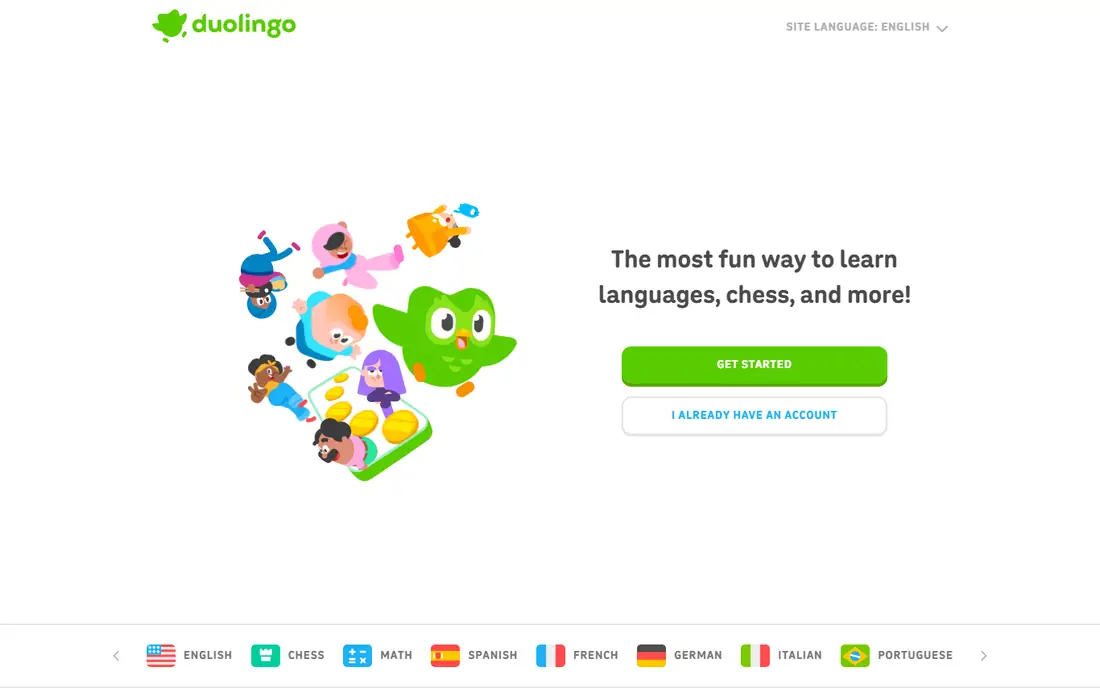
Duolingo is the most-downloaded language app in the world, and its free tier with full app access makes it the easiest way to start German. Gamified streaks build a daily habit, and the German course covers beginner levels A1 to A2. Super at about $13 a month removes ads and adds offline access.
Grammar explanations are shallow, and learners can complete long streaks without holding a real conversation. For a beginner who wants a free daily habit, Duolingo is the best starting point, but pair it with a structured app for grammar.
What we like- Free tier with full app access
- Gamified streaks build daily habits
- German course covers A1 to A2
- Widely available
Watch out for- Grammar explanations are shallow
- Sentences can feel awkward
- Gamification rewards streaks over comprehension
Starting priceFrom $15 per month
Free planFirst lesson free
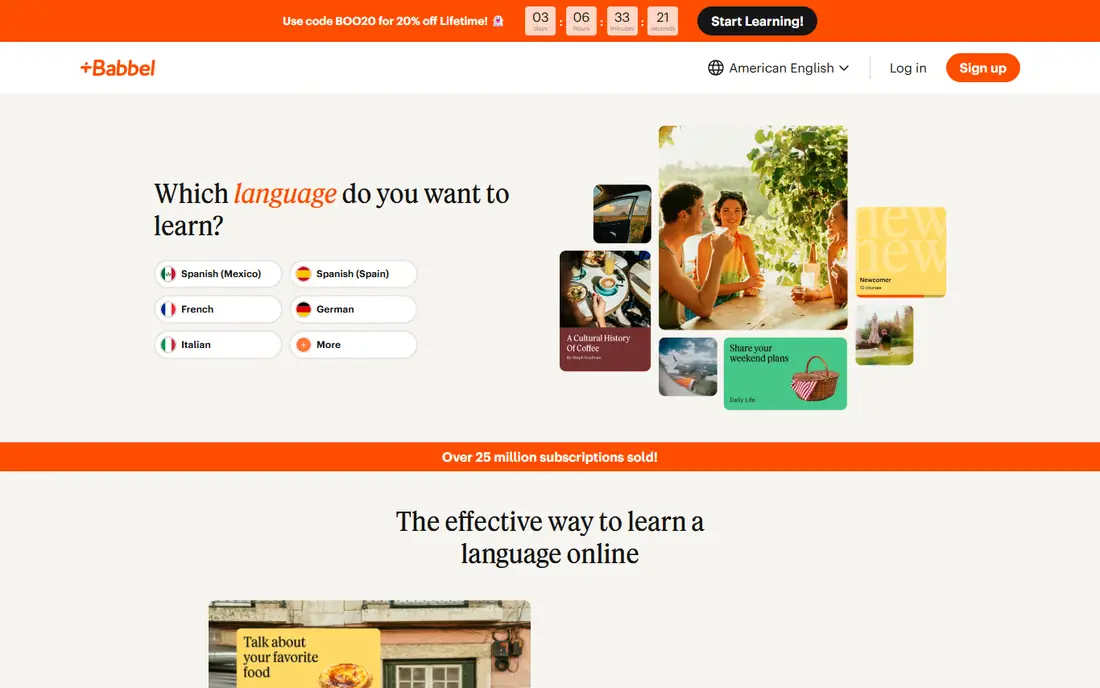
Babbel is the strongest structured curriculum for German, with lessons built around real-life conversation and clear grammar explanations. The German course reaches B1, and the 3-month plan costs $45.75, about $15 a month. First lessons per unit are free to test the method.
No live speaking is included, and coverage is limited beyond B1. For a learner who wants structured German with grammar explained, Babbel is the best app pick.
What we like- Structured lessons with good grammar
- Real-life conversation focus
- German course reaches B1
- First lesson per unit free
Watch out for- About $15 a month on the 3-month plan
- No live speaking included
- Limited beyond B1
Starting priceFrom $12 per month
Free planFree trial
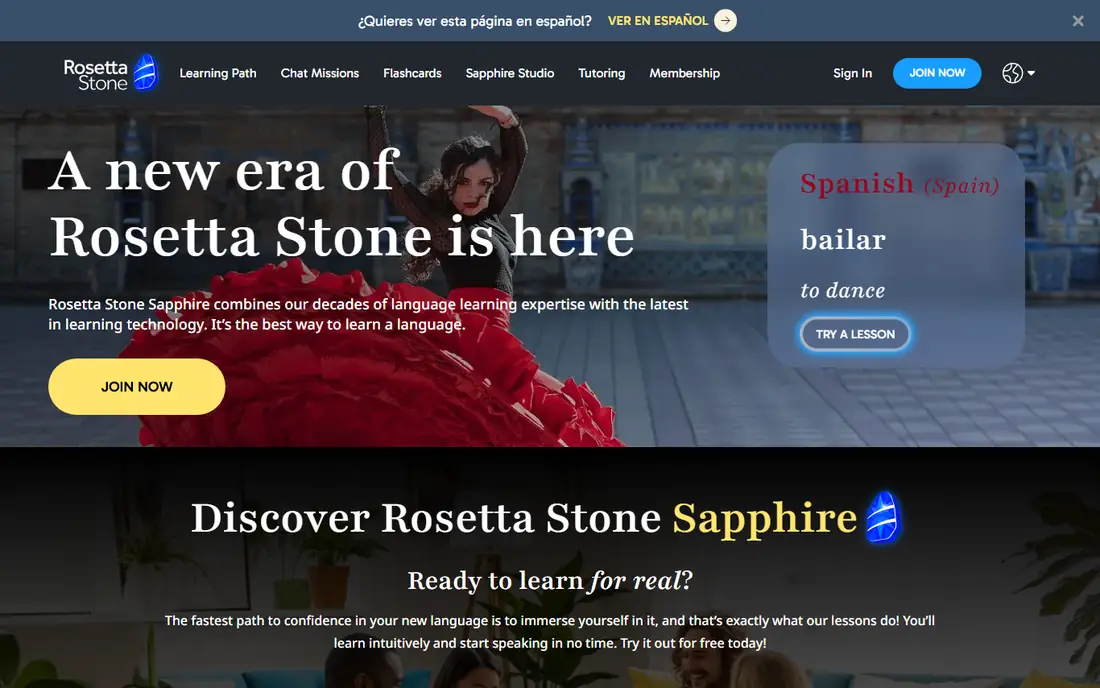
Rosetta Stone uses no-translation immersion, forcing learners to think in German from day one, with vocabulary built by association with images. Pricing runs about $12 to $15 a month on longer plans, with a 3-day trial and a lifetime option.
Grammar is never explained, which is a weak fit for German case system, and learners can stay confused rather than progressing. For a learner who prefers pure immersion and vocabulary intuition, Rosetta Stone works, but German learners usually need Babbel grammar alongside it.
What we like- Immersion with no translation from day one
- Vocabulary by association with images
- Lifetime option available
Watch out for- Grammar is never explained, a weak fit for German cases
- About $12 to $15 a month
- Does not go past B1 effectively
#4Busuu
Best for: Native-speaker feedback4.4/5 on
G2 (71 reviews, checked Oct 2026)
Visit busuu.com
Starting priceFree; Premium from $73 per year
Free planYes
Busuu pairs structured lessons with native-speaker feedback on writing and speaking, a feature few apps offer. The German course reaches B2, with grammar and clear structure, and a free plan covers basic lessons. Premium is sold as an annual plan at about $73 a year.
Community feedback is unpredictable in quality and speed. For a learner who wants native-speaker corrections on real writing and speaking, Busuu is the best app choice.
What we like- Native-speaker feedback on writing and speaking
- German course reaches B2
- Structured grammar
- Free plan available
Watch out for- Premium sold as an annual plan at about $73
- Community feedback is unpredictable
- Smaller vocabulary than rivals
Starting priceFrom $20 per month
Free planFree trial
Pimsleur suits audio learners who study while commuting or walking. Lessons are audio-only, with speaking from the first lesson and a strong pronunciation focus. Twelve weeks of Premium for one language costs about $60, roughly $20 a month, with a 7-day trial.
Reading and writing get little attention, and grammar is implicit rather than explained. For a commuter who wants to speak German before reading it, Pimsleur is the best audio app.
What we like- Audio-only lessons suit commuters
- Speaking from the first lesson
- 7-day trial
- Strong pronunciation focus
Watch out for- About $20 a month for Premium
- No reading or writing focus
- Implicit grammar, not explained
Starting priceFree; Pro from $6 per month
Free planYes
Memrise uses spaced repetition with native-speaker videos to make vocabulary stick, with a free version covering core lessons, two native videos a day, and two speaking practices a day. Pro costs $22.99 monthly or $71.99 a year, about $6 a month, and adds all vocabulary lessons, 30,000 native videos, and unlimited speaking practice without ads.
Free version has ads and limits, and grammar is weaker than Babbel. For a learner who wants vocabulary that sticks, Memrise is the best supplement to a structured app.
What we like- Spaced repetition with native-speaker videos
- Free version covers core vocabulary
- 30,000 native videos on Pro
- Gamified leaderboards
Watch out for- Pro at $22.99 monthly or $71.99 a year
- Free version has ads and limits
- Weaker for grammar than Babbel
Starting priceFrom $377 per 12-class plan
Free planFree trial
Lingoda replaces self-study with live group classes from qualified teachers, using a structured curriculum and class credits billed every four weeks. A 12-class plan costs about $377 for 36 classes across cycles, with a 7-day free trial. Live classes give real speaking time and teacher feedback that apps cannot match.
Cost exceeds app-plus-tutor combinations, and a fixed timetable suits less flexible schedules. For a learner who wants live classes and a timetable, Lingoda is the best classroom-style option.
What we like- Live group classes with qualified teachers
- Structured curriculum
- 7-day free trial
- Class credits billed every four weeks
Watch out for- 12-class plan costs about $377 for 36 classes
- More expensive than apps
- Fixed timetable, less flexible than self-study
#8italki
Best for: Real conversation3.8/5 on
G2 (19 reviews, checked Oct 2026)
Visit italki.com
Starting priceFrom $6 per lesson
Free planSee website
italki gives real conversation with native tutors, with community tutors from $6 to $12 per lesson and professional teachers from $18 to $43. Pay per lesson with no subscription, so learners control spending. Two lessons a week for twelve weeks costs about $144 to $288 with community tutors.
No structured curriculum is included, so italki works best paired with Babbel or Duolingo for grammar and vocabulary. For a learner who wants real conversation, italki offers the cheapest hour of real speaking time.
What we like- Real conversation with native tutors
- Community tutors from $6 to $12 per lesson
- Professional teachers from $18 to $43
- Pay per lesson, no subscription
Watch out for- No structured curriculum included
- Tutor quality varies
- Scheduling takes effort
- Costs add up at two lessons a week
How we chose
We compared apps on German course depth, grammar coverage, speaking practice, and pricing, using vendor pages and published comparisons from September and October 2026. We favored apps with a German course at a stated level, not just a language list. We did not claim hands-on testing, and prices vary by plan and region, so verify before subscribing. German cases need explanation, which is why grammar-first apps rank above pure immersion here.
How to pick the right German learning app
Start with your level and goal. Beginners building a habit should use Duolingo free, then add Babbel for grammar. Intermediate learners should use Babbel plus Busuu feedback, while commuters should use Pimsleur audio. Learners who want real conversation should add italki tutors twice a week, and classroom learners should use Lingoda live classes.
Then combine an app with speaking time. The cheapest plan per month buys no speaking time at all, so an app alone rarely produces conversation. A structured app plus two cheap tutor lessons a week costs roughly $190 to $335 for twelve weeks, less than a professional tutor alone, and produces real speaking progress. Also study cases deliberately: German nominative, accusative, dative, and genitive cases drive sentence structure, so an app that explains cases beats one that only drills vocabulary.
Common mistakes slow German learning. Learners stay on Duolingo for years without speaking, or buy Rosetta Stone expecting grammar explanations that never come. Set a weekly speaking goal, even 30 minutes with a tutor or exchange partner, and test yourself with real sentences, not just app streaks. The best German app is the one paired with real speaking.
Listening immersion accelerates progress beyond any app alone. Add German podcasts, YouTube channels, and music at your level, and listen daily even when you understand only part of it, since ears adapt faster than textbooks suggest. Graded readers and simple news sites bridge the gap between app sentences and real German, and a daily 15-minute listening habit compounds faster than weekend cramming.
Travel preparation changes app choice: a trip in eight weeks favors Pimsleur audio plus italki conversation over a slow structured course, since speaking and listening matter more than reading on a trip. Learn greetings, directions, ordering, and numbers first, and practice them with a tutor before departure, since a small set of confident phrases beats a large passive vocabulary abroad.
Anki flashcards supplement any app here for vocabulary retention, since spaced repetition schedules reviews at the moment before forgetting. Build decks from words you meet in Babbel or Busuu lessons rather than generic lists, and review daily for ten minutes, since personal vocabulary sticks better than pre-made decks.
Consistency beats intensity for language learning, so a daily 20-minute habit outperforms a weekly three-hour session. Protect the streak through busy days with a short review, and resume quickly after a missed day rather than restarting from scratch, since momentum matters more than perfection.
Frequently asked questions
What is the best app to learn German?
Babbel for structured German with grammar, Duolingo for free habit building, and italki for real conversation. Combine an app with speaking practice for best results.
Is Duolingo good for German?
Duolingo builds a free daily habit at A1 to A2 level, but grammar explanations are shallow and long streaks alone rarely produce conversation. Pair it with Babbel or a tutor.
How much does it cost to learn German with an app?
Duolingo is free, Babbel about $15 a month, Pimsleur about $20 a month, and italki from $6 per lesson. A structured app plus two tutor lessons a week costs roughly $190 to $335 for twelve weeks.
Can I learn German to fluency with an app alone?
Apps rarely produce fluency alone, since speaking time matters most. Add italki tutors, Lingoda classes, or a language-exchange partner for real conversation.
Is Rosetta Stone good for German?
Rosetta Stone builds vocabulary intuition through immersion, but grammar is never explained, which is a weak fit for German cases. German learners usually need grammar alongside it.
What level does Babbel German reach?
Babbel German reaches B1, with structured lessons and good grammar. Busuu reaches B2 with native-speaker feedback for learners who want to go further.
Sources we checked (8)
- https://www.duolingo.com
- https://www.babbel.com
- https://www.rosettastone.com
- https://www.busuu.com
- https://www.pimsleur.com
- https://www.memrise.com
- https://www.lingoda.com
- https://www.italki.com
Is your product missing or out of date?
We review this list regularly. Vendors can request a listing, send updated pricing or ask about featured placement.

Shihab Mia · Founder, Rankite
Shihab has 5+ years in B2B and SaaS SEO. He writes Rankite's software buying guides from pricing pages, documentation and public user reviews. More about Shihab.