How we make this list: we compare pricing pages, product documentation and public user reviews. Ratings come from G2, Capterra or Trustpilot, with the date we checked them.
Key takeaways
- Mixpanel's free plan (1 million events a month) is the best free start for event-based product analytics, with usage-based pricing once you grow past it.
- Firebase Analytics is the best free foundation for mobile teams: unlimited event reporting at no cost, especially if you already use Google's stack.
- Amplitude is the enterprise pick for behavioral analytics and predictive modeling, while PostHog is the open-source all-in-one for teams that want analytics plus experiments and feature flags.
- AppsFlyer and Adjust answer a different question (attribution: which campaign drove the install) and are commonly used alongside a product analytics tool, not instead of one.
Quick comparison
| Tool | Best for | Starting price | Free plan |
|---|
 Mixpanel Mixpanel | Event-based product analytics without a data team | $0 for up to 1M events per month; Growth is usage-based after that | Yes |
 Amplitude Amplitude | Behavioral analytics and predictive modeling at scale | See website | Yes |
 Firebase Analytics Firebase Analytics | Free analytics for Google-stack mobile teams | $0 | Yes |
 PostHog PostHog | Teams that want analytics plus experiments in one tool | $0 (generous free tier; usage-based paid plans) | Yes |
 UXCam UXCam | Seeing exactly how users experience the app | See website | Yes |
 Smartlook Smartlook | Visual behavior analytics for web and mobile | See website | Yes |
 AppsFlyer AppsFlyer | Mobile marketing attribution at scale | See website (custom pricing) | Yes |
 Adjust Adjust | Attribution with strong automation | See website (custom pricing) | No |
 CleverTap CleverTap | Lifecycle messaging driven by behavior | See website (custom pricing) | Free trial |
Is your product missing or out of date?
We review this list regularly. Vendors can request a listing, send updated pricing or ask about featured placement.
A fitness app startup in Austin had 200,000 monthly users and a retention problem it could not see. The dashboard showed downloads climbing and revenue flat. When the team finally instrumented proper event analytics, the answer appeared in one funnel: 70 percent of new users never finished the onboarding workout. They redesigned those three screens, and 30-day retention doubled in two months. The data had been there all along; they just had no way to ask the question.
That is what app analytics tools do: they let you ask what users actually do inside your app, instead of guessing from downloads and revenue. The best mobile analytics platform for your team depends on the question you need answered. Product analytics tools (Mixpanel, Amplitude, PostHog) track in-app behavior: funnels, retention, feature adoption. Attribution tools (AppsFlyer, Adjust) track where users came from: which campaign drove the install. Most serious mobile teams use one of each.
The nine tools below are the realistic options for US app teams in 2026. Pricing reflects published plans as of September and October 2026.
Starting price$0 for up to 1M events per month; Growth is usage-based after that
Free planYes
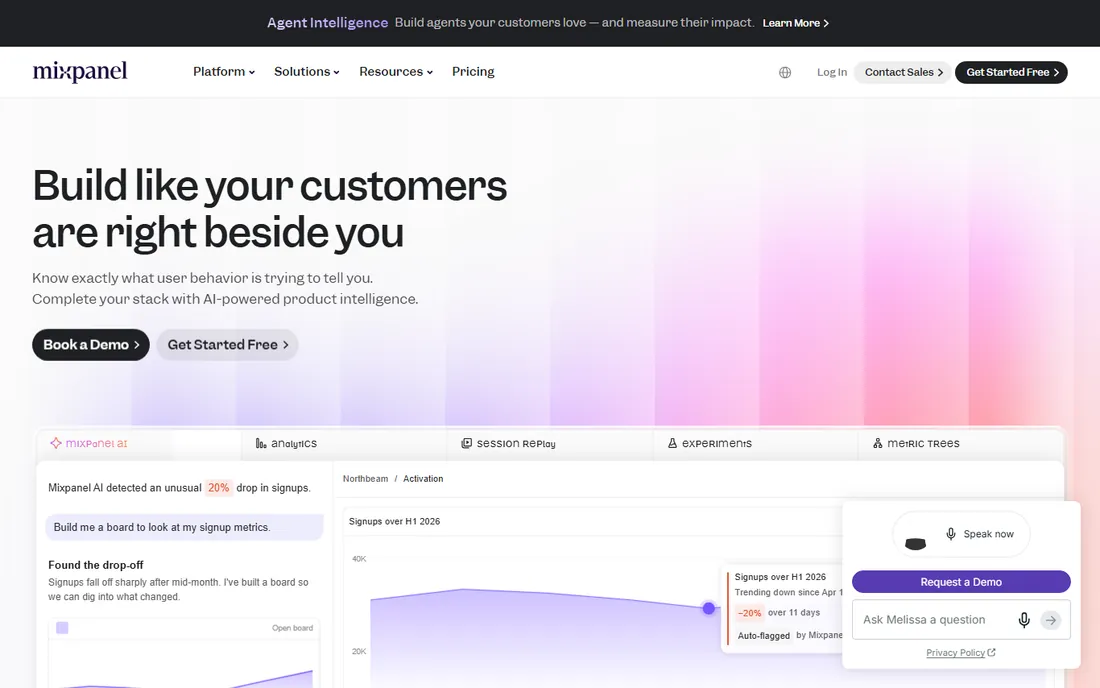
Mixpanel is the tool product teams reach for when they want to understand user behavior without hiring a data team. The event-based model maps naturally to how apps work: a user did this, then this, then dropped off here. Funnels, retention curves, and cohort analysis are genuinely excellent, and the free tier (1 million events a month, unlimited seats) covers most early-stage apps completely.
The pricing curve is the thing to model honestly. Past the free 1M events, Growth charges per event, and at 10 million monthly events the bill reaches thousands a month. Teams with chatty event tracking get surprised. Instrument deliberately, use the free tier generously, and compare the projected cost at your 12-month volume before building your whole analytics practice on it.
What we like- Generous free tier with unlimited seats
- Funnels and retention analysis are best in class
- Startup program gives qualifying startups a free first year
Watch out for- Costs escalate fast past 1M monthly events
- Session replay and advanced add-ons cost extra
- Event-based model punishes chatty instrumentation
#2
Amplitude
Best for: Behavioral analytics and predictive modeling at scale
Visit amplitude.com
Starting priceSee website
Free planYes
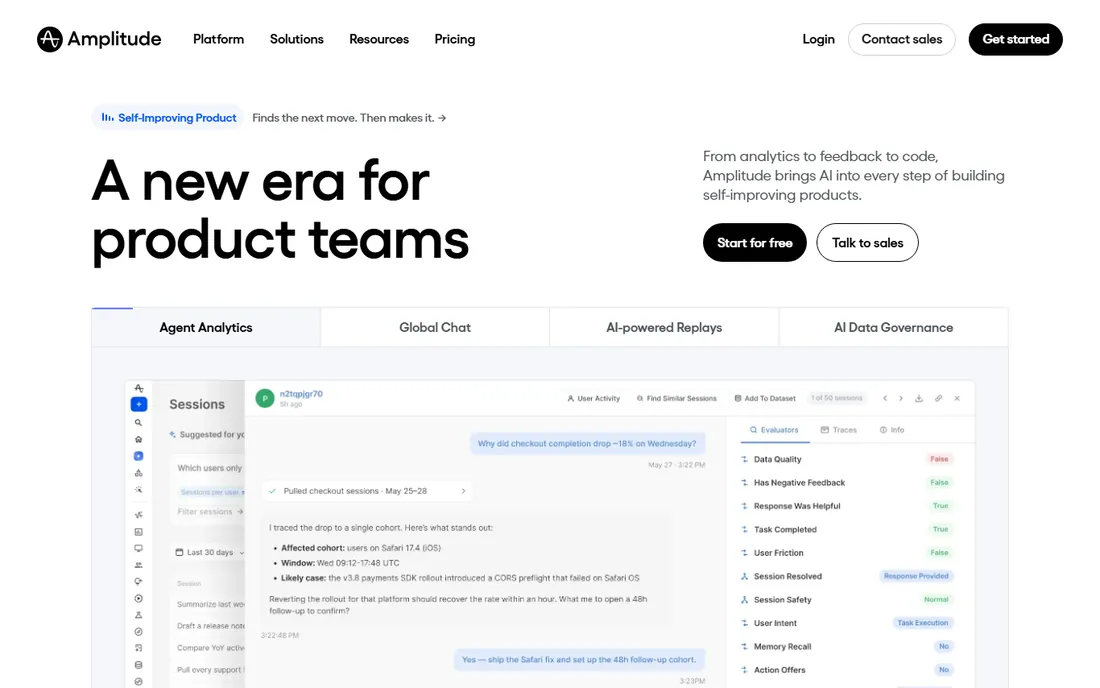
Amplitude is the enterprise answer to product analytics: behavioral analysis, predictive modeling, and cohort work at a depth Mixpanel does not match, with dashboards polished enough to put in front of a board. Large product organizations choose it for the governance features as much as the analysis: permissions, data views, and audit controls that matter when dozens of people query the same data.
For smaller teams, it is a lot. Pricing above the free tier runs through sales, the platform rewards dedicated analysts more than casual users, and early-stage apps rarely need predictive modeling. Amplitude earns its place when the product organization is large enough that analytics is a team sport. Until then, Mixpanel or PostHog delivers most of the value for less money and effort.
What we like- Deepest behavioral and predictive analytics in the category
- Polished dashboards executives actually read
- Strong data governance for enterprises
Watch out for- Pricing is quote-based above the free tier
- The learning curve is steeper than Mixpanel
- Overkill for early-stage apps
Starting price$0
Free planYes
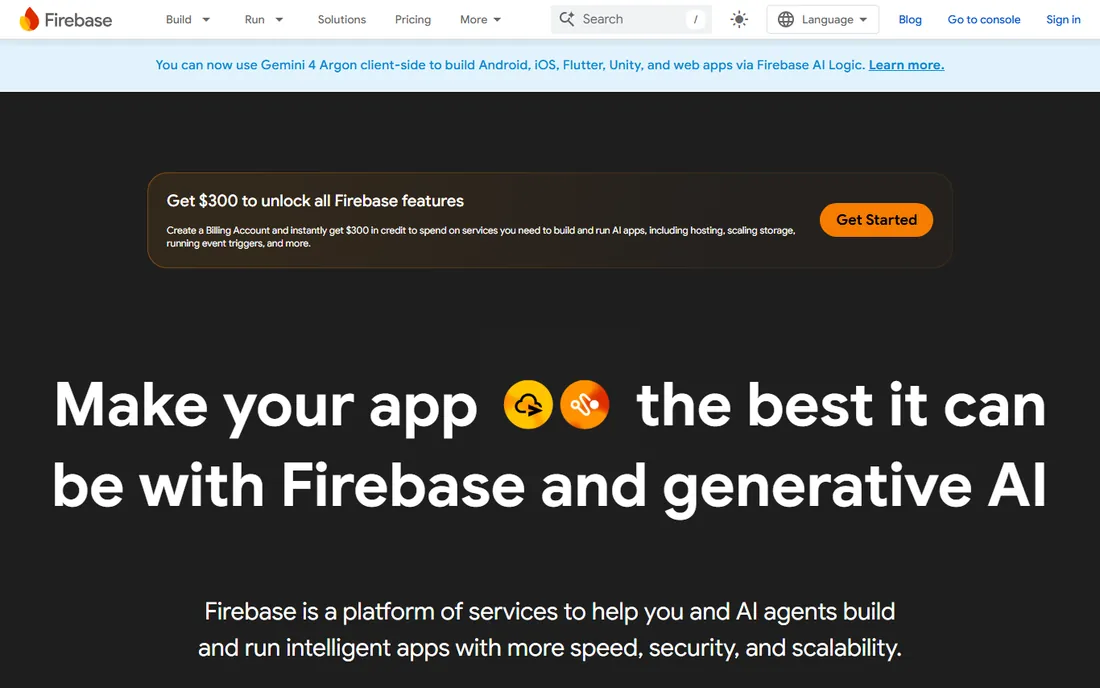
Firebase Analytics is the default free foundation for mobile analytics, and for many apps it is enough. Event tracking, audiences, funnels, and real-time reporting cost nothing, and the integration with the rest of Firebase (crash reporting, remote config, A/B testing) plus Google Ads makes it the path of least resistance for Android-heavy teams. There is no cheaper way to get real analytics into an app.
Power users hit the ceiling. Cohort and retention analysis are shallower than the dedicated tools, and the interface draws consistent complaints from analysts. Most teams follow the same arc: Firebase free from day one, then add Mixpanel or Amplitude when the product questions outgrow it. Starting anywhere else when Firebase is free is usually premature optimization.
What we like- Completely free with no event caps that matter to most apps
- Deep integration with Crashlytics, Remote Config, and Google Ads
- Unlimited reporting
Watch out for- Analysis depth trails Mixpanel and Amplitude
- The interface frustrates power users
- Google-ecosystem lock-in
#4
PostHog
Best for: Teams that want analytics plus experiments in one tool
Visit posthog.com
Starting price$0 (generous free tier; usage-based paid plans)
Free planYes
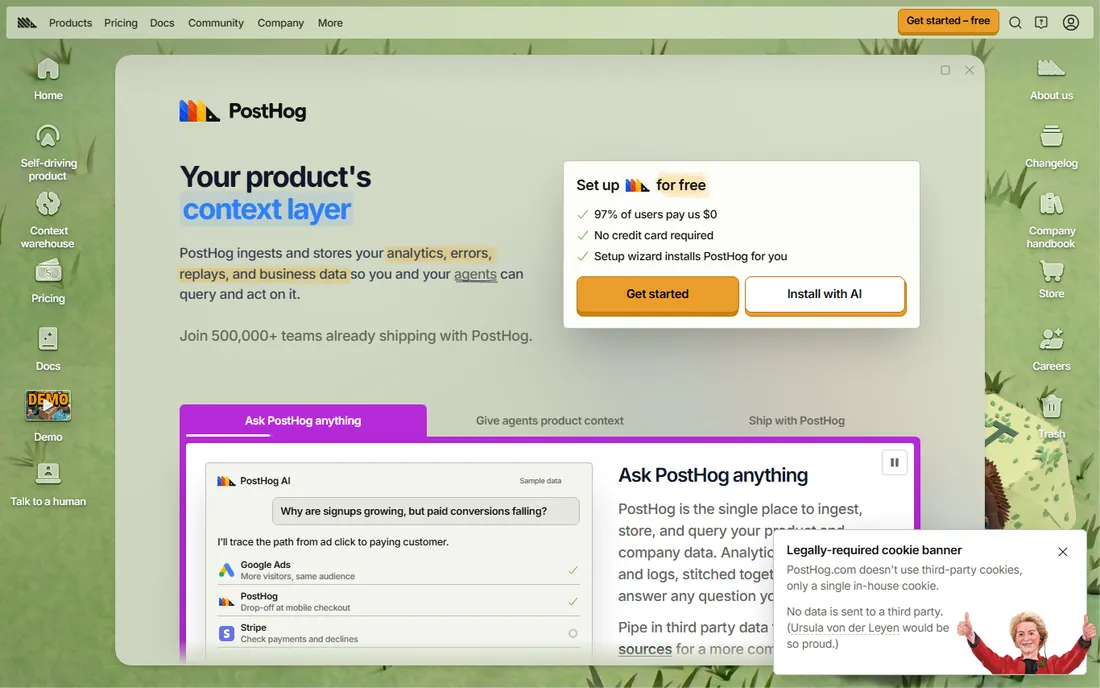
PostHog is the open-source challenger that refuses to be just one tool. Product analytics, session replay, feature flags, experiments, and error tracking live in one platform with one SDK, which eliminates the integration tax of stitching five tools together. The free tier is generous, the pricing is usage-based and transparent, and teams with strict data requirements can self-host.
The breadth is also the risk. Doing five things means none gets the dedicated polish of a specialist, and the interface can overwhelm teams that only wanted funnels. Self-hosting is real work, not a checkbox. PostHog is the right pick for engineering-led teams that value openness and want to consolidate their stack. Teams that want the single best analytics interface should still compare Mixpanel.
What we like- Open source with a self-hosted option
- Combines analytics, session replay, feature flags, and A/B testing
- Transparent usage-based pricing
Watch out for- The all-in-one surface can feel sprawling
- Self-hosting needs real DevOps capacity
- Newer than Mixpanel and Amplitude
#5
UXCam
Best for: Seeing exactly how users experience the app
Visit uxcam.com
Starting priceSee website
Free planYes
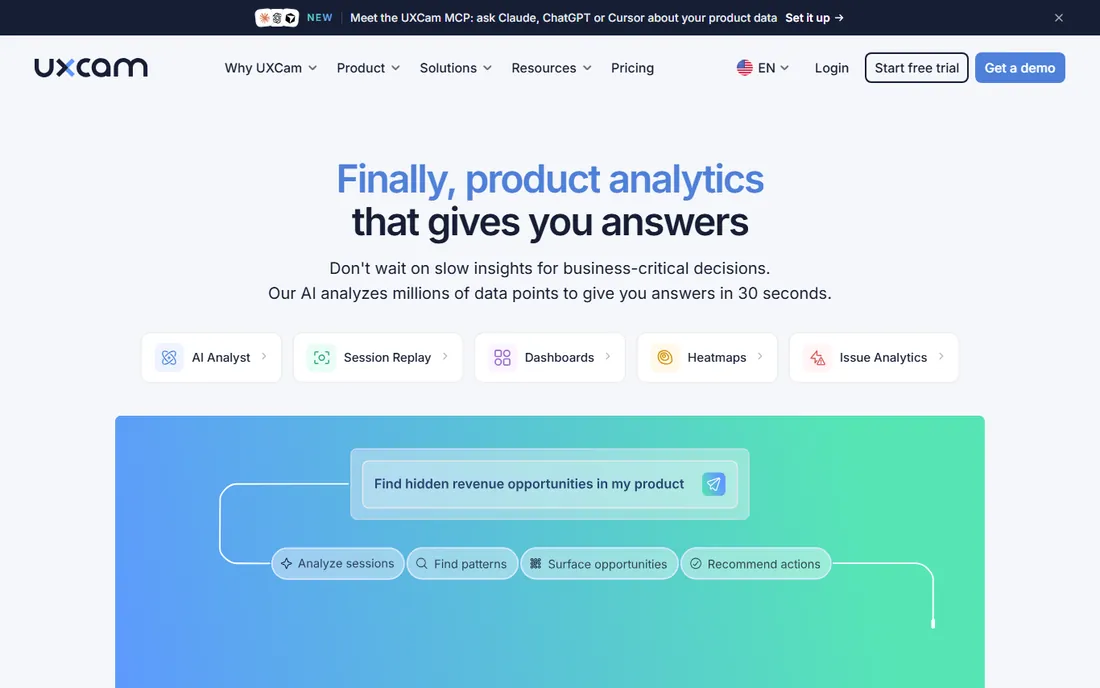
UXCam answers the question numbers cannot: what did the user actually experience. Session replay shows the taps, scrolls, and rage-quits behind the funnel drop-off, with mobile-specific signals like gesture tracking and crash context attached. For UX teams and mobile-first product teams, watching ten sessions often beats staring at a hundred charts.
It complements rather than replaces product analytics; nobody runs their KPI dashboard on session replay alone. Pricing is not published as transparently as Mixpanel's, so buyers need a quote. The standard serious stack is Mixpanel or Amplitude for the numbers plus UXCam for the why behind them. If you can only buy one, buy the numbers first.
What we like- Session replay plus funnels in one mobile-native tool
- Gesture tracking, rage taps, and crash context
- Built specifically for mobile UX
Watch out for- Not a full product analytics replacement
- Pricing not published transparently
- Smaller company than the leaders
Starting priceSee website
Free planYes

Smartlook brings the visual analytics playbook, session recordings and heatmaps, to teams that want to watch behavior rather than query it. Setup is quick, it covers websites and mobile apps in one account, and the free tier handles small products. Product teams use it to spot the confusing screen, the dead button, and the form field where users give up.
Like UXCam, it is a qualitative complement, not a quantitative foundation. The event analytics are thinner than the specialists', and heatmaps only mean something with real traffic volume. It is a good second tool for teams that already have their numbers instrumented and want to see the behavior behind them.
What we like- Session recordings and heatmaps are easy to set up
- Covers both web and mobile apps
- The free tier is usable for small products
Watch out for- Analytics depth is thinner than Mixpanel
- Heatmaps need meaningful traffic to be useful
- Owned by Cisco, which gives some buyers pause
Starting priceSee website (custom pricing)
Free planYes
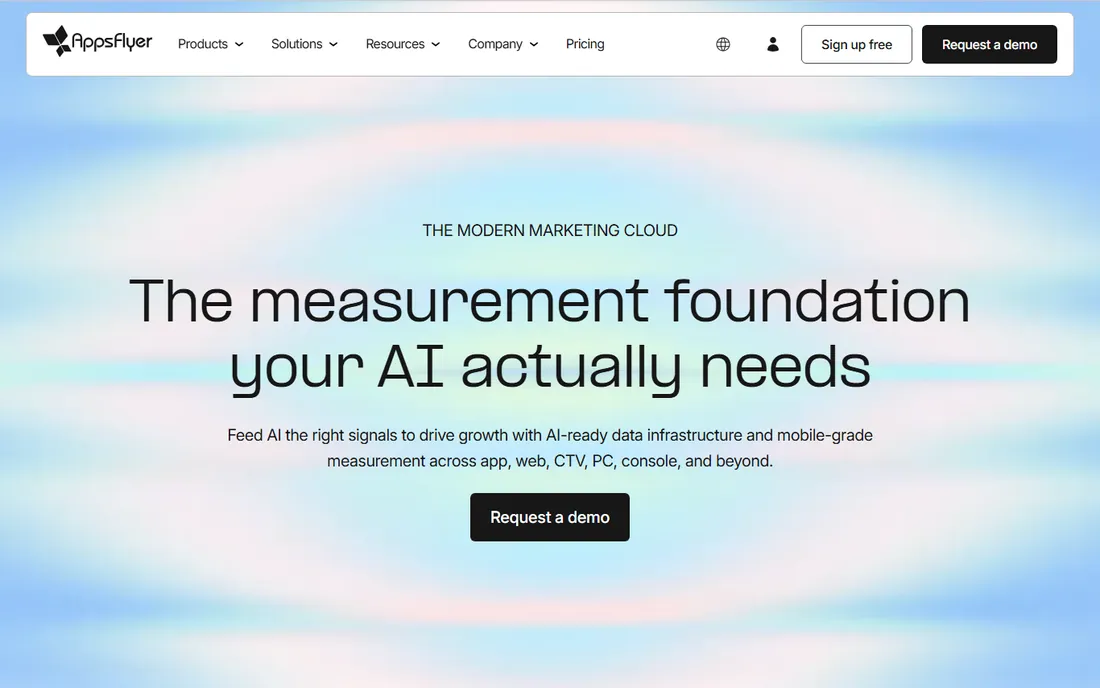
AppsFlyer is the mobile measurement partner (MMP) most serious advertisers standardize on. It answers the attribution question: which campaign, creative, and channel drove each install and the revenue after it. The fraud protection suite matters because mobile ad fraud is a real budget line, and the integrations cover every ad network worth buying from. A free Zero tier covers basic attribution for smaller apps.
It does not do product analytics, and buyers should not expect it to. The common stack is AppsFlyer for "where did users come from" plus Mixpanel, Amplitude, or Firebase for "what did they do." If the app does not run meaningful paid acquisition, an MMP is premature; start with product analytics and add attribution when ad spend justifies it.
What we like- The industry-standard mobile measurement partner
- Strong fraud protection
- Deep integrations with every ad network
Watch out for- Custom pricing with no public tiers
- Attribution only, not product analytics
- Overkill without meaningful paid acquisition
Starting priceSee website (custom pricing)
Free planNo
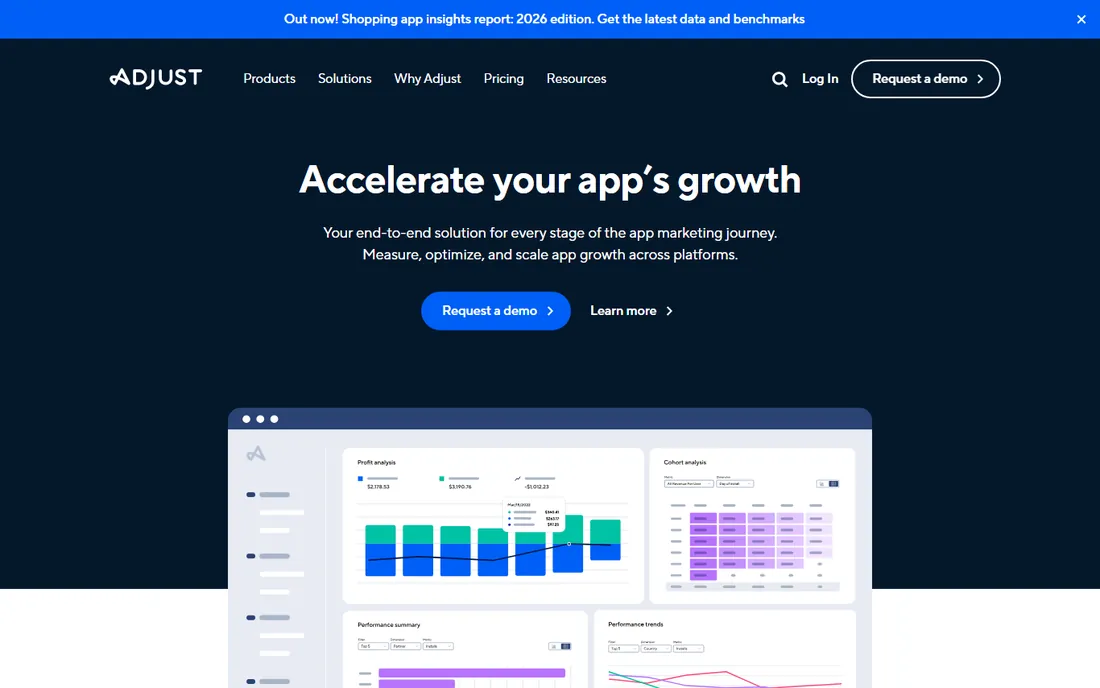
Adjust competes head-to-head with AppsFlyer as a mobile measurement partner: attribution, campaign analytics, deep linking, and fraud prevention for performance marketing teams. Its automation features for marketing workflows are a genuine differentiator for teams running many campaigns across many networks. Enterprises that standardize on it tend to stay.
The evaluation mirrors AppsFlyer's: custom pricing, no self-serve free tier, and a scope limited to attribution rather than in-app behavior. Teams choosing between the two should run both through their actual media mix, since the difference comes down to specific network integrations and workflow fit. Everyone else should note that neither replaces product analytics.
What we like- Comprehensive attribution and campaign analytics
- Strong fraud prevention
- Good automation for marketing workflows
Watch out for- No free tier
- Custom pricing only
- Same category limitation as AppsFlyer (attribution, not behavior)
Starting priceSee website (custom pricing)
Free planFree trial
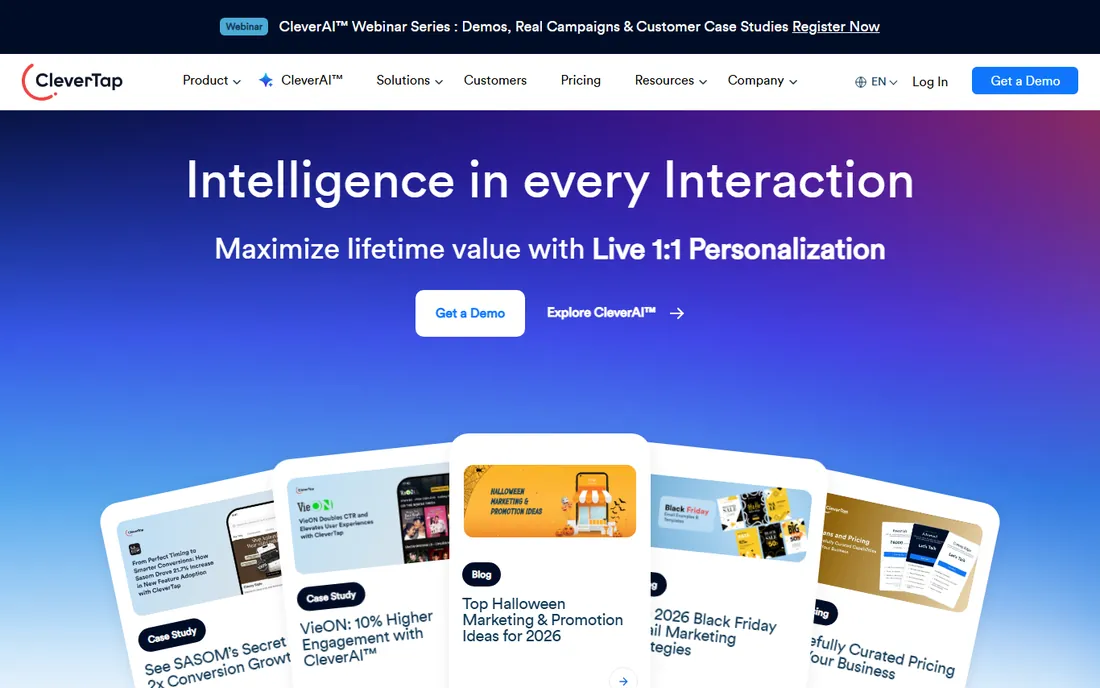
CleverTap closes the loop between analytics and action: it tracks behavior, then lets lifecycle marketers trigger push notifications, emails, and in-app messages from that behavior without engineering help. For subscription and e-commerce apps where retention marketing drives revenue, having the analytics and the messaging in one platform removes the usual data handoff delays.
The analytics serve the messaging use case rather than standing alone as a product analytics platform; data teams will still want Mixpanel or Amplitude for deep analysis. Pricing is custom and the sales process is enterprise-flavored. CleverTap is the right tool when the job is retaining users through lifecycle campaigns, not when the job is understanding the product.
What we like- Ties analytics directly to push, email, and in-app messaging
- Strong segmentation for lifecycle campaigns
- Built for retention marketing
Watch out for- Custom pricing with a sales process
- The analytics are a means to messaging, not the product
- Smaller US presence than the leaders
How we built this list
We compared mobile analytics tools that US app teams actually buy, identified through mobile industry publications, vendor documentation, and reviews on G2, Capterra, and developer forums. Every tool had to ship an active mobile SDK and serve a real analytics job in 2026: product analytics, visual behavior, or attribution. We excluded retired names and pure web tools. Pricing reflects published plans checked in September and October 2026, including Mixpanel's usage-based Growth tiers. This is a research-based comparison, not hands-on testing.
What to check before you commit
Define the question before choosing the tool, because the category splits on it. "What do users do in the app" points to Mixpanel, Amplitude, PostHog, or Firebase. "Which campaign drove the install" points to AppsFlyer or Adjust. "Why are users confused" points to UXCam or Smartlook. "How do we message them back" points to CleverTap. Buying one tool to answer every question is the most common mistake; most serious teams run two or three with defined roles.
Then model the cost at scale, not at signup. Free tiers are generous across this category, which makes the sticker price $0 for everyone at first. The real comparison is the bill at your 12-month event volume: Mixpanel's per-event pricing, Amplitude's custom quotes, and the MMPs' custom contracts behave very differently at 50 million events than at 500,000. Ask each vendor for the projected cost at your actual volume in writing.
Finally, check data ownership and privacy posture. Analytics tools see everything your users do, which makes their data retention, deletion, and compliance practices (GDPR, CCPA, and for some apps HIPAA) a procurement question, not a technical footnote. Self-hosting options like PostHog and Countly exist for teams with strict requirements. Everyone else should still read the data processing terms before instrumenting.
Product analytics vs attribution: pick the right question
New app teams routinely buy an attribution tool expecting product insights, or a product analytics tool expecting campaign ROI, and end up disappointed with both. The distinction is simple: product analytics measures behavior inside the app, attribution measures the journey that brought the user to it. They share identifiers but answer different questions for different teams (product versus marketing). Budget for both once paid acquisition is real; before that, Firebase plus Mixpanel's free tier covers nearly every question a young app has. The tools are complements, and the teams that treat them that way get clean answers from each.
Frequently asked questions
What is the best free app analytics tool?
Firebase Analytics is the best free foundation: unlimited event reporting at no cost with no meaningful caps for most apps. Mixpanel's free tier (1 million events a month) is the best free product analytics with deeper funnels and retention. PostHog's free tier adds session replay and experiments. Most indie apps start with Firebase and add Mixpanel when they need deeper analysis.
What is the difference between Mixpanel and Amplitude?
Both do event-based product analytics. Mixpanel is easier to adopt, with transparent usage-based pricing and a generous free tier, making it the better pick for small and mid-size teams. Amplitude goes deeper on behavioral analysis, predictive modeling, and enterprise governance, making it the better pick for large product organizations. Most teams outgrow neither; they choose based on team size and analyst sophistication.
Do I need both product analytics and an attribution tool?
Once you run meaningful paid acquisition, yes. Product analytics (Mixpanel, Amplitude, Firebase) tells you what users do in the app; attribution (AppsFlyer, Adjust) tells you which campaign brought them. They answer different questions for different teams. Before paid acquisition is significant, product analytics alone is enough.
How much does app analytics cost at scale?
Free tiers cover most apps to about 1 million monthly events. Past that, Mixpanel's usage-based pricing reaches thousands a month at 10 million events, Amplitude and the MMPs use custom quotes that typically start in the tens of thousands a year, and enterprises negotiate. Model the cost at your projected 12-month volume before committing your instrumentation to one vendor.
What happened to Flurry, Localytics, and Facebook Analytics?
They are effectively gone. Facebook Analytics shut down in 2021, Localytics and several others were acquired and wound down, and Google's Universal Analytics was replaced by GA4 in 2023. Do not build a 2026 analytics stack on retired names; the current standards are Firebase, Mixpanel, Amplitude, PostHog, and the AppsFlyer/Adjust MMPs.
Is session replay worth adding?
For UX and product teams, yes. Watching real sessions reveals confusion that funnels only hint at: rage taps, dead clicks, and misunderstood screens. UXCam and Smartlook are the mobile-native options, and Mixpanel and PostHog bundle limited replay into their platforms. It complements quantitative analytics rather than replacing it.
Sources we checked (7)
- https://uxcam.com/blog/mobile-app-tracking-tools/
- https://www.softwareworld.co/mobile-analytics-software/
- https://adapty.io/blog/which-services-your-app-needs/
- https://github.com/posthog/posthog.com/blob/HEAD/contents/blog/best-mobile-app-analytics-tools.mdx
- https://rybbit.com/blog/mixpanel-pricing
- https://github.com/openpanel-dev/openpanel/blob/HEAD/apps/public/content/articles/mixpanel-pricing.mdx
- https://baremetrics.com/blog/baremetrics-vs-mixpanel-vs-amplitude
Is your product missing or out of date?
We review this list regularly. Vendors can request a listing, send updated pricing or ask about featured placement.

Shihab Mia · Founder, Rankite
Shihab has 5+ years in B2B and SaaS SEO. He writes Rankite's software buying guides from pricing pages, documentation and public user reviews. More about Shihab.