How we make this list: we compare pricing pages, product documentation and public user reviews. Rankite is independent; if a vendor ever pays for a featured spot, that listing is clearly labeled Partner.
Key takeaways
- Best overall: Salt Security, ideal for enterprises that need runtime API attack protection: strong behavioral attack detection.
- Akamai API Security suits akamai customers that want API security at the edge, while 42Crunch is the better fit for teams that want API security baked into CI/CD.
- Buyers who want everything in one subscription should look at Wallarm, which pairs flexible deployment options with broader platform features.
Quick comparison
| Tool | Best for | Starting price | Free plan |
|---|
 Salt Security Salt Security | Enterprises that need runtime API attack protection | See website | No |
 Akamai API Security Akamai API Security | Akamai customers that want API security at the edge | See website | No |
 42Crunch 42Crunch | Teams that want API security baked into CI/CD | See website | No |
 Wallarm Wallarm | Cloud-native teams that need WAF plus API discovery | See website | No |
 Imperva Imperva | Enterprises that want API security in a full suite | See website | No |
 Escape Escape | Teams that need business-logic-aware API scanning | See website | No |
 APISec APISec | Teams that want automated penetration testing for APIs | See website | No |
 StackHawk StackHawk | Developers who want DAST in their pipeline | See website | Yes |
 Invicti Invicti | Enterprises that want DAST plus IAST in one platform | See website | No |
Is your product missing or out of date?
We review this list regularly. Vendors can request a listing, send updated pricing or ask about featured placement.
#1
Salt Security
Best for: Enterprises that need runtime API attack protection
Visit salt.security
Starting priceSee website
Free planNo
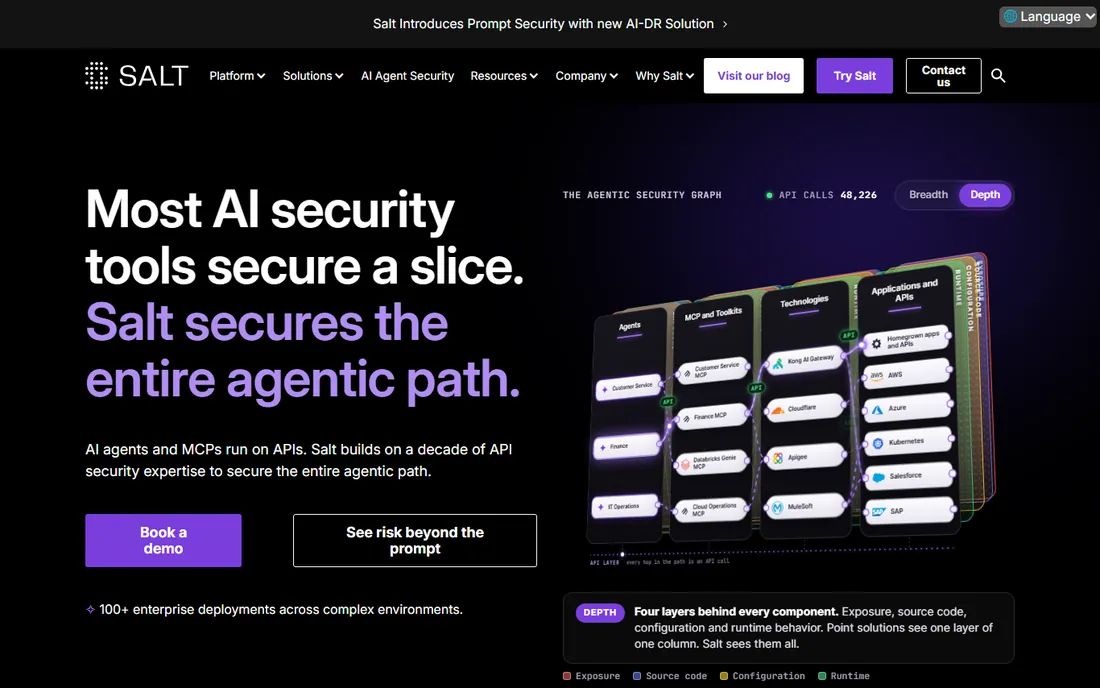
Salt Security helped define the API security category, and its platform reflects that maturity. Behavioral analysis baselines normal API usage and flags attacks like BOLA and data exfiltration in real time, while continuous discovery keeps the inventory honest. For large API estates, that combination is the core requirement.
The platform is built for security teams managing thousands of endpoints across hybrid environments. Alert quality benefits from years of tuning on real attack data.
Expect an enterprise buying process with unpublished pricing. Smaller teams may find the platform more than they need. But for organizations where APIs carry the business, Salt is the established choice.
What we like- Strong behavioral attack detection
- Continuous API discovery
- Established leader in the category
Watch out for- Enterprise sales cycle
- Pricing not published
#2
Akamai API Security
Best for: Akamai customers that want API security at the edge
Visit akamai.com
Starting priceSee website
Free planNo
Akamai API Security brings dedicated API discovery, posture management and behavioral analysis to the edge. Built on technology from the Noname Security acquisition, it inventories APIs across traffic, code and specs, then watches runtime behavior for abuse. For teams already on Akamai, the integration story is compelling.
The platform covers the full lifecycle: discovery, testing with hundreds of built-in checks, compliance mapping and remediation routing. AI-linked APIs get specific attention, which matters as LLM integrations multiply.
Standalone buyers should weigh the ecosystem fit, since the value compounds inside Akamai's stack. Pricing is quote-based. But for Akamai customers, this is the coherent API security layer.
What we like- Edge-scale protection on Akamai's network
- Pairs with App and API Protector
- Broad compliance mapping
Watch out for- Best value inside the Akamai stack
- Complex for small teams
Starting priceSee website
Free planNo
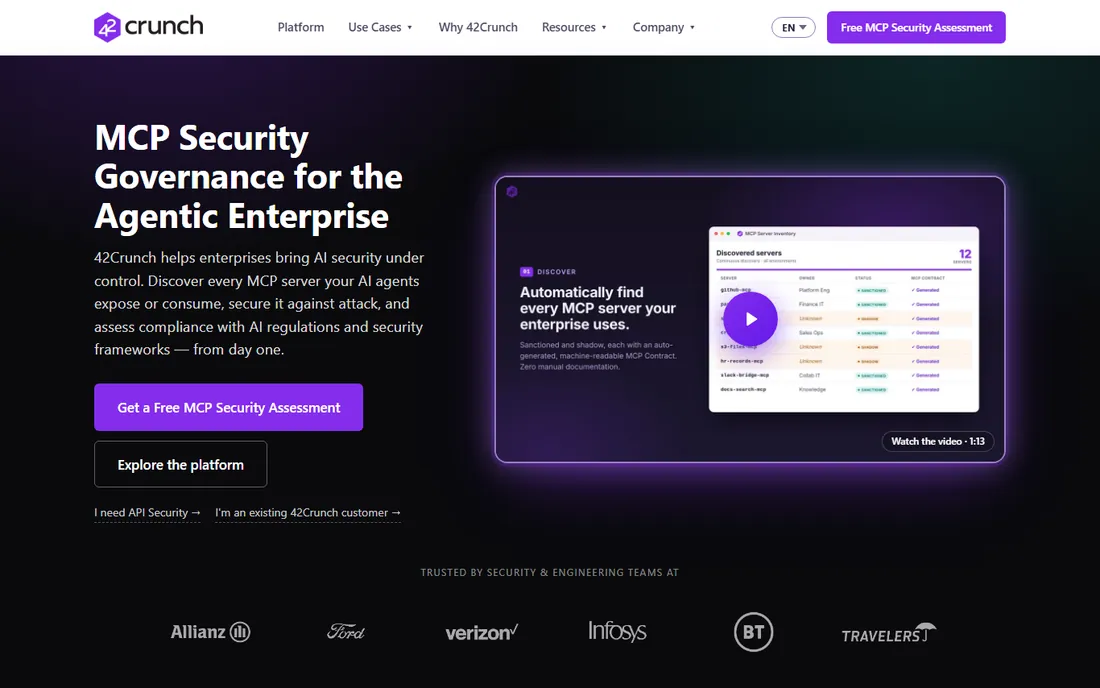
42Crunch takes a contract-first approach: your OpenAPI definition becomes the security baseline, tested with hundreds of automated checks and enforced at runtime by a micro-firewall. For API-first engineering teams, that model fits how they already work.
Shift-left is real here. IDE plugins and CI/CD gates catch design flaws before deployment, and the firewall blocks anything outside the declared contract. The deterministic approach appeals to engineers tired of noisy scanners.
Non-technical buyers will find it developer-heavy, and pricing requires a conversation. But for teams that want API security in the pipeline rather than bolted on after, 42Crunch is a strong philosophical fit.
What we like- Contract-based testing from OpenAPI specs
- IDE and pipeline integrations
- API firewall included
Watch out for- Developer-centric, less for non-technical buyers
- Pricing not published
#4
Wallarm
Best for: Cloud-native teams that need WAF plus API discovery
Visit wallarm.com
Starting priceSee website
Free planNo
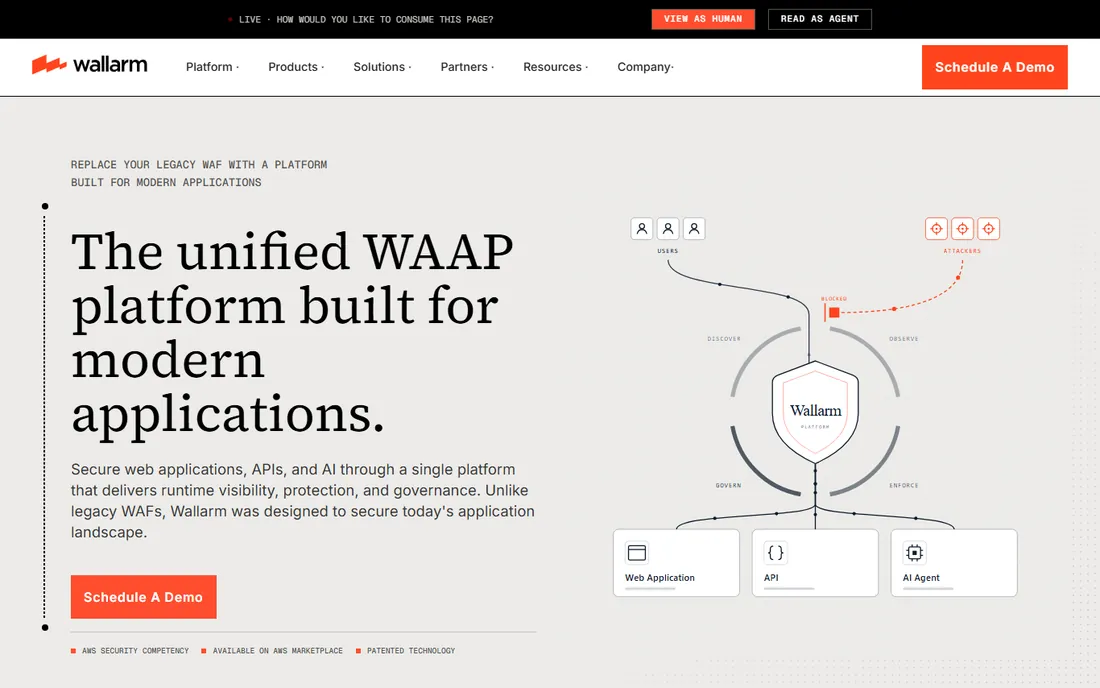
Wallarm blends API discovery, vulnerability testing and real-time protection for cloud-native stacks. Deployment options span cloud, containers and on-premise, which suits teams with hybrid infrastructure. Kubernetes support is a genuine strength.
The platform learns API behavior and blocks OWASP API Top 10 threats inline, with an open-source firewall component for the DIY inclined. DevOps-friendly tooling keeps it in the deployment pipeline.
Initial tuning takes effort, and pricing is not public. But for cloud-native teams that want protection and discovery from one vendor, Wallarm is a capable pick.
What we like- Flexible deployment options
- Real-time blocking
- Good Kubernetes support
Watch out for- Setup takes tuning
- Pricing not published
#5
Imperva
Best for: Enterprises that want API security in a full suite
Visit imperva.com
Starting priceSee website
Free planNo
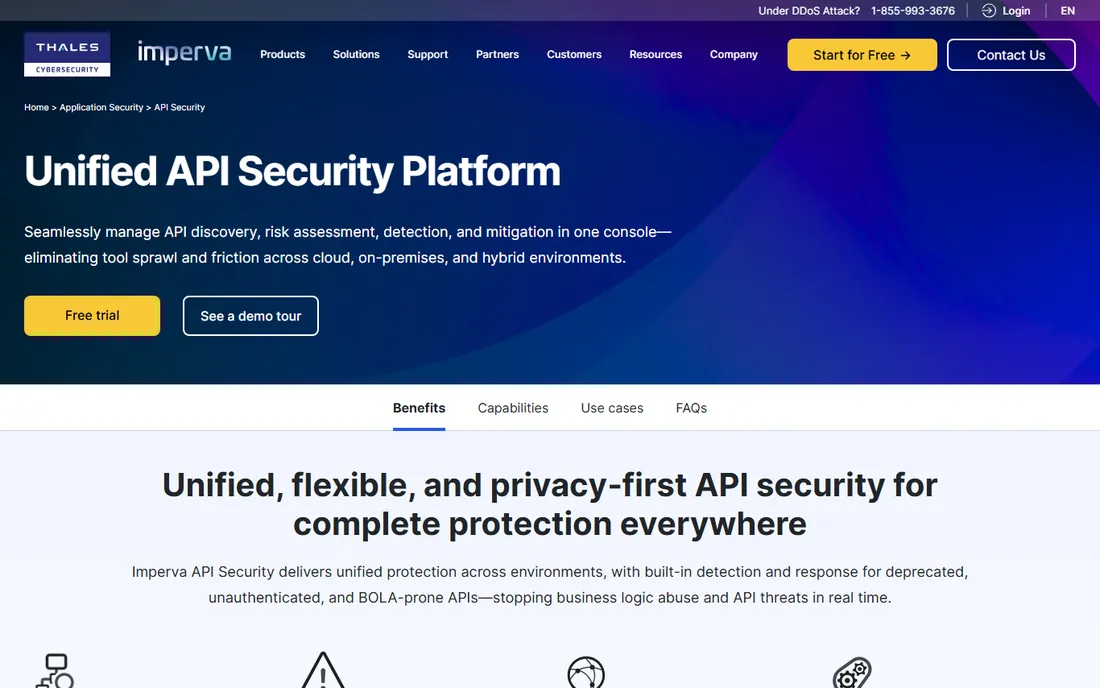
Imperva API Security sits inside a full application security suite, which is exactly the point. Discovery, risk assessment and business-logic protection pair with the company's WAF, DDoS and bot defenses, giving large organizations one throat to choke.
BOLA detection and response is a highlighted strength, with behavioral baselines flagging authorization abuse in real time. Deployment flexes across cloud WAF, on-premise and hybrid.
The suite model means enterprise pricing and more product than API-only teams need. But for organizations standardizing on Imperva, the API security layer integrates cleanly.
What we like- Pairs with WAF, DDoS and bot protection
- Continuous discovery and classification
- Compliance reporting built in
Watch out for- Suite pricing is enterprise-grade
- More than API-only teams need
#6
Escape
Best for: Teams that need business-logic-aware API scanning
Visit escape.tech
Starting priceSee website
Free planNo
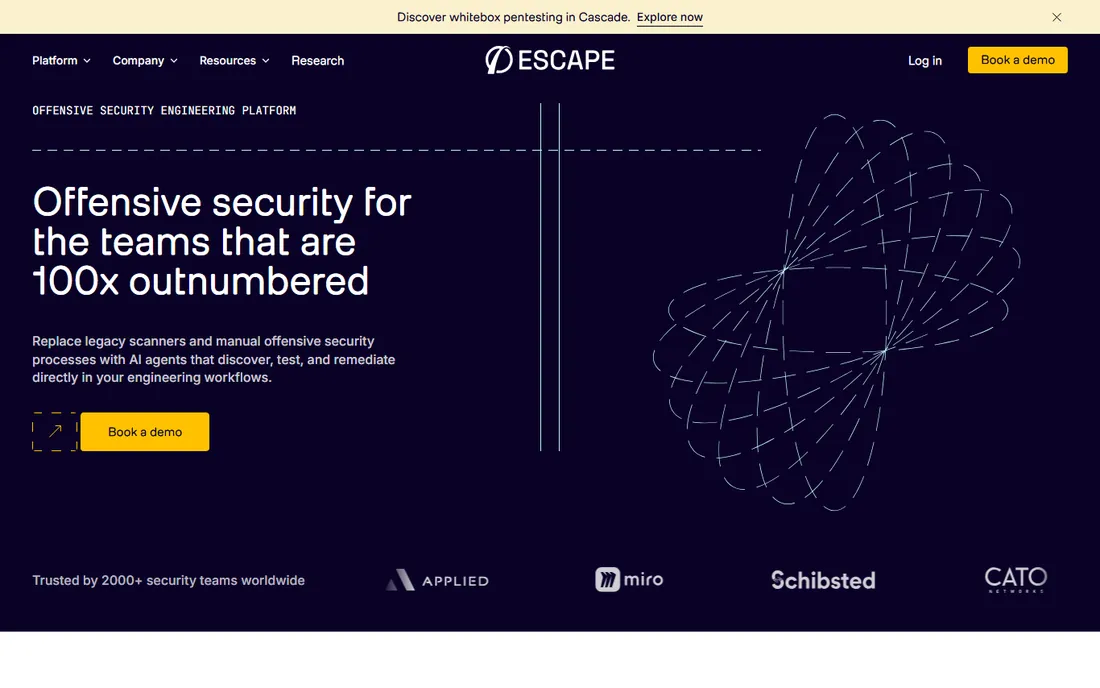
Escape focuses on what most scanners miss: business logic flaws in APIs. Its DAST engine tests multi-step workflows, access control and tenant isolation, catching vulnerabilities like IDOR that configuration checks overlook. For API-heavy products, that depth matters.
Reports speak developer: clear reproduction steps, severity tied to exploitability, and CI/CD integration for continuous testing. The GraphQL coverage is a plus as that ecosystem grows.
Escape is a testing platform, not a runtime shield, so pair it with a WAF or firewall for blocking. Pricing is quote-based. But for finding the flaws attackers actually exploit, it is sharp.
What we like- DAST built specifically for APIs
- Finds logic flaws, not just misconfigurations
- Developer-friendly reporting
Watch out for- Scanning-focused, no runtime blocking
- Pricing not published
#7
APISec
Best for: Teams that want automated penetration testing for APIs
Visit apisec.ai
Starting priceSee website
Free planNo
APISec automates penetration testing for APIs, generating attacker-style test cases from your API definitions and validating which findings are actually exploitable. That proof-over-noise approach cuts the false-positive fatigue security teams dread.
Coverage maps to the OWASP API Top 10, and CI/CD integrations keep testing continuous as APIs evolve. The AI-driven angle updates test logic as attack patterns change.
It is a testing tool, so runtime protection needs a separate layer. The vendor is also smaller than suite competitors. But for continuous automated API pen-testing, APISec is a focused and modern option.
What we like- Automated pen-testing approach
- OWASP API Top 10 coverage
- CI/CD integrations
Watch out for- Testing-focused, not runtime defense
- Smaller vendor footprint
Starting priceSee website
Free planYes
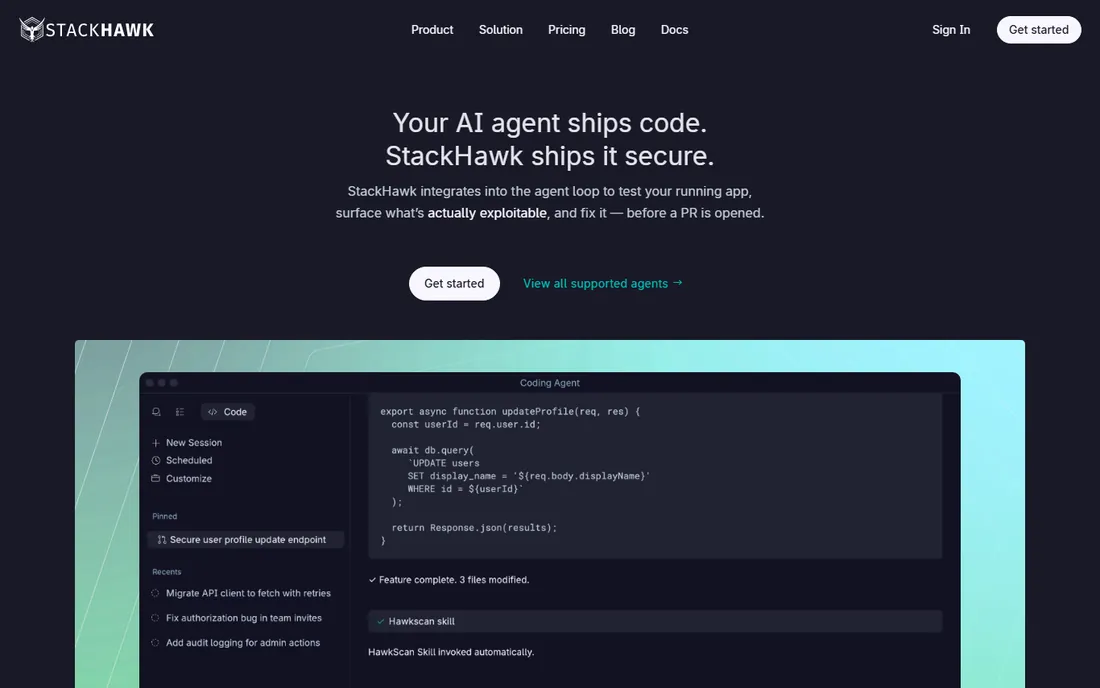
StackHawk puts DAST where developers live: in the CI/CD pipeline. HawkScan runs against your running app on every build, finding exploitable vulnerabilities before they ship. The free tier lets small teams start without procurement.
The developer experience is the differentiator: YAML configs, Docker-based scans, and findings with fix guidance written for engineers. Security becomes a build step, not a separate phase.
It tests rather than blocks, so runtime defense needs another tool. Advanced enterprise features sit behind higher tiers. But for shift-left API and app testing that developers actually use, StackHawk is excellent.
What we like- Developer-first design
- CI/CD native workflows
- Free tier to start
Watch out for- Testing-focused, not a WAF
- Enterprise features cost more
#9
Invicti
Best for: Enterprises that want DAST plus IAST in one platform
Visit invicti.com
Starting priceSee website
Free planNo
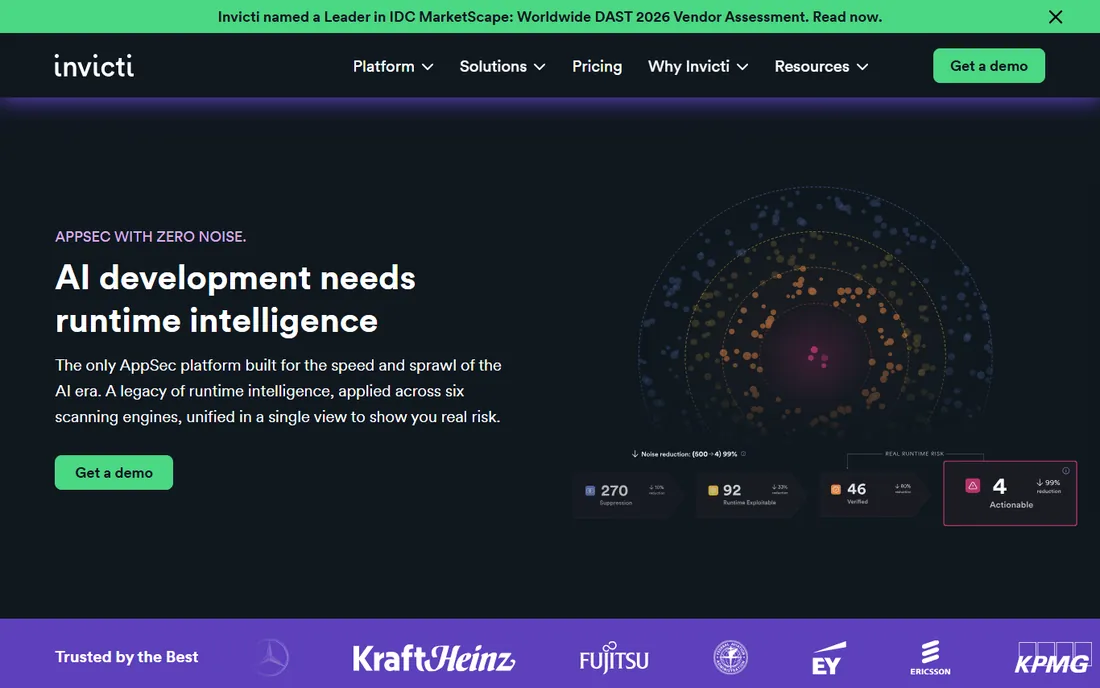
Invicti combines DAST and IAST with proof-based scanning that validates vulnerabilities by safe exploitation. The result is unusually low false-positive rates, which keeps developers trusting the findings. API discovery feeds the scanner automatically.
The platform story is breadth: web apps, APIs, and now AI component tracking in one place. Enterprises consolidating AppSec tools find a lot to consolidate onto.
Setup is heavier than developer-first tools and pricing is enterprise-grade. But for accuracy-focused AppSec programs, Invicti's proof-based approach is genuinely differentiated.
What we like- Proof-based scanning cuts false positives
- Broad web and API coverage
- Mature, proven platform
Watch out for- Enterprise pricing
- Heavier setup than dev-first tools
Testing versus protection: you need both
Testing tools like DAST find vulnerabilities before attackers do. They scan your APIs on a schedule or in CI/CD and report flaws to fix. Without them, you ship blind.
Protection tools like WAFs and API firewalls block attacks in real time. They enforce the contract your APIs declare and stop abuse as it happens. Without them, known flaws stay exploitable.
Plan for both layers. Test in the pipeline, protect in production, and keep discovery running continuously so new endpoints enter both systems automatically.
Start with discovery. You cannot protect APIs you do not know exist, so the platform's ability to find shadow and zombie APIs across your estate matters more than any single detection feature. Ask for a discovery trial on your own environment.
Separate testing from protection. DAST tools find flaws; WAFs and firewalls block attacks. Most organizations need both, so decide whether you want one vendor covering the lifecycle or best-of-breed point tools.
Check deployment fit. Cloud-native teams need Kubernetes support; regulated enterprises need on-premise options. Also confirm CI/CD integration, because API security that slows releases gets bypassed.
How we chose
Each tool was assessed from its vendor pricing page, product docs, and public user feedback on G2, Capterra, and Reddit. We compared how well each serves the category's main use cases, how transparent the pricing is, and which team size each fits best. We did not accept vendor payments for inclusion or ranking.
Frequently asked questions
What is API security?
API security protects the interfaces your applications use to exchange data. It covers discovering all your APIs, testing them for vulnerabilities like broken authentication, and blocking attacks such as data scraping and authorization abuse in real time.
How is API security different from a WAF?
A WAF protects web applications from common exploits. API security goes deeper: it understands your API contracts, finds shadow APIs, tests business logic flaws, and detects abuse patterns that look like legitimate traffic to a WAF.
Do small companies need API security?
If your product exposes APIs to customers or partners, yes at some level. Start with discovery and testing tools, which are affordable. Full runtime protection becomes essential as your API traffic and data sensitivity grow.
What is the OWASP API Top 10?
A ranked list of the most critical API security risks, including broken object-level authorization and excessive data exposure. Good API security tools map their testing and protection to this list, so ask vendors how they cover it.
Should I choose testing or runtime protection?
Both. Testing finds flaws before attackers do; runtime protection blocks attacks against flaws you have not fixed yet. Most mature programs run continuous testing in CI/CD plus always-on protection in production.
Sources we checked (9)
- https://salt.security/
- https://www.akamai.com/products/api-security
- https://42crunch.com/
- https://www.wallarm.com/
- https://www.imperva.com/products/api-security/
- https://escape.tech/
- https://apisec.ai/
- https://www.stackhawk.com/
- https://www.invicti.com/
Is your product missing or out of date?
We review this list regularly. Vendors can request a listing, send updated pricing or ask about featured placement.

Shihab Mia · Founder, Rankite
Shihab has spent more than a decade helping SaaS and e-commerce brands grow through search. He writes Rankite's software buying guides from pricing pages, documentation and public user reviews. More about Shihab.