How we make this list: we compare pricing pages, product documentation and public user reviews. Ratings come from G2, Capterra or Trustpilot, with the date we checked them.
Key takeaways
- Hudl is the default for American football programs from high school to college, with video exchange, breakdowns and recruiting tools in one ecosystem.
- Catapult pairs wearable tracking with video, which suits programs that want load management and performance data alongside film study.
- Second Spectrum and Stats Perform serve the elite end with tracking data and event feeds, priced for professional and top college budgets.
- Veo and Spiideo remove the camera operator with automated recording, a practical win for programs without a film crew.
Quick comparison
| Tool | Best for | Starting price | Free plan |
|---|
 Hudl Hudl | All-in-one video for football programs | See website | No |
 Catapult Catapult | Wearables plus video performance data | See website | No |
 Stats Perform Stats Perform | Pro-grade data feeds and analysis | See website | No |
 Second Spectrum Second Spectrum | Tracking data and tactical analysis | See website | No |
 Veo Veo | Automated recording for teams without crews | See website | Yes |
 Spiideo Spiideo | AI recording and analysis platform | See website | No |
 Wyscout Wyscout | Soccer scouting and video database | See website | No |
 Dartfish Dartfish | Technique and motion analysis | See website | No |
Is your product missing or out of date?
We review this list regularly. Vendors can request a listing, send updated pricing or ask about featured placement.
Film study wins games, and the tools have grown far past a projector in a dark room. Modern football analytics means tagged video, wearable load data, tracking feeds and automated cameras, packaged for everyone from high school staffs to professional analysts. Eight tools across the levels of the game.
#1
Hudl
Best for: All-in-one video for football programs
Visit hudl.com
Starting priceSee website
Free planNo
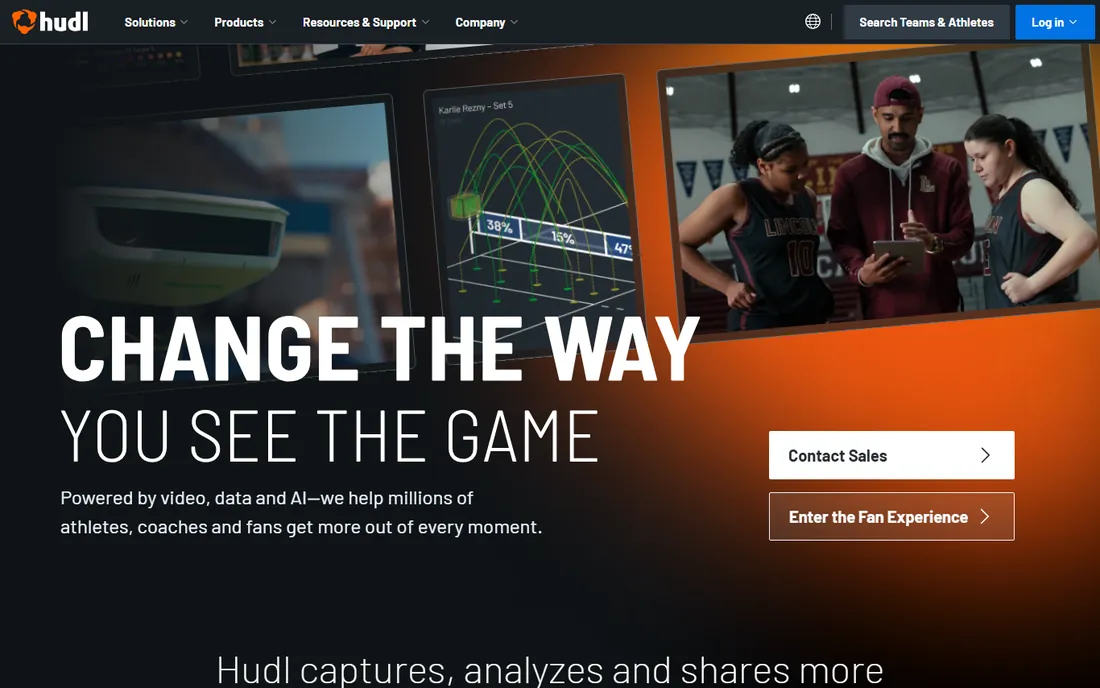
Hudl is the operating system of American football video. Teams upload game film, exchange it with opponents through the platform, break it down with tagging tools, and share cut-ups with players on any device. Recruiting profiles extend the value to athletes chasing college offers, and Hudl Sportscode gives elite programs a fully customizable analysis environment.
The cost is the honest conversation: packages are quoted per program and grow with storage, users and add-ons. Once a program's history lives in Hudl, leaving means migrating years of film. Hudl fits programs that want one home for everything video, from Friday night film to recruiting.
What we like- Deepest ecosystem for American football from youth to college
- Video exchange, breakdowns and recruiting profiles in one place
- Sportscode for elite custom analysis
Watch out for- Pricing is quote-based and adds up with add-ons
- The ecosystem lock-in makes switching painful
Starting priceSee website
Free planNo
Catapult pairs what the body does with what the film shows. Wearable devices track distance, speed, accelerations and impacts, and the software syncs those metrics to video so coaches see the physical cost behind each play. Load management, return-to-play decisions and practice planning all draw on the same data.
This is a professional and top-college product: device fleets, subscriptions and staff time add up fast. Smaller programs get more value from video-only tools. Catapult fits programs with sports science staff who will actually act on load data, not just collect it.
What we like- Industry-standard athlete monitoring with GPS and inertial data
- Video synced to physical metrics
- Trusted by elite teams worldwide
Watch out for- Hardware plus software pricing puts it out of reach for small programs
- The learning curve for sports science staff is real
Starting priceSee website
Free planNo
Stats Perform, home of Opta data, supplies the event-level feeds that power professional analysis, broadcast graphics and betting markets. Teams get detailed on-ball event data, advanced metrics and predictive models built on the deepest historical database in sports.
The pricing and packaging assume professional budgets. A high school or small college gains little over a good video platform. Stats Perform fits professional clubs, leagues and media-adjacent organizations that need authoritative data, not just video.
What we like- Opta event data is the industry standard for detailed match feeds
- AI-powered analysis and predictions
- Massive historical database
Watch out for- Enterprise pricing for professional organizations
- Overkill for teams that just need film breakdown
Starting priceSee website
Free planNo
Second Spectrum's optical tracking turns the game into data: every player's position, speed and spacing, multiple times per second, feeding tactical analysis tools that show why plays worked. The same tracking drives the augmented broadcasts fans see.
The infrastructure requirement is the gate: tracking needs calibrated camera installations, so it lives in professional stadiums and top facilities. Pricing follows. Second Spectrum fits professional and elite college programs where tracking data informs tactics, recruitment and player development.
What we like- Optical tracking captures every player's movement
- Tactical analysis tools for coaching staffs
- Powers broadcast augmentation too
Watch out for- Requires installed camera systems, limiting availability
- Priced for the professional tier
#5
Veo
Best for: Automated recording for teams without crews
Visit veo.co
Starting priceSee website
Free planYes
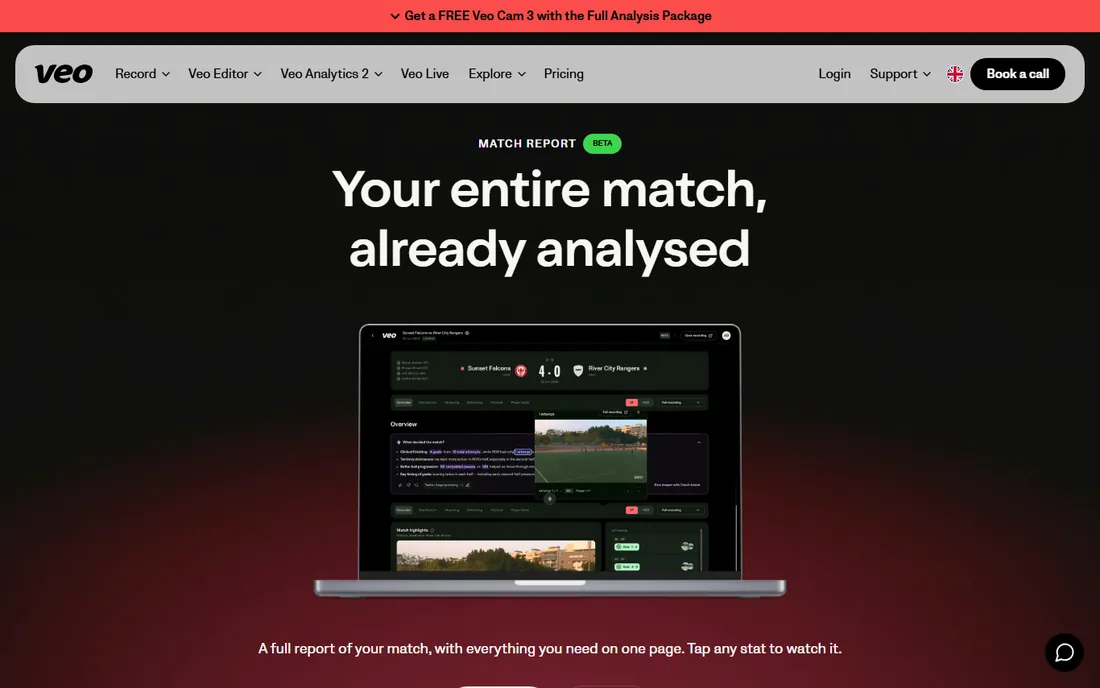
Veo solves the most practical problem in team video: nobody to film the game. Its AI camera records the full field and automatically follows play, producing watchable footage without a camera operator. The platform adds analysis tools, and a limited free tier lets teams start.
The camera is the investment, and the AI director is good but not perfect on chaotic plays. Still, for youth clubs, high schools and small colleges, Veo turns "we have no film" into a full video program. It fits programs where the alternative is a parent with a phone.
What we like- AI camera follows the action with no operator
- Affordable for clubs and schools
- Analysis tools included with recordings
Watch out for- Camera hardware is a separate purchase
- AI framing occasionally misses the action on crowded plays
Starting priceSee website
Free planNo
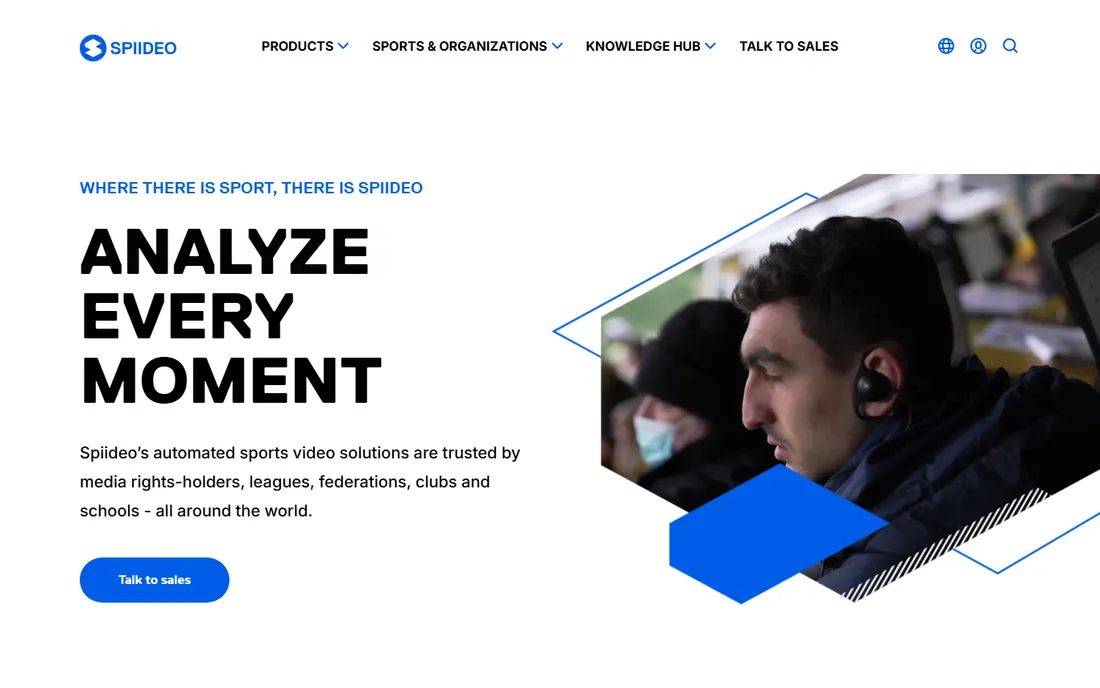
Spiideo combines automated recording with a cloud analysis platform: fixed or portable cameras capture the game, AI handles the filming, and coaches get breakdown tools, telestration and sharing in the browser. It is established in professional soccer and expanding across sports.
Pricing targets clubs and organizations rather than casual users, and fixed installations need planning. Spiideo fits organizations standardizing video capture across multiple teams or venues, where the cloud workflow replaces local hardware and hard drives.
What we like- Automated multi-angle recording with AI analysis
- Cloud platform for sharing and breakdown
- Strong in soccer with growing American football use
Watch out for- Quote-based pricing aimed at organizations, not individuals
- Installation planning for fixed cameras takes effort
Starting priceSee website
Free planNo
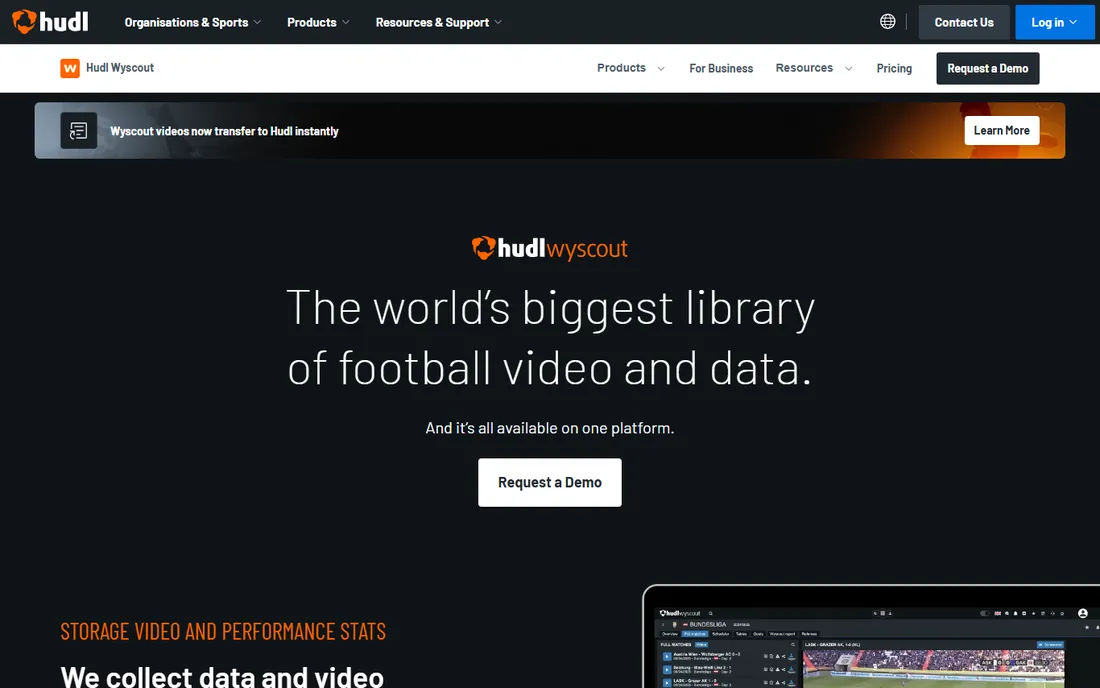
Wyscout (part of Hudl) is the soccer world's scouting database: video and data on hundreds of thousands of players across global leagues, searchable by position, attributes and performance. Recruitment departments live in it during transfer windows.
The single-sport focus is the boundary. American football programs should look at Hudl's core products instead. Wyscout fits soccer clubs, from professional academies to ambitious semi-pro sides, where recruitment depends on seeing players you cannot visit in person.
What we like- Massive video database of players and matches worldwide
- The standard tool for soccer recruitment
- Detailed player profiles and statistics
Watch out for- Soccer-specific, of little use to American football programs
- Subscription pricing per user adds up for large staffs
Starting priceSee website
Free planNo
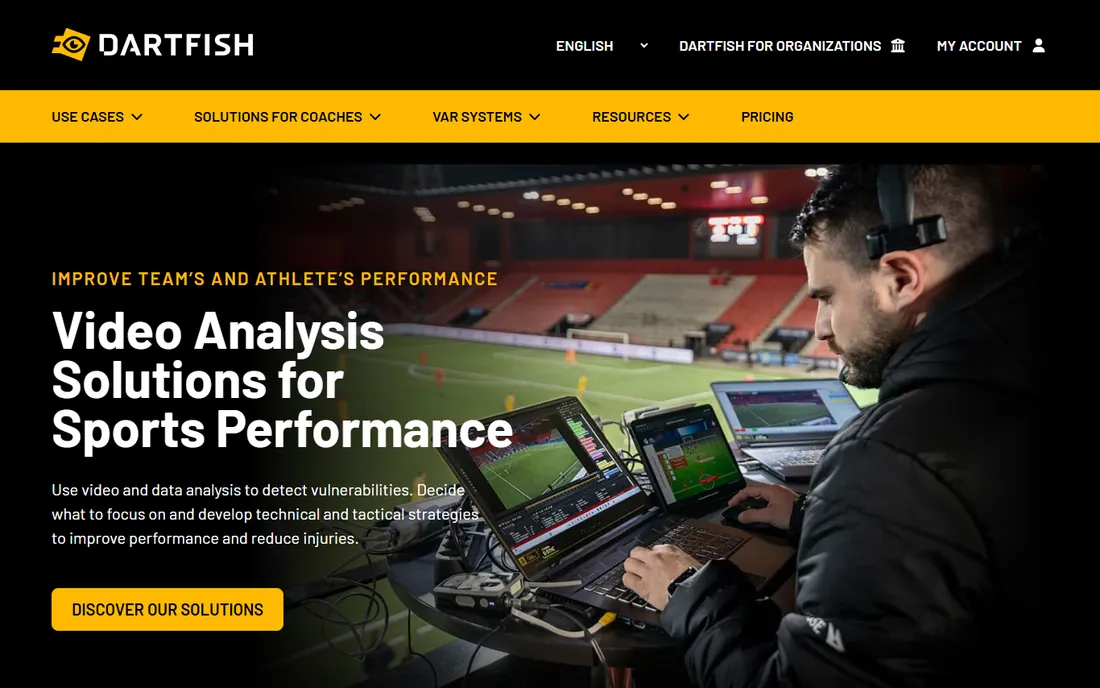
Dartfish is the coach's microscope: record a movement, slow it down, draw angles, compare side by side with a model performer. It excels at technique coaching, from quarterback mechanics to kicking form, and it is a staple of coaching certification programs.
It does not manage a team's season; there is no exchange network or recruiting database. Dartfish fits individual coaches and skills trainers who analyze technique rep by rep, complementing rather than replacing a team video platform.
What we like- Precise slow-motion and side-by-side technique comparison
- Trusted in coaching education
- Works across all sports
Watch out for- Analysis-focused rather than team management
- Smaller ecosystem than Hudl or Catapult
What to check before you buy
Start with your level and your staff. A high school with two coaches needs automated recording and simple breakdown, not optical tracking. A college program needs exchange networks and recruiting tools. A professional club needs data feeds and sports science integration. Buying above your level wastes money; buying below it wastes the season.
Check the camera situation honestly. Automated cameras solve the filming problem but cost money upfront; manual upload workflows need someone doing the work every week. Verify storage and user limits, since film libraries grow fast. Confirm the exchange network covers your opponents and league. Finally, count the real users: per-seat pricing across a 100-player roster changes the math versus a coaches-only license.
How we chose
We selected football analytics tools with live products and real team customer bases, from automated cameras to pro data feeds, using vendor sites, documentation and public reviews. Pricing in this category is almost entirely quote-based, so every starting price is listed as See website. We did not test hardware or measure tracking accuracy.
Making data stick in the dressing room
The best analytics platform in the world is worthless if the coaching staff ignores it. Adoption in football is a people problem disguised as a technology problem, and it follows patterns worth knowing.
Translate numbers into football language. Nobody in a dressing room cares about "expected threat per 90" until someone shows what it means: this is why we attack down the left, this is the pass we need to cut out. Analysts who present clips first and numbers second get heard; analysts who present spreadsheets get tuned out. Every metric needs a video example and a plain-English sentence.
Win over one coach, not the whole staff. Find the assistant coach or set-piece specialist who is curious, give them one insight that works on the pitch, and let the results recruit everyone else. Top-down mandates ("we are a data-driven club now") produce compliance without belief; one converted believer produces genuine adoption.
Respect the hierarchy of the dressing room. Senior players can kill an analytics initiative with a joke. Involve them early, show them data that respects their experience (their positioning has always been good; here is the proof), and never use data to embarrass a player publicly. The fastest way to lose a squad is a leaked stat that makes someone look bad.
Keep matchday simple. Whatever the platform can do, the matchday output should fit on one page: three strengths to exploit, three threats to nullify, set-piece responsibilities. Complexity is for the training ground; clarity is for the tunnel.
Frequently asked questions
What is the difference between video analysis and performance analytics?
Video analysis breaks down film: tagging plays, drawing on clips, sharing cut-ups. Performance analytics adds data: wearables, tracking feeds and event data that quantify what happened. Most programs start with video and add data as budgets allow.
Do we need wearable devices?
Not necessarily. Wearables add load and speed data that help manage training and injuries, but they need staff to interpret. Programs without sports science support get more from investing in video first.
How much does football analytics software cost?
It ranges from a few hundred dollars a year for automated camera subscriptions to six figures for professional tracking and data feeds. Most team video platforms are quote-based; always get the per-season total including storage and users.
Can one camera really replace a film crew?
For most levels, yes. AI cameras from Veo and Spiideo produce usable game film without an operator. They occasionally miss the ideal angle on broken plays, but they beat having no film at all, which is the real alternative for most programs.
What is optical tracking?
Camera systems that record every player's position continuously during a match, producing movement data for tactical analysis. It requires installed cameras and is currently a professional-tier technology.
How do teams share film with opponents?
Platforms like Hudl operate exchange networks where teams upload and trade game film under league rules. Confirm your league's exchange rules before choosing, since some mandate specific platforms.
Sources we checked (8)
- https://www.hudl.com/
- https://www.catapult.com/
- https://www.statsperform.com/
- https://www.secondspectrum.com
- https://www.veo.co
- https://www.spiideo.com
- https://wyscout.com/
- https://www.dartfish.com/
Is your product missing or out of date?
We review this list regularly. Vendors can request a listing, send updated pricing or ask about featured placement.

Shihab Mia · Founder, Rankite
Shihab has 5+ years in B2B and SaaS SEO. He writes Rankite's software buying guides from pricing pages, documentation and public user reviews. More about Shihab.