How we make this list: we compare pricing pages, product documentation and public user reviews. Rankite is independent; if a vendor ever pays for a featured spot, that listing is clearly labeled Partner.
Key takeaways
- Agentic AI platforms split three ways: developer frameworks (LangGraph, AutoGen, CrewAI), no-code builders (Lindy, Relevance AI, Dify, Zapier Agents) and enterprise suites (Agentforce).
- LangGraph (free, MIT) is the leading framework for stateful, production agent workflows; LangGraph Cloud adds pay-per-use hosting.
- CrewAI (free Basic tier) is the multi-agent specialist: role-based agents collaborating on complex tasks.
- Lindy ($49.99/month Plus) is the most accessible no-code agent builder for business users.
- Zapier Agents (free, 100 tasks/month) turns 7,000+ app integrations into agent actions with no code.
Quick comparison
| Tool | Best for | Starting price | Free plan |
|---|
 LangGraph LangGraph | Production-grade stateful agent workflows | $0 (open source, MIT); LangGraph Cloud pay-per-use ($0.005/run + $0.0036/min) | Yes |
 CrewAI CrewAI | Multi-agent teams with specialized roles | $0 (free Basic, 50 executions/month); Enterprise custom | Yes |
 AutoGen AutoGen | Research-grade programmatic multi-agent systems | $0 (open source, MIT) | Yes |
 Lindy Lindy | No-code AI agents for everyday business work | $49.99 per month (Plus) | Free tier |
 Relevance AI Relevance AI | No-code agents for sales, support and research | See website | Yes |
 Dify Dify | Open-source visual agent building | $0 (open source); cloud plans paid | Yes |
 Zapier Agents Zapier Agents | Agents that act across 7,000+ apps | $0 (free forever, 100 tasks/month); Professional from $19.99 per month (billed annually) | Yes |
 Agentforce Agentforce | AI agents inside the Salesforce ecosystem | $0 (free starter, 200k Flex credits); pay-as-you-go credits from $500/100k | Yes |
Is your product missing or out of date?
We review this list regularly. Vendors can request a listing, send updated pricing or ask about featured placement.
Starting price$0 (open source, MIT); LangGraph Cloud pay-per-use ($0.005/run + $0.0036/min)
Free planYes
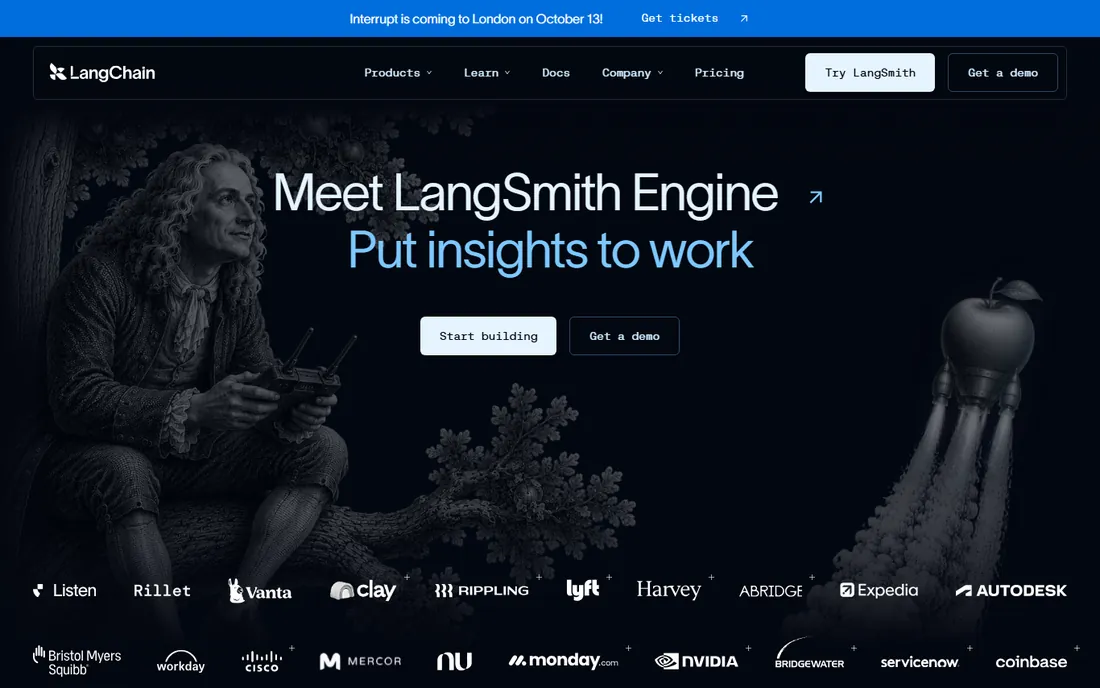
LangGraph (from the LangChain team) is the leading framework for agents that need memory and structure: stateful workflows with branching, loops, retries and persistent execution state. Where simple agent loops break down, LangGraph's graph model holds up. The framework is free and MIT-licensed; LangGraph Cloud hosts deployments pay-per-use, and LangSmith ($39-99/seat/month) adds observability.
Production teams choose it for reliability engineering: guardrails, retry logic and human-in-the-loop checkpoints that keep per-step success rates high. The cost beyond hosting is LLM API calls, which scale with workflow complexity; caching cuts that substantially.
It fits developers building agents that must work reliably at scale, not just demo well.
What we like- Best-in-class stateful orchestration
- Branching, loops and retries
- Huge LangChain ecosystem
Watch out for- Developer-only
- You manage complexity
- LLM API costs separate
Starting price$0 (free Basic, 50 executions/month); Enterprise custom
Free planYes
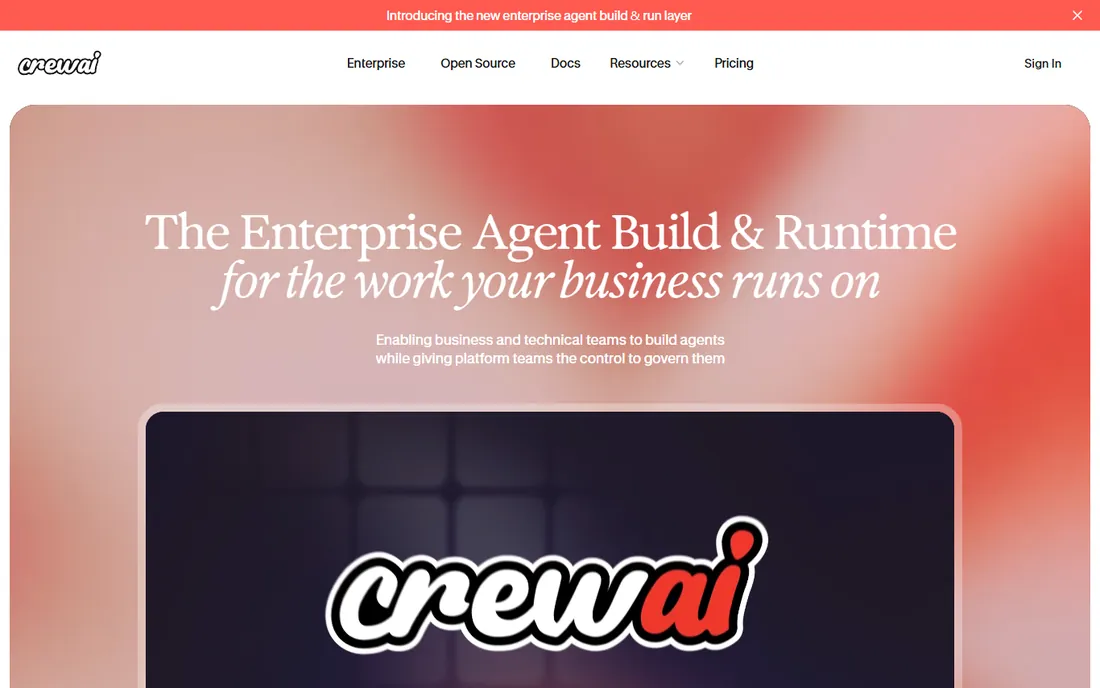
CrewAI organizes agents the way teams organize people: specialized roles (researcher, writer, critic) collaborating on complex workflows, with hierarchical options adding manager agents. The framework is free and MIT-licensed; CrewAI AMP adds a free Basic tier (50 workflow executions a month) and enterprise deployment to your own VPC.
It is the developer's choice for genuinely multi-agent work: role-based prompting reduces redundant context, and the management UI plus tracking help turn concepts into production systems. Beginners may find the concepts heavy; single-agent tasks do not need it.
Choose CrewAI when the job genuinely benefits from multiple specialized agents, not one agent doing everything.
What we like- Role-based agent collaboration
- No-code templates plus code
- Deploy to your own VPC
Watch out for- Can be complex for beginners
- Enterprise focus at higher tiers
Starting price$0 (open source, MIT)
Free planYes
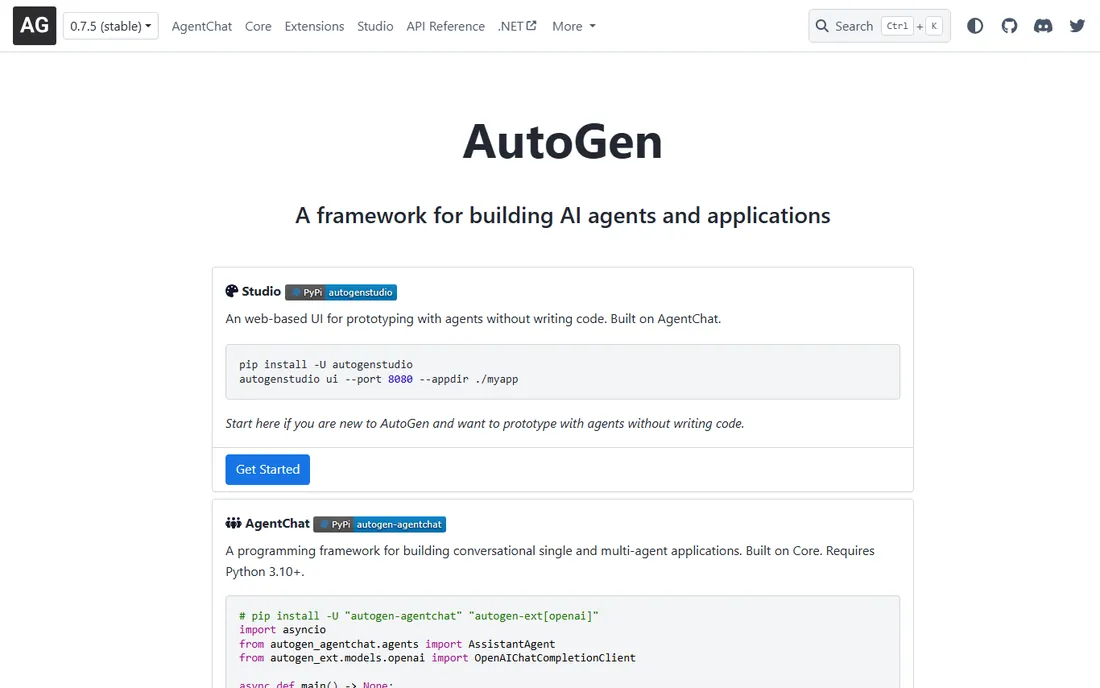
AutoGen (Microsoft) is the open-source framework for building multi-agent applications programmatically: agents that converse, collaborate and use tools, with patterns for reflection, planning and human oversight. It is free, MIT-licensed and backed by Microsoft's research ecosystem.
It is firmly developer territory: Python, configuration and experimentation rather than visual builders. Enterprise or hosted options exist but vary. Teams use it for advanced agent research and custom multi-agent systems where framework flexibility matters more than convenience.
It suits technical teams building novel agent architectures rather than standard workflows.
What we like- Free and Microsoft-backed
- Flexible conversation-based agents
- Strong research community
Watch out for- Developer-centric
- Setup overhead
- Enterprise options vary
#4
Lindy
Best for: No-code AI agents for everyday business work
Visit lindy.ai
Starting price$49.99 per month (Plus)
Free planFree tier
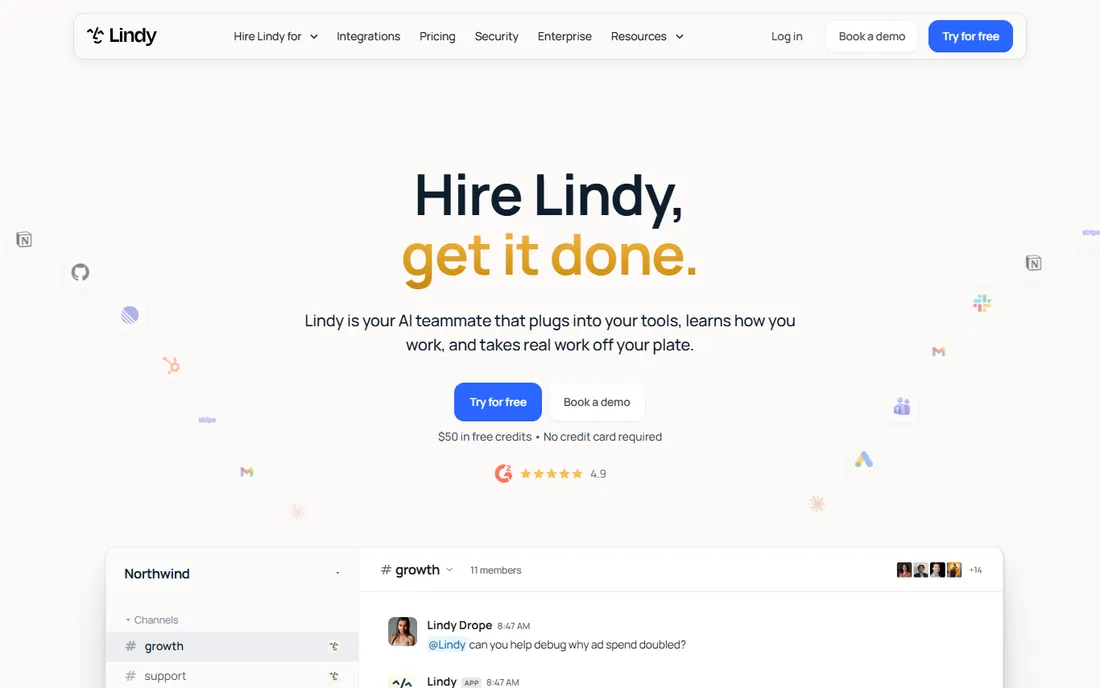
Lindy is the no-code agent platform for business users: build custom AI agents for email triage, meeting scheduling, CRM updates, customer support and multi-step workflows without writing code. A free tier plus plans from $49.99 per month (Plus) make entry accessible, with usage-based pricing tying cost to agent actions.
With 3,000+ integrations and pre-built templates, setup runs minutes to hours rather than weeks. The tradeoff is control: complex logic and custom integrations hit the no-code ceiling faster than frameworks. But for standard business automation, it is the fastest path from idea to working agent.
It fits small and mid-size businesses that want AI agents without hiring developers.
What we like- True no-code builder
- 3,000+ integrations
- Pre-built templates
- Usage-based pricing
Watch out for- Per-action costs scale with use
- Less control than code frameworks
Starting priceSee website
Free planYes
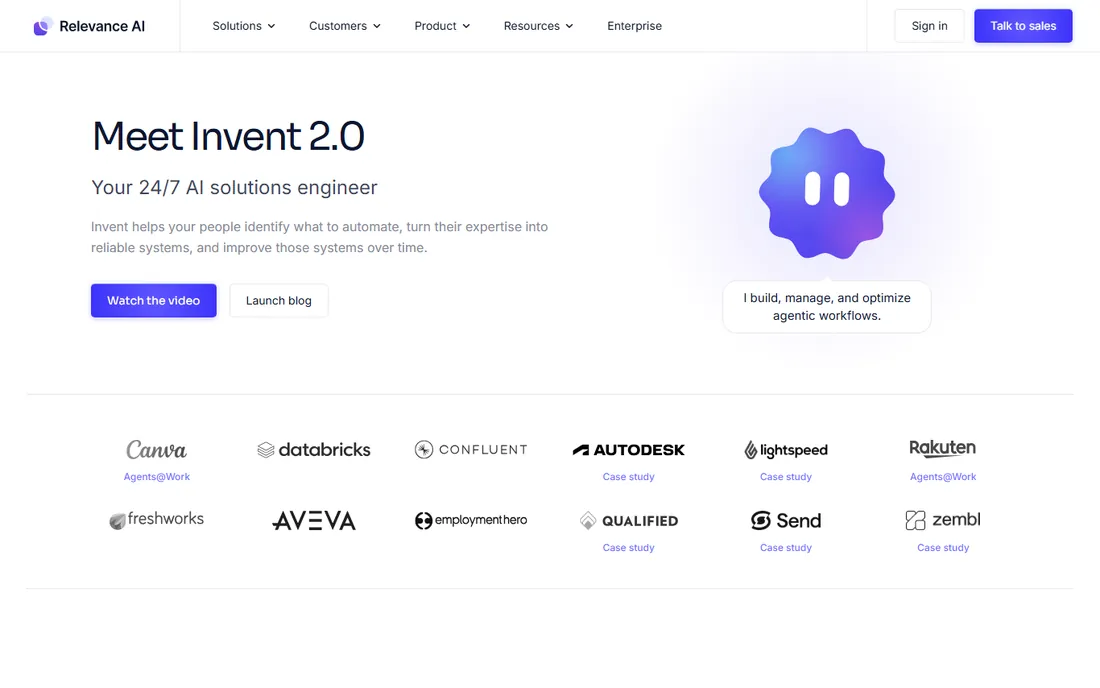
Relevance AI targets the highest-value agent use cases first: sales prospecting, customer support and research agents, built through a no-code interface. The platform trades breadth for depth in these verticals, with templates and integrations tuned for go-to-market teams.
Pricing is not published on a simple tier page (enterprise plans are custom), though a free tier exists for starting. As the company moves upmarket, small teams should confirm the self-serve path still fits.
Choose it when your agent use case is sales, support or research and you want vertical depth over generality.
What we like- Purpose-built for GTM and support use cases
- No-code builder
- Free tier to start
Watch out for- Pricing not published simply
- Enterprise focus growing
Starting price$0 (open source); cloud plans paid
Free planYes
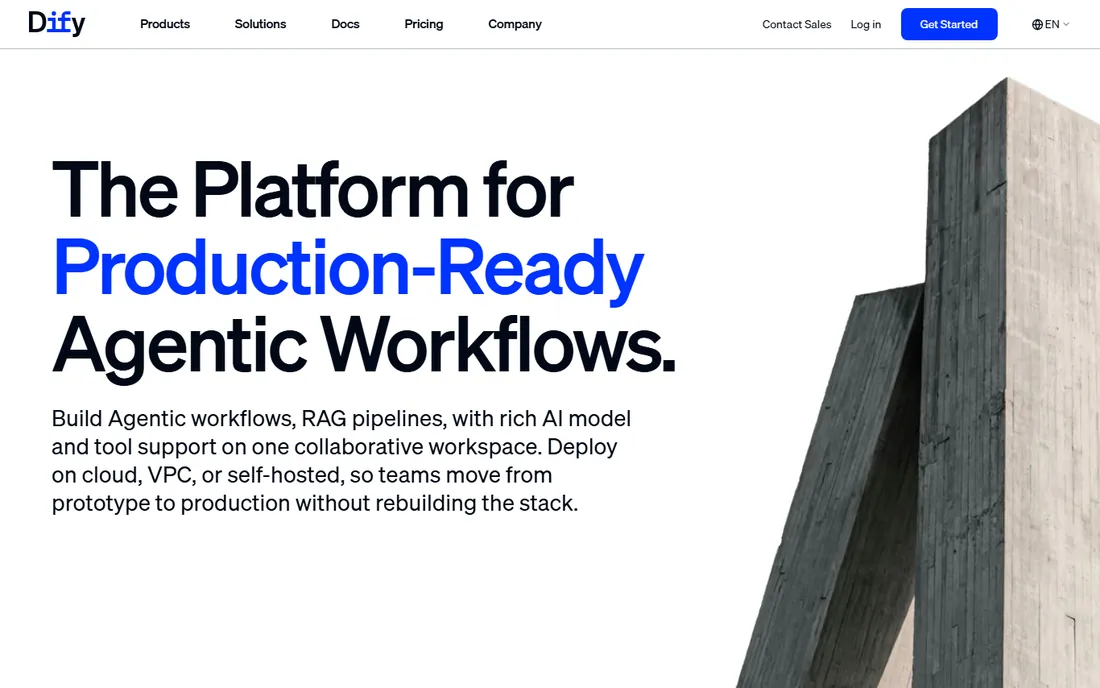
Dify is the open-source LLMOps platform for building AI agents visually: drag-and-drop agent construction, RAG pipelines and model management, with one of the largest open-source communities in the space. Self-host for free or use the managed cloud.
The visual builder lowers the barrier versus code frameworks while keeping the self-hosting option that no-code SaaS tools lack. Operating it yourself takes effort, but data stays on your infrastructure. For teams that want visual building without vendor lock-in, it is the standout.
It suits teams that like no-code building but insist on open source and self-hosting.
What we like- Open source with 130k+ stars
- Visual builder with RAG
- Self-hostable
Watch out for- Self-hosting needs ops effort
- Cloud pricing separate
Starting price$0 (free forever, 100 tasks/month); Professional from $19.99 per month (billed annually)
Free planYes
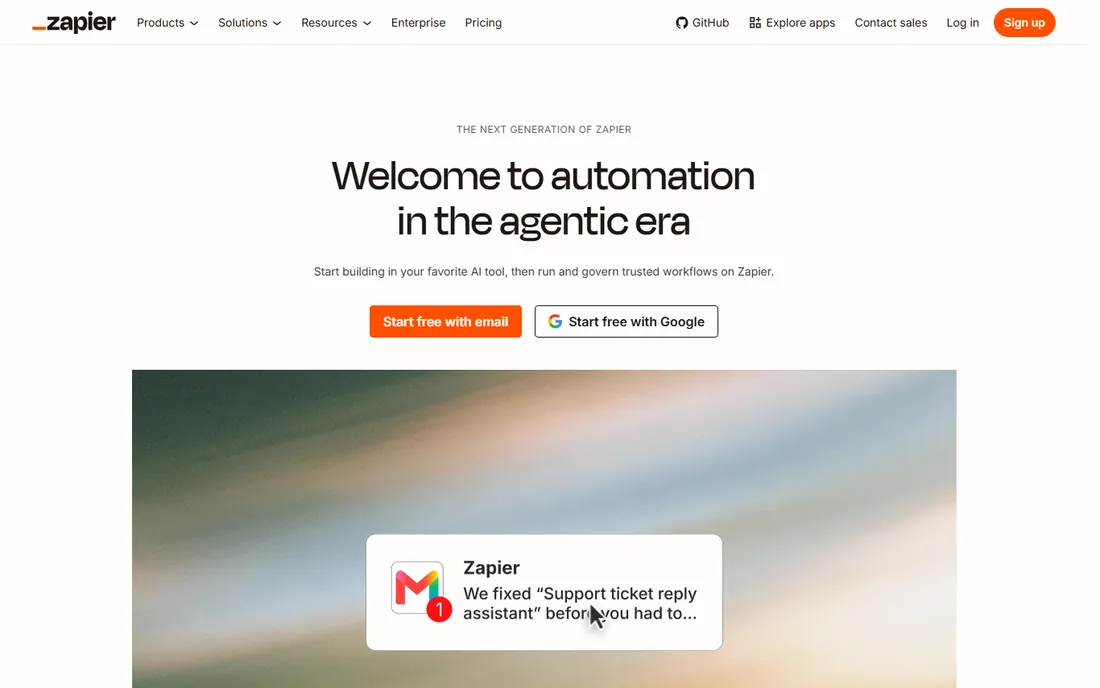
Zapier Agents brings agentic behavior to the world's largest app integration catalog: describe what you want in natural language, and agents act across 7,000+ connected apps. The free tier (100 tasks/month forever) is genuinely useful, with Professional from $19.99 per month billed annually.
The agents are less sophisticated than LangGraph or CrewAI constructions: they excel at cross-app automation with AI decision-making, not at complex reasoning workflows. But for businesses already on Zapier, agents extend existing Zaps with autonomy at minimal learning cost.
Pick it when your agent's value is acting across many business apps, not deep reasoning.
What we like- Unmatched app integration breadth
- Natural language agent building
- Generous free tier
Watch out for- Agents are simpler than framework-built ones
- Per-task costs at scale
Starting price$0 (free starter, 200k Flex credits); pay-as-you-go credits from $500/100k
Free planYes
Agentforce (Salesforce) puts AI agents inside the CRM where customer data lives: service agents resolving cases, sales agents qualifying leads, all governed by Salesforce's trust layer with audit trails and permissions. A free starter (200,000 Flex credits) lets teams experiment; scale pricing is credit-based.
The value is entirely within the Salesforce platform; companies not on Salesforce get nothing from it. Credit pricing takes modeling to predict. But for Salesforce enterprises, agents with native data access and governance beat generic platforms bolted onto the CRM.
It fits Salesforce customers automating service and sales workflows with AI agents.
What we like- Native to Salesforce CRM
- Governed and auditable
- Free starter credits
Watch out for- Salesforce-only value
- Credit pricing complexity
- Enterprise sales motion
Framework vs builder: the real decision
The choice that matters is who builds and maintains the agents. Frameworks (LangGraph, CrewAI, AutoGen) give developers unlimited control and demand engineering skill permanently: someone owns the code, the prompts, the evals and the incidents. No-code builders (Lindy, Relevance AI, Dify, Zapier Agents) let business users build and iterate, but cap complexity and create platform dependence. A useful rule: if the workflow changes monthly, builders win on iteration speed; if it must run reliably for years, frameworks win on control. Many organizations end up with both.
Start with one pilot that has a clear success metric, not with a platform decision. Pick a workflow that is currently manual, measurable and low-risk (triage, data entry, first-draft responses), build it on the most accessible platform for your team, and measure for a month: time saved, error rate, and how often a human had to intervene. That pilot tells you whether your bottleneck is the platform or the workflow design. Most failed agent projects fail on vague goals and unmeasured results, not on the choice between LangGraph and Lindy.
How we chose
We listed active agentic AI platforms across all three camps (frameworks, no-code builders, enterprise suites) with real 2026 adoption. Pricing comes from vendor pages and current third-party comparisons that read those pages; open-source frameworks are honestly listed as free with hosting and LLM costs described. We weighted production readiness, ease of building, integration breadth and governance. No hands-on testing was performed.
Frequently asked questions
What is an agentic AI platform?
Software for building AI agents that plan tasks, use tools, make decisions and complete multi-step workflows with limited human intervention, as opposed to chatbots that only answer questions.
What is the difference between LangChain and LangGraph?
LangChain provides components and integrations for building AI applications. LangGraph orchestrates stateful agent workflows with branching, loops, retries and persistent state. Most production agents use both.
Which platform is best for non-developers?
Lindy ($49.99/month) for general business agents, Zapier Agents (free) if you live in its app ecosystem, Relevance AI for sales and support use cases. All three are genuinely no-code.
How much do agentic AI platforms cost?
Frameworks are free (you pay hosting plus LLM API calls). No-code builders run $0-200/month for small teams. Enterprise suites (Agentforce) are credit-based. Model your LLM token costs separately; they often exceed platform fees.
Are AI agents reliable enough for production?
With engineering, yes: guardrails, retry logic, human-in-the-loop checkpoints and evaluation keep per-step reliability at 98-99%. Unevaluated agents fail compounding: 95% per-step success over 10 steps is only 60% overall.
Do I need my own data for agents to be useful?
Agents are most valuable connected to your tools and data (CRM, docs, APIs). A generic agent with no integrations is a chatbot. Prioritize platforms with the integrations you actually use.
What is the biggest cost risk with AI agents?
LLM token costs, not platform fees. A chatty multi-agent workflow can burn dollars per run at scale. Set per-run cost budgets, cache aggressively, and monitor token spend weekly from day one. The platforms are cheap; the tokens are the bill.
Sources we checked (5)
- https://memeburn.com/best-ai-agents/
- https://brlikhon.engineer/blog/building-production-agentic-ai-systems-in-2026-langgraph-vs-autogen-vs-crewai-complete-architecture-guide
- https://cellcog.ai/blog/best-multi-agent-platforms/
- https://www.lowcode.agency/blog/top-ai-agent-companies
- https://github.com/caramaschiHG/awesome-ai-agents-2026
Is your product missing or out of date?
We review this list regularly. Vendors can request a listing, send updated pricing or ask about featured placement.

Shihab Mia · Founder, Rankite
Shihab has spent more than a decade helping SaaS and e-commerce brands grow through search. He writes Rankite's software buying guides from pricing pages, documentation and public user reviews. More about Shihab.