How we make this list: we compare pricing pages, product documentation and public user reviews. Rankite is independent; if a vendor ever pays for a featured spot, that listing is clearly labeled Partner.
Key takeaways
- Google Ads wins when customers search with intent to buy; every other platform is interruption, which changes how you measure success.
- Meta Ads remains the default for consumer reach at scale, but creative quality now decides performance more than targeting tweaks.
- TikTok Ads has the highest floor of the social platforms ($50/day per campaign), so it suits brands ready to spend at least $700 to $1,000 on a first test.
- LinkedIn Ads is the only platform built for B2B targeting by job title, but its $10/day minimum buys almost nothing at typical B2B click prices; plan for $100/day or skip it.
- Reddit and Pinterest are the cheapest specialist picks: Reddit for niche communities at a few dollars a day, Pinterest for planners in home, fashion and DIY categories.
Quick comparison
| Tool | Best for | Starting price | Free plan |
|---|
 Google Ads Google Ads | Capturing high-intent search demand | See website (no minimum spend) | No |
 Meta Ads Meta Ads | Broad consumer reach on Facebook and Instagram | See website (no minimum spend) | No |
 Microsoft Advertising Microsoft Advertising | Searchers on Bing with strong buying power | See website (no minimum spend) | No |
 TikTok Ads TikTok Ads | Short-form video commerce | See website ($50/day campaign minimum) | No |
 LinkedIn Ads LinkedIn Ads | B2B lead gen by job title and company | See website ($10/day minimum) | No |
 Amazon Ads Amazon Ads | Product sales at the point of purchase | See website (no minimum for self-serve) | No |
 Reddit Ads Reddit Ads | Niche community targeting | See website (tests from about $5/day) | No |
 X Ads X Ads | Real-time conversation and news moments | See website (no minimum spend) | No |
 Pinterest Ads Pinterest Ads | Planners shopping home, fashion and DIY | See website (no minimum spend) | No |
 Snapchat Ads Snapchat Ads | Gen Z reach with AR ad formats | See website ($5/day minimum) | No |
Is your product missing or out of date?
We review this list regularly. Vendors can request a listing, send updated pricing or ask about featured placement.
The wrong ad platform does not just waste your budget. It wastes the three months you spend learning its quirks, building creative that does not fit the format, and optimizing toward numbers that look good in the dashboard but never show up in revenue. A B2B company that spends a quarter on TikTok chasing cheap clicks has not saved money; it has burned the quarter.
The second cost is harder to see: misattribution. Every platform takes credit for sales it only touched, and when you run the wrong platform alongside the right one, you end up cutting the channel that was actually doing the work. Choosing deliberately, with one clear job per platform, is the only defense.
This comparison covers the ten platforms US small and mid-size companies actually use. The best advertising platform is not the one with the most users. It is the one where your buyers already spend attention and where your unit economics survive the click price.
Starting priceSee website (no minimum spend)
Free planNo
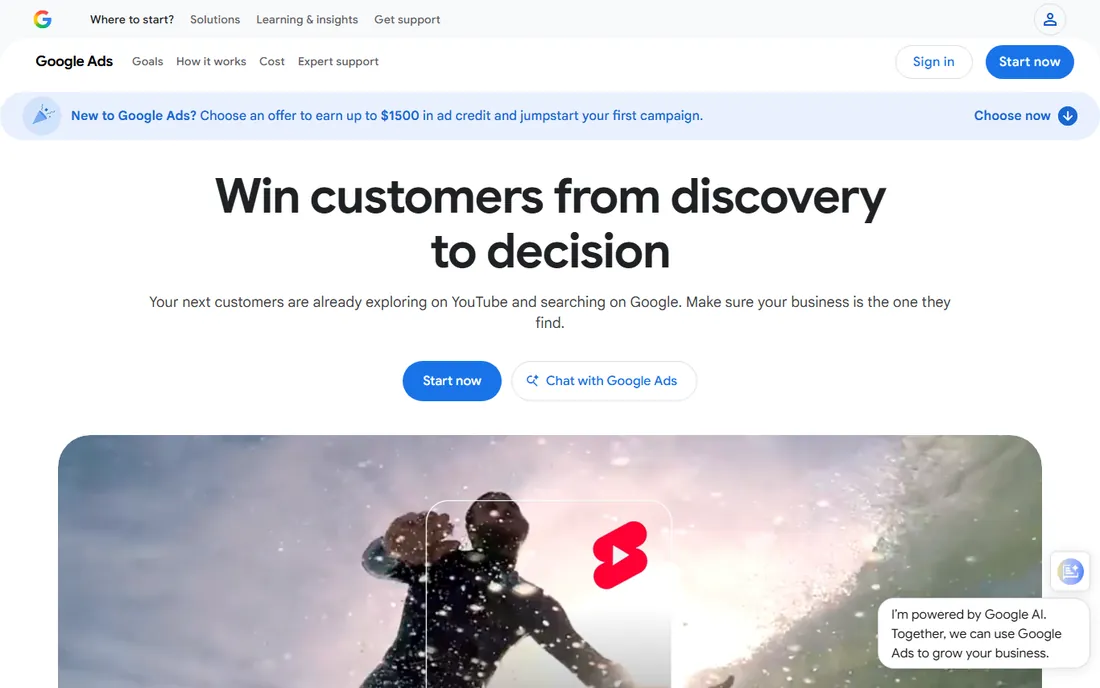
Google Ads is the only major platform where the customer tells you what they want before you pay a cent. Someone typing "emergency plumber near me" is worth more than a thousand interrupted scrollers, which is why search campaigns still anchor most paid acquisition. There is no minimum spend, so a local business can start with a few dollars a day on exact-match keywords. YouTube, Shopping and Performance Max campaigns extend that intent across formats.
The catch is that you are bidding against everyone else who read the same playbook. Legal, insurance and SaaS keywords cost tens of dollars per click, and broad match without negative keywords can drain a budget in days. Google Ads rewards operators who check search terms weekly and punish set-and-forget accounts. If you will not do the maintenance, hire someone who will or pick a simpler platform.
What we like- Buyers arrive with intent to purchase
- Enormous reach including YouTube and the Display Network
- No minimum spend to start
Watch out for- Click prices rise every year in competitive categories
- Needs constant management to avoid waste
- Invalid clicks remain a real cost
Starting priceSee website (no minimum spend)
Free planNo
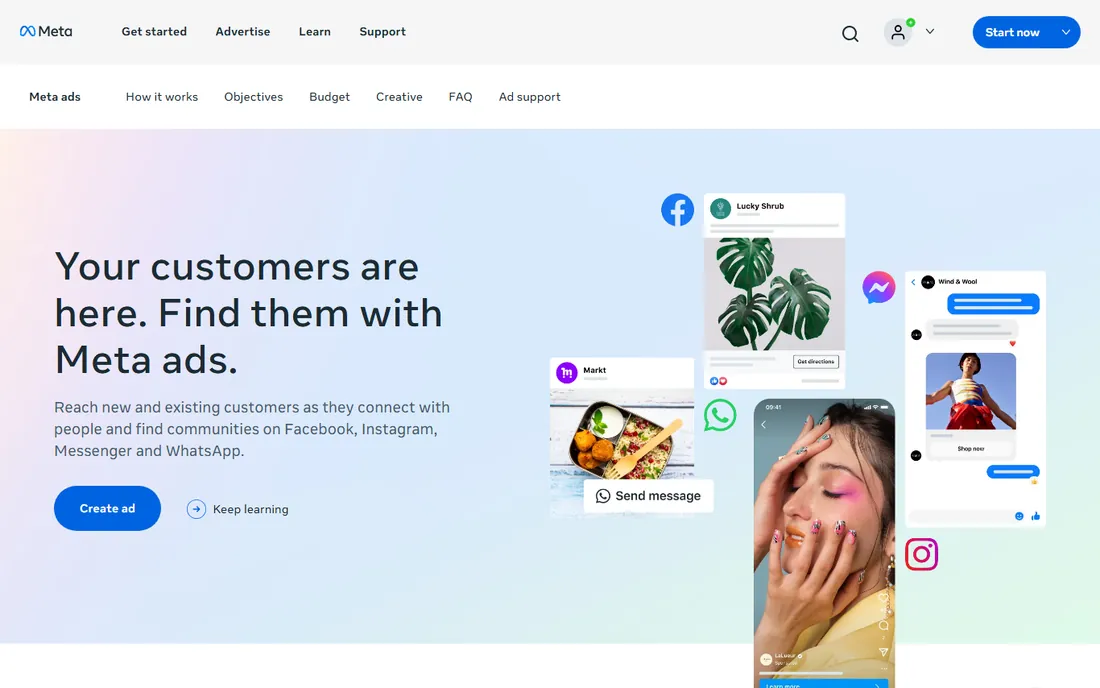
Meta's ad platform reaches more US consumers than any other, across Facebook, Instagram, Messenger and its audience network. For ecommerce, local services and consumer apps, it is usually the first paid social channel worth testing. There is no minimum spend, and the auction lets you start small while the algorithm learns. Retargeting, in particular, remains one of the highest-return uses of ad money anywhere.
Performance now lives and dies on creative. Broad targeting with strong video and image creative outperforms fiddly interest stacks in most accounts, which means the skill you need is creative production, not media buying. Watch the account health side too: automated bans and restricted ad accounts are a common complaint, and appeals can take weeks. Keep backup payment methods and a clean compliance record.
What we like- Unmatched audience scale and interest data
- Creative testing is cheap and fast
- Strong for retargeting site visitors
Watch out for- Targeting precision has narrowed since privacy changes
- Ad account bans hit without clear appeal paths
- Creative fatigue forces constant refreshes
Starting priceSee website (no minimum spend)
Free planNo
Bing's audience is smaller but valuable: older, more affluent, and less bombarded by competitors, which keeps cost per click noticeably lower than Google in many categories. Campaigns can be imported directly from Google Ads, so setup takes minutes if you already run search elsewhere. The LinkedIn profile targeting, which layers job function and company data onto search campaigns, is a genuinely unique B2B feature.
Volume is the limitation. In most US markets Bing holds a single-digit share of searches, so it works as a second engine, not a replacement. Treat it as incremental reach: import your winning Google campaigns, adjust bids down, and collect the cheaper conversions. Companies that ignore it usually leave easy money on the table.
What we like- Cheaper clicks than Google in most categories
- Audience skews older and higher-income
- LinkedIn profile targeting on search campaigns
Watch out for- Far less search volume than Google
- Interface lags behind Google Ads
- Some features arrive months later
Starting priceSee website ($50/day campaign minimum)
Free planNo
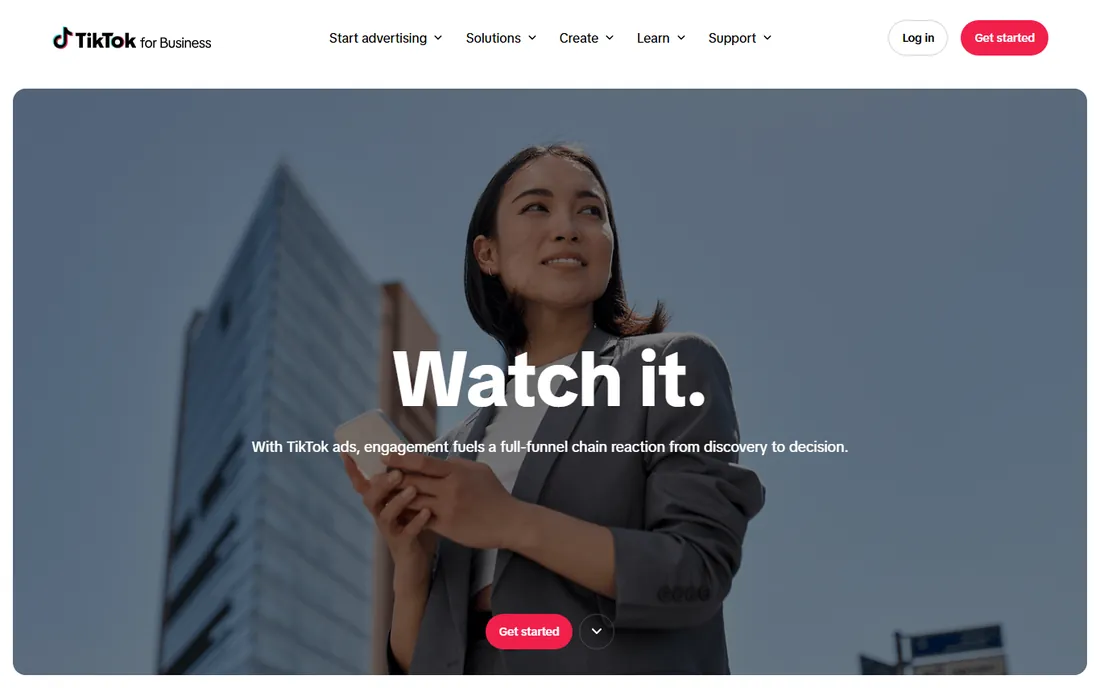
TikTok sells attention at prices Meta cannot match, with average CPMs well below the social average and engagement rates that reward good creative. For brands with a visual product and a young buyer, it can be the most efficient acquisition channel available. Spark Ads, which boost organic posts from your account or creators, lower the creative barrier further. TikTok Shop closes the loop from video to purchase without leaving the app.
The budget floor is the thing to respect. TikTok requires $50 a day at the campaign level and $20 a day per ad group, and practitioners suggest $700 to $1,000 for a meaningful first month. Below that, the algorithm never exits the learning phase and your test proves nothing. This is not a platform for dipping a toe in; commit to a real test budget or spend the money elsewhere.
What we like- Cheap reach with strong engagement
- Native-feeling video outperforms polished ads
- TikTok Shop ties ads directly to checkout
Watch out for- $50/day campaign minimum is the highest floor here
- Algorithm needs real conversion volume to learn
- Creative must feel native or it flops
Starting priceSee website ($10/day minimum)
Free planNo
No other platform lets you put an ad in front of every VP of Operations at mid-size manufacturers. For B2B companies with deal sizes in the thousands, that precision justifies click prices that would be absurd anywhere else. Sponsored Content, Message Ads and Lead Gen Forms each serve different plays, from content promotion to direct meeting booking. Account-based lists with company name matching make it a true ABM channel.
The economics filter out most small advertisers. LinkedIn's $10-a-day minimum is a platform floor, not a workable budget; with B2B CPCs commonly running $8 to $20, ten dollars buys about one click. Practitioners treat $100 a day per campaign as the minimum for learning anything in two to three weeks. If your average deal cannot absorb a $75-plus cost per lead, LinkedIn will eat your margin.
What we like- Target by job title, company, seniority and skills
- Ideal for account-based marketing
- Decision-makers actually use the platform
Watch out for- The most expensive clicks in B2B advertising
- $10/day buys almost nothing at real CPCs
- Small audiences limit scale
Starting priceSee website (no minimum for self-serve)
Free planNo
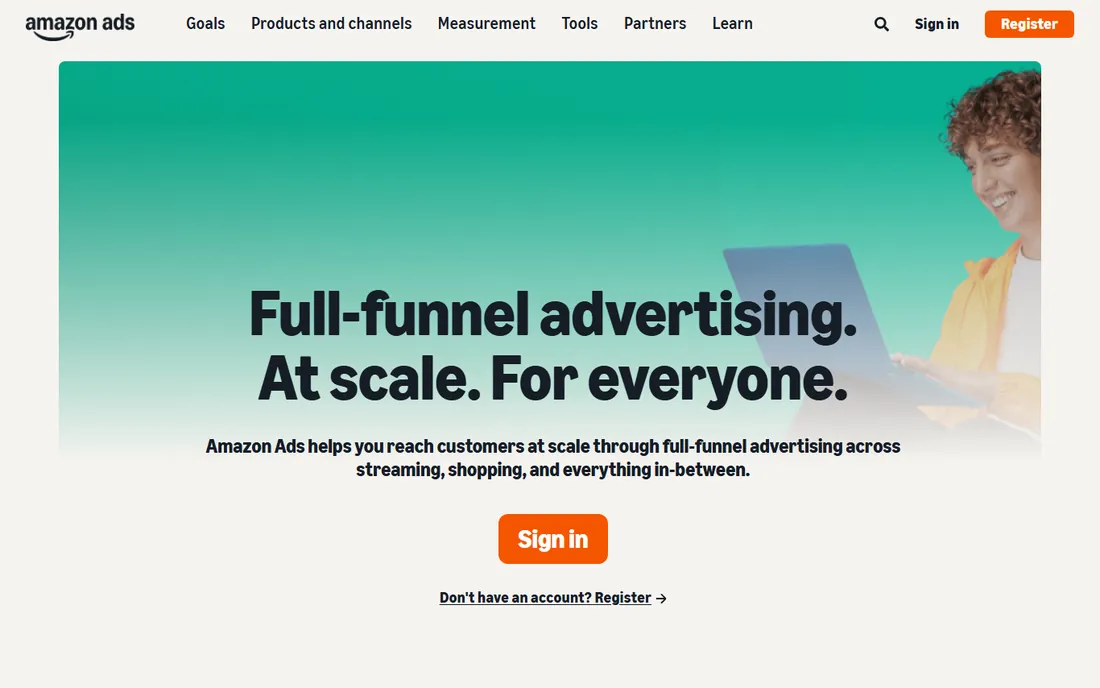
Amazon's ad platform sits at the bottom of the funnel: the shopper has already decided to buy something and is choosing from whom. Sponsored Products, Sponsored Brands and Sponsored Display let sellers defend their listings and steal placement from competitors. For brands that sell on Amazon, paid search inside the marketplace is close to mandatory, because organic placement alone rarely holds against bidding rivals.
The obvious limit is the walled garden. If your product is not on Amazon, most of the platform's value disappears, though Amazon DSP can buy off-Amazon inventory with Amazon's shopper data. Costs have also climbed as more sellers bid on the same keywords. Treat it as a cost of selling on Amazon rather than a growth channel, and measure it against total marketplace profit, not ad revenue alone.
What we like- Shoppers are already in buying mode
- Sponsored Products convert at high rates
- Rich purchase data for optimization
Watch out for- Mostly useful if you sell on Amazon
- Rising competition inflates bids
- Brand building is limited
Starting priceSee website (tests from about $5/day)
Free planNo
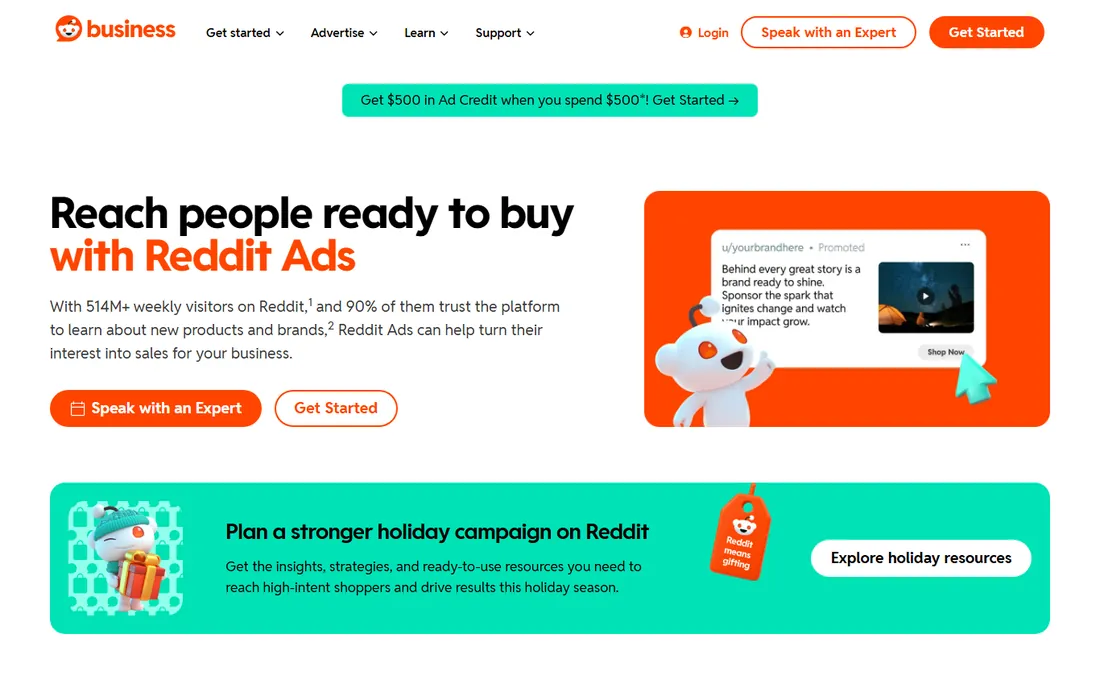
Reddit's superpower is specificity. Few platforms let you advertise to exactly the people discussing your product category, and subreddit targeting makes small budgets productive in a way broad platforms cannot match. Tests can start around $5 a day, which makes Reddit the cheapest serious experiment on this list. The auction runs on CPM, CPC and CPV depending on objective, and engaged communities can deliver surprisingly efficient traffic.
Creative has to respect the culture. Redditors downvote ads that feel corporate or salesy, and negative engagement acts as a cost multiplier in the auction. The winning approach is educational and conversational, closer to a good comment than a commercial. Managed buys and takeovers start at $10,000 a quarter, but self-serve advertisers can ignore that tier entirely.
What we like- Target passionate subreddit communities directly
- Very low cost to test
- Users reward honest, useful creative
Watch out for- Users punish obvious advertising
- Smaller reach than major platforms
- Narrow targeting can leave budget unspent
Starting priceSee website (no minimum spend)
Free planNo
X remains the place where news breaks and industries talk to themselves, which makes its ad platform valuable for timely campaigns: product launches, event promotion, and commentary on trending topics. There is no minimum spend, and you only pay for billable actions tied to your objective, whether that is link clicks, follows or video views. Finance, tech and media audiences are disproportionately present.
The trade-offs are real. The audience is smaller than Meta's or TikTok's, the platform's volatility has made some brands cautious, and the targeting and measurement tools lag behind Google and Meta. It works best as a tactical channel for moments rather than an always-on acquisition engine. Test it when timing matters to your message.
What we like- No minimum spend
- Strong for news, finance and tech audiences
- Real-time targeting around events and trends
Watch out for- Smaller and more volatile audience than rivals
- Brand safety concerns persist
- Measurement and attribution are weaker
Starting priceSee website (no minimum spend)
Free planNo
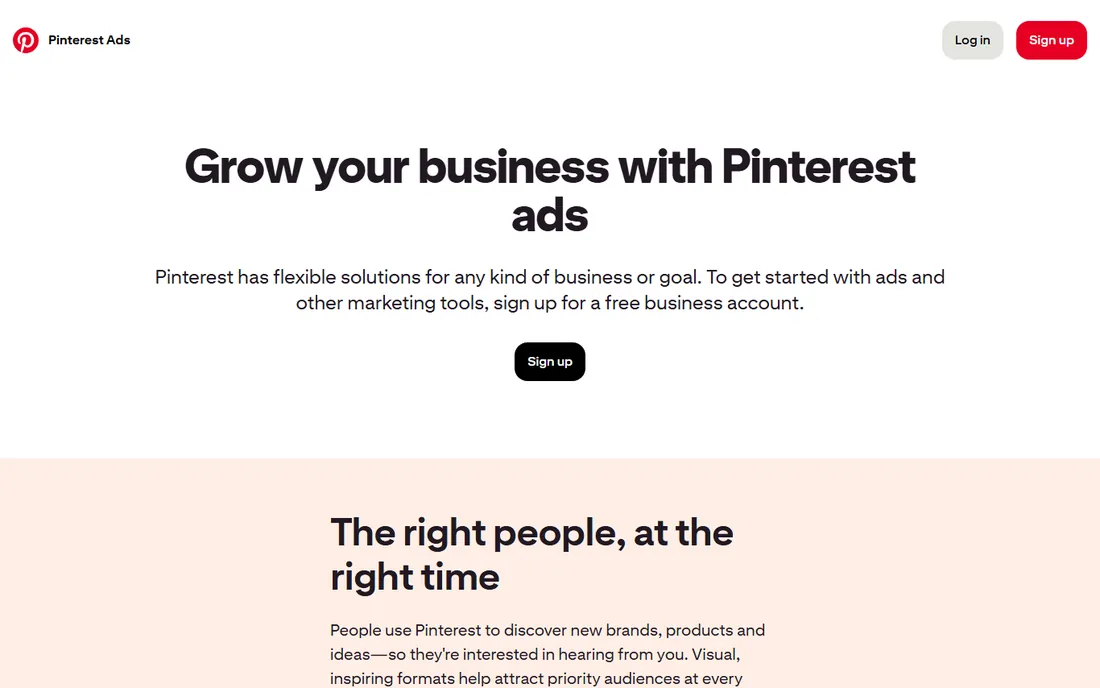
Pinterest users are planners: they save ideas for weddings, renovations, wardrobes and holidays weeks before they spend. That intent makes it a quiet performer for home goods, fashion, beauty, food and DIY brands. There is no minimum spend, and promoted pins keep earning organic traffic long after the campaign ends, which no other paid platform offers. CPMs in the $2 to $5 range keep tests affordable.
The audience is narrower than it looks. Pinterest over-indexes on women planning household purchases, so B2B and male-skewing categories usually struggle. Campaigns also ramp slowly; practitioners warn against judging performance in the first days. Start seasonal pushes a month or two before the buying moment, and give the algorithm room to learn.
What we like- Users arrive planning to buy
- Pins keep driving traffic for months
- Efficient CPMs around $2 to $5
Watch out for- Skews heavily toward certain demographics and categories
- Needs patience as campaigns ramp slowly
- Conversion tracking needs setup work
Starting priceSee website ($5/day minimum)
Free planNo
Snapchat reaches a young audience that is hard to find elsewhere, with nearly a billion monthly users and deep engagement among Gen Z and millennials. The $5-a-day minimum makes it one of the cheapest platforms to test, and formats like AR Lenses let brands create interactive experiences instead of flat video. App installs are a particular strength, with efficient cost-per-install benchmarks.
Youth is both the asset and the limit. If your buyer is over 40, most of this audience is irrelevant. Conversion campaigns also need real budget to exit the learning phase; practitioners suggest $50 to $100 a day per ad set for purchase goals, far above the $5 floor. New advertisers can soften the test cost with Snap's ad credit offers, which match initial spend up to set thresholds.
What we like- $5/day minimum keeps tests cheap
- AR Lenses create interactive brand moments
- Strong app-install performance
Watch out for- Audience skews young, limiting many categories
- Conversion campaigns need $50 to $100/day to learn
- Smaller scale than Meta or TikTok
How this shortlist was put together
This list was built from platform documentation, current advertiser guides, and public benchmarks checked in October 2026, with attention to what small and mid-size US companies can actually use. Only platforms with self-serve buying and real advertiser adoption were included. Minimum budgets come from platform-published figures; cost benchmarks come from third-party 2026 reports and are ranges, not promises. No hands-on ad spend was run for this article and no platform paid for placement.
Start with your buyer's attention, not the platform's pitch deck. List where your customers already spend time and what they do there: searching with intent, scrolling for entertainment, planning purchases, or talking shop with peers. Then match the platform to the behavior. Intent platforms like Google and Amazon convert faster but cost more per click; interruption platforms like TikTok and Meta are cheaper per impression but need stronger creative and longer funnels.
Next, run the unit economics before you run the ads. Take the platform's typical cost per click or per thousand impressions, multiply by your expected conversion rate, and see whether the resulting cost per acquisition fits your margin. LinkedIn's $75 cost per lead is fine for enterprise software and fatal for a $49 product. Do this math on paper first; the platforms will happily spend money that was never going to work.
Creative and tracking readiness
Every platform on this list is an auction, which means your creative competes against everyone else's for the same eyeballs. Video-first platforms punish static or repurposed creative. Before you launch, confirm you can produce the format natively: vertical video for TikTok and Snapchat, square and story formats for Meta, pins for Pinterest. Also install the platform's pixel or conversions API on day one; without it, you are optimizing blind and retargeting is impossible.
Budget for learning, not just spending
Plan your first month as tuition. Most platforms need dozens of conversions per ad set to exit the learning phase, which sets a real floor well above the published minimums. TikTok's $50-a-day campaign minimum, LinkedIn's practical $100-a-day need, and Snapchat's $50-to-$100 learning budget all mean the same thing: a test that is too small teaches you nothing. Budget for a real test or do not start.
Budget traps that eat small ad accounts
The most common trap is splitting a small budget across too many platforms. Five hundred dollars spread over four channels produces four inconclusive tests. One channel with five hundred dollars produces an answer. Pick the single platform where your buyers are most concentrated, run a real test, then expand.
The second trap is optimizing for the wrong event. Likes, views and even clicks are cheap to buy and easy to misread as progress. Every campaign should optimize toward the business outcome, purchases, qualified leads, or booked calls, even if that means slower initial delivery. Vanity metrics are how small budgets die quietly.
Frequently asked questions
How much should a small business spend on ads to start?
Enough to buy a statistically meaningful test on one platform, which usually means $500 to $1,500 for the first month. Google and Meta can start smaller because they have no minimums; TikTok needs at least $700 to $1,000 to clear its floors and learning phase. Spending less than the platform's learning threshold is the most common way beginners waste money.
Which ad platform is cheapest?
Reddit and Snapchat have the lowest floors at about $5 a day, and Pinterest's CPMs run $2 to $5 per thousand impressions. But the cheapest platform is the one where your cost per acquisition fits your margin. Cheap clicks that never convert are the most expensive clicks of all.
Should I run ads on multiple platforms at once?
Not at first. Start with the one platform where your buyers concentrate and your economics work. Add a second only when the first is profitable and you have the creative capacity to feed another auction. Spreading a small budget across platforms produces inconclusive data everywhere.
Do I need a big budget for LinkedIn Ads?
For most small businesses, yes, or you should skip it. The $10-a-day minimum buys roughly one click at typical B2B prices. Practitioners treat $100 a day per campaign as the floor for learning anything useful. LinkedIn makes sense when one closed deal is worth thousands of dollars.
Are TikTok Ads good for B2B?
Rarely as a primary channel. TikTok's audience and format favor consumer products with visual appeal. B2B advertisers sometimes use it for employer branding or top-of-funnel awareness, but the $50-a-day campaign minimum makes casual testing expensive. LinkedIn, Google and Meta usually fit B2B budgets better.
How long before ads become profitable?
Expect four to twelve weeks of testing before a new channel turns reliably profitable. The first weeks buy data: which creative works, which audiences convert, what the real cost per acquisition is. Platforms need conversion volume to optimize, so underfunded tests take longer or never get there.
Sources we checked (10)
- https://www.stackmatix.com/blog/tiktok-ads-minimum-daily-budget-2026
- https://www.wordstream.com/blog/tiktok-ads-cost
- https://www.stackmatix.com/blog/linkedin-ads-minimum-daily-budget-2026
- https://www.stackmatix.com/blog/how-much-linkedin-ads-cost
- https://subscribepr.com/blog/how-much-does-reddit-advertising-cost/
- https://aimers.io/blog/reddit-ads-cost
- https://www.digitalmarketingagency.sg/blog/snapchat-ads
- https://www.shopify.com/ng/blog/snapchat-ads
- https://medium.com/@rep.deerlia/how-much-does-pinterest-advertising-cost-e9d1e466f007
- https://froggyads.com/blog/twitter-paid-ads/
Is your product missing or out of date?
We review this list regularly. Vendors can request a listing, send updated pricing or ask about featured placement.

Shihab Mia · Founder, Rankite
Shihab has spent more than a decade helping SaaS and e-commerce brands grow through search. He writes Rankite's software buying guides from pricing pages, documentation and public user reviews. More about Shihab.