How we make this list: we compare pricing pages, product documentation and public user reviews. Rankite is independent; if a vendor ever pays for a featured spot, that listing is clearly labeled Partner.
Key takeaways
- AppLovin MAX and Unity LevelPlay, which absorbed ironSource, are the two dominant mediation platforms for mobile games.
- Google AdMob suits publishers wanting Google's demand with straightforward mediation.
- Chartboost, now part of LoopMe, remains relevant for in-app brand advertising.
- Digital Turbine, InMobi, Mintegral and Liftoff offer mediation alongside growth and monetization suites.
- Verve, formerly Smaato, serves publishers wanting multi-channel monetization beyond mobile.
Ad mediation platforms let app publishers manage multiple ad networks in one SDK, maximizing fill rates and eCPMs through waterfalls and in-app bidding. Consolidation has reshaped this space: ironSource merged into Unity, Chartboost joined LoopMe, Smaato became Verve, and MoPub shut down entirely.
Quick comparison
| Tool | Best for | Starting price | Free plan |
|---|
 AppLovin MAX AppLovin MAX | Leading mobile game mediation | See website | No |
 Unity LevelPlay Unity LevelPlay | Unity game mediation | See website | No |
 Google AdMob Google AdMob | Google demand mediation | See website | No |
 Chartboost Chartboost | In-app brand ads | See website | No |
 Digital Turbine Digital Turbine | Growth plus monetization | See website | No |
 InMobi InMobi | Global in-app monetization | See website | No |
 Mintegral Mintegral | AI-driven monetization | See website | No |
 Liftoff Liftoff | Growth acceleration platform | See website | No |
 Verve Verve | Multi-channel publisher monetization | See website | No |
Is your product missing or out of date?
We review this list regularly. Vendors can request a listing, send updated pricing or ask about featured placement.
Starting priceSee website
Free planNo
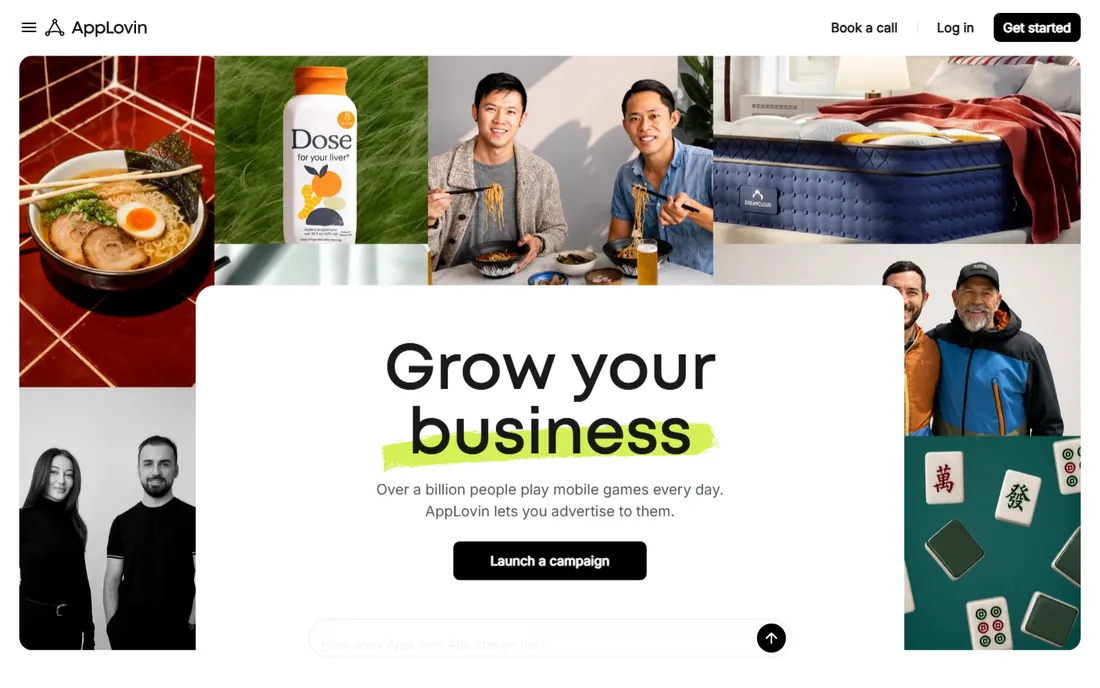
AppLovin MAX is the most widely used mobile ad mediation: in-app bidding across networks, real-time analytics and massive demand. Game publishers maximize ARPDAU here.
As both ad network and mediation, neutrality concerns persist. For revenue maximization at scale, it is the default.
AppLovin MAX publishers should test the in-app bidding setup thoroughly before full rollout; the configuration determines the yield. The analytics reveal which networks perform per geo. Keep the SDK updated for new demand sources.
What we like- Largest mediation market share
- In-app bidding
- Strong analytics
Watch out for- Impartiality questions as both network and mediation
- Complexity
Starting priceSee website
Free planNo
Unity LevelPlay combines Unity Ads with the ironSource mediation platform following their merger, offering in-app bidding native to Unity games. Unity developers get integrated monetization.
Non-Unity publishers get less. For Unity games, the native integration is compelling.
Unity developers should use LevelPlay's mediation alongside the Unity Ads demand; the combination is the natural fit. The ironSource merger history means checking current branding in documentation. Test the integration in the Unity editor workflow.
What we like- Native to Unity engine
- IronSource demand merged in
- Solid bidding
Watch out for- Best for Unity games
- Post-merger integration ongoing
Starting priceSee website
Free planNo
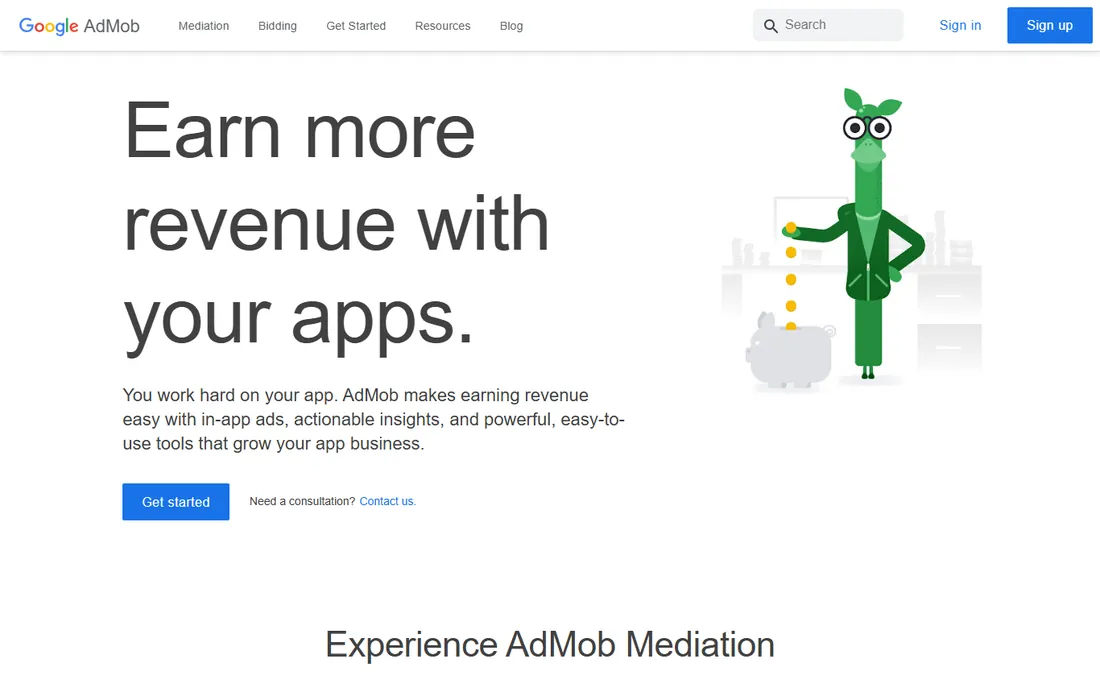
Google AdMob brings Google's advertiser demand to app mediation with straightforward setup and reliable payments. Smaller publishers get started easily.
Advanced mediation trails the specialists. For Google-demand-first monetization, it is simple and trusted.
AdMob publishers should enable mediation with third-party networks rather than relying on AdMob demand alone; competition raises eCPMs. The Google demand is strong, but mediation multiplies it. Monitor the fill rates by network.
What we like- Google's massive advertiser demand
- Simple setup
- Trusted reporting
Watch out for- Mediation features thinner than MAX
- Google-centric
Starting priceSee website
Free planNo
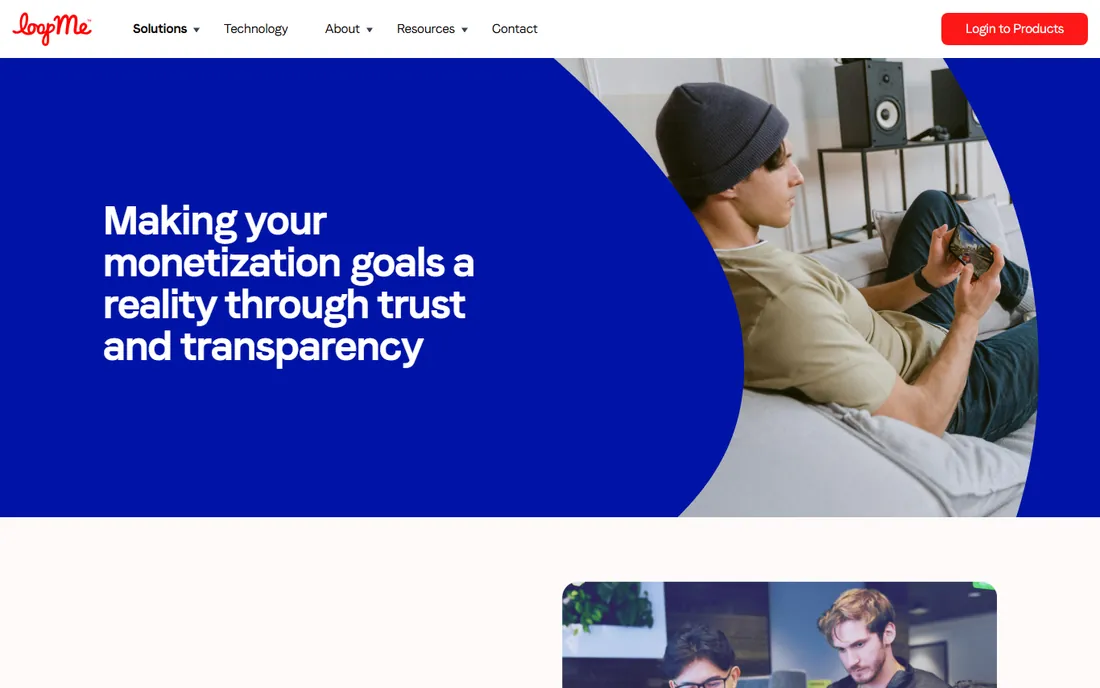
Chartboost, now part of LoopMe following acquisition, focuses on in-app brand advertising with direct deals and rich media. Brand-focused publishers get premium demand.
Programmatic scale trails MAX. For brand advertising in apps, the LoopMe backing adds stability.
Chartboost advertisers and publishers should note the LoopMe acquisition and verify current platform details. The direct deals marketplace suits premium inventory. Keep an eye on the product evolution.
What we like- Brand advertising focus
- Direct deals
- Now backed by LoopMe
Watch out for- Smaller programmatic scale
- Transition under LoopMe
Starting priceSee website
Free planNo
Digital Turbine combines mobile growth and monetization, including the former Fyber's mediation technology, with unique on-device distribution. Publishers and advertisers get an alternative ecosystem.
The breadth complicates evaluation. For diversified mobile monetization beyond standard mediation, it is distinctive.
Digital Turbine partners should understand the on-device distribution model; it differs from pure mediation. Telecom partnerships create unique inventory access. The model suits specific publisher categories best.
What we like- On-device plus in-app
- Fyber heritage
- Carrier relationships
Watch out for- Complexity
- Enterprise focus
Starting priceSee website
Free planNo
InMobi offers global in-app advertising with mediation and exchange, particularly strong in Asia-Pacific markets. International publishers diversify demand here.
US gaming publishers may prefer MAX. For global reach, the demand diversity matters.
InMobi publishers should explore the exchange alongside mediation; the dual role offers flexibility. The APAC strength helps apps with Asian audiences. Test the SDK integration carefully.
What we like- Strong global demand
- Asia-Pacific strength
- Exchange plus mediation
Watch out for- US game focus thinner
- Enterprise sales
Starting priceSee website
Free planNo
Mintegral applies AI to programmatic monetization with mediation capabilities, popular in casual gaming. Algorithmic optimization appeals to data-driven publishers.
Western market presence is smaller. For AI-led monetization experimentation, it deserves testing.
Mintegral advertisers should use the programmatic UA alongside publisher monetization; the two sides inform each other. The creative testing tools improve campaign performance. It suits growth-stage apps.
What we like- AI-powered bidding
- Strong in casual gaming
- Transparent platform
Watch out for- Smaller Western presence
- Newer brand
Starting priceSee website
Free planNo
Liftoff, now at liftoff.ai, is a growth acceleration platform spanning user acquisition and monetization, including the former Vungle's supply. Mobile marketers manage growth holistically.
Pure mediation buyers get extra scope. For unified growth and monetization, the platform approach appeals.
Liftoff customers should confirm the current domain and branding, given the shift to liftoff.ai. The acquisition history means verifying product names. The mobile expertise runs deep.
What we like- Full-funnel growth platform
- Vungle heritage
- Creative testing
Watch out for- UA heritage more than pure mediation
- Enterprise focus
Starting priceSee website
Free planNo
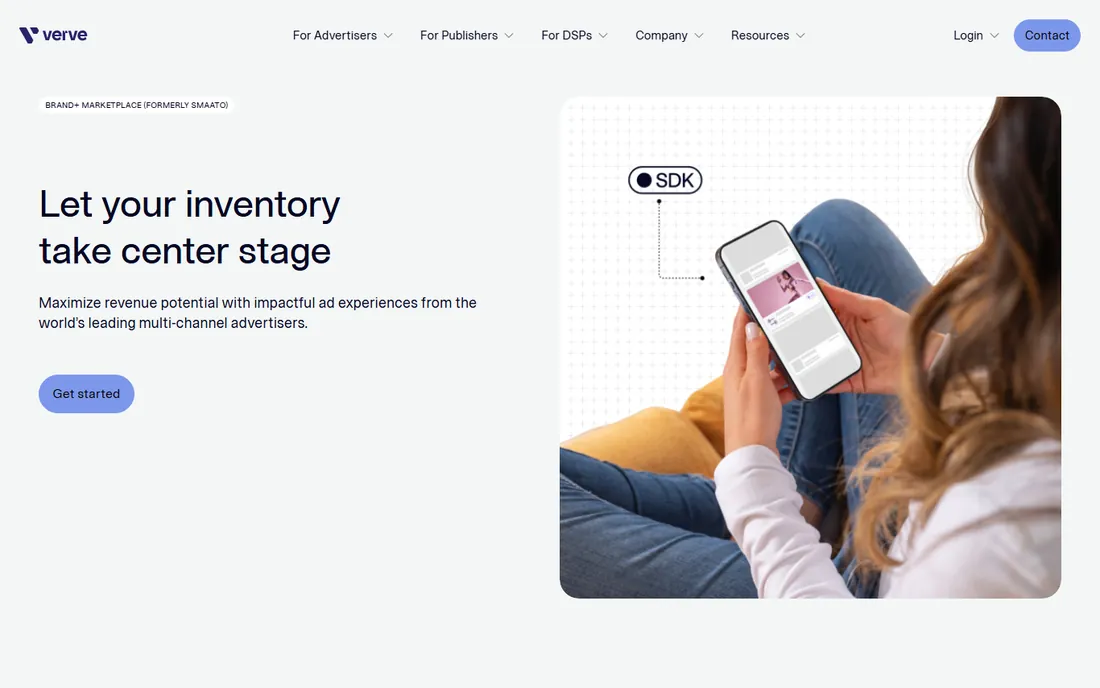
Verve, formerly Smaato before acquisition and rebrand, offers multi-channel publisher monetization across mobile, CTV and DOOH. Privacy-forward positioning suits regulated markets.
Hardcore game mediation trails the leaders. Publishers monetizing across channels get a unified partner.
Verve publishers should verify the Smaato legacy details during evaluation; the rebrand consolidated several products. The privacy-first positioning suits regulated markets. Test the SDK performance impact.
What we like- Multi-channel beyond mobile
- Smaato heritage
- Privacy-forward
Watch out for- Mobile game mediation thinner
- Rebrand transition
How we chose
We verified each vendor's homepage and current corporate status: ironSource merged into Unity LevelPlay, Chartboost acquired by LoopMe, Smaato became Verve, Liftoff moved to liftoff.ai, and MoPub is shut down and excluded. We kept platforms with real mediation offerings. Pricing is revenue-share and negotiated.
What to get right before you buy
Test with real traffic. Mediation performance varies by genre, geography and format; run head-to-head tests before committing.
Understand the business model. Most mediation takes a revenue share or favors owned demand; ask directly how the platform makes money.
Check the SDK weight. Mediation SDKs add size and complexity; confirm performance impact on your app.
Frequently asked questions
What is ad mediation?
Technology that lets app publishers manage multiple ad networks through one SDK, routing each impression to the highest-paying demand via waterfalls or bidding.
What is in-app bidding?
A unified auction where ad networks bid in real time for each impression, replacing manual waterfall ordering and typically raising revenue.
What happened to MoPub?
Twitter's MoPub shut down in 2022, with demand transitioning to AppLovin's exchange. It is no longer an option.
What happened to ironSource?
ironSource merged with Unity; its mediation technology continues as part of Unity LevelPlay.
How do mediation platforms make money?
Typically through revenue shares on mediated impressions, fees on owned demand, or SaaS fees. Terms vary; negotiate.
How much revenue uplift does mediation provide?
Versus a single network, mediation commonly adds 20 to 50 percent through competition, though results vary widely by app and market.
Ad mediation only pays when configured properly. The first mistake is too few networks: with only two or three demand sources, competition stays weak and eCPMs suffer. Add networks deliberately, prioritizing those strong in your top geos. Each additional quality bidder raises the clearing price.
The second mistake is stale SDKs and adapters. Outdated integrations miss new demand features and underperform. Schedule quarterly SDK updates across the portfolio; the maintenance burden is real but the revenue impact of neglect is larger. Changelog reviews reveal what each update adds.
The third mistake is ignoring waterfall versus bidding configuration. In-app bidding generally outperforms manual waterfalls by increasing competition, but the setup needs care: price floors, timeouts and network priorities all affect yield. Test bidding against your old waterfall before full migration.
The fourth mistake is neglecting ad format optimization. Rewarded video, interstitials and banners monetize differently across genres; the mediation platform reports format performance, but someone must act on it. A/B test placements and frequency caps regularly.
Finally, watch the user experience trade-off. Aggressive ad loads raise short-term revenue and destroy retention, which destroys long-term revenue. Monitor retention alongside ARPDAU and set ad frequency by player segment. The publishers who win treat mediation as a balance between monetization and experience, not a maximization of impressions.
Understanding eCPM and fill rate
Two metrics define mediation performance. eCPM, effective cost per thousand impressions, measures revenue efficiency: total earnings divided by impressions, times a thousand. Higher eCPM means better monetization per ad shown. Compare eCPMs by geo, format and network to find the gaps.
Fill rate measures what percentage of ad requests actually show an ad. Low fill rate means wasted opportunities; users see empty placements or the app falls back to house ads. Mediation exists primarily to raise fill rates through competition.
The two metrics trade off. Aggressive price floors raise eCPM but lower fill rate; low floors fill everything at poor prices. The optimal point maximizes total revenue, which is eCPM times filled impressions. Test floor prices systematically rather than guessing.
Segment the analysis ruthlessly. Overall eCPM hides the story: US rewarded video versus Southeast Asian banners are different businesses. Break down by country, format, placement and network. The segments reveal where to focus optimization effort.
Finally, benchmark against realistic expectations for your genre and geos. Hyper-casual games monetize differently than utilities. Industry reports provide ranges; your historical data provides the real baseline. Improve against yourself first, the market second.
Waterfall versus in-app bidding
Waterfall mediation, the older method, calls networks in priority order until one fills the impression. It is simple to understand and control. But each network in the chain sees the request sequentially, which limits competition and leaves money behind.
In-app bidding invites all networks to bid simultaneously, with the highest bid winning. The parallel competition raises prices and fills rates. Most publishers earn more after migrating, which is why the industry moved this way.
Migration needs care. Set price floors thoughtfully, configure timeouts so slow bidders do not delay ads, and run bidding alongside the old waterfall during transition. Compare revenue per mille honestly across the test period.
Some networks still perform better in waterfalls for specific geos or formats. The pragmatic setup uses bidding as the primary method with waterfall backfill for edge cases. Monitor both and adjust quarterly.
Finally, the operational burden differs. Bidding reduces manual waterfall tuning but needs SDK updates and bidder management. Waterfalls need constant manual optimization. Most teams prefer bidding's upfront setup over waterfall's ongoing maintenance.
Sources we checked (9)
- https://www.applovin.com/
- https://unity.com/
- https://admob.google.com/home/
- https://loopme.ai/chartboost/
- https://digitalturbine.com/
- https://www.inmobi.com/
- https://www.mintegral.com/en
- https://liftoff.ai/
- https://verve.com/brand-marketplace-for-publishers/
Is your product missing or out of date?
We review this list regularly. Vendors can request a listing, send updated pricing or ask about featured placement.

Shihab Mia · Founder, Rankite
Shihab has spent more than a decade helping SaaS and e-commerce brands grow through search. He writes Rankite's software buying guides from pricing pages, documentation and public user reviews. More about Shihab.