How we make this list: we compare pricing pages, product documentation and public user reviews. Rankite is independent; if a vendor ever pays for a featured spot, that listing is clearly labeled Partner.
Key takeaways
- Pre-revenue and bootstrapped startups should start free: Wave ($0) or Zoho Books (free under $50K revenue) handle real double-entry books at no cost.
- US startups that want the default their accountants and investors recognize fit QuickBooks Online (Simple Start $38/month), despite per-seat pricing and regular price rises.
- Startups planning to raise money need accrual books early: Pilot (from $99/month) delivers investor-grade financials, while Puzzle (from $30/month) offers a modern AI-native ledger.
- Service-based startups billing time fit FreshBooks (Lite $23/month), and hands-off founders fit Bench (from $199/month) for done-for-you bookkeeping.
Quick comparison
| Tool | Best for | Starting price | Free plan |
|---|
 QuickBooks Online QuickBooks Online | US startups wanting the choice accountants and investors already know | $38/month (Simple Start) | Yes (limited free tier) |
 Xero Xero | Startups wanting clean books without per-seat math | $20/month (Early plan) | Free trial (30 days) |
 FreshBooks FreshBooks | Service startups where billable hours are the revenue | $23/month (Lite, up to 5 clients) | Free trial (30 days) |
 Wave Wave | Pre-revenue startups and side projects at zero cost | $0/month (Starter plan) | Yes (Starter is free) |
 Bench Bench | Hands-off founders who want bookkeeping done, not software | $199/month (Grow, businesses under $250K revenue) | No |
 Pilot Pilot | Funded startups needing investor-grade books from day one | From $99/month (scales with monthly expenses) | No |
 Puzzle Puzzle | Tech startups wanting a modern, AI-native ledger | $30/month (Starter plan) | Yes (Starter free until $20K monthly transaction volume) |
 Zoho Books Zoho Books | Startups wanting real accounting free or nearly free | $0 (free under $50K revenue); Standard $20/month | Yes (genuinely functional free tier) |
 Kashoo Kashoo | Founders wanting simple books without learning QuickBooks | $30/month ($27/month billed annually) | No (14-day free trial) |
Is your product missing or out of date?
We review this list regularly. Vendors can request a listing, send updated pricing or ask about featured placement.
The best accounting software for startups
Startup accounting spans $0 to $800 a month, and the right price depends entirely on where the company is going, not where it is. A pre-revenue founder needs free books that do not embarrass them. A seed-stage team needs clean monthly closes. A Series A company needs accrual financials an investor's analyst will trust. Buy for the next 18 months, because migrating accounting mid-growth is nobody's idea of a good quarter. These nine tools cover the whole arc.
Starting price$38/month (Simple Start)
Free planYes (limited free tier)
QuickBooks is the startup default for network-effect reasons. Your accountant opens your file without conversion, your bookkeeper knows the clicks, every bank connects, and investors' analysts read QuickBooks exports without translation. Simple Start at $38 a month covers one user; Essentials at $85 covers three; Plus at $140 adds inventory and project profitability.
The price trajectory is the honest complaint: Essentials went $75 to $85 and Plus $115 to $140 in August 2026, and per-user billing means a five-person finance function pays Plus money. For a US startup that will hire accountants and raise money domestically, the ecosystem still wins. For everyone else, the alternatives below are cheaper and calmer.
What we like- The largest US ecosystem: accountants, apps and integrations all speak it
- Full double-entry with inventory, payroll and payments
- 50 percent off promos for new subscribers
Watch out for- Per-seat pricing punishes growing teams
- Intuit raised three tiers in August 2026 and raises prices regularly
#2
Xero
Best for: Startups wanting clean books without per-seat math
Visit xero.com
Starting price$20/month (Early plan)
Free planFree trial (30 days)
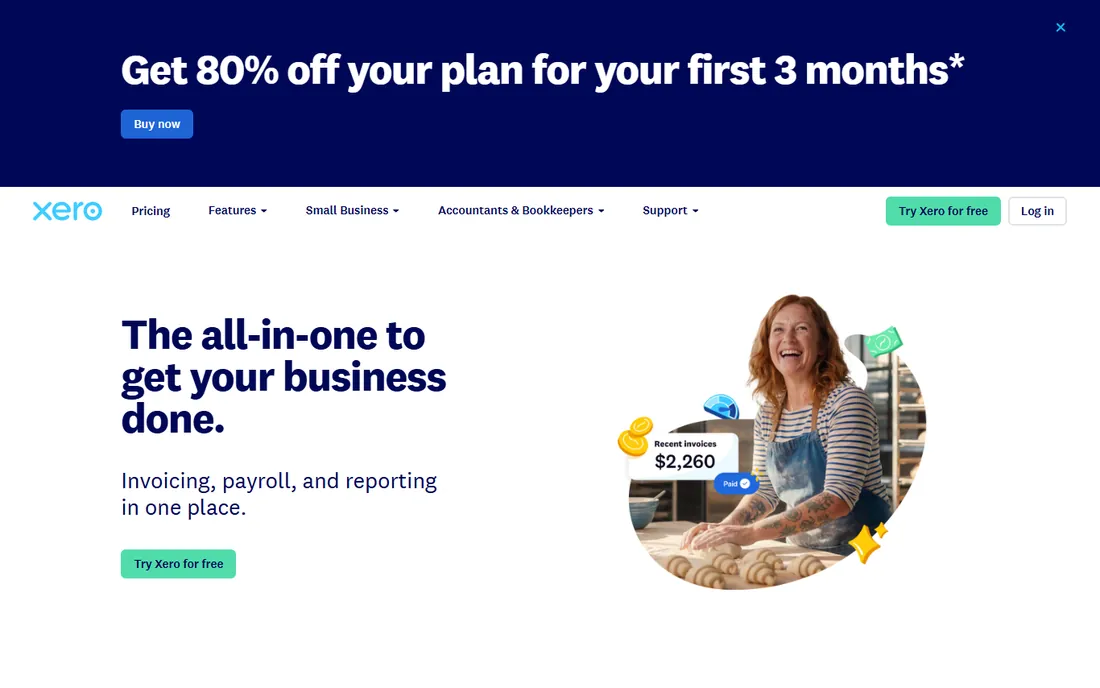
Xero is the founder-friendly alternative for teams that open their books weekly. Early at $20 a month covers invoicing, bills and reconciliation for a small operation; Growing at $47 removes the caps; Established at $80 adds multi-currency, projects and expenses. The unlimited-user model means five people cost the same as one, which changes the economics for a growing team.
The realistic total cost includes add-ons: payroll, inventory and reporting apps typically add $50 to $200 a month on top of the base. International startups often prefer Xero's multi-currency and global feel to QuickBooks' US-centrism. If your startup will stay small and distributed, Xero's calm interface and flat pricing are genuinely pleasant.
What we like- Unlimited users on every plan, so the whole team gets in free
- Best-in-class bank reconciliation
- 1,000-plus app marketplace
Watch out for- US payroll runs through a Gusto partnership, not natively
- Early caps you at 20 invoices and 5 bills a month
Starting price$23/month (Lite, up to 5 clients)
Free planFree trial (30 days)
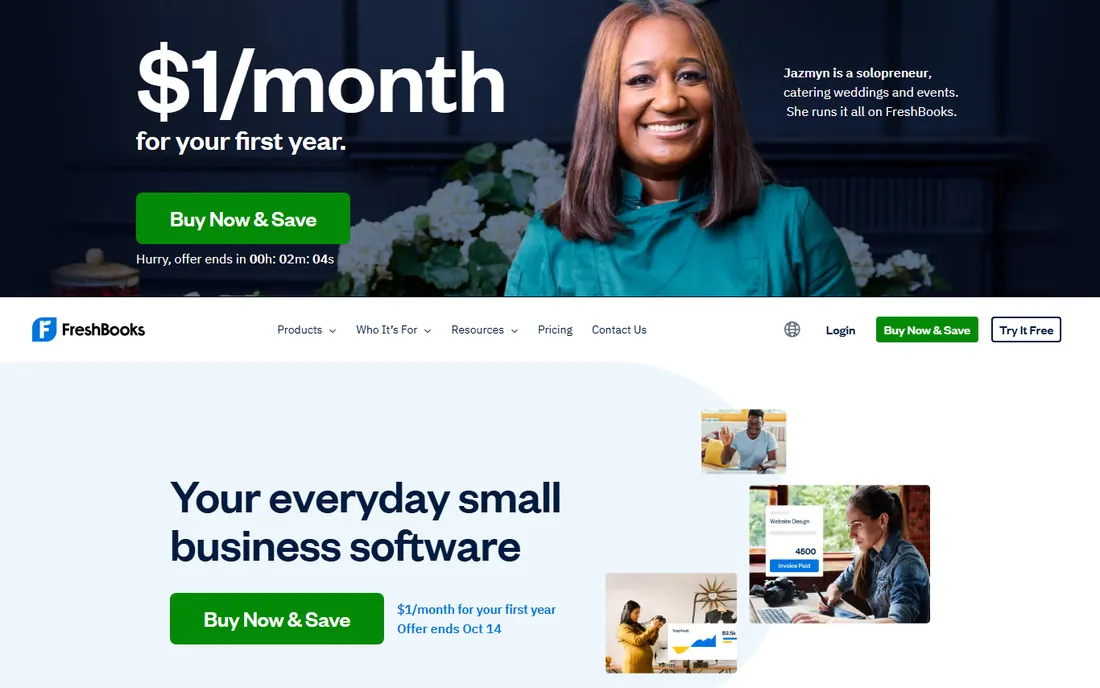
For an agency, consultancy or dev shop, FreshBooks is accounting shaped like the business: hours in, invoices out, money in. Lite at $23 a month covers 5 clients; Plus at $43 covers 50 with proposals and reports; Premium at $70 removes the cap. It will not run inventory or multi-entity consolidation, and it does not pretend to.
The startup fit is specific: pre-product service revenue funding the company. If that is you, FreshBooks replaces a time tracker and an invoicing tool in one login, and the books stay clean enough for taxes. The moment the business becomes product revenue with COGS and inventory, migrate to QuickBooks or Xero rather than stretching FreshBooks past its design.
What we like- Time tracking that becomes invoice lines in one click
- The easiest invoicing in the category
- Proposals and late-payment reminders built in
Watch out for- Client caps force upgrades (Lite covers 5, Plus 50)
- Single-user plans with $11 a month per extra team member
Starting price$0/month (Starter plan)
Free planYes (Starter is free)
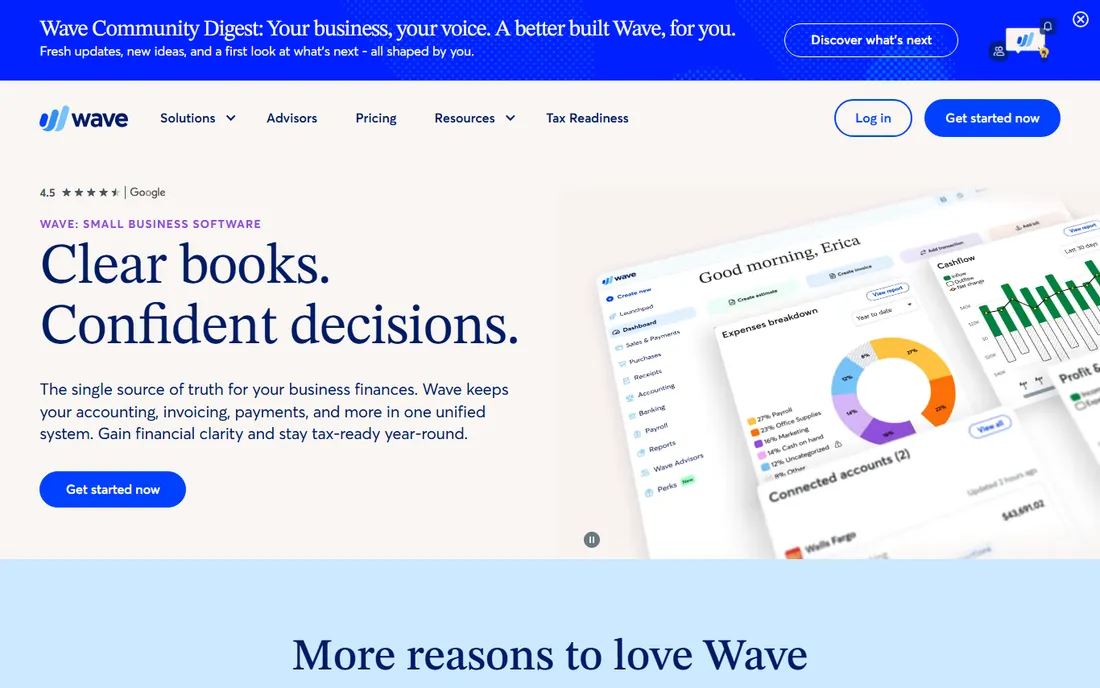
Wave is the correct answer for a startup with no revenue: free books that are actually books. The Starter plan includes unlimited invoices, income and expense tracking and basic reports at $0, which covers a founder validating an idea completely. Pro at $19 a month adds the automation (bank imports, reminders) that becomes worth it once money moves regularly.
Every free tool has edges, and Wave's are geography (US and Canada only), inventory (none) and support (email-first). But starting free and upgrading on revenue is the disciplined move, and Wave exports cleanly when the company outgrows it. No startup should pay for accounting before it has customers.
What we like- Real double-entry accounting and unlimited invoicing free
- Setup takes an hour
- Payment processing available when clients pay by card
Watch out for- Bank feeds and receipt scanning need the $19/month Pro plan
- No inventory, no multi-currency, US and Canada only
#5
Bench
Best for: Hands-off founders who want bookkeeping done, not software
Visit bench.co
Starting price$199/month (Grow, businesses under $250K revenue)
Free planNo
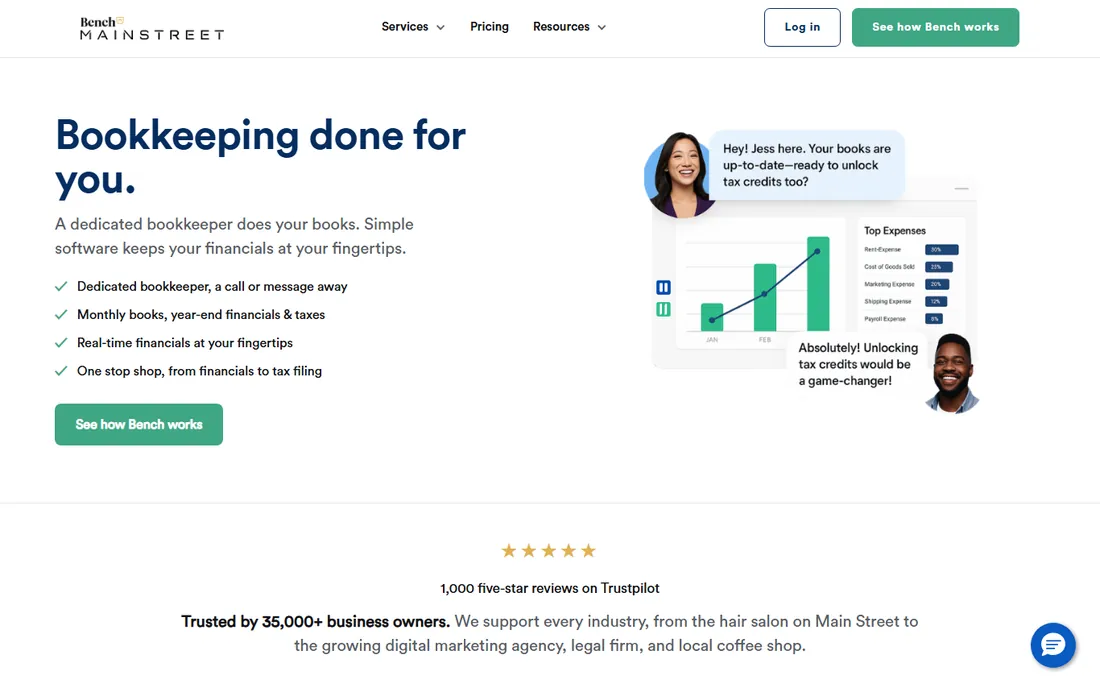
Bench is a service wearing software's clothes. Grow at $199 a month pairs you with bookkeepers who categorize transactions and deliver monthly statements; Core at $399 and Core + Tax at $649 add depth and tax filing. For a founder who would rather do literally anything than reconcile accounts, the done-for-you model is the product.
The trade is portability and accounting method. Because the books live on Bench's platform, switching means migrating, and the default modified-cash basis does not suit startups that will need accrual financials for investors. Compare against a local bookkeeper ($250 to $500 a month) and against Pilot below before committing; Bench wins on consistency, loses on flexibility.
What we like- A dedicated bookkeeper team closes your books monthly
- Financial statements without touching a spreadsheet
- Tax filing bundled on the top tier
Watch out for- Books live on Bench's proprietary platform, not QuickBooks
- Modified cash basis by default, with full accrual only via a separate service
#6
Pilot
Best for: Funded startups needing investor-grade books from day one
Visit pilot.com
Starting priceFrom $99/month (scales with monthly expenses)
Free planNo
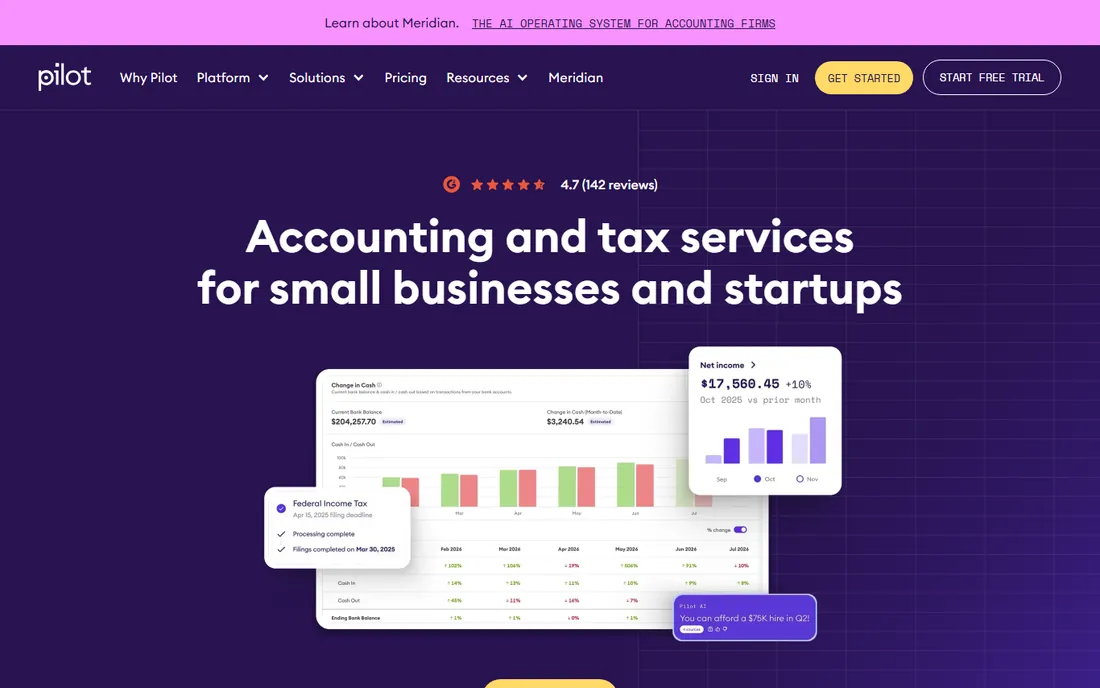
Pilot is bookkeeping for companies that plan to raise money. Accrual books from the start mean revenue and expenses hit when earned or owed, which is what diligence expects. Essentials from $99 a month suits simple needs; Core scales with monthly expenses and adds a dedicated bookkeeper; tax packages and fractional CFO services extend the relationship without switching vendors. Everything runs on QuickBooks Online underneath, so the data stays portable.
The expense-linked pricing is the thing to model: a company spending $50K a month pays hundreds monthly for Core, which is correct for a funded startup and absurd for a freelancer. If an investor, acquirer or board will ever read your financials, Pilot's accrual-first approach saves a painful conversion later. If not, the cheaper tools above do fine.
What we like- Accrual-based bookkeeping from day one, so no painful later switch
- Burn reports and investor-ready financials
- Tax, R&D credits and CFO services scale with you
Watch out for- Pricing scales with expense volume, so costs rise as you spend
- Tax and CFO services are separate purchases
#7
Puzzle
Best for: Tech startups wanting a modern, AI-native ledger
Visit puzzle.io
Starting price$30/month (Starter plan)
Free planYes (Starter free until $20K monthly transaction volume)

Puzzle is what accounting software looks like when it is designed in the 2020s instead of the 2000s. AI handles categorization and continuous accuracy checks, the API is first-class, and the Complete tier promises a 50-percent-faster close. Starter at $30 a month is free until $20K in monthly transaction volume; Core at $72 and Complete at $120 add depth; Scale from $360 covers complex needs like custom revenue recognition.
Youth is the caveat: the product and the pricing are both young, with tier names and prices shifting in 2026, so confirm the current lineup before signing. For a tech startup whose team lives in modern tooling and finds QuickBooks archaic, Puzzle is the credible modern alternative. For a startup that just needs standard books, the incumbents are safer.
What we like- AI categorization, reconciliations and faster month-end close built in
- Unlimited users on all plans
- Revenue recognition and flux analysis for SaaS metrics
Watch out for- Young company with pricing tiers that changed in 2026, so verify at checkout
- Done-for-you bookkeeping costs extra ($1,000-plus a month)
#8
Zoho Books
Best for: Startups wanting real accounting free or nearly free
Visit zoho.com
Starting price$0 (free under $50K revenue); Standard $20/month
Free planYes (genuinely functional free tier)
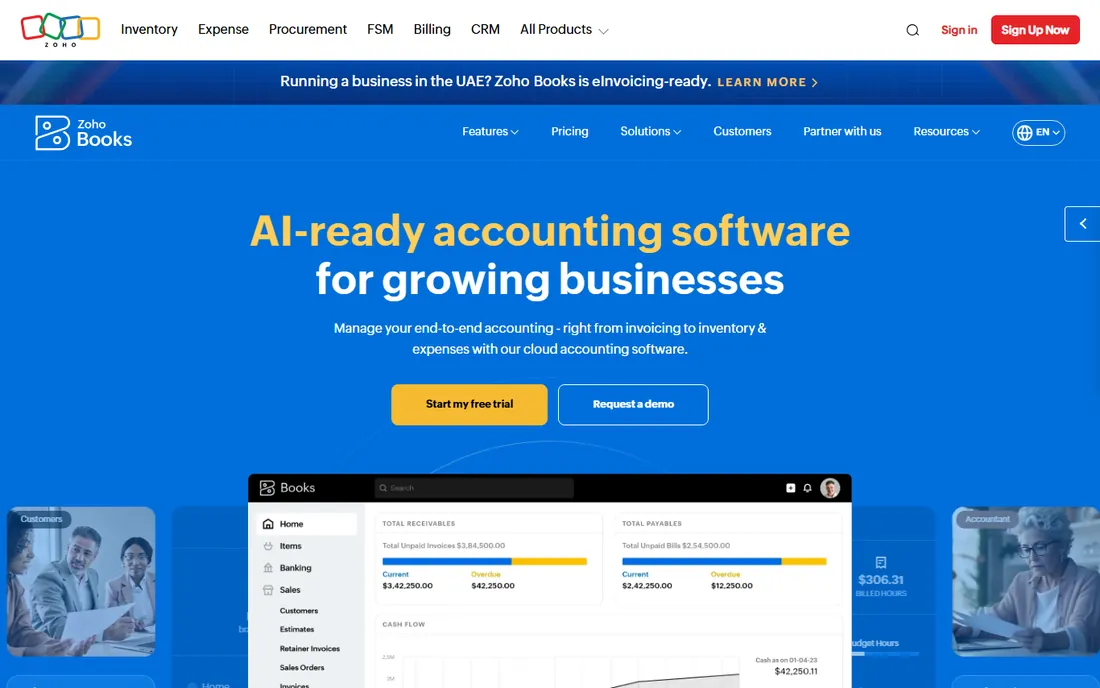
Zoho Books is the international founder's bargain. Free for businesses under $50K in revenue (one user plus accountant, 1,000 invoices a year), then Standard at $20 a month for three users with bank feeds, Professional at $50 with multi-currency. Per-organization pricing means adding team members stays cheap, and the tax compliance covers GST, VAT and US sales tax natively.
The gaps are payroll (none, anywhere) and US accountant familiarity. A US startup whose CPA lives in QuickBooks will fight friction; a startup outside the US, or inside the Zoho ecosystem, gets remarkable value. For the price of nothing, the free tier embarrasses every paid starter plan in this list.
What we like- Per-organization (not per-user) pricing, excellent value for teams
- Strong global tax compliance (GST, VAT, US sales tax)
- Integrates with 40-plus Zoho apps
Watch out for- No payroll in any country
- The free plan lacks automated bank feeds
- Fewer US accountants know it than QuickBooks
#9
Kashoo
Best for: Founders wanting simple books without learning QuickBooks
Visit kashoo.com
Starting price$30/month ($27/month billed annually)
Free planNo (14-day free trial)
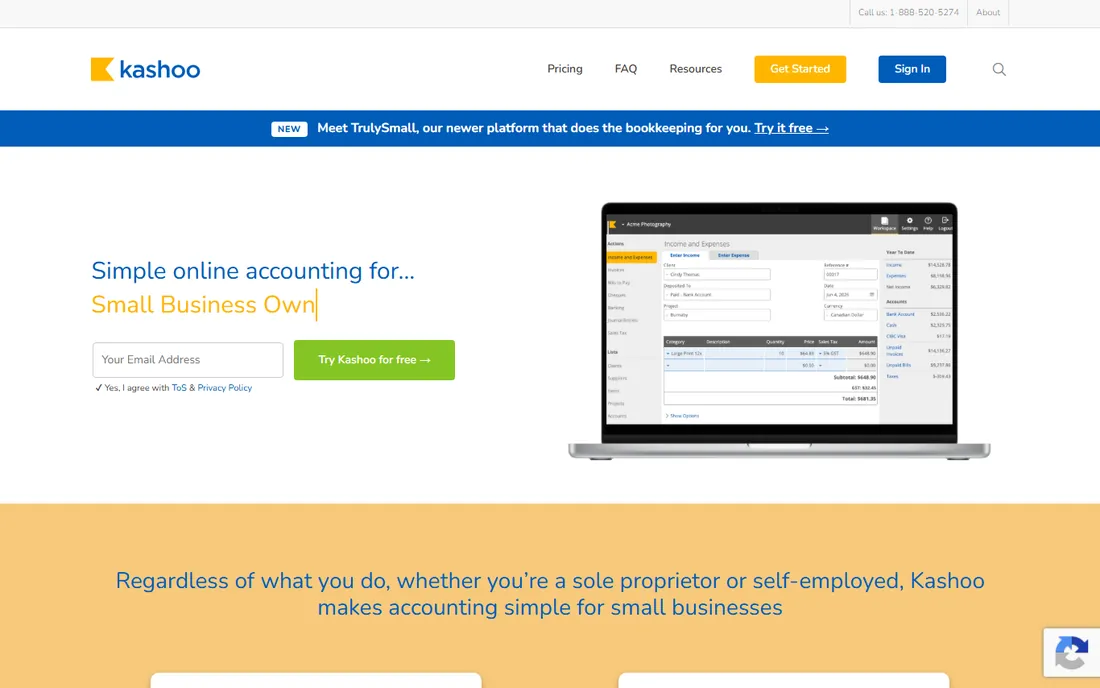
Kashoo is the anti-QuickBooks: invoicing, expenses, bank feeds and tax-ready reports in an interface a non-accountant can learn in an afternoon. At $30 a month ($27 annual) with unlimited users, it undercuts QuickBooks for a small team while doing honest double-entry underneath. Multi-currency is included, which matters for startups billing abroad.
Growth headroom is the limit. The integration list is short, there is no native payroll, and complex needs will eventually force a migration. For a freelancer or two-person startup that wants correct books with minimal learning, it is the simplest paid option. For a startup planning to scale past ten people, start where you will end up instead.
What we like- Clean double-entry accounting without feature bloat
- Unlimited users so the accountant joins free
- Multi-currency included
Watch out for- Thin integration ecosystem
- No native payroll
- Interface feels dated next to modern rivals
What to look for before you buy
Match the tool to the funding path. Bootstrapped and pre-revenue: Wave or Zoho Books free, upgrade on revenue. Service revenue: FreshBooks until the business model changes. Raising money within 18 months: Pilot for accrual books now, or QuickBooks with a bookkeeper, because diligence punishes messy cash-basis books. Hiring a finance lead later: pick what they will want (usually QuickBooks or Xero), not what is cheapest today.
Then check the startup-specific details. Does it handle multi-currency if you will bill abroad (Xero Established, Zoho Professional, Kashoo yes; Wave no)? Does it produce the reports investors ask for: burn, runway, revenue recognition (Pilot and Puzzle yes, others with effort)? Can the books convert from cash to accrual without rebuilding (easier in QuickBooks and Xero than in FreshBooks or Wave)? And confirm the accountant question directly: ask your CPA what they open daily, because their familiarity is worth more than any feature.
The raise-ready books checklist
If fundraising is on the horizon, your books need five things regardless of tool. One: accrual basis, so revenue matches the period it was earned. Two: clean chart of accounts with consistent categorization, not 400 one-off expense labels. Three: monthly closes completed by the 10th, so numbers are never two months stale. Four: burn and runway visible without spreadsheet gymnastics. Five: reconciled bank and card accounts, every month, no exceptions.
Pilot delivers all five as a service. Puzzle automates most of it in software. QuickBooks and Xero deliver it with a bookkeeper's help. Wave and FreshBooks can get there with discipline but will not help you. Whatever you choose, start the habits in month one; reconstructing 18 months of books during diligence is the most expensive accounting project a startup ever buys.
Frequently asked questions
What is the best free accounting software for startups?
Wave and Zoho Books. Wave's Starter plan is free with unlimited invoices and real double-entry books (US and Canada). Zoho Books is free under $50K in revenue with 1,000 invoices a year and works globally. Both beat paying for accounting before the startup has revenue.
When should a startup switch from cash to accrual accounting?
When you carry inventory, when revenue is recognized over time (SaaS, retainers), or when investors or lenders ask for it, which is usually around seed or Series A. Switching later means restating history, so startups planning to raise within 18 months should start on accrual with Pilot, Puzzle or QuickBooks/Xero configured that way.
Do startups need a bookkeeper or is software enough?
Software is enough under roughly 50 transactions a month with simple finances. Hire a bookkeeper (or a service like Bench or Pilot) when you have payroll, when the books fall 60 days behind, or when tax time takes weeks. Most startups add a bookkeeper somewhere between $200K and $1M in annual revenue.
QuickBooks or Xero for a startup?
QuickBooks if your US accountant asks for it, if you need native payroll, or if investors expect it. Xero if you want unlimited users, a calmer interface, or strong multi-currency on a budget. Both handle startup accounting well; the deciding factor is usually the accountant's preference, so ask before you buy.
How much should a startup budget for accounting?
From $0 to $500 a month. Free tools (Wave, Zoho Books) cover pre-revenue. DIY software runs $20 to $140 a month (Xero, QuickBooks). Done-for-you services run $99 to $400 a month (Pilot, Bench). Add a CPA for taxes ($1,000 to $3,000 a year) regardless. Budget the service tier you will need in 12 months, not the free tier you need today.
How we chose
We started with the categories buyers search: accounting software for startups, startup accounting, best accounting software for small business and bookkeeping for startups. For each candidate we opened the vendor's own pricing page, checked plan names and prices against public reviews on G2 and Capterra and practitioner discussion on Reddit, and compared funding-path fit, pricing models, multi-currency support and company-size fit. Where a price could not be verified on the vendor's page we wrote "See website" rather than guessing.
Sources we checked (11)
- https://quickbooks.intuit.com/pricing/
- https://www.xero.com/us/pricing/
- https://www.freshbooks.com/pricing
- https://www.waveapps.com/pricing
- https://bench.co/pricing
- https://pilot.com/pricing
- https://www.puzzle.io/pricing
- https://www.zoho.com/books/pricing/
- https://www.kashoo.com/pricing
- https://www.g2.com/categories/accounting
- https://www.capterra.com/accounting-software/
Is your product missing or out of date?
We review this list regularly. Vendors can request a listing, send updated pricing or ask about featured placement.

Shihab Mia · Founder, Rankite
Shihab has spent more than a decade helping SaaS and e-commerce brands grow through search. He writes Rankite's software buying guides from pricing pages, documentation and public user reviews. More about Shihab.