How we make this list: we compare pricing pages, product documentation and public user reviews. Rankite is independent; if a vendor ever pays for a featured spot, that listing is clearly labeled Partner.
Key takeaways
- QuickBooks is the reseller default: every accountant knows it, and the inventory features handle most reselling operations.
- Xero suits resellers who want clean cloud accounting with strong inventory integrations.
- FreshBooks, Wave, Zoho Books, and Kashoo cover simpler reselling operations at friendly prices.
- Sage and KashFlow serve resellers needing deeper features or UK-specific compliance.
Quick comparison
| Tool | Best for | Starting price | Free plan |
|---|
 QuickBooks QuickBooks | reseller standard, full features | See website | Free trial |
 Xero Xero | cloud accounting with integrations | See website | Free trial |
 FreshBooks FreshBooks | simple reselling and invoicing | See website | Free trial |
 Wave Wave | free accounting for small resellers | Free | Yes |
 Zoho Books Zoho Books | affordable, Zoho ecosystem | See website | Free trial |
 Sage Sage | deeper accounting features | See website | Free trial |
 Kashoo Kashoo | simple double-entry accounting | See website | Free trial |
 KashFlow KashFlow | UK resellers | See website | Free trial |
Is your product missing or out of date?
We review this list regularly. Vendors can request a listing, send updated pricing or ask about featured placement.
The best accounting software for resellers
Starting priceSee website
Free planFree trial
QuickBooks is the accounting software resellers end up with most often, because it handles the reseller basics well: purchase orders, inventory tracking, cost of goods sold, sales across channels, and the reports that show what is actually profitable.
The inventory features on higher tiers track stock quantities, costs, and reorder points, which matters when margins depend on buying right. The app ecosystem connects to Amazon, Shopify, eBay, and shipping tools, reducing manual entry.
Tiered pricing means the features resellers need often sit above the cheapest plan, and the total cost with payroll and apps adds up. But the ubiquity advantage is real: finding a bookkeeper who knows QuickBooks takes minutes.
What we like- Every accountant knows it
- Good inventory tracking
- Huge app ecosystem
Watch out for- Pricing tiers confuse
- Costs add up
Starting priceSee website
Free planFree trial

Xero's clean interface and reliable bank feeds make daily bookkeeping pleasant, and the ecosystem of inventory and ecommerce integrations fills the reseller-specific gaps. Tools like Cin7, Dear, and A2X connect deeply for sellers with real inventory complexity.
The core accounting is solid: invoicing, bills, bank reconciliation, and reporting all work smoothly. Multi-currency support suits resellers sourcing internationally, which many do.
Native inventory tracking is basic; serious resellers pair Xero with a dedicated inventory app. Payroll availability varies by country. But as the cloud accounting foundation with best-of-breed reseller tools attached, Xero is a strong choice.
What we like- Clean cloud interface
- Strong bank feeds
- Great third-party ecosystem
Watch out for- Inventory is basic
- Payroll limited outside some regions
Starting priceSee website
Free planFree trial

FreshBooks excels at invoicing and is easy enough that owners do their own books. Resellers with simple operations, buying and selling without complex inventory, find it covers the essentials: invoices, expenses, and profit reports.
The interface is the friendliest in accounting software, and the mobile app keeps books current from anywhere. Expense tracking with receipt capture handles the purchase side adequately for simple reselling.
Inventory management is minimal; resellers with real stock complexity need more. The service-business DNA shows in places. But for small-scale resellers whose accounting needs are straightforward, FreshBooks' simplicity is the appeal.
What we like- Beautiful invoicing
- Easy to learn
- Good expense tracking
Watch out for- Inventory features are thin
- Built more for services
Starting priceFree
Free planYes

Wave gives small resellers free accounting that handles the fundamentals: income, expenses, invoicing, and basic reports. For resellers starting out, that is often enough to stay organized and tax-ready.
The zero price removes the excuse for messy books. Bank connections import transactions, receipt scanning captures purchases, and the reports show whether the reselling is actually profitable.
There is no inventory tracking, which limits usefulness as operations grow. Scaling businesses eventually graduate to QuickBooks or Xero. But as a free starting point that instills good bookkeeping habits, Wave serves new resellers well.
What we like- Free accounting and invoicing
- Easy to use
- Good for startups
Watch out for- No inventory tracking
- Limited scalability
Starting priceSee website
Free planFree trial
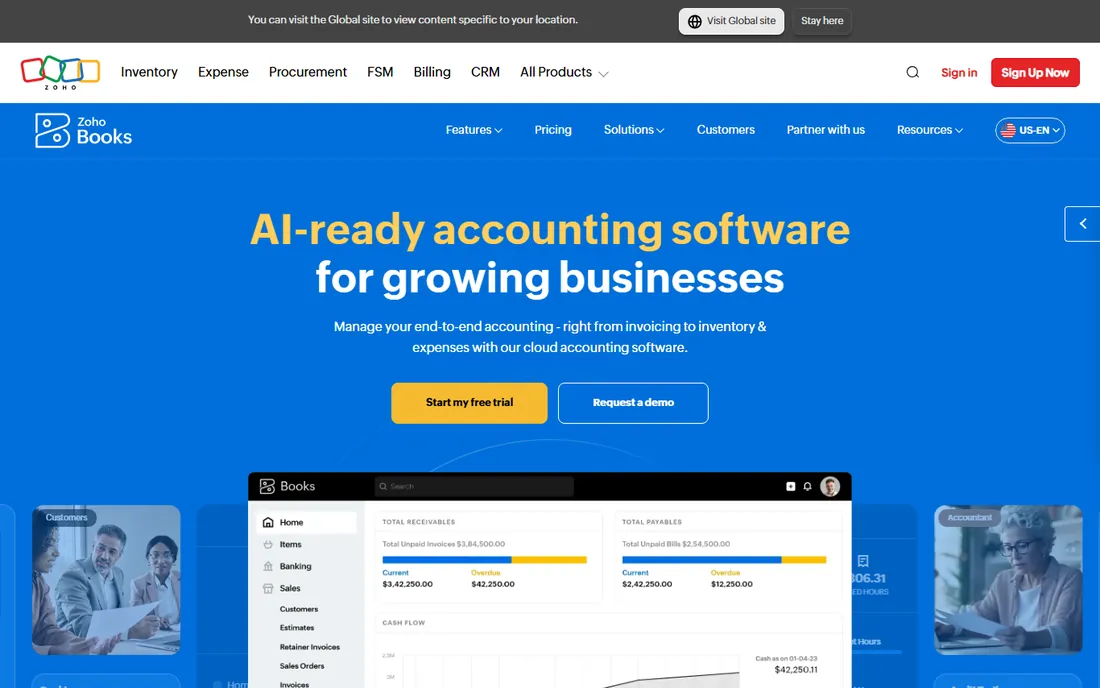
Zoho Books delivers surprising depth at its price: real inventory tracking, purchase orders, multichannel sales, and solid reporting. Resellers in the Zoho ecosystem get continuity with CRM, inventory, and commerce apps.
The value proposition is straightforward: features comparable to higher-priced competitors at a fraction of the cost. The free tier covers very small businesses, and paid tiers stay affordable as you grow.
Fewer accountants know Zoho Books than QuickBooks, and the third-party app selection is smaller. But for cost-conscious resellers comfortable with Zoho, the capability per dollar is excellent.
What we like- Very affordable
- Good inventory features
- Zoho suite integration
Watch out for- Smaller accountant network
- Fewer third-party apps
Starting priceSee website
Free planFree trial

Sage's accounting products serve resellers who need more depth than the simple tools offer: capable inventory management, multi-location stock, serious reporting, and the reliability of an established vendor.
The product range spans small business to enterprise, so growing resellers can scale within the Sage family. Inventory features handle the complexity that growing operations develop: assemblies, multiple warehouses, and landed costs.
The interfaces reflect enterprise heritage rather than startup polish, and navigating the product lineup takes effort. But for resellers whose accounting needs exceed the basics, Sage's depth justifies the learning curve.
What we like- Strong accounting depth
- Good inventory
- Trusted brand
Watch out for- Interface less modern
- Pricing varies by product
Starting priceSee website
Free planFree trial
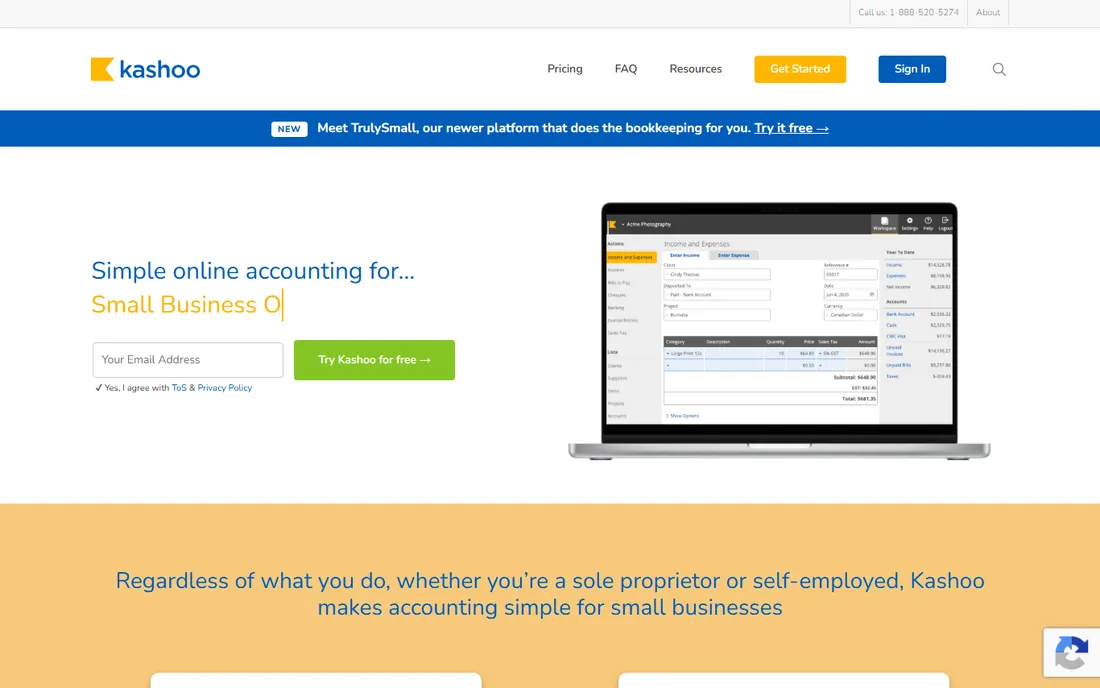
Kashoo offers real double-entry accounting in an interface simple enough for non-accountants. Resellers get proper books, not just income tracking, with invoicing, expenses, and reports that satisfy accountants.
The simplicity is the differentiator. Owners who want correct accounting without learning accounting find Kashoo approachable, and the mobile app keeps things current. Pricing stays reasonable.
Inventory features are limited, and the ecosystem is small. Resellers with stock complexity need more. But for straightforward reselling operations that want proper books without complexity, Kashoo hits the mark.
What we like- True double-entry made simple
- Clean interface
- Affordable
Watch out for- Limited inventory
- Small ecosystem
Starting priceSee website
Free planFree trial
KashFlow is UK accounting software that handles British tax compliance natively: VAT returns, Making Tax Digital submissions, and CIS for construction-adjacent resellers. UK resellers get compliance without workarounds.
The feature set covers invoicing, purchases, bank feeds, and reporting with the UK specifics built in. Payroll integration handles British payroll requirements. Support understands UK tax, which matters more than it sounds.
Outside the UK, there is little reason to choose it. But for British resellers, the compliance-native design beats adapting US software to UK rules.
What we like- Built for UK compliance
- Making Tax Digital ready
- Easy VAT handling
Watch out for- UK-focused
- Less relevant elsewhere
The reseller accounting essentials
Cost of goods sold accuracy makes or breaks reseller accounting. Every purchase, shipping cost, fee, and return must attach to the right products, or margin reports lie. Whatever tool you choose, set up COGS tracking correctly from day one.
Inventory valuation matters at tax time and for business decisions. FIFO, average cost, and the method your accountant prefers should be supported and consistently applied. Changing methods midstream creates messes.
Channel fees are the silent margin killer. Marketplace commissions, payment processing, advertising costs, and shipping must all flow into product profitability analysis. Tools with good ecommerce integrations automate this; manual methods miss it.
When to upgrade
Start simple: Wave or FreshBooks handle early reselling fine. The upgrade triggers are inventory complexity (you need real stock tracking), channel count (manual reconciliation across marketplaces breaks), and revenue scale (tax complexity demands professional books).
Do not upgrade prematurely. Sophisticated software with bad data habits produces sophisticated-looking wrong numbers. Master the fundamentals on a simple tool, then graduate when the business demands it.
The accountant test is practical: when your accountant sighs at your current system, it is time. Their efficiency with proper tools usually covers the software cost.
Cash flow: the reseller's lifeline
Resellers die from cash flow problems, not profit problems. Money tied up in inventory, marketplace payout delays, and supplier payment terms create gaps that profitable businesses cannot survive. Your accounting software should show cash position clearly, not just profit.
Manage the cash conversion cycle deliberately: negotiate supplier terms, avoid overstocking slow movers, and understand each marketplace's payout schedule. The resellers who thrive treat cash flow as a managed metric, reviewed weekly.
Keep a cash reserve. Three months of operating expenses sounds conservative until a supplier demands prepayment or a marketplace holds funds. The reserve turns emergencies into inconveniences.
Buying right: the other half of reseller accounting
Accounting records what happened; purchasing discipline determines what there is to record. Track supplier performance: lead times, defect rates, and true landed costs including shipping, duties, and fees. The cheapest supplier is rarely the cheapest landed cost.
Diversify sourcing as you grow. Single-supplier dependence is fragile, and the accounting gets simpler when purchase data flows from fewer, better relationships. Build the supplier base before you need it.
Negotiate with data. Your purchase history, volumes, and payment reliability give you negotiating power. Suppliers give better terms to buyers who can show consistent, growing orders. The accounting system that tracks this becomes a negotiation tool.
How we chose
We compared accounting software suited to resellers' specific needs: inventory tracking, COGS, multichannel sales, and purchase management, based on vendor documentation, seller community discussion, and reviews on software directories. We covered the standard choices, budget options, and regional picks, noting where inventory depth requires higher tiers or integrations. Pricing changes frequently, so we link to vendors for current numbers.
Frequently asked questions
Do resellers need inventory tracking in their accounting?
If you hold stock, yes, eventually. Simple resellers can start with spreadsheets, but accurate COGS and tax compliance require real inventory accounting as volume grows. The tools with inventory features earn their keep at that transition.
How do we account for Amazon FBA inventory?
Track inventory sent to Amazon as an asset transfer, not a sale; recognize COGS when items sell. Integrations like A2X automate the settlement reconciliation that makes FBA accounting painful manually. Get the workflow right early.
Cash or accrual accounting for resellers?
Most growing resellers use accrual for accurate margin picture; very small resellers often start cash for simplicity. Tax rules may dictate the choice above certain revenue thresholds. Your accountant should decide this with you.
How do we handle sales tax across states?
It is complicated and getting more so. Marketplace facilitator laws mean marketplaces collect in many states, but direct sales create obligations. Tax automation tools (Avalara, TaxJar) integrate with the accounting tools here. Do not ignore this; liabilities accumulate.
Should we hire a bookkeeper?
When bookkeeping takes more than a few hours monthly or when the numbers drive real decisions, yes. A good bookkeeper with reseller experience pays for themselves in caught errors and better decisions. The software matters less than the person operating it.
What records should resellers keep for taxes?
Purchase invoices, sales records, inventory counts, and expense receipts, organized by year. Digital copies are fine. The accounting tools here store most of this; the habit is capturing everything at transaction time.
How often should we review profitability?
Monthly at minimum: revenue, COGS, fees, and net margin by channel and product category. Quarterly, review the bigger picture: supplier terms, pricing strategy, and which products earn their shelf space.
Sources we checked (8)
- https://quickbooks.intuit.com/
- https://www.xero.com/us/
- https://www.freshbooks.com/
- https://www.waveapps.com/
- https://www.zoho.com/us/books/
- https://www.sage.com/en-us/
- https://kashoo.com/
- https://www.kashflow.com/
Is your product missing or out of date?
We review this list regularly. Vendors can request a listing, send updated pricing or ask about featured placement.

Shihab Mia · Founder, Rankite
Shihab has spent more than a decade helping SaaS and e-commerce brands grow through search. He writes Rankite's software buying guides from pricing pages, documentation and public user reviews. More about Shihab.