How we make this list: we compare pricing pages, product documentation and public user reviews. Rankite is independent; if a vendor ever pays for a featured spot, that listing is clearly labeled Partner.
Key takeaways
- QuickBooks Online ($38/month Simple Start) is the strongest general pick: full double-entry books, rehab cost tracking by project and a CPA-ready trail at tax time.
- Stessa and REI Hub are built for real estate: Stessa's Essentials tier is genuinely free, and REI Hub's free plan covers up to 3 units with Schedule E reporting.
- Wave keeps the lights on for free (unlimited invoices, bills and bookkeeping on Starter) if your flip volume is low and your books are simple.
- Flipping is a project business: the right tool tracks acquisition, rehab and closing costs per property so you know your real margin before you sell.
Quick comparison
| Tool | Best for | Starting price | Free plan |
|---|
 QuickBooks Online QuickBooks Online | Flippers who want full double-entry books that a CPA can audit at tax time | $38 per month (Simple Start) | No (30-day free trial or a 3-month discount, per Intuit) |
 Stessa Stessa | Rental-heavy investors who also flip and want real-estate-specific books | Free (Essentials); Manage from $12 per month (billed annually) | Yes (Essentials) |
 REI Hub REI Hub | Investors who want real-estate-specific bookkeeping without an accounting background | Free (up to 3 units); Professional from $9 per month (billed annually) | Yes |
 Xero Xero | Flippers who share books with an accountant and want unlimited users included | $27 per month (Early) | No (30-day free trial) |
 Wave Wave | Small operations that want genuinely free bookkeeping, invoicing and billing | Free (Starter); Pro $19 per month | Yes (Starter) |
 Landlord Studio Landlord Studio | Small landlords who want straightforward rent and expense tracking on mobile | See website (Go plan free for up to 3 properties) | Yes (Go) |
 Rentec Direct Rentec Direct | Flippers who also manage a few rentals and want flat, predictable monthly pricing | $25 per month (Starter, up to 10 properties) | No (2-week free trial) |
 Buildium Buildium | Investors scaling past a handful of doors who need full property-management depth | $62 per month (Essential) | No (14-day free trial) |
 Baselane Baselane | Landlords who want banking, rent collection and bookkeeping in one place | Free (Core); Smart $20 per month | Yes (Core) |
Is your product missing or out of date?
We review this list regularly. Vendors can request a listing, send updated pricing or ask about featured placement.
The best accounting software for real estate flippers
Flipping houses is a project business wearing an accounting disguise. Every deal is really four transactions: the purchase, the rehab spend, the holding costs and the sale. If your books cannot tell you what one property cost versus another, you are guessing at your margins. The nine tools below all handle that property-level tracking in some form, with verified prices and the honest tradeoffs of each.
Starting price$38 per month (Simple Start)
Free planNo (30-day free trial or a 3-month discount, per Intuit)
QuickBooks Online earns its default status the way it always does: every accountant speaks it. Set up a class or project per property and you can book acquisition costs, contractor payments, materials, permits and holding costs against each flip, then see a clean profit and loss per deal. Simple Start ($38/month) handles a small operation; Essentials ($85/month) adds multi-user access; Plus ($140/month) adds the project profitability reporting flippers actually care about. Intuit currently discounts all of them 50 percent for the first three months.
The tradeoff is price and complexity. QuickBooks is not built for real estate, so there is no rent roll, no Schedule E export and no landlord dashboard out of the box. You will configure it. But at tax time, handing your CPA clean double-entry books with per-property classes beats a spreadsheet every time, and that is worth the setup cost for most serious flippers.
What we like- True double-entry accounting with class and project tracking, so rehab costs land on the right property
- 750-plus app integrations, bank feeds and payroll add-ons
- CPAs universally accept its reports
Watch out for- The most expensive general option here, and job-costing detail needs the $140 Plus plan
- The interface carries small-business-accounting complexity that a pure flipper may not use
#2
Stessa
Best for: Rental-heavy investors who also flip and want real-estate-specific books
Visit stessa.com
Starting priceFree (Essentials); Manage from $12 per month (billed annually)
Free planYes (Essentials)
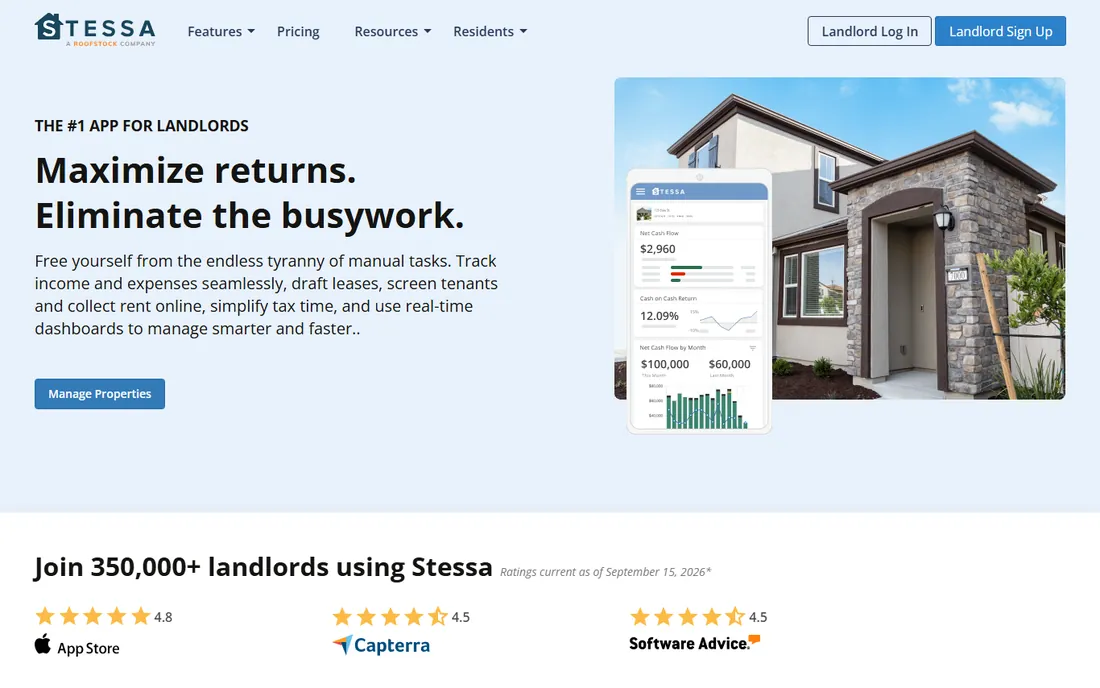
Stessa built its name on rental accounting, and flippers who also hold properties get the best of both worlds. The free Essentials tier covers the fundamentals: income and expense tracking, bank connections and financial reports. Manage at $12 per month annually ($15 month-to-month) adds Schedule E reports and deeper tax tools, while Pro at $28 annually ($35 monthly) adds portfolio-level analytics. If your business is mostly rentals with an occasional flip, that free tier is hard to beat.
The flip side is specialization depth. Stessa thinks in properties and units, not construction projects, so tracking a six-figure rehab with dozens of contractors is less natural than in QuickBooks. Many investors pair Stessa for rentals with a project tracker for the rehab itself. Know which side of your business is bigger before choosing.
What we like- Essentials tier is free with no trial games
- Built-in rental property accounting with tax-ready Schedule E exports
- Bank and mortgage auto-import designed around landlords
Watch out for- Flip-specific project accounting is thinner than QuickBooks
- Premium features like the tax center sit on Manage ($12) or Pro ($28) plans
#3
REI Hub
Best for: Investors who want real-estate-specific bookkeeping without an accounting background
Visit reihub.net
Starting priceFree (up to 3 units); Professional from $9 per month (billed annually)
Free planYes
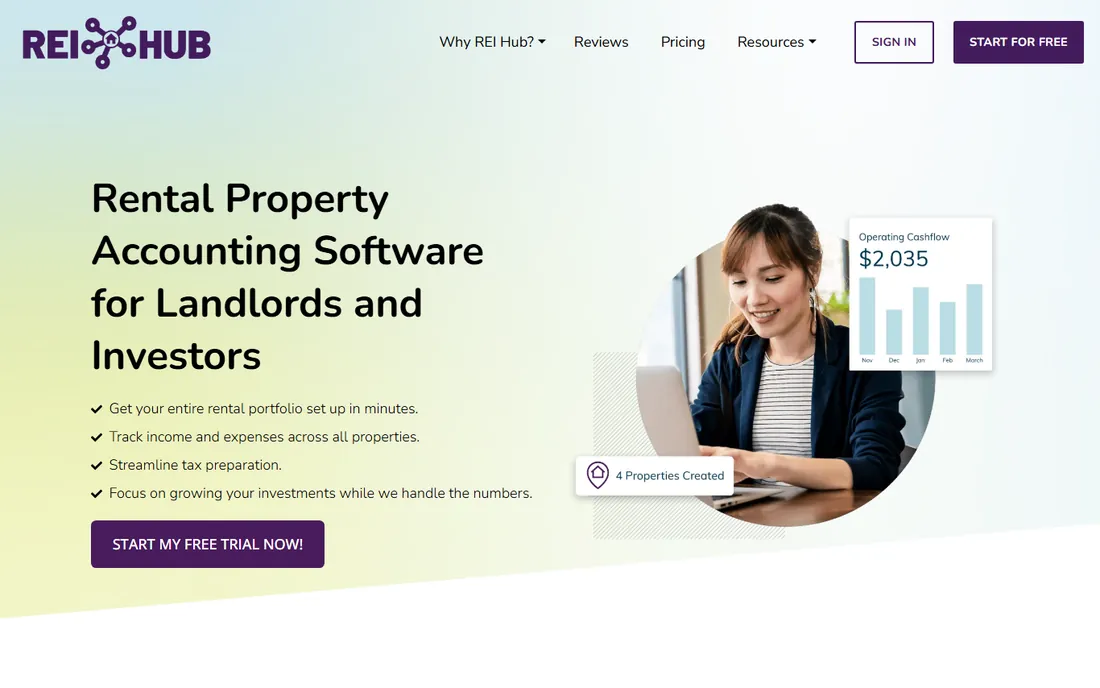
REI Hub sits in the same lane as Stessa but with a different pricing idea: free for up to 3 units, then Professional plans at $9 per month annually ($15 monthly) for 3 units, scaling with unit count up to unlimited. The product is built around how investors actually think: properties, units, tenants, and the income and expenses attached to each. Schedule E reporting arrives on the paid tiers. For a small investor doing their own books without accounting training, the real-estate-first design removes a lot of friction.
One note on ownership: REI Hub was acquired by TurboTenant, but it continues to operate under its own brand and pricing. The unit-based pricing is the thing to watch. Three doors are cheap; thirty doors on the unlimited tier ($48 annually per month) start to approach general-ledger prices. Count your units before comparing.
What we like- Purpose-built for real estate investors with property and unit-level ledgers
- Free plan covers up to 3 units
- Schedule E reporting on paid plans
Watch out for- Unit-based pricing means costs climb as the portfolio grows
- Less third-party app depth than the big general ledgers
#4
Xero
Best for: Flippers who share books with an accountant and want unlimited users included
Visit xero.com
Starting price$27 per month (Early)
Free planNo (30-day free trial)

Xero is the accountant's favorite alternative to QuickBooks, and the unlimited-user model is the reason flippers should look twice. Your bookkeeper, your CPA and your partner all log in without extra seat fees, which QuickBooks charges for on lower tiers. Early at $27 per month covers 20 invoices and 10 bills monthly; Growing at $59 and Established at $97 remove the caps and add multi-currency and expense claims. Intuit-style promos apply here too: 90 percent off the first three months at the time of writing.
What Xero does not do is real estate. There is no property dashboard, no rent tracking, no Schedule E. Like QuickBooks you would layer classes or tracking categories per property. Xero's fixed-asset module is genuinely useful for flippers who hold: depreciation schedules for the buy-and-hold side are cleaner here than in most small-business tools. Pair it with a property tracker if rentals are part of the mix.
What we like- Unlimited users on every plan, so your CPA and bookkeeper log in free
- Clean bank reconciliation and 1,000-plus integrations
- Stronger fixed-asset and depreciation handling than most small-business ledgers
Watch out for- No native real-estate features at all
- US payroll needs a third party (Gusto) on top
#5
Wave
Best for: Small operations that want genuinely free bookkeeping, invoicing and billing
Visit waveapps.com
Starting priceFree (Starter); Pro $19 per month
Free planYes (Starter)

Wave is the only tool here with a real free lunch. The Starter plan costs nothing and includes unlimited invoicing, bill tracking and double-entry bookkeeping. Pro at $19 per month adds the extras like receipt scanning automation and unlimited bank connections. Payroll starts at $25 per month and their bookkeeping service starts at $149 per month if you want a human doing it.
The honest limitation is property granularity. Wave does not think in projects or properties, so a flipper running three simultaneous rehabs has to fake it with account codes or leave the per-deal math to a spreadsheet. For a one-flip-at-a-time operator, or someone flipping their first property, free books that balance are better than expensive books that do not. Graduate to QuickBooks or Stessa when the deal count grows.
What we like- Starter is free with unlimited invoices, bills and bookkeeping, no trial or card games
- Simple enough to run your own books
- Payroll and bookkeeping advisor add-ons available when you grow
Watch out for- No project or property-level accounting on any tier
- Receipt scanning and payment processing cost extra
- Support is limited on the free tier
#6
Landlord Studio
Best for: Small landlords who want straightforward rent and expense tracking on mobile
Visit landlordstudio.com
Starting priceSee website (Go plan free for up to 3 properties)
Free planYes (Go)
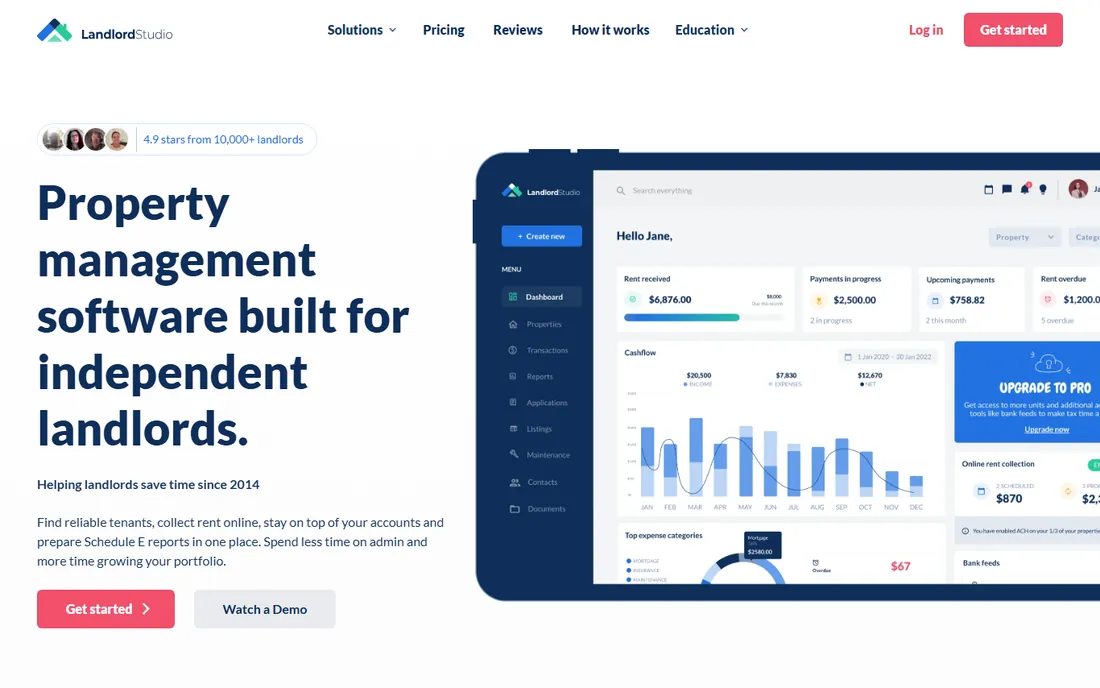
Landlord Studio targets the small landlord, and the free Go tier for up to 3 properties is a legitimate starting point. Income and expense tracking, rent collection records, tenant management and document storage come in a package designed for phones first. The 14-day Pro trial lets you test the paid features, but the vendor does not publish Pro prices, which makes comparison shopping awkward.
As a flipper tool this is a secondary choice. Landlord Studio tracks what a landlord needs: rent in, expenses out, leases on file. Rehab project costing is not the product. It belongs on this list for the flipper who also self-manages a few rentals and wants those books kept clean in a mobile app, while the flip math lives elsewhere. The free tier makes that a cheap division of labor.
What we like- Go plan is free for up to 3 properties
- Mobile-first design that works well for landlords in the field
- Tenant, lease and document storage built in
Watch out for- No published prices for the Pro plan, so you cannot compare without contacting them
- Flip rehab accounting is not its strength
#7
Rentec Direct
Best for: Flippers who also manage a few rentals and want flat, predictable monthly pricing
Visit rentecdirect.com
Starting price$25 per month (Starter, up to 10 properties)
Free planNo (2-week free trial)

Rentec Direct is the steady veteran of this list: property management software with accounting built in, priced flat at $25 per month for the Starter tier covering up to 10 properties. Pro and PM plans start at $50 per month for managers who need the full toolkit. The two-week free trial gives you real time to test it.
The flat pricing is the story. No per-unit fees, no seat math, no surprise tiers: ten properties cost $25. For a flipper with a small rental tail, that predictability matters. The interface is functional rather than pretty, and there is no native flip-project accounting, so rehab tracking would live in a side system or a disciplined chart of accounts. Choose Rentec when the rental portfolio is the business and flipping is the side hustle, not the other way around.
What we like- Flat $25 per month for up to 10 properties with no per-unit math
- Pro and PM tiers from $50 per month add full management features
- US-based support with a long track record
Watch out for- Interface shows its age compared with Stessa or Baselane
- Flip project costing needs workarounds
#8
Buildium
Best for: Investors scaling past a handful of doors who need full property-management depth
Visit buildium.com
Starting price$62 per month (Essential)
Free planNo (14-day free trial)
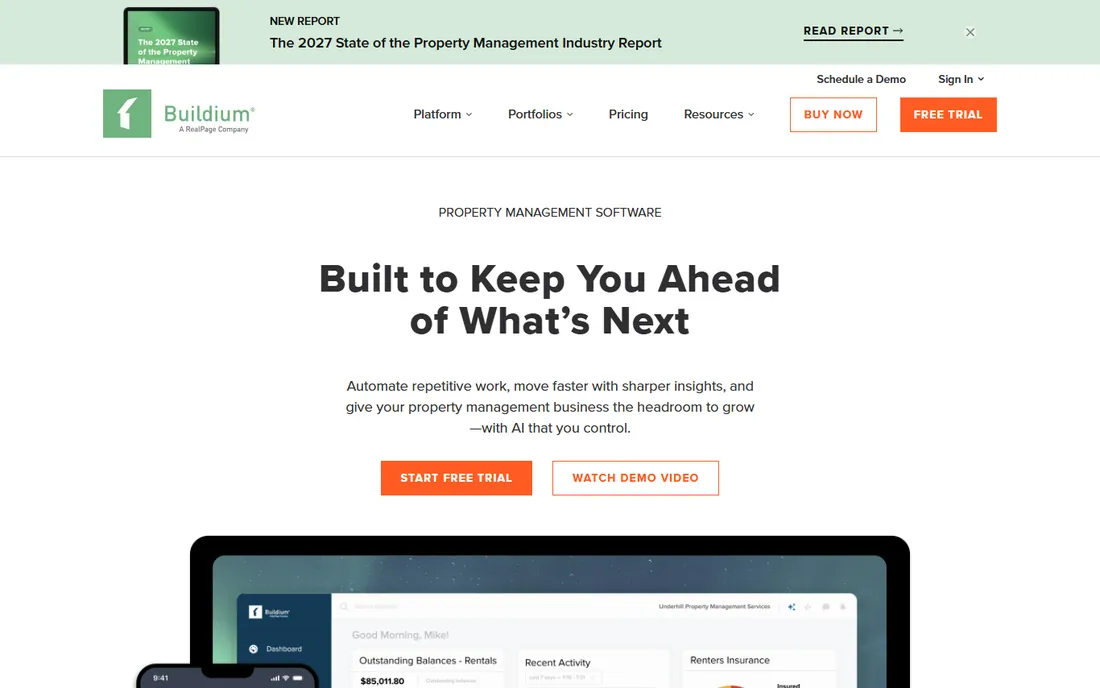
Buildium is property management software first and accounting second, which is exactly right for the investor whose portfolio outgrew spreadsheets. Online rent collection, maintenance request tracking, owner and tenant portals, and full accounting live in one system. The Essential plan at $62 per month covers the basics; Growth ($192) and Premium ($400) add capacity and features as unit counts climb. A 14-day trial is available.
For a pure flipper, Buildium is overkill: you do not need maintenance tickets for a house you will sell in four months. But flippers who build a rental portfolio alongside their flips often end up here eventually, and the accounting is solid enough to serve both sides. Buy Buildium when property management is the bottleneck, not when rehab accounting is.
What we like- Deep property-management feature set: online rent, maintenance tickets, owner portals
- Essential ($62), Growth ($192) and Premium ($400) scale with portfolio size
- Strong reporting for multi-property owners
Watch out for- Priced for managers, not flippers: $62 per month buys a lot of accounting you may not use
- Onboarding is heavier than the lightweight tools here
#9
Baselane
Best for: Landlords who want banking, rent collection and bookkeeping in one place
Visit baselane.com
Starting priceFree (Core); Smart $20 per month
Free planYes (Core)

Baselane takes the unusual route: it starts with banking. Open virtual accounts per property, collect rent into them, and the bookkeeping largely writes itself from the transaction stream. The Core plan is free; Smart at $20 per month adds the analytics and tax reporting. For a landlord, the per-property accounts are genuinely useful: money for each door stays separated by design.
The flip angle is the per-property separation again. If you run each flip through its own Baselane account, acquisition and rehab spend are already isolated, which is half the accounting battle. The product is built around rental income rather than flip revenue, so capital gains and project costing need attention. But for the flipper who also landlords and wants one free hub for the money, Baselane is a practical pick.
What we like- Core plan is free and includes banking with virtual accounts per property
- Automatic transaction categorization built for landlords
- Smart plan ($20/month) adds analytics and tax tools
Watch out for- Banking-first design means general accounting depth is lighter than QuickBooks
- Best suited to US landlords with rental income, not flip revenue
How we chose
We started with the searches buyers actually run: accounting software for real estate investors, flipper bookkeeping, rental property accounting. For every candidate we opened the vendor's own pricing page and homepage, checked feature lists for property-level or project-level accounting, and compared company-size fit for flippers versus landlords. Where the vendor published no prices we wrote "See website" instead of guessing, and we excluded tools that were acquired and shut down.
What flippers should check before buying
The first question is not price but structure: does the tool track costs per property? Flippers live and die by per-deal margins, and a general ledger without project or class tracking forces that math into spreadsheets. QuickBooks Plus, Xero with tracking categories, and the real-estate tools all handle this; the free general tools do not.
Second, decide who does the books. If your CPA already runs QuickBooks or Xero, matching their platform saves more than any subscription costs. If you self-book and hate accounting, the real-estate-first tools (Stessa, REI Hub, Landlord Studio) speak your language out of the box. Third, count your units honestly, because unit-based pricing (REI Hub) and tier jumps (Buildium) punish growth you did not budget for. Fourth, check the tax exports: Schedule E for rentals, capital gains reporting for flips, and per-property P&L your CPA can actually use.
Finally, trial the bookkeeping workflow, not just the features. Connect a bank account, book ten transactions, and run a per-property report before you commit. The tool that makes that loop easy is the right one, regardless of the feature list.
The flip accounting mistakes that cost real money
The most expensive mistake is mixing personal and business money. Flippers who run rehab purchases through a personal card create a reconciliation nightmare and lose deductions they cannot prove. Every tool on this list connects to a business bank account: use a dedicated one per entity, minimum.
The second is lumping rehab costs into one expense line. Without per-property tracking, you cannot tell which flip made money and which one did not, and your CPA cannot defend your cost basis if the IRS asks. The third is ignoring holding costs: insurance, taxes, utilities and interest during the rehab are part of the deal's cost, and they are easy to forget when the contractor invoices arrive. The fourth is doing the books quarterly instead of weekly. A flip that is bleeding money shows up in week three, not in quarter three. Book your costs as they happen.
Frequently asked questions
Do flippers need special accounting software, or is QuickBooks enough?
QuickBooks Online is enough for most flippers if you use classes or projects per property. The real-estate-specific tools (Stessa, REI Hub, Baselane) matter more when rentals are a big part of the business, because they add rent rolls, Schedule E exports and unit-level tracking that QuickBooks lacks.
What is the cheapest good option for a beginner flipper?
Wave's Starter plan is free with unlimited invoicing and bookkeeping, and Stessa's Essentials tier is free for real-estate books. Either works for a first flip. Upgrade when you run multiple simultaneous projects or add rentals.
How should I track rehab costs per property?
Use project or class tracking in QuickBooks Online Plus, tracking categories in Xero, or the property-level ledgers in Stessa and REI Hub. Book every contractor payment, materials receipt and permit fee against the specific property so the per-deal P&L is accurate.
Should flippers use cash or accrual accounting?
Most small flippers use cash basis for simplicity, and their CPA usually agrees. Larger operations or those holding inventory-style assets may need accrual. Ask your CPA before year one; switching methods later is painful.
What reports does my CPA actually need at tax time?
A per-property profit and loss, a balance sheet showing your real-estate assets and loans, and clean records of acquisition costs, rehab spend and sale proceeds. If you hold rentals, add Schedule E-ready income and expense detail per property.
Sources we checked (9)
- https://quickbooks.intuit.com/pricing/
- https://stessa.com/pricing/
- https://www.reihub.net/pricing/
- https://www.xero.com/us/pricing/
- https://www.waveapps.com/pricing/
- https://www.landlordstudio.com/pricing/
- https://rentecdirect.com/pricing/
- https://buildium.com/pricing/
- https://baselane.com/pricing/
Is your product missing or out of date?
We review this list regularly. Vendors can request a listing, send updated pricing or ask about featured placement.

Shihab Mia · Founder, Rankite
Shihab has spent more than a decade helping SaaS and e-commerce brands grow through search. He writes Rankite's software buying guides from pricing pages, documentation and public user reviews. More about Shihab.