How we make this list: we compare pricing pages, product documentation and public user reviews. Rankite is independent; if a vendor ever pays for a featured spot, that listing is clearly labeled Partner.
Key takeaways
- Wave ($0) and Zoho Books (free for businesses under $50K revenue) handle invoicing and bookkeeping free; both are genuine options for musicians starting out.
- Watch client caps: FreshBooks Lite at $23/mo allows only 5 billable clients, so most working musicians need Plus at $43/mo for 50 clients.
- Musicians who book gigs with contracts, like wedding and event performers, get more from HoneyBook ($29/mo annual) or Bonsai ($19/user/mo annual) than from pure accounting tools.
- QuickBooks Self-Employed is discontinued; Intuit replaced it with QuickBooks Solopreneur at $20/mo.
- Touring bands with employees should look at Patriot: Basic bookkeeping at $17/mo with payroll available when the crew grows.
The best accounting software for musicians
Here is the blunt truth: most accounting software was built for plumbers and consultants, and musicians have weirder money. Gig pay in cash and Venmo, streaming royalties in drips, merch table revenue, session fees, teaching income, gear purchases, van mileage, and a stack of 1099s from venues that paid you $600 or more. You do not need enterprise accounting. You need something that invoices fast, tracks messy income streams, and makes tax time survivable. These nine tools cover the real options, from free to full business management.

#1
Wave
Best for: Musicians who want real bookkeeping free while starting out
Visit waveapps.com
Starting price$0 (Starter plan free); Pro plan $19/month
Free planYes (Starter plan is free, not a trial)
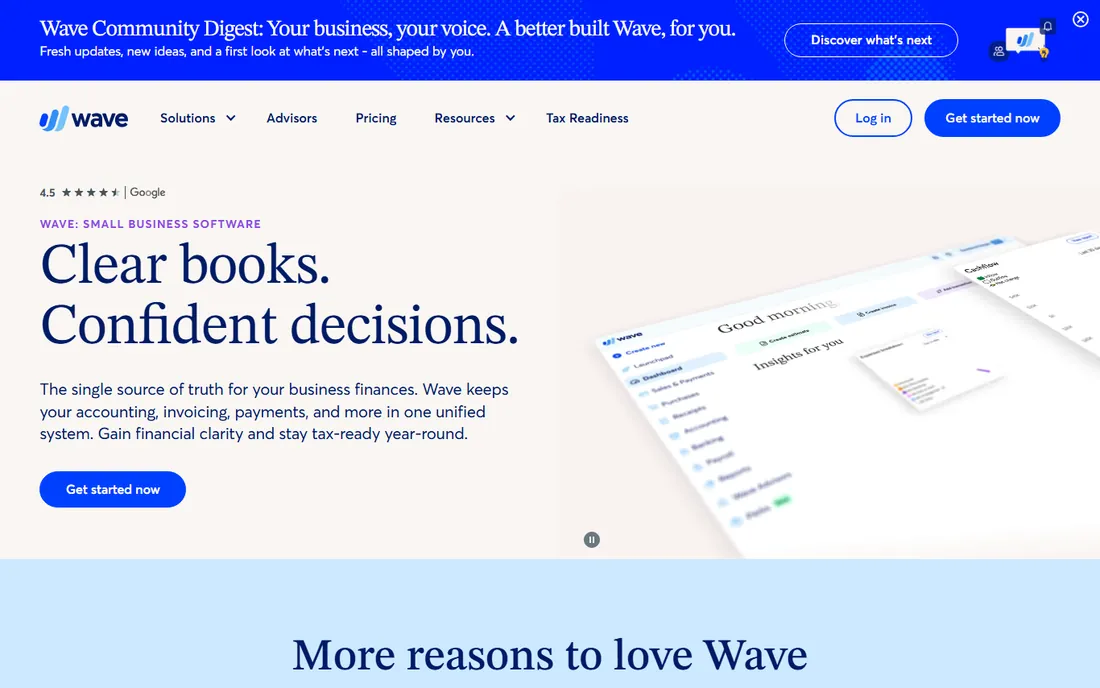
Wave is the rare product that is actually free where it counts. A musician can invoice venues, track merch expenses and run profit-and-loss reports without paying anything, and there is no cap on transactions or users on the free Starter plan. That makes it the default recommendation for artists in the building phase: bedroom producers selling beats, new bands playing local rooms, teachers with a handful of students.
The catch is what free does not include. Bank transaction imports are manual on Starter, so you type or upload statements yourself until you pay $19 a month for Pro automation. Receipt scanning is a paid add-on on the free plan. And every card payment a client makes through Wave costs 2.9% plus $0.60. None of that disqualifies it: for a musician with under a few dozen transactions a month, the free plan does the whole job.
What we like- Unlimited invoices, estimates, bills and bookkeeping records on the free plan with no user seat limits
- Double-entry accounting that accountants trust
- Pro at $19/mo adds automatic bank imports and receipt scanning
Watch out for- No inventory tracking or time tracking
- Integrations beyond the basics need the Pro plan
- Payment processing fees (2.9% + $0.60 per card transaction) are how Wave earns on free users
Starting price$23/month (Lite plan)
Free planFree trial (30 days, no credit card required)
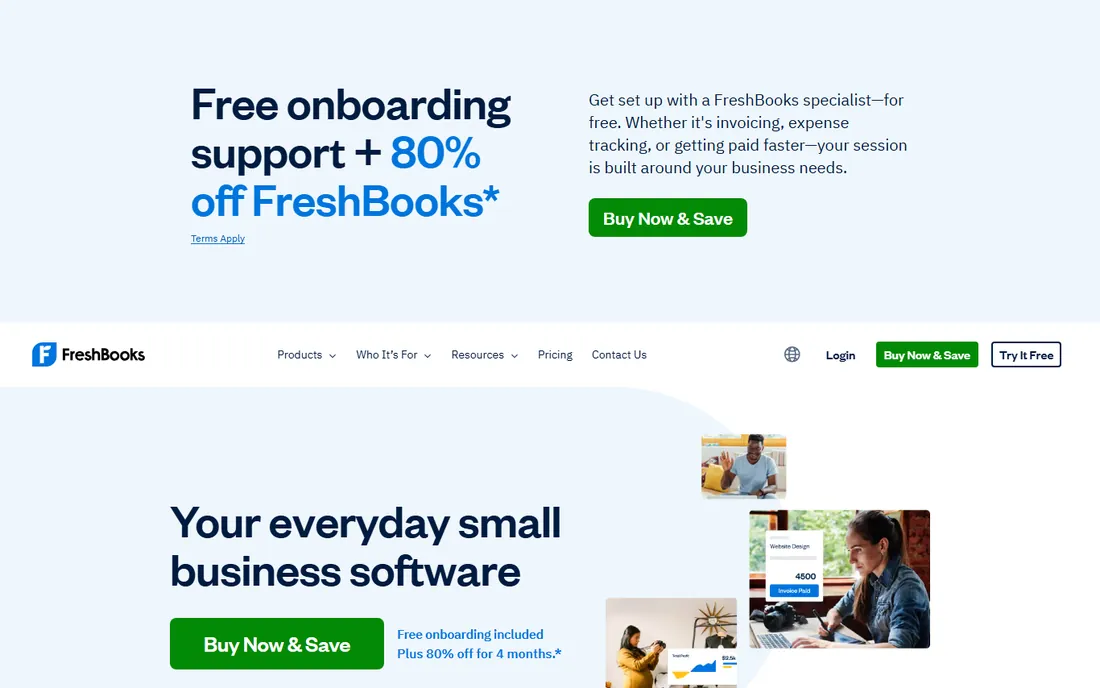
FreshBooks is built for people who bill lots of clients, which describes working musicians exactly. Session players, wedding bands, private teachers and sound engineers all invoice different payers constantly, and FreshBooks makes each invoice look professional, tracks who has paid, and chases late payers automatically. Time tracking flows straight onto invoices, which matters for hourly session and teaching work.
The catch is the client cap structure. Lite at $23 a month allows only 5 billable clients, and that is the sharpest constraint in this roundup: a musician with six regular payers cannot use the entry plan. Plus at $43 a month raises the cap to 50 clients and adds real accounting depth (chart of accounts, general ledger, balance sheet). Budget from the list price, not the frequent 90%-off intro promos, and count your payers before picking a tier.
What we like- The best invoicing in this category: unlimited customized invoices, recurring billing, automated late-payment reminders and client portals
- Unlimited time tracking on every plan
- 30-day trial with no card required
Watch out for- Lite caps you at 5 billable clients, which a busy gig musician hits fast
- Every plan covers one user, with extra team members at $11/mo each
- No permanent free plan

#3
Xero
Best for: Musicians with international income or a growing team
Visit xero.com
Starting price$25/month (Early plan)
Free planFree trial (30 days, no credit card required)
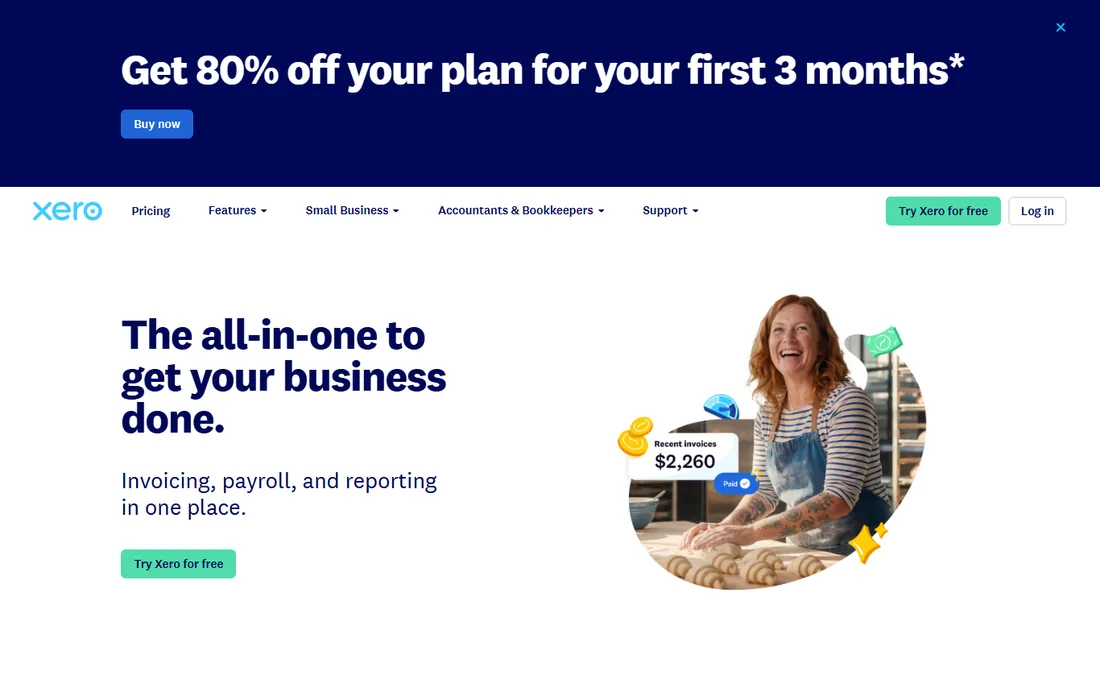
Xero is the serious-ledger option for musicians whose business has outgrown simple invoicing. The unlimited-users model is the standout: a four-piece band plus a manager plus an accountant all log in on one $25 to $55 subscription, where competitors charge per seat. Royalty income from multiple countries, merch sales through Shopify, and touring expenses all reconcile against bank feeds cleanly.
The honest catch is the Early plan's caps: 20 invoices and 5 bills a month is tight for a musician invoicing every gig. Most working artists land on Growing at $55 a month for unlimited invoices and bills. Xero also assumes some accounting comfort; it is less hand-holding than FreshBooks or Wave. Pick it when the operation has multiple people and income streams, not when you are solo and starting out.
What we like- Unlimited users on every plan, so bandmates, managers and accountants all get access free
- Bank reconciliation is the best in class
- 1,000-plus app integrations including Stripe and PayPal
Watch out for- Early caps invoices at 20 and bills at 5 per month, which active musicians can exceed
- Multi-currency needs the $90 Established plan
- US payroll runs through a Gusto add-on rather than natively

#4
Zoho Books
Best for: Budget-conscious musicians who want a free plan with real depth
Visit zoho.com
Starting price$0 (Free plan); paid from $15/month (Standard, billed annually)
Free planYes (free for businesses under $50K annual revenue)
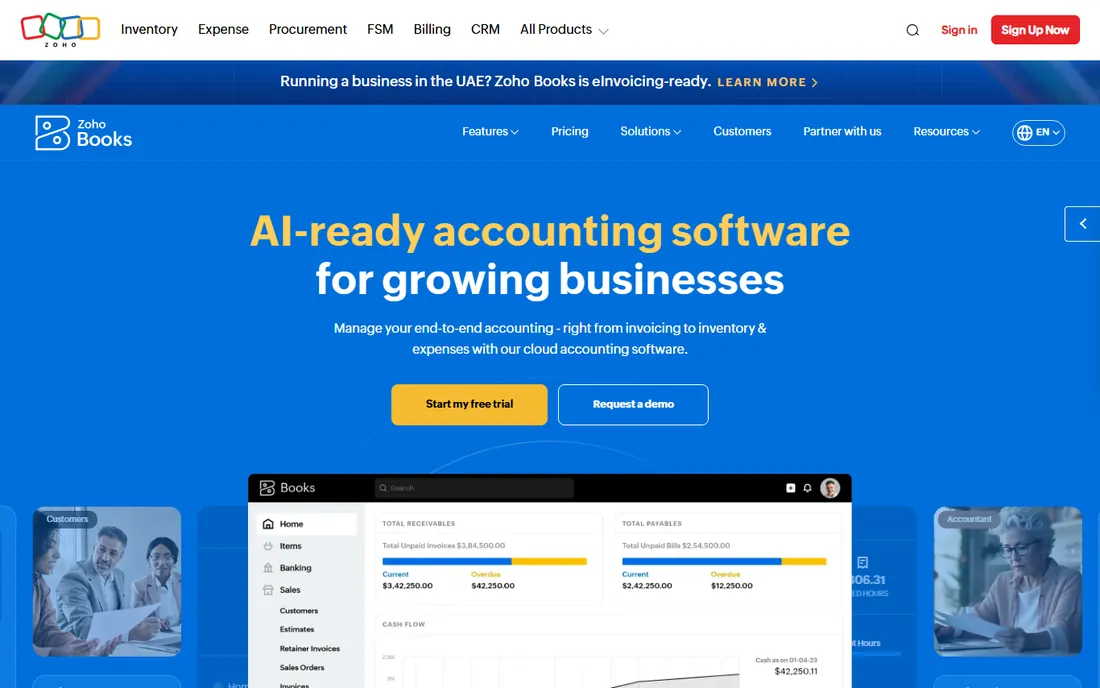
Zoho Books might be the best free accounting deal nobody talks about. Under $50,000 in annual revenue, a musician gets invoicing, bank reconciliation, mileage tracking, 1099 management and a customer portal at zero cost, with no time limit. That covers most independent artists completely. When income grows, Standard at $15 a month billed annually adds connected bank feeds and multi-user access.
The catch is payroll: Zoho Books does not offer it on any plan, so a band with employees needs a separate payroll provider. The free plan's single-user limit also means bandmates share one login or upgrade. But for a solo musician or duo tracking gigs, royalties and expenses, the free tier beats every paid competitor on value. Zoho's own pricing page lists all six tiers plainly, which is more transparency than most vendors offer.
What we like- The free plan covers 1,000 invoices a year, bank reconciliation, expense tracking and 1099 management
- Pricing is per organization, not per user
- Zoho's own page confirms the annual prices: Standard $15, Professional $40, Premium $60 per org per month
Watch out for- The free plan allows one user plus an accountant
- US payroll is not offered on any Zoho Books plan
- The interface carries the usual Zoho learning curve

#5
HoneyBook
Best for: Event and wedding musicians who book clients with proposals and contracts
Visit honeybook.com
Starting price$29/month (Starter plan, billed annually)
Free planFree trial (30 days, no credit card required)

HoneyBook is for the musician whose business is bookings: wedding bands, event DJs, session vocalists hired per project. The flow runs inquiry to proposal to signed contract to scheduled session to paid invoice without leaving the platform, and clients get a polished portal that makes a solo act look like an agency. Automations follow up on unanswered proposals and remind clients of balances.
The honest catch is that you are paying for machinery. If your work is "play the gig, send the invoice," $29 a month annual buys workflow you will never start. HoneyBook earns its price when contracts, scheduling and deposits are constant friction: the wedding musician juggling 40 events a year saves real hours. Pure bookkeeping and tax prep still need an accountant or a ledger tool alongside it.
What we like- The whole booking flow in one place: lead capture, proposals, contracts, invoices and payments
- Built specifically for creative service businesses
- HoneyBook's own homepage confirms the plan prices and that every plan starts with a free trial
Watch out for- It is a client-booking platform with accounting features, not a full ledger
- Starter at $29/mo annual is pricey if you only send invoices
- Payment processing fees stack on top (2.9% + $0.25 per card transaction)

#6
Indy
Best for: Freelance musicians who want contracts, proposals and invoices in one cheap bundle
Visit weareindy.com
Starting price$9/month (Pro Bundle, billed annually; $12 month to month)
Free planYes (free plan with limited invoices, contracts and proposals)
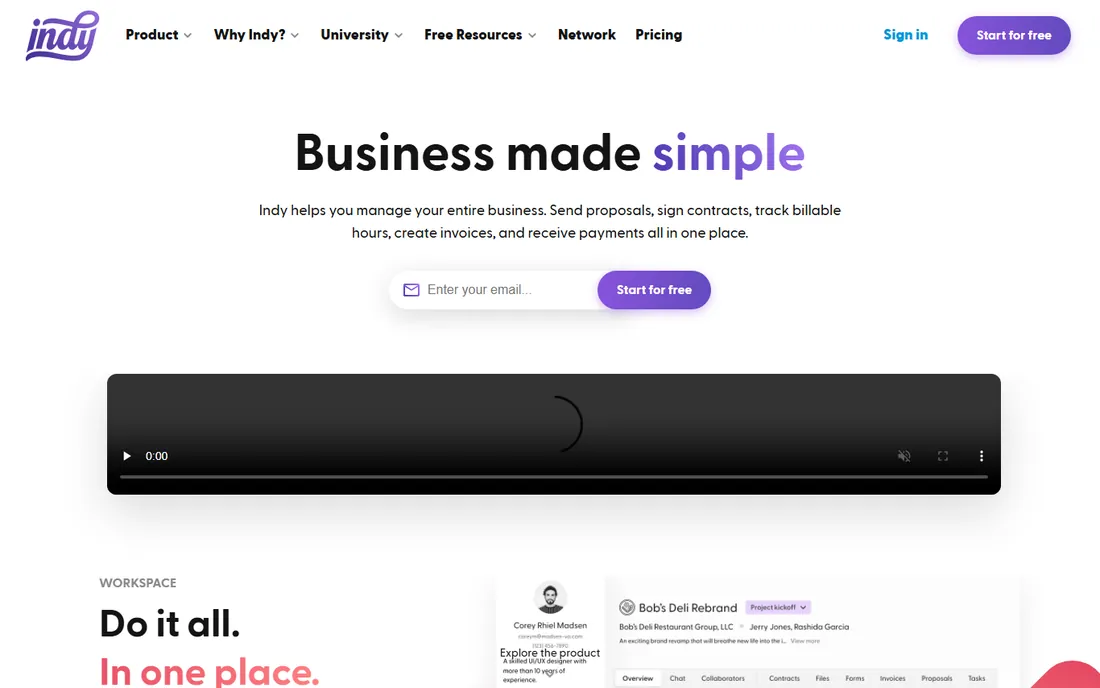
Indy is the Swiss-army option for the musician-as-freelancer. A producer can send a proposal for a beat package, get the contract signed, track the hours, invoice on delivery and accept payment through Stripe or PayPal, all for $9 a month billed annually. The free plan covers enough to run a real test: two invoices, two contracts, two proposals, plus tasks and time tracking.
The catch is accounting depth. Indy does not keep a general ledger, reconcile bank accounts or produce the reports an accountant wants at tax time. Think of it as the front office (clients, contracts, invoices) that pairs with a back office like Wave's free bookkeeping for the full picture. For the price, though, nothing else bundles this much client workflow this cheaply.
What we like- Nine tools in one subscription: invoices, contracts, proposals, time tracking, tasks, forms, calendar and file storage
- The free plan lets you test the whole workflow
- The Pro Bundle is among the cheapest paid options here
Watch out for- It is a freelancer business suite, not true accounting software: no double-entry ledger or tax reports
- The free plan caps you at 2 invoices, 2 contracts and 2 proposals
- Brand polish lags HoneyBook

#7
Bonsai
Best for: Freelance musicians and producers who want polished client management plus bookkeeping
Visit hellobonsai.com
Starting price$19/user/month (Essentials plan, billed annually)
Free planNo (free trial available)
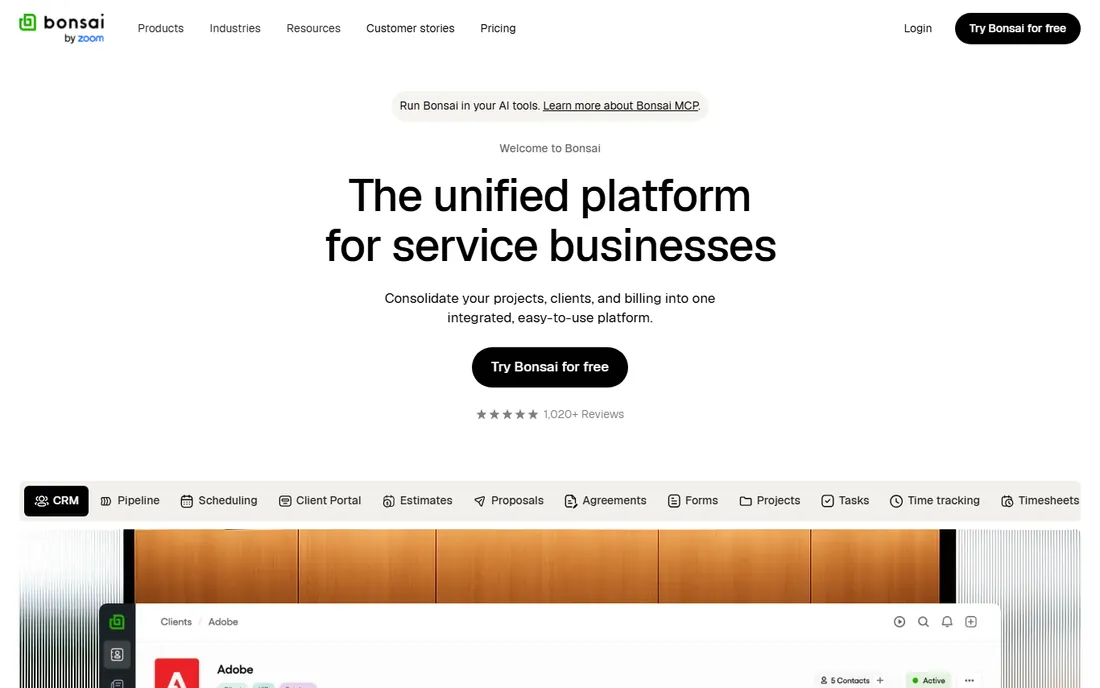
Bonsai sits between HoneyBook and FreshBooks: more client-management polish than FreshBooks, more accounting substance than HoneyBook. A producer with retainer clients or a musician doing regular corporate gigs gets contracts, time tracking, invoicing and expense bookkeeping in one login, with automations that cut admin time. The interface is the selling point: proposals and invoices look expensive, which helps when quoting higher rates.
The catch is the per-user pricing and the tier structure. Basic at $15 a user a month sounds cheap until you learn invoicing and contracts need Essentials at $19. A solo operator is fine; add a manager or assistant and the bill climbs. Like Indy and HoneyBook, Bonsai covers the client-facing money well but is not a full tax-prep ledger, so keep an accountant in the loop at year end.
What we like- Client management, projects, contracts, time tracking, invoicing and bookkeeping in one integrated platform
- Clean modern interface that clients take seriously
- Recurring payments and retainers suit ongoing client relationships
Watch out for- Pricing is per user, so costs scale with collaborators
- The $15 Basic tier lacks invoicing and contracts, pushing most users to Essentials at $19
- Tax features are lighter than dedicated accounting tools
Starting price$17/month (Basic plan); Full Service payroll $37/month + $5/worker
Free planFree trial (30 days)
Patriot is the unglamorous workhorse for music businesses that have become employers. A touring band with a crew, a studio with engineers on payroll, or a teaching academy with instructors needs actual payroll tax filing, and Patriot's Full Service plan at $37 a month plus $5 per worker handles federal, state and local filings plus year-end forms. The clever billing means you pay the per-worker fee only in months they are actually paid, which fits seasonal touring.
The catch is that nothing here is music-specific: no royalty tracking, no gig invoicing templates, no merch inventory nuance. It is straight small-business accounting that happens to be cheap and honest. Solo musicians with no employees should start with Wave or Zoho free; Patriot earns its place the moment you put anyone on payroll.
What we like- The cheapest paid bookkeeping here at $17/mo, with a real payroll product when the band hires
- You pay only for workers actually paid each month
- Free US-based support
Watch out for- The $17 Basic tier is not full-service: tax filings need the $37 Full Service tier
- Music-specific features are zero, it is plain small-business accounting
- Each additional state costs $12/mo for payroll
Starting price$20/month (Solopreneur plan)
Free planFree trial (30 days)
QuickBooks Solopreneur is what QuickBooks Self-Employed became: Intuit retired the old product and moved subscribers to Solopreneur at $20 a month. For a solo musician, it does the two things that matter: it organizes income and expenses into IRS Schedule C categories automatically, and it estimates quarterly tax payments so April does not bring surprises. Mileage tracking covers the drives to gigs, rehearsals and the studio.
The honest catch is the price-to-value math. At $20 a month it costs more than Wave Pro and infinitely more than Wave or Zoho free, for bookkeeping that is comparable at this scale. What you are buying is the QuickBooks ecosystem: any US accountant knows it, and it grows into QuickBooks Online if the business scales. Note the name change when reading old reviews: anything praising QuickBooks Self-Employed at $15 a month describes a product you can no longer buy.
What we like- Built for one-person businesses: income and expense tracking sorted for Schedule C, quarterly estimated tax calculations and mileage tracking
- The largest US accountant network if you hire help
- Imports bank and card transactions automatically
Watch out for- QuickBooks Self-Employed, the old product, is discontinued: existing users were moved to Solopreneur, so old reviews and prices no longer apply
- Pricier than Wave or Zoho free for similar basics
- Upsells to pricier QuickBooks Online tiers are constant
Quick comparison
| Tool | Best for | Starting price | Free plan |
|---|
| Wave | Musicians who want real bookkeeping free while starting out | $0 (Starter plan free); Pro plan $19/month | Yes (Starter plan is free, not a trial) |
 FreshBooks FreshBooks | Gigging musicians who invoice many different clients | $23/month (Lite plan) | Free trial (30 days, no credit card required) |
| Xero | Musicians with international income or a growing team | $25/month (Early plan) | Free trial (30 days, no credit card required) |
| Zoho Books | Budget-conscious musicians who want a free plan with real depth | $0 (Free plan); paid from $15/month (Standard, billed annually) | Yes (free for businesses under $50K annual revenue) |
| HoneyBook | Event and wedding musicians who book clients with proposals and contracts | $29/month (Starter plan, billed annually) | Free trial (30 days, no credit card required) |
| Indy | Freelance musicians who want contracts, proposals and invoices in one cheap bundle | $9/month (Pro Bundle, billed annually; $12 month to month) | Yes (free plan with limited invoices, contracts and proposals) |
| Bonsai | Freelance musicians and producers who want polished client management plus bookkeeping | $19/user/month (Essentials plan, billed annually) | No (free trial available) |
 Patriot Software Patriot Software | Bands and music businesses with employees or contractors to pay | $17/month (Basic plan); Full Service payroll $37/month + $5/worker | Free trial (30 days) |
 QuickBooks Solopreneur QuickBooks Solopreneur | Solo musicians who want the QuickBooks name with Schedule C tax help | $20/month (Solopreneur plan) | Free trial (30 days) |
Is your product missing or out of date?
We review this list regularly. Vendors can request a listing, send updated pricing or ask about featured placement.
How we chose
We started with the categories buyers search: accounting software for musicians, best accounting software for freelancers, bookkeeping for gig workers and invoicing software for creatives. For each candidate we opened the vendor's own homepage or pricing page, checked plan prices and free tiers against the vendor's own published figures, and judged musician fit: gig invoicing, royalty and multi-stream income, contract workflows, quarterly tax support and band payroll. Where a product was discontinued we used its current replacement and said so.
Musicians do not have one income; they have five, and the right tool depends on which ones dominate. Gig and session payers who invoice constantly need invoicing-first tools: FreshBooks, Wave or Zoho Books. Wedding and event bookings with contracts and deposits need client-workflow tools: HoneyBook, Bonsai or Indy. Royalty drips from streaming plus merch plus touring need a real ledger with bank reconciliation: Xero, Wave Pro or Zoho Books paid tiers. Teaching income with recurring students needs recurring invoicing, which all nine handle.
Then consider the tax reality. Every US musician earning over $400 in self-employment income owes quarterly estimated taxes, and the tools that calculate them (QuickBooks Solopreneur, FreshBooks, Xero with add-ons) save more than they cost in avoided penalties. Keep every 1099, log mileage to every gig, and save receipts for strings, sticks, cables and repairs: they are deductible, but only if they are recorded. The best accounting software for a musician is the one that gets used weekly, because a perfect ledger updated never is worthless.
The mistakes that cost musicians money
The first mistake is paying for power you do not use. A solo artist on QuickBooks Solopreneur at $20 a month when Wave free does the same job is burning $240 a year. Start free, upgrade when transaction volume or client count forces it, and let revenue justify every subscription.
The second mistake is ignoring the client caps. FreshBooks Lite's 5-client limit, Xero Early's 20-invoice cap and Indy's 2-invoice free tier all punish the exact behavior working musicians have: many small payers. Count your monthly invoices and payers before choosing, not after.
The third mistake is treating the subscription as the whole cost. Payment processing takes 2.9% plus around 30 cents on nearly every platform here, which dwarfs the subscription for anyone collecting thousands monthly. Add-on payroll, extra users and receipt scanning stack up too. Model the full year: subscription plus processing on your actual volume, then compare.
The fourth mistake is no separation. Running gig money through a personal account makes every tool on this list half as useful. Open a separate checking account for music income, connect it to whichever tool you pick, and reconcile monthly. Thirty minutes a month beats thirty hours at tax time.
Frequently asked questions
What is the best free accounting software for musicians?
Wave and Zoho Books. Wave's Starter plan is free with unlimited invoices and bookkeeping, and Zoho Books is free for businesses under $50K annual revenue with 1,000 invoices a year, bank reconciliation and 1099 management. Both handle a solo musician's needs without paying anything.
How should a musician handle taxes with multiple income streams?
Track every stream separately in one ledger: gigs, royalties, merch, teaching and session work. Save every 1099, log mileage to gigs and rehearsals, and keep receipts for instruments, repairs and consumables. Tools like QuickBooks Solopreneur calculate quarterly estimated taxes; with free tools, set aside 25 to 30 percent of profit in a separate account each month.
Can musicians deduct instruments and gear?
Yes. Instruments, equipment, repairs, strings, sticks, cables and software used for your music work are deductible business expenses in the US. Larger purchases may need to be depreciated over several years rather than deducted at once. Record every purchase in your accounting tool with the receipt attached, and confirm the treatment with a tax professional.
What happened to QuickBooks Self-Employed?
Intuit discontinued it and moved subscribers to QuickBooks Solopreneur at $20 a month. The tax features carried over: Schedule C categorization, quarterly estimated taxes and mileage tracking. Old reviews quoting $15-a-month Self-Employed pricing describe a product that no longer exists.
Do I need accounting software or just an invoicing app?
If you only send occasional invoices, an invoicing workflow like Indy's free plan or HoneyBook may be enough. The moment you need profit-and-loss reports, expense tracking for deductions, or quarterly tax estimates, you need real accounting: Wave, Zoho Books, FreshBooks, Xero or QuickBooks Solopreneur.
How much should a musician budget for accounting software?
Start at $0 with Wave or Zoho Books free. Most working musicians land between $15 and $55 a month: Zoho Standard ($15), Wave Pro ($19), FreshBooks Plus ($43) or Xero Growing ($55). Add payment processing at roughly 2.9% plus 30 cents per transaction on whatever you collect, which usually exceeds the subscription itself.
Sources we checked (9)
- https://www.waveapps.com
- https://www.freshbooks.com
- https://xero.com
- https://www.zoho.com/books/
- https://honeybook.com/
- https://weareindy.com/
- https://hellobonsai.com/
- https://www.patriotsoftware.com/
- https://quickbooks.intuit.com/
Is your product missing or out of date?
We review this list regularly. Vendors can request a listing, send updated pricing or ask about featured placement.

Shihab Mia · Founder, Rankite
Shihab has spent more than a decade helping SaaS and e-commerce brands grow through search. He writes Rankite's software buying guides from pricing pages, documentation and public user reviews. More about Shihab.