How we make this list: we compare pricing pages, product documentation and public user reviews. Rankite is independent; if a vendor ever pays for a featured spot, that listing is clearly labeled Partner.
Key takeaways
- Axon Software and McLeod Software are built for trucking and freight with accounting inside.
- QuickBooks Enterprise remains the common choice for small logistics companies.
- Sage Intacct and NetSuite serve growing 3PLs and freight forwarders with multi-entity needs.
- Acumatica, SAP Business One and Dynamics 365 Business Central cover mid-market ERP.
- Odoo and Xero suit small operators wanting value and simplicity.
Quick comparison
Is your product missing or out of date?
We review this list regularly. Vendors can request a listing, send updated pricing or ask about featured placement.
The best accounting software for logistics business
Starting priceSee website
Free planFree trial
QuickBooks Enterprise is where most small logistics companies start: real accounting with advanced inventory, job costing and payroll, in software every bookkeeper understands. Dispatchers invoice loads, the office runs payroll, and the accountant gets clean books. The ecosystem of integrations covers common TMS connections.
Freight-specific needs, per-load profitability, driver settlements, IFTA reporting, require workarounds or add-ons. Growing past a few dozen users gets expensive and creaky. But for small carriers and brokers getting organized, QuickBooks Enterprise's familiarity beats specialized software nobody knows.
QuickBooks Enterprise's Advanced Inventory handles the lot tracking and warehouse management small 3PLs need, with barcode scanning keeping counts honest. The job costing tracks profitability per customer or lane when configured properly. Multi-user permissions control who sees payroll versus dispatch data. It is not freight software, but as the financial core with TMS integrations handling operations, it serves thousands of small logistics companies reliably.
What we like- Familiar accounting your bookkeeper knows
- Strong payroll and reporting
- Huge accountant ecosystem
Watch out for- Not built for freight specifics
- Scales poorly past mid-size
- Per-user pricing adds up
Starting priceSee website
Free planNo
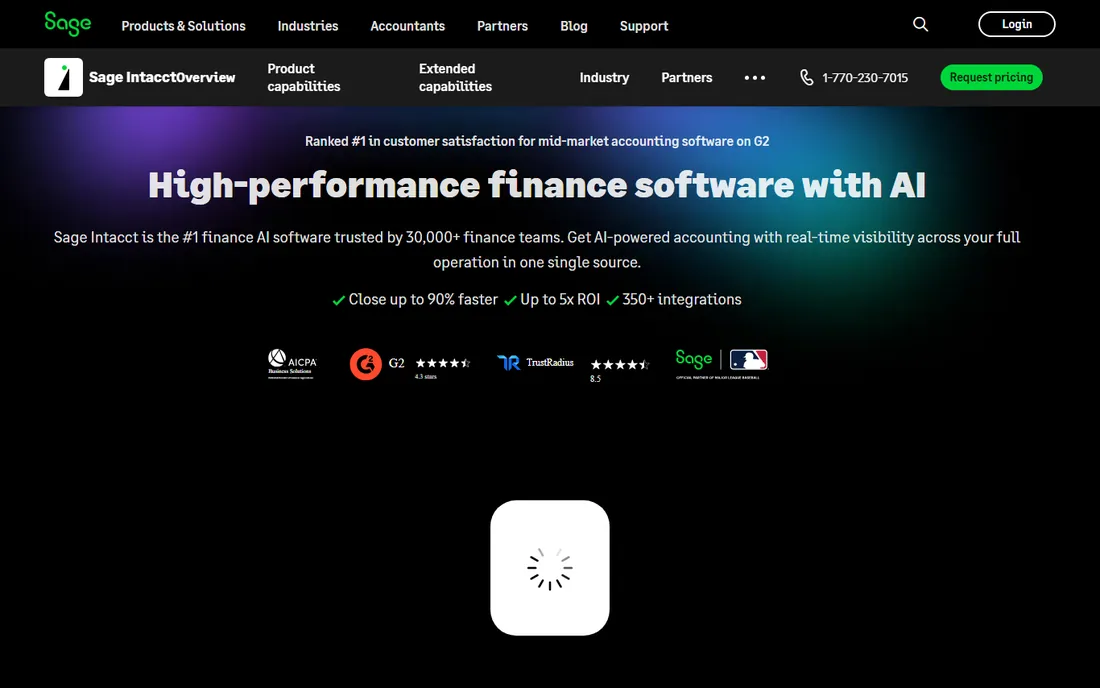
Sage Intacct suits logistics companies outgrowing QuickBooks: multi-entity support for expanding operations, dimensional accounting that tracks profitability by lane, customer or division, and automation that handles high transaction volumes. 3PLs and freight forwarders with complex billing get real financial control.
Freight operations still live in the TMS; Intacct handles the financial side and integrates. Implementation needs expertise and pricing is quote-based. For logistics businesses whose complexity is financial, multiple entities, varied billing models, Intacct is the step up that lasts.
Sage Intacct's dimensional chart of accounts lets logistics firms slice profitability by customer, lane, division or equipment without a bloated account list: dimensions replace the thousand-account workarounds. The multi-entity consolidation handles expansion into new operating companies cleanly. Contract and subscription billing modules suit 3PLs with recurring customer agreements. For finance-led logistics companies, the reporting flexibility is the reason to choose it.
What we like- Multi-entity consolidation for growing firms
- Dimensional accounting for lanes and customers
- Strong automation
Watch out for- Needs TMS integration for freight specifics
- Pricing is quote-based
- Implementation needs expertise
Starting priceSee website
Free planNo
NetSuite gives scaling logistics companies one system for financials, inventory, warehousing and order management, with multi-subsidiary consolidation for global operations. 3PLs managing warehouses plus transportation get operational and financial data together. The partner ecosystem includes logistics specialists.
The cost and implementation timeline are enterprise-grade, and freight-specific workflows need building. But for logistics enterprises standardizing operations globally, NetSuite's unified platform eliminates the system sprawl that kills visibility.
NetSuite's warehouse management module gives 3PLs real operational depth: receiving, putaway, picking and shipping inside the same system as the financials. The SuiteBilling module handles the complex rating and accessorial billing freight demands. Multi-subsidiary support covers cross-border operations. For logistics enterprises standardizing globally, the unified platform eliminates the reconciliation between operational and financial systems.
What we like- Unified ERP for finance, inventory and operations
- Multi-subsidiary global support
- Huge partner network
Watch out for- Expensive
- Implementations are long
- Logistics specifics need customization
Starting priceSee website
Free planNo
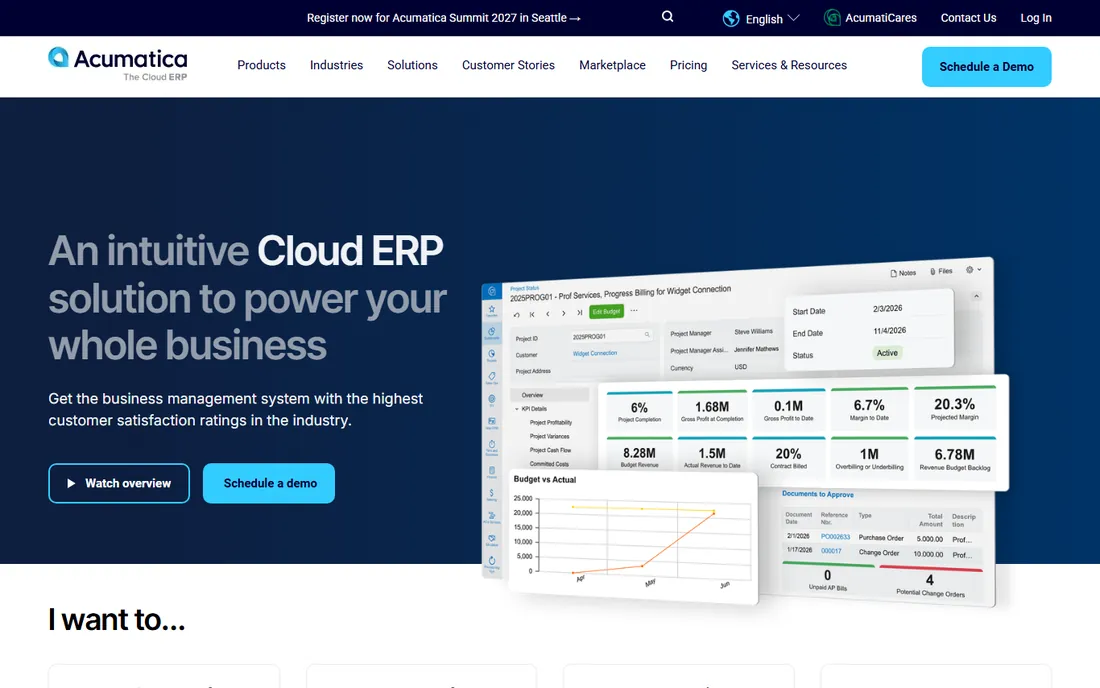
Acumatica's distribution ERP fits mid-size logistics and 3PL operations: financials, inventory, order management and warehousing with unlimited-user pricing that suits operations with many warehouse staff. The value against NetSuite is significant for the right buyer.
Logistics-specific partners are fewer than NetSuite's, and freight features need configuration or add-ons. But for mid-market 3PLs and distributors wanting real ERP without enterprise pricing, Acumatica's flexibility and pricing model stand out.
Acumatica's distribution edition includes lot and serial tracking, warehouse management and order fulfillment that fit 3PL operations. The unlimited-user pricing means warehouse staff, drivers and office all get access without license anxiety. Customization through the framework adapts to unusual billing models. For mid-market logistics firms wanting ERP depth without enterprise pricing, the value proposition is strong.
What we like- Unlimited-user pricing
- Strong distribution edition
- Flexible deployment
Watch out for- Smaller logistics partner network
- Freight specifics need add-ons
- Brand recognition is lower

#5
SAP Business One
Best for: Small-enterprise logistics
Visit sap.com
Starting priceSee website
Free planNo
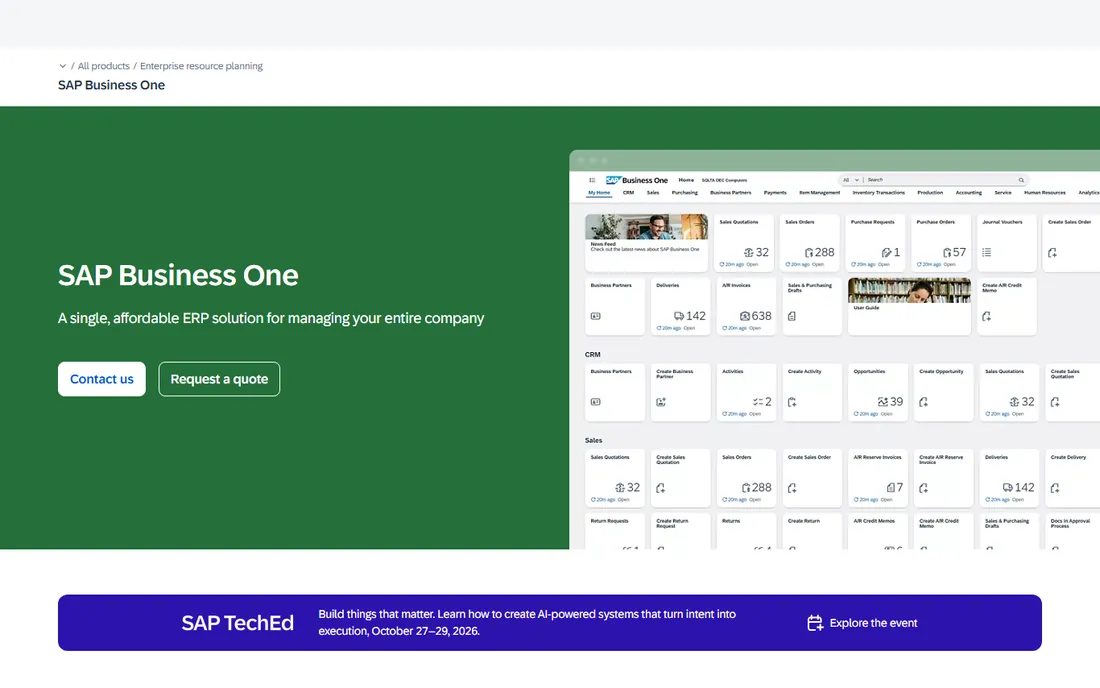
SAP Business One brings genuine ERP to small logistics enterprises: financials, inventory, purchasing and sales in one system with SAP's credibility. Freight forwarders and distributors get operational depth beyond accounting software. The partner network implements industry-specifically.
It needs partner implementation, the interface is traditional, and pricing is quote-based. But for small logistics companies wanting ERP legitimacy and growth headroom, Business One is the established path.
SAP Business One's warehousing and production modules suit logistics firms with value-added services like kitting and light assembly. The SAP HANA database delivers real-time inventory visibility. Industry partner add-ons extend into freight specifics. For small logistics enterprises wanting the SAP name and growth path, Business One is the established entry point.
What we like- Real ERP for small enterprises
- Strong inventory and logistics
- SAP ecosystem credibility
Watch out for- Needs partners for implementation
- Interface is traditional
- Pricing is quote-based

#6
Dynamics 365 Business Central
Best for: Microsoft-centric logistics firms
Visit microsoft.com
Starting priceSee website
Free planFree trial
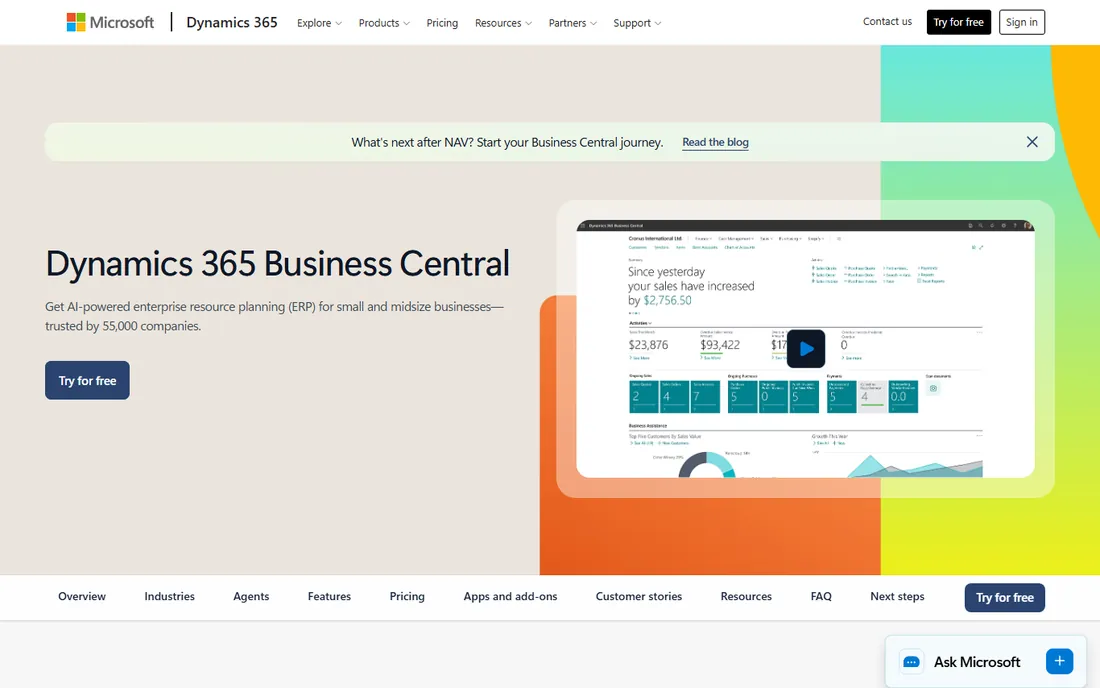
Business Central is the approachable ERP for Microsoft-centric logistics firms: financials, inventory, warehousing and job costing inside the Microsoft world. Office 365 users adopt it easily, and the extension marketplace adds logistics functionality. Small to mid-size operators get ERP without enterprise trauma.
Deep freight features need extensions, advanced capabilities cost more, and partner quality varies. But for logistics businesses standardized on Microsoft, Business Central's integration and familiarity make it the pragmatic ERP choice.
Business Central's Jobs module tracks project-like work, which maps well to freight jobs with estimated versus actual costing. The warehouse management functionality covers the 3PL basics. Power BI integration gives operations dashboards without separate BI tools. For Microsoft-centric logistics firms, the familiarity reduces training costs and the ecosystem provides the extensions freight needs.
What we like- Natural for Microsoft 365 shops
- Good warehousing and jobs modules
- Approachable ERP
Watch out for- Logistics specifics need extensions
- Premium features cost extra
- Partner quality varies
Starting priceSee website
Free planNo
Axon Software does what generic accounting cannot: driver settlements, IFTA fuel tax reporting, dispatch integration and trucking-specific billing in one system. Carriers get accounting shaped around how trucking actually works instead of workarounds. The support reputation among truckers is genuinely good.
It only does trucking, the interface is traditional, and it is a smaller vendor. But for for-hire carriers, the specialization is everything: settlements and IFTA done right save more than the software costs. Trucking companies should evaluate Axon before adapting generic accounting.
Axon's dispatch integration means load data flows into settlements and invoicing without re-entry: the operational and financial sides stay synchronized. IFTA reporting automates the quarterly fuel tax filings that plague carriers. Driver pay calculations handle percentage, mileage and hourly models. For for-hire carriers, these trucking-native features replace the spreadsheet workarounds that generic accounting forces.
What we like- Built for trucking: settlements, IFTA, dispatch integration
- Real trucking accounting not generic
- Good support reputation
Watch out for- Trucking-only focus
- Interface is traditional
- Smaller company
Starting priceSee website
Free planNo
McLeod's LoadMaster is the freight industry standard: dispatch, operations and accounting unified for truckload carriers and brokers. The depth in freight workflows, rating, settlements, driver management, is unmatched. Large carriers run their entire business on it.
Pricing and implementation are enterprise-grade, and small carriers drown in the complexity. But for serious trucking operations, McLeod's freight-native platform is the category leader for good reason.
McLeod's PowerBroker for freight brokers manages the full brokerage lifecycle: quoting, dispatch, carrier management and accounting in one flow. The document imaging keeps rate confirmations and BOLs attached to loads. EDI integrations connect with shipper systems. For brokerages and carriers at scale, the freight-native depth means operations never fight the software.
What we like- Deep freight operations plus accounting
- LoadMaster is an industry standard
- Strong carrier and broker support
Watch out for- Enterprise pricing
- Implementation is significant
- Complexity for small carriers
Starting priceSee website
Free planCommunity edition free
Odoo gives small logistics operators ERP breadth at remarkable prices: accounting, inventory, fleet management and CRM from the app library, with a free community edition. Owner-operators and small fleets get organized without enterprise budgets.
Freight-specific depth requires configuration, app quality varies, and implementation needs technical help. But for cost-conscious operators wanting more than QuickBooks, Odoo's value is unmatched.
Odoo's fleet module tracks vehicles, fuel, maintenance and costs, giving small carriers operational awareness alongside accounting. The Helpdesk and CRM modules manage customer relationships. Studio customization adapts workflows without code. For owner-operators growing into small fleets, Odoo's breadth at the price point is unmatched, provided someone technical guides the implementation.
What we like- Affordable ERP with fleet and inventory apps
- Open-source community edition
- Huge app library
Watch out for- Logistics depth needs configuration
- App quality varies
- Implementation needs technical skill
Starting priceSee website
Free planFree trial

Xero suits the smallest logistics operations: clean accounting, invoicing and bank reconciliation without complexity. Owner-operators and tiny brokers get professional books cheaply. The interface stays pleasant and the mobile app works.
Freight specifics are absent; anything beyond basic accounting needs add-ons or workarounds. But for micro-logistics businesses whose needs are "invoice customers, track expenses, pay drivers," Xero's simplicity wins.
What we like- Clean simple accounting
- Good invoicing and bank feeds
- Affordable
Watch out for- Not built for freight
- Limited inventory
- Needs add-ons for logistics
How we chose
We selected accounting tools with real logistics adoption, from trucking-specific platforms to general ERPs logistics firms use. We reviewed vendor documentation and industry feedback, and verified each vendor's current status. We included both specialists and generalists because logistics businesses genuinely split.
The freight accounting reality
Logistics accounting has specific demands generic software misses: per-load profitability, driver settlements, fuel tax reporting, accessorial billing and multi-currency freight. Specialists like Axon and McLeod handle these natively; generalists need TMS integrations or add-ons.
Map your must-haves before evaluating: if settlements and IFTA are daily reality, start with the specialists. If your complexity is multi-entity financials, start with Intacct or NetSuite and integrate a TMS. The wrong choice is generic accounting plus spreadsheets for the freight parts; that is where money leaks.
Frequently asked questions
What accounting software do trucking companies use?
Axon Software and McLeod Software are built for trucking; QuickBooks Enterprise is the common general choice for small carriers. The right pick depends on fleet size and operational complexity.
How much does logistics accounting software cost?
From affordable (Xero, QuickBooks) to quote-based enterprise (McLeod, NetSuite, Intacct). Trucking specialists typically price per truck or per user. Budget implementation separately.
Do I need a TMS and accounting software?
Most operations need both: the TMS runs freight operations, accounting runs the books. Specialists like McLeod unify them; others integrate. Avoid running freight finances in spreadsheets.
What is IFTA reporting?
The International Fuel Tax Agreement requires interstate carriers to report fuel use by jurisdiction. Trucking software like Axon automates the calculations; generic accounting does not.
Can QuickBooks handle a trucking company?
For small carriers, yes, with add-ons or workarounds for settlements and IFTA. Growing carriers usually migrate to trucking-specific software when the workarounds cost more than the switch.
What about 3PLs and freight forwarders?
3PLs need multi-client billing and warehousing: Sage Intacct, NetSuite or Acumatica for financials, integrated with WMS and TMS. The complexity is operational as much as financial.
Sources we checked (10)
- https://quickbooks.intuit.com/desktop/enterprise/
- https://www.sage.com/en-us/sage-business-cloud/intacct/
- https://netsuite.com/
- https://www.acumatica.com/
- https://www.sap.com/products/erp/business-one.html
- https://www.microsoft.com/en-us/dynamics-365/products/business-central
- https://axonsoftware.com/
- https://www.mcleodsoftware.com/
- https://www.odoo.com/
- https://www.xero.com/us/
Is your product missing or out of date?
We review this list regularly. Vendors can request a listing, send updated pricing or ask about featured placement.

Shihab Mia · Founder, Rankite
Shihab has spent more than a decade helping SaaS and e-commerce brands grow through search. He writes Rankite's software buying guides from pricing pages, documentation and public user reviews. More about Shihab.
 QuickBooks Enterprise
 Sage Intacct
 NetSuite
 Acumatica
 Axon Software
 McLeod Software
 Odoo
Odoo Xero
Xero