How we make this list: we compare pricing pages, product documentation and public user reviews. Rankite is independent; if a vendor ever pays for a featured spot, that listing is clearly labeled Partner.
Key takeaways
- NetSuite and Sage Intacct lead the mid-market-to-enterprise cloud segment with proven multi-entity support.
- SAP S/4HANA, Oracle Fusion and Workday serve the largest enterprises with deep global capabilities.
- Microsoft Dynamics 365 Finance fits organizations standardized on Microsoft.
- Acumatica, SYSPRO, Epicor and Odoo offer strong value for upper mid-size and industry-specific needs.
- Implementation costs dwarf licenses: budget 1-3x the software cost for services.
Quick comparison
Is your product missing or out of date?
We review this list regularly. Vendors can request a listing, send updated pricing or ask about featured placement.
The best accounting software for large business
Starting priceSee website
Free planNo
NetSuite is the default cloud ERP for companies outgrowing QuickBooks and mid-market tools: one system for accounting, inventory, order management, CRM and HR, with multi-subsidiary consolidation that actually works across currencies. Businesses from $10 million to $1 billion in revenue run on it, and the partner ecosystem means help is available everywhere.
The complaints are consistent: pricing is quote-based and rises at renewal, customization requires specialized SuiteScript developers, and implementations routinely take longer than sold. Go in with eyes open, negotiate the renewal caps upfront, and NetSuite delivers a unified platform that eliminates the spreadsheet consolidation most growing companies suffer through.
What we like- Financials, CRM, inventory and HR in one cloud suite
- Proven multi-subsidiary consolidation
- Huge partner ecosystem
Watch out for- Expensive with annual increases
- Customization needs SuiteScript skills
- Implementations often run long

#2
Sage Intacct
Best for: Multi-entity mid-size businesses
Visit sage.com
Starting priceSee website
Free planNo
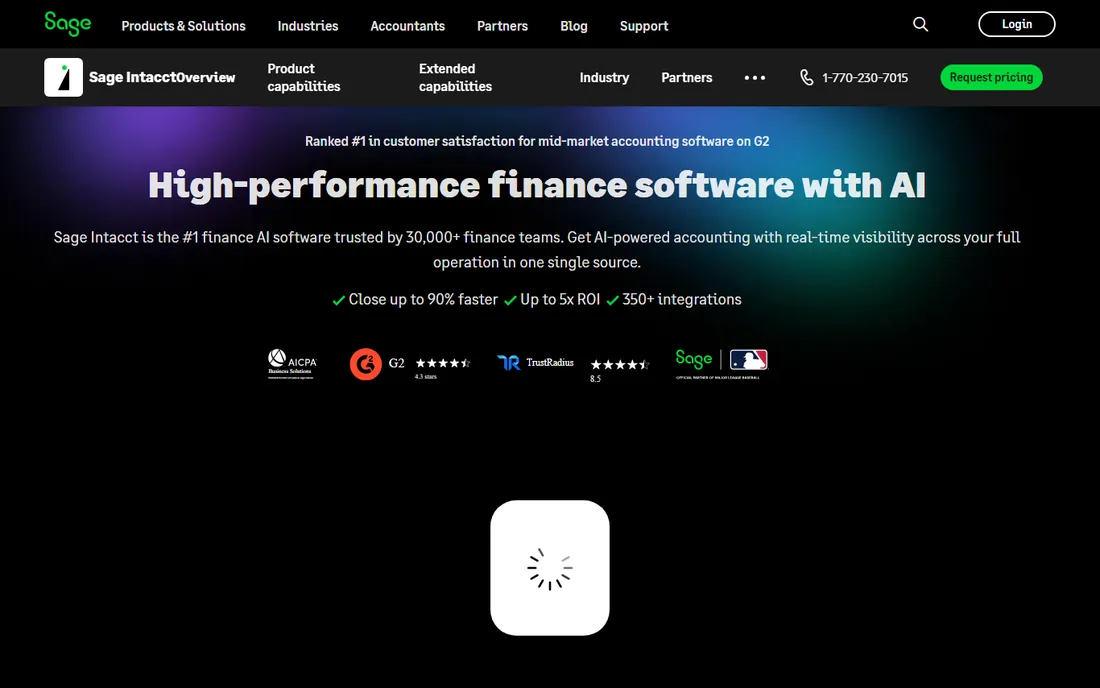
Sage Intacct built its reputation on one thing done exceptionally well: consolidating dozens of entities in real time with dimensional accounting that makes slicing financials by department, location or project effortless. Finance teams at multi-entity nonprofits, SaaS companies and services firms consistently rate it above the alternatives for core accounting.
It is a financial management system first, not a full ERP: inventory, manufacturing and deep operational modules need partners or add-ons. The ecosystem is smaller than NetSuite's. For organizations whose complexity is entities and dimensions rather than warehouses and work orders, Intacct is often the better and cheaper fit.
What we like- Best-in-class multi-entity consolidation
- Strong dimensional chart of accounts
- Good value against NetSuite
Watch out for- Needs add-ons for full ERP breadth
- Smaller ecosystem than NetSuite
- Reporting learning curve
Starting priceSee website
Free planNo
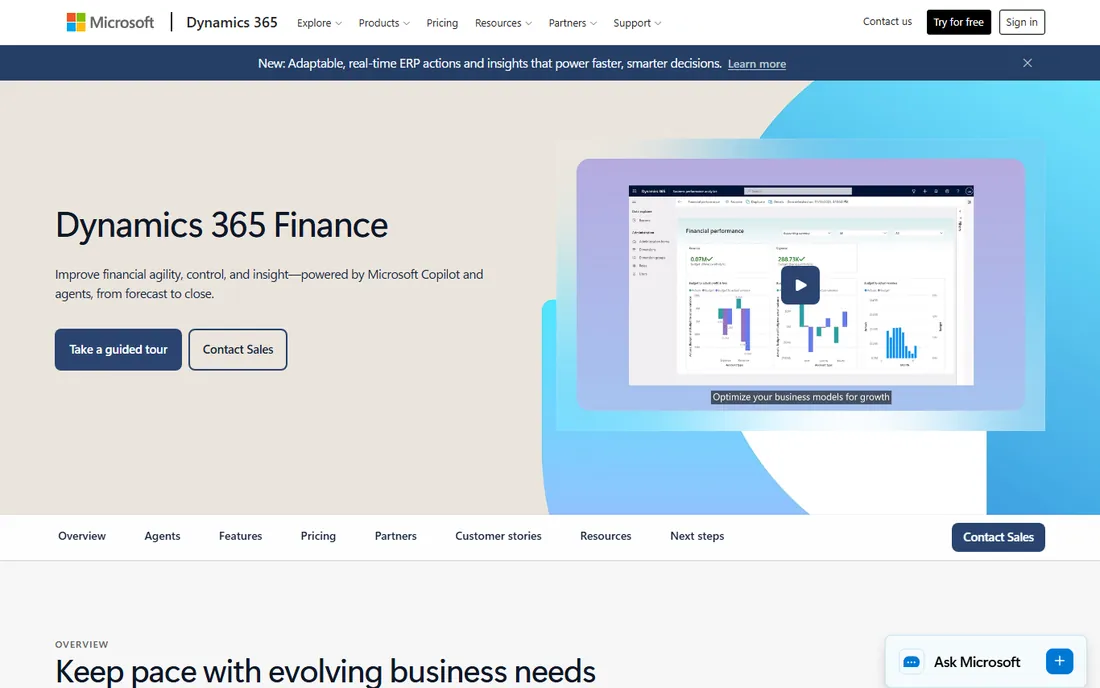
Dynamics 365 Finance makes most sense where Microsoft already runs the business: Teams, Office, Azure and Power BI users get financials inside the ecosystem they know. Global compliance coverage is broad, and the Copilot AI features for finance workflows are developing quickly. Multi-company, multi-currency operations are well supported.
Microsoft licensing is famously complex, and Dynamics implementations demand experienced partners; the wrong partner choice is the most common failure mode. The interface still shows its Dynamics AX heritage in places. For Microsoft-standardized enterprises, the integration value outweighs these costs. Others should compare carefully against NetSuite and Intacct.
What we like- Deep integration with Microsoft 365 and Azure
- Strong global compliance
- AI and Copilot features maturing
Watch out for- Complex licensing
- Implementations need experienced partners
- UI carries legacy Dynamics weight

#4
SAP S/4HANA
Best for: Global enterprises with complex operations
Visit sap.com
Starting priceSee website
Free planNo
SAP S/4HANA is the heavyweight: the most functionally complete ERP on earth, running the finances and operations of the world's largest companies. Multi-country tax, complex manufacturing, global supply chains and intricate consolidation are its home turf. No other platform matches its depth for genuinely complex enterprises.
The price of that depth is legendary: seven-figure implementations, multi-year timelines and a permanent need for SAP expertise. Mid-size companies should not touch it; the cloud ERP options above deliver what they need at a fraction of the cost and pain. For global enterprises with real operational complexity, nothing else does the job.
What we like- Deepest operational and financial functionality available
- Unmatched global compliance
- Massive consultant ecosystem
Watch out for- Enormous cost and implementation timelines
- Complexity overwhelms mid-size firms
- Upgrades are major projects
Starting priceSee website
Free planNo
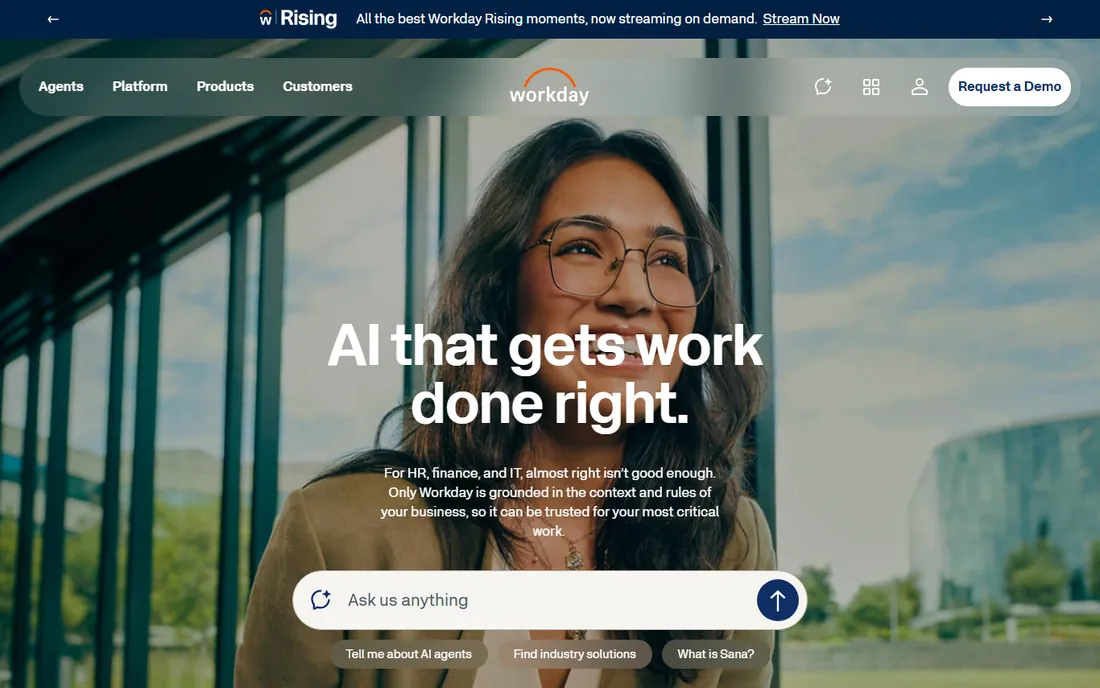
Workday's genius is unifying finance and HR: headcount planning, payroll accounting and project costing flow between systems that were designed together. Services firms, healthcare, education and nonprofits with people-heavy cost structures get financial management shaped around their reality. The cloud update model means no upgrade projects.
Pricing is premium and the value compounds when Workday HCM is already deployed. Product-centric companies needing deep inventory or manufacturing find it thinner than SAP or Oracle. For people-driven enterprises choosing or already on Workday HCM, the financials are the natural and strong complement.
What we like- Finance and HCM unified beautifully
- Excellent for services organizations
- Continuous cloud updates
Watch out for- Premium pricing
- Weaker for inventory and manufacturing
- Best with Workday HCM already in place

#6
Oracle Fusion Cloud ERP
Best for: Oracle-stack global enterprises
Visit oracle.com
Starting priceSee website
Free planNo
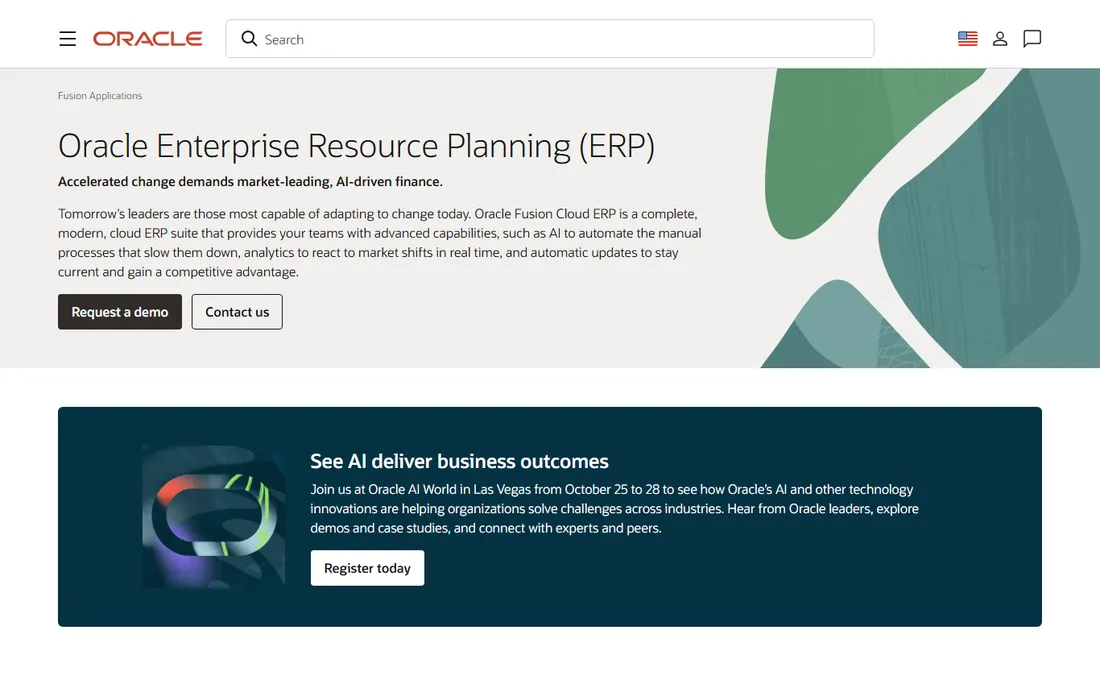
Oracle Fusion Cloud ERP is the SaaS successor to E-Business Suite, offering comprehensive financials for global enterprises deeply invested in Oracle technology. Multi-GAAP, multi-currency and complex industry requirements are well covered, and integration with Oracle's database and cloud infrastructure suits Oracle-standardized IT shops.
Oracle's commercial reputation precedes it: aggressive sales tactics and license audits are industry lore. Costs are enterprise-grade and implementations need elite partners. Organizations already running Oracle databases and middleware get the most synergy. Everyone else should weigh the commercial relationship carefully against the functional fit.
What we like- Comprehensive global financials
- Strong in complex industries
- Deep Oracle cloud integration
Watch out for- Expensive and complex
- Oracle's sales and audit reputation
- Implementations need top-tier partners
Starting priceSee website
Free planNo
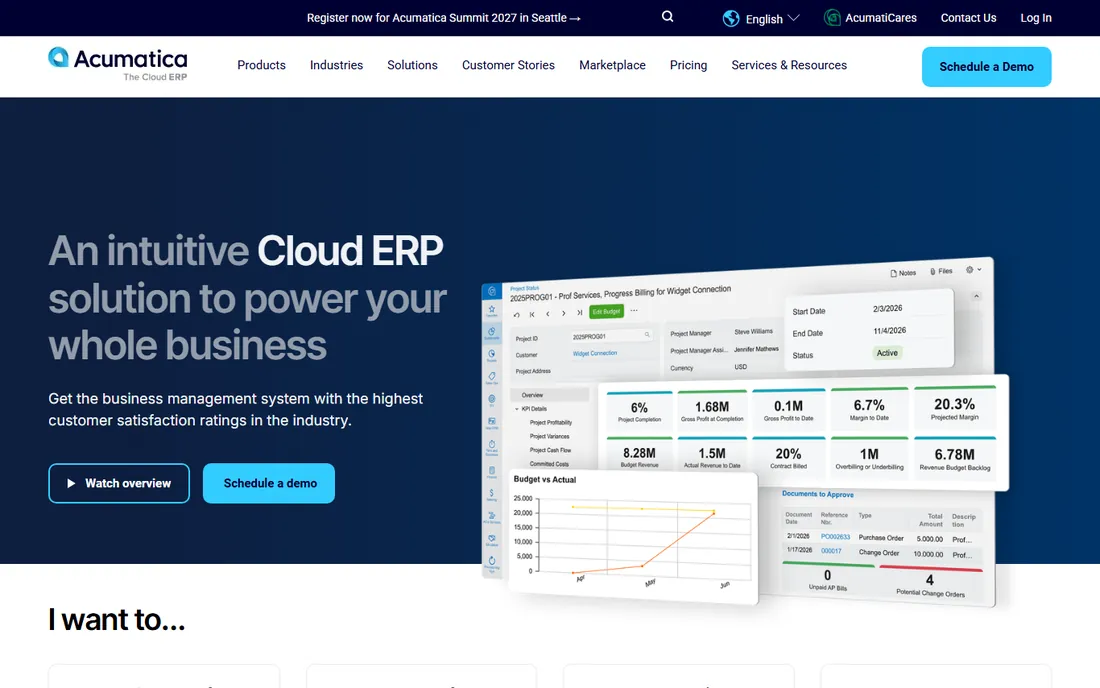
Acumatica's standout feature is commercial, not technical: unlimited-user pricing means growing headcount does not grow the license bill, a refreshing contrast in the ERP world. The platform covers financials, distribution, manufacturing and construction editions with flexible cloud or on-premises deployment. Mid-size businesses get real ERP without enterprise pricing.
The ecosystem is smaller than NetSuite's, so partner selection matters more, and brand recognition lags. But the value proposition is strong: companies that would pay NetSuite per-user fees for fifty casual users save substantially. For mid-market businesses wanting ERP flexibility without the enterprise tax, Acumatica deserves a serious look.
What we like- Unlimited-user pricing model
- Flexible deployment options
- Strong distribution and manufacturing editions
Watch out for- Smaller ecosystem than NetSuite
- Partner quality varies
- Brand recognition is lower
Starting priceSee website
Free planNo
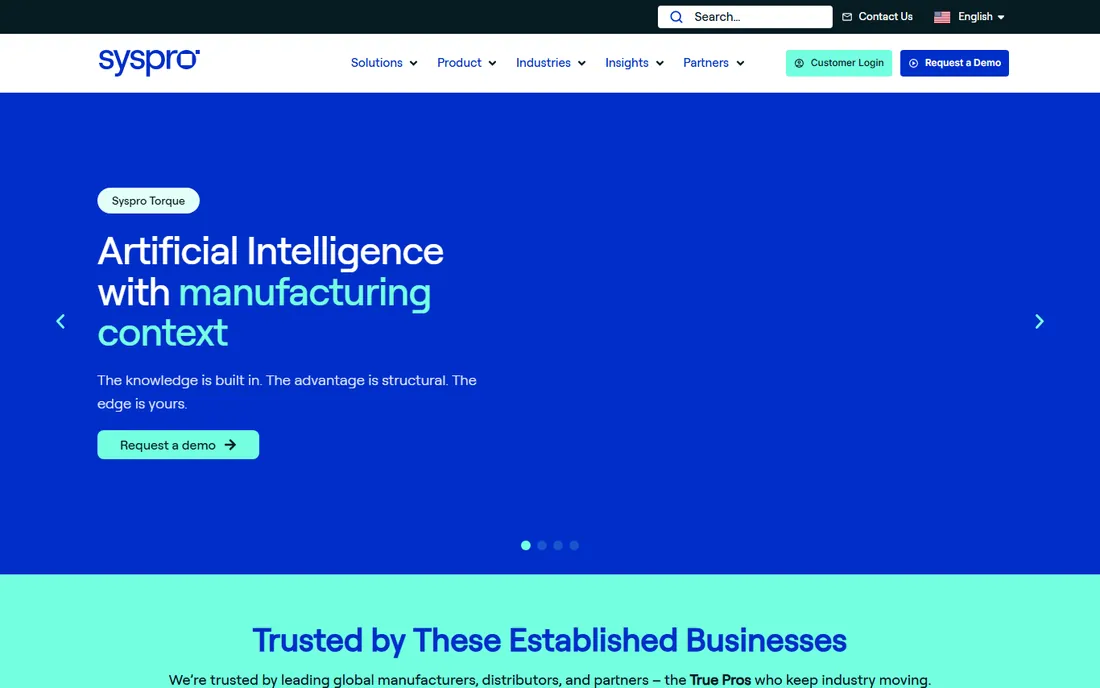
SYSPRO has served manufacturers and distributors for decades, and the depth shows: lot and serial traceability, quality management, shop floor integration and industry-specific workflows that generic ERPs handle poorly. Food, electronics and industrial manufacturers with real production complexity find a purpose-built fit.
Services and pure SaaS companies should look elsewhere; this is an operational ERP for companies that make and move things. The interface prioritizes function over beauty, and the partner network is smaller than the giants'. For manufacturers, though, SYSPRO's specialization beats adapting a generic financial system to the shop floor.
What we like- Deep manufacturing and distribution functionality
- Strong inventory and lot traceability
- Good for regulated production
Watch out for- Niche focus limits services-industry fit
- Interface is utilitarian
- Smaller partner network
Starting priceSee website
Free planNo
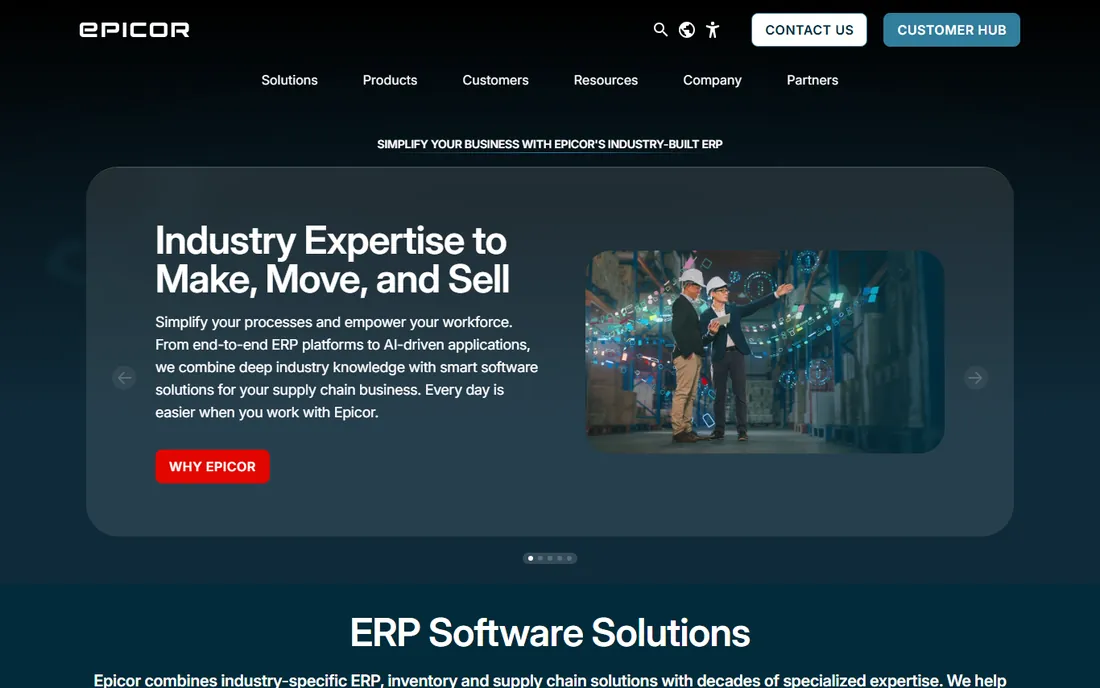
Epicor serves the "essential businesses" that make, move and sell physical things: manufacturing, distribution, building supply, automotive aftermarket. Its industry-specific editions, like Kinetic for manufacturers and Prophet 21 for distributors, come with workflows prebuilt for those trades rather than generic modules to configure.
The product portfolio is broad enough to confuse: confirm exactly which Epicor product fits your industry before engaging. Pricing is quote-based and implementations need partners who know your trade. For distributors and manufacturers in its sweet-spot industries, Epicor's specialization delivers faster time-to-value than generic platforms.
What we like- Strong industry-specific editions
- Good for manufacturing and distribution
- Deep operational features
Watch out for- Multiple product lines confuse buyers
- Pricing is quote-based
- Implementations need industry-experienced partners
Starting priceSee website
Free planCommunity edition free
Odoo is the value disruptor: an open-source-rooted ERP with apps for accounting, inventory, CRM, HR, project management and more, at prices far below the enterprise vendors. The community edition is free, and paid Enterprise tiers stay affordable. Businesses that need broad functionality on a budget get remarkable coverage.
App quality varies, especially in the community ecosystem, and serious implementations need technical expertise to select and integrate the right modules. It is not as polished out of the box as NetSuite. But for cost-conscious mid-size businesses willing to invest in implementation, Odoo delivers ERP breadth that would cost multiples elsewhere.
What we like- Huge app library covering ERP, CRM, HR and more
- Open-source community edition
- Very affordable paid tiers
Watch out for- Quality varies across community apps
- Enterprise features need paid version
- Implementations need technical skill
Implementation is the real price
The license quote is the smallest number you will see. Enterprise accounting implementations typically cost one to three times the software price in consulting, data migration, integration and training, and the timeline runs six to eighteen months. The vendors' sales teams quote software; your CFO needs the total.
Three things control the total: scope discipline, data cleanliness and partner quality. Every customization doubles future upgrade cost, so fight for standard processes. Clean your chart of accounts and master data before migration, not during. And choose the implementation partner on reference calls with similar companies, not on the vendor's recommendation alone. The most common ERP regret is not the software choice; it is the implementation partner choice.
How we chose
We selected platforms that serve large and upper-mid-size businesses as core customers, with multi-entity, multi-currency and audit-grade financials. We reviewed vendor documentation and analyst coverage, and we checked current product status. We included both suite ERPs and best-of-breed financials because large businesses genuinely split on the approach.
What to evaluate before you sign
Run your close process in the trial. Take last quarter's actual consolidation, intercompany eliminations and reporting pack, and reproduce them in each finalist. The demo always works; your close is the test that matters. Verify multi-entity, multi-currency and local compliance for every country you operate in.
Check the integration story for your specific stack: payroll, expense, billing and banking connections you actually use. Confirm the upgrade model and its costs, because some platforms upgrade smoothly at no extra charge and others bill for every major version. Negotiate renewal caps and price protection now; the negotiating power you have before signing never returns. And talk to reference customers of similar size and complexity, not the vendor's showcase accounts.
Frequently asked questions
What is the best accounting software for a large company?
NetSuite and Sage Intacct lead for upper mid-market; SAP S/4HANA, Oracle Fusion and Workday serve the largest enterprises. The right choice depends on your industry, entity complexity and existing technology stack.
How much does enterprise accounting software cost?
Licenses typically run from tens of thousands to millions annually depending on users, entities and modules. Implementation services usually cost one to three times the license. Always budget the total, not just the subscription.
NetSuite vs Sage Intacct: which is better?
NetSuite for broader ERP needs including inventory and operations; Intacct for pure multi-entity financial management at better value. Companies with warehouses and complex operations lean NetSuite; services and multi-entity finance teams lean Intacct.
How long does implementation take?
Six to eighteen months is typical for large businesses, depending on entity count, data cleanliness and customization. Rushing the timeline is the most reliable way to inflate the cost.
Can large businesses use QuickBooks?
QuickBooks caps out well before large-business needs: multi-entity consolidation, audit controls and high transaction volumes exceed its design. Companies usually migrate when the monthly close becomes a spreadsheet project.
What is the difference between ERP and accounting software?
Accounting software handles financials: GL, AP, AR and reporting. ERP adds operational modules: inventory, manufacturing, order management, HR and CRM. Large businesses usually need ERP breadth, not just accounting depth.
Sources we checked (10)
- https://netsuite.com/
- https://www.sage.com/en-us/sage-business-cloud/intacct/
- https://www.microsoft.com/en-us/dynamics-365/products/finance
- https://www.sap.com/index.html
- https://www.workday.com/
- https://www.oracle.com/erp/
- https://www.acumatica.com/
- https://www.syspro.com/
- https://www.epicor.com/
- https://www.odoo.com/
Is your product missing or out of date?
We review this list regularly. Vendors can request a listing, send updated pricing or ask about featured placement.

Shihab Mia · Founder, Rankite
Shihab has spent more than a decade helping SaaS and e-commerce brands grow through search. He writes Rankite's software buying guides from pricing pages, documentation and public user reviews. More about Shihab.
 NetSuite
 Microsoft Dynamics 365 Finance
 Workday Financial Management
 Acumatica
 SYSPRO
 Epicor
 Odoo
Odoo