How we make this list: we compare pricing pages, product documentation and public user reviews. Rankite is independent; if a vendor ever pays for a featured spot, that listing is clearly labeled Partner.
Key takeaways
- QuickBooks Online is the default because investors, accountants and acquirers all expect it; startups planning to raise should start there.
- Wave is free and perfectly fine for pre-revenue founders; upgrade when money starts moving seriously.
- Bench, Pilot and inDinero bundle software with human accountants, which is the right call for founders who will never do bookkeeping themselves.
- Xero is the best QuickBooks alternative for entrepreneurs with international customers or inventory from day one.
Quick comparison
| Tool | Best for | Starting price | Free plan |
|---|
 QuickBooks Online QuickBooks Online | Startups that plan to scale or raise funding | See website | Free trial |
 Xero Xero | Entrepreneurs with international or inventory businesses | See website | Free trial |
 FreshBooks FreshBooks | Service-based entrepreneurs and consultants | See website | Free trial |
 Wave Wave | Pre-revenue and side-project founders | Free | Yes |
 Zoho Books Zoho Books | Cost-conscious founders wanting full features | See website | Free tier |
 Sage Sage | Entrepreneurs who need serious accounting early | See website | Free trial |
 Bench Bench | Founders who want bookkeeping handled | See website | No |
 Pilot Pilot | Startups wanting tech-forward accounting services | See website | No |
 inDinero inDinero | Founders wanting accounting plus fractional CFO | See website | No |
 Kashoo Kashoo | Simple affordable books for solo founders | See website | Free trial |
Is your product missing or out of date?
We review this list regularly. Vendors can request a listing, send updated pricing or ask about featured placement.
The best accounting software for entrepreneurs
Starting priceSee website
Free planFree trial
For entrepreneurs with ambitions beyond a lifestyle business, QuickBooks Online is the pragmatic default. Investors, lenders and acquirers all speak QuickBooks, which removes friction in due diligence. The ecosystem covers payroll, expenses, inventory and hundreds of integrations. Starting here means never migrating later.
Solo founders often find it heavy and pricey for what they need today. But accounting software is infrastructure: choosing the standard early is cheaper than switching mid-growth. If you plan to raise money or sell the company, this is the expected choice.
What we like- The standard investors and accountants expect
- Huge integration ecosystem
- Scales from startup to mid-market
Watch out for- Pricing climbs with add-ons
- Interface can overwhelm solo founders
#2
Xero
Best for: Entrepreneurs with international or inventory businesses
Visit xero.com
Starting priceSee website
Free planFree trial
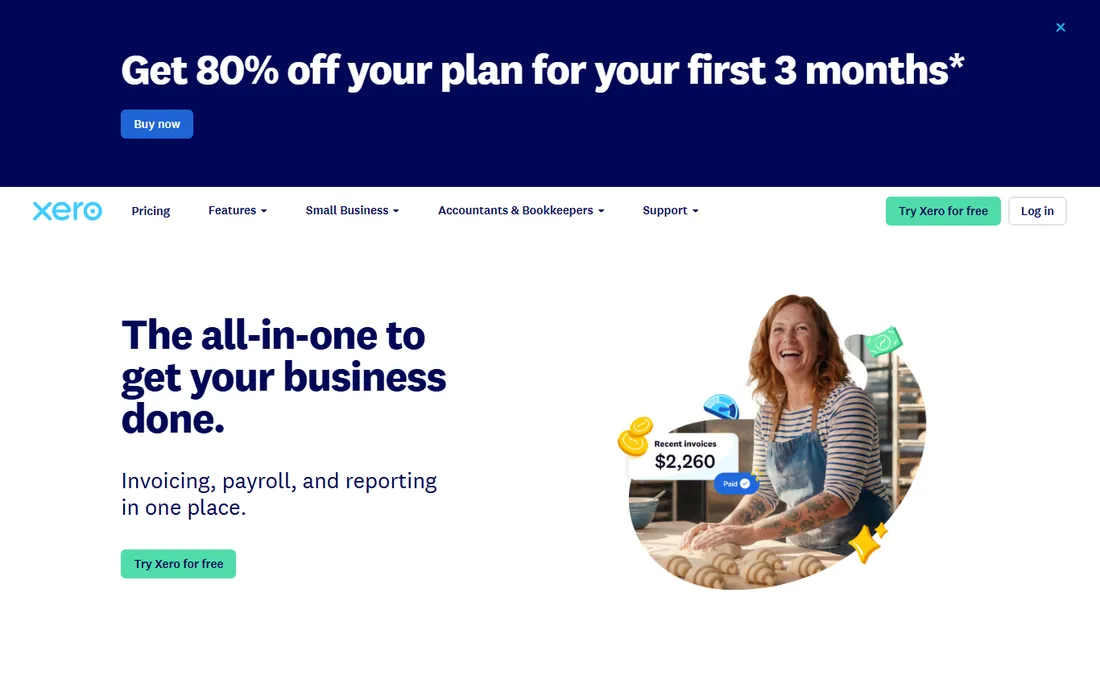
Xero suits founders whose businesses cross borders or hold stock from the start. Multi-currency invoicing and payments work naturally, and inventory tracking on mid-tier plans beats QuickBooks' equivalent. The interface is less intimidating for first-time founders.
The US ecosystem is smaller: fewer accountants, fewer integrations, payroll via partners. Domestic service startups usually do better on QuickBooks or FreshBooks. But international and product founders will find Xero the more natural home.
What we like- Excellent multi-currency
- Strong inventory management
- Cleaner interface than QuickBooks
Watch out for- Smaller US accountant network
- Payroll needs third-party tools
Starting priceSee website
Free planFree trial
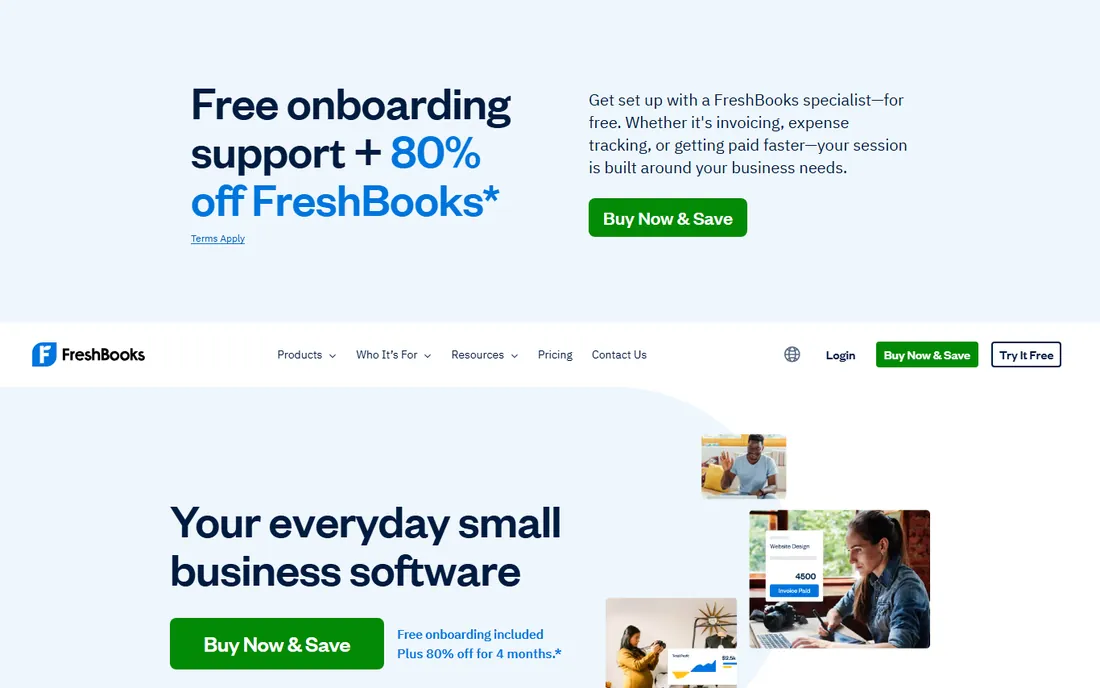
Consultants, agencies and freelancers-turned-founders live in FreshBooks comfortably. Invoicing is fast, time tracking converts to bills, and clients pay online easily. Founders who sell expertise rather than products get everything they need without accounting complexity.
Product businesses and anyone needing real inventory should look elsewhere. But for service entrepreneurs, the question is rarely whether the accounting is deep enough; it is whether you get paid fast. FreshBooks optimizes for that.
What we like- Excellent invoicing and time tracking
- Easy for non-accountants
- Professional client experience
Watch out for- Lighter accounting depth
- Not built for inventory or complex needs
Starting priceFree
Free planYes
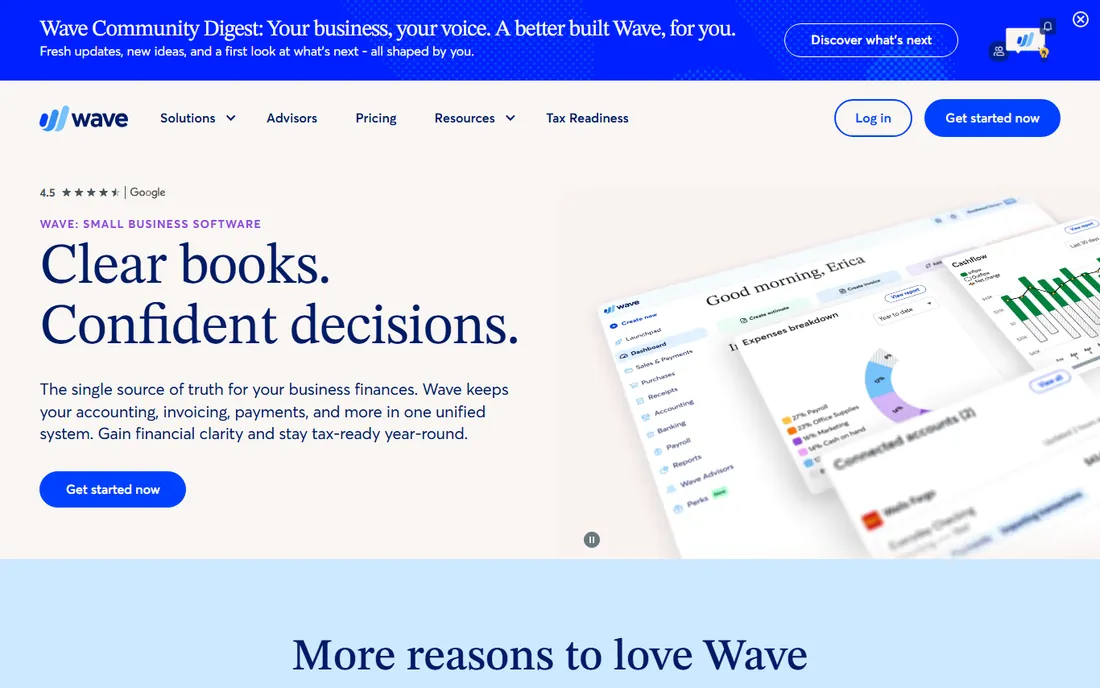
Every founder should start bookkeeping from day one, and Wave removes the cost excuse. Free invoicing, expense tracking, receipt scanning and basic reports cover the pre-revenue and early-revenue phase honestly. There is no cheaper way to build the habit.
Wave is not the forever tool. Growing companies eventually need deeper reporting, inventory or payroll that Wave handles lightly. But starting free and migrating later beats starting on spreadsheets and migrating in a panic at tax time.
What we like- Completely free accounting and invoicing
- Simple enough for anyone
- No reason not to start
Watch out for- Limited scalability
- Support is thin
- Monetizes via payments
#5
Zoho Books
Best for: Cost-conscious founders wanting full features
Visit zoho.com
Starting priceSee website
Free planFree tier
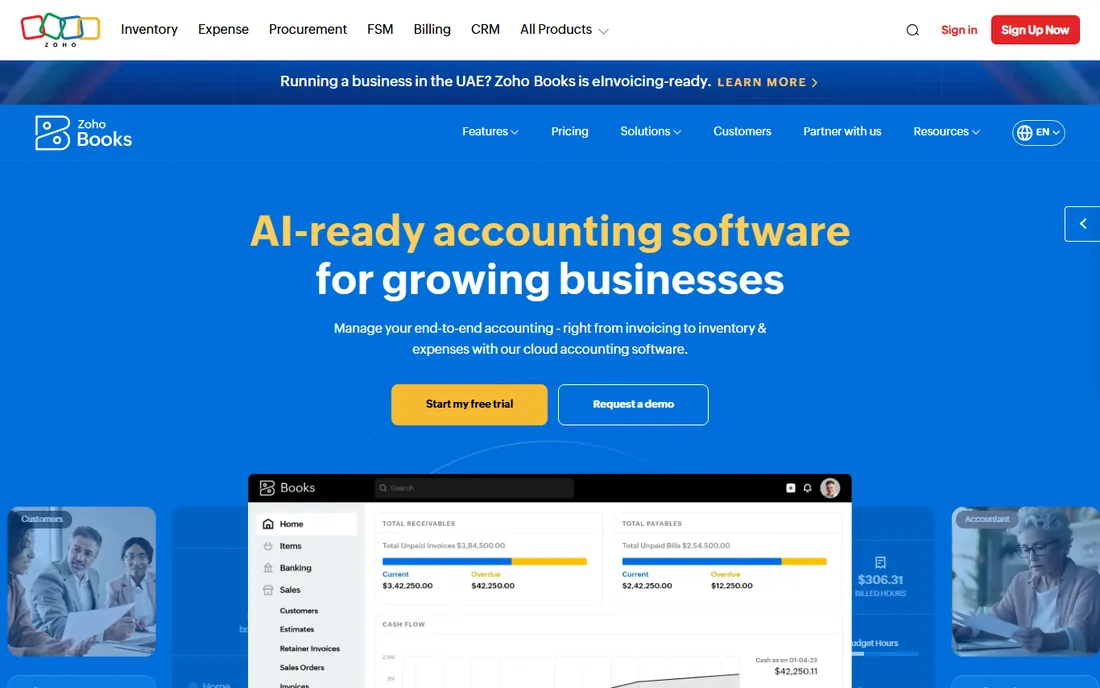
Zoho Books gives bootstrapped founders full accounting software at a fraction of QuickBooks' price, with a free tier that covers the early days. Invoicing, expenses, projects and basic inventory all work. Founders already using Zoho CRM get a unified system.
The trade is mainstream familiarity. US accountants and investors expect QuickBooks or Xero; Zoho Books adds a translation step. For bootstrapped founders optimizing for cost over convention, that trade is usually worth it.
What we like- Generous free tier
- Real accounting at low prices
- Integrates with the Zoho suite
Watch out for- Less familiar to US accountants and investors
- Ecosystem is smaller
#6
Sage
Best for: Entrepreneurs who need serious accounting early
Visit sage.com
Starting priceSee website
Free planFree trial
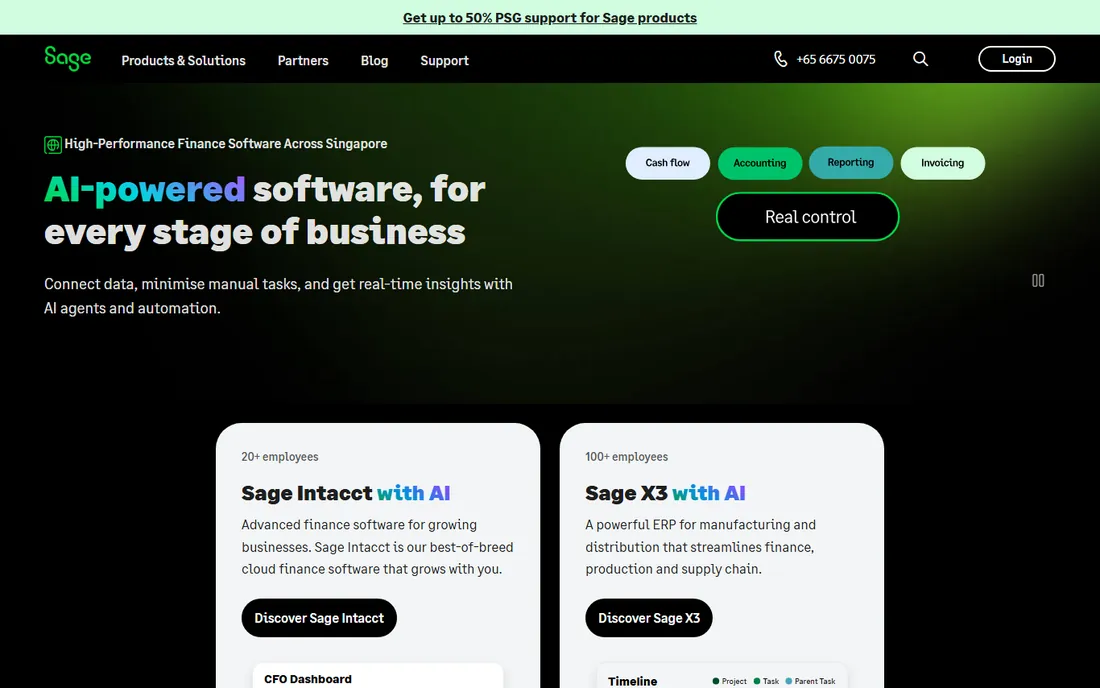
Some startups need real accounting from day one: manufacturing, wholesale, businesses with complex inventory or multi-entity structures. Sage brings enterprise-grade depth to smaller companies, with inventory, job costing and reporting that the friendly tools cannot match.
The experience is more accountant than founder. If your business is straightforward, Sage is overkill. But founders in product-heavy industries who know they will need depth should evaluate it before outgrowing a simpler tool.
What we like- Deep accounting functionality
- Good for product and manufacturing startups
- Scales well
Watch out for- Less founder-friendly than modern tools
- Smaller startup ecosystem
#7
Bench
Best for: Founders who want bookkeeping handled
Visit bench.co
Starting priceSee website
Free planNo
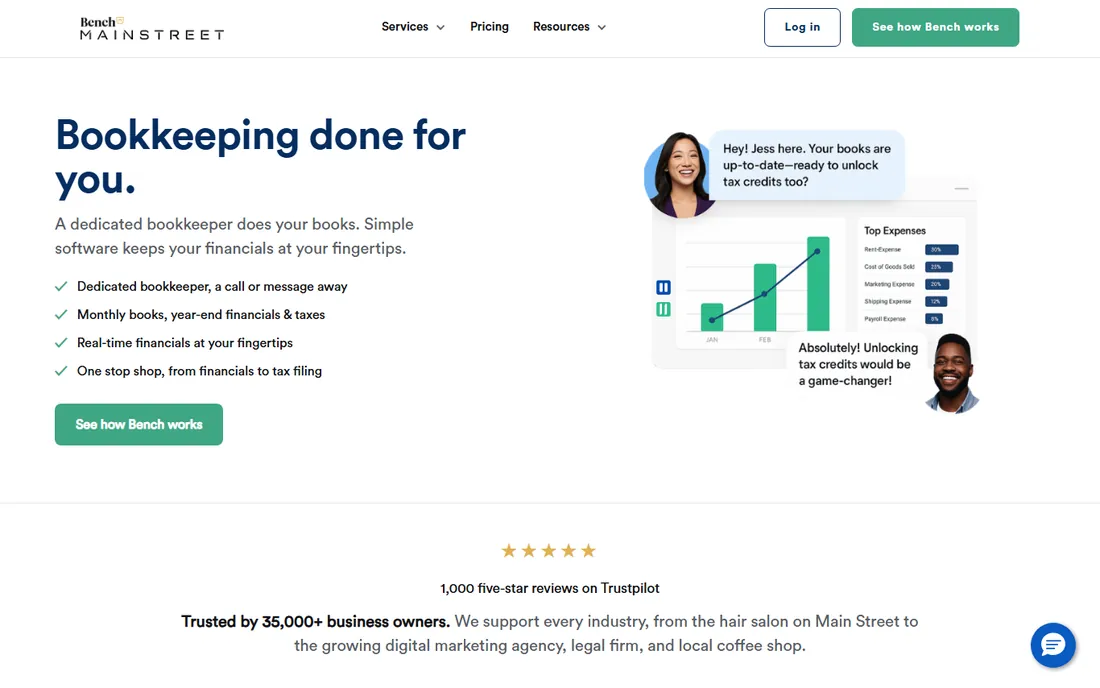
Bench is for founders who know themselves: the books will not get done if they have to do them. A dedicated bookkeeper categorizes everything and delivers monthly financial statements, so you always know your numbers and tax season is painless. The dashboard keeps cash flow visible.
It costs more than software alone, and control freaks may dislike delegating. But honest founders recognize that done-by-someone beats undone-by-me. For busy entrepreneurs, Bench buys back the scarcest resource: attention.
What we like- Dedicated human bookkeeper plus software
- Monthly financials done for you
- Tax-ready books
Watch out for- Premium over DIY software
- Less hands-on control
#8
Pilot
Best for: Startups wanting tech-forward accounting services
Visit pilot.com
Starting priceSee website
Free planNo
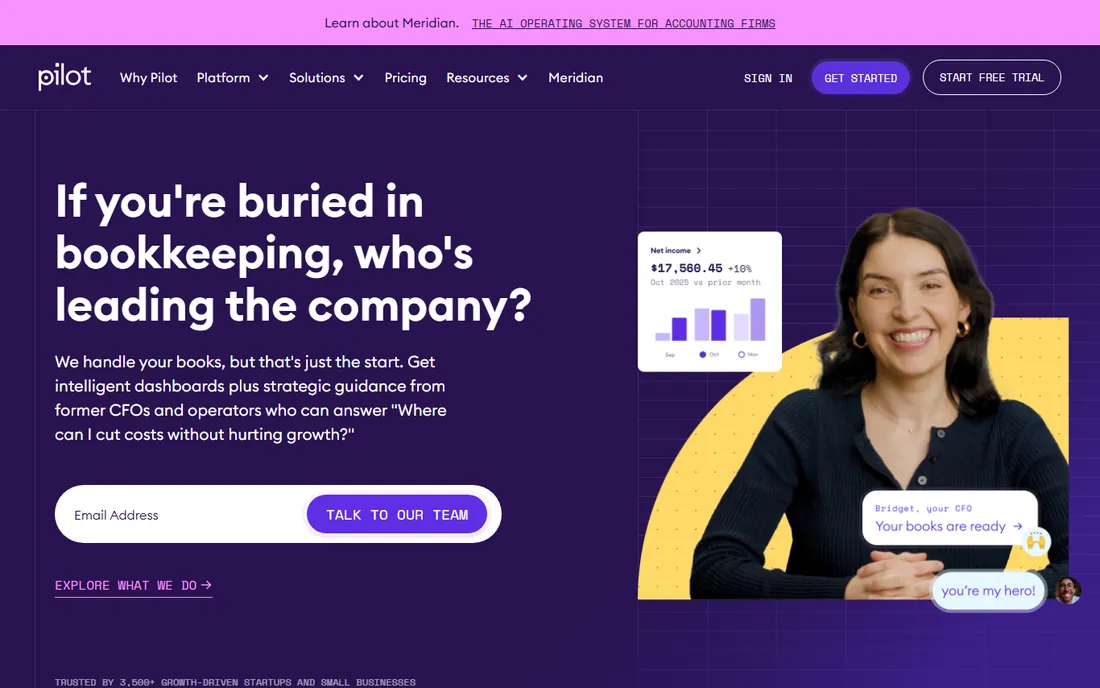
Pilot targets startups specifically: software plus a finance team that does your bookkeeping, with proper accrual accounting that investors expect. The product is modern, the accountants understand startup metrics, and the service scales from seed to Series B.
The pricing assumes venture-scale budgets. Bootstrapped solo founders will find it expensive. But funded startups that need investor-ready financials without hiring a finance team get exactly that.
What we like- Built for startups
- Combines software with expert accountants
- Handles accrual accounting properly
Watch out for- Priced for funded startups
- Overkill for simple businesses
Starting priceSee website
Free planNo
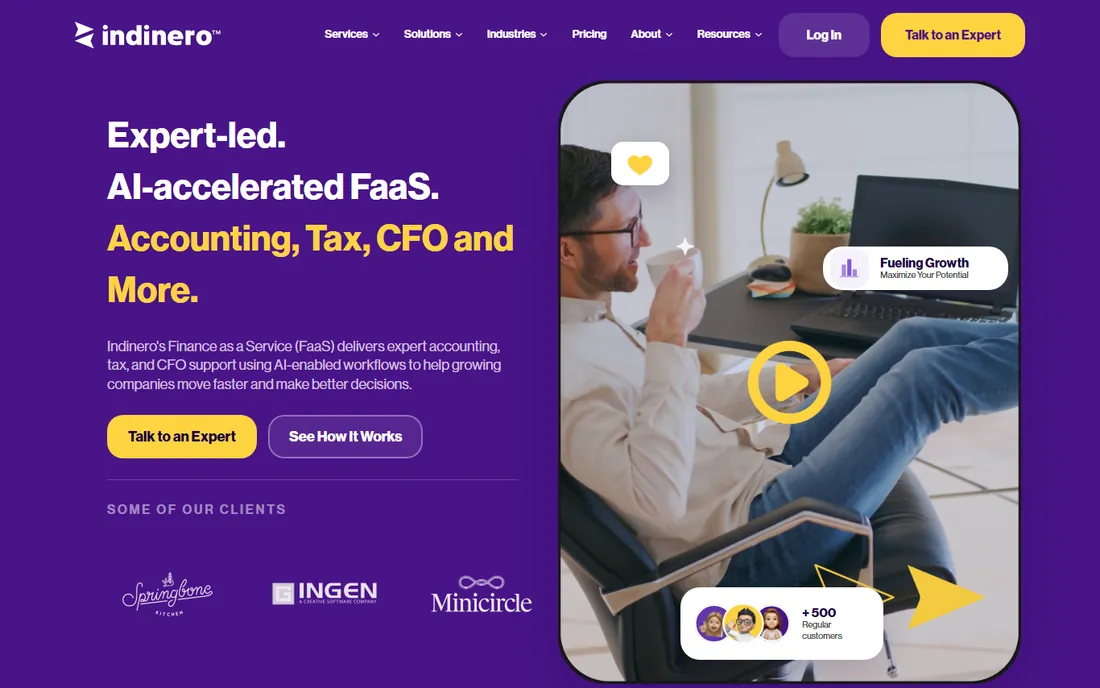
inDinero goes beyond bookkeeping into fractional CFO services: financial strategy, fundraising support and operational finance alongside the monthly close. Growth-stage founders get senior financial thinking without a full-time hire.
This is a service engagement with service pricing. Early founders do not need it. But when the questions shift from "are my books right" to "what should we do," inDinero fills the gap between a bookkeeper and a CFO.
What we like- Bookkeeping plus CFO-level guidance
- Good for growth-stage startups
- Tax support included
Watch out for- Service pricing, not software pricing
- Needs a real budget
Starting priceSee website
Free planFree trial
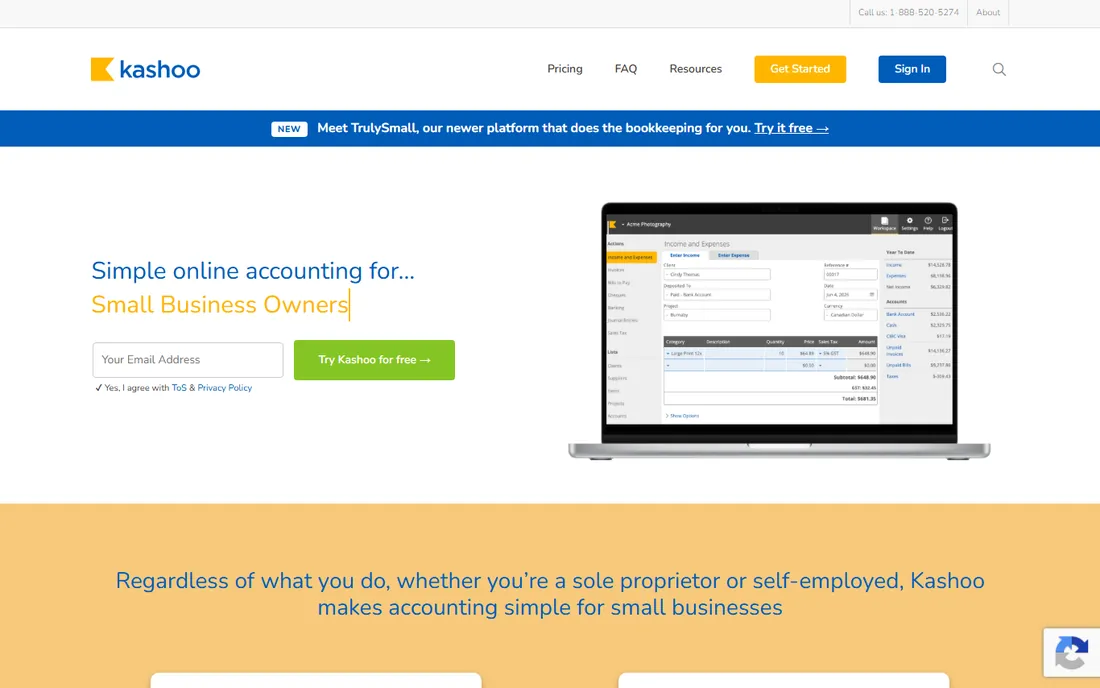
Kashoo is the quiet middle option: genuine double-entry accounting in a simple package at a modest price. Solo founders and tiny teams get invoicing, expenses, bank reconciliation and reports without QuickBooks' complexity or cost.
It will not scale to a funded startup's needs, and the integration ecosystem is small. But for founders who want proper books with minimal fuss and minimal spend, Kashoo is a sensible, unflashy choice.
What we like- Simple real accounting
- Affordable pricing
- Automatic reconciliation
Watch out for- Limited integrations
- Not built for scale
When to switch from DIY to done-for-you
The honest dividing line is not revenue but behavior. If your books are current, reconciled monthly and tax-ready, DIY software is fine at any size. If they are three months behind and tax season fills you with dread, no software feature will fix that; a service like Bench, Pilot or inDinero will.
A practical rule: founders should do their own books until the business can afford not to, then delegate immediately. Your time is better spent on customers than categorization. The cost of a bookkeeping service is almost always less than the cost of messy books: missed deductions, late filings and decisions made on bad numbers.
How we chose
We compared platforms on founder-relevant criteria: ease of use for non-accountants, investor and accountant compatibility, scalability, pricing, and the availability of human help. We verified each vendor's homepage and current positioning, reviewed founder feedback on startup forums, G2 and review sites, and weighted real-world fit over feature lists. We did not run live businesses on these platforms.
Financial habits that separate surviving founders from the rest
Know your runway at all times. Runway is cash in the bank divided by monthly burn, and every founder should be able to state theirs without opening a spreadsheet. When runway drops below six months, fundraising or profitability becomes the full-time job. Founders who discover this late rarely recover.
Separate operating cash from everything else. Tax obligations, in particular, should sit in their own mental (or actual) bucket. Setting aside 25 to 30 percent of profit for taxes as you go prevents the April shock that kills young companies. Your accounting software can automate the tracking; the discipline has to come from you.
Review the numbers monthly, not quarterly. A monthly close, even a rough one, catches problems while they are small: a creeping expense, a late-paying customer concentration, a margin slipping on a key product. Founders who look at financials only at tax time are flying blind for eleven months.
Finally, price with margin from the start. Many founders underprice to win early customers, then discover the business cannot sustain itself at those prices. Your accounting should show gross margin per product or service line clearly. If a line loses money, fix the price or kill the line; hoping volume will save it almost never works.
Frequently asked questions
What accounting software do startups actually use?
QuickBooks Online dominates among startups planning to raise funding, because investors and accountants expect it. Xero is the main alternative. Pre-revenue founders often start on Wave for free.
Should I do my own bookkeeping?
Early on, yes: it teaches you your numbers. Delegate when the business can afford it or when you consistently fall behind. The goal is accurate, current books, not founder martyrdom.
How much should accounting software cost a startup?
Free to $30/month covers most early-stage needs. Done-for-you services run a few hundred per month and up. Budget for an accountant or CPA at tax time regardless.
Do I need an accountant or just software?
Software records; accountants advise. Get a CPA for tax planning and filing once revenue is meaningful, even if software handles daily bookkeeping. The tax savings usually exceed the fee.
Cash or accrual accounting?
Most small businesses start on cash basis for simplicity. Investors and lenders usually want accrual. QuickBooks, Xero and Pilot handle both; know which you are using before tax season.
When should I switch accounting tools?
When your current tool cannot do something you regularly need: inventory, multi-currency, payroll integration or investor-grade reporting. Plan migrations during a quiet month, never at year-end.
Sources we checked (10)
- https://www.quickbooks.intuit.com/
- https://www.xero.com/
- https://www.freshbooks.com/
- https://www.waveapps.com/
- https://www.zoho.com/books/
- https://www.sage.com/
- https://bench.co/
- https://pilot.com/
- https://www.indinero.com/
- https://www.kashoo.com/
Is your product missing or out of date?
We review this list regularly. Vendors can request a listing, send updated pricing or ask about featured placement.

Shihab Mia · Founder, Rankite
Shihab has spent more than a decade helping SaaS and e-commerce brands grow through search. He writes Rankite's software buying guides from pricing pages, documentation and public user reviews. More about Shihab.